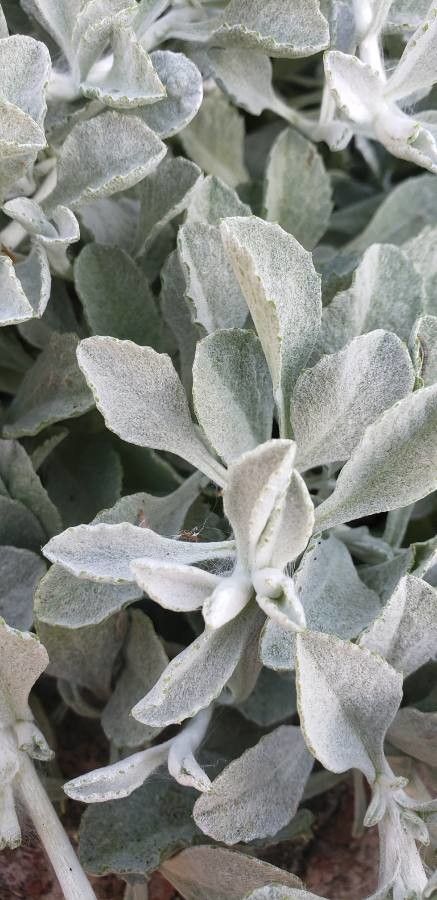
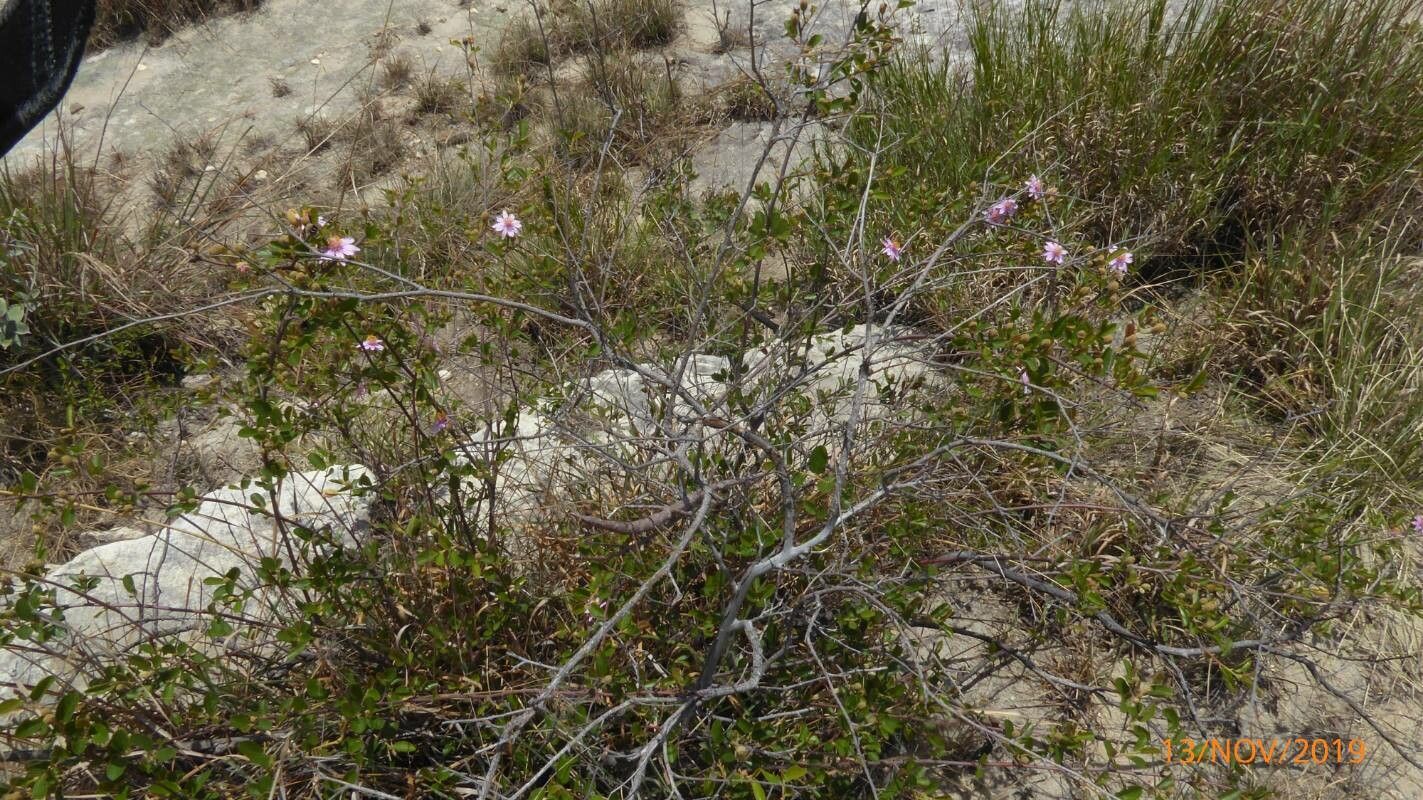
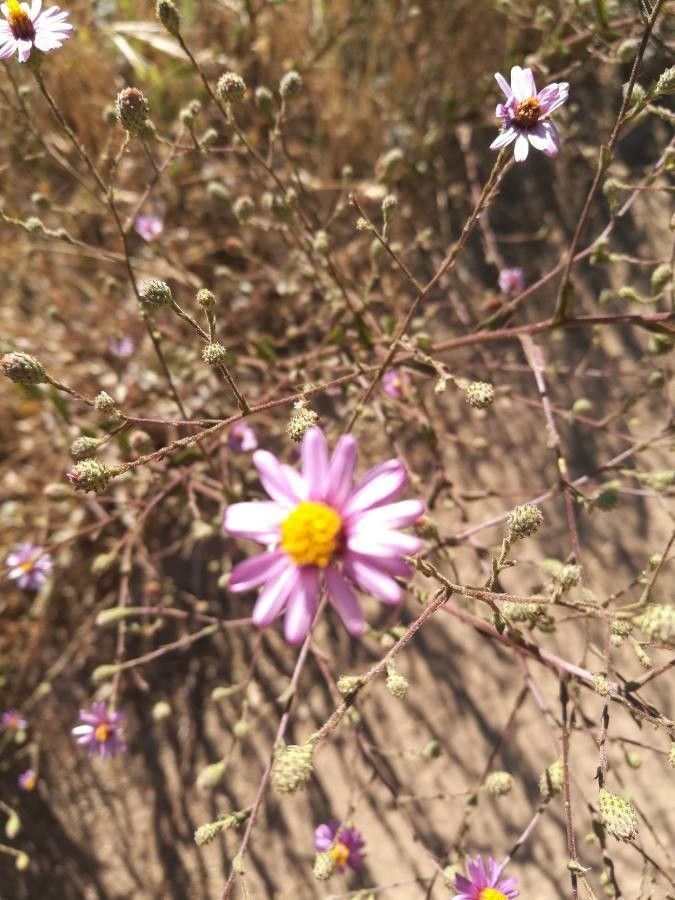
Corethrogyne filaginifolia, commonly known as the California aster or silverpuffs, is a perennial herbaceous plant native to California and Baja California. Belonging to the Asteraceae family, it can grow up to 3 feet tall. The plant features a woody base with several stems adorned with small, silver-gray leaves that are narrow and linear, measuring up to 2 inches long. The flowers of Corethrogyne filaginifolia are small and daisy-like, with yellow centers surrounded by white or pinkish petals. They bloom from late spring through summer, attracting bees and butterflies for pollination. This plant prefers full sun exposure but can tolerate partial shade. It thrives in well-drained soils and has moderate watering needs once established. Native Americans have used Corethrogyne filaginifolia for medicinal purposes, such as treating coughs, colds, headaches, and stomachaches, due to its anti-inflammatory properties. Overall, this plant is an attractive addition to any garden due to its unique foliage coloration and delicate flowers. It is an excellent choice for gardeners seeking low-maintenance plants that add visual interest throughout the year while also providing ecological benefits like pollinator habitat support.
California aster has strong resistance to disease and is generally not prone to illnesses. Still, it can be affected by pests and diseases present in its environment. Such infections are typically mild. Regarding care, this plant needs a moderate level of maintenance. It should be pruned regularly to preserve an attractive appearance and encourage healthy growth. Applying fertilizer can also aid in increasing bloom production. California aster is a good choice for anyone with an outdoor area like a garden or patio and does not demand extensive gardening experience. It may need more attention if kept indoors.
How to keep Corethrogyne Filaginifolia.
Light
The california aster reliably does well with plentiful light, making it well suited to its native sunny habitats. Its high light requirements mean it grows best where sunlight is abundant throughout the day. Very intense light can cause damage, while too little sunlight may impede its proper development.
Water
The California aster thrives in well-drained soils and requires moderate moisture, making it ideal for coastal and dry scrub environments. It generally grows outdoors and benefits from seasonal rains, especially in regions with wet winters and dry summers. For optimal growth, water the plant every two weeks, allowing it to experience dry spells in between.
Temperature
California aster is a hardy plant that is known to do well in its native habitats at temperatures between 59 and 95°F (15 and 35°C). It prefers mild to warm climates. Seasonal adjustments are usually not needed unless there are extreme changes.
Fertilizer
The best time to fertilize a California aster is in early spring, as it comes out of dormancy and starts active growth. Fertilization supplies essential nutrients for healthy development. Although California aster has relatively low fertilizer needs, applying fertilizer once a year can improve its survival and encourage better, longer-lasting flowers.
Pruning
California aster is characterized by its daisy-like flowers and woolly leaves. To maintain its health and improve its appearance, it's important to prune it annually between late winter and early spring. This pruning process enhances air circulation and encourages denser, more prolific flowering. When pruning, focus on removing any dead or overly long stems, and be careful to avoid cutting late in the season to protect the emerging buds.
Botanical profile.
- Plant Type
- Herb
- Life Cycle
- Perennial
- Genus
- Corethrogyne
- Family
- Asteraceae
- Hardiness Zone
- 8-10
- Mature Height
- 20 cm to 91 cm
- Mature Spread
- 20 cm to 49 cm
- Leaf Color
- Gray, Silver
- Leaf Type
- Evergreen
- Flower Color
- Lavender
- Flower Size
- 1.78 cm to 2.54 cm
- Bloom Time
- Summer, Early fall, Mid fall
- Planting Time
- Spring, Summer
- Harvest Time
- Late summer, Fall
- Native Area
- Mexico
Other names.
Reader questions.
How should I water my California aster plant?
To properly care for the California aster, it is recommended to water it with filtered water at room temperature. This is because tap water may contain harmful particles. Additionally, the water should not be cold as this can shock the plant, considering its preference for warm conditions. Instead of watering from above, it is better to thoroughly water the soil with the filtered room temperature water. This helps moisten the roots, allowing them to spread and gather nutrients for the plant's health.
Why should I put fertilizer on my California aster?
Fertilization is important for the California aster because it provides essential nutrients for the plant's above and below ground growth. While the overall fertilization needs for this plant are relatively low, annual fertilization can greatly benefit its survival and promote the development of longer-lasting, beautiful flowers. To keep your California aster looking its best, it is recommended to maintain a regular schedule of annual fertilization.
What are the sunlight requirements for a California aster?
The California aster requires above 6 hours of sunlight daily to thrive. It is advisable to watch how sunlight moves through your garden, selecting spots that offer a healthy balance of light and shade. This ensures optimal growth conditions for the plants.
What are the ideal temperature conditions for California aster?
California aster thrives best in mild to warm climates, with optimal temperatures ranging from 59 to 95°F (15 to 35°C). It has some cold tolerance and can generally withstand temperatures down to -5°C without needing special care. However, it's essential to protect the plant from colder temperatures below -5°C by using materials like plastic film, fabric, or other suitable covers, which should be removed as soon as temperatures rise again.
What should I do if I give my California aster too much water or too little water?
Taking care of your California aster requires being mindful of both overwatering and underwatering. Overwatering is a common problem that can cause wilting, yellowing, and even diseases like root rot, mold, and mildew which can be fatal. Underwatering is less common, as this plant can withstand drought, but it can still cause brittleness and browning of the leaves. It's important to spot signs of overwatering early, as some diseases may not be reversible if left untreated. Reduce watering immediately if you notice these signs and consider replacing poorly-draining soil with a loose, well-draining potting mix. If you notice signs of underwatering, simply adjust your watering schedule until the signs disappear.
When should I fertilize my California aster plant?
The best time to fertilize a California aster is in the late winter to early spring. This is when the plant is coming out of its dormant phase and starting to grow actively. Fertilizing at this time helps promote healthy growth and gives the plant a strong start for the season. While early spring is generally the most beneficial time to fertilize, it is also okay to do so in the fall. However, it is not recommended to feed a California aster during the summer or winter seasons.
How does the California aster react to different lighting conditions?
The California aster thrives under abundant light, similar to its natural, sun-drenched habitats. While extreme light can cause damage, insufficient sunlight inhibits proper development. The plant requires ample sunlight throughout the day for the healthiest growth. In indoor conditions where natural light is lacking, especially during winter or in less sunny spaces, artificial lighting can be a vital solution. LED lights, providing 30-50W/sq ft for full sun plants, can offer the specific wavelengths needed for optimal growth. The correct setup involves positioning the light source 12-36 inches above the plant and ensuring it receives 8-12 hours of light daily to mimic natural daylight hours.
How does California aster react to low temperatures?
California aster has a moderate tolerance to low temperatures, performing best when temperatures are above 15°C. In winter, it's crucial to keep it above -5°C. If temperatures fall below -10°C, you might notice the leaves drooping; they may recover in mild cases but can wilt and fall off in severe conditions. To protect the plant from low temperatures, you can trim off frost-damaged parts, wrap it with materials like non-woven fabric or cloth, and build a wind barrier to shield it from cold winds.
How often should I give water to my California aster plant?
If your California aster plant is in a pot, the easiest way to determine if it needs water is to stick your finger into the soil. When the top two to three inches of soil are dry, it's time to water it. If you grow your California aster outdoors in the ground, you can use the same method to test the soil. Once the top few inches of soil have dried out, it needs to be watered. Typically, this plant should be watered about once a week during the spring and early fall. However, in extremely hot weather, you may need to water it twice or more per week. It's worth noting that mature, well-established California asters can withstand drought conditions quite well.
When is not a good time to fertilize my California aster?
To properly care for your California aster, you should only fertilize it during the late winter and early spring. This plant has low fertilization needs, so a single annual feeding is sufficient. It's important not to fertilize during the spring, summer, and fall, as this can lead to overfertilization and complications. The only exception is if you missed fertilizing in the spring, then it is acceptable to feed the plant in the fall. Additionally, there is no need to fertilize during the winter, as the plant is in a dormant growth phase and not producing new growth. Therefore, it is not advisable to fertilize during most of the winter.
What are some symptoms of light deficiency or overexposure in California asters?
Symptoms of light deficiency in California asters include smaller new leaves, leggy or sparse growth, faster leaf drop, slower or no new growth, and lighter-colored new leaves. Overexposure to sunlight can cause chlorosis, sunscald, leaf curling, wilting, and leaf scorching. These conditions showcase the plant’s struggle with inappropriate light levels, from the stretching of stems to conserve energy in low light to physical damage on leaves due to excessive sunlight.
What should I do if my California aster is exposed to high temperatures?
During the summer, it's important to ensure the California aster doesn't go above 35°C. Exposure to temperatures exceeding 41°C can cause the leaves to lighten in color, tips to dry and wither, leaves to curl, and increase the plant's susceptibility to sunburn. If this happens, trim away the sunburned and dried-up parts. Additionally, relocate the plant to a shady area during the midday and afternoon sun or employ a shade cloth for protection. Keeping the soil moist by watering in the morning and evening can also help mitigate the effects of high temperatures.