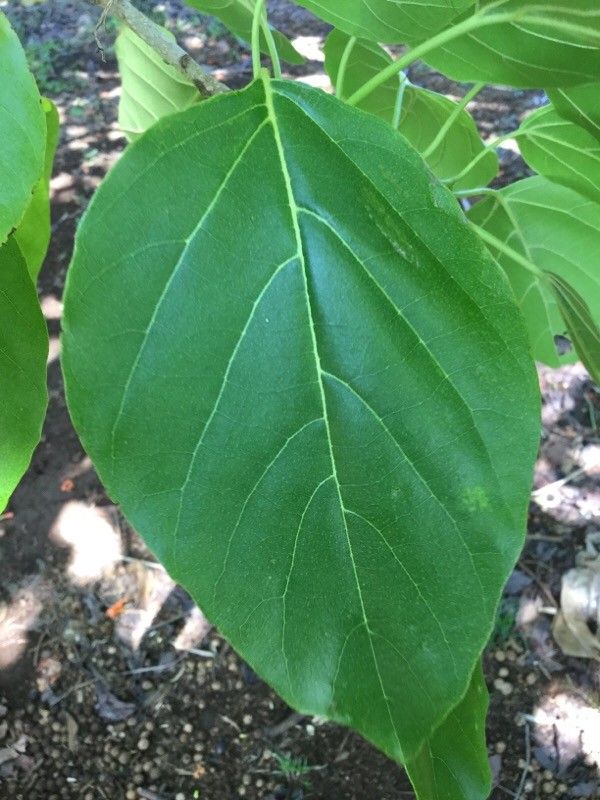
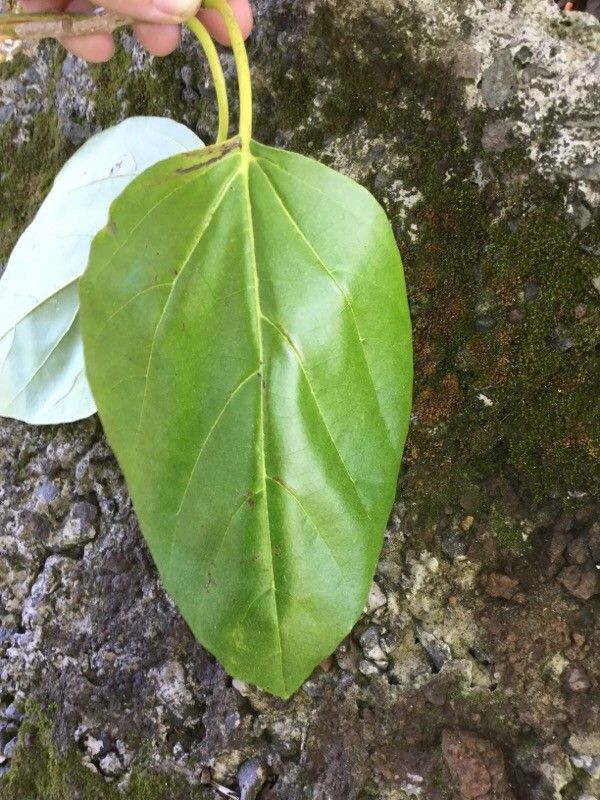
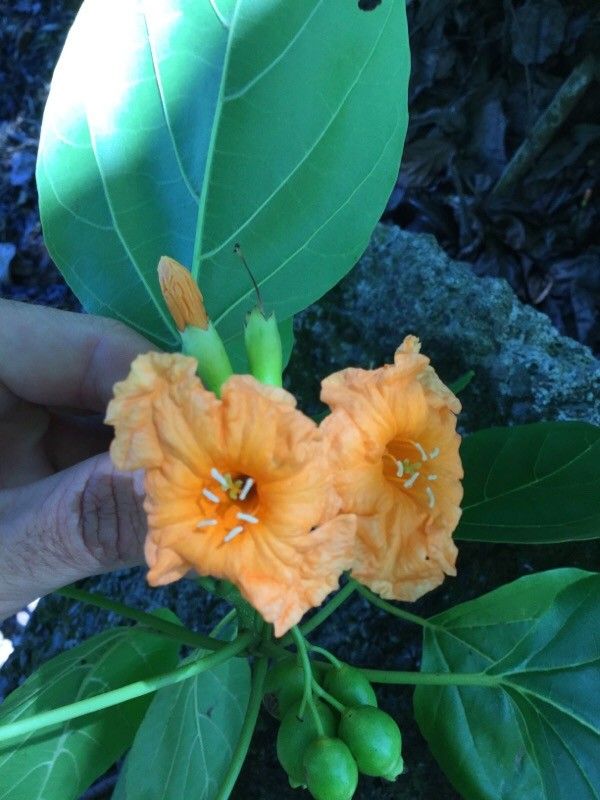
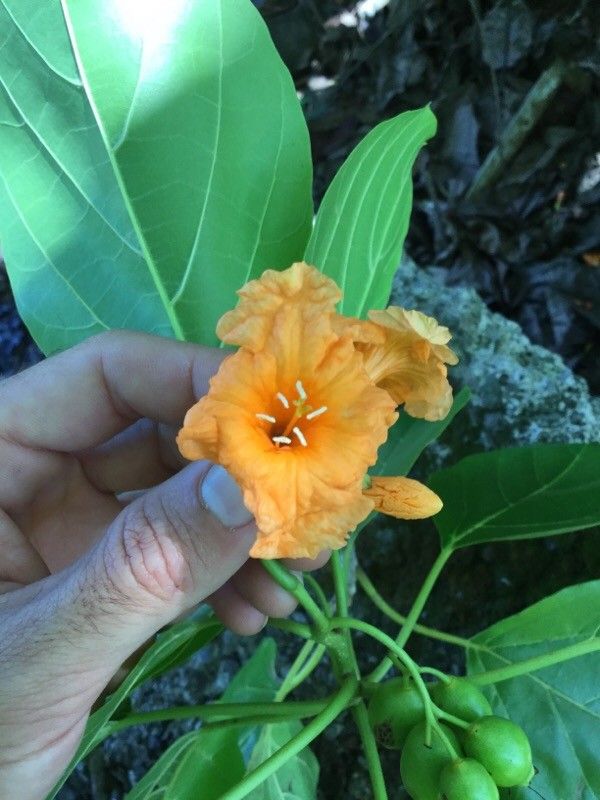
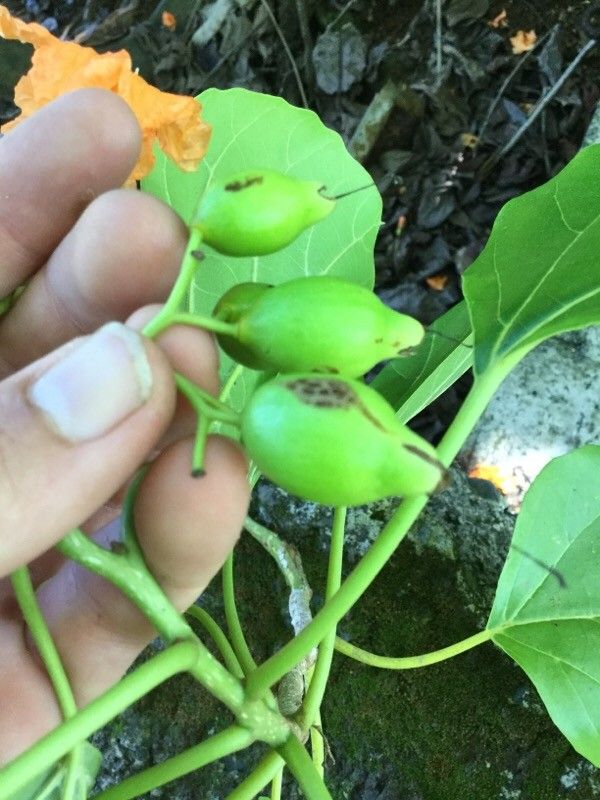
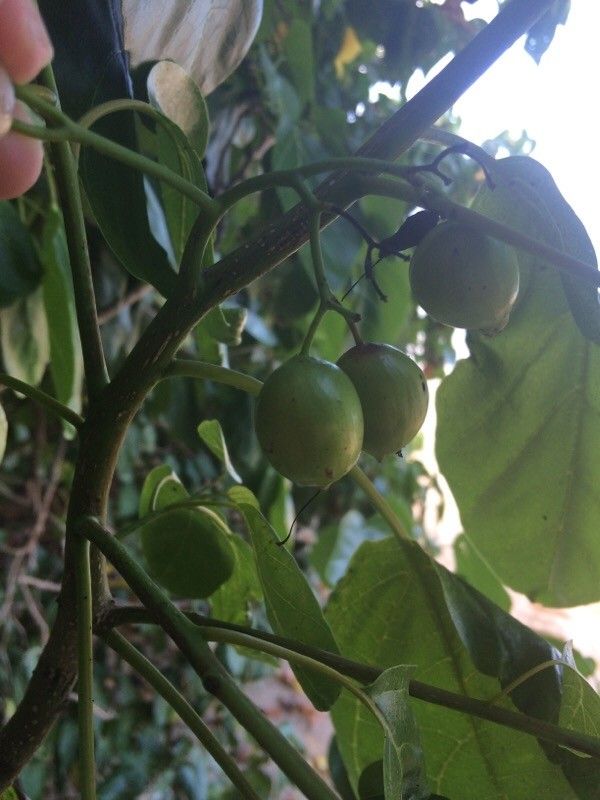
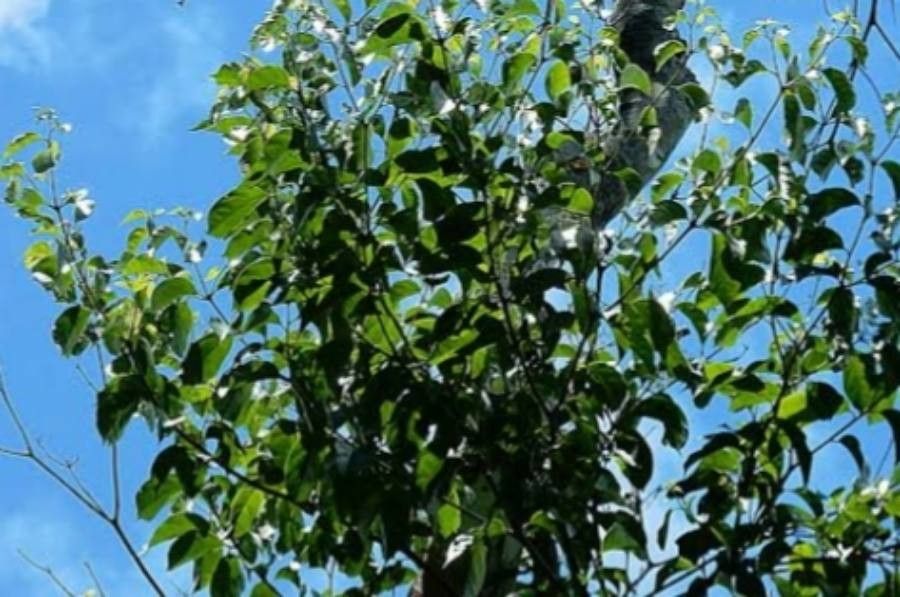
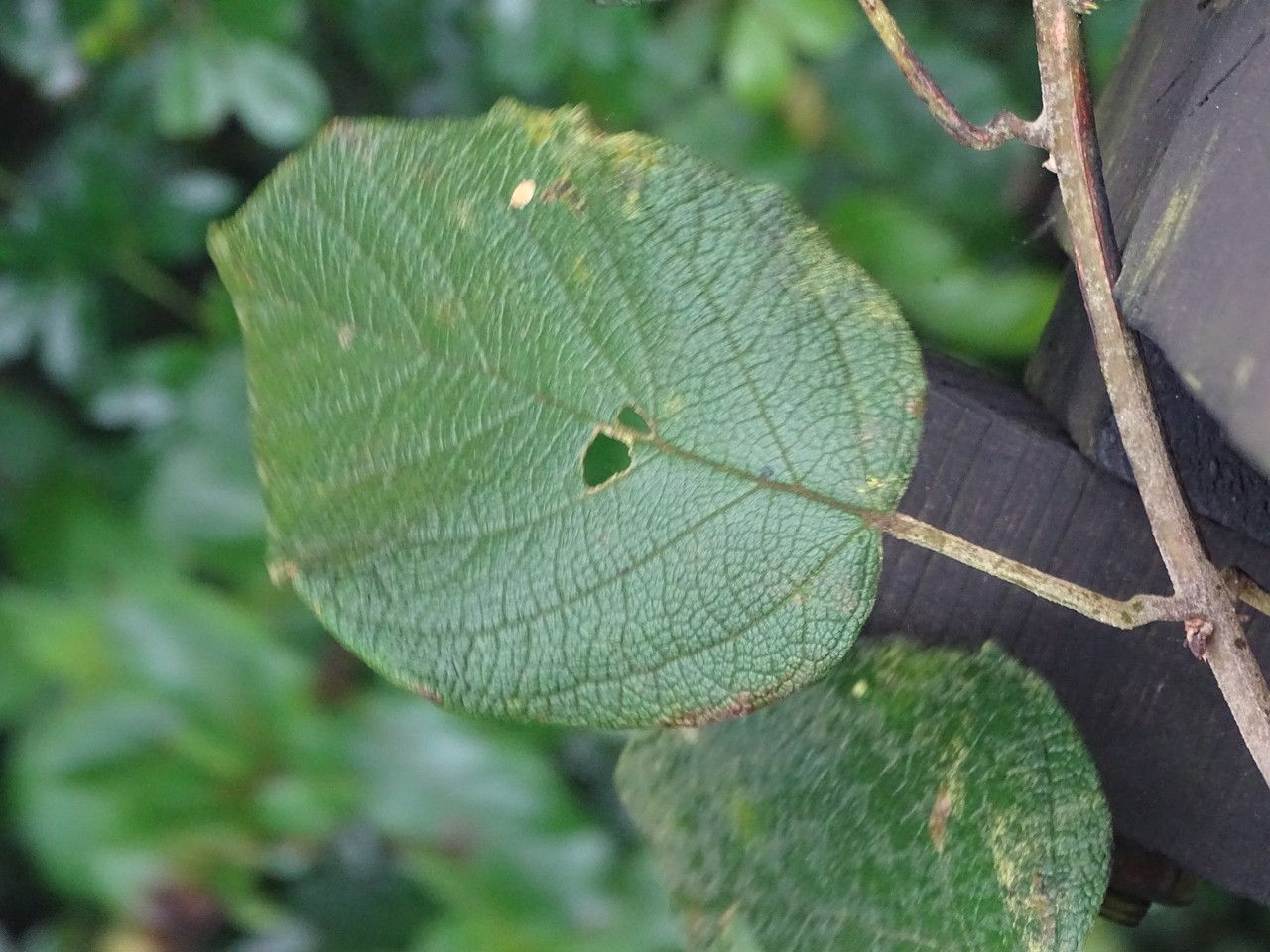
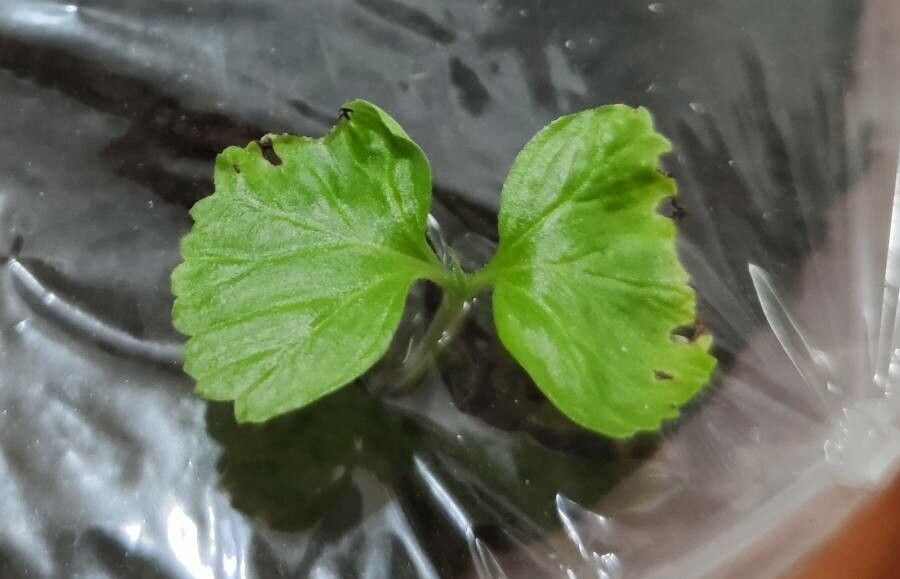
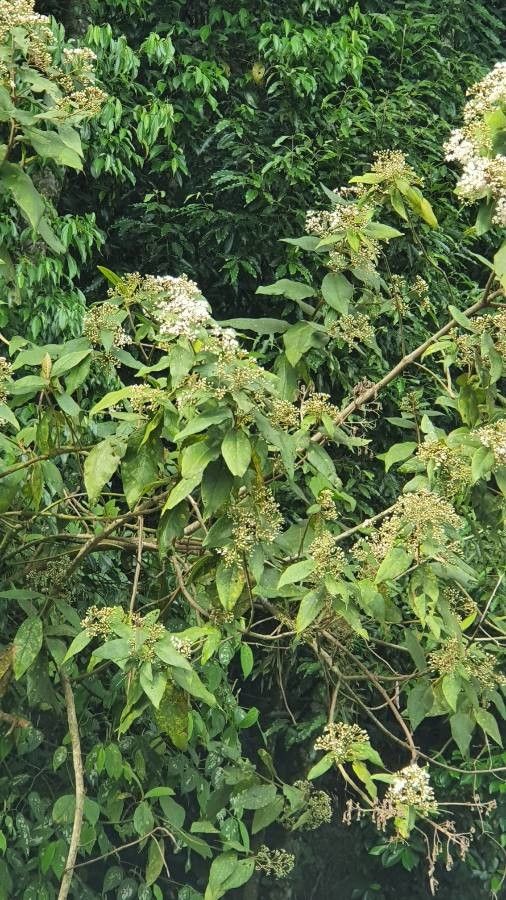
Cordia subcordata, commonly known as the Kou tree or Hawaiian Cordia, is a species of flowering plant in the borage family. It is native to tropical regions of the Pacific Ocean, including Hawaii, Fiji, and Samoa. The tree can grow up to 30 feet tall and has a broad canopy with glossy green, oval-shaped leaves pointed at both ends. The flowers are small, white, and feature five petals, blooming in clusters at the ends of branches. For centuries, Pacific Islanders have traditionally used the Kou tree for various purposes. Its wood is prized for its durability and resistance to rotting, making it ideal for boat building and carving tools. The bark has been used as a natural remedy for ailments such as coughs and skin irritations. Beyond its practical uses, Cordia subcordata plays a significant role in Hawaiian culture, symbolizing strength and resilience due to its ability to withstand harsh weather conditions like hurricanes and tsunamis. Today, Cordia subcordata remains an important species both culturally and ecologically throughout the Pacific region. It provides habitat for wildlife, such as birds, and serves practical purposes like erosion control along coastlines. Overall, this plant holds great significance within traditional cultures while also offering ecological benefits, making it an important species in tropical regions around the world.
Kou is disease-resistant and is generally not susceptible to illnesses. In terms of care, this plant is fairly low-maintenance. When grown outdoors it needs little water, and larger plants usually do not require pruning. Smaller plants, however, should be pruned after they finish blooming. Kout is suitable for anyone who has an outdoor area, such as a garden or a deck, and it does not demand extensive plant-care experience.
How to keep Cordia Subcordata.
Light
Kou prospers in locations that receive abundant sunlight throughout the day. This plentiful exposure supports its healthy growth and development. Both too little and too much sunlight can impede its optimal growth. Traditionally, it is found in habitats where ample sunlight is common.
Water
Kou thrives in tropical coastal habitats, where there is moderate rainfall and high humidity. It can tolerate drought, needing to be watered only every two weeks. For best results, grow kou outdoors in well-draining soil, where it can flourish in sunny conditions that mimic its natural seaside environment.
Temperature
Kou is usually found in regions where temperatures fall between 68 and 95 °F (20 to 35 ℃). It grows best under these conditions, though it can withstand short periods of temperature variation. Seasonal guidance may recommend minor adjustments to replicate its native growing environment.
Fertilizer
The best time to fertilize a Kou is in early spring, as it comes out of dormancy. This encourages overall growth and supports flower development. Fertilizing improves the foliage, stems, and branches, while encouraging flowers that are large, vibrant, and long-lasting. It also helps move nutrients from the roots to the blossoms and enhances the plant's health and resistance to disease.
Pruning
Kou plants thrive when they have lush foliage and are robust. To keep them healthy, prune them from early to late winter. Focus on removing dead or crowded branches to allow more sunlight and improve airflow. Regular light pruning helps enhance flowering, sustain vigor, and maintain their overall health and aesthetic appeal.
Botanical profile.
- Plant Type
- Tree
- Life Cycle
- Perennial
- Genus
- Cordia
- Family
- Boraginaceae
- Hardiness Zone
- 10
- Mature Height
- 7.01 m to 14.94 m
- Mature Spread
- 7.62 m
- Leaf Color
- Dark Green
- Leaf Type
- Evergreen
- Flower Color
- Orange
- Flower Size
- 2.54 cm to 4.06 cm
- Bloom Time
- All year round
- Planting Time
- Spring, Summer, Autumn
- Harvest Time
- All year round
- Native Area
- Sri Lanka, India, Malaysia, Philippines, Madagascar, Fiji, Kenya, Tanzania, China, Indonesia, Cambodia, Vietnam, Mozambique, Myanmar, Singapore, Thailand
Other names.
Reader questions.
How should I water my Kou plant?
Your Kou is not picky about how you water it. You can use any common watering tool, such as watering cans, hoses, or cups. It's important to water the Kou by applying the water directly to the soil. Make sure to moisten all soil areas equally to provide water to the entire root system. Using filtered water is recommended to avoid harmful particles that may be present in tap water. It's also best to use water that is at or slightly above room temperature to prevent shocking the Kou. However, the Kou generally responds well to any type of water.
Why is it important to add fertilizer to my Kou plant?
Fertilization plays a crucial role in the overall health and well-being of a Kou plant. It promotes healthy foliage growth, strengthens stems and branches, and enhances the production of valuable flowers. By providing the right amount of energy and nutrients, fertilization ensures that the flowers are large, vibrant, and long-lasting. This is achieved by enabling efficient transfer of fuel from the roots to the flowers through the stems. Additionally, proper fertilization helps maintain the plant's overall health, making it more resilient against diseases.
What are the sunlight requirements for Kou plants?
Kou plants thrive in environments where they can receive an abundance of sunlight throughout the day, ideally more than 6 hours of direct sunlight. This ample exposure is crucial for their healthy growth and development. When choosing spots for your Kou plants, observe the movement of sunlight through your garden to ensure they get a balanced amount of light and shade, which is essential for their wellbeing. In conditions where natural sunlight is insufficient, such as during winter or in less sunny spaces, artificial lighting can be a beneficial alternative to support their growth. LED lights are recommended for indoor Kou plants, providing 30-50W/sq ft for full sun plants. The light source should be placed 12-36 inches above the plant, ensuring it receives 8-12 hours of light daily to mimic natural sunlight conditions.
What are the ideal conditions for growing Kou?
Kou thrives in temperatures ranging from 68 to 95 °F (20 to 35 °C) and prefers conditions similar to its native environment for optimal growth. It is a heat-loving plant that does not tolerate cold well. During autumn, it is advised to bring outdoor-grown Kou indoors and place it near a bright window, keeping it at a safe distance from heaters to avoid damage from the cold. Maintaining temperatures above 20°C during the winter is beneficial for the plant's growth, as temperatures nearing 5°C can be detrimental.
What do I do if I give my Kou too much water or too little water?
Outdoor plants, especially newly planted ones or seedlings, are prone to lack of watering. Remember to water them adequately for a few months when they are small or recently planted. Once the roots are established, they can rely on rain most of the time. When your plant is in pots, overwatering is more likely to happen. If you accidentally overwater your plant, take immediate action to fix the situation. First, stop watering the plant to minimize the impact of overwatering. Then, remove the plant from its pot to inspect the roots. If none of the roots show signs of root rot, you can put the plant back in its container. However, if root rot is present, trim the affected roots and consider applying a fungicide to prevent further damage. Finally, repot the plant in well-draining soil. On the other hand, if the plant is underwatered, simply water it more frequently. Underwatering is easy to remedy - the leaves will droop, dry out, and fall off, but they will regain fullness after sufficient watering. Make sure to adjust the watering frequency promptly when underwatering occurs.
What is the best time to add fertilizer to my Kou plant?
The best time to fertilize a Kou is during early spring when it is coming out of dormancy and preparing to bloom. Fertilizing at this time provides ample energy for growth and flower development. However, there is another opportunity to fertilize in the fall, though a smaller amount is sufficient. Some gardeners prefer to fertilize during planting, but it is not always necessary.
What symptoms indicate a Kou plant is getting insufficient light?
Insufficient light can lead to several noticeable symptoms in Kou plants. These include smaller new leaves, leggy or sparse growth, faster leaf drop, slower or no new growth, and lighter-colored new leaves indicating a lack of chlorophyll and essential nutrients. Conditions such as chlorosis, where leaves lose their green color and turn yellow, sunscald resulting in damaged plant tissues, leaf curling as a defense against excessive sunlight, wilting from loss of turgor pressure, and leaf scorching characterized by brown, dry, and crispy leaf edges are also symptoms of improper light exposure.
How does low temperature affect Kou and what are the solutions?
Kou prefers warm temperatures and can suffer when exposed to cold. It thrives best above 20°C and should be kept above 5°C during winter. Exposure to temperatures below 1°C may cause the leaves to lighten in color. Frost damage can turn the leaf color to brown or black, leading to wilting and drooping. If frost damage occurs, the damaged parts should be trimmed off and the plant should be immediately moved to a warm indoor environment. It's recommended to place the Kou near a south-facing window for sunlight while avoiding proximity to heaters or air conditioning vents to prevent air dryness.
How often do I need to water my Kou?
If you live in an area with regular rainfall, most outdoor plants can rely on natural precipitation for their water needs. However, if your area doesn't get much rain, it's important to water your plants adequately. During the spring and fall, watering every two weeks should be sufficient. In the summer, when plants need more water, you'll need to water them more frequently. In the winter, when plants grow slower and require less water, it's best to water them sparingly or not at all. Young or newly planted Kou plants will need more frequent watering to help them establish and grow into drought-tolerant plants. For potted plants, there are two main methods to determine when to water your Kou. The first method is to follow a set watering schedule, such as once a week or every other week. However, this approach may not always be reliable as it doesn't take into account the specific conditions in your plant's environment. Another option is to check the moisture level of the soil. It's generally recommended to wait until the top two to four inches of soil (about 1/3 to 1/2 depth of the pot) have completely dried out before watering again. Seasonal changes can also affect watering frequency, especially during the summer when plants have higher water needs.
When is it not a good idea to add fertilizer to my Kou plant?
During the winter, Kou plants enter a dormant phase and do not require fertilization, just like many other plants. They do not need much energy from the soil to grow during this time. Fertilizing during winter increases the risk of overfertilization. The best times to feed a Kou plant are in early spring and fall. Therefore, during most of the spring and summer, the plant does not need fertilizer. It is also advisable to avoid feeding the plant if it is subjected to extremely hot or dry conditions.
How can you address light-related issues in Kou plants?
To address light-related issues in Kou plants, gradually acclimate them to receive at least 6 hours of direct sunlight daily. For indoor plants, this can include moving them to a south-facing window or utilizing artificial light sources like desk lamps or professional grow lights for at least 8 hours a day. For outdoor plants, it's important to move them to sunnier spots gradually to avoid sunburn. Reducing obstructions such as trees blocking sunlight by pruning can help outdoor and ground-planted Kou get enough sun. Transplanting smaller plants during their dormant period to a sunnier location with good drainage can also improve light exposure. Note that while parts of the plant that have suffered from low light might not recover, new growth should be healthy with correct light adjustments.
What should be done if Kou is exposed to high temperatures?
During summer, Kou should be kept below 35°C to prevent heat stress. Temperatures exceeding 41°C can lighten the color of the leaves and make the plant susceptible to sunburn. To mitigate damage, trim away the sunburned and dried-up parts, and relocate the plant to a shaded area during the midday and afternoon sun. Ensuring the soil stays moist by watering in the morning and evening can also help protect the plant from high temperature stress.