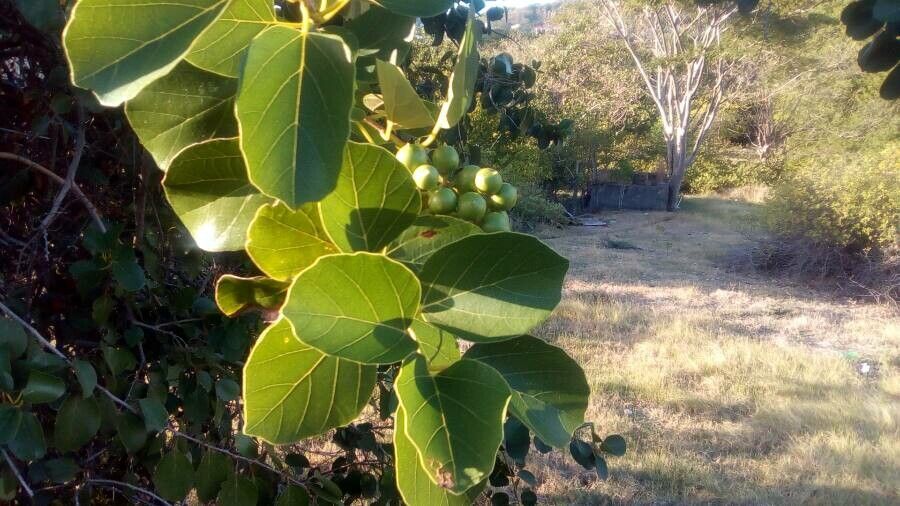
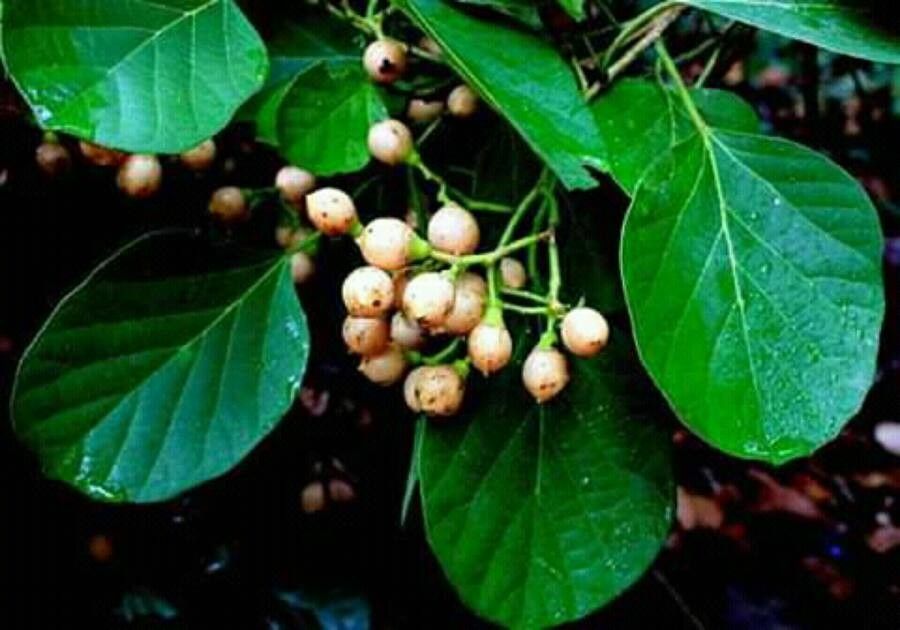
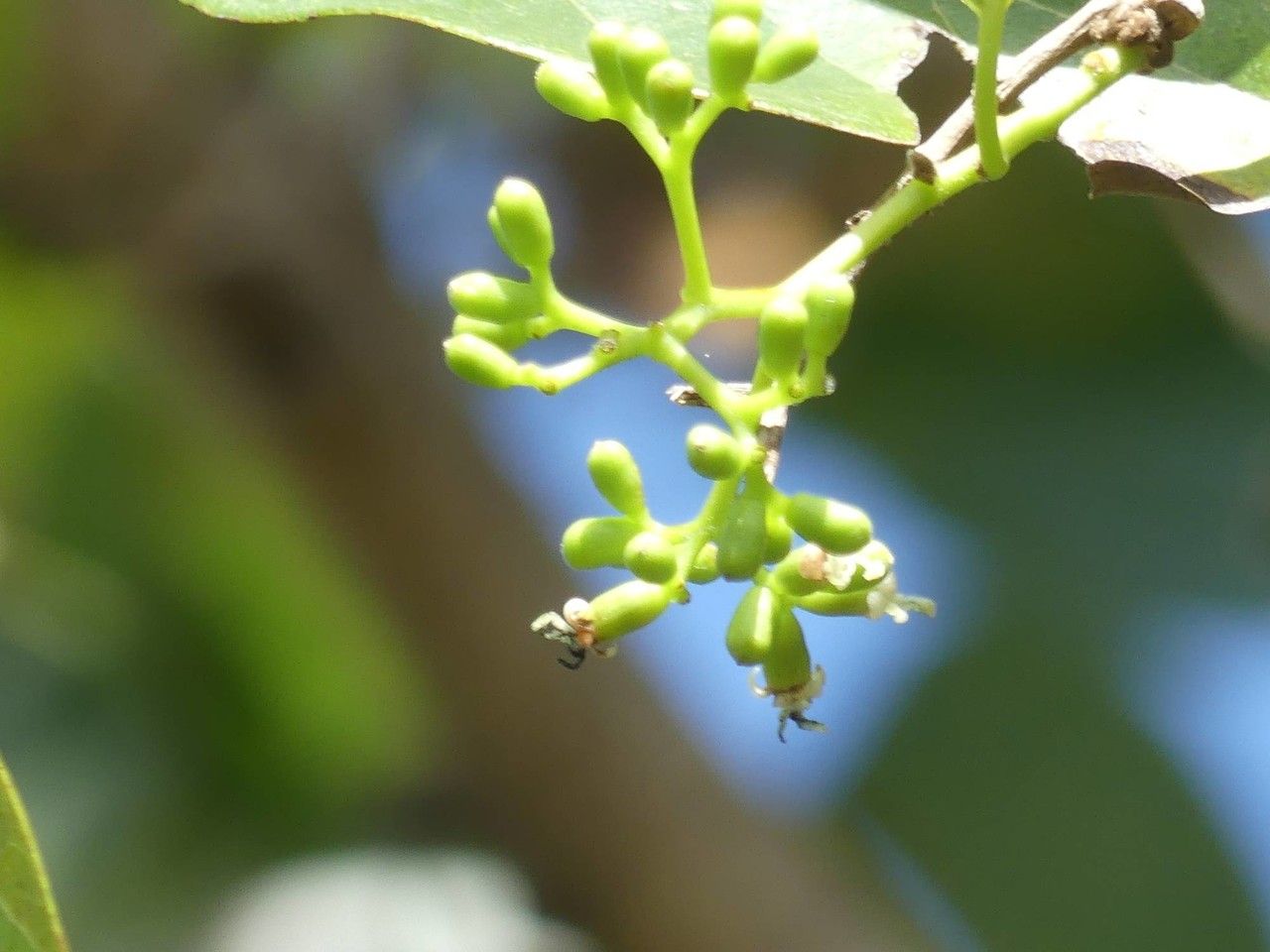
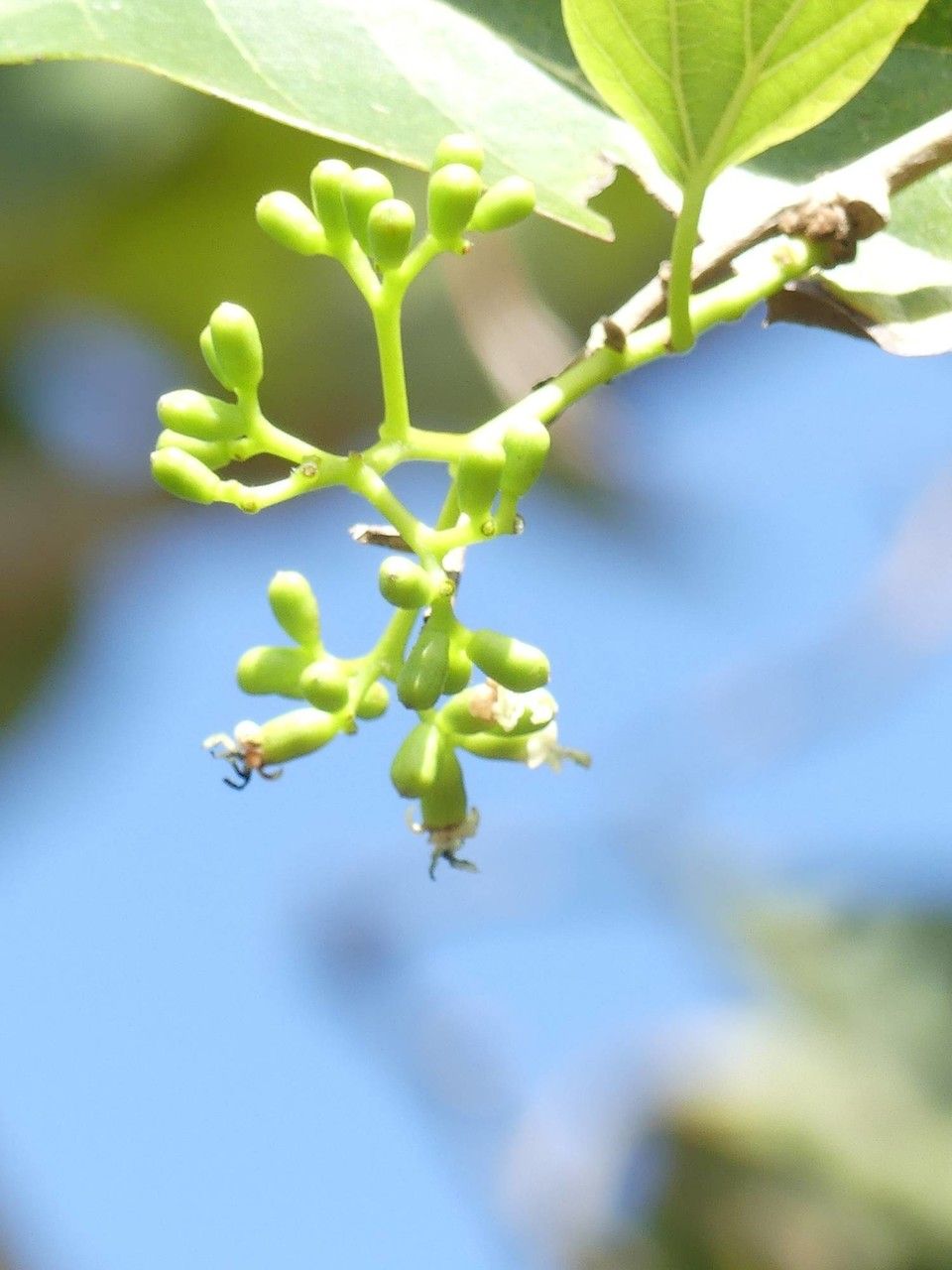
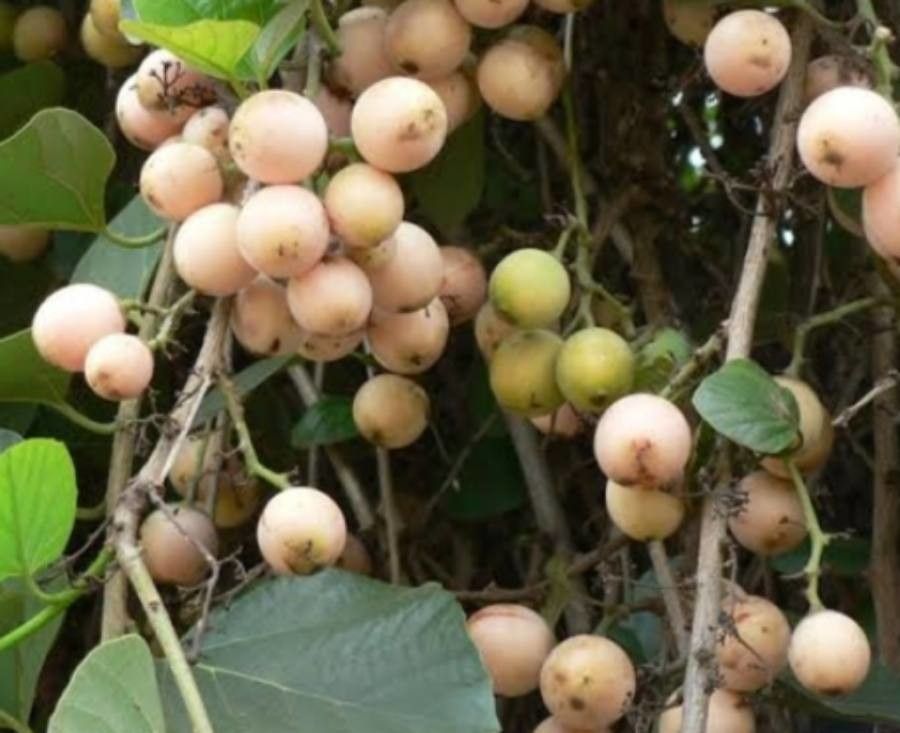
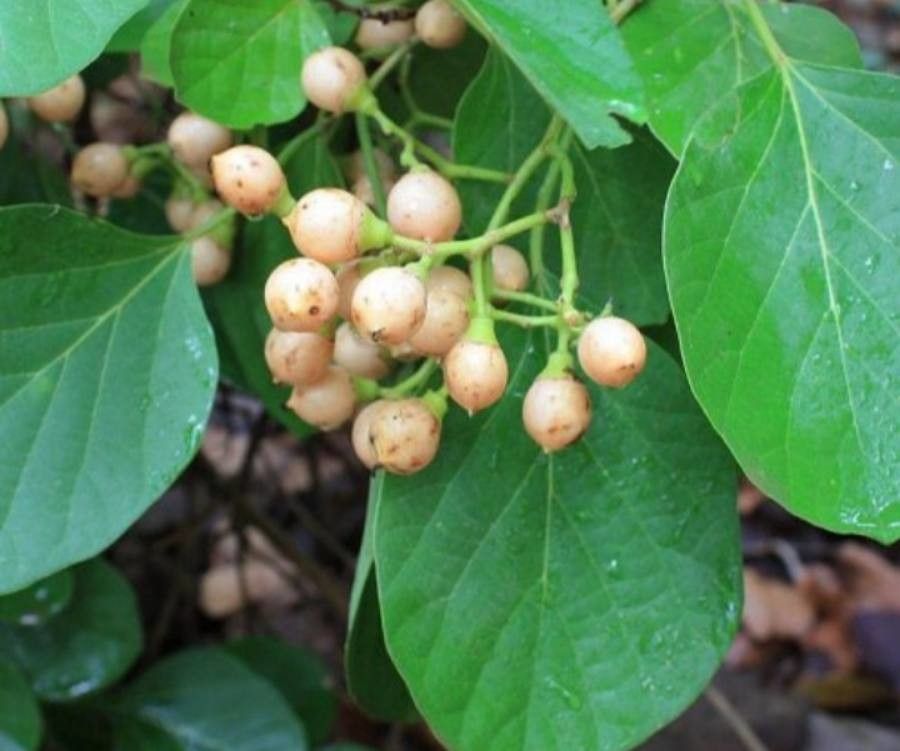
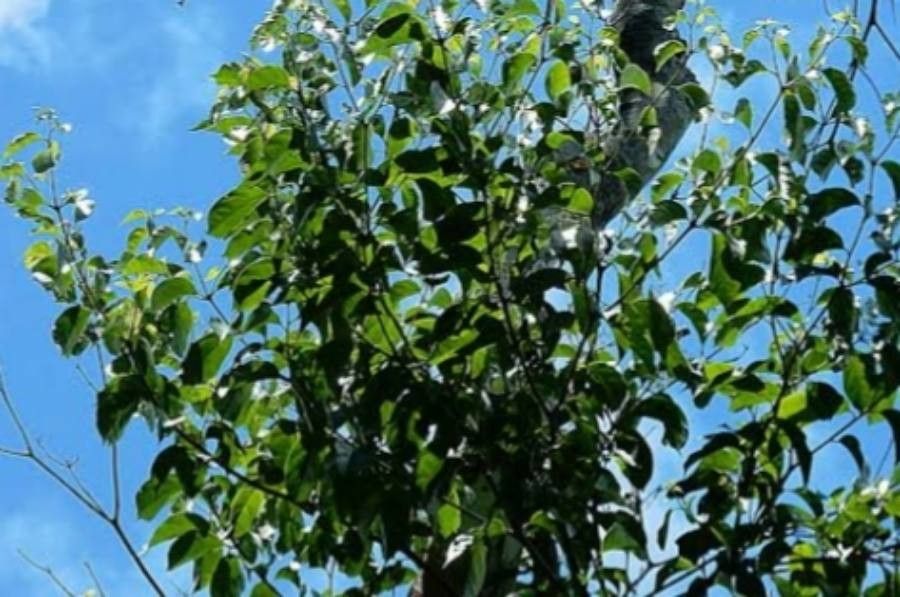
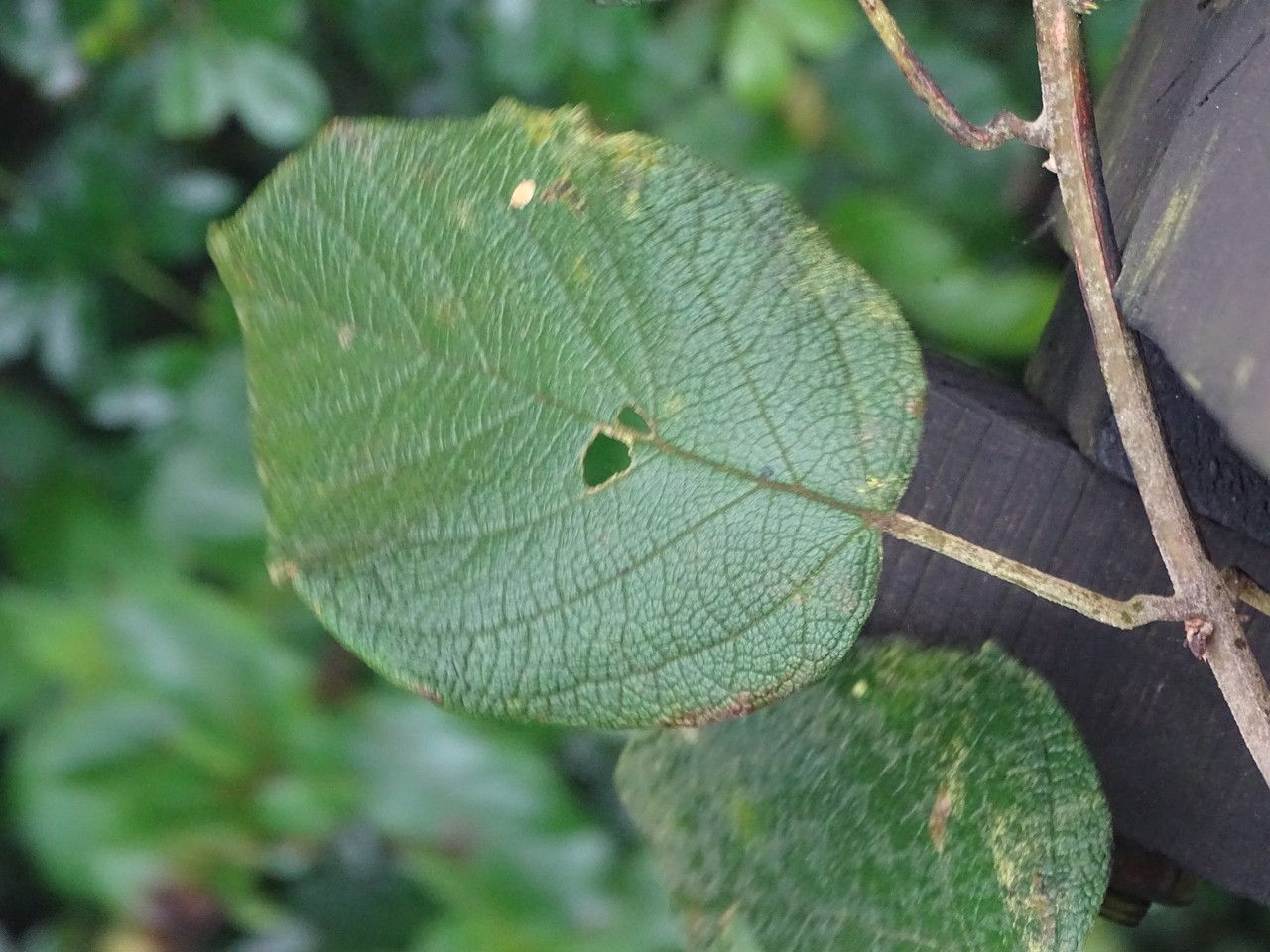
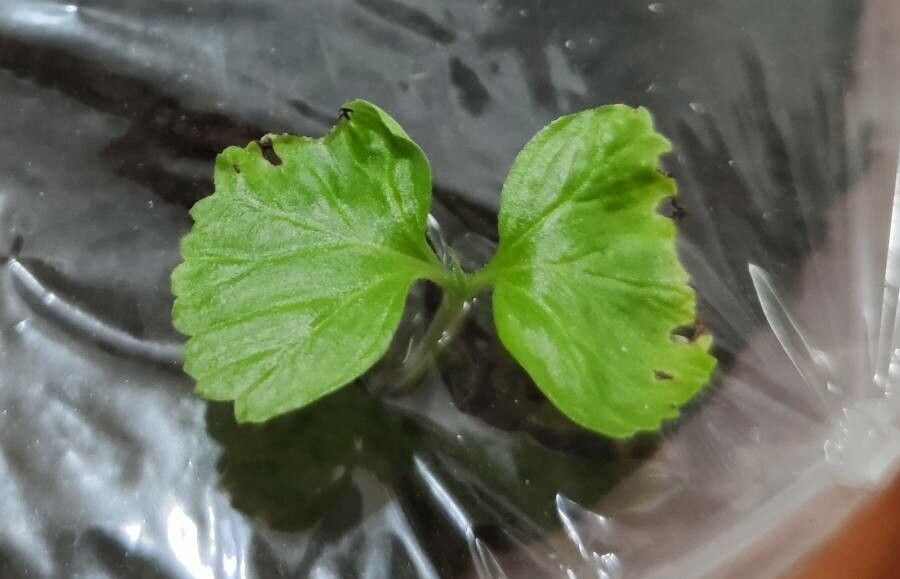
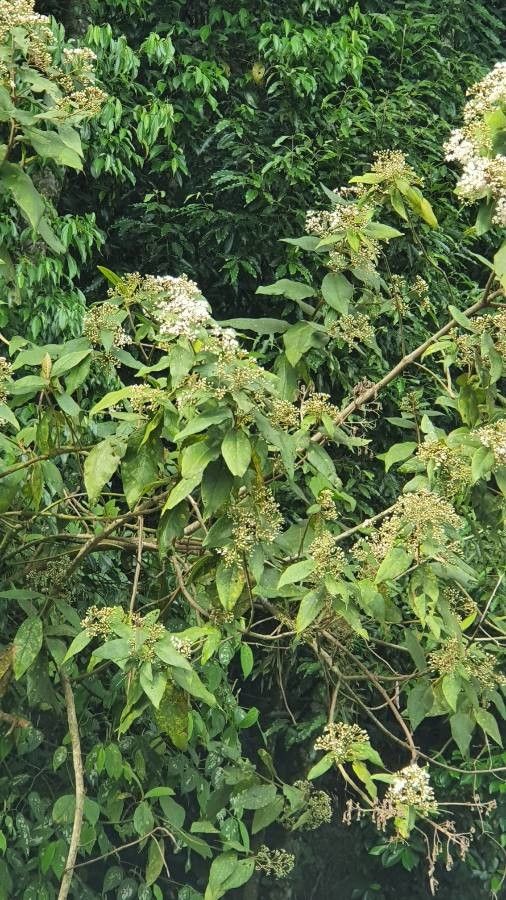
Cordia myxa, the Assyrian plum, is a mid-sized, deciduous tree in the borage family (Boraginaceae), native to Asia. It produces small, edible fruit and is found in warmer areas across Africa and Asia. Other common names include lasura, laveda, pidar, panugeri, naruvilli, geduri, spistan, burgund dulu wanan and ntege. It is found growing primarily in Asia, as well as, across the globe especially in tropical regions having the right type of geophysical environment. It is seen coming up naturally and growing abundantly from Myanmar in the east to Lebanon and Syria in the west. Its habitat starts at about 200 m above mean sea level in the plains and ascends to an altitude around 1,500 m in the hills.
Assyrian plum shows strong resistance to disease and is typically not susceptible to illnesses. Regarding care, this species is fairly low-maintenance. When grown outdoors it needs only minimal watering, and larger specimens usually do not require pruning. However, smaller specimens should be pruned after they finish blooming. Assyrian plumt is appropriate for anyone who has an outdoor area, such as a garden or a deck, and it does not demand extensive gardening experience.
How to keep Cordia Myxa.
Light
The Assyrian plum is native to open habitats, like sunny meadows and forest margins, where there is abundant light. It does best in full sun but can also tolerate partial sun, adapting well to different light conditions.
Temperature
The Assyrian plum comes from tropical areas, where the climate is generally warm and humid. As a result, it is well adapted to high heat and humidity. It does poorly with sudden temperature shifts and prefers a consistent temperature, so avoiding indoor temperature fluctuations is important. It typically cannot tolerate cold and needs warmer conditions to grow. If the surrounding temperature falls too low, the plant may stop growing or even die.
Fertilizer
Use organic fertilizers (e.g., fish emulsion, compost) rather than chemical ones for Assyrian plum. Provide higher levels of nitrogen and phosphorus to young plants in spring. Incorporate compost or fertilizer into the soil before or after planting. For mature plants, supplement in spring with a balanced fertilizer or one aimed at specific deficiencies. Nutrient deficiency causes small leaves, short branches, yellow or bronze foliage, acidic fruits, premature fruit fall, and splitting.
Botanical profile.
- Plant Type
- Tree, Shrub
- Life Cycle
- Perennial
- Genus
- Cordia
- Family
- Boraginaceae
- Hardiness Zone
- 9-11
- Mature Height
- 10.06 m to 14.94 m
- Mature Spread
- 7.92 m to 11.89 m
- Leaf Color
- Green, Dark Green
- Leaf Type
- Evergreen
- Flower Color
- White
- Flower Size
- 0.51 cm to 0.76 cm
- Bloom Time
- Late spring, Early summer
- Planting Time
- Summer
- Harvest Time
- Mid summer, Late summer, Early fall
- Native Area
- Sri Lanka, India, Vietnam, Myanmar, Pakistan, Laos, Thailand
Other names.