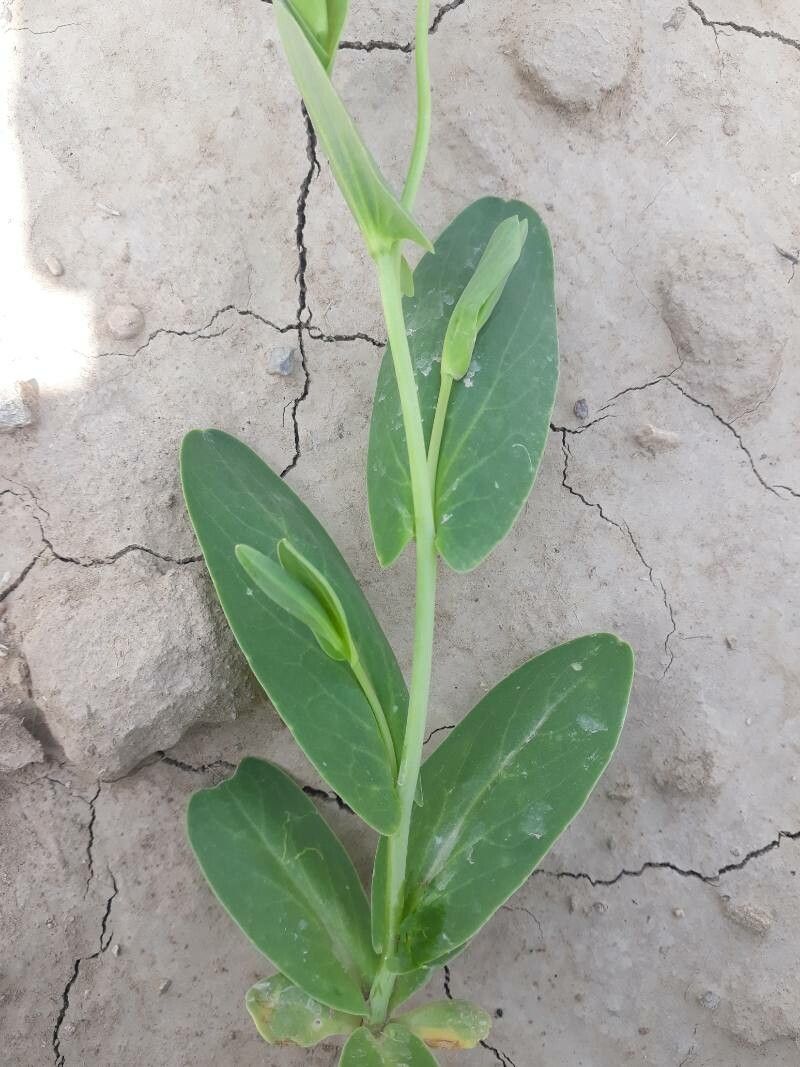
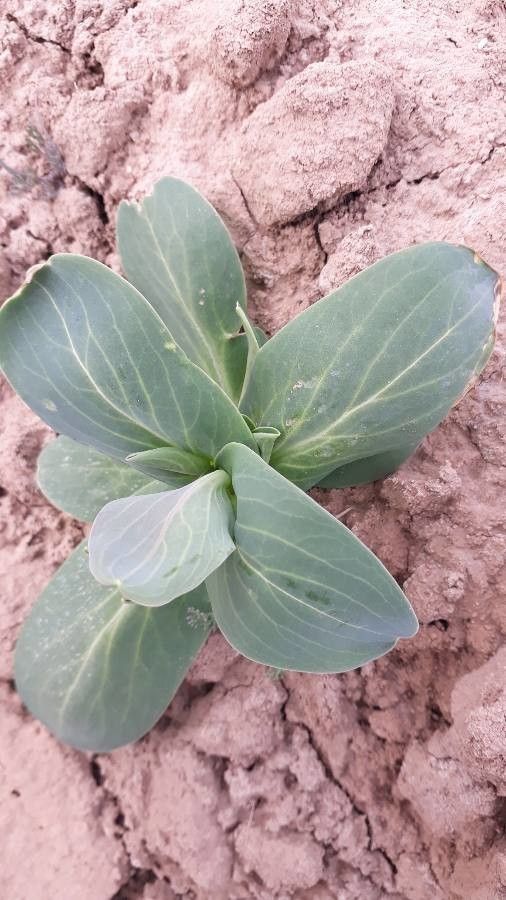
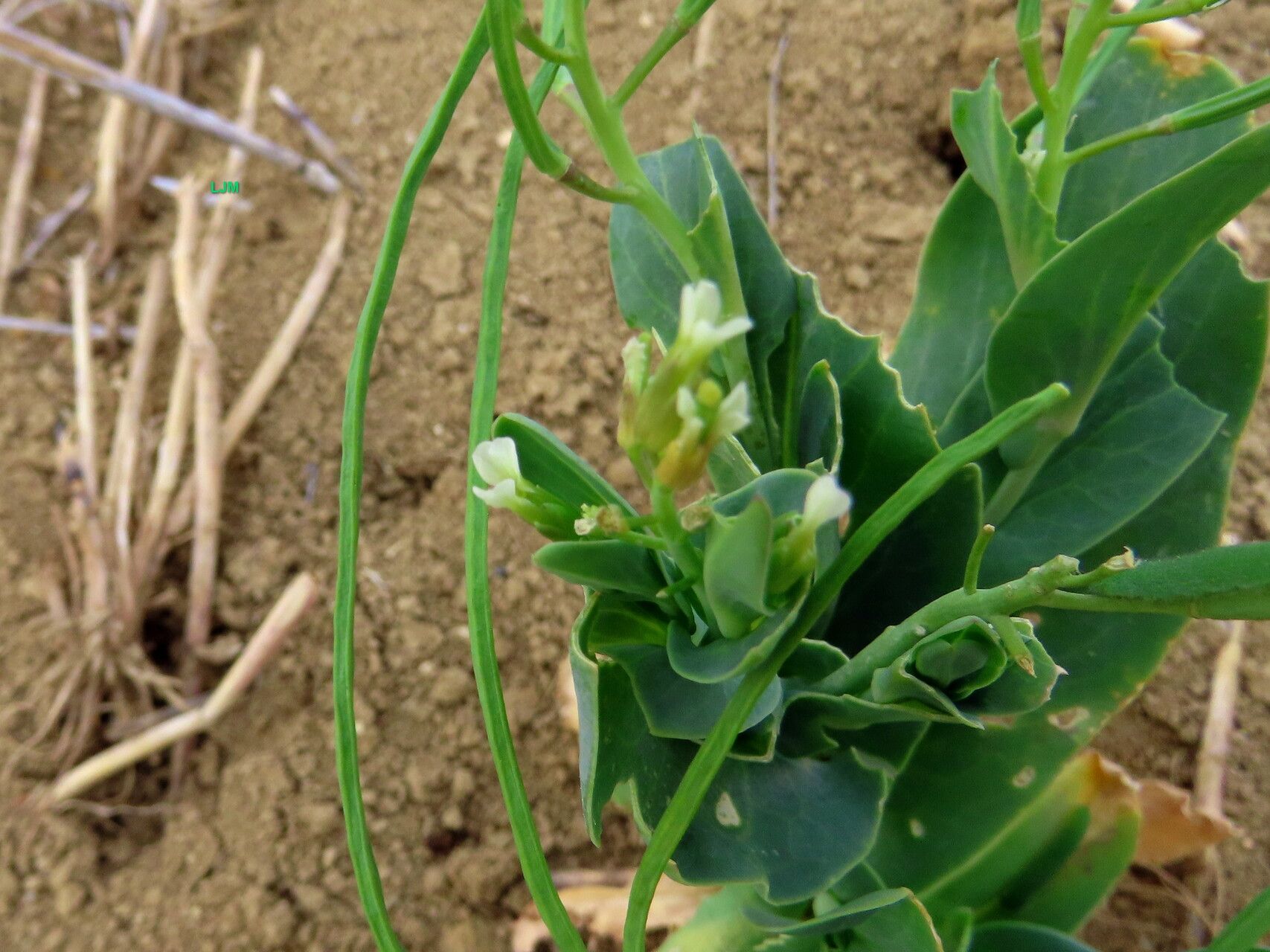
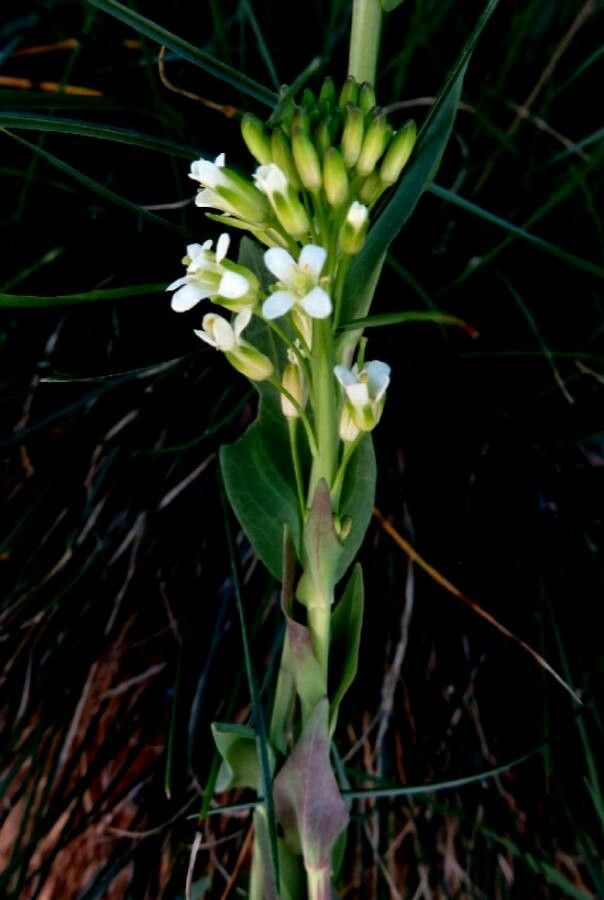
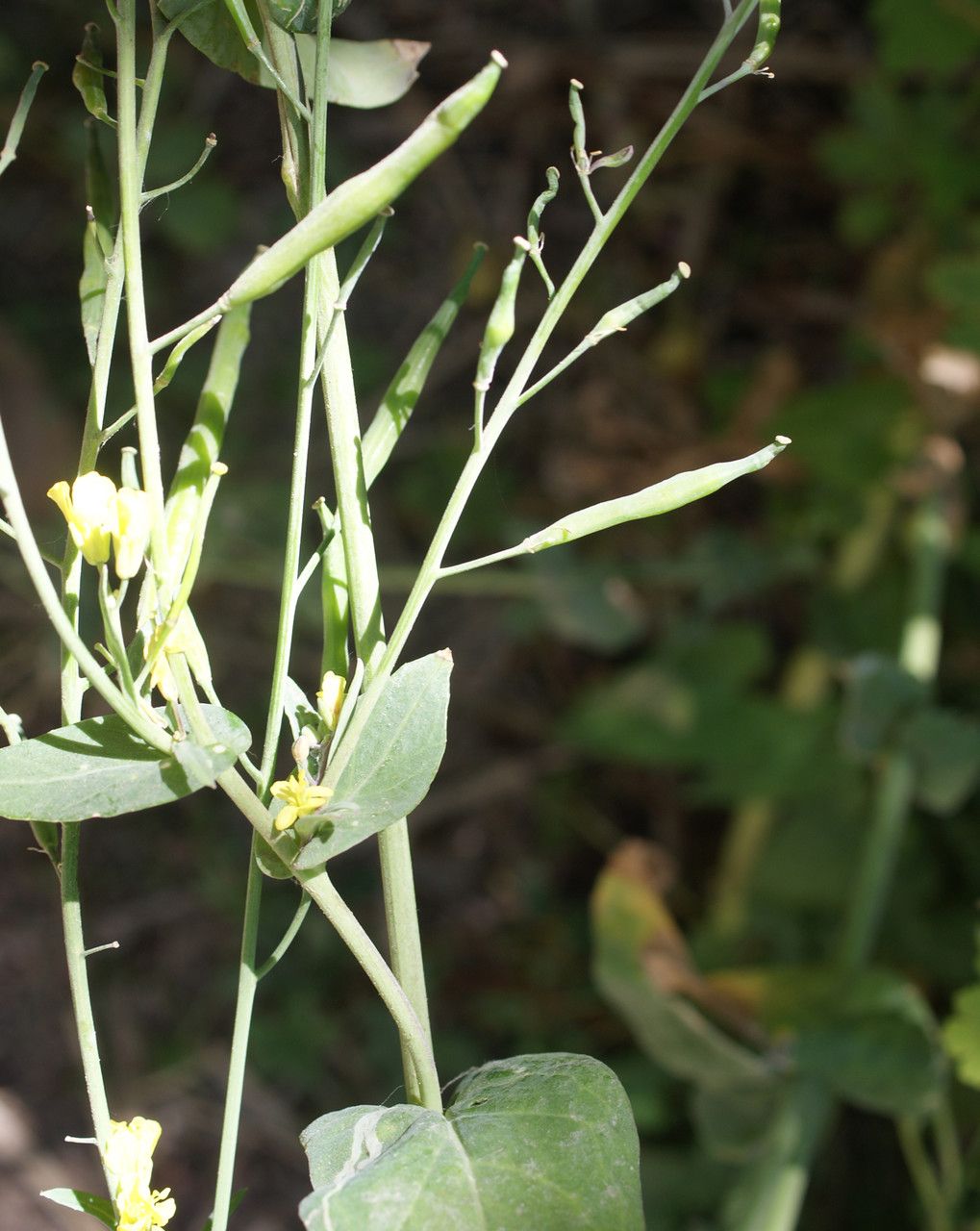
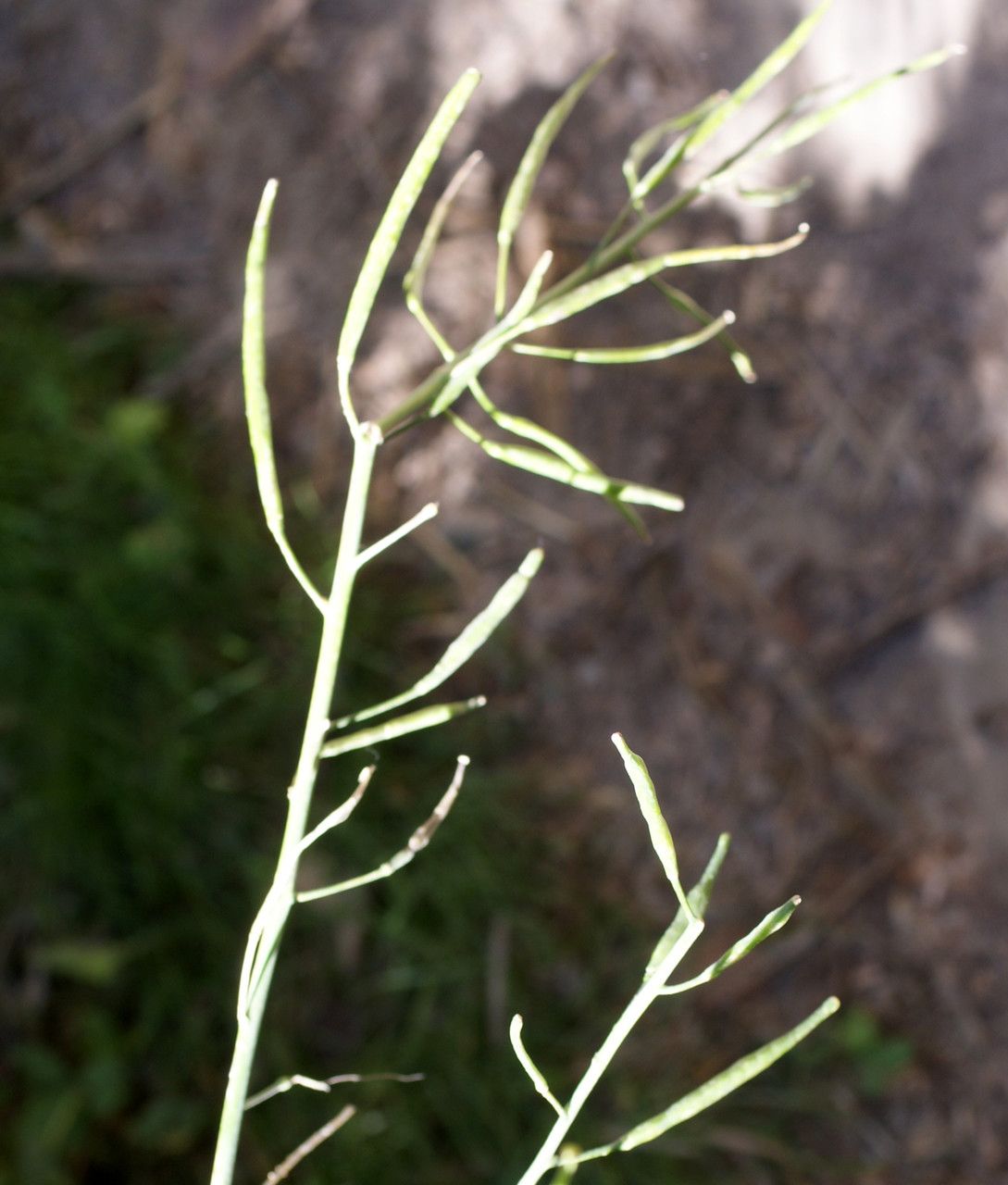
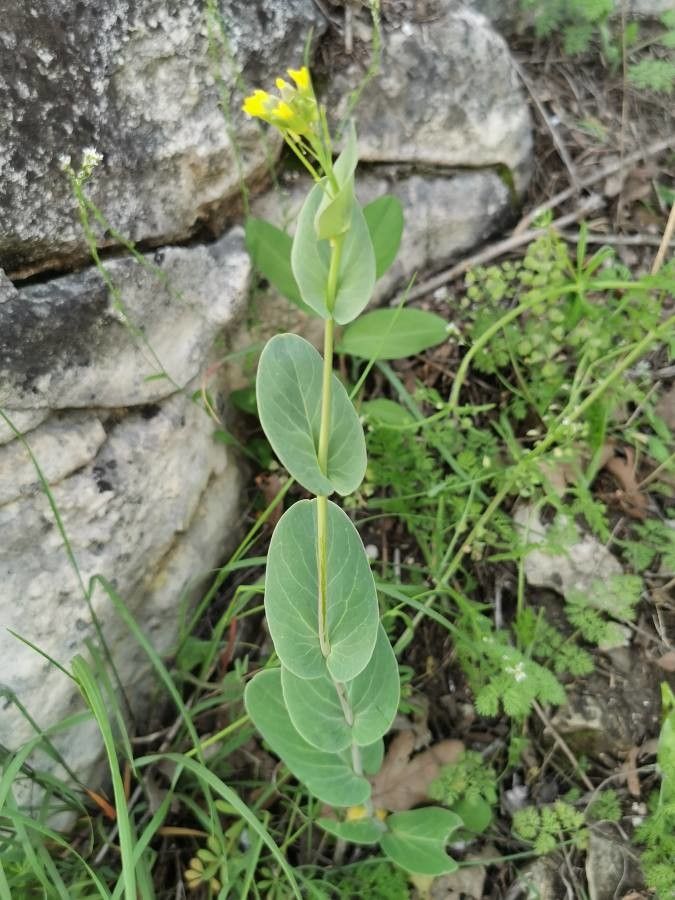
Conringia orientalis is a species of flowering plant in the mustard family known by the common name hare's ear mustard. It is native to Eurasia but it is known elsewhere as an introduced species and sometimes a noxious weed. It is weedy in its native range and also in North America, where it is a widespread invasive species, especially in central Canada.It is an annual herb producing an unbranched erect stem 30 to 70 centimetres (12 to 28 inches) in height. The thick, waxy leaves are generally oval in shape, up to 9 centimetres (3+1⁄2 inches) long, and clasp the stem at their bases. The flower is enclosed in pointed sepals and has yellow, clawed petals about 1 centimetre (1⁄3 inch) long. The fruit is a beaded silique up to 13 centimetres (5 inches) long. The plant is known to be toxic to livestock.
Hare's ear mustard has good disease resistance and is generally not prone to illnesses. However, it can be susceptible to pests and diseases present in its surroundings. These infections are usually mild. Regarding care, this plant requires moderate maintenance. It needs regular pruning to maintain a tidy appearance and healthy growth. Fertilizing can also help encourage flowering. Hare's ear mustard is suitable for anyone with outdoor space, such as a garden or patio, and does not demand extensive care experience. It may require more attention when grown indoors.
How to keep Conringia Orientalis.
Light
Hare's ear mustard prospers when it receives direct, unobstructed sunlight. It does well in its native habitat that has abundant sun. Too little light can reduce its vigor, while too much exposure can cause scorching. At every stage of its growth, it favors consistent, uninterrupted sunlight.
Water
Hare's ear mustard flourishes in temperate regions, where it enjoys moderate moisture with short periods of dryness. It needs to be watered weekly to prevent waterlogging. As an outdoor plant, hare's ear mustard adapts well to seasonal rainfall. It efficiently absorbs water during wet periods and conserves it during droughts.
Temperature
Hare's ear mustard is native to temperate climates and prefers temperatures from 68 to 95 °F (20 to 35 ℃). During colder periods it should be protected, and in hot conditions ensure it receives adequate moisture.
Fertilizer
Hare's ear mustard does well with regular, light applications of fertilizer to encourage healthy leaf growth. You should fertilize Hare's ear mustard about once a month during the summer. Nitrogen is important for foliage, and providing nitrogen-rich sources helps Hare's ear mustard thrive.
Pruning
Hare's ear mustard is an annual plant characterized by slender stems and yellow flowers. It thrives when properly pruned in the spring. To ensure healthy growth, remove any dead stems and thin out dense areas to improve air circulation. This practice helps reduce the risk of disease and promotes better growth. For detailed care instructions, consider consulting reliable sources such as the Royal Horticultural Society (RHS).
Botanical profile.
- Plant Type
- Herb
- Life Cycle
- Annual
- Genus
- Conringia
- Family
- Brassicaceae
- Hardiness Zone
- 7-10
- Mature Height
- 30 cm to 61 cm
- Mature Spread
- 20 cm to 40 cm
- Leaf Color
- Green Yellow, Light Green
- Leaf Type
- Semi-evergreen
- Flower Color
- White
- Flower Size
- 0.51 cm to 0.76 cm
- Bloom Time
- Spring
- Planting Time
- Spring, Summer
- Harvest Time
- Summer
- Native Area
- Libya, Egypt, Turkey, Austria, Slovakia, Montenegro, Pakistan, Croatia, Slovenia, Morocco, Belarus, Uzbekistan, Russia, Germany, Romania, Tajikistan, Tunisia, Czech Republic, Cyprus, Bulgaria, Poland, Armenia, Greece, Ukraine, Lebanon, Serbia, Afghanistan, Kyrgyzstan, Kazakhstan, Italy, Spain, Iran, Albania, Azerbaijan, Algeria, Hungary, Turkmenistan
Other names.
Reader questions.
What are the sunlight requirements for Hare's ear mustard?
Hare's ear mustard requires above 6 hours of sunlight daily to thrive. Observing how sunlight moves through your garden can help you choose spots that provide a good balance of light and shade, ensuring the plants' health and happiness. In its natural habitat, Hare's ear mustard is accustomed to unobstructed sun rays, and its vigor diminishes with inadequate sunlight, while excessive exposure can lead to scorching. Regardless of its growth stage, it enjoys consistent sunlight exposure.
What is the ideal temperature range for growing Hare's ear mustard?
Hare's ear mustard, or Conringia orientalis, thrives in temperate climates with ideal temperatures ranging from 68 to 95°F (20 to 35°C). It exhibits strong cold resistance and typically doesn't require special frost protection measures during winter. However, in regions where winter temperatures are expected to fall below 15°C, measures to protect the plant from cold should be taken, such as covering it with soil or straw. To prepare for winter, it's advisable to water the plant abundantly before the first freeze of autumn, ensuring the soil remains moist and can freeze in that state. This preparation helps in preventing drought and water scarcity for the plant during the colder months and early spring.
How can artificial lighting support indoor plants, and what are the specifics for optimal growth?
Indoor plants, including Hare's ear mustard, require adequate lighting for optimal growth, especially when natural sunlight is insufficient. Artificial lights, like LED lights, are a popular choice because they can be tailored to provide the specific wavelengths of light needed by plants. For full sun, plants require 30-50W/sq ft; partial sun plants need 20-30W/sq ft; and full shade plants require 10-20W/sq ft of artificial light. The appropriate distance for the light source is 12-36 inches above the plant, mimicking natural sunlight. Most plants need 8-12 hours of light per day to mimic natural daylight hours.
How does low temperature affect Hare's ear mustard and what are the solutions?
Hare's ear mustard is cold-tolerant and fares best when temperatures stay above 20°C. Although it can withstand low temperatures, during winters where thermometers read below 0°C, and especially below -15°C, the plant may face decreased sprouting or fail to sprout at all in the following spring. To combat this, gardeners should remove any parts of the plant that have failed to sprout when spring arrives, allowing for healthier growth of the remainder.
What are the symptoms of light deficiency or excessive exposure in Hare's ear mustard?
Symptoms of light deficiency in Hare's ear mustard include small leaves, leggy or sparse growth, faster leaf drop, slower or no new growth, along with lighter-colored new leaves. On the other hand, excessive sunlight can cause chlorosis, where leaves turn yellow due to chlorophyll breakdown, sunscald with damaged plant tissues, leaf curling as a defense against water loss, wilting from excessive water loss due to transpiration, and leaf scorching, characterized by brown or crispy leaf edges. These indicators help identify the plant's need for adjusting light exposure.
How does high temperature affect Hare's ear mustard and what are the solutions?
During the hotter months, it's crucial to keep Hare's ear mustard's environment below 35°C to avoid stress from high temperatures. When exposed to temperatures exceeding 41°C, the plant's leaves may show signs of distress, such as becoming lighter in color, curling, and being prone to sunburn. In more severe cases, the plant can wilt and dry out completely. To mitigate these effects, affected parts should be trimmed away. The plant should be moved to a shaded location or covered with a shade cloth to protect it from the midday and afternoon sun. Additionally, watering the plant during cooler times of the day, like morning and evening, can help keep the soil appropriately moist and the plant healthy.
What solutions can address light-related issues for Hare's ear mustard?
To optimize Hare's ear mustard's growth, gradually acclimate it to sunlight by moving it to a sunnier location each week until it gets at least 6 hours of direct sunlight daily. Use south-facing windows and consider artificial lighting if natural light is insufficient, keeping lights on for at least 8 hours a day. For outdoor plants, ensure a gradual transition to avoid sunburn. Reducing obstructions and transplanting smaller plants to sunnier locations can also improve sunlight exposure. Note, previously affected parts may not recover, but new growth will be healthy following these adjustments.