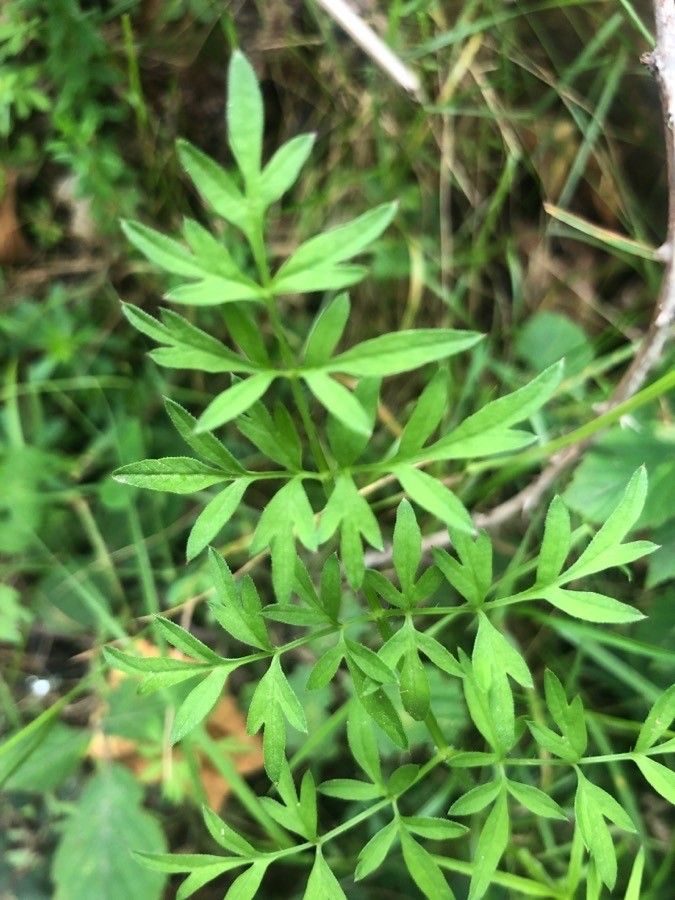
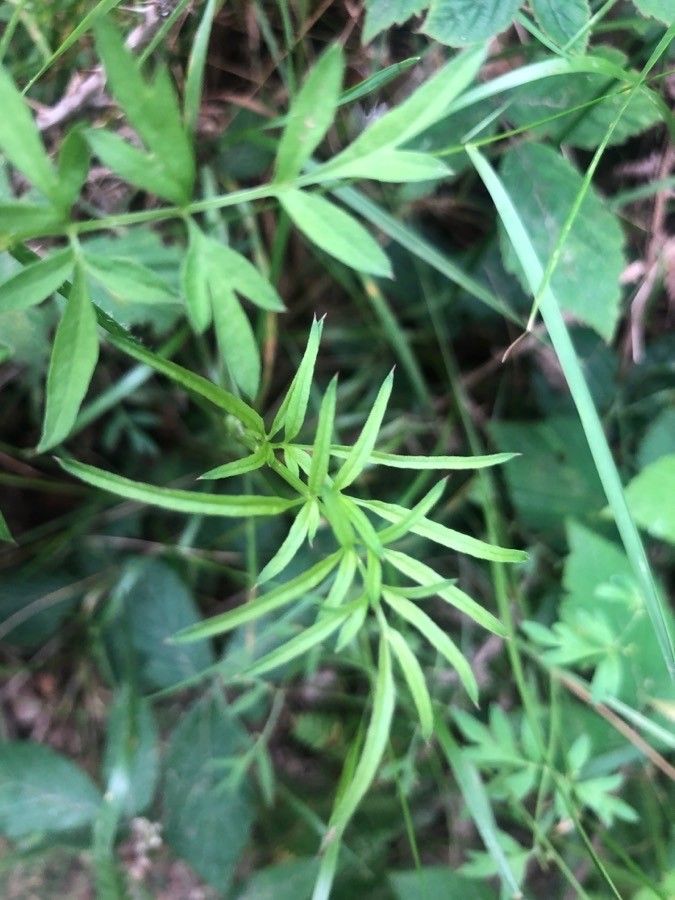
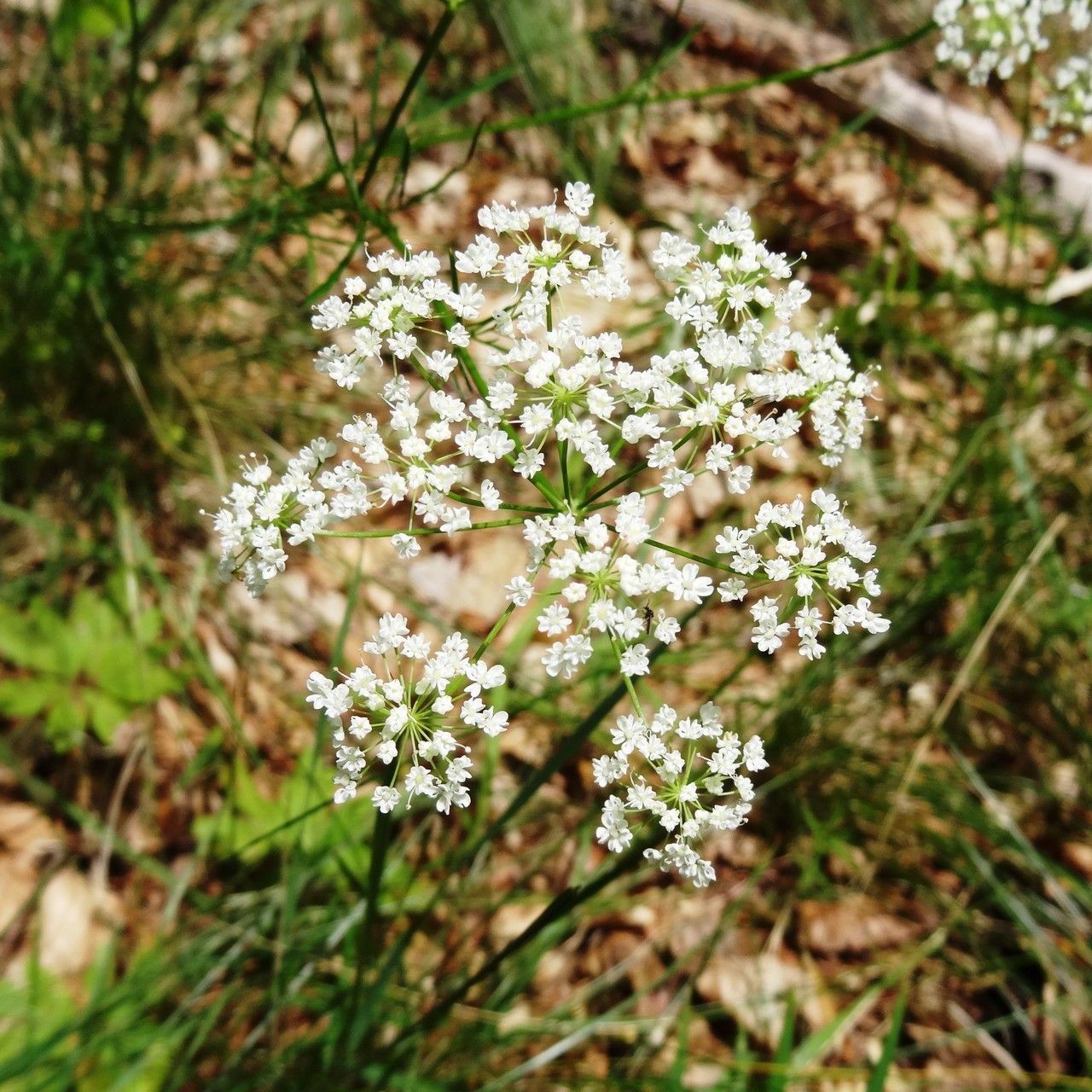
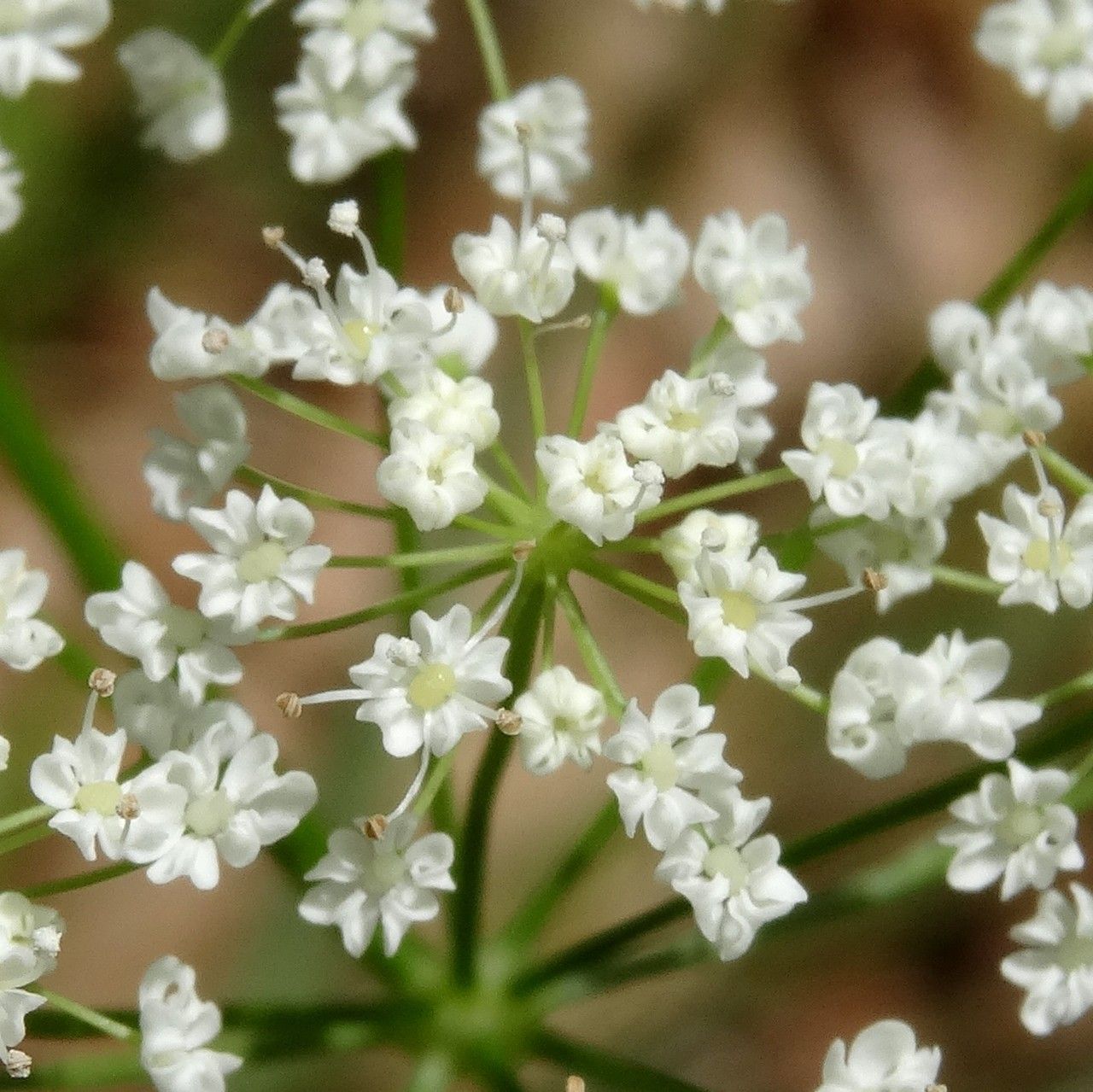
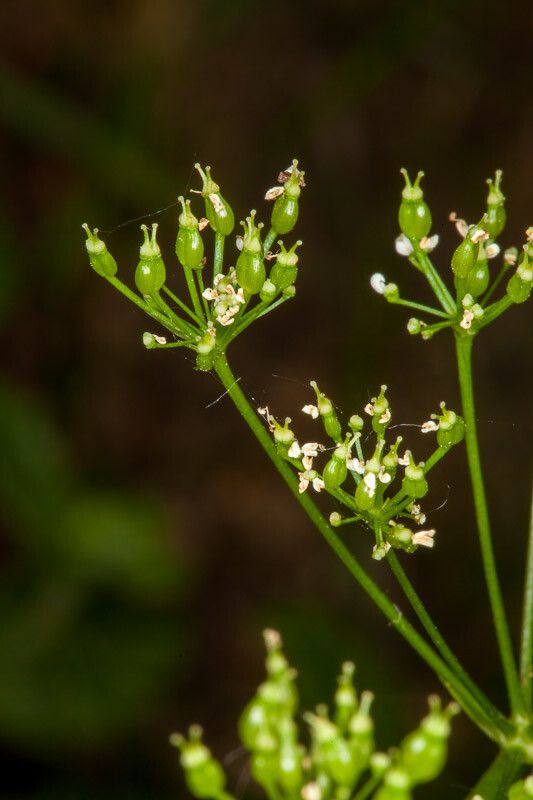
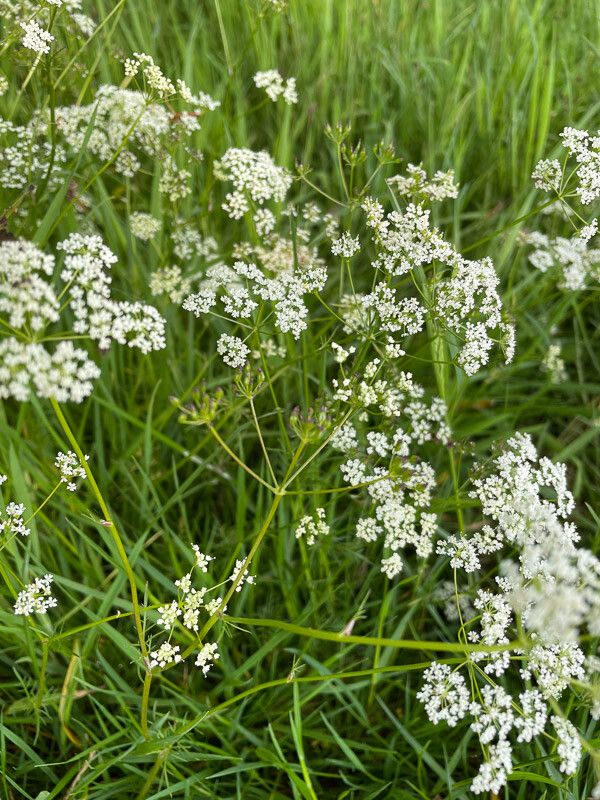
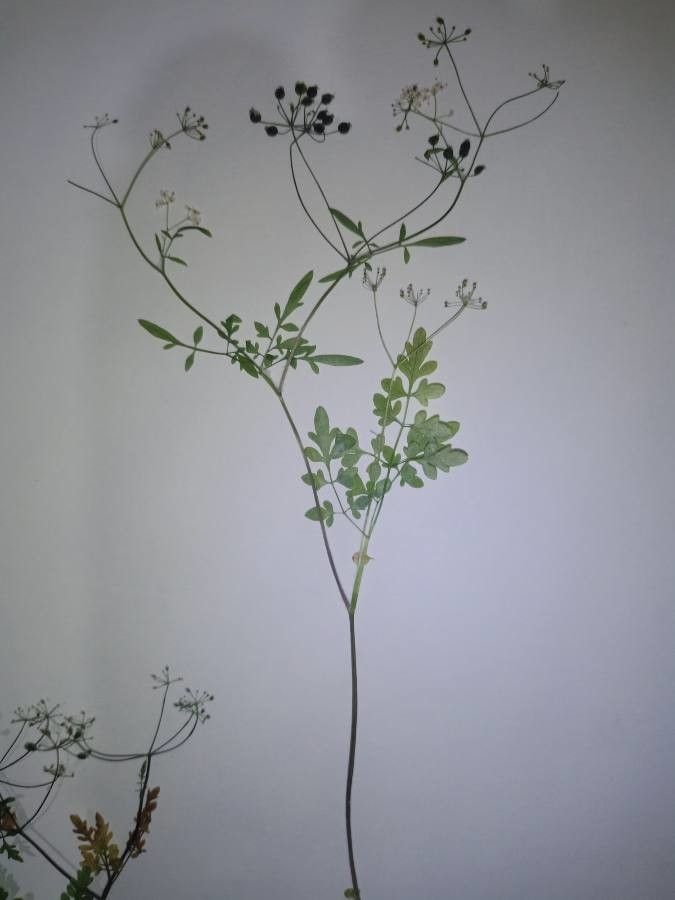
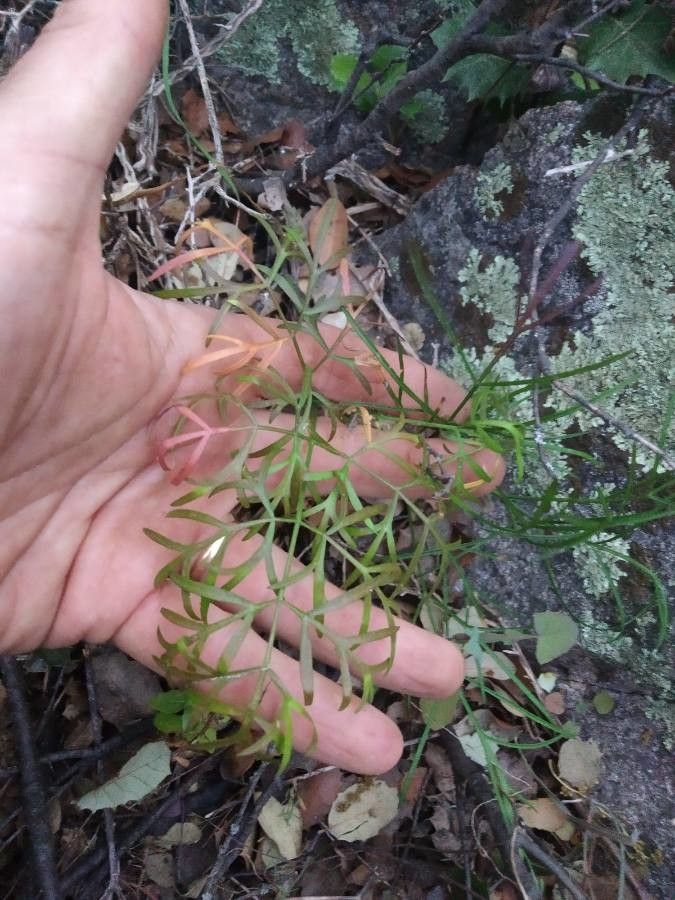
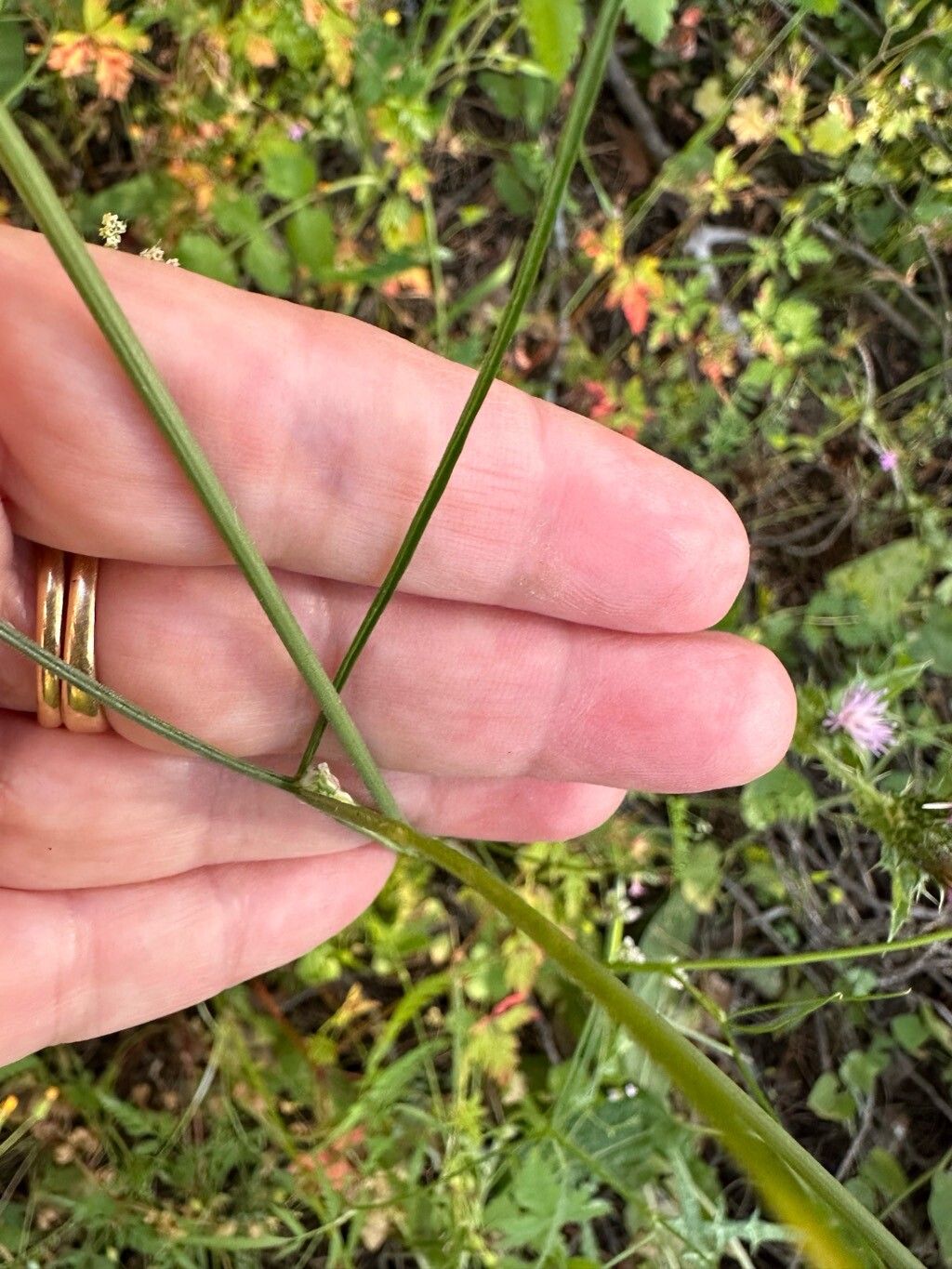
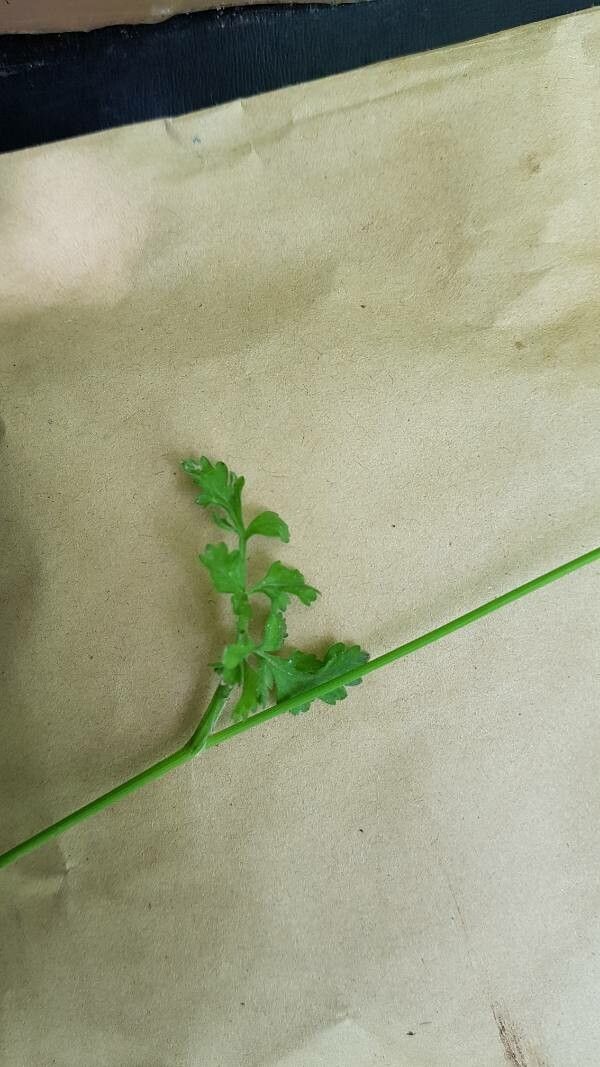
Conopodium majus is a perennial herbaceous flowering plant in the celery family Apiaceae. Its underground part resembles a chestnut and is sometimes eaten as a wild or cultivated root vegetable. The plant has many English names (many of them shared with Bunium bulbocastanum, a related plant with similar appearance and uses) variously including kippernut, cipernut, arnut, jarnut, hawknut, earth chestnut, groundnut, and earthnut. From its popularity with pigs come the names pignut, hognut, and more indirectly Saint Anthony's nut, for Anthony the Great or Anthony of Padua, both patron saints of swineherds. (See groundnut, earthnut, and hognut for other plants which share these names.)
Kippernut has moderate resistance to disease and can be prone to problems such as leaf spot. Its vulnerability to insect pests varies by variety, although most varieties are less resistant to pests. For care, Kippernut needs regular watering and fertilizing, and yellow leaves should be pruned frequently. It is important to control pests and diseases when they occur and to harvest the plant promptly. Kippernut is suitable for people who can give some time and effort to regular maintenance.
How to keep Conopodium Majus.
Light
Kippernut does best when it receives abundant light for most of the day, though it can adapt and grow in places with somewhat less light. This sun-loving plant, native to a brightly lit habitat, may become stunted or lose vigor if light is too low or too high.
Water
The Kippernut thrives in consistent moisture and needs to be watered weekly to mimic its natural habitat. It grows best outdoors during a growing season that aligns with local rain patterns, which ensures it stays well-hydrated for healthy growth.
Temperature
Kippernut prefers moderate temperatures, roughly the range most people find comfortable. It does best in conditions that are neither excessively hot nor too cold. The chief problem with high temperatures is the risk of sunburn, so providing some shade in summer is advisable to avoid excessive heat. When temperatures fall, Kippernut becomes dormant. If continuous growth is wanted, warmer conditions must be kept during winter. Frost can damage the plant and should be avoided.
Fertilizer
Kippernut species do well with one or two applications of organic, natural fertilizers that provide potassium and phosphorus. Apply the fertilizer before planting, incorporate it into the soil and water thoroughly. Usually a single application is enough, but a second can be applied once seedlings are established. Avoid overusing fertilizer to prevent damage to the plants.
Pruning
The kippernut plant features delicate clusters of white flowers and tuberous roots. To enhance its health and ensure robust growth, it's best to prune the kippernut from early to late spring. Remove weak stems and spent flowers during this time. This not only promotes vitality but also reduces the risk of disease. For the best results, use clean and sharp tools when pruning.
Botanical profile.
- Plant Type
- Herb
- Life Cycle
- Perennial
- Genus
- Conopodium
- Family
- Apiaceae
- Hardiness Zone
- 5-10
- Mature Height
- 91 cm
- Mature Spread
- 30 cm
- Leaf Color
- Green
- Leaf Type
- Deciduous
- Flower Color
- White
- Flower Size
- 3.05 cm to 6.35 cm
- Bloom Time
- Mid spring, Late spring, Early summer
- Planting Time
- Spring, Summer, Autumn
- Harvest Time
- Mid summer, Late summer, Early fall
Other names.
Reader questions.
How should I water my Kippernut plant?
To properly water the Kippernut plant, it's best to use filtered water at room temperature. Tap water may contain harmful particles that can affect the plant's health. It's important for the water to be at room temperature, or slightly warmer, because the Kippernut is accustomed to warm environments and cold water may shock it. Instead of overhead watering, it's recommended to apply filtered room temperature water directly to the soil until it is completely soaked. Soaking the soil is beneficial as it helps moisturize the roots and facilitates their spread through the soil for nutrient absorption.
Why should I put fertilizer on my Kippernut?
The majority of the Kippernut's structure is made up of its leaves, and proper fertilization is key to ensuring that these leaves not only look good but also fulfill their purpose effectively. By fertilizing your Kippernut correctly, you can maintain consistent leaf color and promote a healthy texture. Additionally, fertilization has benefits that extend beyond the surface, as it helps the Kippernut develop new roots and maintain existing ones underground. This means that fertilization not only keeps your plant healthy now but also improves its ability to absorb nutrients from the soil in the future.
What are the sunlight requirements for Kippernut?
Kippernut plants thrive best under full sun conditions, which means they need above 6 hours of sunlight daily. However, they can also grow in partial sun, receiving about 3-6 hours of sunlight. It's important to observe how sunlight moves through your garden over the day to find locations that provide an ideal balance of light and shade, ensuring the plants' optimal growth and happiness.
What is Kippernut?
Kippernut, known botanically as Conopodium majus, is a plant species. However, this entry does not include details on its uses, characteristics, or any additional information. To learn more about Kippernut, one might consider exploring botanical or horticultural resources that provide comprehensive data on various plant species.
What should I do if I give my Kippernut too much water or not enough water?
Taking care of your Kippernut requires understanding the impacts of overwatering and underwatering. While both can harm your plant, overwatering is more common. It causes wilting and yellowing of stems and leaves, as well as diseases like root rot, mold, and mildew that can be fatal. On the other hand, underwatering is less likely, given the Kippernut's drought tolerance. However, when it does happen, you'll notice brittle and brown leaves. It's essential to spot signs of overwatering early, as some diseases can't be reversed if neglected. Reduce watering immediately if you see signs and consider the soil's drainage. Replace poorly draining soil with loose, well-draining potting mix. If your Kippernut lacks water, increase your watering frequency until the signs disappear.
When should I fertilize my Kippernut tree?
If you grow your Kippernut outdoors every year, it will start growing new leaves in early spring. This is a signal that it's time to start fertilizing. Normally, a single application of fertilizer in the spring is enough for a Kippernut to do well. But, if you want to maximize its growth, you can fertilize it multiple times during spring and early summer. If you go with this approach, you can feed your Kippernut about once every month or month and a half.
How does Kippernut react to different lighting conditions?
Kippernut requires abundant light for the majority of the day to thrive, as it originates from brightly-lit natural habitats. It can adapt to somewhat less light, but insufficient or excessive light might lead to stunted growth or a lack of vitality. For indoor plants, when natural sunlight is limited, artificial lighting can be a viable solution to promote healthier growth. LED lights, with their customizable wavelengths, are recommended, with full sun plants needing 30-50W/sq ft, partial sun plants 20-30W/sq ft, and full shade plants 10-20W/sq ft of artificial light. It's crucial to provide the right distance (12-36 inches above the plant) and duration (mimicking natural daylight hours, typically 8-12 hours per day) of light exposure.
How frequently should I water my Kippernut?
If your Kippernut plant is in a pot, the most precise way to determine if it needs water is by checking the soil with your finger. If the top two to three inches of soil are dry, then it is time to add water. If you have planted your Kippernut outdoors in the ground, you can use a similar method to test the soil. When you find that the top few inches of soil have dried out, it is a sign that it needs water. Typically, during the spring and early fall, watering your Kippernut once a week should be sufficient using this method. However, during extremely hot weather, you may need to increase the frequency to about twice or more per week. It is worth noting that mature, well-established Kippernut plants have an admirable ability to withstand drought.
When is it not a good idea to put fertilizer on my Kippernut?
During the late fall and winter, your Kippernut goes into a dormant phase and stops growing. It's best to avoid fertilizing it during this time. In the spring and summer, if you choose to fertilize, gradually reduce the amount as summer approaches because the growth rate of your Kippernut will also slow down. It's generally not recommended to fertilize your Kippernut when the weather is unusually hot or the soil is extremely dry. Fertilizing in those conditions can stress the Kippernut and lead to premature death.
What are the signs of light deficiency in Kippernut?
Symptoms of light deficiency in Kippernut include smaller new leaves compared to older ones, leggy or sparse growth due to longer spaces between leaves or stems, faster dropping of older leaves as a conservation effort, slower or halted new growth, and lighter-colored or yellowing leaves indicating insufficient chlorophyll and nutrient uptake. Conversely, excessive sunlight can cause symptoms like chlorosis, sunscald, leaf curling, wilting, and leaf scorching, all of which negatively affect the plant's ability to photosynthesize and maintain health.
How much water does my plant need?
When watering your Kippernut plant, don't be afraid to give it a generous amount of water. Make sure the top two to three inches of soil are dry before watering, and then provide a thorough watering that saturates the entire soil. The water should be enough to cause excess water to flow out of the drainage holes at the bottom of the pot. If you don't see any excess water draining, it means you might not have given enough water. However, be careful not to let the water accumulate in the soil, as it can harm the plant. On the other hand, if water is not draining properly from the pot, it could indicate that the soil doesn't drain well, which is bad for the plant's health. Avoid this by ensuring the soil drains properly. If the plant is outside, it will only need about 1 inch of rain per week.
What kind of fertilizer does my Kippernut tree need?
Choosing the best fertilizer for a Kippernut is fortunately quite simple. These plants thrive on a general-purpose garden fertilizer with equal amounts of nitrogen, phosphorus, and potassium, like a 10-10-10 ratio. Avoid fertilizers with excessive nitrogen. Granular fertilizers that are slow-release are typically the best option for a Kippernut, as they are easy to apply to the soil. Using an organic soil amendment like compost can also be beneficial in feeding your Kippernut.