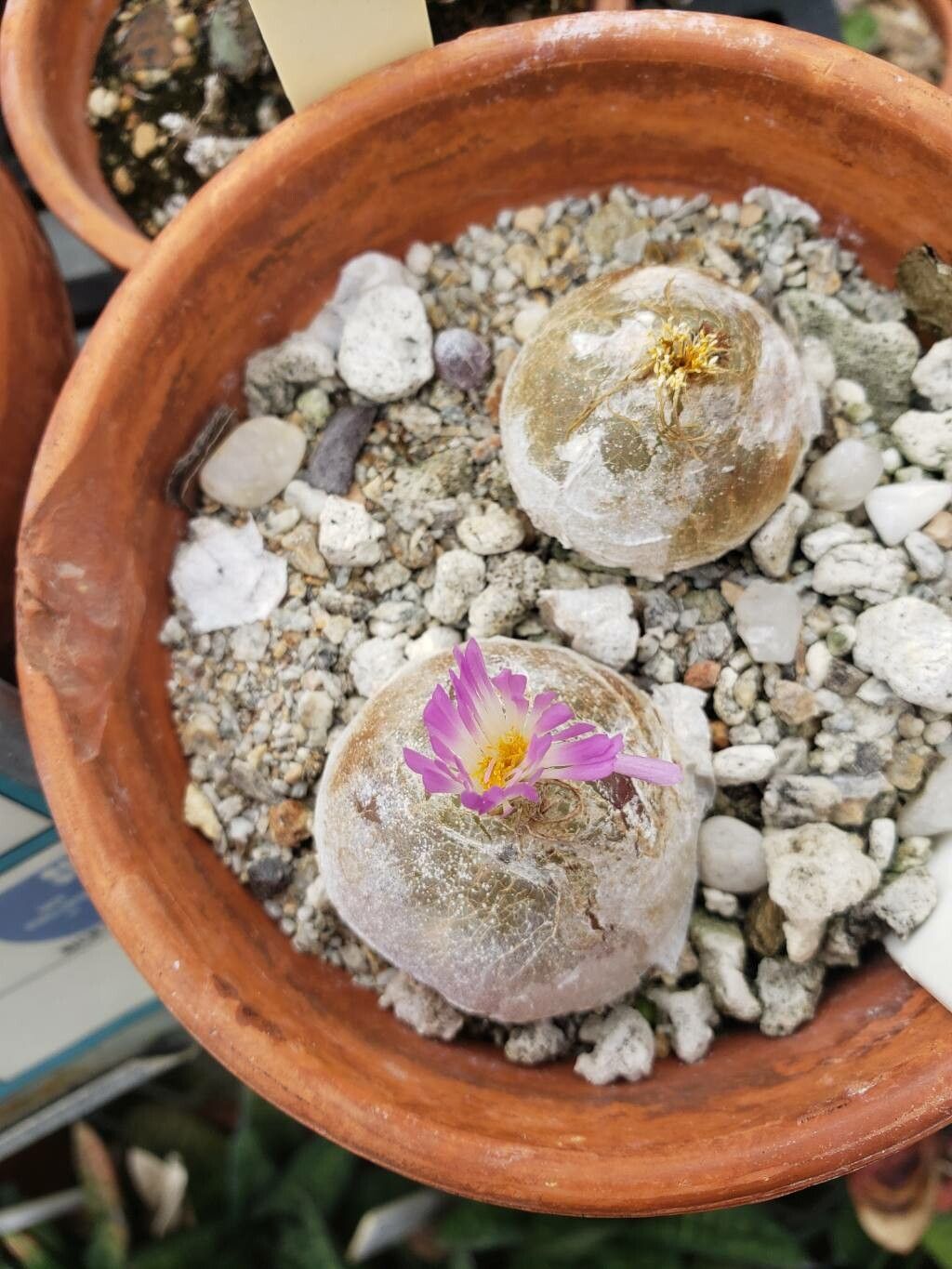
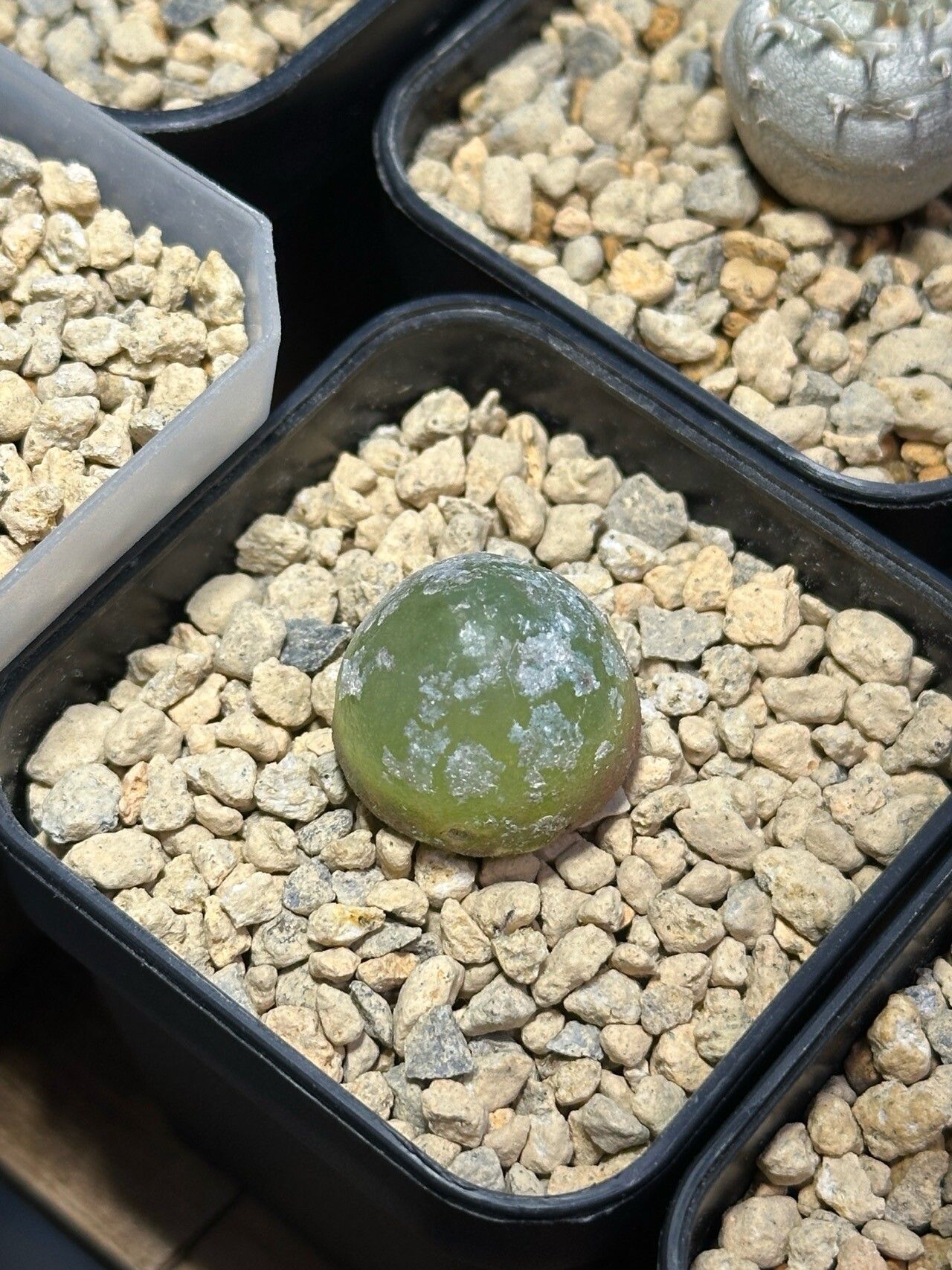
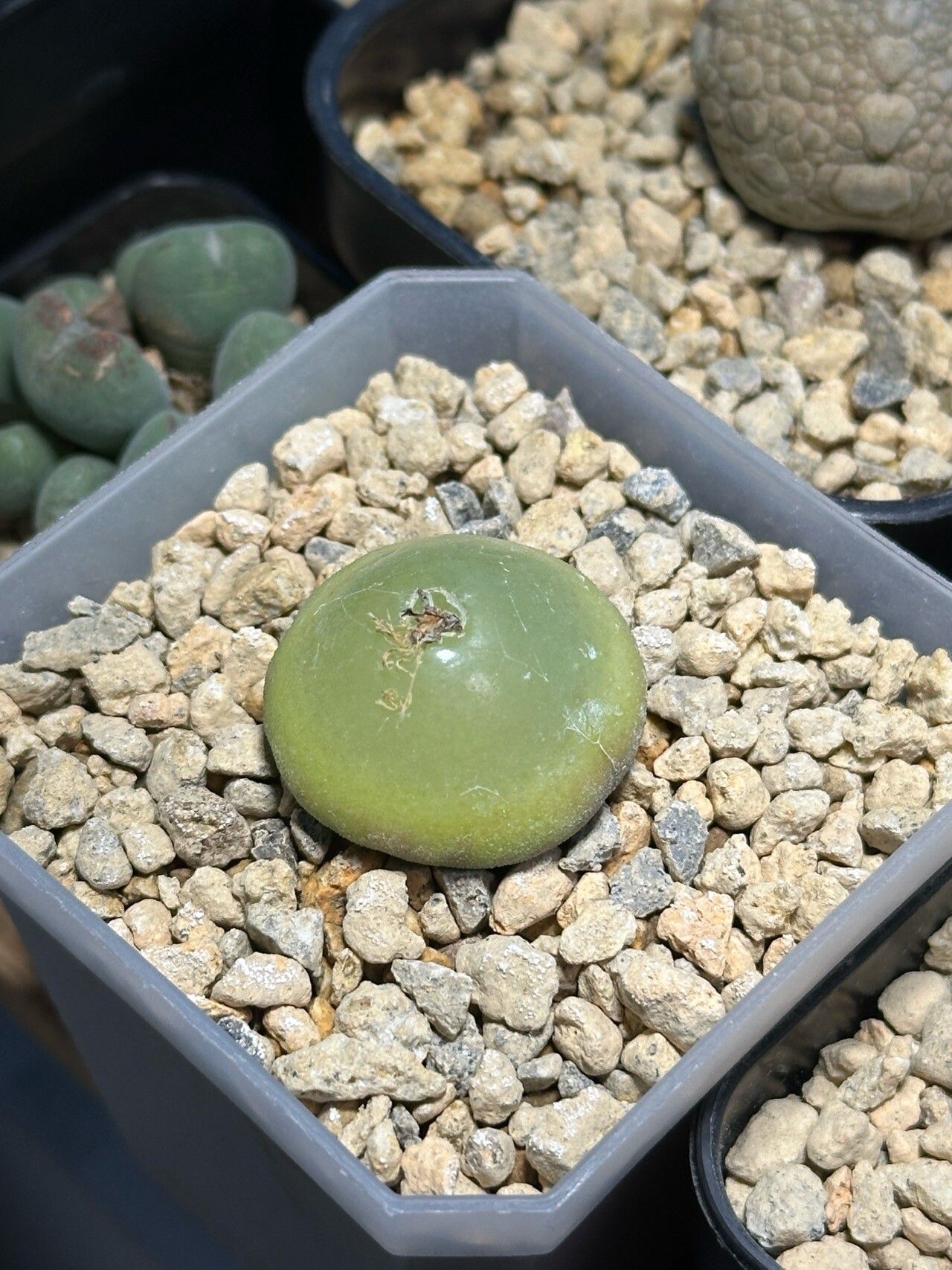
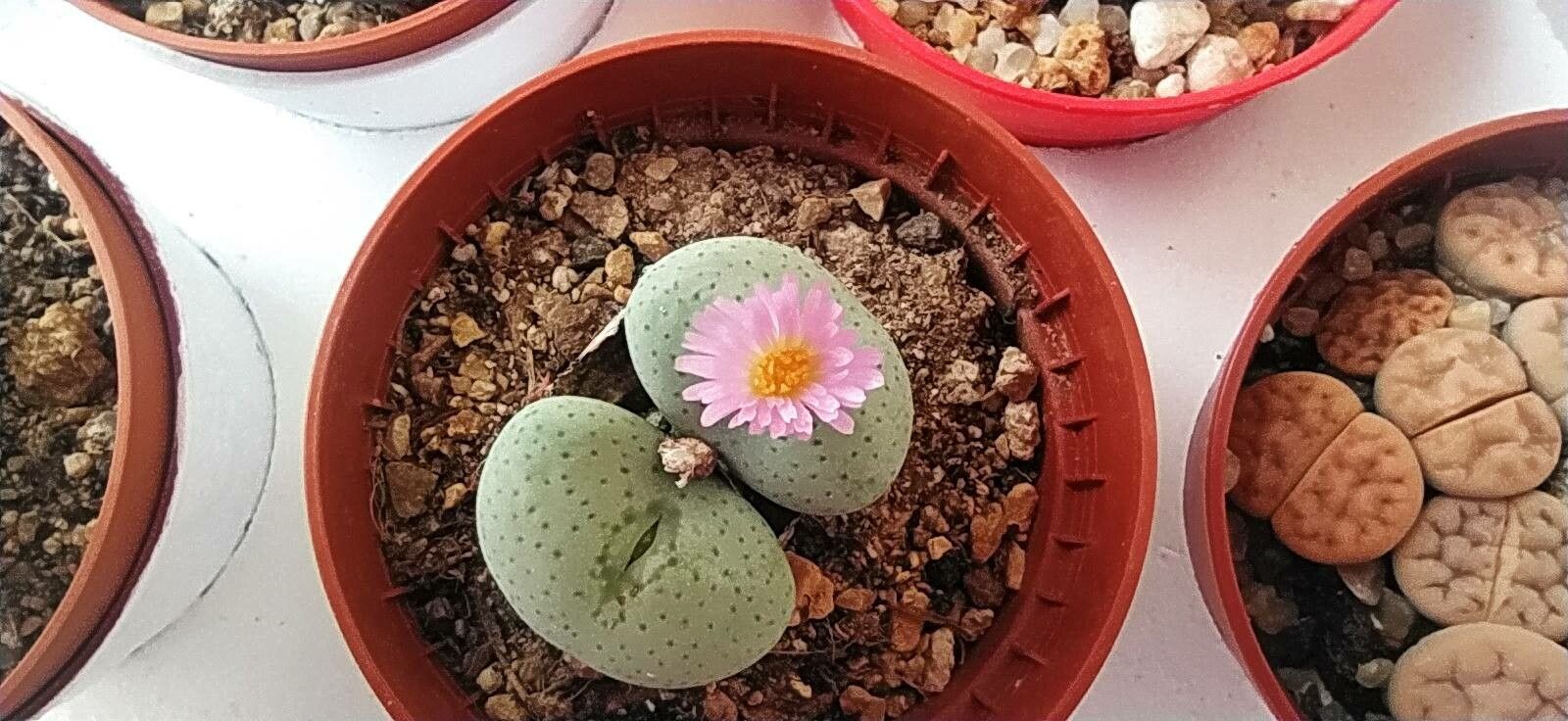
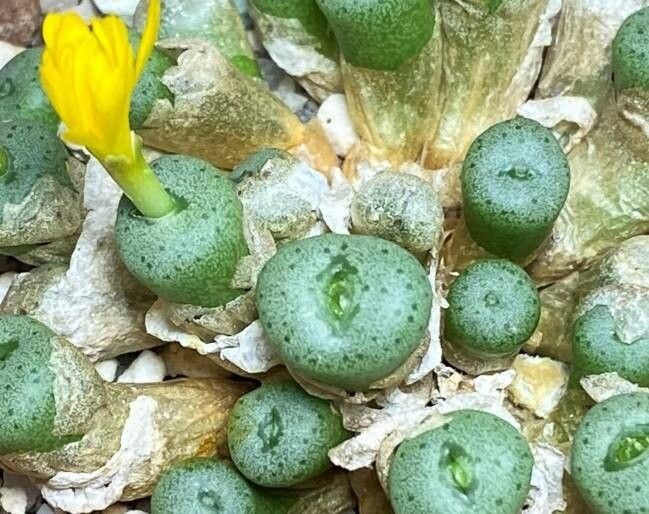
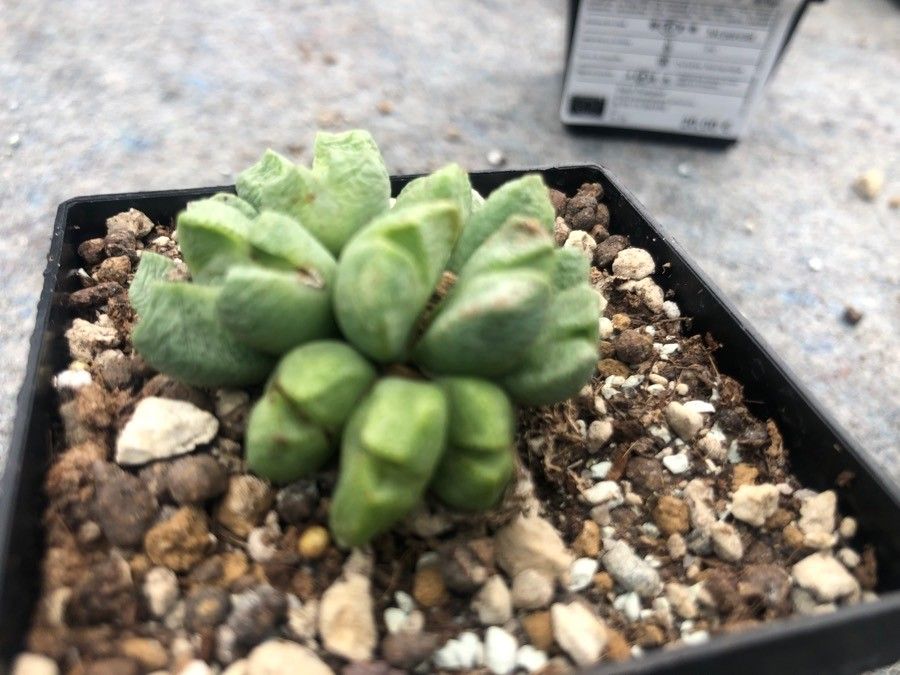
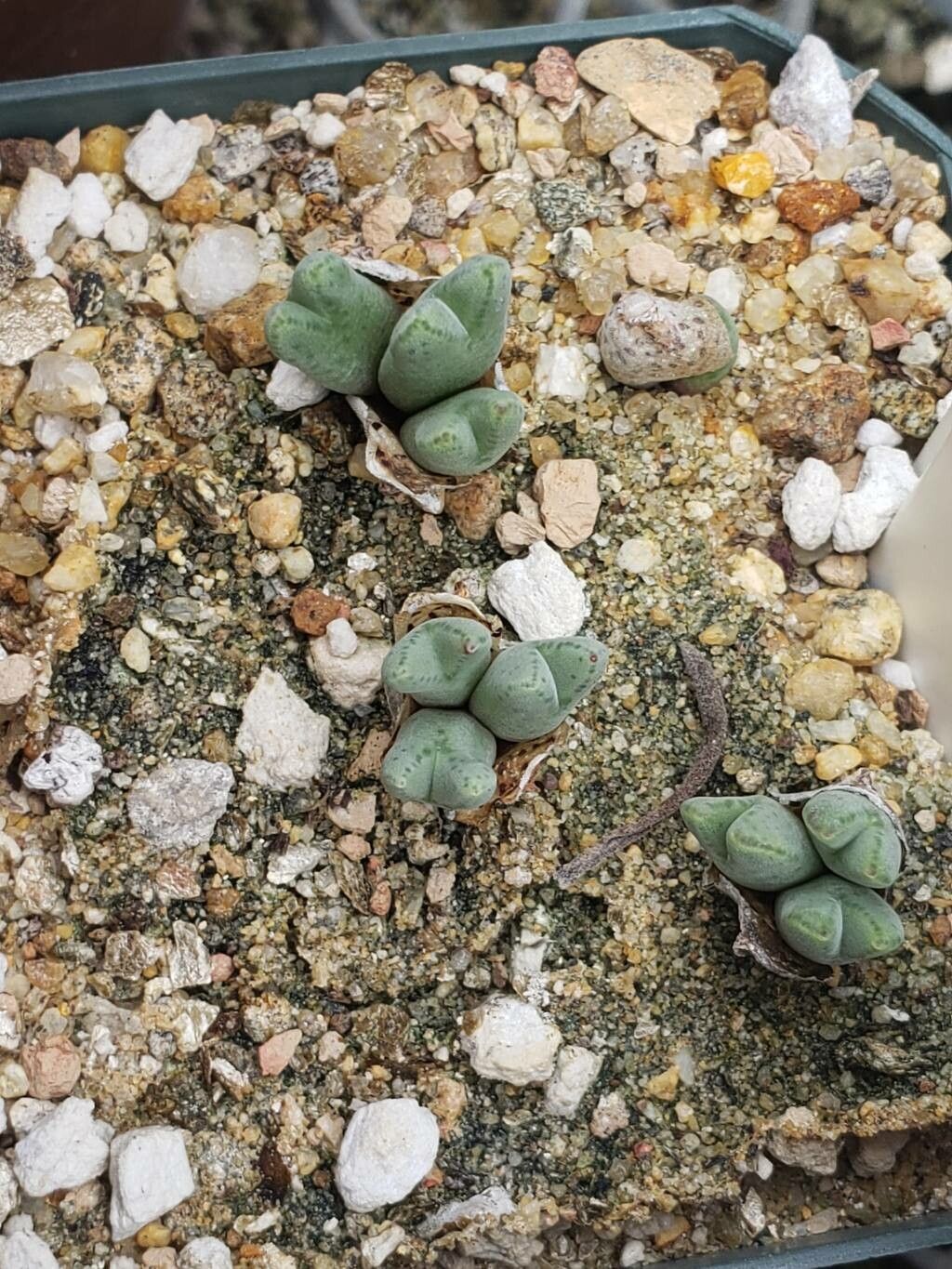
Conophytum burgeri is a small, endangered, South African species of succulent plant, of the genus Conophytum.
Conophytum burgeri has moderate disease resistance but is more sensitive to humidity. It is vulnerable to disease when humidity is high and is likely to suffer root rot during dormancy. Regarding care, Conophytum burgeri tolerates drought yet requires increased watering in the growing season. Watering should be sharply reduced or halted entirely during the dormant period. Conophytum burgeri is suitable for people with some growing experience, though it can be difficult to maintain, particularly during dormancy. It is especially appropriate for those who can devote time to its care in the winter months.
How to keep Conophytum Burgeri.
Light
Originating from dry areas, Conophytum burgeri flourishes in direct sunlight, reflecting its natural habitat marked by intense solar exposure and scarce shading. It can also adapt to locations with partial sun, demonstrating some flexibility in its cultivation.
Temperature
Conophytum burgeri can tolerate some degree of heat, but it mostly flourishes and develops during the cooler months, becoming inactive in the summer. When there are high summer temperatures, protection from strong sunlight is imperative to avoid burns. It's also crucial to lessen or even stop watering during the peak of summer to protect against root decay. Conophytum burgeri undergoes substantial growth in the winter and spring seasons. As long as the temperature remains above freezing, its growth will progress steadily.
Fertilizer
For the Conophytum burgeri, it's enough to lightly fertilize it 1-2 times annually during its growth phase. Refrain from adding fertilizer in the winter and summer months when the plant is in a dormant state. After repotting, cut down on the amount of fertilizer and allow a few months to pass before fertilizing again. The use of fertilizer aids in robust growth and promotes flowering.
Pot & Repot
While transplanting Conophytum burgeri, choose a container that's a bit bigger than the current one and ensures sufficient water flow. Employ a grainy, well-draining succulent or cactus blend. Gently extract the plant from its prior container, whisk off surplus dirt, and reposition at an identical depth. Pause for several days before watering to let any potential root injuries mend. It's best to transplant during the spring or autumn, and place the plant in an area with ample light.
Botanical profile.
- Plant Type
- Succulent
- Life Cycle
- Perennial
- Hardiness Zone
- 9-11
- Mature Height
- 10 cm
- Mature Spread
- 20 cm
- Leaf Color
- Light Green, Gray
- Leaf Type
- Semi-evergreen
- Flower Color
- Pink, White
- Flower Size
- 1.02 cm to 2.03 cm
- Bloom Time
- Early fall, Mid fall
- Planting Time
- Spring, Autumn
- Harvest Time
- Late fall, Early winter
- Native Area
- South Africa