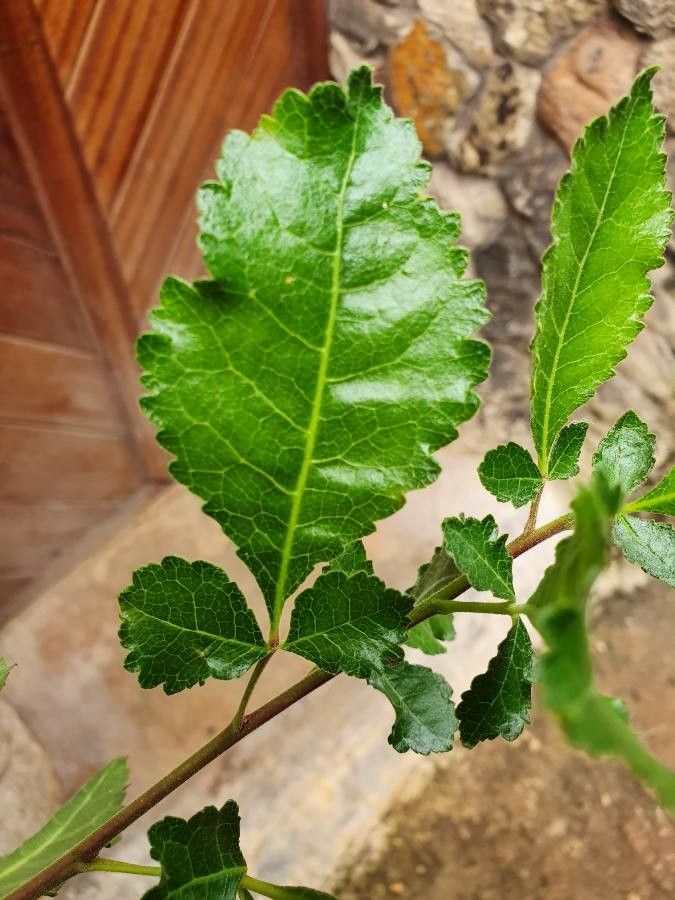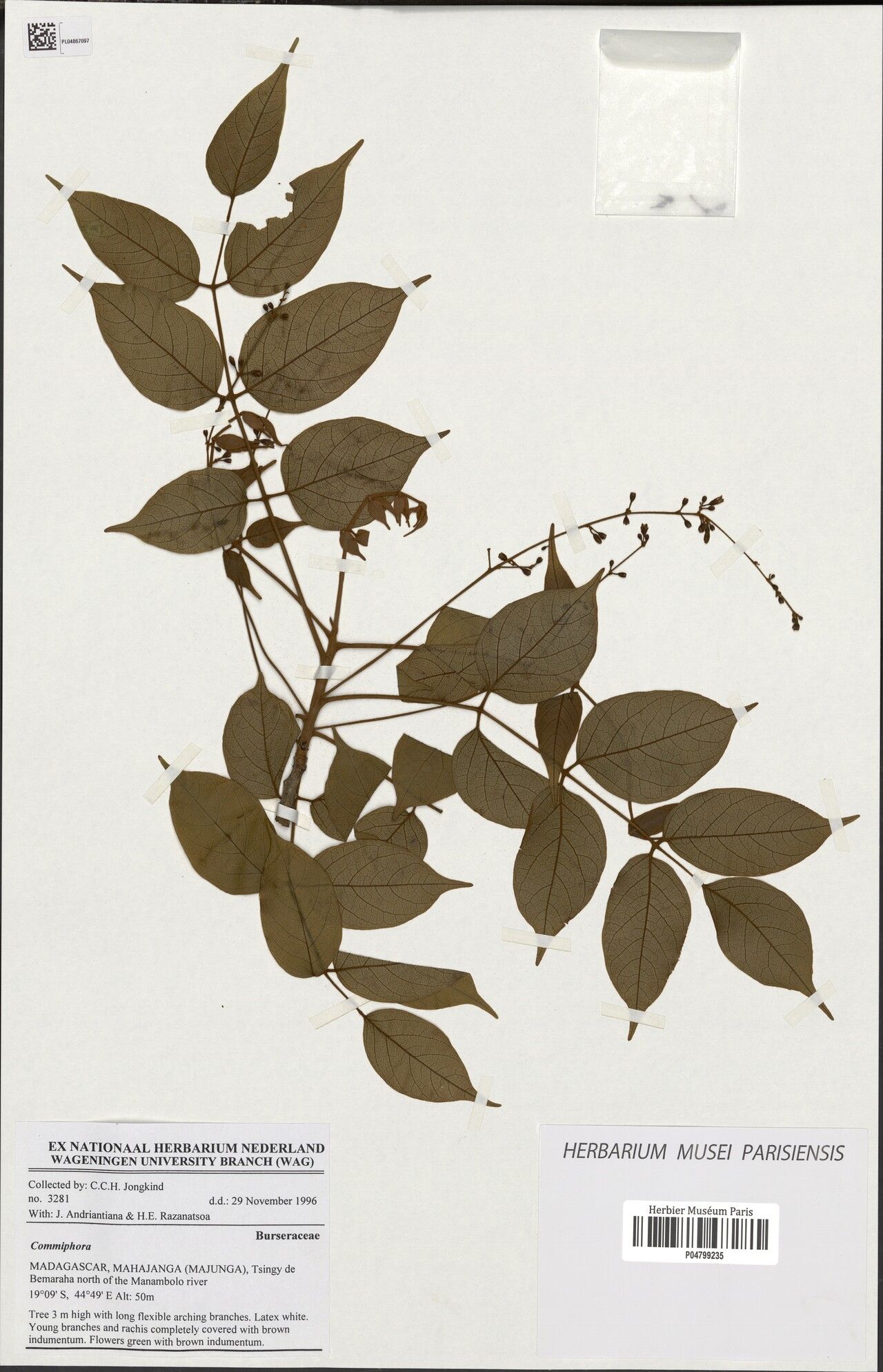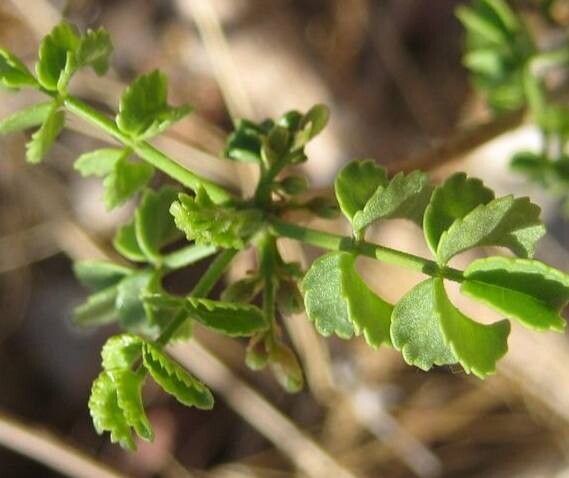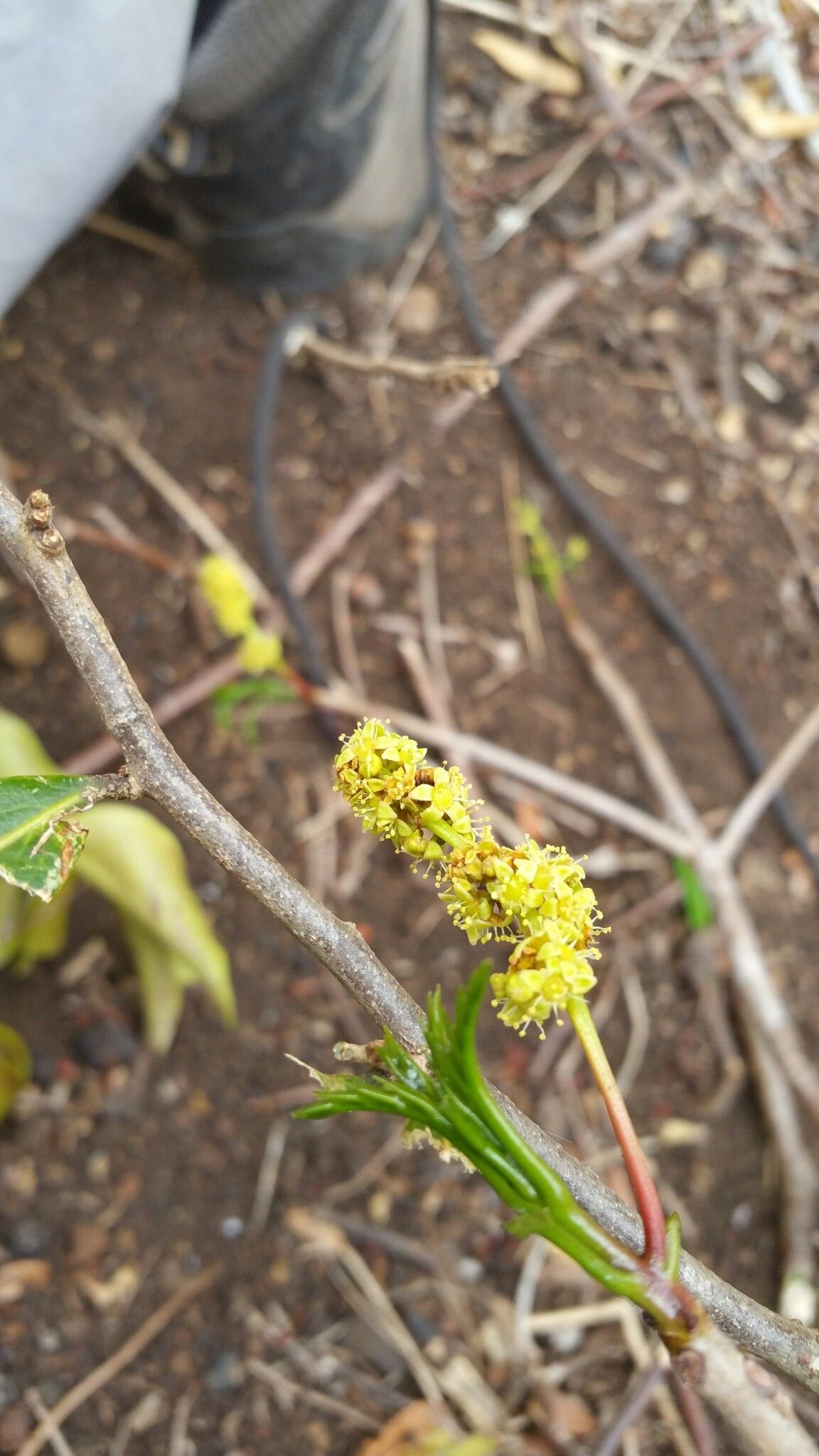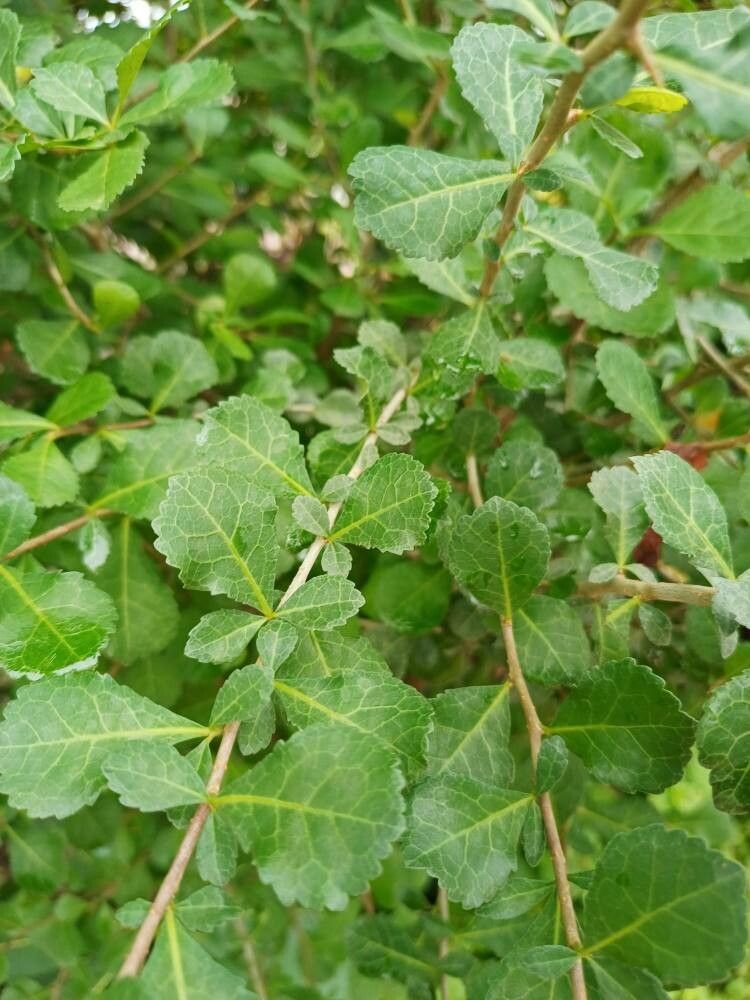
Commiphora glandulosa, commonly known as desert myrrh or gum myrrh, is a small, slow-growing shrub that belongs to the Burseraceae family. Native to arid regions of Africa and the Middle East, the plant features twisted, gnarled branches and small, hairy leaves, giving it a distinctive appearance.
The resin produced by Commiphora glandulosa has been valued for centuries in traditional medicine for its anti-inflammatory properties. Additionally, it is used as incense due to its pleasant aroma.
This plant thrives in hot, dry climates with well-draining soil and can withstand extreme temperatures ranging from -10°C to 50°C. Although it can reach heights of up to 2 meters, it usually remains smaller because of its slow growth rate.
Commiphora glandulosa plays a crucial role in desert ecosystems by providing food and shelter for various animals, including camels, goats, birds, and insects. As such, it is an essential component of the ecosystem's biodiversity.
Overall, Commiphora glandulosa is a fascinating plant with unique characteristics that enable it to survive in harsh environments while offering important ecological benefits.
Tall firethorn corkwood has strong disease resistance and is generally not susceptible to disease. Regarding care, this plant is relatively low-maintenance. When grown outdoors it requires minimal watering, and larger plants typically do not need to be pruned. However, smaller plants should be pruned after they have finished blooming. Tall firethorn corkwoodt is suitable for anyone with an outdoor space, such as a garden or deck, and does not require much experience in plant care.
How to keep Commiphora Glandulosa.
Light
Tall firethorn corkwood comes from open habitats, such as sunny meadows and forest edges, which supply abundant light. It thrives in Full Sun but can also tolerate Partial Sun, showing good adaptability to a range of sunlight conditions.
Temperature
Tall firethorn corkwood comes from tropical areas, where the climate is generally warm and humid. Consequently, it is adapted to high temperatures and moisture. It does not tolerate sudden temperature changes and prefers a consistent thermal environment, so avoiding indoor temperature fluctuations is important. It usually cannot withstand cold and needs higher temperatures to grow. If the surrounding temperature falls too low, the plant may stop growing or even die.
Fertilizer
Feeding is essential for the care of Tall firethorn corkwood. Applying fertilizer regularly during the growing season maintains the energy needed for its showy foliage and supports overall development. If fertilization is neglected, leaves can become unhealthy, the plant’s ornamental value declines, and growth may be stunted or weak and prone to breaking.
Botanical profile.
- Plant Type
- Tree
- Life Cycle
- Perennial
- Genus
- Commiphora
- Family
- Burseraceae
- Hardiness Zone
- 10-12
- Mature Height
- 3.05 m to 7.01 m
- Mature Spread
- 2.13 m to 3.96 m
- Leaf Color
- Green, Olive Drab
- Leaf Type
- Evergreen
- Flower Color
- White
- Flower Size
- 0.25 cm to 0.51 cm
- Bloom Time
- Mid fall, Late fall, Early winter
- Planting Time
- Spring, Summer
- Harvest Time
- Mid winter, Late winter, Early spring
- Native Area
- Angola, Mozambique, Tanzania, South Africa, Zambia, Eswatini, Namibia, Congo (DRC), Botswana, Zimbabwe