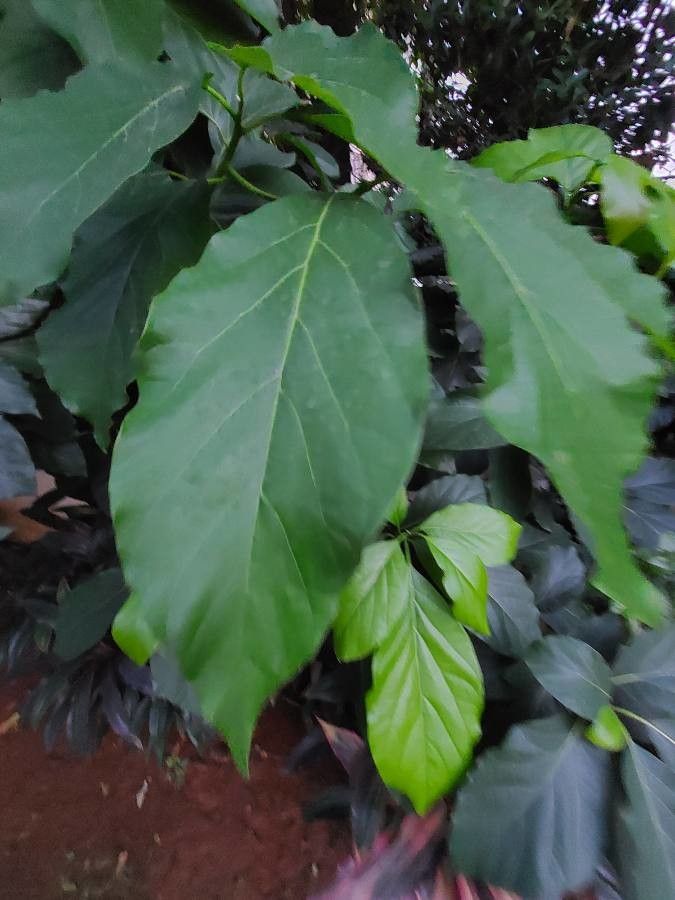
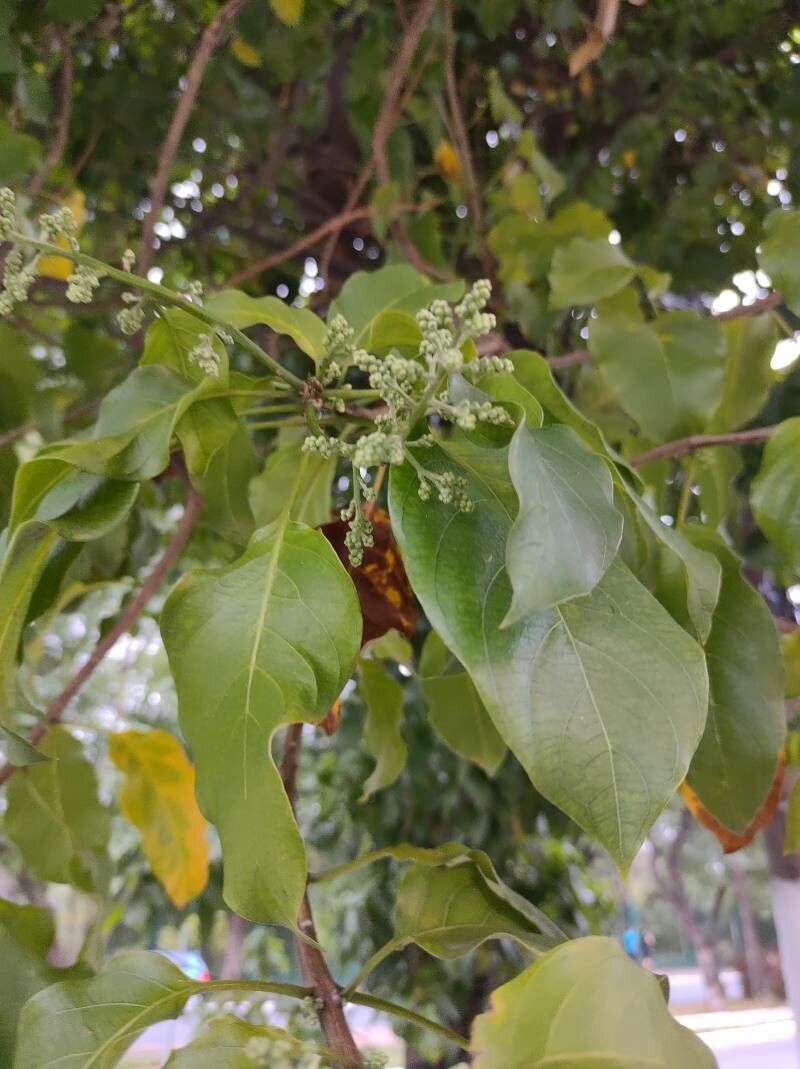
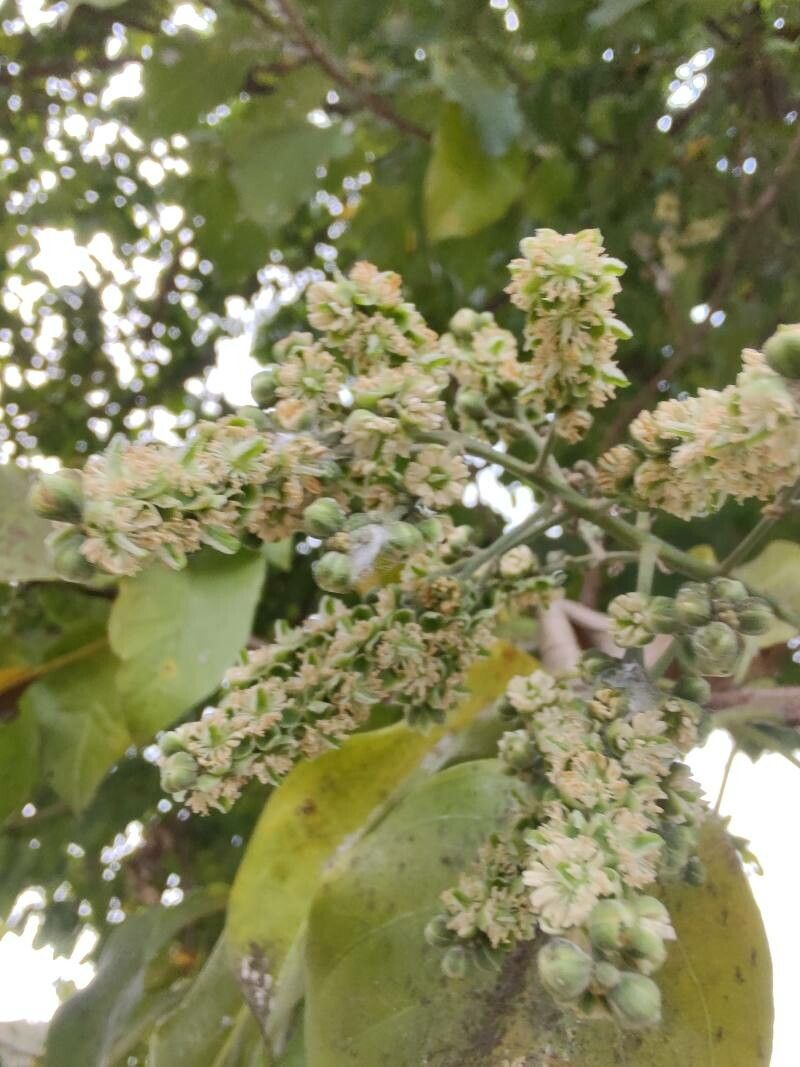
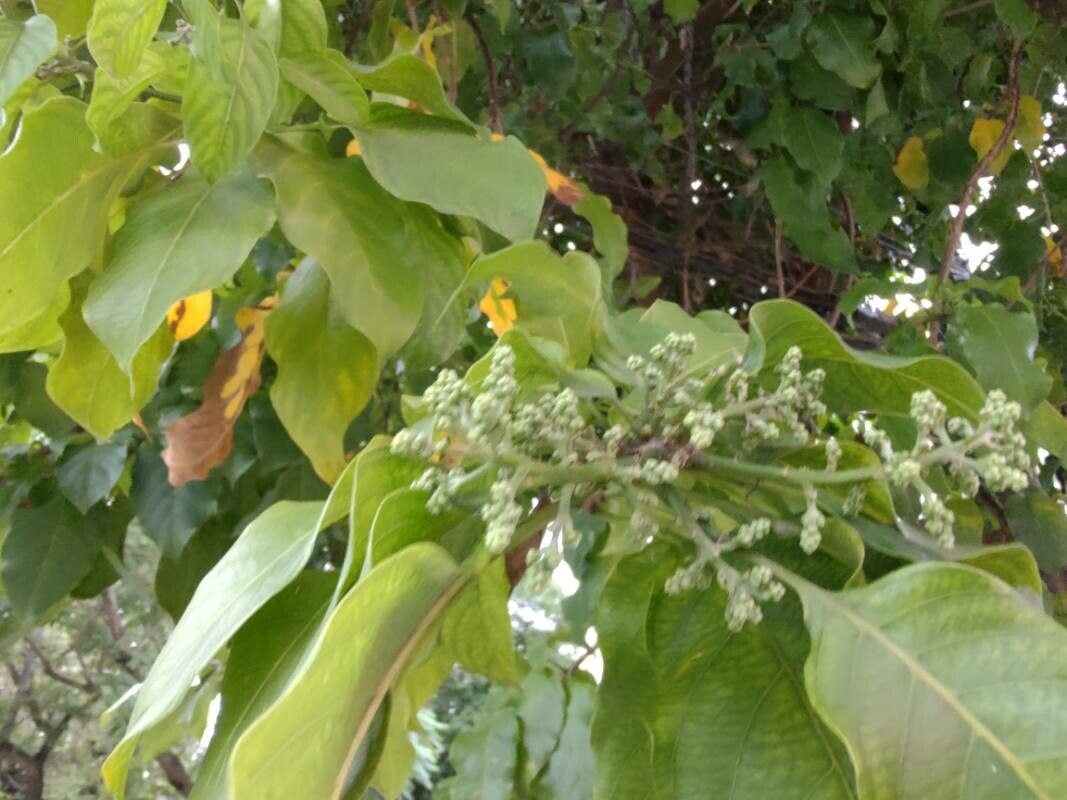
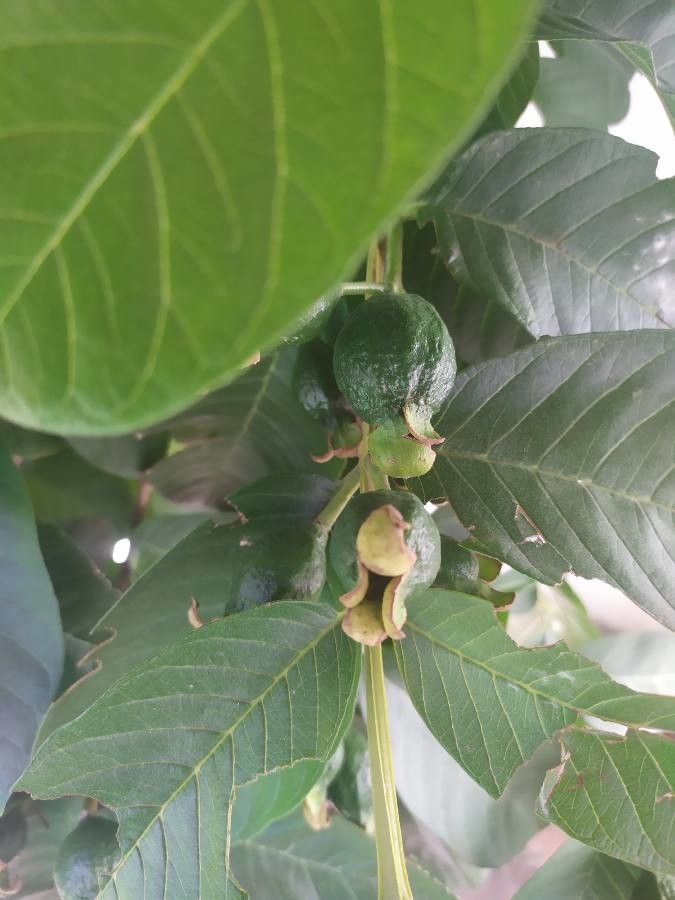
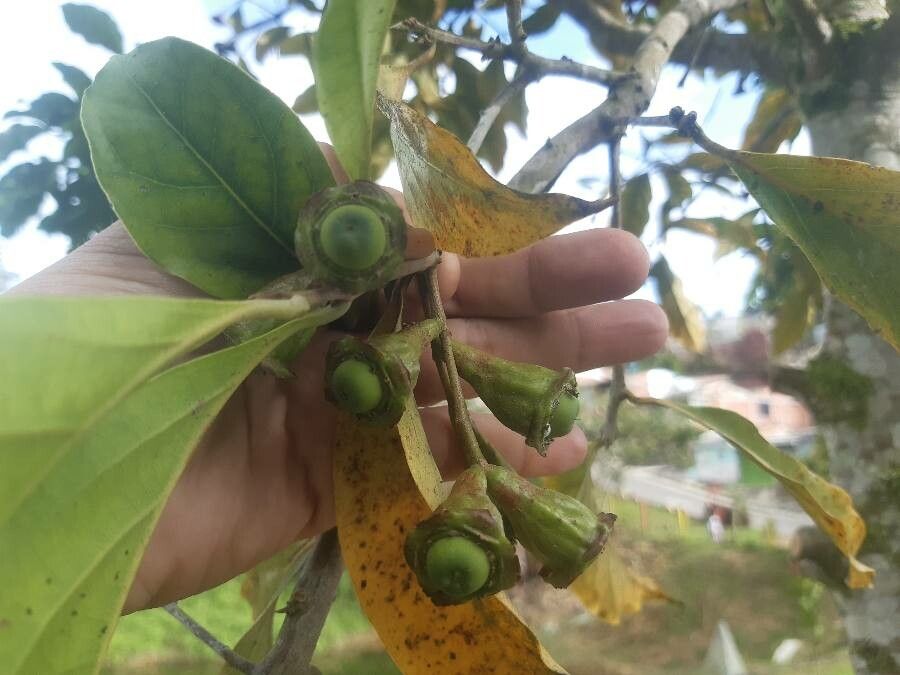
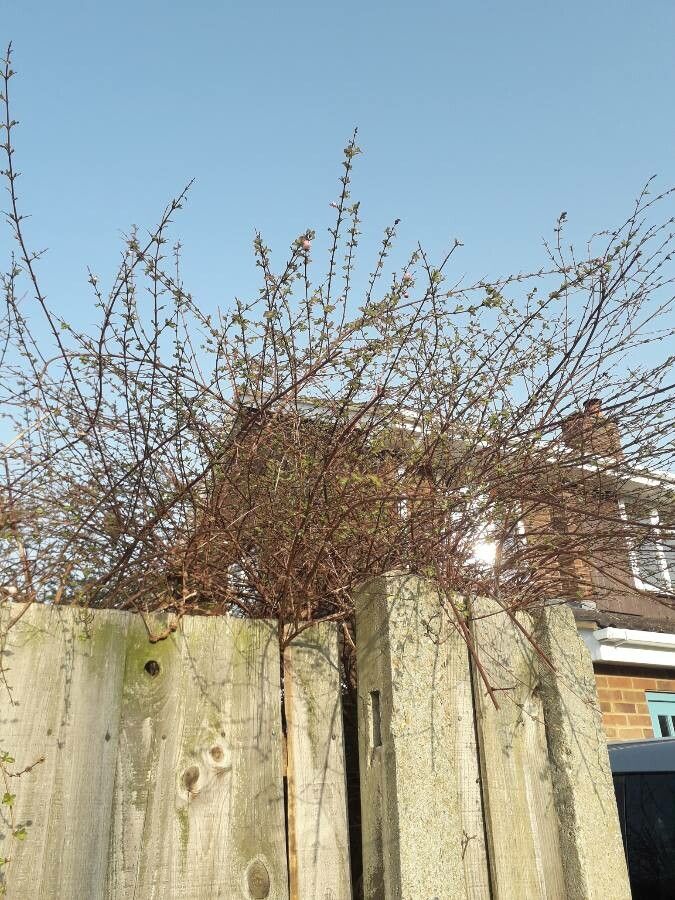
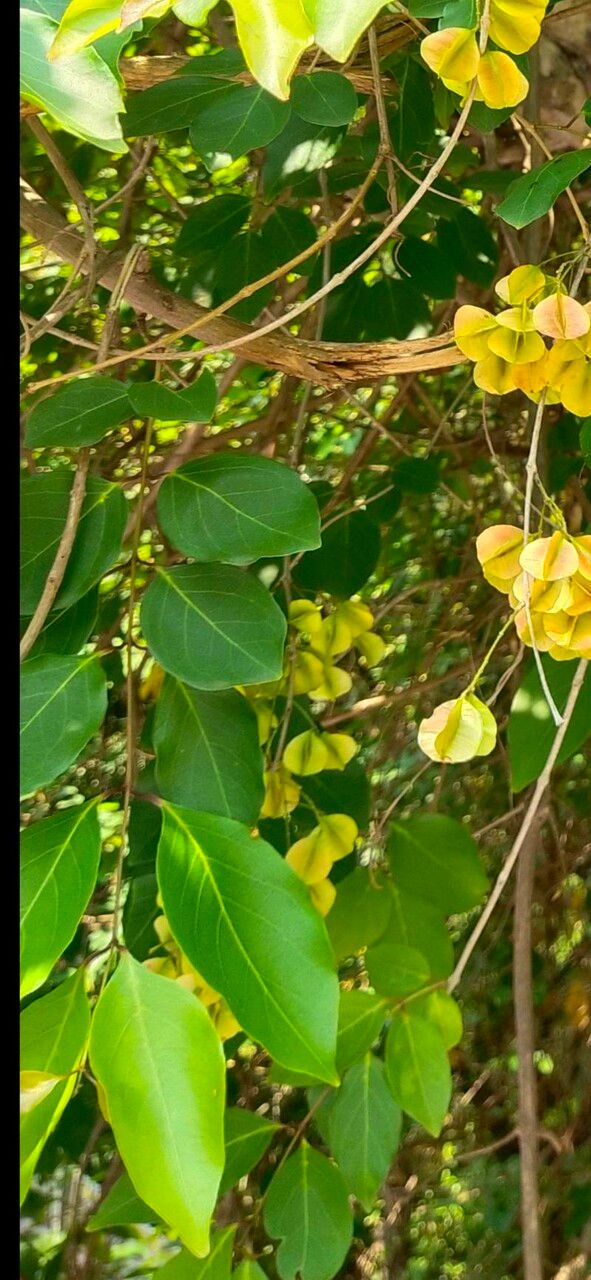
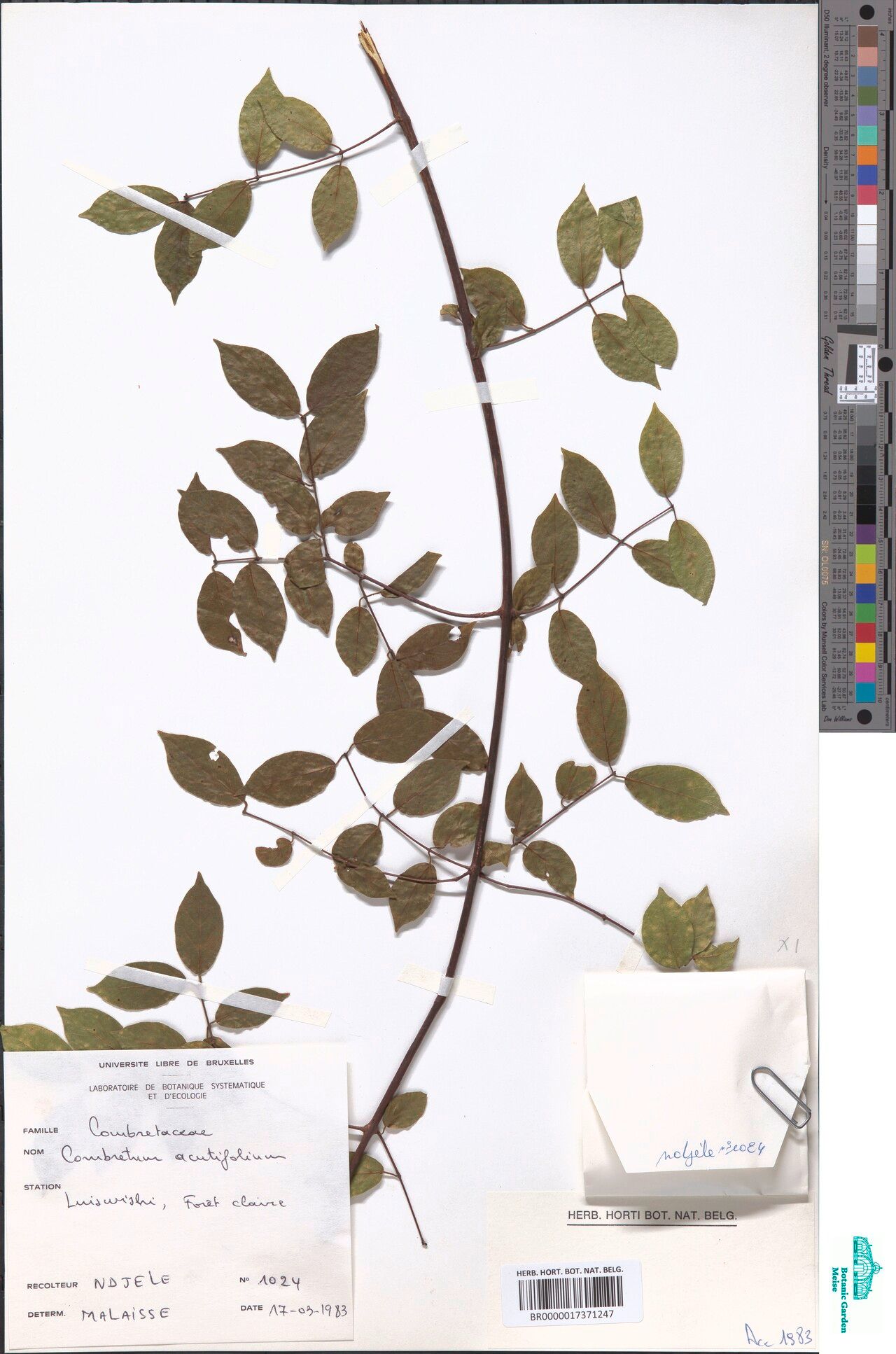
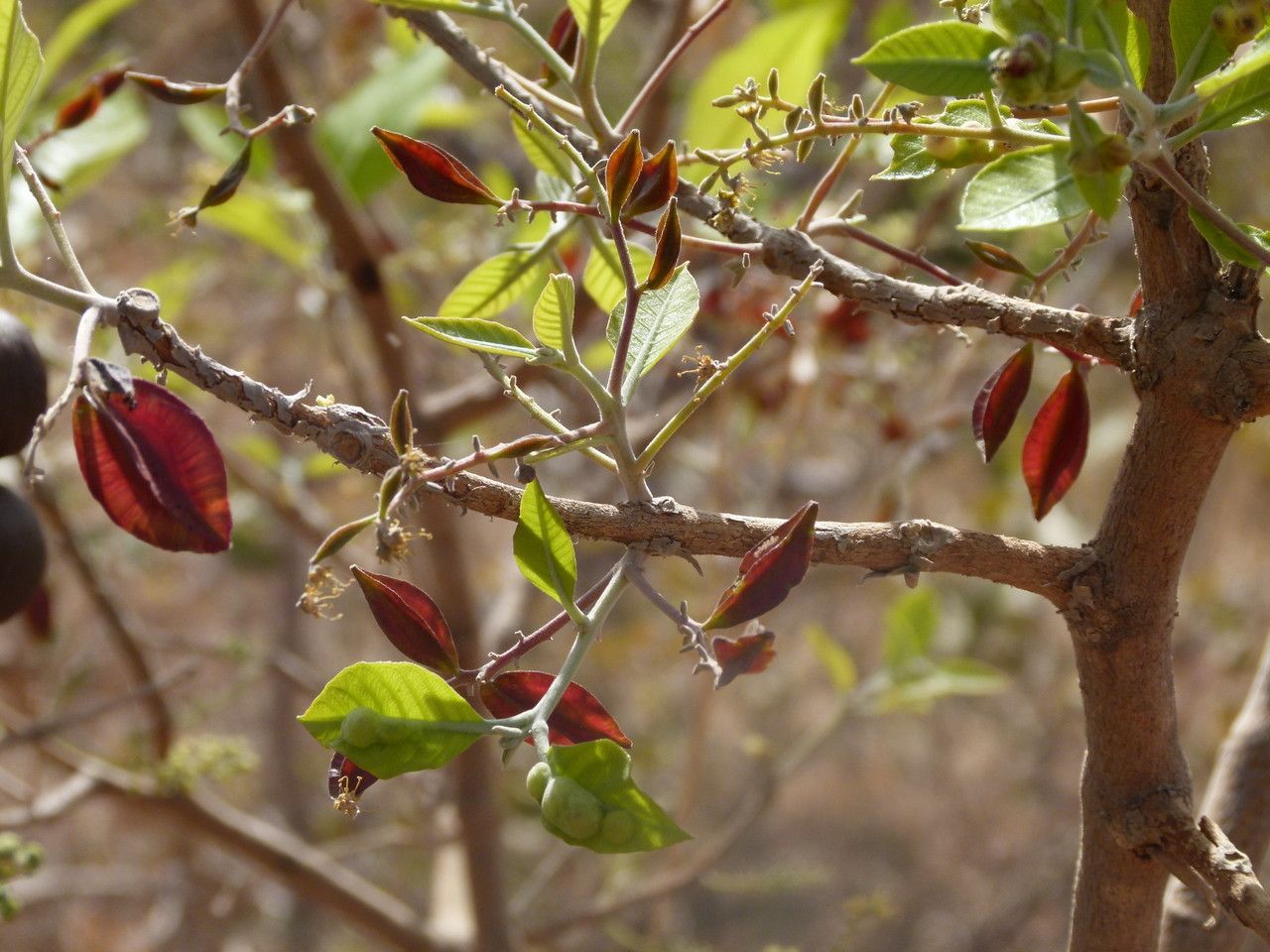
Combretum woodii, commonly known as the Forest Bushwillow, is a small to medium-sized tree native to southern Africa. Belonging to the Combretaceae family, this tree can reach heights of up to 10 meters. It features a dense, rounded crown with glossy, dark green leaves on top and a paler shade underneath. The leaves are simple, alternate, and ovate, with serrated margins. During the summer months (November to January), the Forest Bushwillow produces dense clusters of small white or cream-colored flowers. These blossoms are followed by small fruits that transition from green to brown as they mature. Combretum woodii typically grows in woodland areas or along riverbanks, where it provides valuable shade for other plants and animals. Indigenous people have long used this plant for medicinal purposes, treating ailments such as fever, diarrhea, dysentery, and stomach problems, among others. Overall, this tree plays a crucial ecological role in its native habitat and holds cultural significance for local communities that have relied on its medicinal properties for generations.
Botanical profile.
- Plant Type
- Tree, Shrub
- Life Cycle
- Perennial
- Genus
- Combretum
- Family
- Combretaceae
- Native Area
- South Africa, Eswatini
Other names.