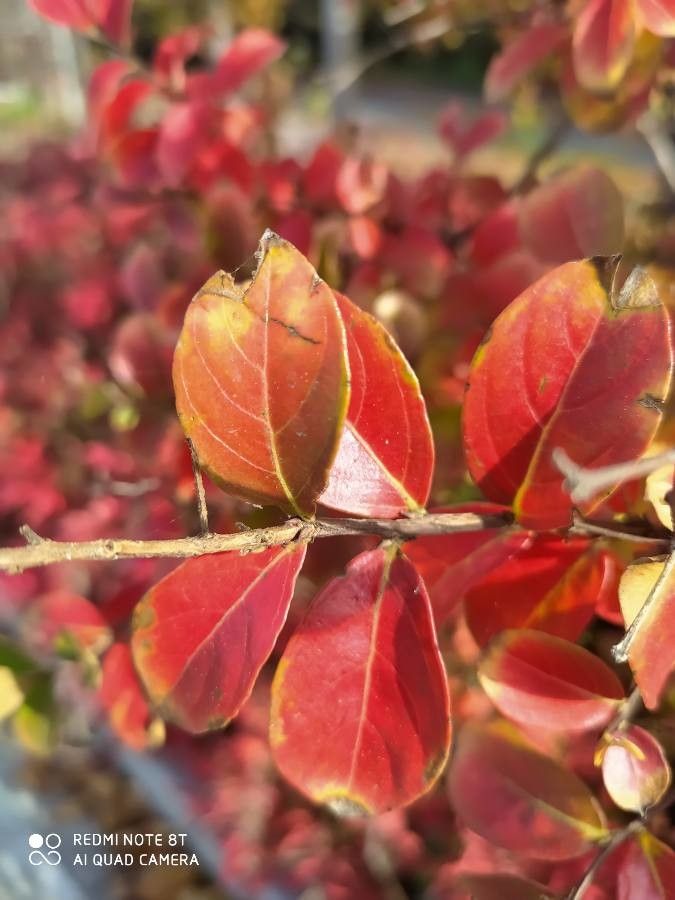
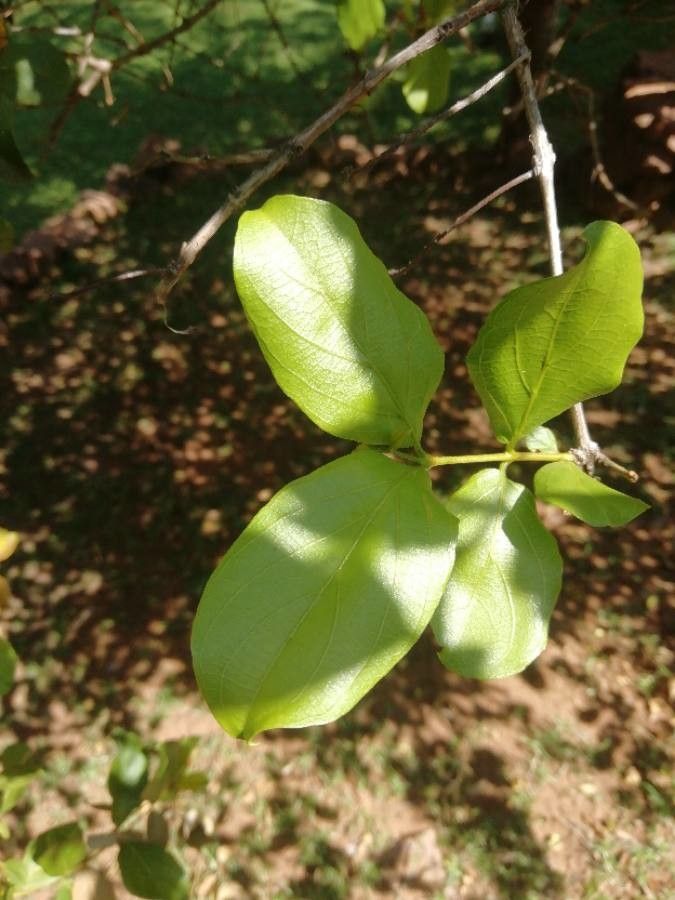
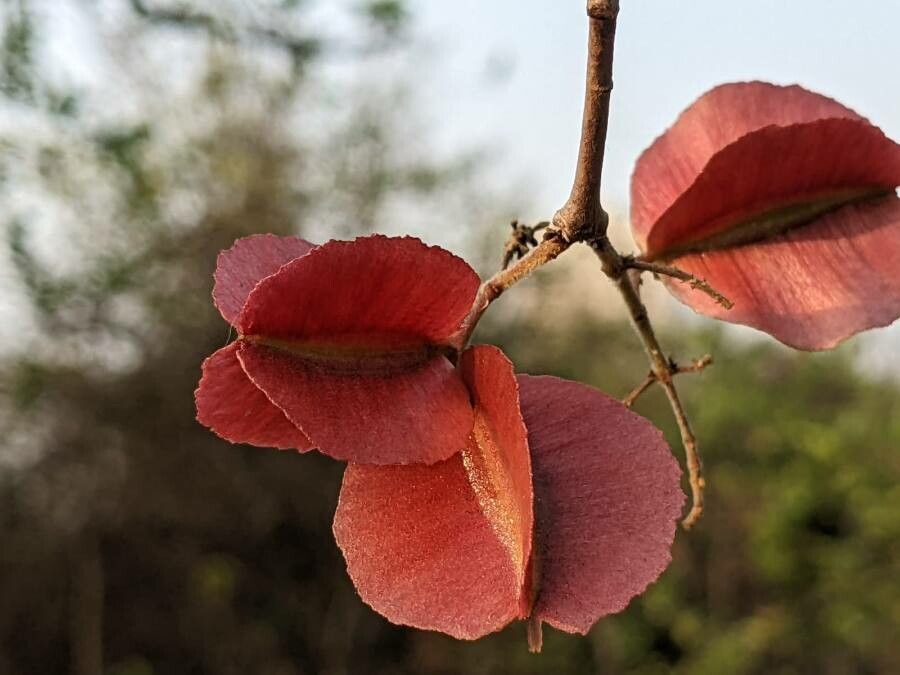
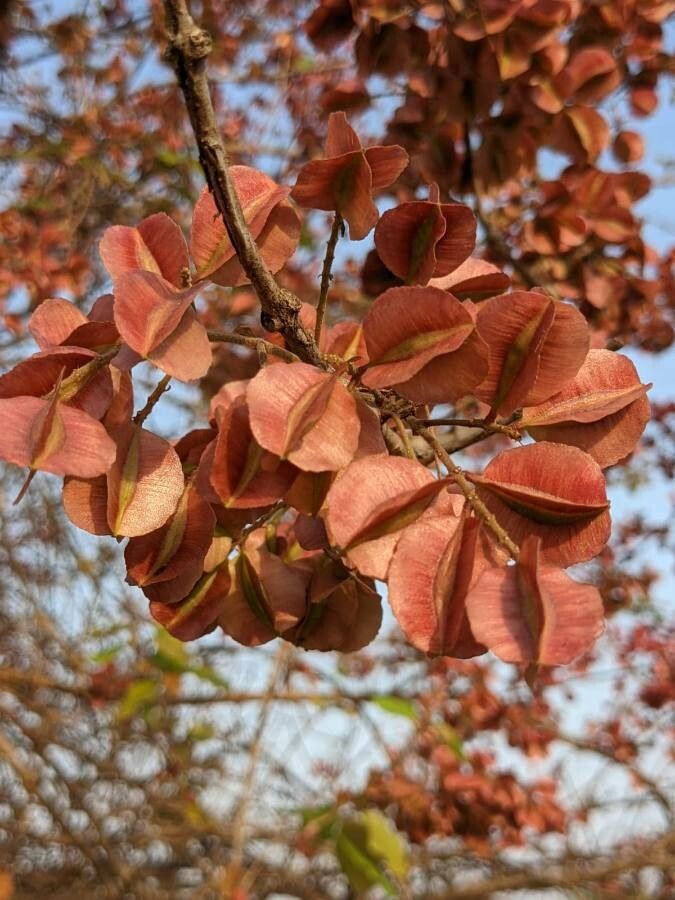
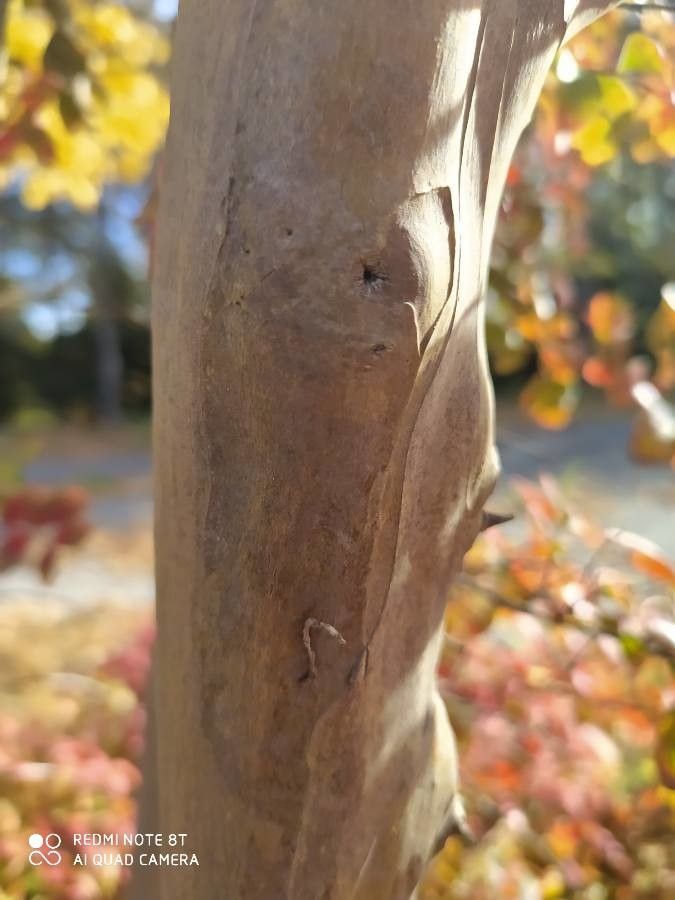
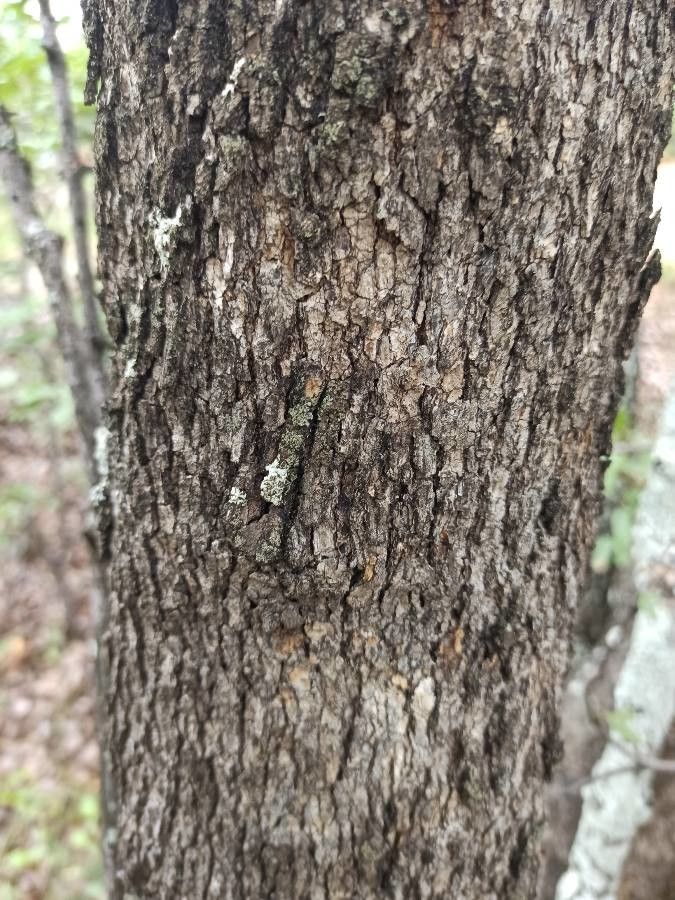
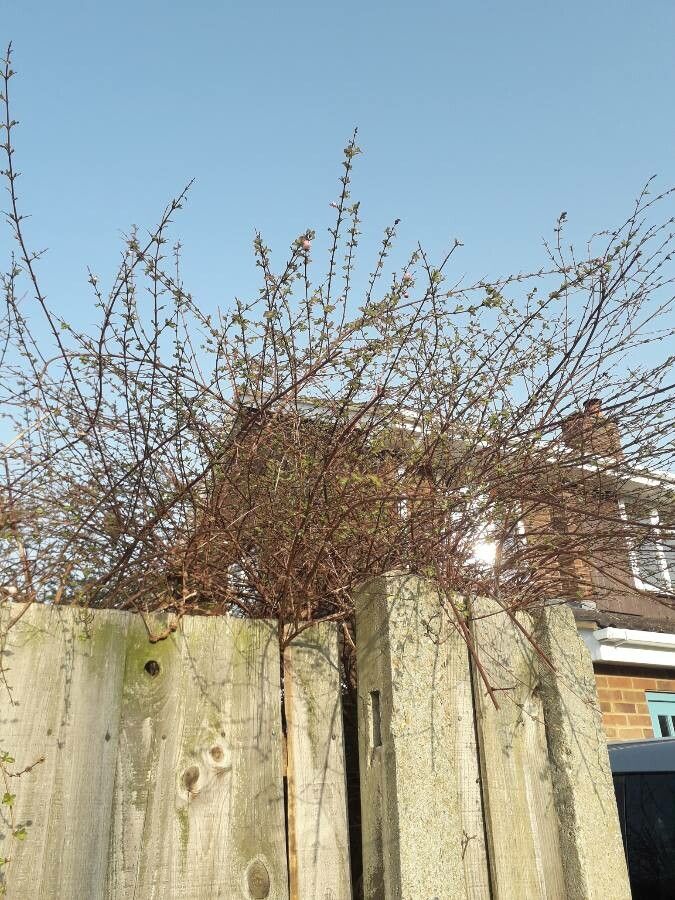
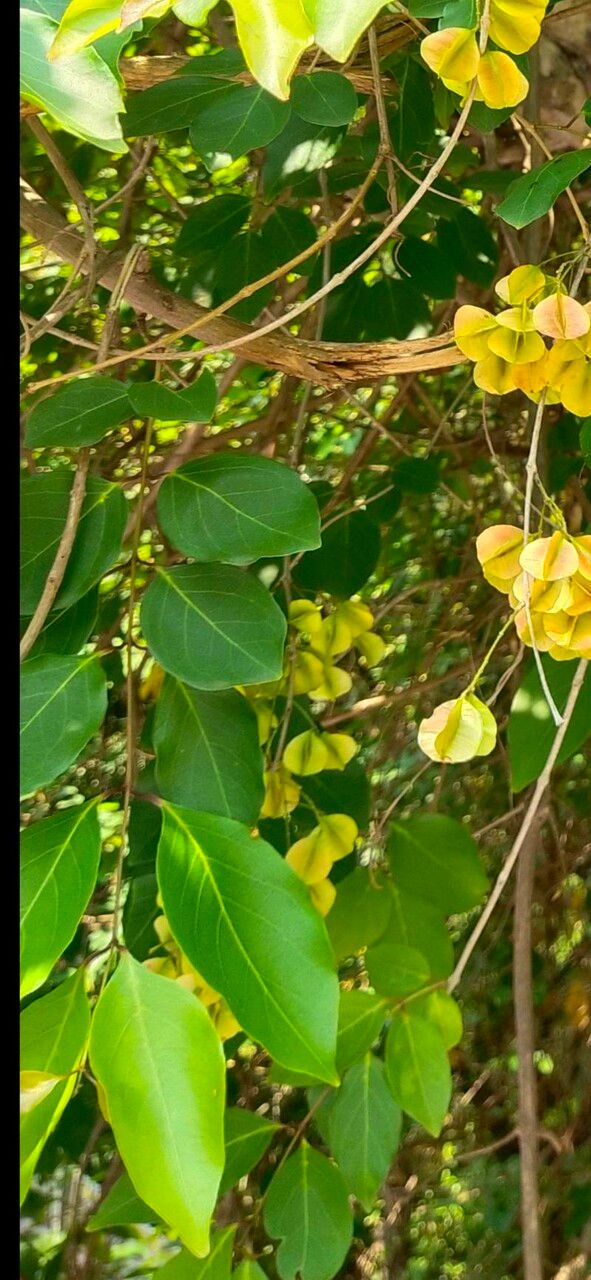
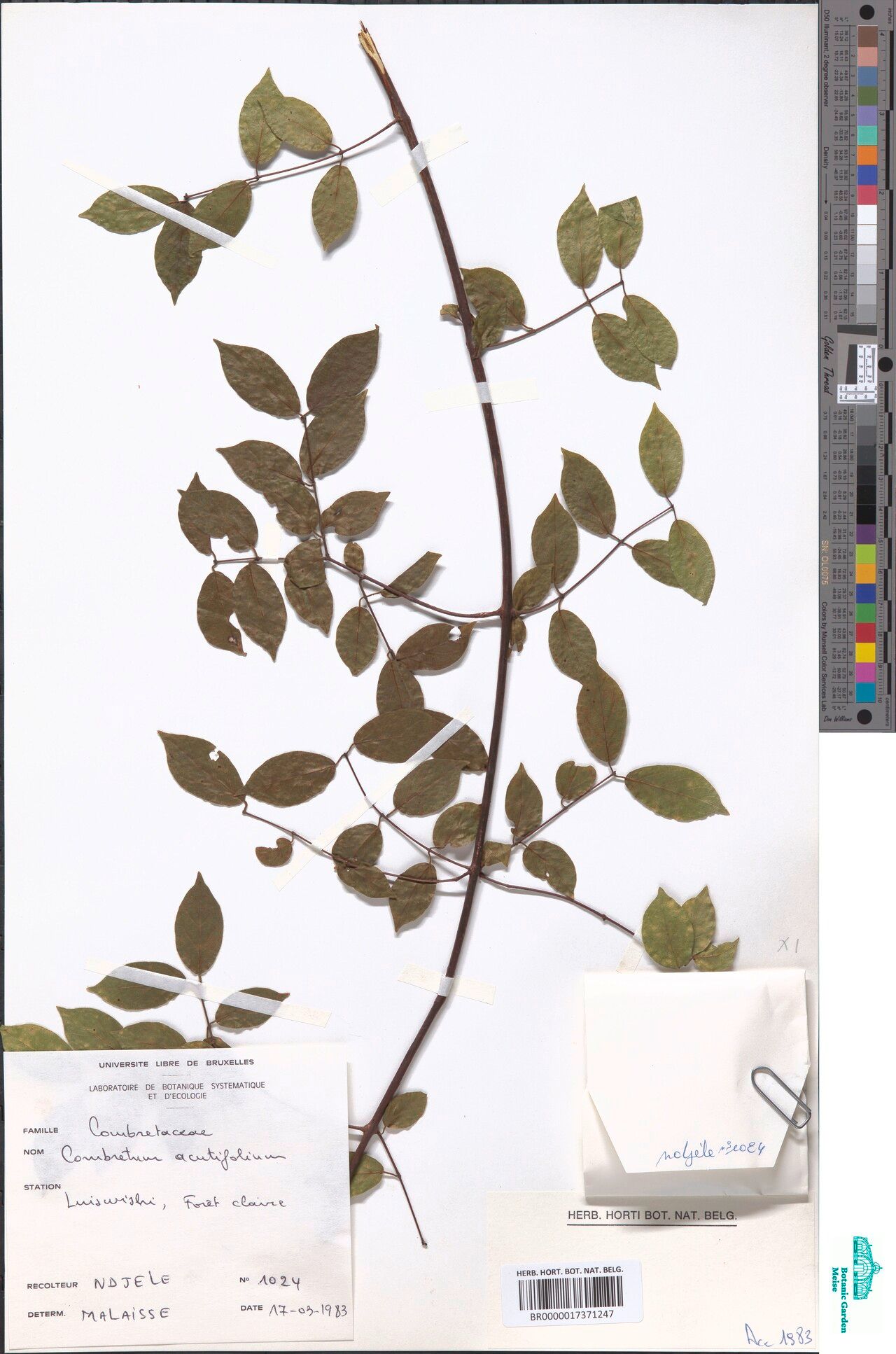
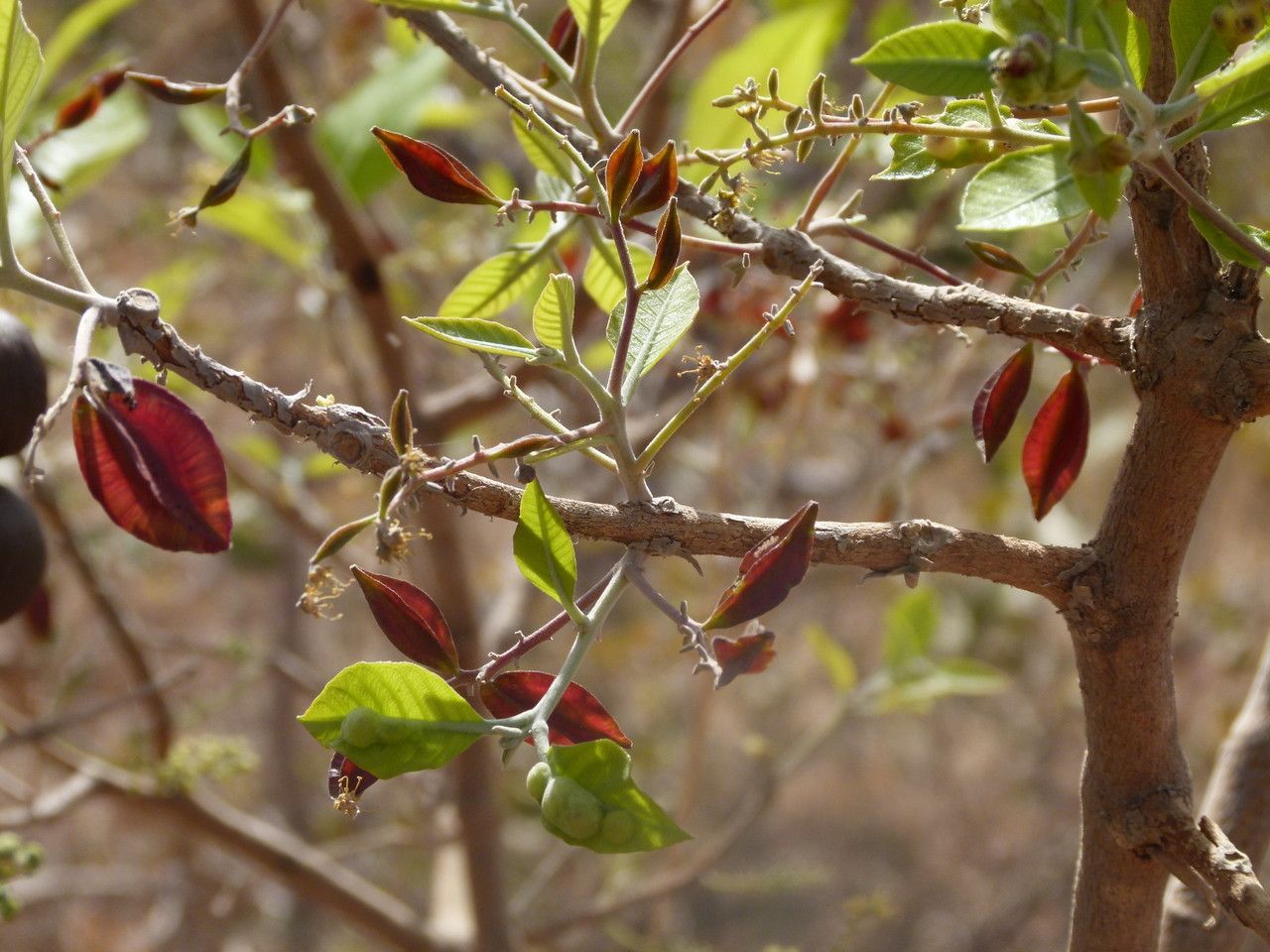
Combretum apiculatum, commonly known as the Knobthorn, is a species of flowering plant in the Combretaceae family, native to southern Africa. It thrives in various habitats such as savannas, woodlands, and rocky outcrops. The plant can grow up to 10 meters tall, forming a dense canopy with its spreading crown of branches. The leaves are simple, alternate, and elliptical, tapering at both ends. The flowers of the Knobthorn are small and inconspicuous, but they are arranged in dense clusters at the ends of branches, which give rise to showy red or yellow fruits that attract birds. The bark of mature trees is gray-brown with rough patches. The Knobthorn has various uses, notably in traditional medicine where healers use it to treat ailments such as stomach problems, fever, and respiratory infections. Additionally, it holds cultural significance for some African tribes who use it to craft traditional musical instruments. Ecologically, Combretum apiculatum plays a crucial role by providing food for wildlife; birds feed on its fruits, while elephants consume its bark during droughts when other food sources are scarce. Overall, this plant is an integral part of southern African ecosystems not only because of its ecological importance but also for its cultural significance and medicinal uses among some African tribes.
Red bushwillow is disease-resistant and, in general, not susceptible to illnesses. Regarding care, this plant is fairly low-maintenance. When grown outdoors it needs only minimal watering, and larger specimens usually do not require pruning. Smaller specimens, however, should be pruned after they finish blooming. Red bushwillowt is appropriate for anyone with an outdoor area, such as a garden or deck, and does not demand a lot of gardening experience.
How to keep Combretum Apiculatum.
Light
Red bushwillow is native to open habitats, such as sunny meadows and forest edges, which provide abundant light. It flourishes in Full Sun but will also tolerate Partial Sun, adapting well to a variety of sunlight conditions.
Temperature
Red bushwillow has strong adaptability to temperature, able to endure high heat and considerable temperature fluctuations. In hot weather, care should be taken with watering and providing adequate shade to prevent sunburn. However, its tolerance for low temperatures is relatively limited. It can withstand some cold, but excessively freezing conditions can cause frost damage.
Fertilizer
The timing of fertilizing Red bushwillow is important. Apply fertilizer in early spring and continue monthly until early summer. Fertilizer promotes attractive blooms and provides energy during both dormant and active growth phases.
Pruning
The red bushwillow is a hardy shrub known for its attractive pods. To encourage healthy growth, prune it in early spring by removing any dead branches. Regular thinning can improve light penetration and enhance the plant's vibrancy. It's important to avoid heavy pruning in order to preserve the shrub's natural shape while managing its size and preventing disease. For specific care tips, consult your local guidelines.
Botanical profile.
- Plant Type
- Tree
- Life Cycle
- Perennial
- Genus
- Combretum
- Family
- Combretaceae
- Hardiness Zone
- 9-11
- Mature Height
- 10.06 m
- Mature Spread
- 9.14 m
- Leaf Color
- Green
- Leaf Type
- Deciduous
- Flower Color
- Yellow
- Flower Size
- 6.35 cm
- Bloom Time
- Mid fall, Late fall, Early winter
- Planting Time
- Spring, Autumn
- Harvest Time
- Late winter, Early spring, Mid spring
Other names.