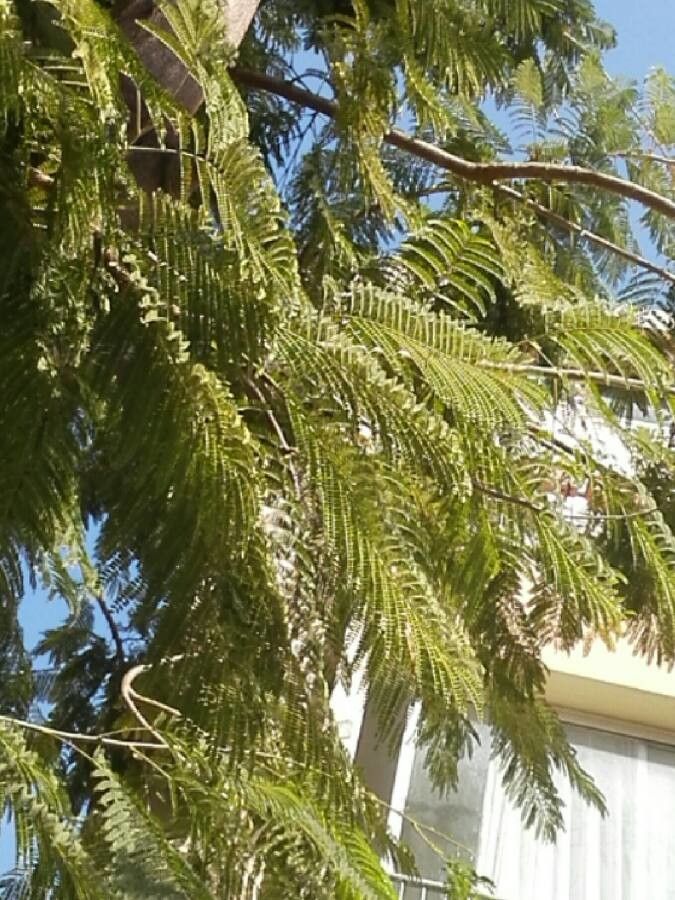
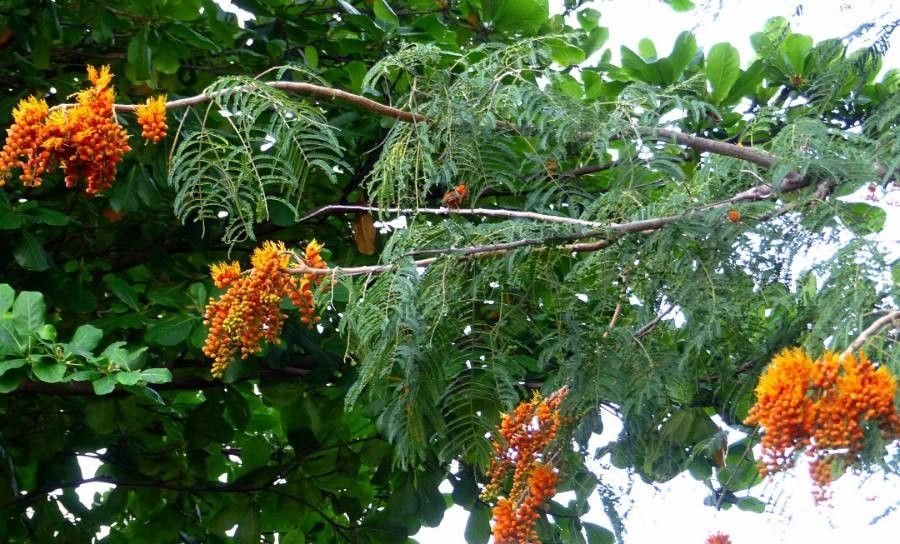
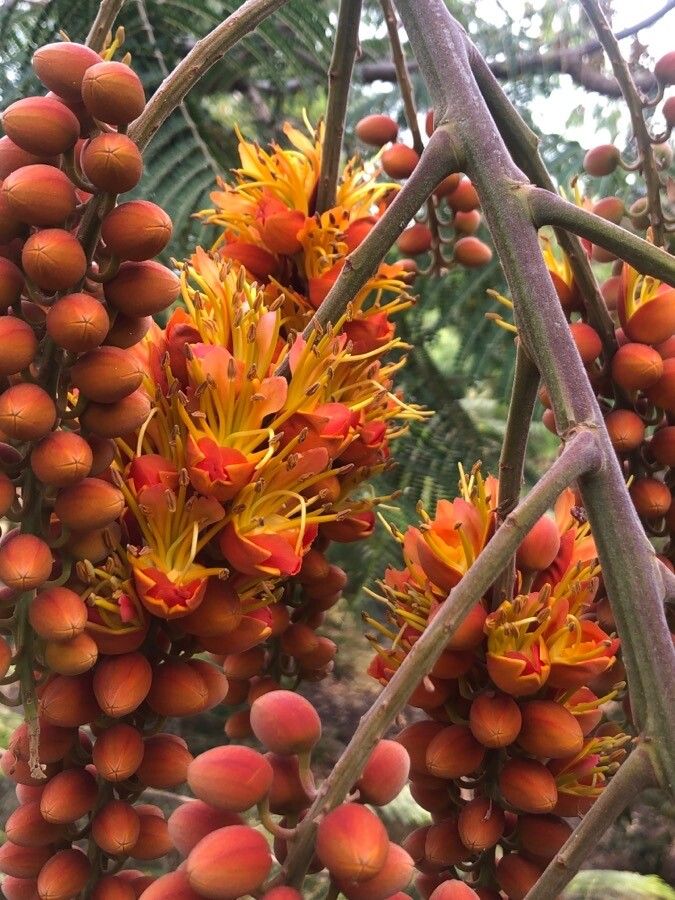
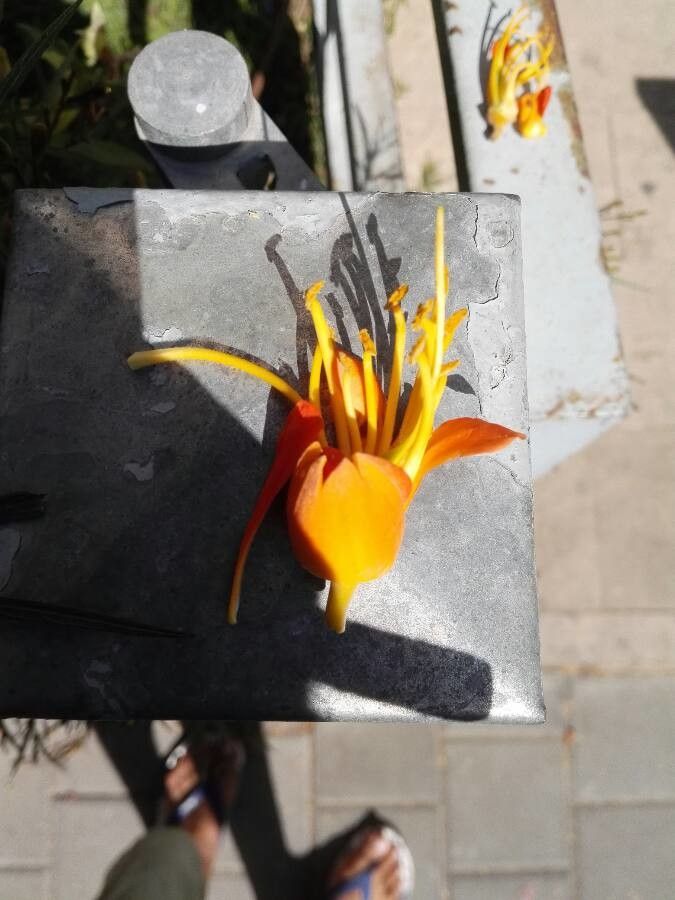
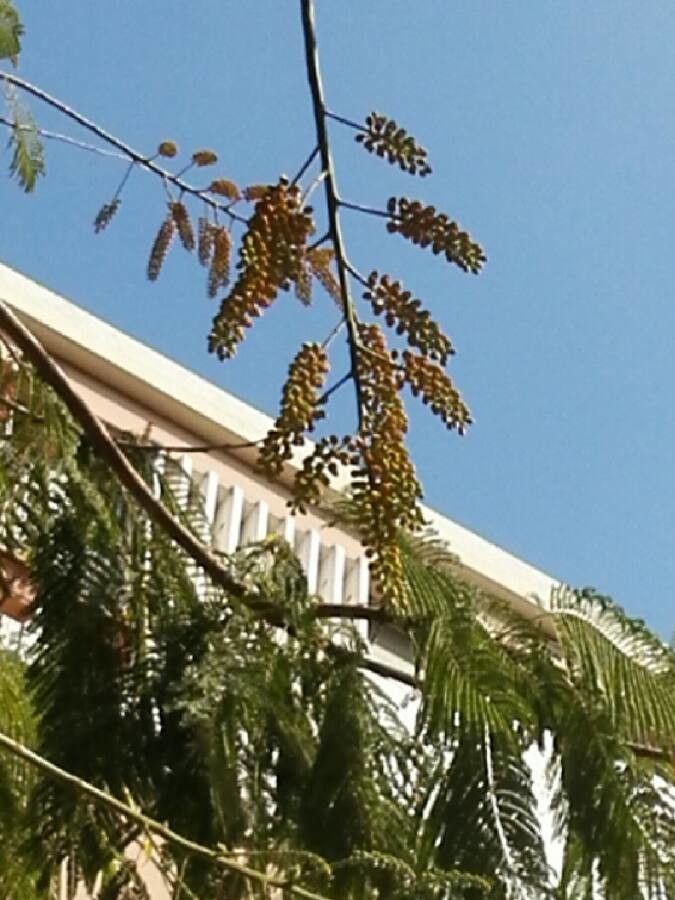
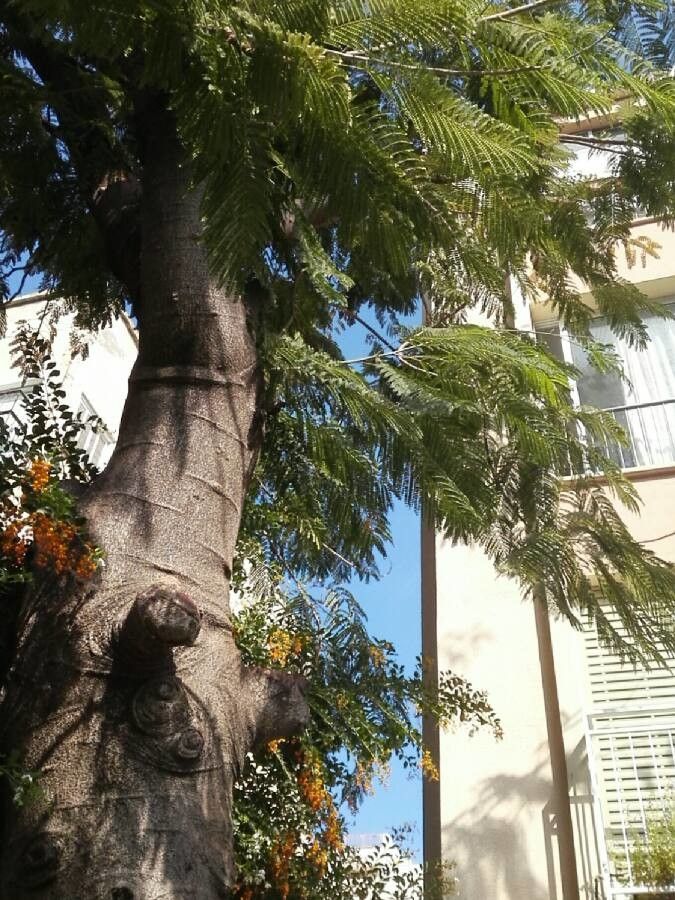
Colvillea racemosa is a species of legume in the family Fabaceae. It is also known by the common name Colville's Glory. Its genus is named for Sir Charles Colville, an ex Governor of Mauritius. The tree is particularly known for its bright orange flowers that grow in large cone or cylinder shaped clusters. After flowering, the tree produces long, flat, woody seed pods. The tree has small deep green leaves, superficially similar to Delonix regia. The tree is native to Madagascar, although it is now widely grown as an ornamental plant in Australia and North America. In its native range, the tree primarily grows in lowland forest and savannah areas.The species is listed as "Least Concern" on the IUCN red list.
Colville's glory tree shows good resistance to disease and is generally not susceptible to illnesses. With respect to care, this plant is fairly low maintenance. When grown outdoors it needs only minimal watering, and larger plants typically do not require pruning. Smaller plants, however, should be pruned after they finish blooming. Colville's glory tree is appropriate for anyone who has outdoor space, such as a garden or a deck, and does not demand much care experience.
How to keep Colvillea Racemosa.
Light
Colville's glory tree comes from open habitats, like sunlit meadows and forest margins, where abundant light is available. It performs best in Full Sun but can also endure Partial Sun, showing good adaptability to different light conditions.
Water
The Colville's glory tree thrives in high humidity and requires consistent moisture, although it can handle moderate drought once it is well established. It's best to water the tree every three weeks, allowing the soil to dry out slightly between waterings. During the growing season, maintaining adequate hydration will help enhance the blooms of this ornamental tree, which is typically grown outdoors.
Temperature
Colville's glory tree comes from tropical areas, where the climate is generally warm and humid. As a result, it is adapted to high temperatures and humidity. It is sensitive to sudden temperature shifts and prefers a stable thermal environment, so it's important to avoid temperature fluctuations indoors. It usually cannot tolerate cold and needs warmer conditions to grow. If the surrounding temperature drops too low, the plant may stop growing or even die.
Fertilizer
The best time to fertilize a Colville's glory tree is in early spring, as it breaks dormancy. This supports overall growth and the development of flowers. Fertilizing improves the foliage, stems, and branches, while encouraging large, colorful, and long-lasting blooms. It helps move nutrients from the roots to the flowers and enhances the plant's health and resistance to disease.
Pruning
The Colville's glory tree showcases vibrant flowers and lush foliage. To maintain its health and beauty, prune it in early spring. This helps to remove dead branches, improve air circulation, and shape the tree's structure. Regular pruning boosts its blooms and overall vitality. Be sure to use clean, sharp tools to prevent disease. Timing and precision are key for achieving the best results.
Botanical profile.
- Plant Type
- Tree
- Life Cycle
- Perennial
- Genus
- Colvillea
- Family
- Leguminosae
- Hardiness Zone
- 10
- Mature Height
- 9.14 m to 15.24 m
- Mature Spread
- 7.92 m to 11.89 m
- Leaf Color
- Green
- Leaf Type
- Semi-evergreen
- Flower Color
- Orange
- Flower Size
- 2.03 cm to 3.05 cm
- Bloom Time
- Mid fall, Late fall, Early winter
- Planting Time
- Spring, Summer
- Harvest Time
- Mid winter, Late winter, Early spring
- Native Area
- Madagascar
Other names.