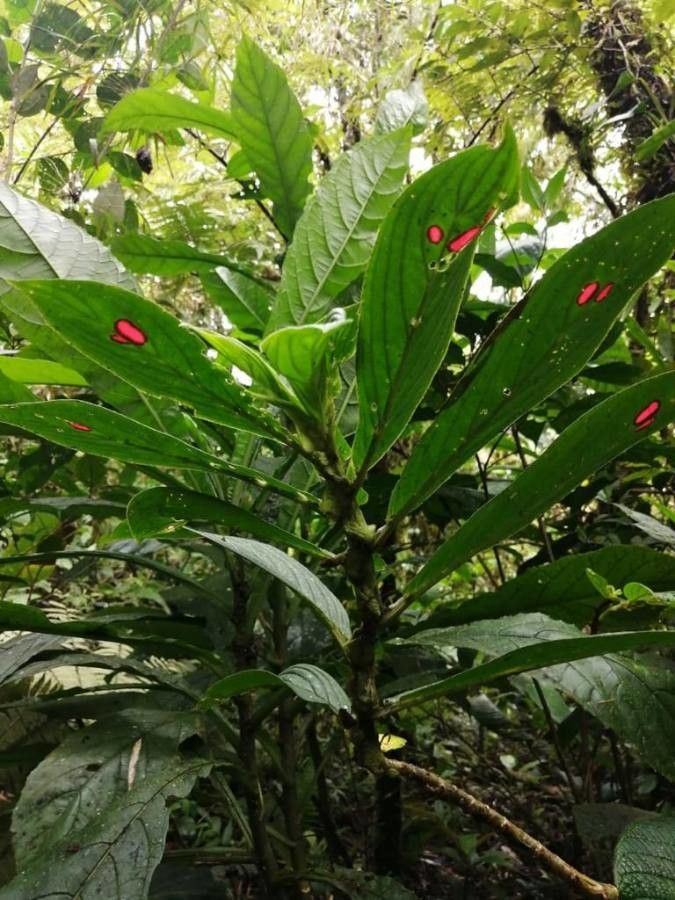
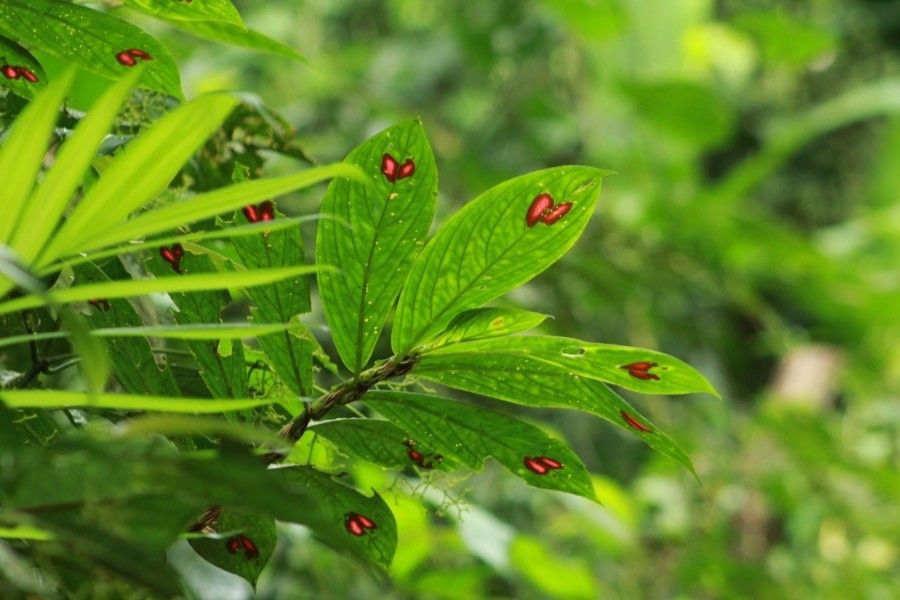
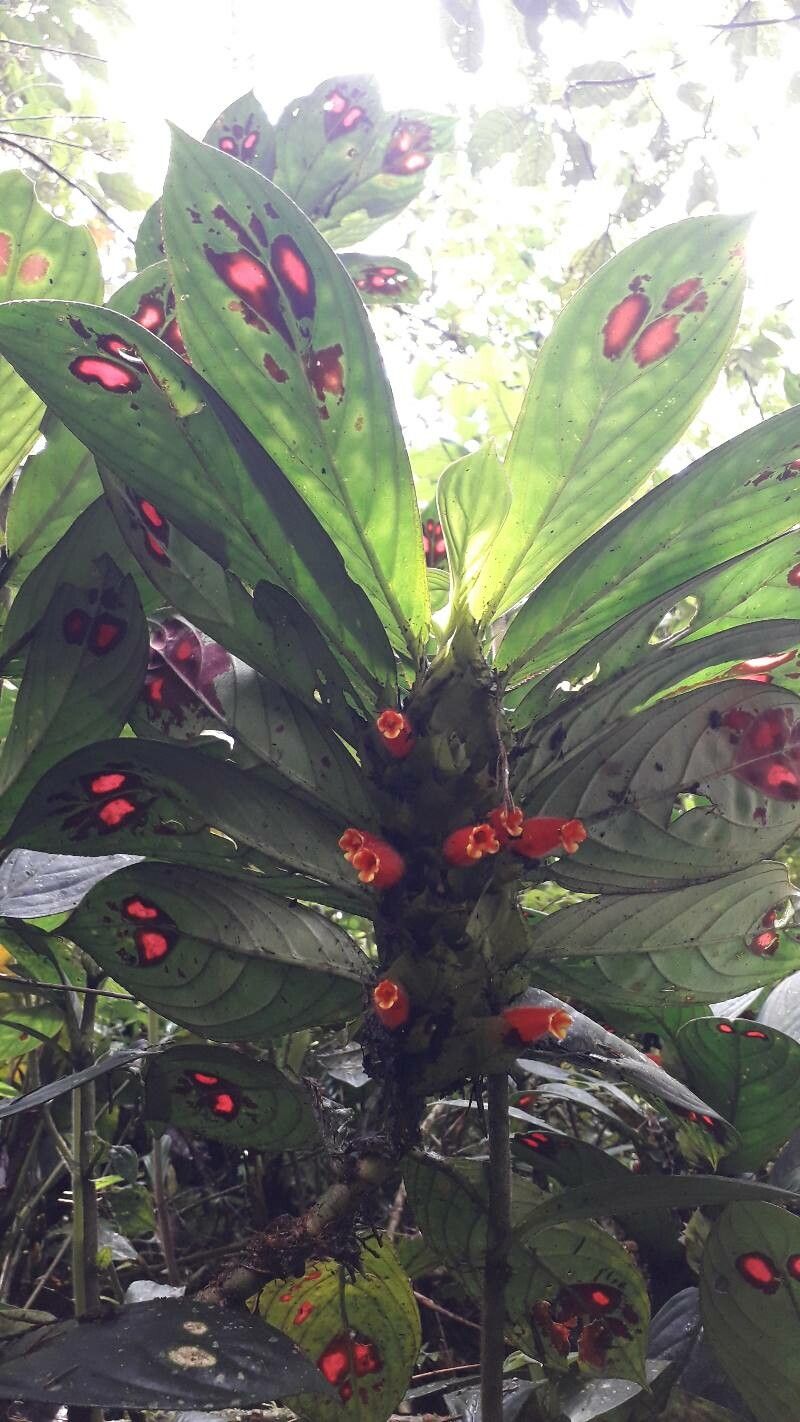
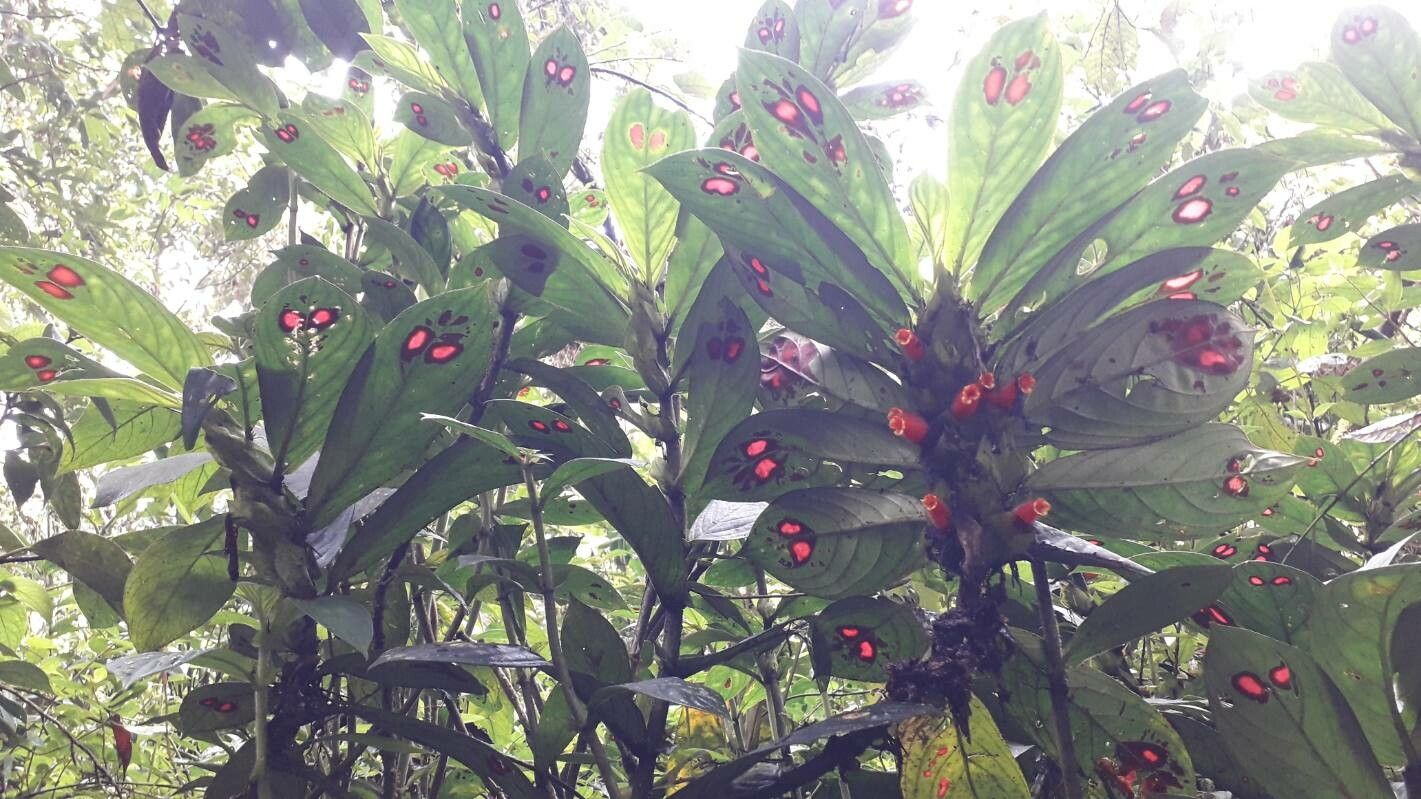
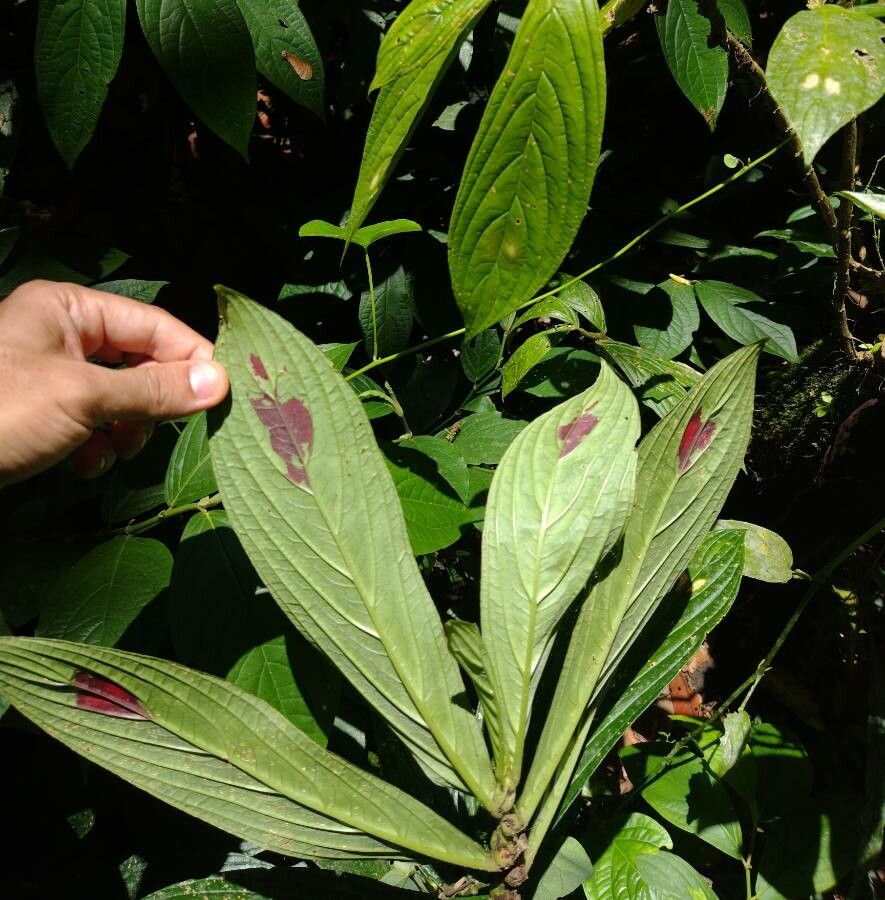
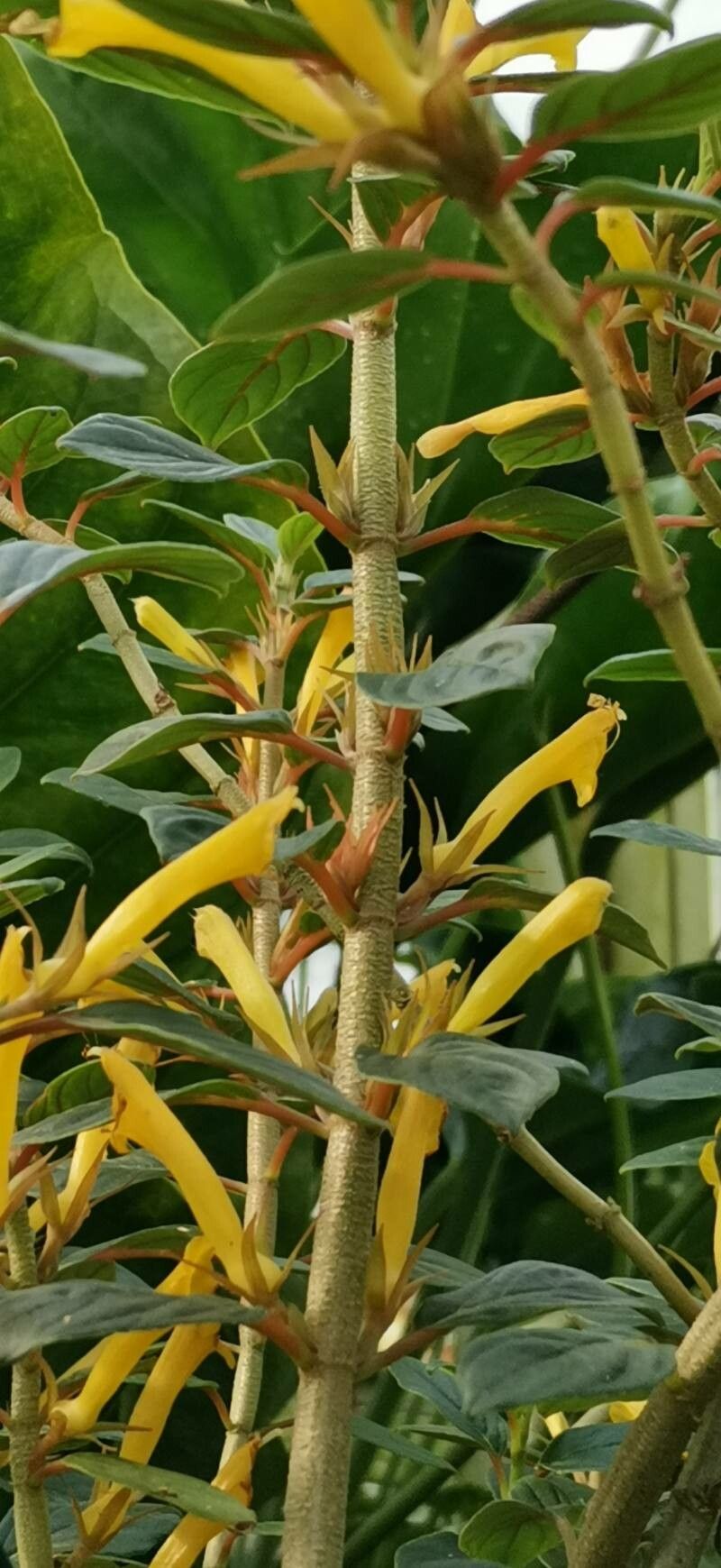
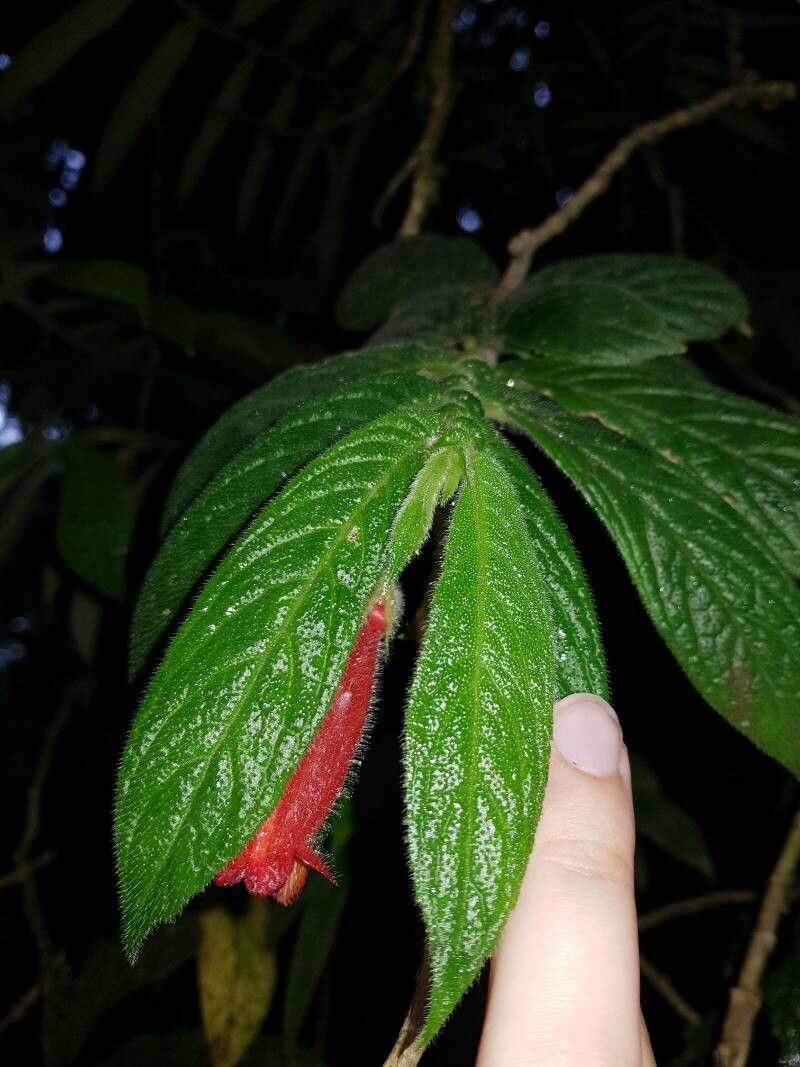
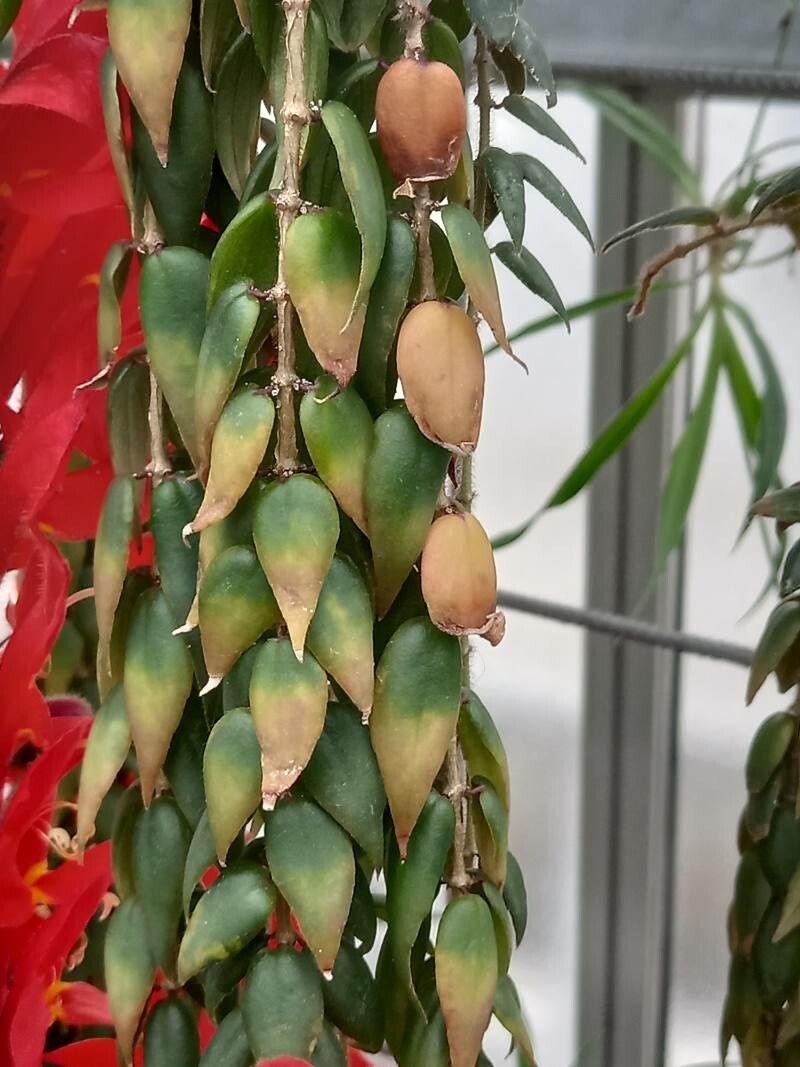
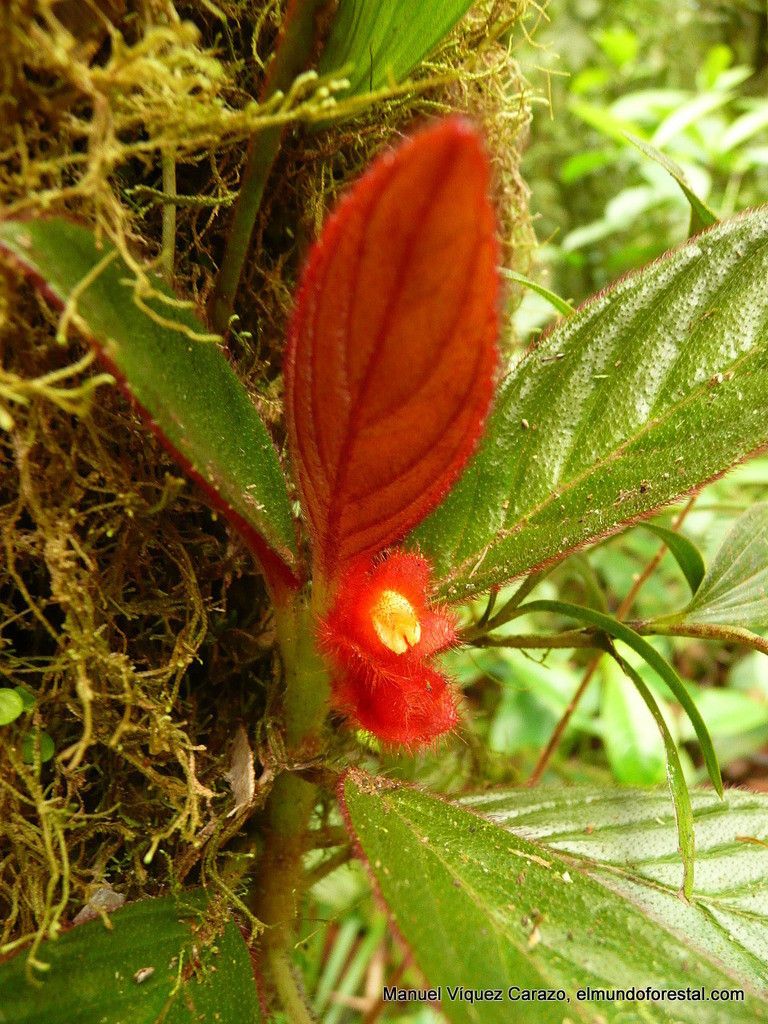
Columnea consanguinea is a species of flowering plants in the genus Columnea. They are endemic to Colombia, Costa Rica, Ecuador, Nicaragua, and Panama. They are distinctive for possessing red translucent heart-shaped markings on their leaves that serve to attract their main pollinators - the hummingbird Heliodoxa jacula - to their more inconspicuous flowers. The species was first described by Johannes von Hanstein in 1865. It is classified under the family Gesneriaceae.
Blood of Christ shows a strong level of disease resistance and is generally not prone to illnesses. Nevertheless, if the plant is grown in poor conditions, its vulnerability to disease can increase. It also suffers from relatively few insect pests. Regarding care, this plant has moderate needs. Providing ample sunlight is important, because insufficient light can make it more disease-prone and cause spindly growth. Since it is commonly kept indoors, it may need to be relocated regularly to a brighter spot. It does not need frequent watering. In general, Blood of Christ is appropriate for most people, though it thrives best with those who can supply good light conditions.
How to keep Columnea Consanguinea.
Light
Blood of Christ is native to habitats like forest understories or rocky sites, where it occurs in natural shade. It favors partial sun but can tolerate full sun or full shade, reflecting its versatile and hardy nature.
Temperature
Blood of Christ comes from tropical areas, where the climate is generally warm and humid. Therefore it is well-suited to high temperatures and humidity. It does not tolerate abrupt temperature changes and prefers a steady temperature environment, so avoiding temperature fluctuations indoors is important. It typically cannot withstand cold and needs warmer conditions for growth. If the surrounding temperature falls too low, the plant may stop growing or even die.
Fertilizer
The best time to fertilize a Blood of Christ is in early spring, when it comes out of dormancy. This encourages overall growth and flower formation. Fertilizing improves the foliage, stems, and branches, and supports flowers that are large, bright, and long-lasting. It helps transfer nutrients from the roots to the flowers and enhances the plant’s health and resistance to disease.
Pruning
Columnea consanguinea is known for its striking red-veined leaves. To encourage bushy growth, it's best to prune it in early spring. Use clean tools to cut back any leggy stems, which helps prevent disease. Avoid heavy pruning during other seasons to minimize stress, leading to healthier foliage and more vibrant flowers.
Pot & Repot
When repotting Blood of Christ, pick a container that is 1–2 inches (2.5–5.1 cm) larger and has ample drainage. Use a well-draining potting mix. Repot in spring or fall, making sure the root ball sits slightly below the rim of the flower pot. Water thoroughly after repotting and place it in a warm spot with indirect sunlight.
Botanical profile.
- Plant Type
- Vine
- Life Cycle
- Perennial
- Genus
- Columnea
- Family
- Gesneriaceae
- Hardiness Zone
- 10-12
- Mature Height
- 30 cm to 61 cm
- Mature Spread
- 30 cm to 46 cm
- Leaf Color
- Green, Dark Green
- Leaf Type
- Evergreen
- Flower Color
- Red, Orange
- Flower Size
- 3.05 cm to 5.08 cm
- Bloom Time
- All year round
- Planting Time
- Spring, Summer, Autumn
- Harvest Time
- All year round
- Native Area
- Colombia, Nicaragua, Ecuador, Costa Rica, Panama
Other names.
Reader questions.
What is Columnea consanguinea?
Columnea consanguinea, also known by its botanical name Columnea consanguinea, is a plant species. However, the provided information does not include details on its essentials or symptoms, nor does it provide any additional information regarding the plant.