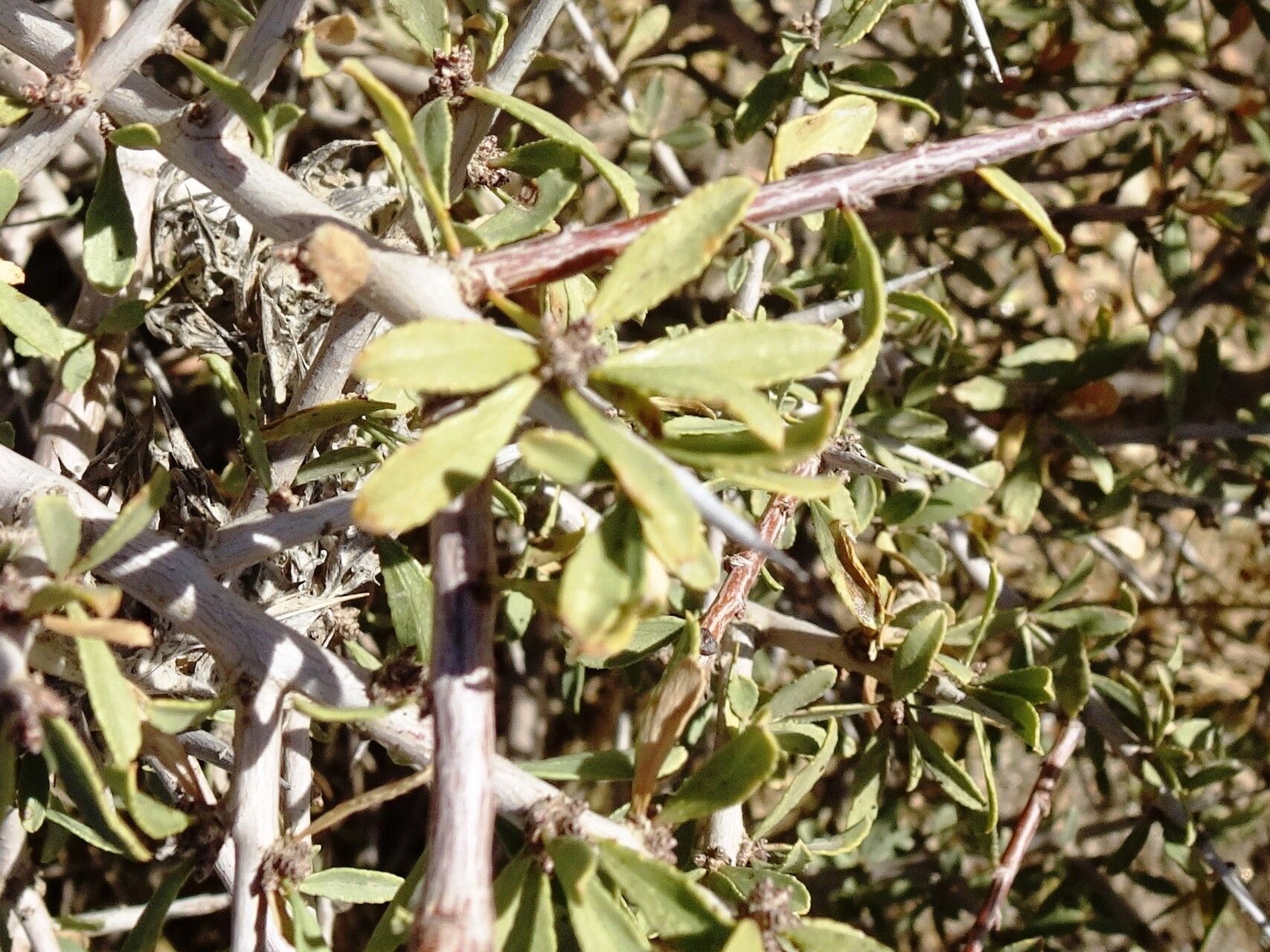
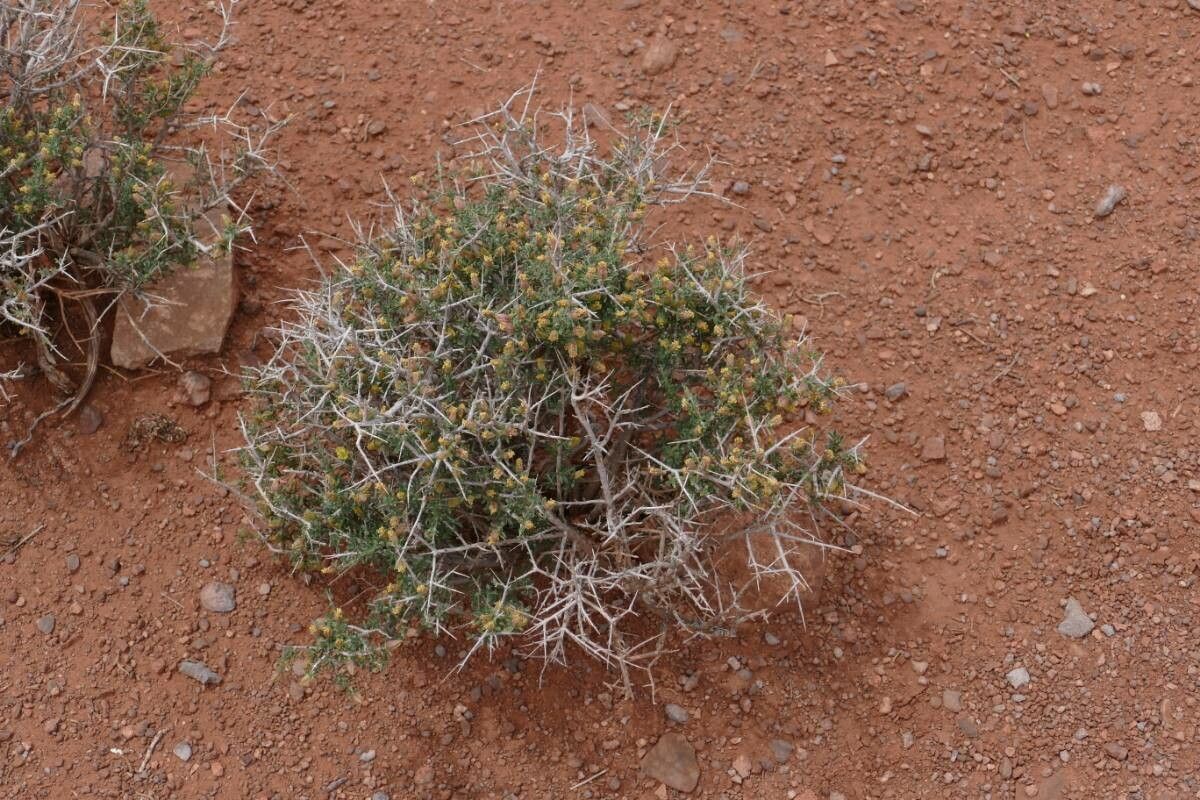
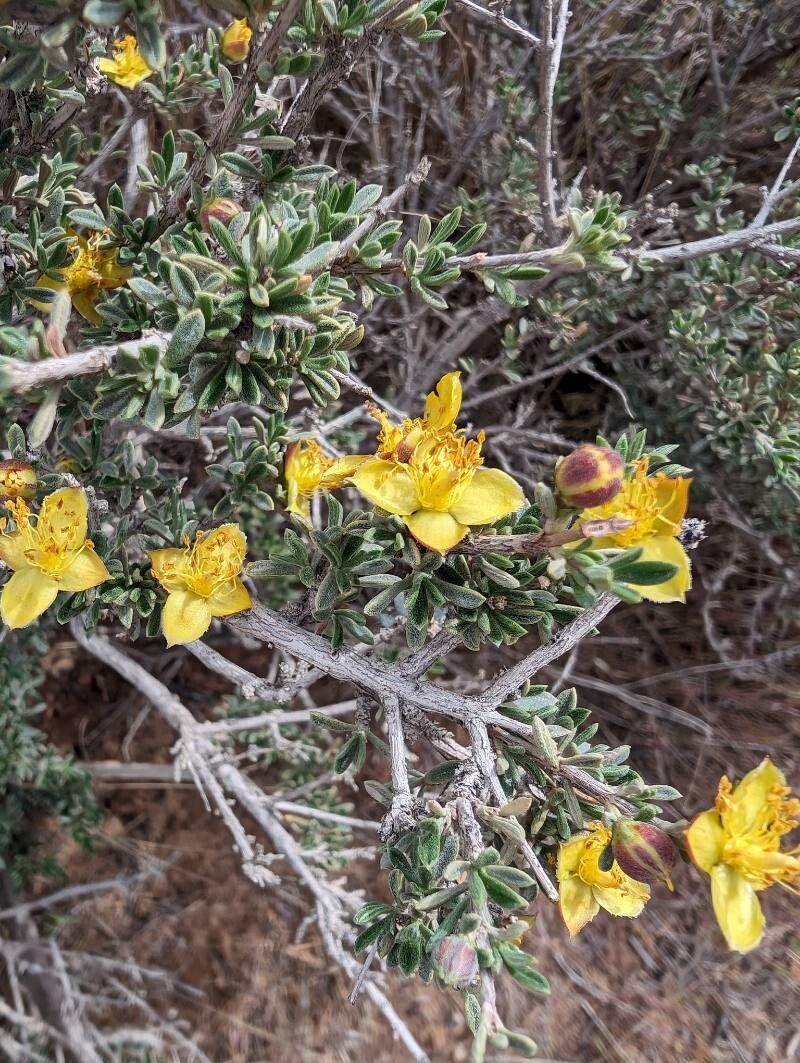
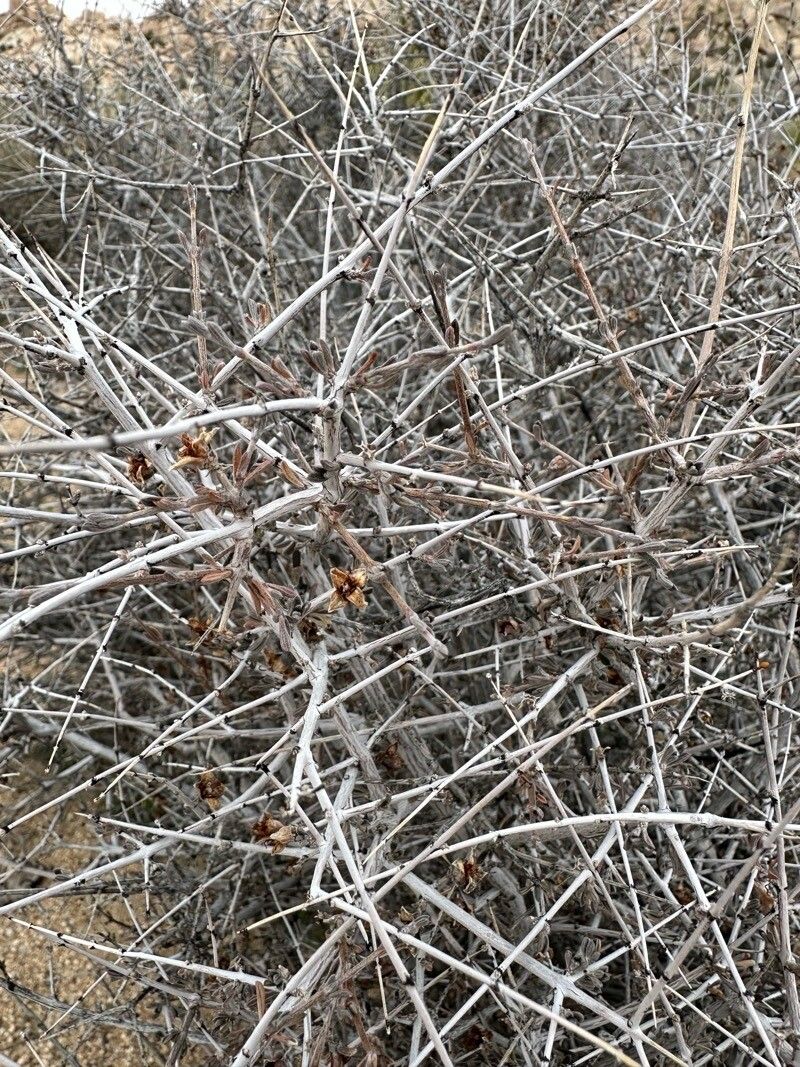
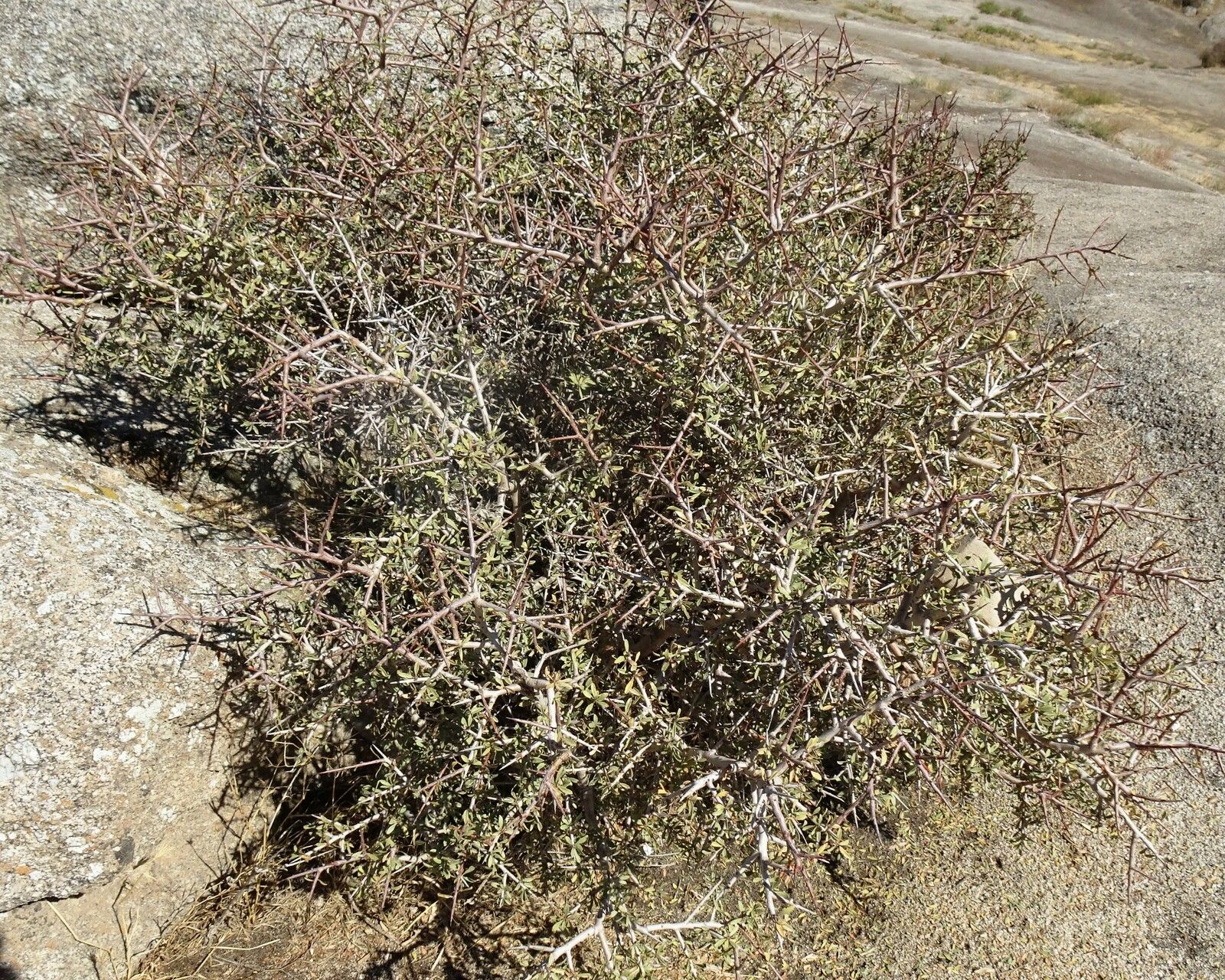
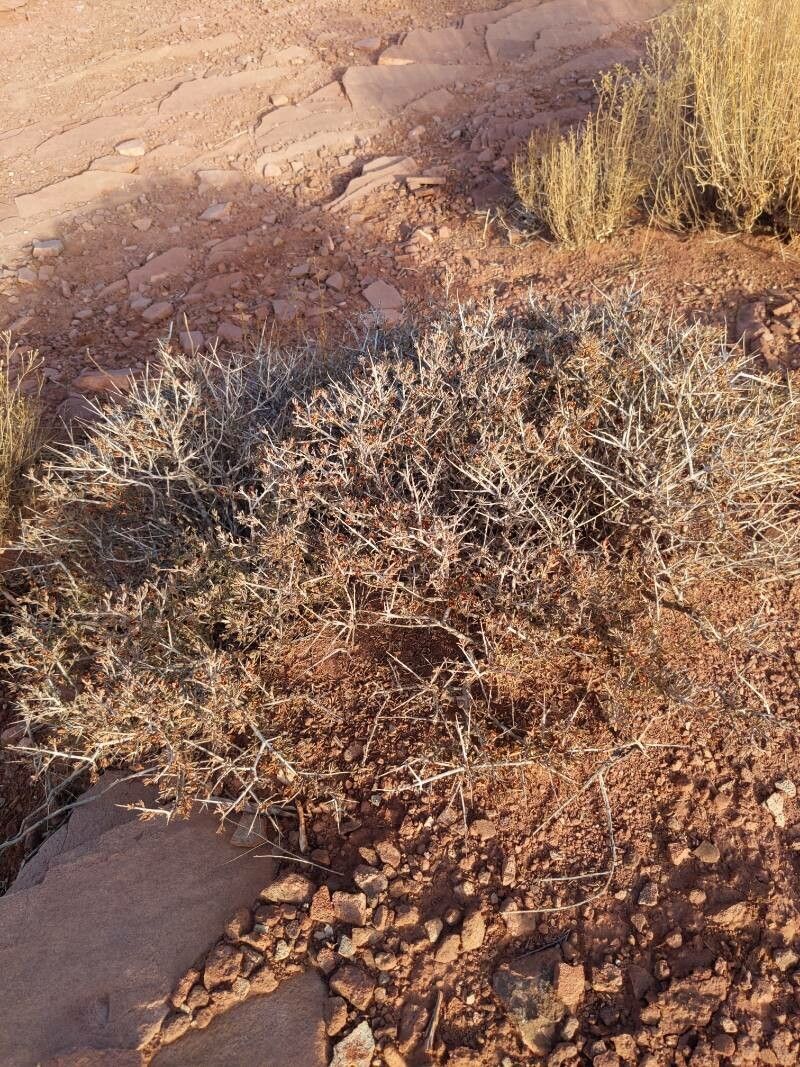
Coleogyne ramosissima, commonly known as blackbrush, is a small shrub native to the southwestern United States. Belonging to the Rosaceae family, this plant can grow up to 3 meters tall. It exhibits a dense, twiggy growth habit with small, dark green leaves. In early spring, blackbrush produces small white flowers with five petals.
Blackbrush thrives in arid regions such as deserts and dry plains, where it tolerates extreme temperatures ranging from hot summers to cold winters. It has adapted to these harsh environments by developing deep roots that access water from underground sources.
Ecologically, blackbrush is crucial as it provides food for wildlife like rabbits, deer, and birds. Its extensive root system also helps prevent soil erosion by stabilizing the soil.
Historically, Native Americans have utilized blackbrush for its medicinal properties, particularly its anti-inflammatory benefits that help alleviate pain from arthritis and other inflammatory conditions.
In summary, Coleogyne ramosissima is a vital plant species that maintains ecological balance and offers medicinal benefits to humans.
Blackbrush shows good resistance to disease and is usually not susceptible to illnesses. As for maintenance, this plant is fairly low-maintenance. Planted outdoors, it needs only minimal watering, and larger specimens typically do not require pruning. Smaller plants, however, should be pruned after they finish blooming. Blackbrusht is appropriate for anyone with outdoor space, such as a garden or deck, and does not demand much experience in plant care.
How to keep Coleogyne Ramosissima.
Light
Blackbrush grows best with the maximum sunlight, though it adapts well to dimmer conditions, even full shade. Native to environments with abundant sun, its health and growth can suffer if it lacks sufficient light. Conversely, excessive exposure can also be harmful.
Water
Blackbrush is well-suited to arid environments, thriving with minimal moisture and demonstrating remarkable drought tolerance. It only needs to be watered infrequently, about every 2-3 weeks. Frequently found outdoors, blackbrush is resilient even during dry months, making it an excellent example of water conservation in plants.
Temperature
Blackbrush is native to temperate regions and prefers temperatures between 41 and 77 °F (5 and 25 °C). Seasonal adjustments might involve supplying extra warmth during the winter months.
Fertilizer
Fertilize your Blackbrush in early spring to encourage healthy growth. Regular feeding boosts overall health, leading to vigorous growth, better tolerance of harsh conditions, and increased resistance to pests and diseases. Keep a consistent fertilization schedule for your Blackbrush to maintain vibrant, deeply colored foliage and a lush appearance.
Pruning
Blackbrush is a thorny shrub that thrives in arid climates. To keep it healthy, prune it between early and late winter. This will help remove dead branches and improve air circulation, which enhances growth and flowering potential. Regular maintenance is essential for promoting resilience and preserving its shape.
Botanical profile.
- Plant Type
- Shrub
- Life Cycle
- Perennial
- Genus
- Coleogyne
- Family
- Rosaceae
- Hardiness Zone
- 5
- Mature Height
- 30 cm to 91 cm
- Mature Spread
- 30 cm to 91 cm
- Leaf Color
- Gray, Dark Gray
- Leaf Type
- Evergreen
- Flower Color
- Yellow
- Flower Size
- 1.02 cm to 1.52 cm
- Bloom Time
- Early spring, Mid spring
- Planting Time
- Spring, Autumn
- Harvest Time
- Early summer, Mid summer
Other names.
Reader questions.
How should I water my Blackbrush plant?
Your Blackbrush can be watered using any common watering tool, such as watering cans, hoses, or even cups. It is important to apply the water directly to the soil and ensure that all areas are equally moistened to provide water to the entire root system. Using filtered water is preferable, as tap water may contain harmful particles. Additionally, it is better to use water that is at or slightly above room temperature, as extremely hot or cold water can shock the plant. However, the Blackbrush typically responds well to any type of water.
What are the sunlight requirements for Blackbrush?
Blackbrush thrives best under maximum sun exposure but can adapt to less light, including full shade. It originates from habitats with abundant sunlight, so ample light is crucial for its health and growth, although too much can be harmful. Sunlight requirements vary: full sun plants need above 6 hours of sunlight, while partial sun to full shade plants require about 3-6 hours. Monitoring how sunlight moves through your garden helps in choosing the best spots for planting, ensuring a good balance of light and shade for optimal plant health.
What is the native environment of Blackbrush?
Blackbrush, scientifically known as Coleogyne ramosissima, is native to temperate environments. It prefers a temperature range of 41 to 77 °F (5 to 25 °C). To thrive, it requires seasonal adjustments, such as providing additional warmth during the winter months. Despite its high cold tolerance, ensuring the soil remains moist entering winter by watering generously before the first freeze is recommended. This practice helps prevent drought and water scarcity for the plant during the colder months.
What should I do if I give my Blackbrush plant too much or too little water?
When it comes to outdoor plants, especially newly planted ones or seedlings, they are inclined to not getting enough water. It's important to remember to water them consistently for a few months while they are small or recently planted. Once the roots are established, Blackbrush plants can rely on rain for the most part. If you have Blackbrush plants in pots, overwatering is more likely to happen. If you accidentally overwater your Blackbrush, you should take immediate action to remedy the situation. First, stop watering the plant right away to minimize the effects of overwatering. Then, remove the Blackbrush from its pot to inspect its roots. If you find that none of the roots have developed root rot, you can put the plant back in its container. However, if you do find signs of root rot, trim away the affected roots and consider applying a fungicide to prevent further damage. Lastly, repot the Blackbrush in well-draining soil. On the other hand, if your Blackbrush has been underwatered, simply water it more frequently. Underwatering can be easily fixed. Look for drooping and drying leaves, which will bounce back after sufficient watering. Adjust your watering frequency as soon as you notice underwatering occurring.
How can artificial lighting be used for Blackbrush indoor plants?
For Blackbrush plants indoors, adequate lighting is essential, especially in locations with insufficient natural sunlight. Artificial lighting, like LED lights that can be customized to specific wavelengths, provides a vital solution. Full sun plants need 30-50W per square foot, partial sun plants require 20-30W per square foot, and full shade plants need 10-20W per square foot. The light source should be placed 12-36 inches above the plant, mimicking natural sunlight, for 8-12 hours per day to promote faster and healthier growth.
How does low temperature affect Blackbrush, and what are the solutions?
Blackbrush is extremely cold-tolerant and can withstand temperatures down to -25°C. However, if the temperature dips below this threshold, you might not notice immediate damage during winter. The real issue manifests in spring when the branches may become brittle, dry, and unable to produce new shoots. The best solution for this issue is to prune away any dead branches that have failed to produce new leaves, promoting the growth of new, healthy branches.
How frequently should I give water to my Blackbrush plant?
To ensure healthy growth for most outdoor plants, you can rely on rainfall. However, in areas with less rainfall, it's important to provide adequate watering every 2 weeks in the spring and fall, with more frequent watering needed in the summer. In the winter, when plants need less water, it's best to water sparingly or not at all. Young or newly planted Blackbrush plants require more frequent watering to establish themselves and become more adaptable to drought conditions. For potted plants, you have two options to determine watering frequency. One is to set a regular schedule, such as once a week or every other week. However, this approach may not consider the specific conditions of your Blackbrush's growing environment. Another option is to monitor soil moisture and water when the top two to four inches of soil, about ⅓ to ½ depth of the pots, have completely dried out. This approach takes into account seasonal variations, as in summer when the plant's water needs are highest.
What are the symptoms of light deficiency or overexposure in Blackbrush?
Blackbrush sensitive to both too little and too much sunlight might show symptoms like small or pale leaves, leggy growth, leaf drop, and halted growth due to insufficient light. Overexposure can cause chlorosis, sunscald, leaf curling, wilting, and leaf scorching. These symptoms indicate either a lack of or too much sunlight, affecting the plant's photosynthesis and overall health. Subtle symptoms of light deficiency could include smaller new leaves, and stretched growth, while overexposure symptoms include damaged or discolored leaves.
What should I do if my Blackbrush is exposed to high temperatures?
Blackbrush struggles with high temperatures, particularly when the thermometer climbs above 25°C. This can lead to significant leaf drop and, in extreme cases, the plant may wither and die. To mitigate these effects, trim sunburned and dried-up parts of the plant. Relocate it to a shaded area or use a shade cloth to protect it from the midday and afternoon sun. Keeping the soil moist by watering the plant in the morning and evening can also help reduce temperature stress.
How much water does my Blackbrush plant need?
Watering your Blackbrush correctly is important, and you may be surprised to learn that it doesn't always require a lot of water. If only a few inches of soil have dried since your last watering, giving it about five to ten ounces of water each time should support healthy growth. You can determine the appropriate amount of water by checking the moisture of the soil. Remember to take note of how many inches of soil have dried out between waterings. To ensure your Blackbrush receives enough moisture, water it thoroughly enough to moisten all the dry soil layers since the last watering. If over half of the soil has dried out, it's a good idea to provide more water. In such cases, continue watering until you see excess water draining from the pot's drainage holes. If your Blackbrush is planted in an area that receives adequate rain, you may not need to water it additionally. However, when the plant is young or newly established, it should receive 1-2 inches of rain per week. As it grows and establishes itself, it can rely on rainwater alone. Only when the weather is hot and there has been no rainfall for 2-3 weeks should you consider giving it a full watering to prevent stress.
What solutions can remedy insufficient sunlight for Blackbrush?
To combat insufficient sunlight for Blackbrush, indoors, gradually move plants to sunnier locations, aiming for at least 6 hours of direct sunlight by using south-facing windows or considering artificial light for large or less movable plants. Outdoors, gradually transition plants to sunnier spots to prevent sunburn, and prune or transplant to reduce obstructions and improve sunlight exposure. Adaptation to sufficient light involves gradual changes and may require additional support through artificial lighting or environmental adjustments.
How can I know if I am giving enough water to my Blackbrush plant?
The Blackbrush plant is often affected by overwatering, which is a common problem. If you notice yellowing leaves or leaf drop, your Blackbrush may be overwatered. Overwatering can also cause the plant to shrivel and promote root rot. On the other hand, an underwatered Blackbrush will start to wilt and may have brown or brittle leaves. In either case, it's important to take action and restore the plant's health.