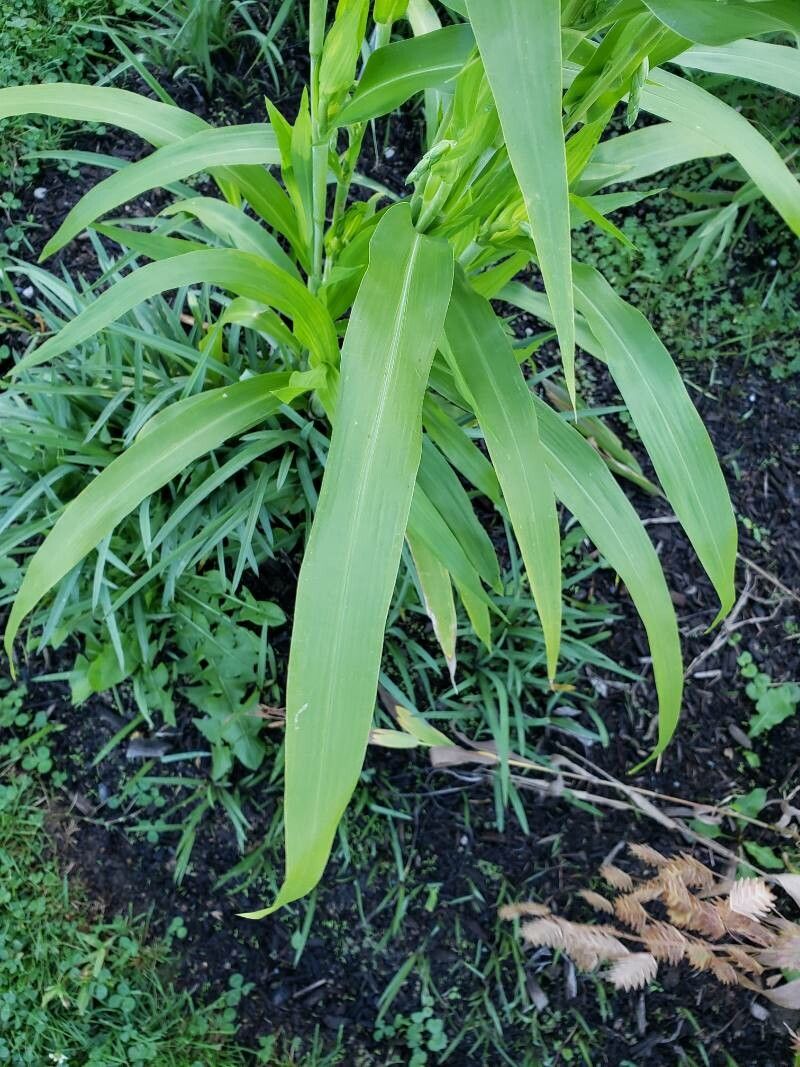
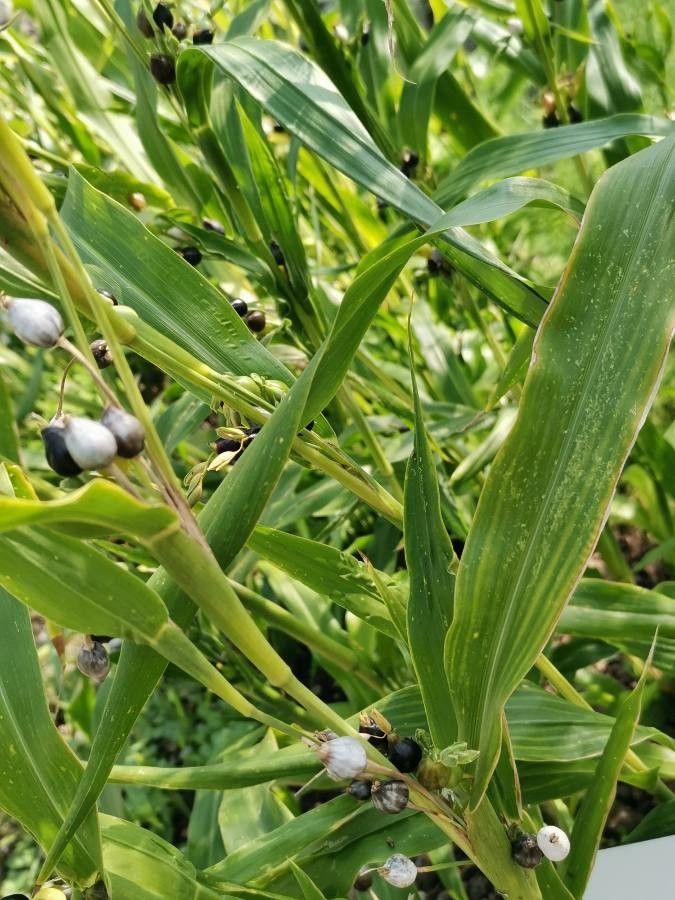
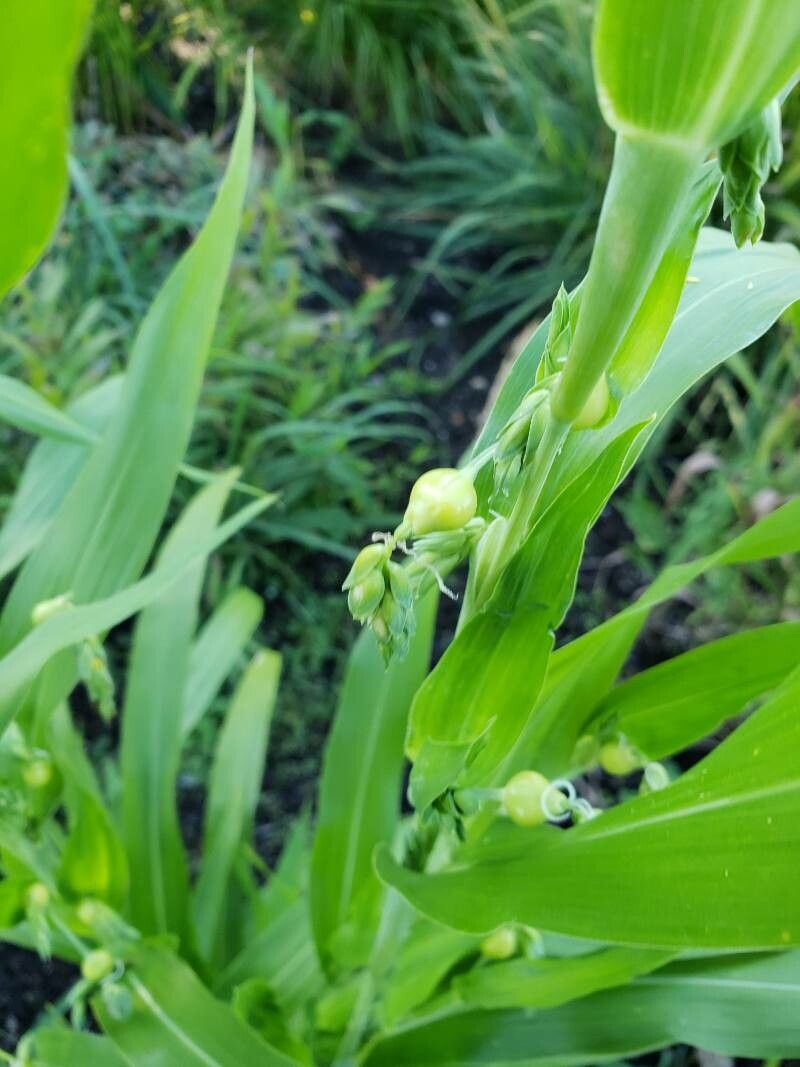
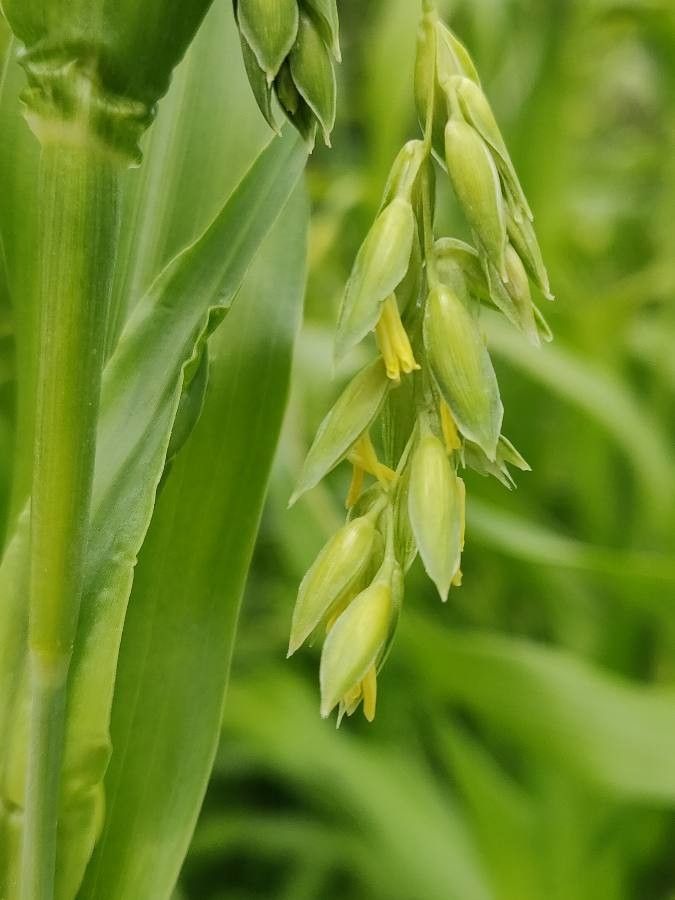
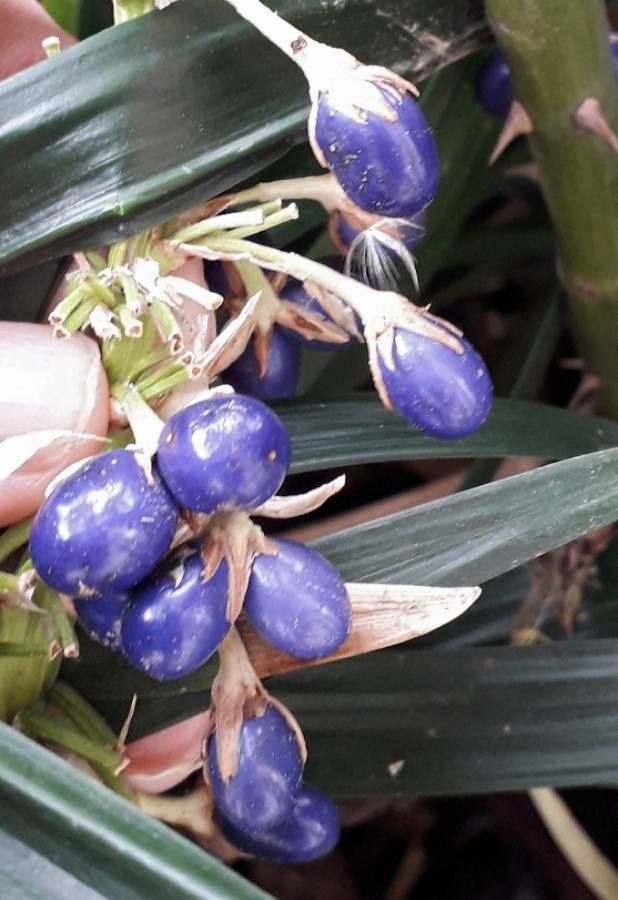
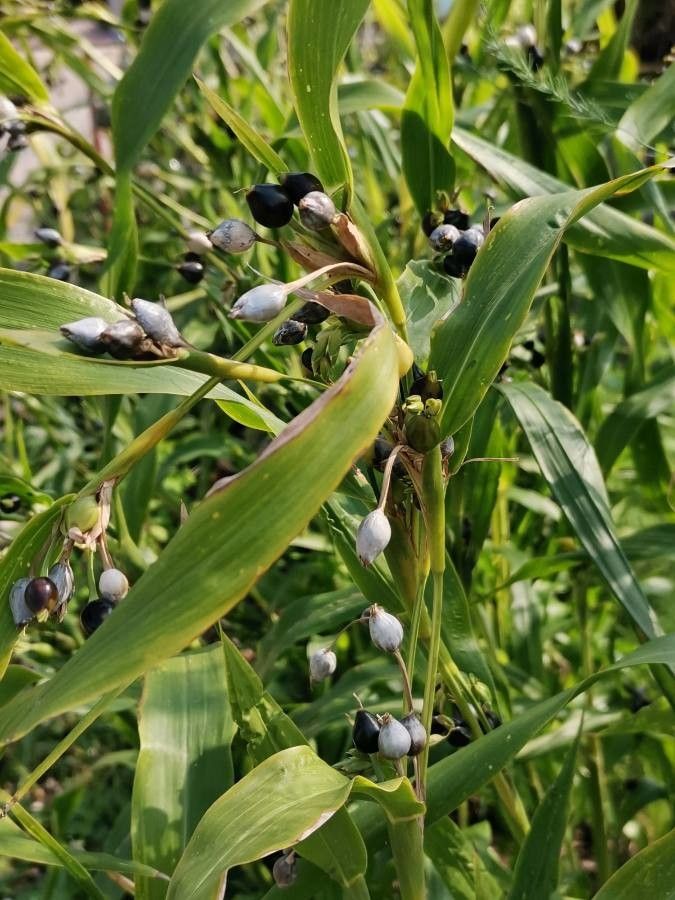
Coix lacryma-jobi, commonly known as Job's tears, is a tall annual grass belonging to the Poaceae family. Native to Southeast Asia, this plant has been cultivated for thousands of years for its edible seeds and medicinal properties. It can grow up to 2 meters tall and features long, slender green leaves.
The seeds of Coix lacryma-jobi are the most valuable part of the plant. These small, round beads have a hard outer shell and come in various colors such as white, brown, or black. Traditionally, the seeds have been used in Chinese medicine for centuries due to their anti-inflammatory properties.
Beyond its medicinal uses, Job's tears is also a significant food crop in many parts of Asia. The seeds can be boiled or roasted and eaten like popcorn or ground into flour for baking.
The plant is also valued for its ornamental beauty, with attractive foliage and unique seed heads that resemble teardrops hanging from the stem.
Overall, Coix lacryma-jobi is an important plant with both medicinal and culinary applications, making it a vital part of many cultures around the world today.
Adlay is fairly resistant to disease and typically does not suffer from illnesses. However, it can be vulnerable to pests and pathogens present in its environment. Such infections are generally mild. In terms of care, the plant needs a moderate level of upkeep. Regular pruning is necessary to preserve its appearance and encourage healthy growth. Applying fertilizer can also help promote flowering. Adlay is suitable for anyone with outdoor space, like a garden or patio, and does not require extensive gardening experience. When grown indoors, it may demand more attention.
How to keep Coix Lacryma Jobi.
Light
Adlay requires ample sunlight for healthy development. The plant originates from areas where light is abundant. At different growth stages, its photosynthesis can function with moderate sun. However, too little or too much sun can injure the plant, disrupting growth or causing it to wilt.
Water
Adlay thrives in humid conditions and is excellent at retaining moisture. It prefers to be watered consistently, ideally twice a week. Using mulch outdoors can help conserve water, reducing the need for frequent irrigation during its active growing season. Although Adlay can tolerate short dry spells, it benefits most from regular hydration.
Humidity
This plant will thrive in moderate humidity, which is probably the level in your home. However, misting it a few times a week can be very beneficial. Make sure the room has good ventilation.
Temperature
Adlay is native to environments where temperatures commonly range from 68 to 100.4 °F (20 to 38 ℃). In its preferred settings, temperature adjustments are often unnecessary throughout the seasons.
Fertilizer
For best growth, Adlay needs three fertilizer applications: one before planting, a second one month after the seedlings emerge, and a final application 1 to 1.5 months after the second. Some Adlay varieties also benefit from extra fertilizer at planting to encourage rapid growth.
Pruning
Adlay is a tall and hardy grass known for its bead-like seeds. To encourage new growth and maintain its shape, it's best to prune it in the spring. Regular trimming not only improves its appearance but also helps reduce pests. Always use clean tools to prevent the spread of disease. For more detailed guidance, be sure to consult reliable sources.
Botanical profile.
- Plant Type
- Herb
- Life Cycle
- Annual, Perennial
- Genus
- Coix
- Family
- Poaceae
- Hardiness Zone
- 8-11
- Mature Height
- 0.91 m to 1.22 m
- Mature Spread
- 61 cm to 91 cm
- Leaf Color
- Green
- Leaf Type
- Deciduous
- Flower Color
- Green
- Flower Size
- 2.54 cm
- Bloom Time
- Summer, Early fall, Mid fall
- Planting Time
- Spring
- Harvest Time
- Late summer, Fall, Early winter
- Native Area
- Nepal, Sri Lanka, Saudi Arabia, India, Malaysia, Philippines, Bangladesh, Pakistan, Laos, China, Iraq, Indonesia, Cambodia, Vietnam, Myanmar, Japan, Bhutan, Iran, Thailand
Other names.
Reader questions.
What should I do if I give my Adlay plant too much or too little water?
The solution for underwatering Adlay is simple: when you see that the plant is lacking moisture, start watering it more consistently. On the other hand, overwatering can be a serious problem, especially if not noticed early. When Adlay is overwatered, it can develop diseases that cause it to wither and die. To avoid this, it is important to select a suitable location for planting, one that receives ample sunlight to dry out the soil and has good drainage to prevent water from accumulating. If you overwater an Adlay plant in a pot, it may be necessary to transfer it to a different pot. The previous container may not have had proper drainage or enough drainage holes. When repotting the overwatered Adlay, ensure that the soil is loose and that the new pot drains efficiently.
Why should I put fertilizer on my Adlay?
Plants require nutrients to grow, and while some types can obtain all they need without additional fertilizers, Adlay and other plants rely on nutrients to support growth and internal processes. The main nutrients that plants use are nitrogen, phosphorus, and potassium, and each contributes to essential plant functions. For foliage, nitrogen is particularly important. However, Adlay may struggle to obtain enough nitrogen from the soil, so many gardeners choose to supplement by providing a nitrogen source.
What are the sunlight requirements for growing Adlay?
Adlay plants require different amounts of sunlight at various stages of their growth. For healthy growth, these plants need a generous amount of sunlight, as they originate from environments where bright light is abundant. Full sun, defined as above 6 hours of sunlight daily, is ideal for Adlay, but they can also manage with partial sun, which is about 3-6 hours of sunlight. It's crucial to observe the movement of sunlight through your garden to find spots that offer the right mix of light and shade, ensuring the plants' well-being.
What is the ideal temperature range for growing Adlay?
Adlay is indigenous to environments with temperatures typically between 68 to 100.4 °F (20 to 38 °C). In these preferred settings, adjustments for temperature are often unnecessary across different seasons, indicating that Adlay thrives well within this temperature range without the need for intervention.
How frequently should I water my Adlay?
Adlay, like many other plants, requires regular watering throughout the growing season. In the spring, it's recommended to water this plant once a week. However, as the season progresses and the temperature rises, you may need to water it two to three times a week. It's important to avoid overwatering, as it can harm your Adlay. Along with frequency, you should also be mindful of keeping the soil moist but not overly wet, regardless of how often you water. Watering Adlay in a pot is slightly different. Generally, potted plants need more frequent watering because the soil in the pot can dry out more quickly. Therefore, it's advisable to water a container-grown Adlay a few times per week, compared to just once a week for a plant in the ground.
When should I fertilize my Adlay for the best results?
Adlay generally grows well and benefits from monthly fertilization, especially during its active growth period in spring and summer. It is important to note that you should only fertilize Adlay during these seasons, as it becomes less active in fall and winter and requires fewer nutrients. A good indication to begin fertilizing is when you observe new growth on the plant. Whether you are growing Adlay outside or in a container indoors, the fertilization schedule remains the same. However, if your Adlay is in a container, you may not need to fertilize for the first one to two months. Container plants typically have nutrient-rich potting soil, so it is best to start fertilizing once the plant has been settled in the same soil for a while.
How does artificial lighting benefit indoor Adlay plants?
Indoor Adlay plants benefit significantly from artificial lighting, especially when natural sunlight is insufficient, such as during winter or in less sunny locations. Artificial lighting, like LED lights, can be tailored to provide specific wavelengths of light needed by the plants, promoting faster and healthier growth. For full sun plants, 30-50W/sq ft of artificial light is recommended, while partial sun plants need 20-30W/sq ft, and full shade plants require 10-20W/sq ft. The light source should be placed 12-36 inches above the plant, for 8-12 hours per day, to mimic natural sunlight effectively.
Does Adlay require any special care for cold temperatures?
Adlay has some level of cold tolerance and does not generally require additional measures when the temperature is above 0°C. However, if temperatures are expected to drop below freezing (0°C), temporary protective measures should be applied, such as wrapping the plant with plastic film, fabric, or other materials to shield it from the cold. These protective materials should be removed once temperatures rise again to prevent any potential damage from overheating or restricted air flow.
How much water does my Adlay plant need?
There are a few ways to determine the right amount of water to give your Adlay plant. Some gardeners prefer to feel the soil to check for moisture. This method suggests watering until the top six inches of soil feel moist. Another approach is to use a specific measurement. Generally, giving your Adlay about two gallons of water per week is a good rule of thumb, but this can vary depending on factors like temperature and how quickly the soil dries. However, following these guidelines strictly can lead to overwatering if your plant actually needs less water. When growing Adlay in a container, a different method should be used. In this case, you should water enough to moisten all the dry soil layers. To check for moisture, simply stick your finger in the soil or water until you see a slight trickle of excess water draining from the pot's holes.
When is the best time to not use fertilizer on my Adlay?
To ensure the health of your Adlay plant, avoid fertilizing it if it is already unhealthy or if it has a disease or insect infestation. Similarly, refrain from fertilizing a dehydrated plant, as this can exacerbate the issue. It is best to only fertilize healthy plants. When watering, be cautious not to splash fertilizer onto the leaves or stem as it can cause burned spots. Unless you are using a specialized fertilizer meant to be applied to foliage, make sure the fertilizer does not directly touch the plant.
What are the symptoms of inadequate light exposure in Adlay?
When Adlay plants don't receive enough light, they may show several symptoms indicating light deficiency. These include smaller new leaves, leggy or sparse growth, faster leaf drop, slower or no new growth, and lighter-colored new leaves. Additionally, excessive sunlight can lead to chlorosis, where leaves turn yellow due to the breakdown of chlorophyll, sunscald with pale or necrotic areas on plant tissue, leaf curling as a defense against water loss, wilting from excessive water loss through transpiration, and leaf scorching characterized by brown, dry edges on leaves.
How does Adlay react to very low temperatures, and what should be done?
Adlay has a moderate tolerance to low temperatures but thrives best above 20°C. During winter, it is crucial to keep it above 0°C to ensure its health. When temperatures fall below -10°C, Adlay's leaves may droop; they can recover in mild cases, but severe conditions can cause the leaves to wilt and drop off. The solution involves trimming off frost-damaged parts and, to avoid future cold damage, wrapping the plant with non-woven fabric or cloth, along with constructing a wind barrier for protection against cold winds.