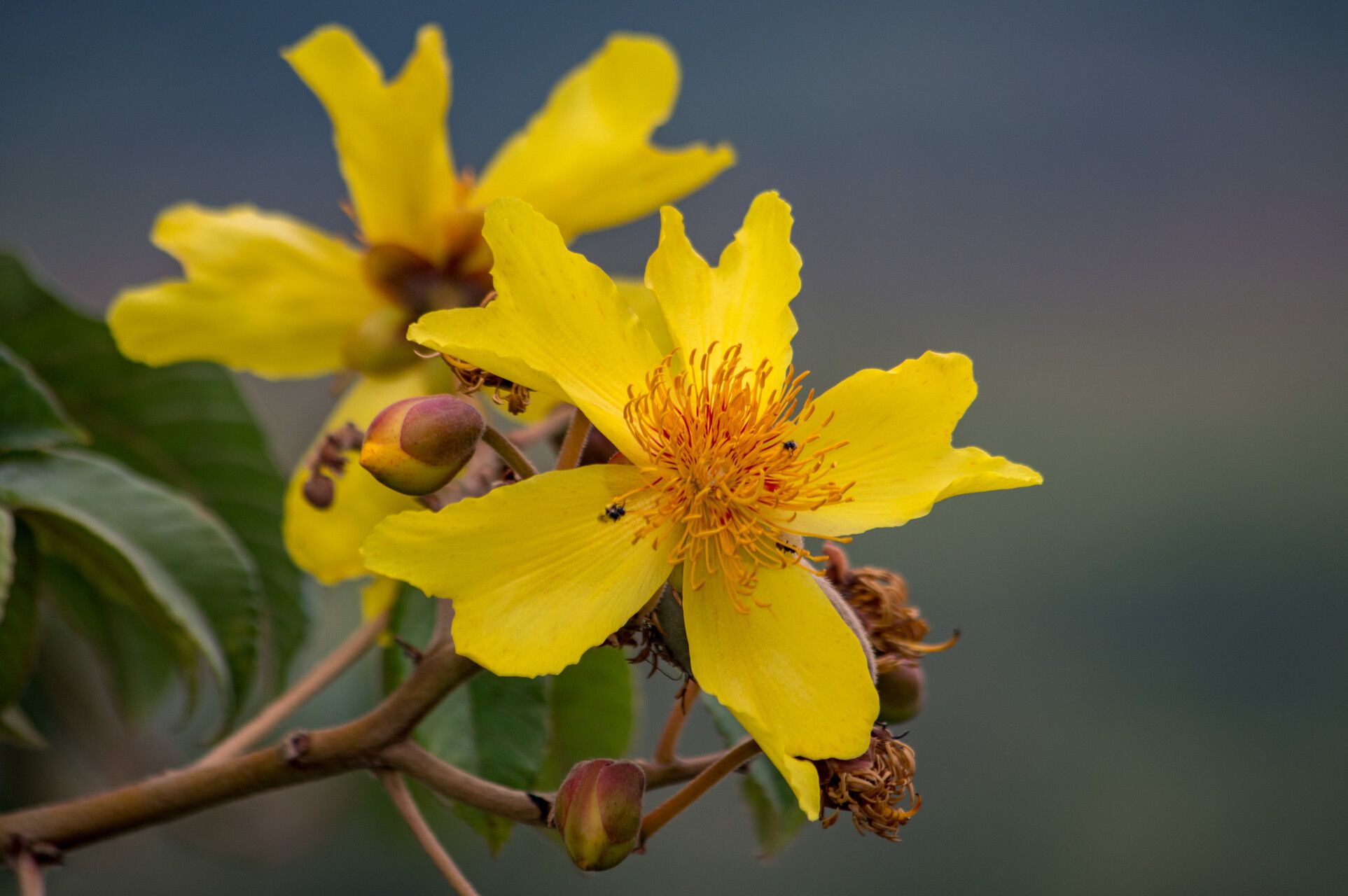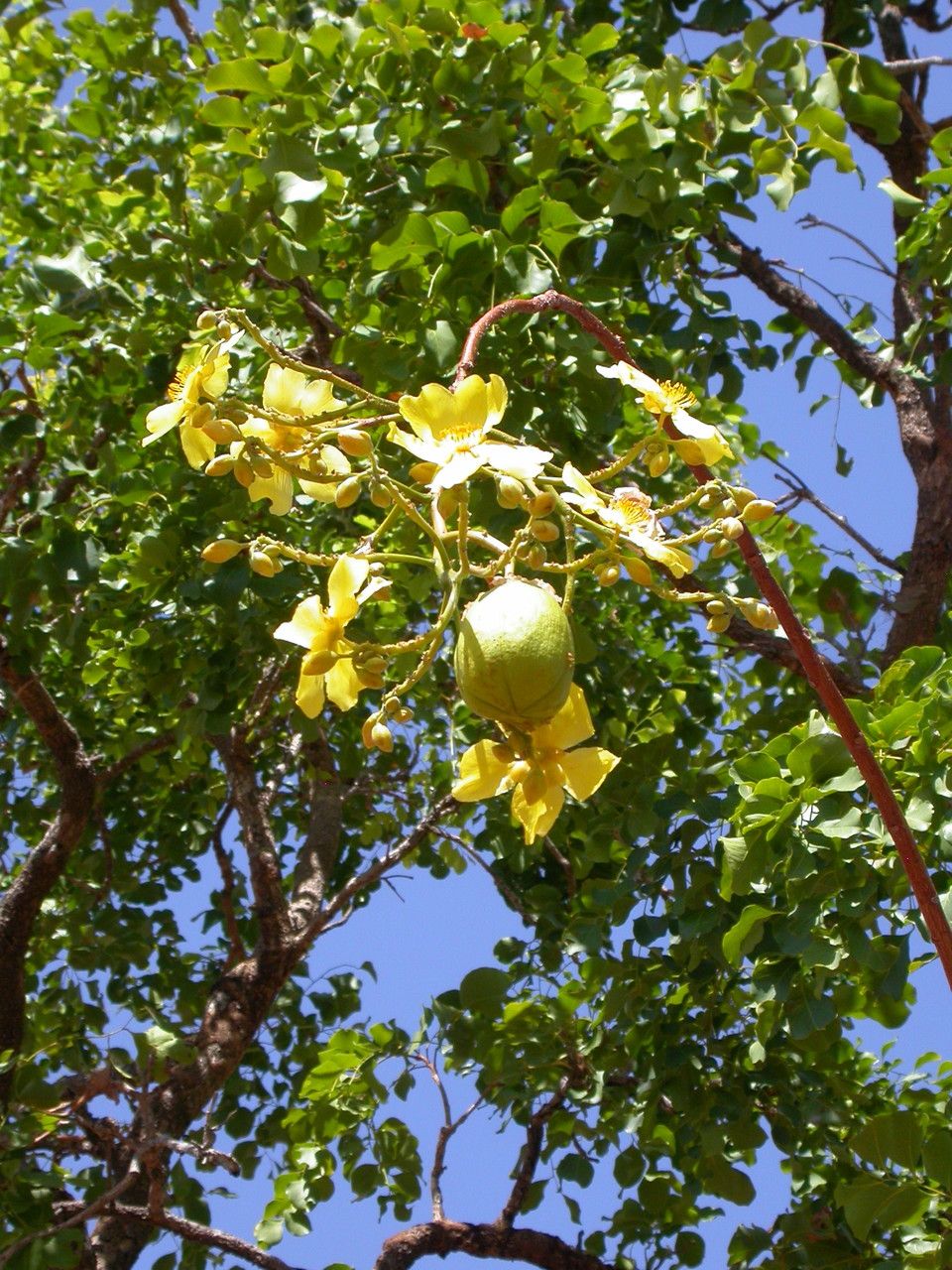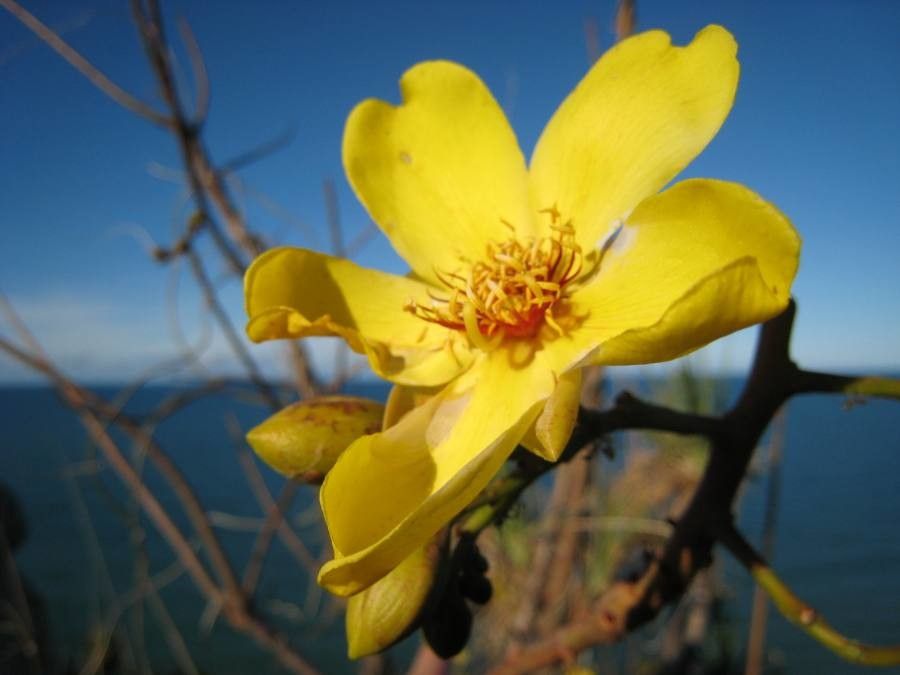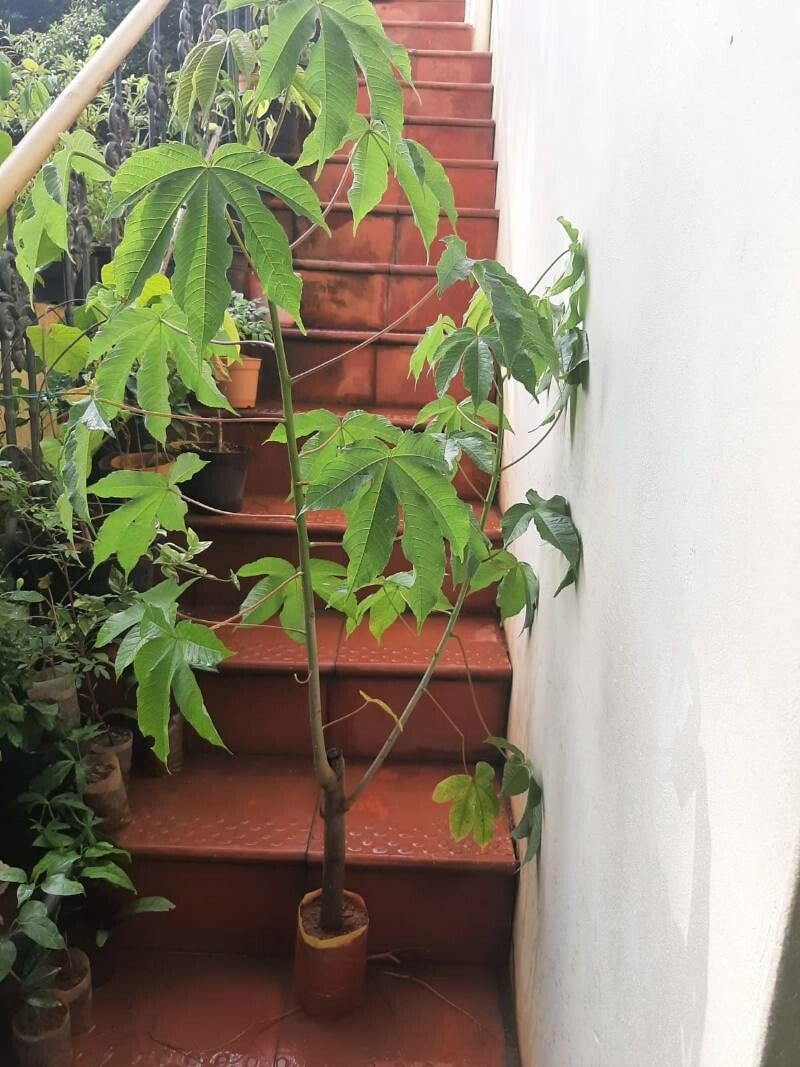
Cochlospermum religiosum is a flowering plant from the tropical region of Southeast Asia and the Indian subcontinent. It is a small tree growing to a height of 7.5 m (25 ft) usually found in dry deciduous forests. The name religiosum derives from the fact that the flowers are used as temple offerings. It is also known as silk-cotton tree because the capsules containing the seeds have a fluffy cotton-like substance similar to kapok. Another common name is buttercup tree because its yellow and bright flowers look like large-sized buttercups.
The silk-cotton tree is quite disease-resistant and usually not susceptible to illnesses. Regarding upkeep, this plant is fairly low-maintenance. When grown outdoors it needs only light watering, and mature specimens typically do not require pruning. Young plants, however, should be trimmed after they finish flowering. The silk-cotton tree is well suited to anyone with an outdoor area, like a garden or a deck, and does not demand extensive gardening experience.
How to keep Cochlospermum Religiosum.
Light
The silk-cotton tree prefers plenty of sunlight to grow well. It can also survive in less brightly lit locations. Its native habitat is characterized by abundant sun, which influences its growth; reduced light may impair development, and in extreme light situations the foliage can become withered.
Water
The silk-cotton tree, native to dry, tropical regions, is highly drought-tolerant and only needs watering every 2-3 weeks. When grown outdoors in warmer climates, it benefits from deep watering to develop strong roots. To prevent waterlogging, use well-draining soil and containers.
Temperature
The silk-cotton tree is native to areas where temperatures range from 68 to 95°F (20 to 35 ℃). It favors warm conditions and may need thermal adjustments during colder seasons to meet its temperature preferences.
Fertilizer
The best time to fertilize a Silk-cotton tree is in early spring, when it is coming out of dormancy. This encourages overall growth and development of flowers. Fertilization improves the foliage, stems, and branches, and supports the production of large, vibrant, long-lasting flowers. It also helps transport nutrients from the roots to the flowers and enhances the plant’s health and resistance to disease.
Pruning
To improve the growth and appearance of the silk-cotton tree, prune it in early spring. Begin by removing dead branches and thinning out crowded areas. Then, shape the tree to enhance its aesthetic appeal. Make sure to sterilize your tools before pruning to prevent disease and promote healthy growth and more abundant flowering. The tree's large, cup-shaped yellow flowers will benefit from this care.
Botanical profile.
- Plant Type
- Tree
- Life Cycle
- Perennial
- Genus
- Cochlospermum
- Family
- Bixaceae
- Hardiness Zone
- 10
- Mature Height
- 7.62 m
- Mature Spread
- 4.88 m to 7.92 m
- Leaf Color
- Green
- Leaf Type
- Deciduous
- Flower Color
- Yellow
- Flower Size
- 10.16 cm
- Bloom Time
- Winter
- Planting Time
- Spring, Summer, Autumn, Winter
- Harvest Time
- Spring
- Native Area
- Sri Lanka, India, Cambodia, Vietnam, Myanmar, Laos