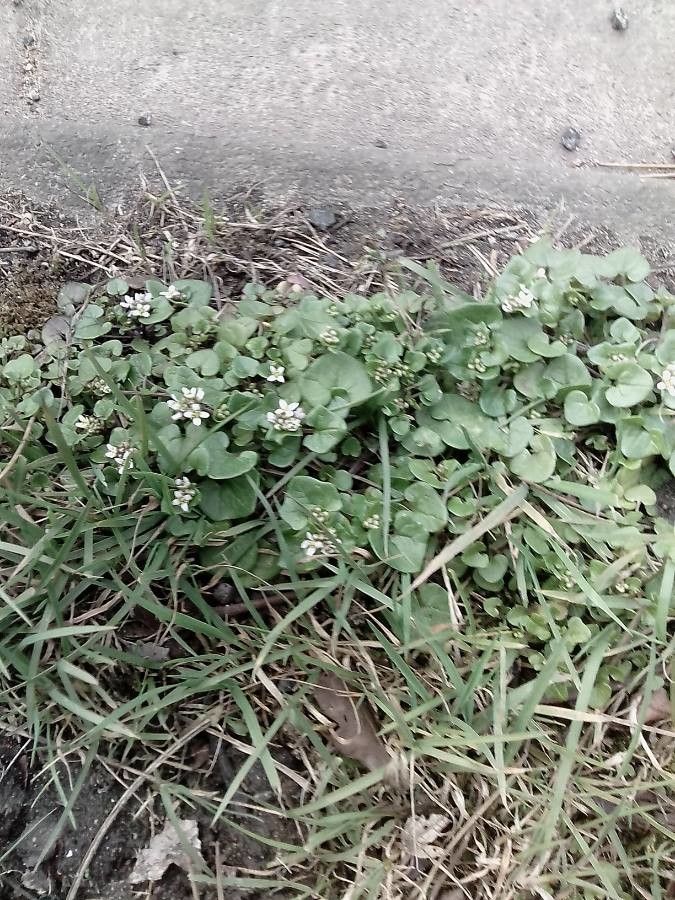
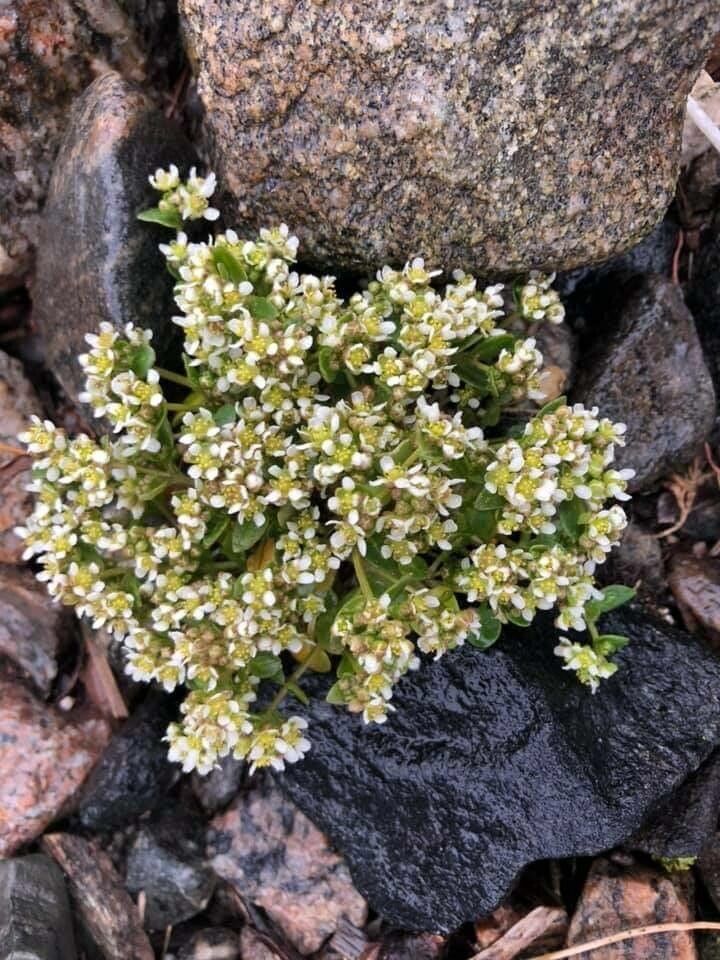
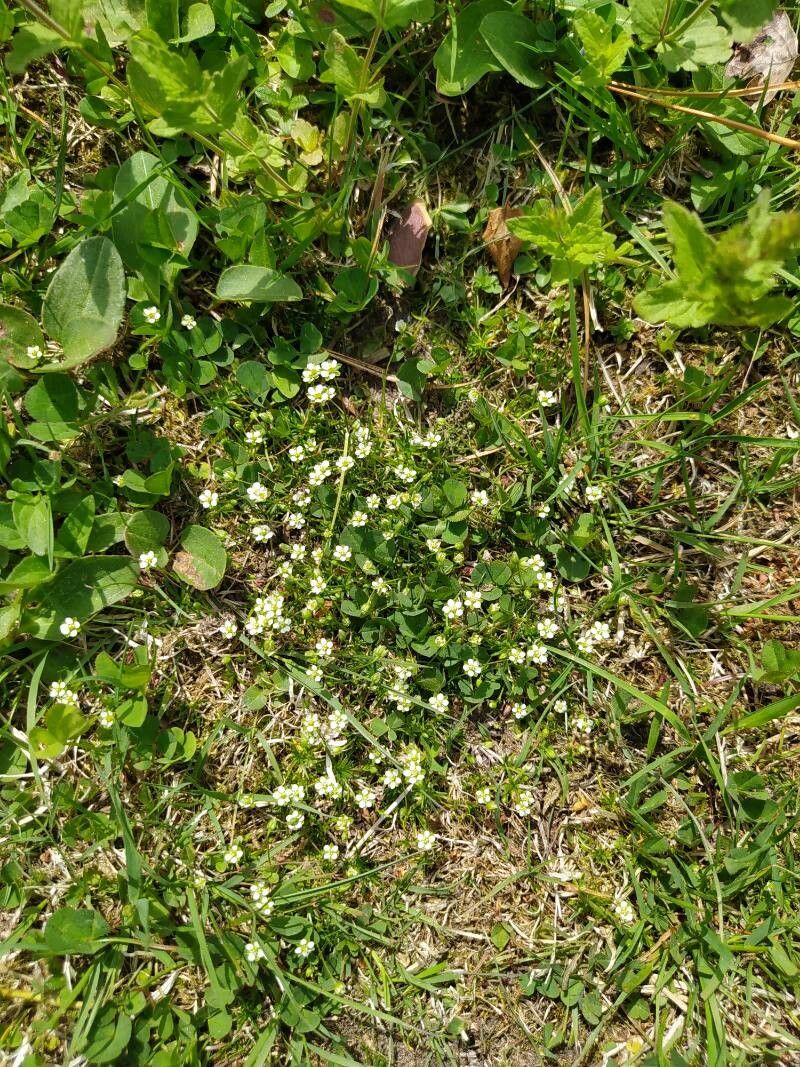
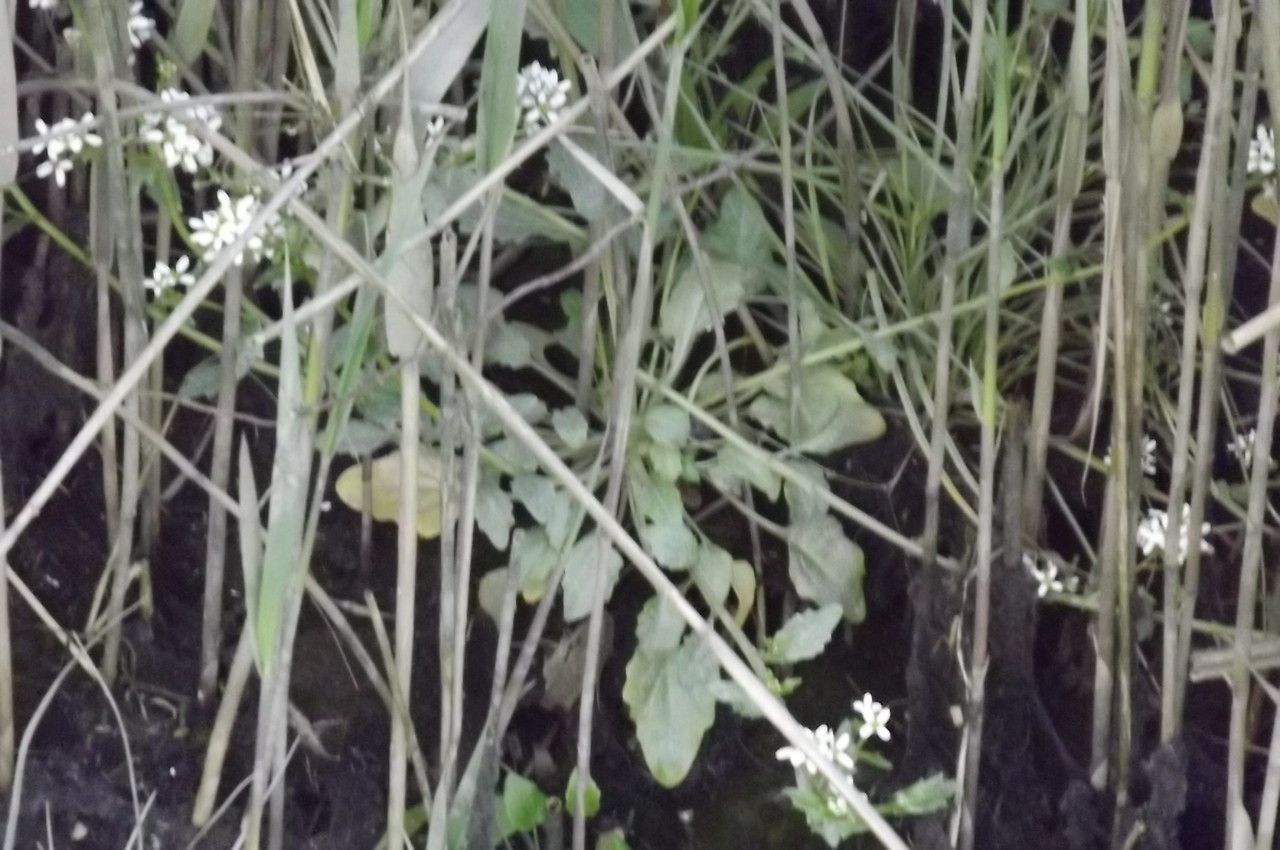
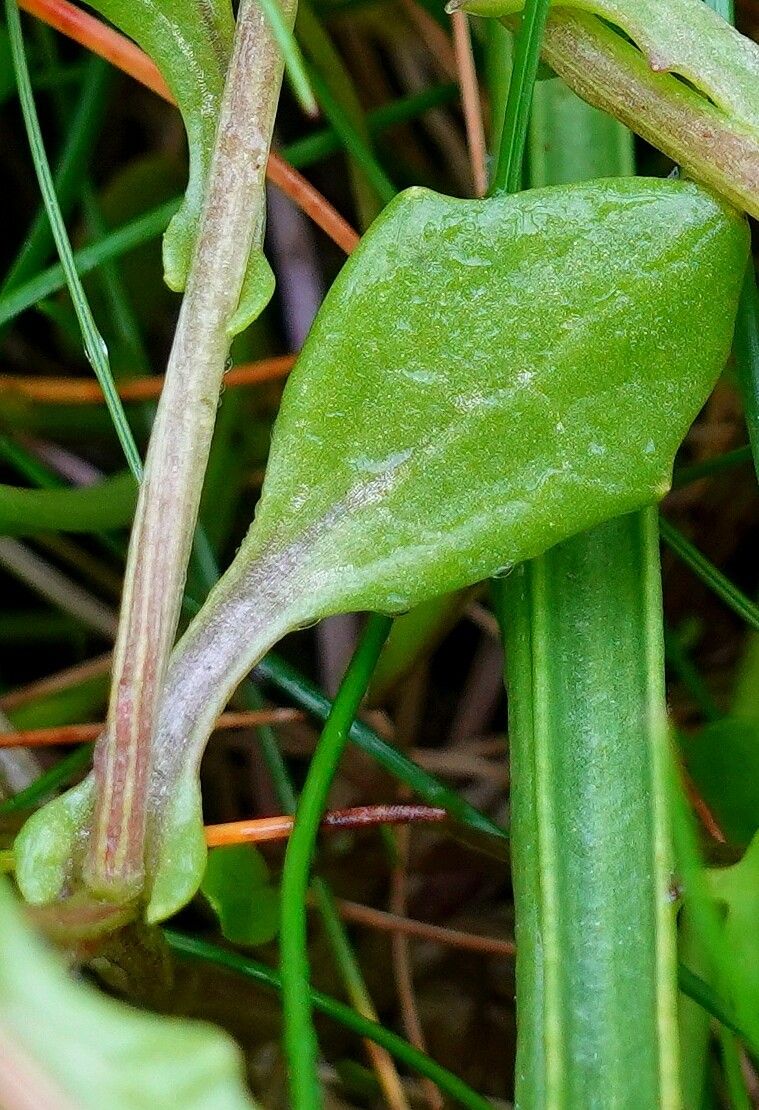
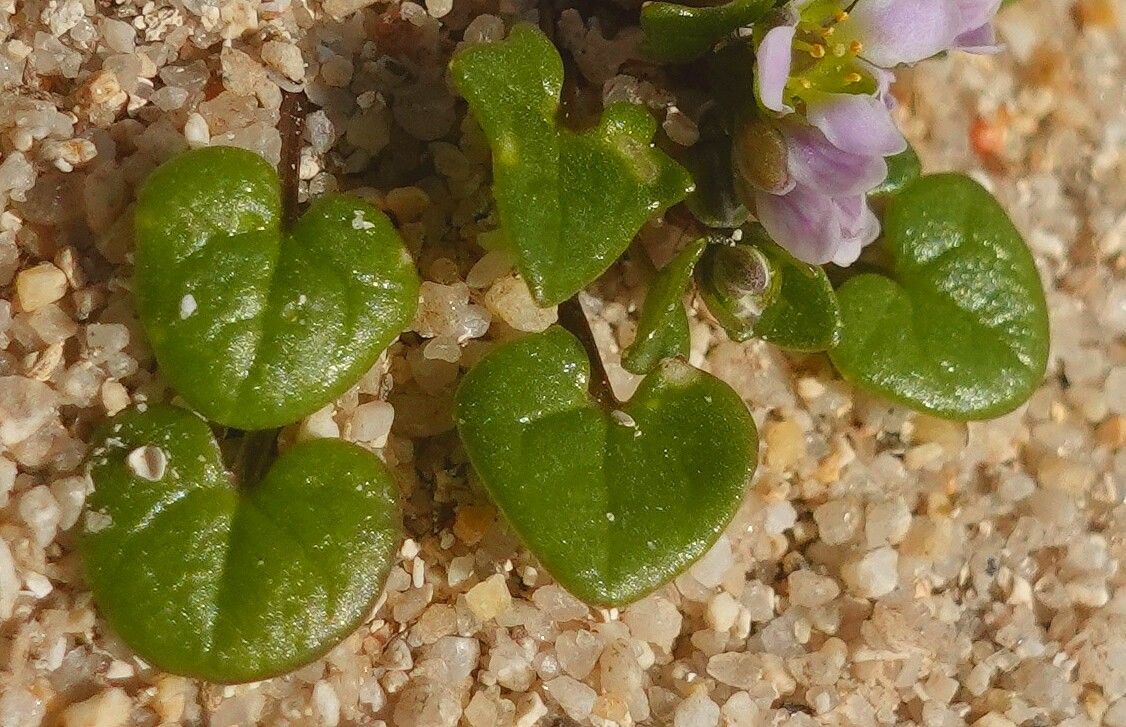
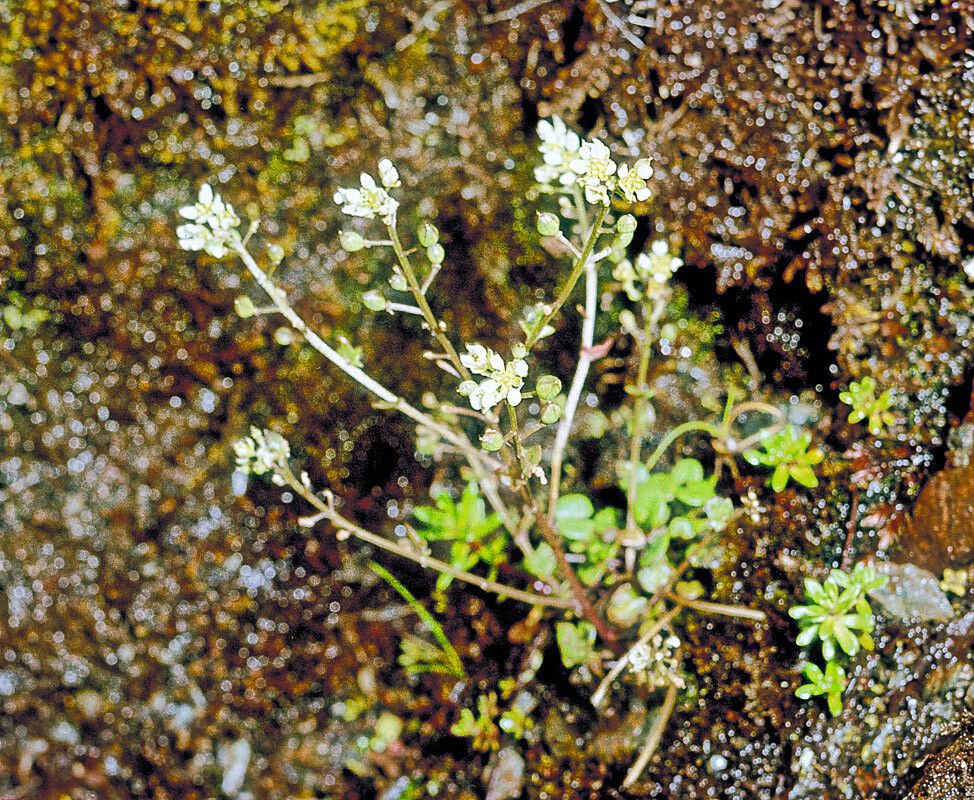
Cochlearia groenlandica, known in English as Danish scurvygrass or Greenland scurvy-grass, is a flowering plant of the genus Cochlearia in the family Brassicaceae. Cochlearia groenlandica grows as a solitary plants, the size of the individual plants varying between 1–2 centimetres (0.39–0.79 in) to 15–20 centimetres (5.9–7.9 in) in diameter. The flowers are white or pale violet and 3–6 millimetres (0.12–0.24 in) in diameter. The plant flowers between June to August. Cochlearia groenlandica grows on open ground, typically beaches, tidal flats, gravelly or sandy ground and mud flat bird nesting sites. Its range is circumpolar, and present in all major Arctic regions. In North America, its range reaches from Canada and Alaska to Oregon and it has been found as far south as California.
Danish scurvygrass has moderate disease resistance and can be prone to illnesses like leaf spot. Its vulnerability to insect pests differs by variety, but most are relatively less resistant to pests. For care, Danish scurvygrass requires regular watering and fertilizing, along with frequent removal or pruning of yellowing leaves. It is important to address pests and diseases as they appear and to harvest the plant promptly. Danish scurvygrass is appropriate for people who can commit some time and energy to routine care.
How to keep Cochlearia Groenlandica.
Light
Danish scurvygrass comes from habitats with plentiful sunlight, such as open fields and sunny meadows. It prefers full sun but can also tolerate partial sun.
Temperature
Danish scurvygrass prefers moderate temperatures, roughly the same range most people find comfortable. It does best when it is neither very hot nor very cold. The principal problem with high temperatures is an increased risk of sunburn, so giving it some shade in summer is recommended to avoid excessive heat. When temperatures decline, Danish scurvygrass becomes dormant. To maintain continuous growth, higher winter temperatures must be kept. Frost can damage the plant and should be avoided.
Fertilizer
To obtain the highest yield and best flavor from Danish scurvygrass, provide plenty of nitrogen during the entire growth period, from before planting through harvest. Plants kept well watered and properly fertilized develop abundant, healthy leaves and are less bitter. Before planting, improve the soil with organic matter such as compost or manure, preferably applied 2 to 8 weeks ahead.
Botanical profile.
- Plant Type
- Herb
- Life Cycle
- Annual, Biennial, Perennial
- Genus
- Cochlearia
- Family
- Brassicaceae
- Hardiness Zone
- 2-7
- Mature Height
- 5 cm to 15 cm
- Mature Spread
- 10 cm to 20 cm
- Leaf Color
- Dark Green
- Leaf Type
- Semi-evergreen
- Flower Color
- White
- Flower Size
- 0.51 cm to 0.76 cm
- Bloom Time
- Mid spring, Late spring, Early summer
- Planting Time
- Spring
- Harvest Time
- Summer
- Native Area
- Russia, Norway, Denmark, Japan, Finland, Iceland
Other names.