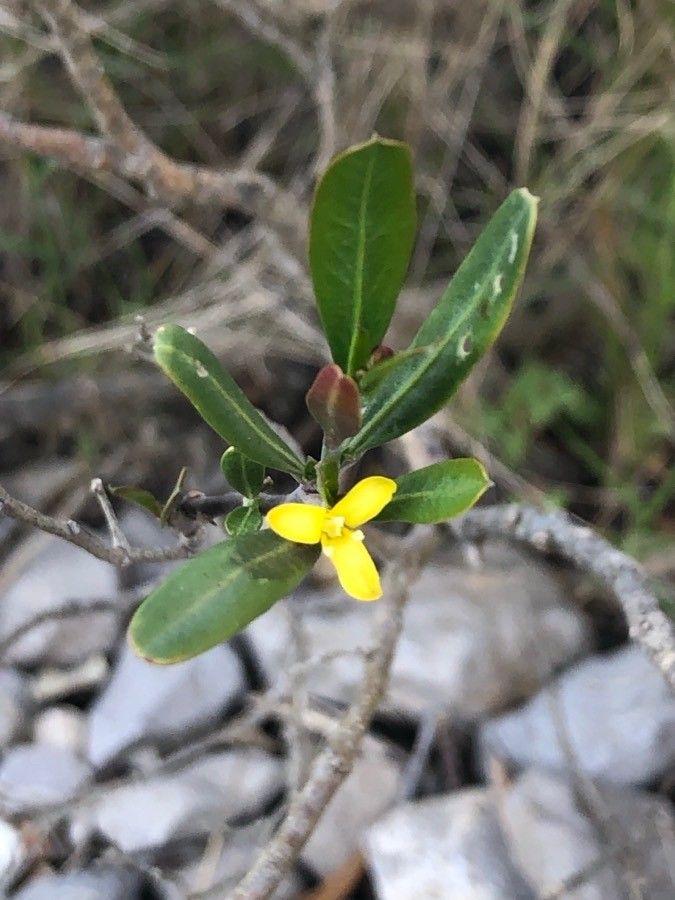
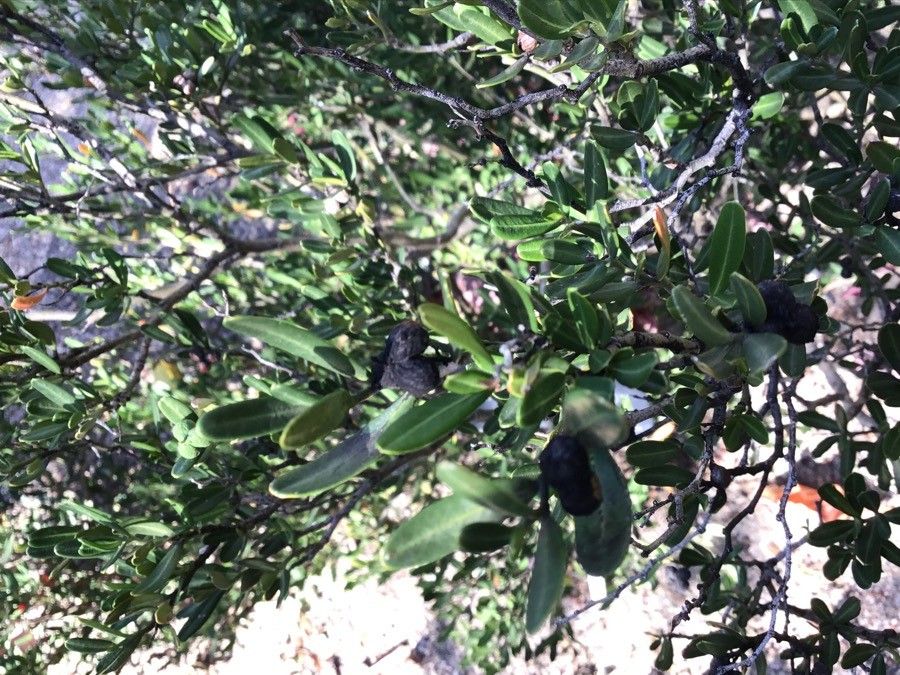
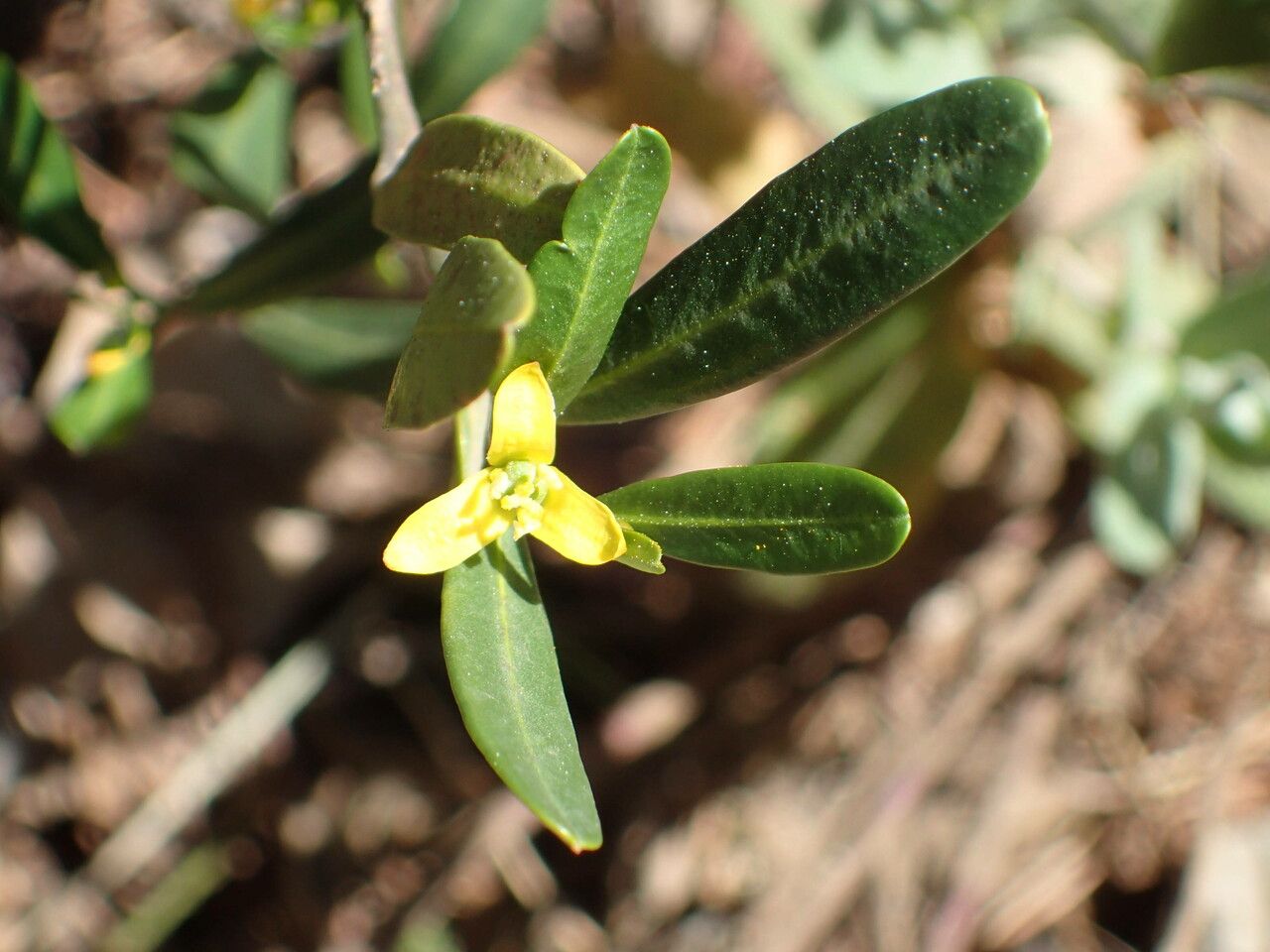
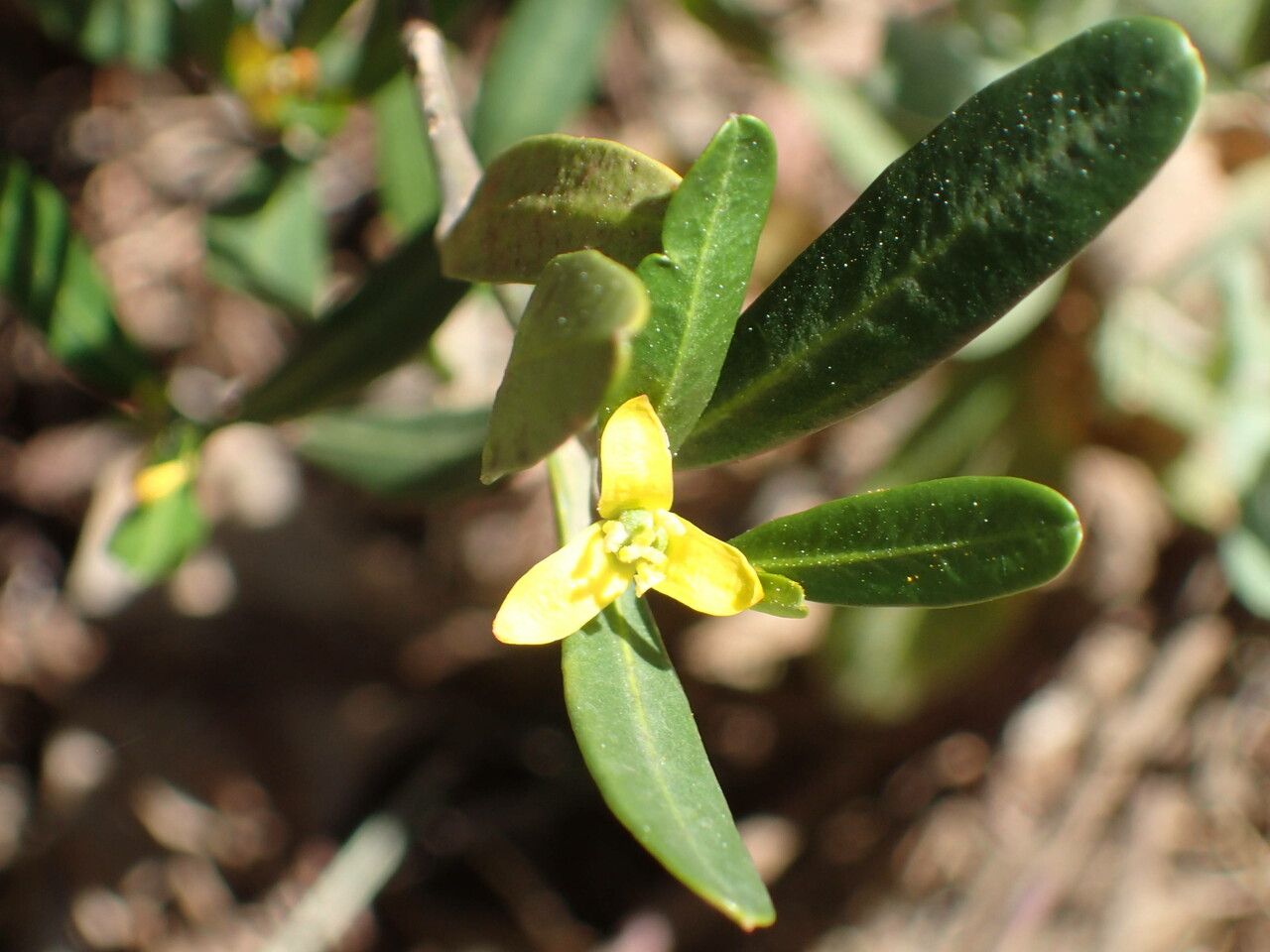
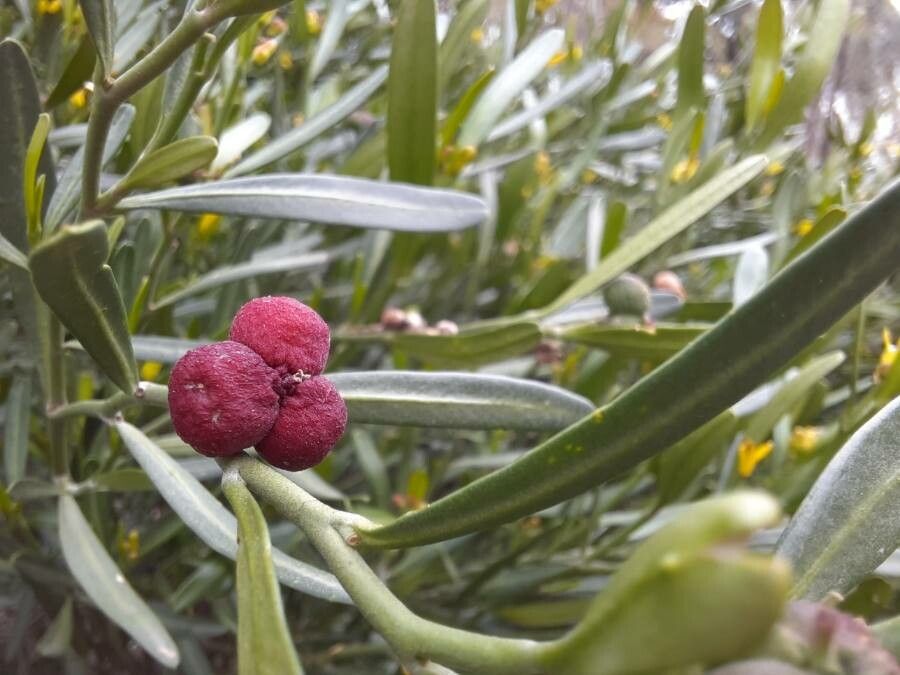
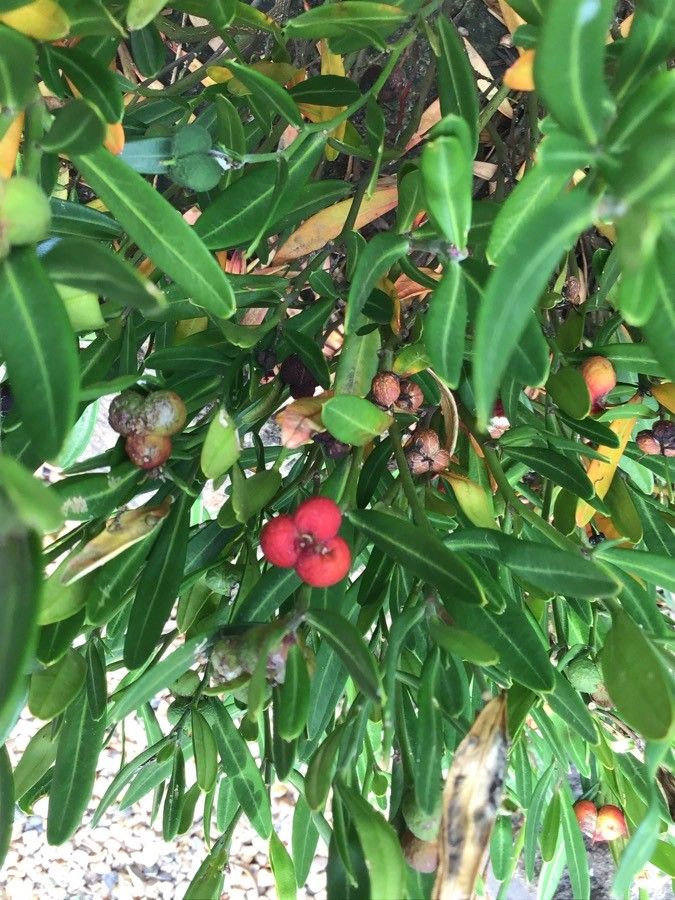
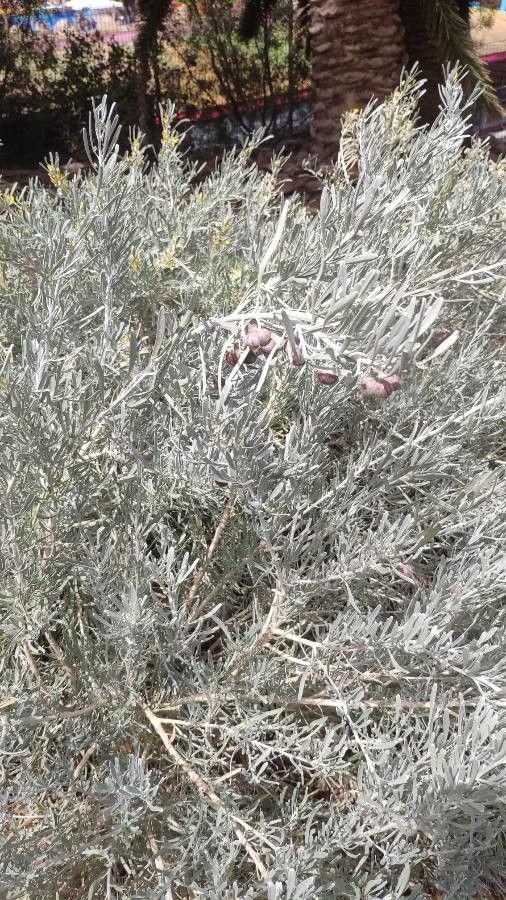
Cneorum tricoccon, commonly known as the Mediterranean garland flower, is a small evergreen shrub belonging to the Cneoraceae family. Native to the Mediterranean region, it thrives in rocky and dry habitats, such as hillsides, cliffs, and scrublands.
This plant features a compact growth habit and dense foliage comprising small, leathery leaves. The dark green, glossy, oval-shaped leaves provide a lush appearance. From late spring to early summer, the plant produces fragrant white flowers. Although the flowers are small, they grow in clusters at the branch tips, creating a striking display.
Cneorum tricoccon is easy to cultivate, preferring well-drained soil and full sun exposure for optimal growth. It is drought-tolerant but benefits from occasional watering during extended dry periods.
The plant boasts several medicinal properties, including anti-inflammatory, antiseptic, and diuretic effects, making it useful for treating ailments such as rheumatism and urinary tract infections.
In conclusion, Cneorum tricoccon is an attractive evergreen shrub with fragrant white flowers that enhance the beauty of any garden or landscape. Additionally, it offers medicinal benefits when used appropriately.
Spurge olive resists disease well and is generally not vulnerable to illnesses. In terms of care, this plant is fairly low-maintenance. When grown outdoors it needs little watering, and larger plants usually do not require pruning. However, smaller plants should be pruned after they finish blooming. Spurge olivet is suitable for anyone with an outdoor area, such as a garden or deck, and does not demand extensive care experience.
How to keep Cneorum Tricoccon.
Light
The spurge olive grows best with ample sunlight, which supports its healthy development. Native to areas with abundant sun, it does not need shade to survive. Neither insufficient nor excessive sunlight has a significant effect on this plant.
Water
Spurge olive, a plant native to the Mediterranean region, flourishes in dry conditions with very little moisture. It only needs watering once every 2-3 weeks. By simulating its natural arid environment, you can encourage its growth. Due to its drought tolerance, spurge olive is an excellent choice for xeriscaping, as it significantly reduces the need for irrigation.
Temperature
Spurge olive originates from temperate regions and does best in temperatures of 59 to 100.4 °F (15 to 38 ℃). During colder seasons, it may need to be moved to a warmer environment.
Fertilizer
Fertilize your Spurge olive in early spring to encourage healthy growth. Regular feeding improves overall health, producing vigorous growth, better tolerance of harsh conditions, and increased resistance to pests and diseases. Keep to a consistent fertilization schedule for your Spurge olive to maintain deeply colored, vibrant foliage and a lush appearance.
Pruning
Spurge olive is an evergreen plant known for its compact structure and vibrant yellow flowers. For optimal growth and shape, it's best to prune it from early to late winter. Be sure to remove any dead branches and thin out dense areas to improve air circulation. This will help ensure vigorous growth in the spring and enhance its ornamental beauty.
Botanical profile.
- Plant Type
- Shrub
- Life Cycle
- Perennial
- Genus
- Cneorum
- Family
- Rutaceae
- Hardiness Zone
- 8-11
- Mature Height
- 61 cm
- Mature Spread
- 1.22 m to 1.52 m
- Leaf Color
- Green
- Leaf Type
- Evergreen
- Flower Color
- Yellow
- Flower Size
- 0.51 cm
- Bloom Time
- Mid spring, Late spring
- Planting Time
- Spring, Summer
- Harvest Time
- Late summer, Early fall, Mid fall
- Native Area
- Italy, Spain, France
Other names.
Reader questions.
How should I water my Spurge olive plant?
When it comes to watering your Spurge olive, you have many options. You can use a watering can, a hose, or even a cup - whatever works for you. The important thing is to water the soil directly, making sure that all areas are evenly moistened. Using filtered water is advisable, as tap water may have harmful particles. It's also best to use water that is at or slightly above room temperature to avoid shocking the plant. However, the Spurge olive is generally tolerant of different water types.
Why should I put fertilizer on my Spurge olive plant?
Regardless of the type of Spurge olive you own, regular fertilization is important for overall plant health. Providing the proper nutrients promotes stronger growth and helps the Spurge olive withstand challenging conditions. It also enhances its ability to combat diseases and pests. The foliage of the Spurge olive is particularly appealing, so it is essential to maintain its condition. This involves following a specific fertilization schedule for your Spurge olive, which will result in vibrant leaves and a lush appearance.
What are the sunlight requirements for Spurge Olive?
Spurge Olive requires full sun, which means it needs above 6 hours of sunlight daily. It's essential to observe how sunlight moves through your garden to find spots that offer a balance of light and shade, ensuring the plants' well-being. The Spurge Olive plant is adapted to environments with plenty of sunlight and does not typically require shade to thrive. Inadequate or excessive sunlight does not significantly affect this plant, making it a resilient choice for sunny areas.
What is the native climate of Spurge olive?
Spurge olive is native to temperate zones and thrives in temperature ranges of 59 to 100.4 °F (15 to 38 °C). It has some cold tolerance and generally does not need additional measures for cold protection when the temperature is above -5°C. However, if temperatures are expected to drop below -5°C, it is necessary to implement temporary measures for cold protection, such as wrapping the plant with plastic, fabric, or other suitable materials, which should be removed once temperatures rise again.
What should I do if I give my Spurge olive plant too much water or too little water?
When caring for outdoor plants, especially new ones or seedlings, it's important to remember that they can easily suffer from lack of watering. It's crucial to ensure they receive enough water for the first few months, particularly when they are small or recently planted. Once the roots are established, Spurge olive plants can generally rely on rainwater. However, if your Spurge olive is in a pot, overwatering becomes more likely. In the event that you accidentally overwater your Spurge olive, there are steps you can take to remedy the situation. First, stop watering the plant immediately to minimize the impact of overwatering. Then, remove the Spurge olive from its pot to inspect the roots. If there are no signs of root rot, it can be returned to its container. However, if root rot is evident, affected roots should be trimmed and a fungicide may be necessary. Finally, repot the Spurge olive in well-draining soil. On the other hand, underwatering can also be problematic for Spurge olive plants. If the plant is not getting enough water, its leaves may appear droopy, dry out, and even fall off. To address underwatering, simply water the plant more frequently and adjust your watering schedule accordingly.
When should I fertilize my Spurge olive tree?
To ensure the healthy growth of your Spurge olive, fertilize it for the first time in late winter or early spring. This will provide all the necessary nutrients for its growth once the weather becomes warmer. If you live in a warm climate, it is also helpful to give your Spurge olive an additional fertilizer feeding in early fall. This not only adds nutrients for the following growing season, but also strengthens the plant's ability to survive winter without foliage damage. Early fertilization allows new branches enough time to grow and withstand the cold winter.
Can I use artificial lighting for Spurge Olive and how?
Yes, artificial lighting can be used for Spurge Olive, especially for indoor plants that require adequate lighting for optimal growth. When natural sunlight is lacking, particularly during winter or in less sunny spaces, artificial lights can be a great solution. Choose LED lights, which can be customized to provide specific light wavelengths needed by your plants. Full sun plants need 30-50W/sq ft of light, partial sun plants need 20-30W/sq ft, and full shade plants need 10-20W/sq ft. Place the light source 12-36 inches above the plant and mimic natural daylight hours, generally 8-12 hours of light per day, to promote healthy growth.
How does Spurge olive react to low temperatures?
Spurge olive has a moderate tolerance to low temperatures and fares best when the temperature stays above 15°C. In winter, it's crucial to keep it above -5°C. If the temperature falls below -10°C, you might observe drooping leaves. While the plant can recover from mild frost damage, severe cold may cause the leaves to wilt and eventually fall off. To protect against low temperatures, it's advisable to trim frost-damaged parts, wrap the plant with insulating materials like non-woven fabric, and create a wind barrier.
How frequent should I give water to my Spurge olive?
If your area lacks rainfall, it's important to water your plants regularly. During the spring and fall, watering every 2 weeks should be sufficient. In the summer, you'll need to water more often due to increased water needs. However, in the winter when growth slows down, you can water less frequently or not at all. Young or newly planted Spurge olive plants will require more frequent watering to help them establish and become more adaptable to drought conditions. For potted plants, there are two main methods for determining watering frequency. The first is to follow a predetermined schedule, such as once every week or every other week. However, this may not take into account the specific growing conditions of your Spurge olive. Another approach is to monitor soil moisture. Wait until the top two to four inches of soil have completely dried out before watering again. This is usually about ⅓ to ½ depth of the pots.
When is the best time to not fertilize my Spurge olive plant?
To properly care for your Spurge olive, there are specific times of the year when you should avoid fertilizing it. Firstly, during the early and mid-winter months when the plant is dormant, fertilization is unnecessary. Additionally, it is not recommended to fertilize the Spurge olive in late spring and throughout summer as the hotter and drier weather during this period can have negative effects on the plant if fertilized. It is best to follow a fertilization schedule that only involves feeding in early spring and early fall to prevent any potential issues.
What are the signs of insufficient or excessive light in Spurge Olive?
Signs of insufficient light in Spurge Olive include small leaves, leggy or sparse growth, faster leaf drop, slower or no new growth, and lighter-colored new leaves. Excessive sunlight can cause chlorosis (leaves turning yellow), sunscald, leaf curling, wilting, and leaf scorching. These symptoms indicate issues with the plant's light exposure, affecting its health and growth.
How does Spurge olive handle high temperatures?
During the summer, it is essential to keep Spurge olive below 38°C to prevent overheating. Temperatures exceeding 43°C can lead to lighter leaf color, dry and withered leaf tips, curling leaves, and increased susceptibility to sunburn. To mitigate the damage, trim away the sun-damaged parts of the plant. Moving the plant to a shaded area or using shade cloth can protect it from the intense midday and afternoon sun. Additionally, watering the plant in the morning and evening helps maintain soil moisture and support the plant through high temperatures.