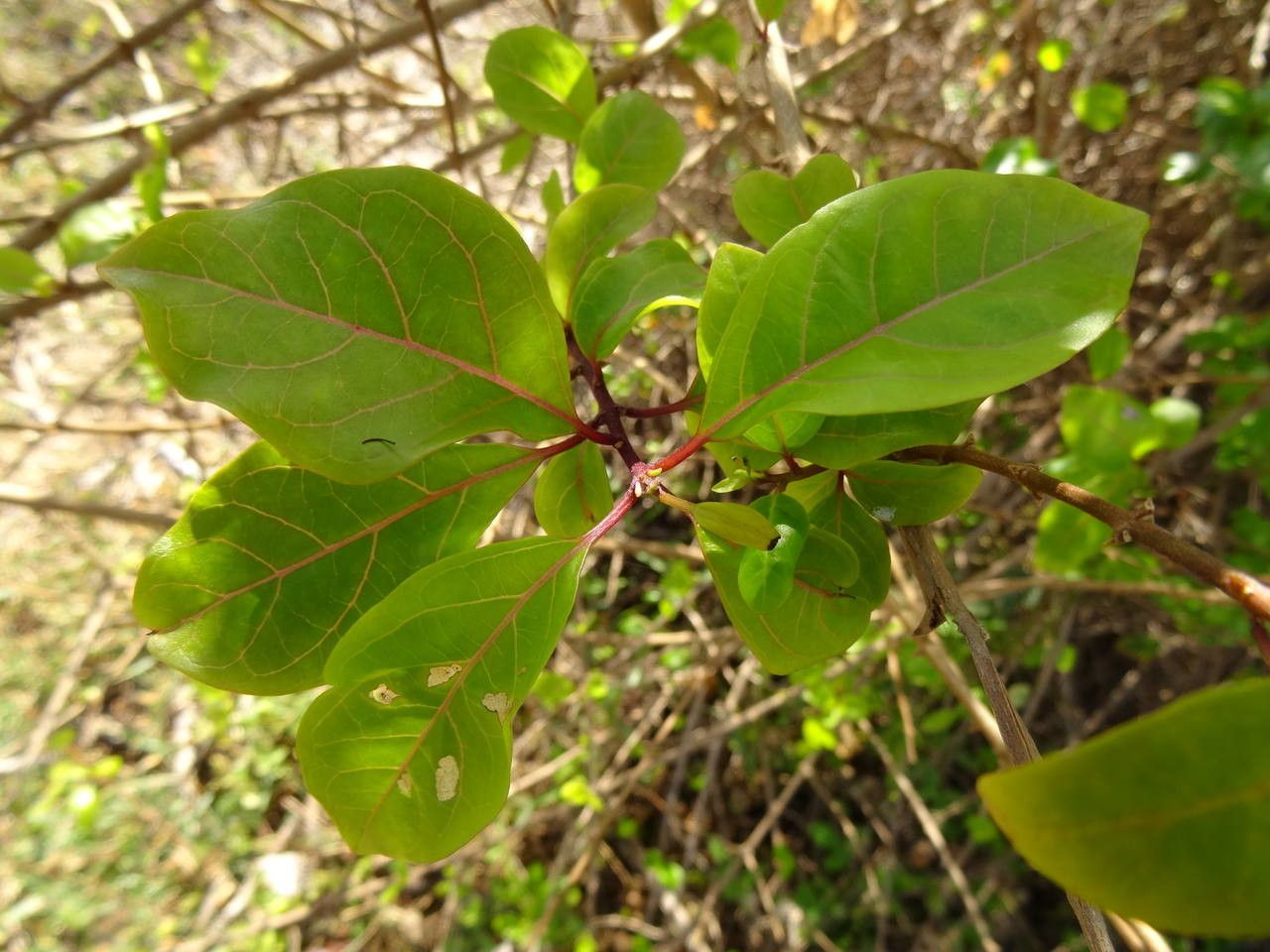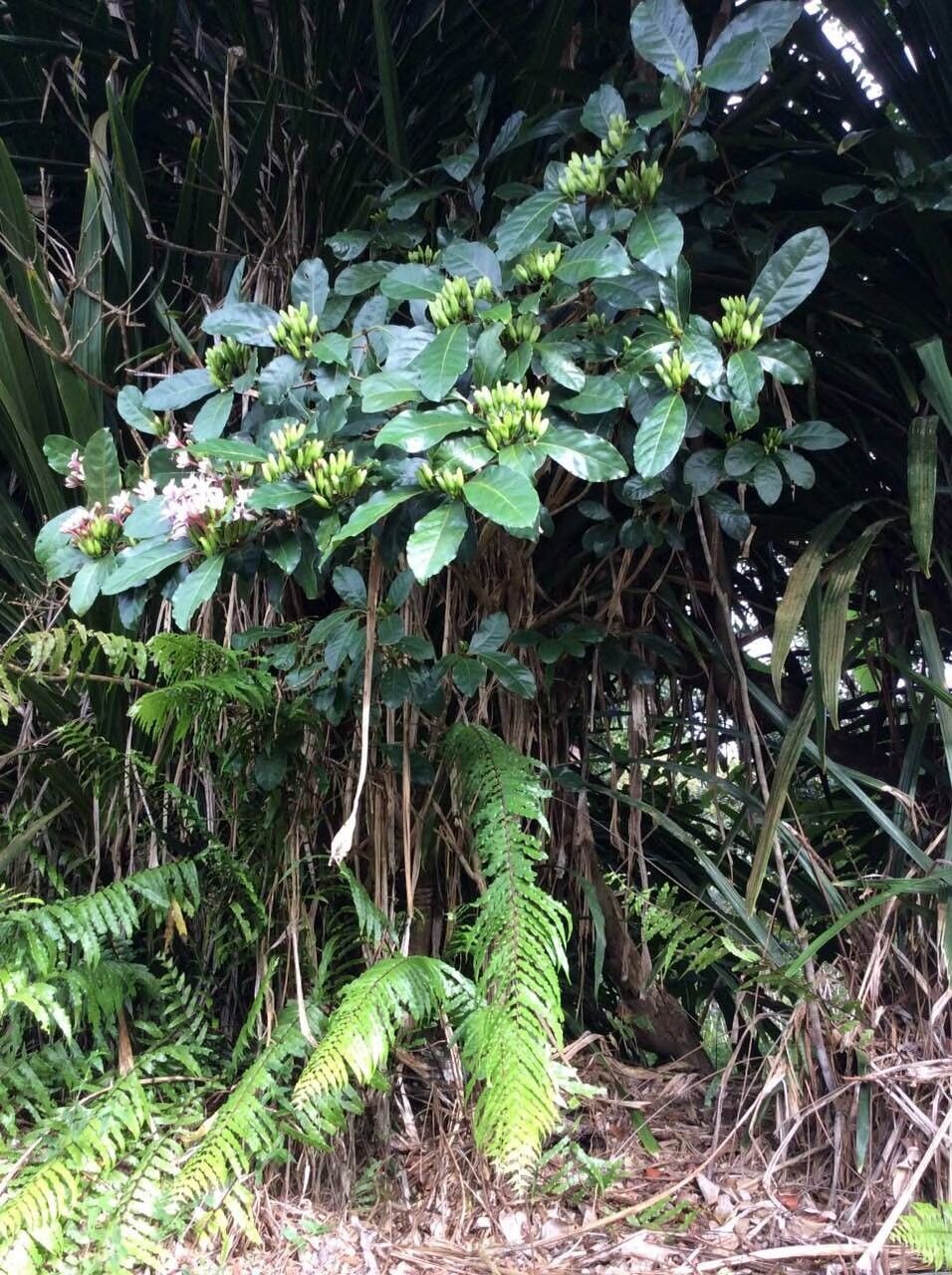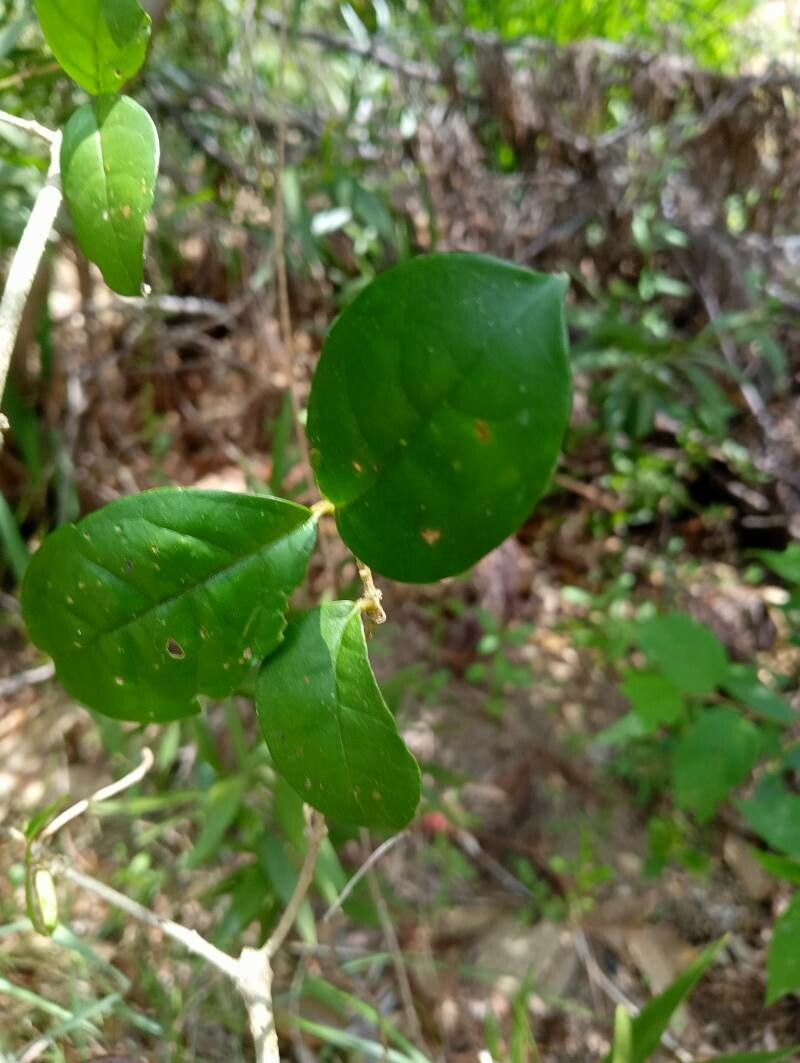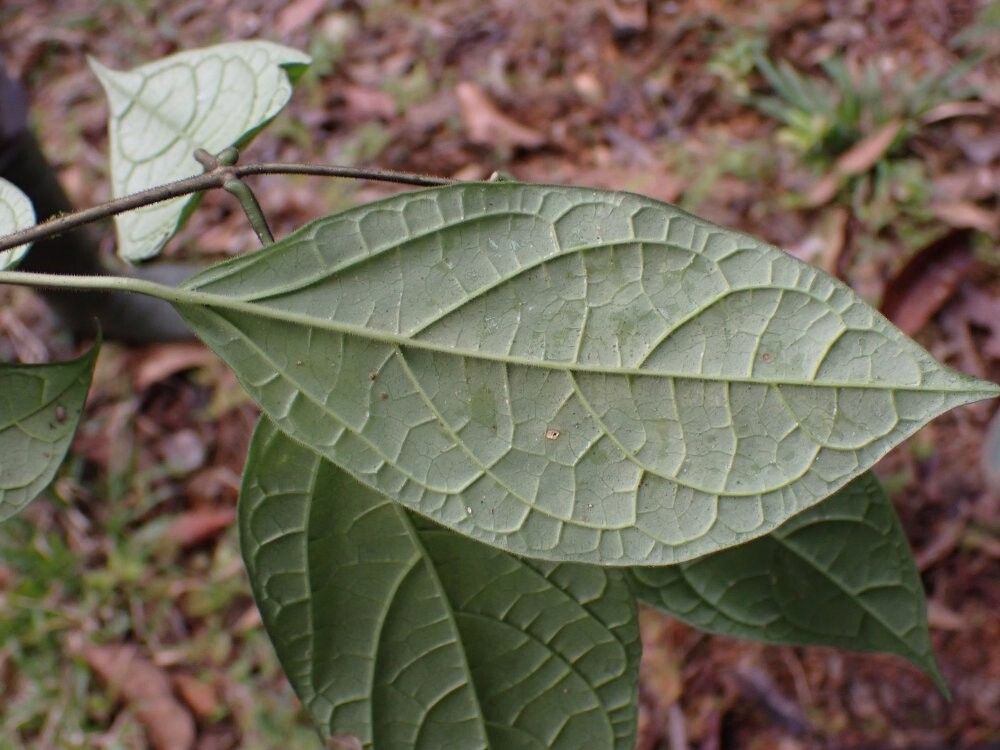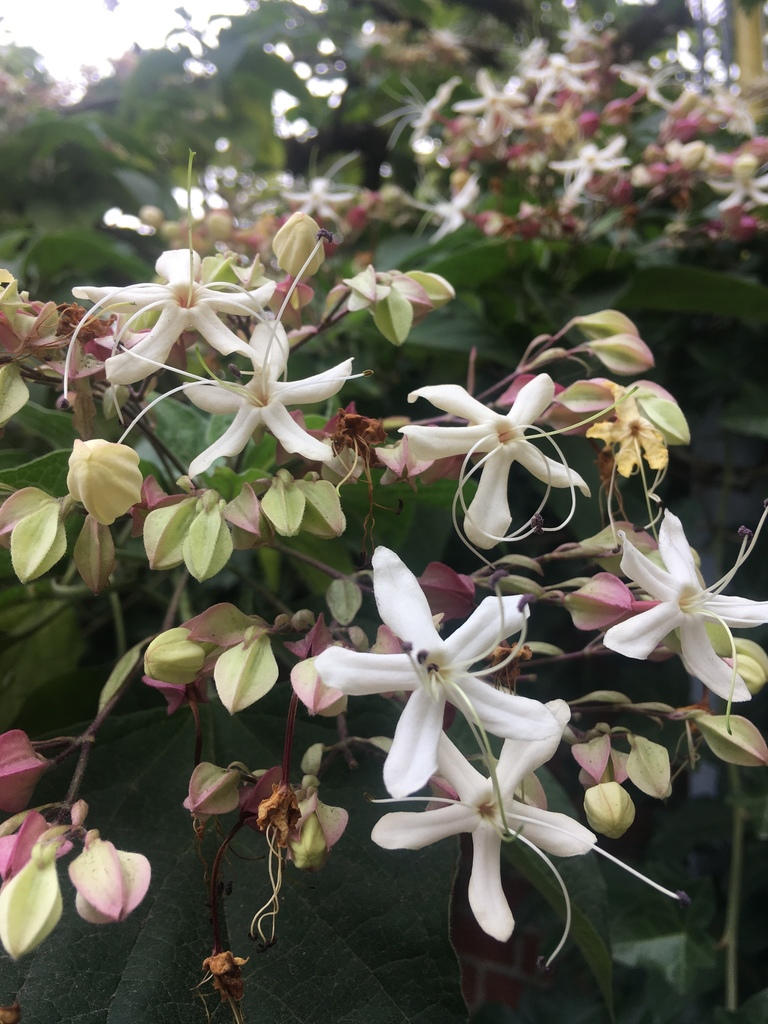
Clerodendrum trichotomum, the harlequin glorybower, glorytree or peanut butter tree, is a species of flowering plant in the family Lamiaceae. It is native to China, Korea, Taiwan, Japan, India, and the Philippines.It is a large deciduous shrub, growing 3–6 metres (10–20 ft) high. The leaves are ovate, up to 12 cm (5 in) long, soft and downy or hairy, producing a peanut odor when crushed. The fragrant flowers are borne on branching peduncles. They have white petals, held within a green calyx which turns red as the fruits ripen. The fruits (drupes) are white, changing to bright blue and eventually dark blue on maturity. They contain the novel blue pigment trichotomine.It is cultivated for its fragrant flowers, autumn colour, and ornamental berries. It is hardy but requires a sheltered position. The variety C. trichotomum var. fargesii (Farges' harlequin glorybower) and the cultivar C. trichotomum var. fargesii 'Carnival' have gained the Royal Horticultural Society's Award of Garden Merit. (confirmed 2017).
Harlequin glorybower is resistant to disease and generally not susceptible to illnesses. Regarding care, this plant is fairly low-maintenance. When grown outdoors, it needs minimal watering, and larger plants typically do not require pruning. Smaller plants, however, should be pruned after they finish blooming. Harlequin glorybowert is appropriate for anyone with an outdoor area, such as a garden or deck, and does not need extensive care experience.
How to keep Clerodendrum Trichotomum.
Light
Harlequin glorybower prefers continuous sunlight but can tolerate situations where sun is intermittent or even limited. Native to habitats rich in sunlight, it shows its strongest growth under those conditions. Care should be taken to avoid both excessive and insufficient light, as either can adversely affect its health.
Water
The Harlequin glorybower thrives in environments with balanced moisture and displays a moderate tolerance to drought. It's essential to water it every 1-2 weeks, allowing the soil to dry out slightly between waterings. Providing ample hydration during the growing season is crucial, as it enhances the plant's flowering and highlights its ornamental qualities.
Temperature
The harlequin glorybower plant is native to regions with temperatures between 15 and 35 ℃ (59 to 95 ℉). It favors moderate temperatures and can endure some fluctuations. In cooler months, it may benefit from being moved to a slightly warmer spot or given a heat source. During hotter months, it may benefit from being placed in a slightly cooler spot or provided with shade.
Fertilizer
Fertilize your Harlequin glorybower in early spring to encourage healthy growth. Regular feeding boosts overall health, leading to vigorous growth, improved tolerance of harsh conditions, and increased resistance to pests and diseases. Keep to a defined fertilization schedule for your Harlequin glorybower to maintain vibrant, deeply colored foliage and a lush appearance.
Pruning
The Harlequin glorybower is known for its eye-catching clusters of white flowers and blue berries. To maintain its shape and vigor, it needs to be pruned annually in early spring. Be sure to trim away any dead or crossing branches to encourage healthy growth, improve flowering, and ensure good air circulation. This will help prevent disease and enhance its ornamental appearance.
Botanical profile.
- Plant Type
- Shrub
- Life Cycle
- Perennial
- Genus
- Clerodendrum
- Family
- Lamiaceae
- Hardiness Zone
- 7-10
- Mature Height
- 1.52 m to 10.06 m
- Mature Spread
- 3.05 m to 6.1 m
- Leaf Color
- Green
- Leaf Type
- Deciduous
- Flower Color
- White
- Flower Size
- 2.54 cm to 5.08 cm
- Bloom Time
- Mid summer
- Planting Time
- Spring, Autumn
- Harvest Time
- Mid summer, Late summer, Early fall
- Native Area
- India, Indonesia, Japan, Philippines, Koppen, South Korea, China
Other names.
Reader questions.
How should I water my Harlequin glorybower?
To promote strong root development, place a garden hose at the base of your plants. Avoid spraying the leaves directly, as this could require more watering, especially if the plants are outdoors and exposed to direct sunlight. Consider using bubblers or soaker hoses to keep the roots moist. When adding or removing plants, you can use soaker hoses that cover the entire garden bed to ensure deep root penetration. Make sure to drain any excess water and allow the soil to dry before watering again. Watering at ground level is recommended to prevent diseases. On sunny days, spraying the entire bush with water can be beneficial. Whether your Harlequin glorybower is in a pot or planted in the ground, remember that it prefers deep watering rather than light sprinkling.
Why should I use fertilizer on my Harlequin glorybower?
If you own any kind of Harlequin glorybower, regular fertilization is key to ensuring overall plant health. Providing the right nutrients will promote stronger growth and increase resilience to harsh growing conditions, while also improving the plant's ability to fend off diseases and pests. It's important to pay attention to the foliage of your Harlequin glorybower, as it is one of its most attractive features. To maintain healthy and vibrant leaves, stick to a consistent fertilization schedule tailored to your specific plant. This will encourage the development of deep-colored and lush leaves.
What are the sunlight requirements for Harlequin glorybower?
Harlequin glorybower requires full sun, which means it should receive above 6 hours of sunlight daily. It can also grow in conditions with partial sun or full shade, where it would get about 3-6 hours of sunlight. Observing how sunlight moves through your garden will help in choosing locations that provide the right balance of light and shade, ensuring the plant's well-being.
What is the ideal temperature range for Harlequin glorybower?
The Harlequin glorybower plant thrives in temperatures ranging from 15 to 35°C (59 to 95°F). It is well-suited to moderate temperatures and can handle some fluctuations. During cooler months, it's beneficial to place the plant in a warmer spot or provide a heat source, whereas in hotter months, positioning it in a cooler location or providing shade can help. The plant possesses strong cold resistance, minimizing the need for frost protection in winter. Nonetheless, if temperatures are forecasted to fall below the plant's growth limit, protective measures such as wrapping the trunk and branches with non-woven fabric or cloth are advisable. To aid in drought and water scarcity prevention during winter and early spring, abundant watering before the first autumn freeze to maintain soil moisture is recommended.
What should I do if I give too much or too little water to Harlequin glorybower?
If a Harlequin glorybower is overwatered, its leaves may turn yellow, drop off, and wilt. The plant will also look dull and unhealthy, with mushy stems. When you start seeing these signs, it's best to adjust your watering schedule. Wilting can also be a sign of under watering. Underwatered leaves will turn crispy and dry, while overwatered leaves will be soft and wilted. If the soil is dry and simply watering is not enough, give the plant a thorough watering. This will help the Harlequin glorybower recover, but it may still have dry and yellow leaves for a few days due to the damaged roots. Once it returns to normal, the yellowing leaves will stop. When you have a Harlequin glorybower indoors, always check the moisture levels in the pot to avoid overwatering. Look for signs of black spots which indicate possible overwatering. If present, allow the soil to dry out by not watering for a few days. Overwatering can lead to root rot, so if you notice discolored and slimy roots, consider transferring the plant to a different pot. Always try to prevent root rot by avoiding excessively soggy soil. When planting a Harlequin glorybower outdoors, make sure to dig a little deeper. If the soil feels too dry when you check with your fingers, it could indicate underwatering. Adequate watering is necessary to help the plant recover.
What is the best time to fertilize my Harlequin glorybower?
Fertilize your Harlequin glorybower for the first time in late winter or early spring to give it the nutrients it needs for healthy growth when the weather warms up. If you live in a warm climate region, it is beneficial to fertilize again in early fall. This provides additional nutrients for the following growing season and helps the plant withstand winter cold without foliage damage. Early fertilization ensures that new branches have enough time to grow and withstand the winter.
Can Harlequin glorybower grow under artificial lighting?
Yes, Harlequin glorybower can grow under artificial lighting, especially when natural sunlight is insufficient, such as during winter or in less sunny locations. Artificial lights, like LED lights, are beneficial as they can be customized to provide specific wavelengths needed for plant growth. The amount of artificial light required varies depending on the plant's natural sunlight needs: full sun plants need 30-50W/sq ft, partial sun plants 20-30W/sq ft, and full shade plants 10-20W/sq ft. The light source should be placed 12-36 inches above the plant, and plants typically need 8-12 hours of light per day.
How does Harlequin glorybower react to low and high temperatures, and what are the solutions?
Harlequin glorybower is notably cold-tolerant, thriving best when temperatures stay above its minimum suitable growth threshold. In winter, it should remain above its tolerable growing minimum temperature. Below this limit, while immediate effects may not be evident, branches could become brittle and dry by spring, with a lack of new shoots. The solution is to prune these unproductive branches in spring. Conversely, during high temperatures exceeding its maximum suitable growth threshold, the plant's leaves may lighten, tips can dry and wither, and it becomes prone to sunburn. The remedy includes trimming sunburned and dried parts, relocating the plant to a shaded area or using a shade cloth to protect it from midday and afternoon sun, and watering in the mornings and evenings to ensure the soil stays moist.
How frequently do I need to water my Harlequin glorybower?
The Harlequin glorybower prefers deep and infrequent watering, especially when planted in pots. In pots, the soil dries out faster due to limited water storage. If living in a cold region, water every 3 to 5 days, preferably in the morning when the soil is dry. Check the soil's moisture level by feeling the top 2-3 inches. If dry, water the plant fully. During hot days, check moisture daily as the soil can dry out quickly. If you have a garden, water once a week in hot climates. Only water when the top 2-3 inches of soil are dry. Take rainfall into consideration and avoid overwatering to prevent root rot. Add mulch 3-4 inches deep when the Harlequin glorybower is grown outdoors to conserve water. Adjust watering frequency based on soil type - sandy soil requires more frequent watering, while clay soil requires less. Keep track of watering dates to avoid dehydration of the plant. Drooping leaves may indicate a need for watering.
When is the best time to not fertilize my Harlequin glorybower?
There are a few times during the year when you should avoid fertilizing your Harlequin glorybower. First, during the early and mid-winter months when the plant is dormant and doesn't need nutrients. Secondly, it's not recommended to fertilize in late spring and all of summer because the weather is typically hotter and drier, which can negatively affect the plant's response to fertilization. To prevent any issues, it's best to stick to a fertilization schedule that involves feeding only in early spring and early fall.
What are the symptoms of improper lighting for Harlequin glorybower?
Harlequin glorybower can show several symptoms if it's not receiving the right amount of light. These include small or pale new leaves, leggy or sparse growth, faster leaf drop, slower or no new growth, and symptoms of overexposure such as chlorosis, sunscald, leaf curling, wilting, and leaf scorching. These symptoms indicate that the plant is struggling with either too little or too much light.
How much water does my Harlequin glorybower plant need?
The Harlequin glorybower requires about a gallon of water on a regular schedule. For potted plants, it is best to water them deeply until you see water dripping from the bottom of the pot. Allow the soil to dry before watering again. You can use a water calculator or moisture meter to determine how much water you have given your plant in a week. During the flowering period, provide plenty of water but allow the moisture to evaporate to prevent root rot. If the Harlequin glorybower is planted outdoors with sufficient rainfall, additional watering may not be necessary. When the plant is young or newly planted, make sure it receives 1-2 inches of rain per week. As the Harlequin glorybower grows, it can rely solely on rainfall. However, if the weather becomes extremely hot or there is no rainfall for 2-3 weeks, consider giving the plant a full watering during the cooler part of the day to prevent heat damage. Additional watering will be needed during prolonged dry periods.