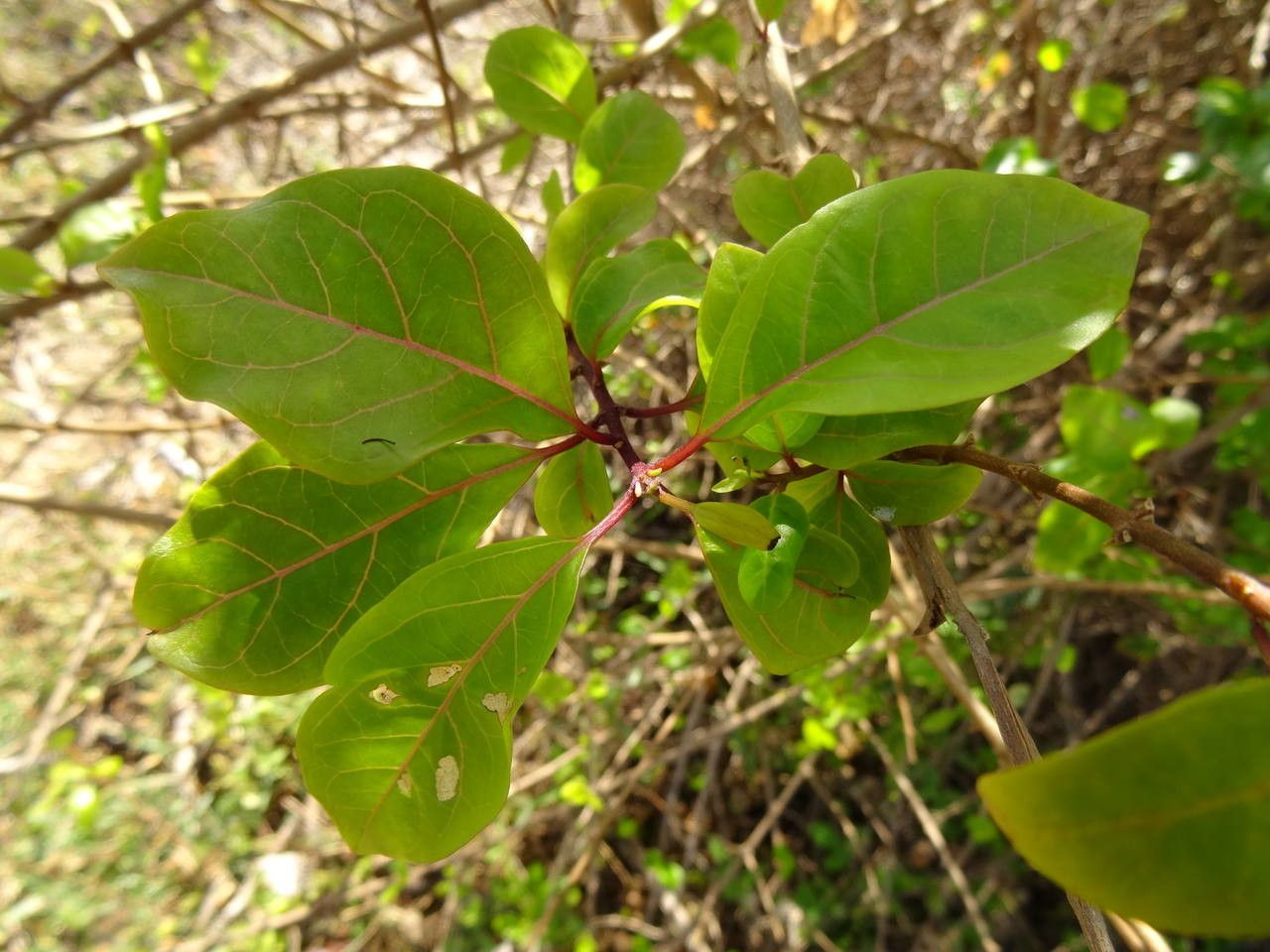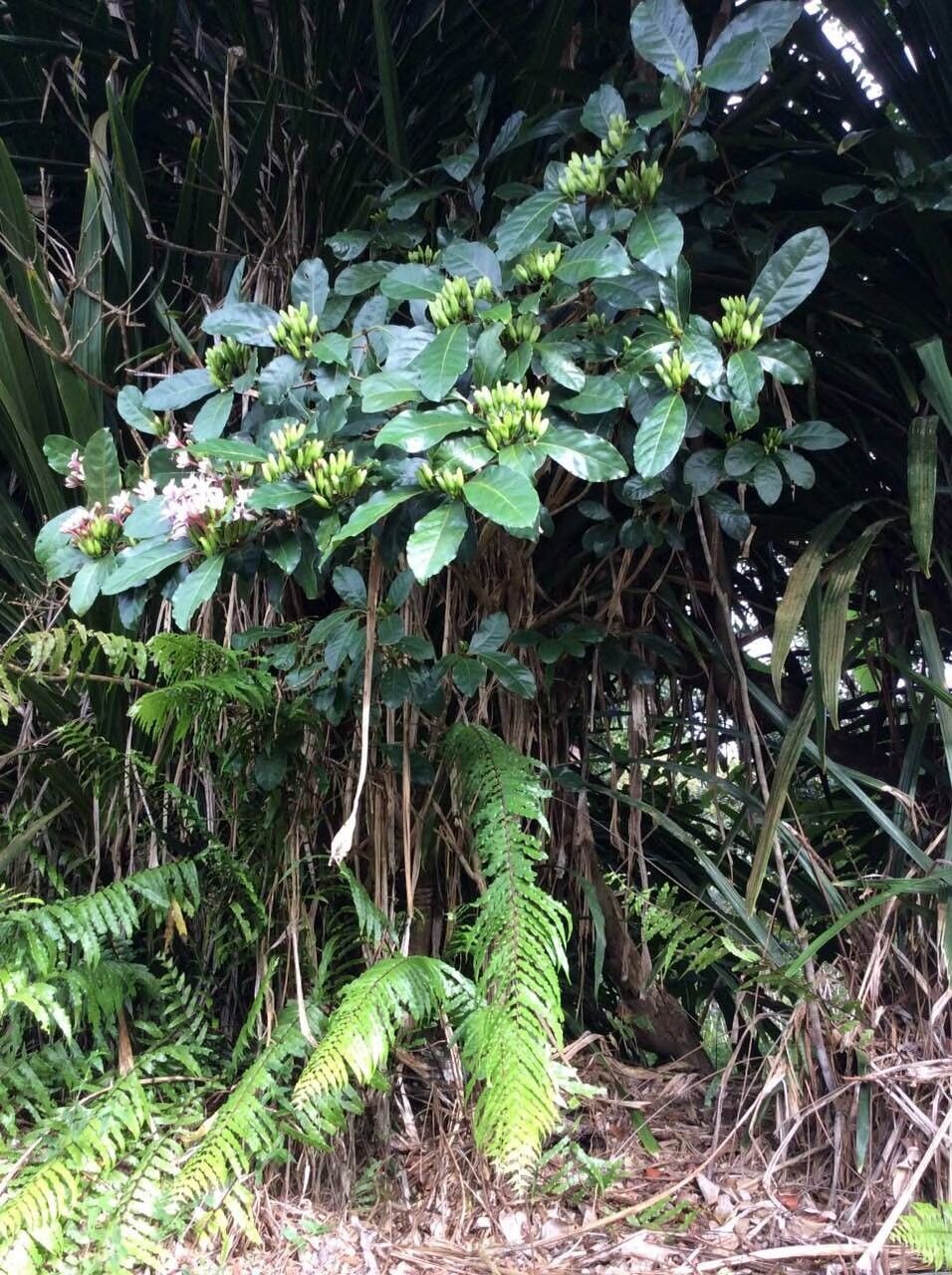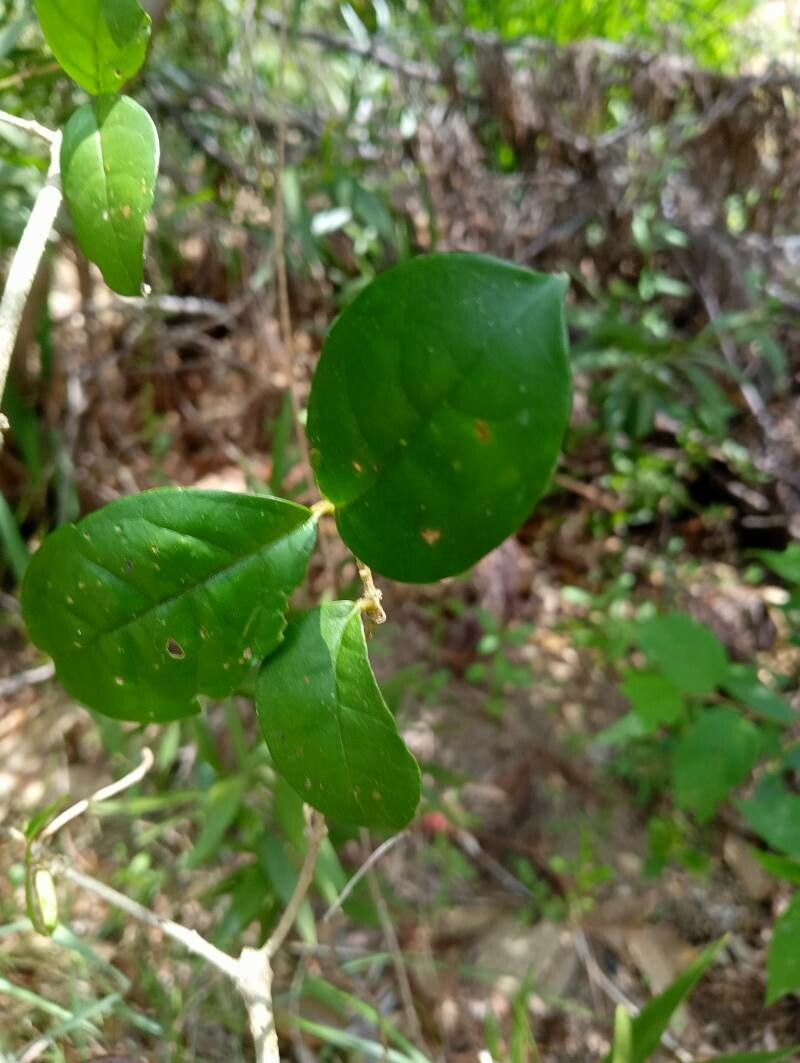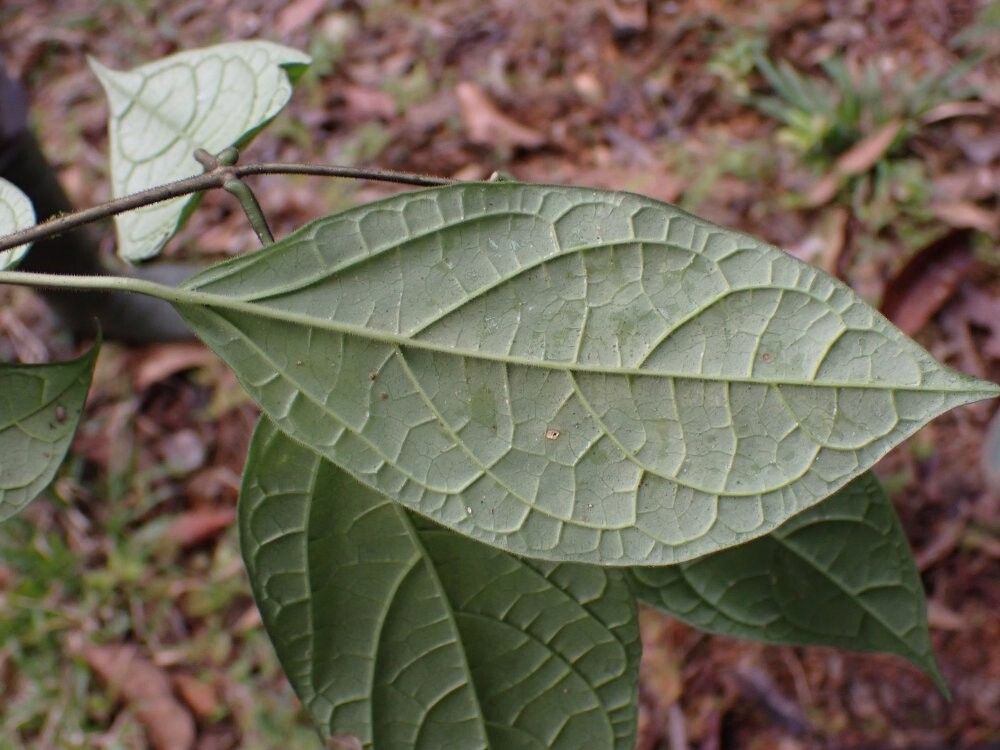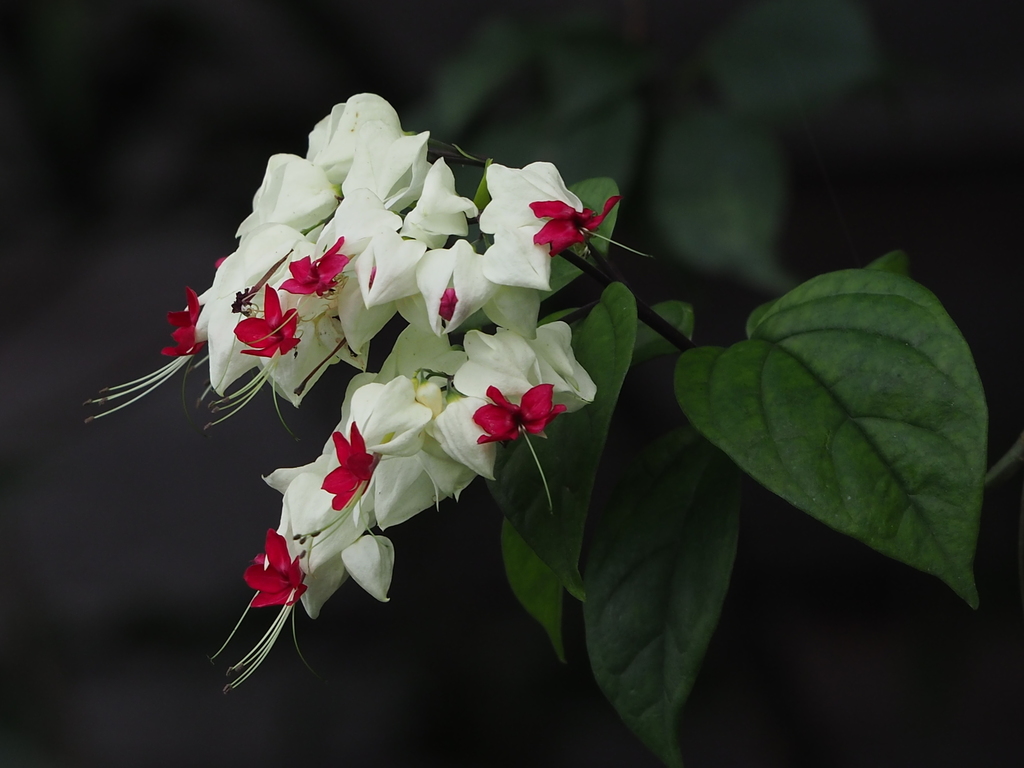
Clerodendrum thomsoniae is a species of flowering plant in the genus Clerodendrum of the family Lamiaceae, native to tropical west Africa from Cameroon west to Senegal. It is an evergreen liana growing to 4 m (13 ft) tall, with ovate to oblong leaves 8–17 cm (3–7 in) cm long. The flowers are produced in cymes of 8–20 together, each flower with a pure white to pale purple five-lobed calyx 2.5 cm in diameter, and a red five-lobed corolla 2 cm long and in diameter. The flowers are born in cymose inflorescences arising from the axils of the leaves. The leaves, in turn, are arranged opposite to each other and at right angles to the pairs above and below. An unambiguous common name is bleeding glory-bower; terms like "glory-bower", "bagflower" or "bleeding-heart vine" are also often encountered but can refer to any of the roughly 400 species of Clerodendrum. In some regions it has escaped from cultivation and become naturalised. It is grown as an ornamental plant for its decorative two-coloured flowers. With a minimum temperature of 10–13 °C (50–55 °F), in temperate areas it requires shelter and a frost-free environment. This plant has gained the Royal Horticultural Society's Award of Garden Merit (confirmed 2017).
The plant was named at the request of Rev. William Cooper Thomson (1829-22 March 1878), a missionary and physician in Nigeria, in honor of his late first wife. This plant was very popular during the mid 19th century under the name "beauty bush". It lost favour only when its unusual culture conditions were forgotten. Specifically, its root system must be partially submerged in water most of the time, and it wants very good light.
Bleeding heart vine has strong resistance to disease and is generally not prone to illness. However, it can be vulnerable to leaf spots if light and ventilation are poor and if it is overwatered. The plant is considered easy to care for, needing only regular watering and little else. Bleeding heart vine is suitable for people who don't have some time and energy to devote to regular care.
How to keep Clerodendrum Thomsoniae.
Light
The bleeding heart vine performs best with plenty of daily sun, though it can tolerate shadier locations. Its native habitat’s light conditions reveal this tolerance. Excessive sun can cause leaf scorch. In contrast, insufficient light may restrict growth and flowering.
Water
The bleeding-heart vine originates from tropical rainforests, where it thrives in high humidity and consistently moist soil. To care for this evergreen indoor plant, it's important to water it every 1-2 weeks, ensuring you avoid waterlogging. By maintaining increased humidity, you'll encourage lush foliage and vibrant blooms.
Humidity
This plant needs special care because it loves high humidity levels of 60-80% or more. The best way to achieve this is by placing a humidifier near the plant. Daily misting is also essential! Make sure the room has good ventilation.
Temperature
Bleeding heart vine originates from tropical areas and does best in warm conditions of 20 to 38 ℃ (68 to 100 ℉). In cooler conditions the plant can struggle, so providing a warm, humid environment is recommended to encourage optimal growth.
Fertilizer
Proper fertilizing is essential for the health and appearance of the Bleeding heart vine. Apply fertilizer to the Bleeding heart vine during summer, repeating the application monthly throughout the season. Nutrients supply energy for growth and help preserve the plant's organs. Feeding the Bleeding heart vine improves its flower display and helps produce the best blooms.
Pruning
The bleeding-heart vine is known for its stunning clusters of red and white flowers. To keep it healthy and looking its best, prune it from late winter to early spring. Focus on trimming long stems and removing any dead branches to enhance air circulation and promote better flowering. Proper pruning not only boosts the plant's ornamental beauty and health but also helps prevent the spread of disease.
Pot & Repot
Repot the bleeding heart vine in early spring, selecting a container only slightly bigger than the current one that provides good drainage. Use a well-draining potting mix and position the root ball at the same level as it was before. Gently tease out any root-bound roots. After repotting, water thoroughly and place the pot in a warm, shady spot. Prune regularly to keep size in check and encourage new growth.
Toxicity
Unlike the bleeding heart plant, Clerodendrum bleeding heart vines have no reported toxic effects to people or pets.
Further reading →
The toxicity and danger assessments provided are for reference only. We do not assure their accuracy, so it's crucial not to depend on them. Seek professional advice when necessary for accurate guidance.
Botanical profile.
- Plant Type
- Vine, Herb
- Life Cycle
- Perennial
- Genus
- Clerodendrum
- Family
- Lamiaceae
- Hardiness Zone
- 9-12
- Mature Height
- 2.13 m to 4.88 m
- Mature Spread
- 0.91 m to 1.52 m
- Leaf Color
- Green
- Leaf Type
- Evergreen
- Flower Color
- White
- Flower Size
- 2.54 cm to 5.08 cm
- Bloom Time
- Late spring, Summer, Early fall
- Planting Time
- Spring
- Harvest Time
- Mid summer, Late summer, Fall
- Native Area
- Mali, Sierra Leone, Cameroon, Senegal, Ghana, Nigeria, Guinea, Congo (DRC)
Other names.
Reader questions.
How should I water my Bleeding-heart vine?
To properly water the Bleeding-heart vine, it's best to use filtered water at room temperature. Tap water may have harmful particles, so filtering is recommended. Since this plant is used to warm conditions, it's important to avoid using cold water, which can shock the plant. Additionally, overhead watering should be avoided to prevent issues with the foliage. Instead, gently pour the filtered room temperature water onto the soil until it's completely soaked. This will benefit the plant by moistening the roots and allowing them to spread and gather necessary nutrients.
Why should I use fertilizers on my Bleeding-heart vine?
Fertilizer and soil nutrients are like fuel for your Bleeding-heart vine, helping it grow and stay healthy. Plants in general use the nutrients in the soil to grow new material and maintain their existing parts. For the Bleeding-heart vine, fertilization is especially important for the flowers to look their best. Because the flowers are the main attraction of this plant, most gardeners want to make sure they appear in their finest form. Using fertilizer is one of the most dependable methods to help your Bleeding-heart vine produce beautiful flowers.
What are the sunlight requirements for Bleeding-heart vine?
Bleeding-heart vine thrives in conditions that closely mimic its native habitat's exposure to sunlight. It performs best in full sun, which means it requires more than 6 hours of direct sunlight daily. However, it can also grow in partial sun, with about 3-6 hours of sunlight. It's important to observe how sunlight moves through your garden to place your plants in spots that offer the right balance of light and shade, ensuring their optimal growth and happiness. Excessive sunlight can lead to leaf burn, while insufficient light might hamper the plant's growth and blooming.
What is the native climate of the Bleeding-heart vine?
The Bleeding-heart vine, botanically known as Clerodendrum thomsoniae, is native to tropical regions. It flourishes in warm temperatures ranging from 20 to 38°C (68 to 100°F). Given its preference for warmth, the plant thrives in environments that are both warm and humid, and it may struggle in cooler temperatures outside of this range.
What do I do if I give my Bleeding-heart vine too much or too little water?
Overwatering is more common and harmful to the health of your Bleeding-heart vine. It can cause wilting and yellowing of stems and leaves, as well as diseases like root rot, mold, and mildew that can kill the plant. Underwatering is less common but can still happen, resulting in brittle and brown leaves. It's important to be aware of the signs of overwatering and take action promptly. Reduce watering if you see early signs and check the soil for proper drainage. If your plant is receiving too little water, simply increase your watering frequency until the signs improve.
What is the ideal time to fertilize my Bleeding-heart vine?
The Bleeding-heart vine has two main phases in a year. The first phase is the dormant phase, occurring in winter, where the plant has minimal new growth. The second phase is the active growth phase, happening in spring and fall, which is when fertilization is most needed. It is recommended to start fertilizing your Bleeding-heart vine in spring, repeating the feeding once a month throughout most of spring and summer. As fall approaches, you can gradually decrease the fertilization rate.
How do artificial lights aid the growth of indoor Bleeding-heart vines?
For indoor Bleeding-heart vines, especially in scenarios where natural sunlight is scarce like in winter or less sunny spaces, artificial lighting becomes essential for optimal growth. LED lights are recommended because they can be adjusted to provide specific light wavelengths needed by the plant. The intensity required varies depending on the type of plant, with full sun plants needing 30-50W/sq ft, partial sun plants 20-30W/sq ft, and full shade plants 10-20W/sq ft of artificial light. The light source should be placed 12-36 inches above the plant to mimic natural conditions and should be on for 8-12 hours per day to simulate the natural daylight cycle, promoting healthier and faster growth.
How should Bleeding-heart vine be cared for in cooler temperatures?
In cooler temperatures, it's essential to protect the Bleeding-heart vine from cold by providing a warm, humid environment to promote its growth. During autumn or when the temperature falls, the vine should be brought indoors and placed near a bright window, but not too close to heaters to avoid harm. Maintaining indoor temperatures above 20°C (68°F) during winter is beneficial for the plant’s survival and growth, as temperatures approaching 0°C (32°F) or lower are detrimental.
How frequently should I give water to my Bleeding-heart vine?
If you have a potted Bleeding-heart vine, the best way to determine if it needs water is by checking the soil. Stick your finger into the soil about two to three inches deep. If it feels dry, then it's time to water the plant. For outdoor Bleeding-heart vines planted in the ground, you can use the same method to check the soil moisture. If the top few inches of soil are dry, it's time to water. Usually, during spring and early fall, you'll need to water this plant once a week. However, during hot weather, you may need to water it twice or more per week. It's important to note that mature, well-established Bleeding-heart vines have a remarkable ability to tolerate drought.
When is it not a good idea to fertilize my Bleeding-heart vine?
To support the growth of Bleeding-heart vine, it is important to avoid causing root burn. The plant shows active growth during spring and summer, which is when it requires additional nutrients. However, during fall and winter, the plant goes into dormancy, and it is recommended to discontinue fertilization during this stage.
What are common symptoms of light deficiency in Bleeding-heart vines?
When Bleeding-heart vines do not receive enough light, they may exhibit several symptoms indicative of light deficiency. These include the development of smaller new leaves, leggy or sparse growth due to elongated spaces between leaves or stems, faster shedding of older leaves, paused or completely halted new growth, and the appearance of lighter-colored or irregularly patterned new leaves. Additionally, chlorosis can occur, leading to yellowing leaves due to a breakdown of chlorophyll, which affects the plant's ability to photosynthesize.
What are the symptoms of cold damage in Bleeding-heart vine?
Bleeding-heart vine shows a distinct reaction to cold temperatures. It prefers to be kept in temperatures above 20°C (68°F). When exposed to temperatures below -5°C (23°F), the leaves may lighten in color. Following frost damage, the color might turn brown or black, accompanied by symptoms such as wilting and drooping, indicating significant stress from the cold.