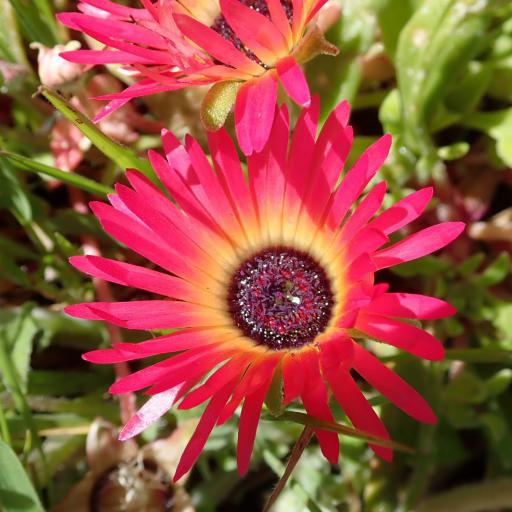
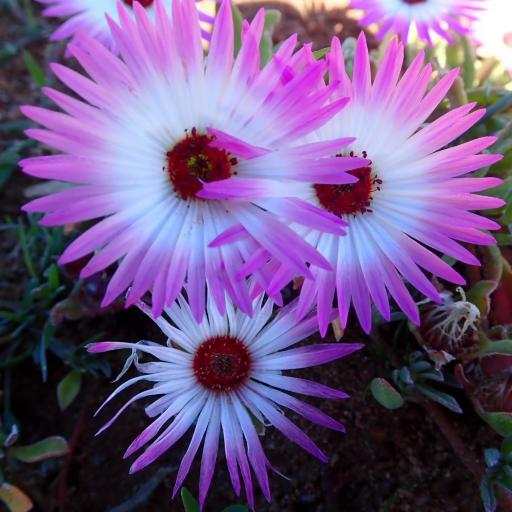
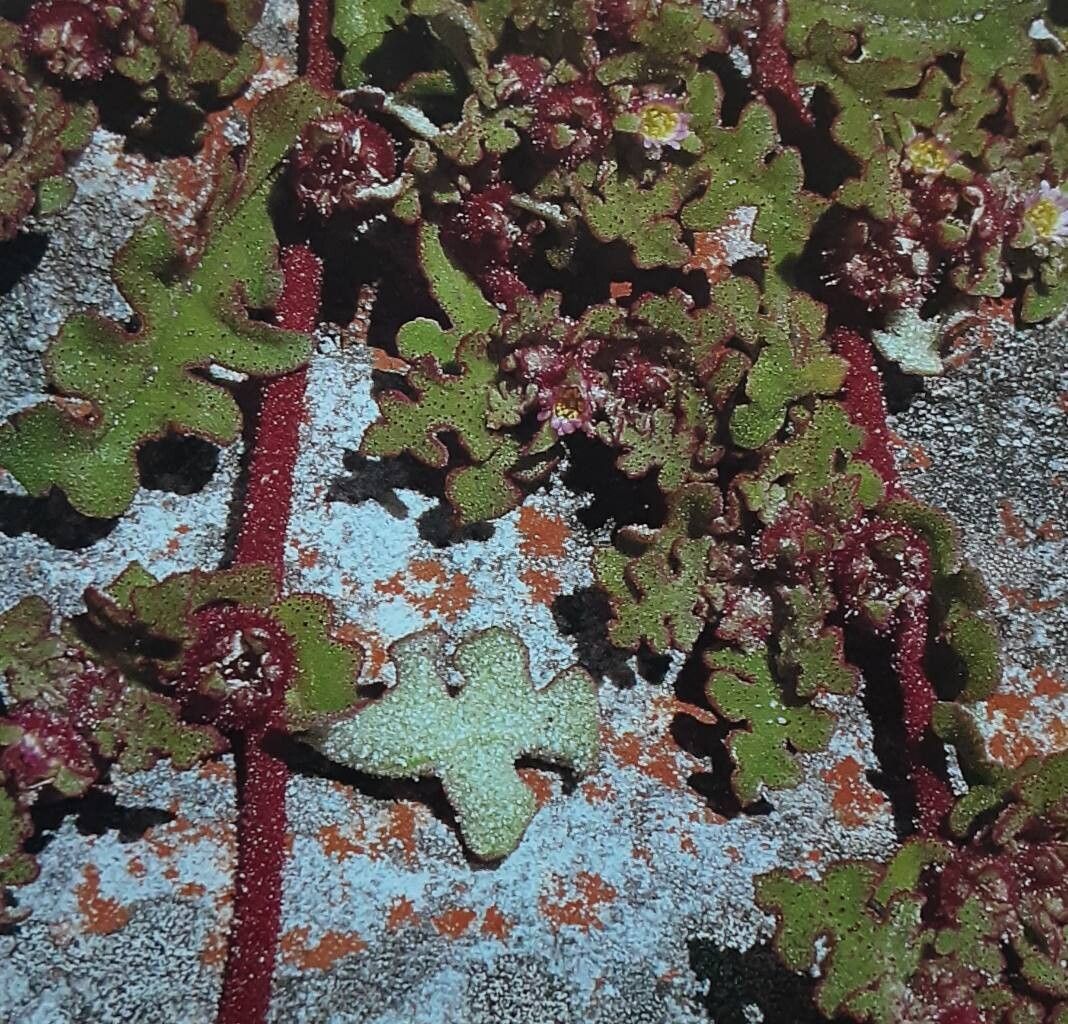
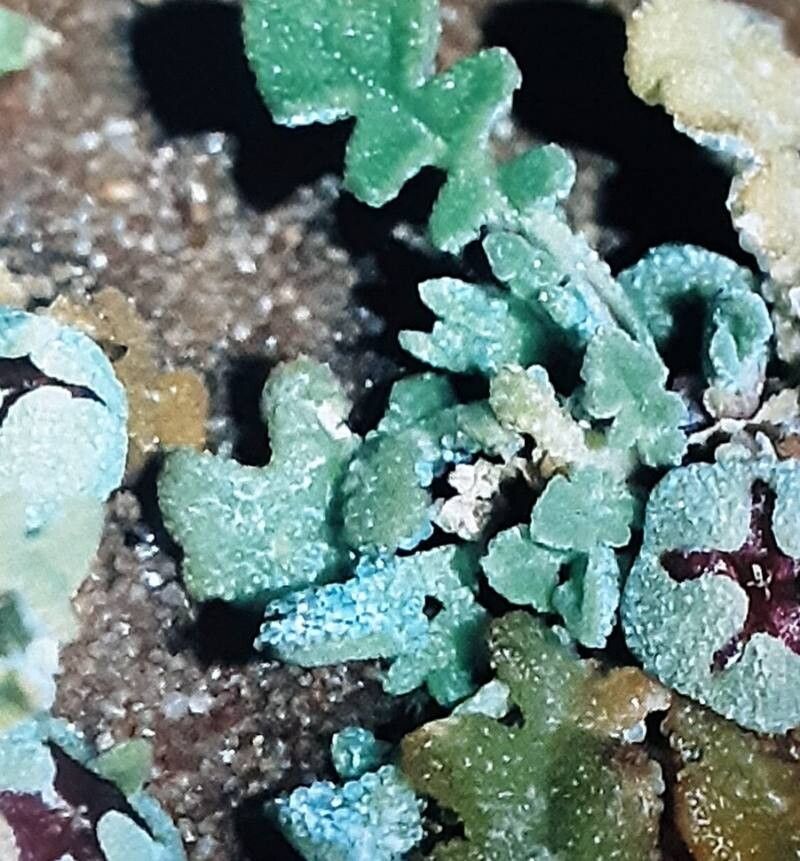
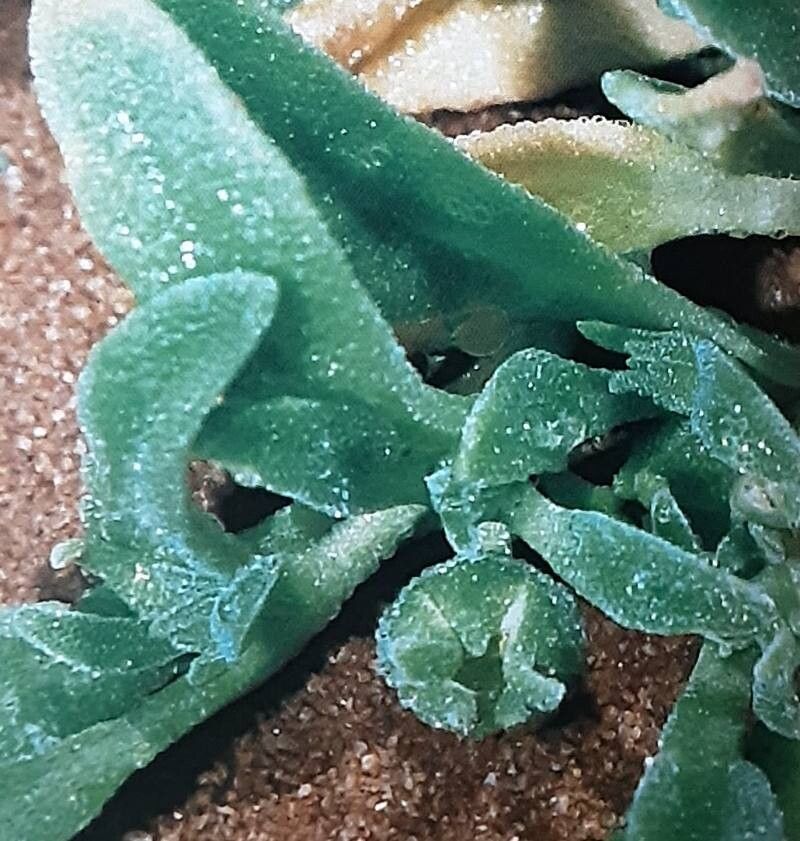
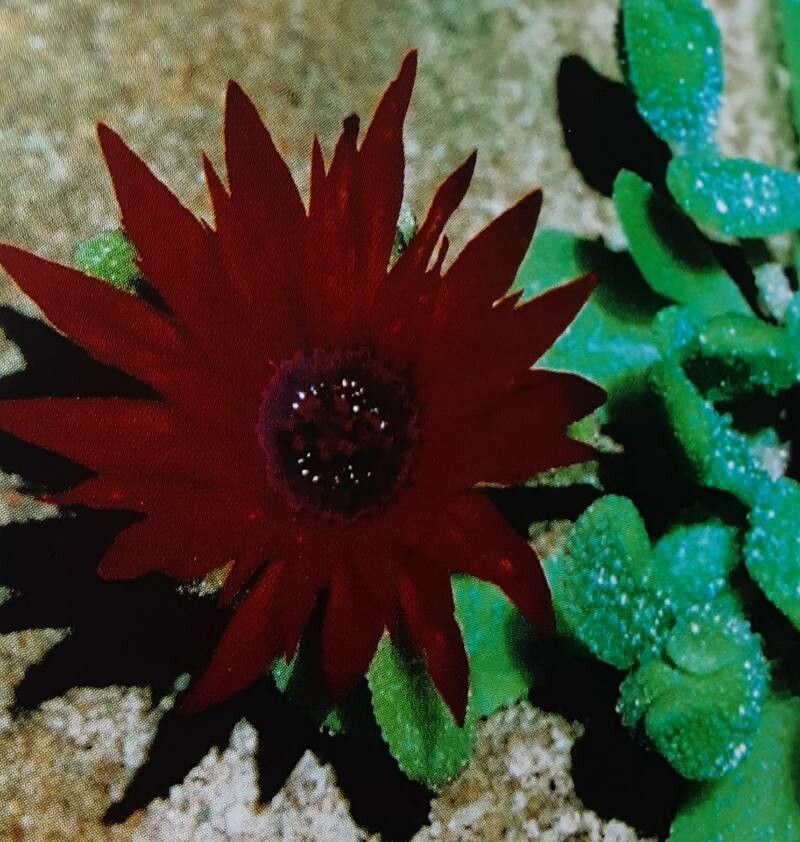
Cleretum bellidiforme, commonly called Livingstone daisy, Bokbaaivygie (Afrikaans), or Buck Bay vygie, is a species of flowering plant in the family Aizoaceae, native to the Cape Peninsula in South Africa. It is a low-growing succulent annual growing to 25 cm (10 in), and cultivated for its iridescent, many-petalled, daisy-like blooms in shades of white, yellow, orange, cream, pink and crimson. In temperate areas it is popularly grown as a half-hardy annual, and lends itself to mass plantings or as edging plants in summer bedding schemes in parks and gardens. It is still widely referenced under its former names, Mesembryanthemum criniflorum and Dorotheanthus bellidiformis.
Bokbaai Vygie: In Afrikaans, "Bokbaai" refers to a specific geographical location in the Western Cape of South Africa, where this plant often grows in the wild. The term "vygie" is used to describe any of the flowering succulents belonging to the family Aizoaceae, which are characteristic of South Africa and New Zealand.
Bokbaai vygie has moderate disease resistance and is relatively sensitive to humidity and overwatering. It is also more prone to disease when it receives insufficient light and is overwatered. Regarding care, Bokbaai vygie is drought-tolerant and can withstand long periods without watering. It requires little fertilizer and only occasional pruning. This makes it suitable for people of all experience levels, especially those who want to spend less time on plant care and who may sometimes be away from home for extended periods. It is a good option for anyone who does not want to invest a lot of time in plant care but still wants an easy-to-maintain plant.
How to keep Cleretum Bellidiforme.
Light
Bokbaai vygie prospers when it gets abundant sunlight for most of the day. This nearly constant exposure to sun supports vigorous growth, especially during flowering. Having evolved in areas with plentiful sun, it does poorly in low-light situations. Both too little and too much light can harm its health and vibrancy.
Water
The Bokbaai vygie, a plant native to arid regions, is well-suited for drought conditions and needs watering only every two weeks. Its water-storing capability makes it an excellent choice for xeriscaping. Commonly seen in rock gardens, the Bokbaai vygie thrives in sandy, well-draining soils, which helps prevent root rot.
Humidity
This plant will thrive in moderate humidity, which is probably the level in your home. However, misting it a few times a week can be very beneficial. Make sure the room has good ventilation.
Temperature
Bokbaai vygie is native to temperate climates and requires temperatures typical of its home habitat, between 68 and 100.4 degrees Fahrenheit (20 to 38 degrees Celsius). To optimize growth, replicate that native temperature range and adjust it seasonally as needed.
Fertilizer
Bokbaai vygie benefits from light fertilizer applications once or twice a year during the growing season. Do not fertilize in winter or summer while it is dormant. Reduce the amount of fertilizer for repotted plants and wait a couple of months after repotting before applying fertilizer. Fertilizing helps maintain healthy growth and encourages flowering.
Pruning
The Bokbaai vygie is a mat-forming succulent known for its daisy-like flowers. To maintain its health and appearance, prune the plant in early to late spring using clean tools. This helps shape the plant and remove any damaged parts. Pruning encourages bushier growth and more blooming, preventing legginess and promoting new growth, which keeps the plant looking vibrant all year long.
Botanical profile.
- Plant Type
- Herb
- Life Cycle
- Annual, Biennial, Perennial
- Genus
- Cleretum
- Family
- Aizoaceae
- Hardiness Zone
- 10-11
- Mature Height
- 25 cm
- Mature Spread
- 25 cm
- Leaf Color
- Green, Silver, Gray
- Leaf Type
- Semi-evergreen
- Flower Color
- Yellow, Orange
- Flower Size
- 3.05 cm
- Bloom Time
- Mid spring, Late spring, Early summer
- Planting Time
- Spring
- Harvest Time
- Late spring, Early summer, Mid summer
- Native Area
- South Africa
Other names.