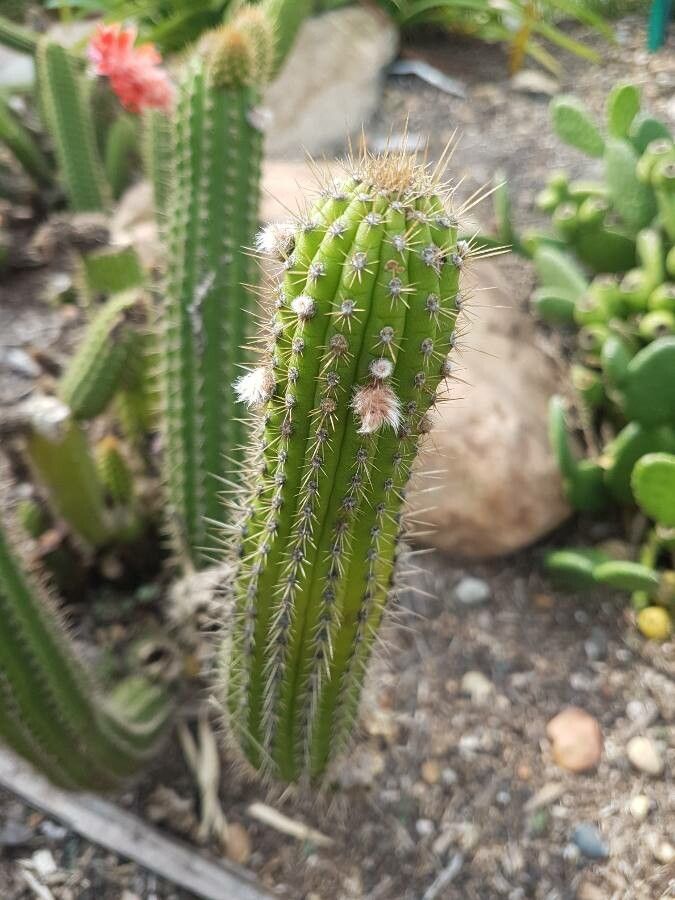
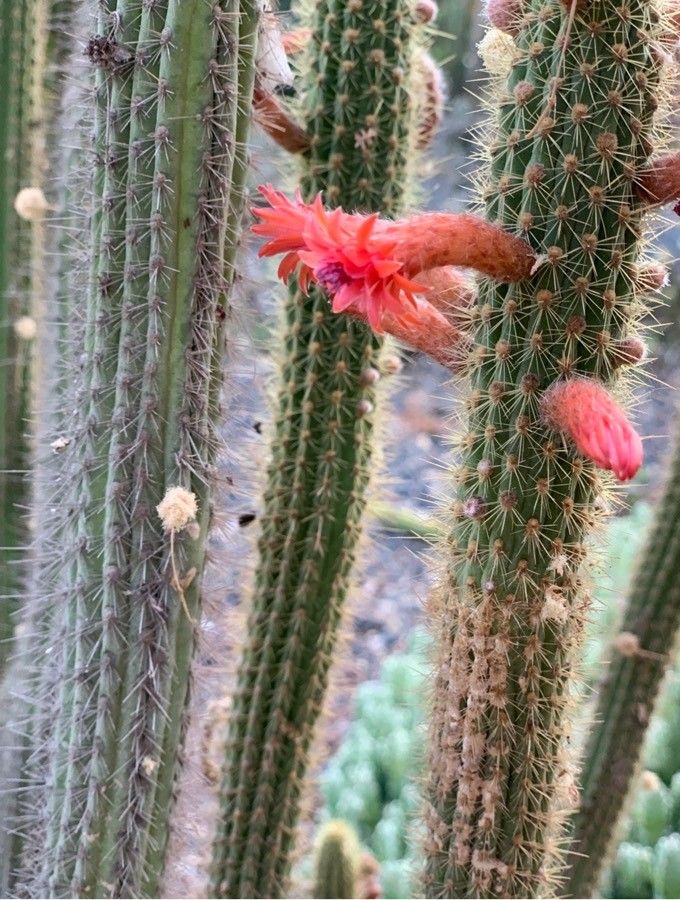
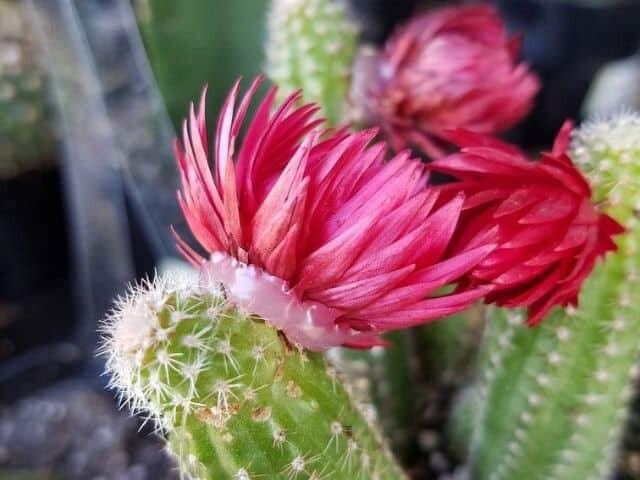
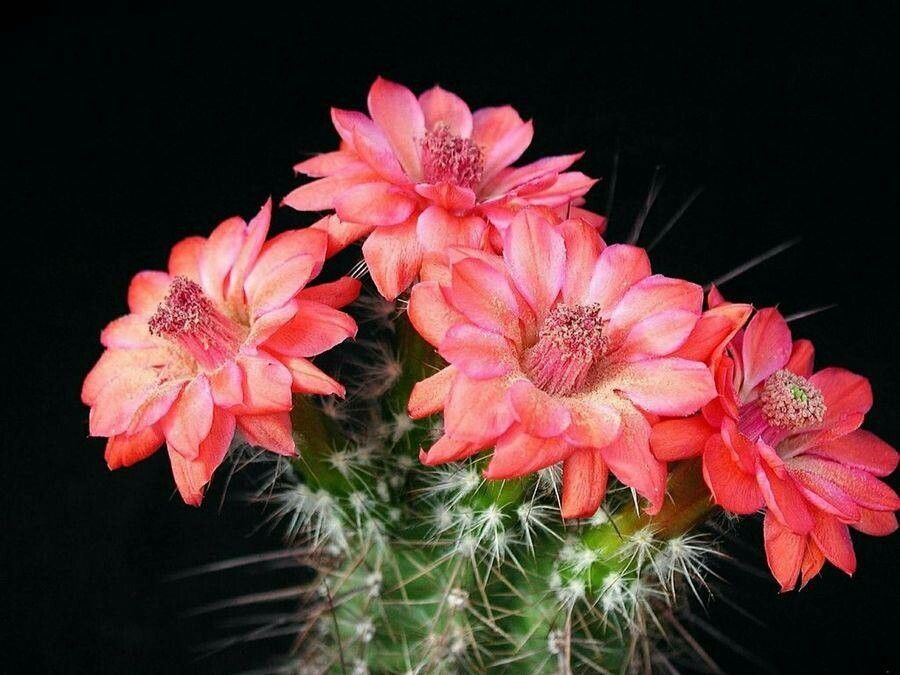
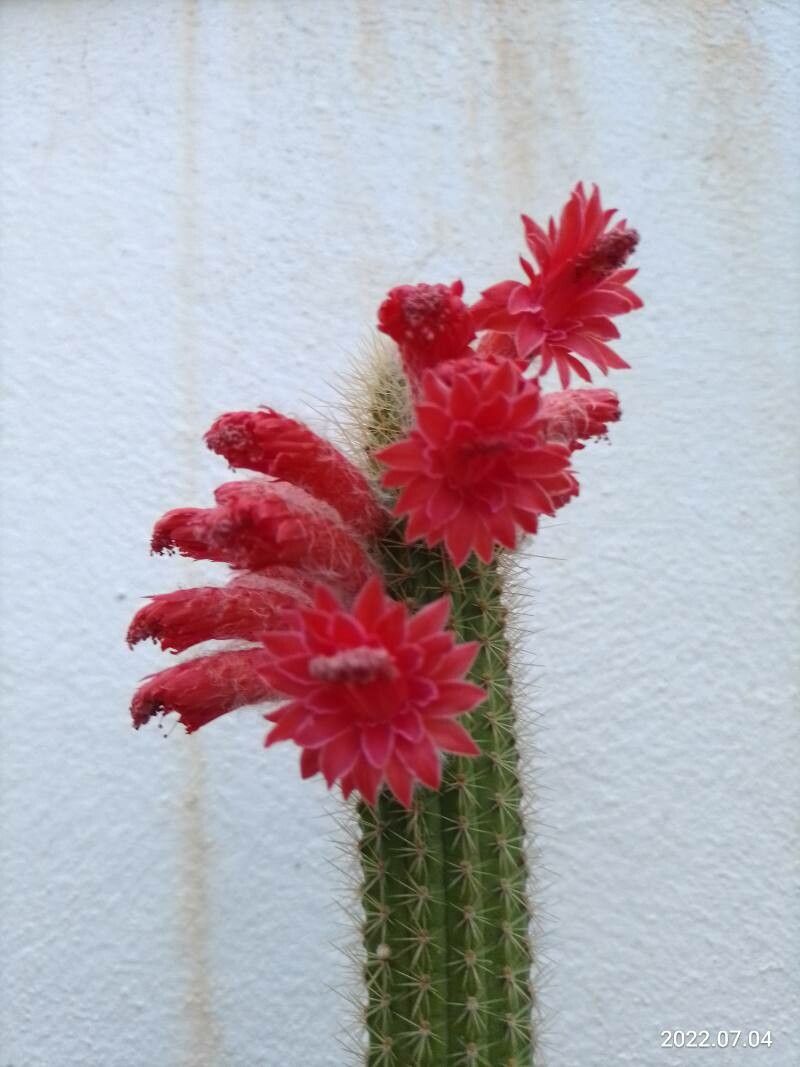
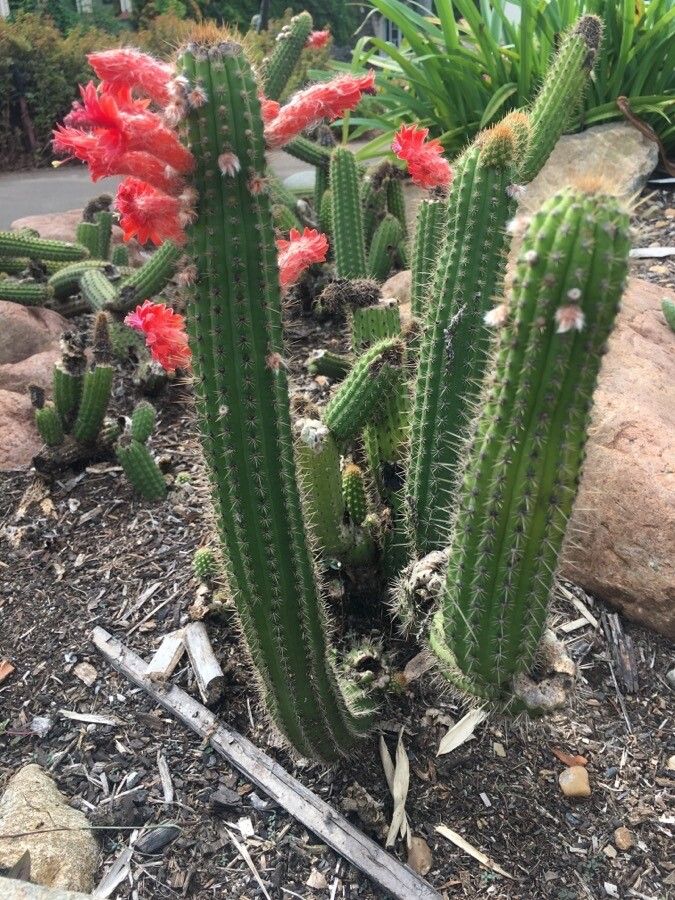
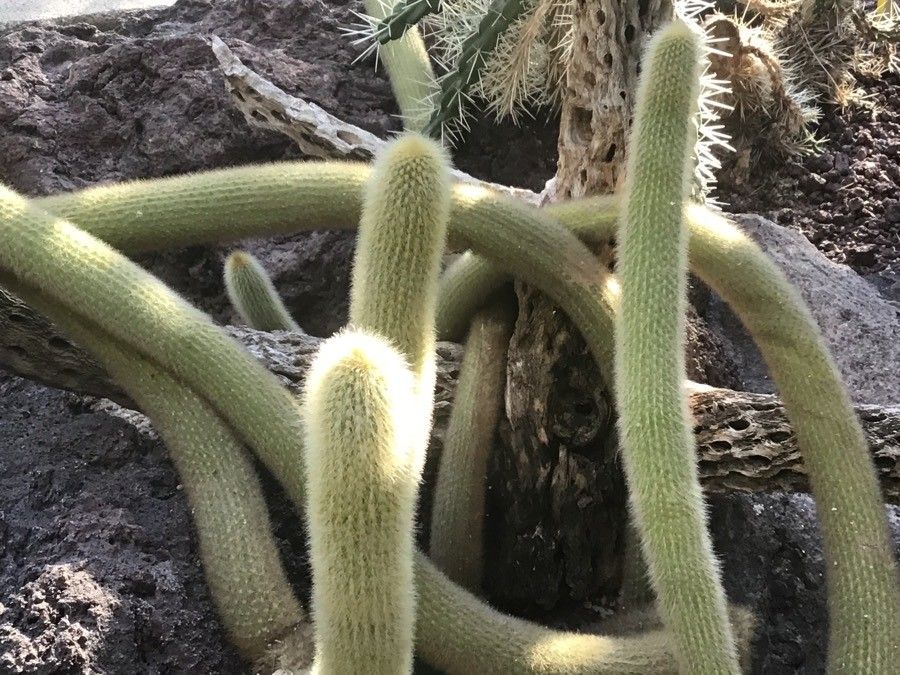
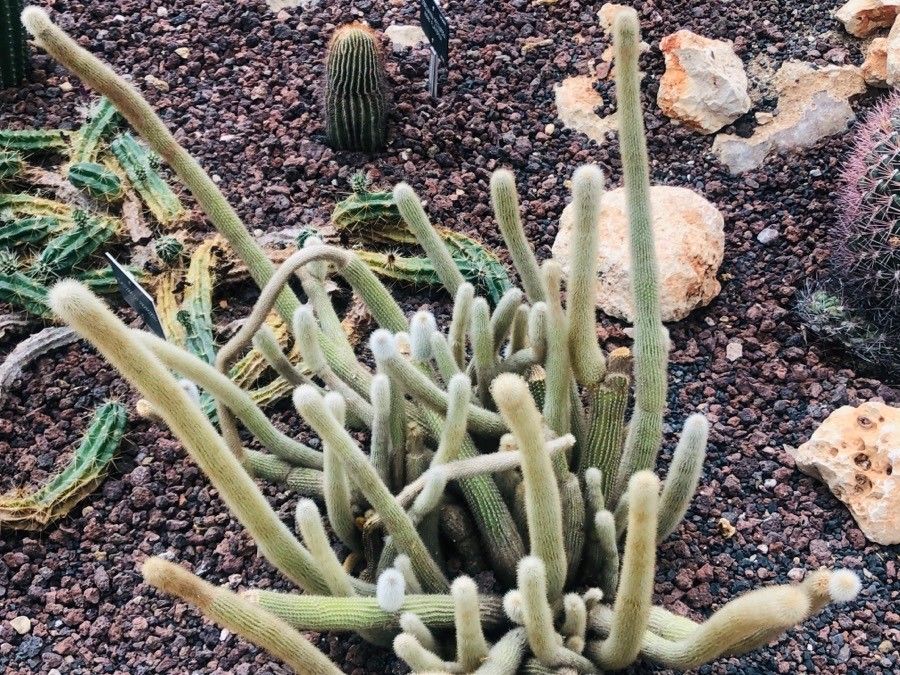
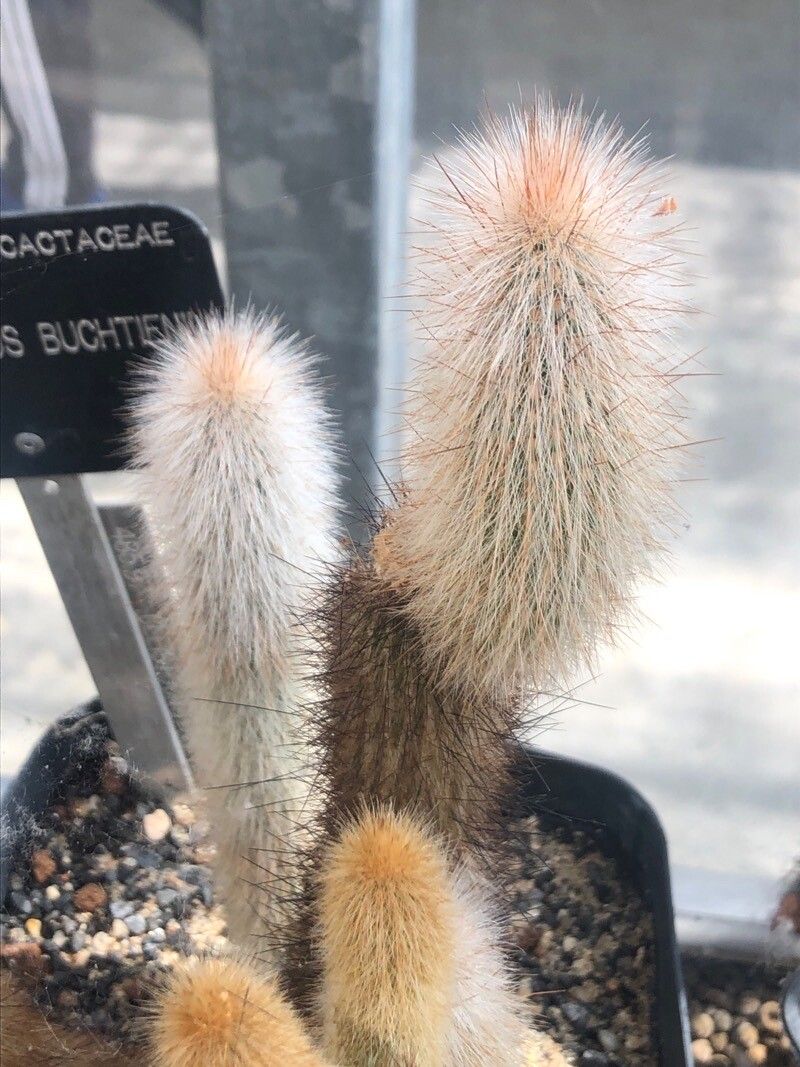
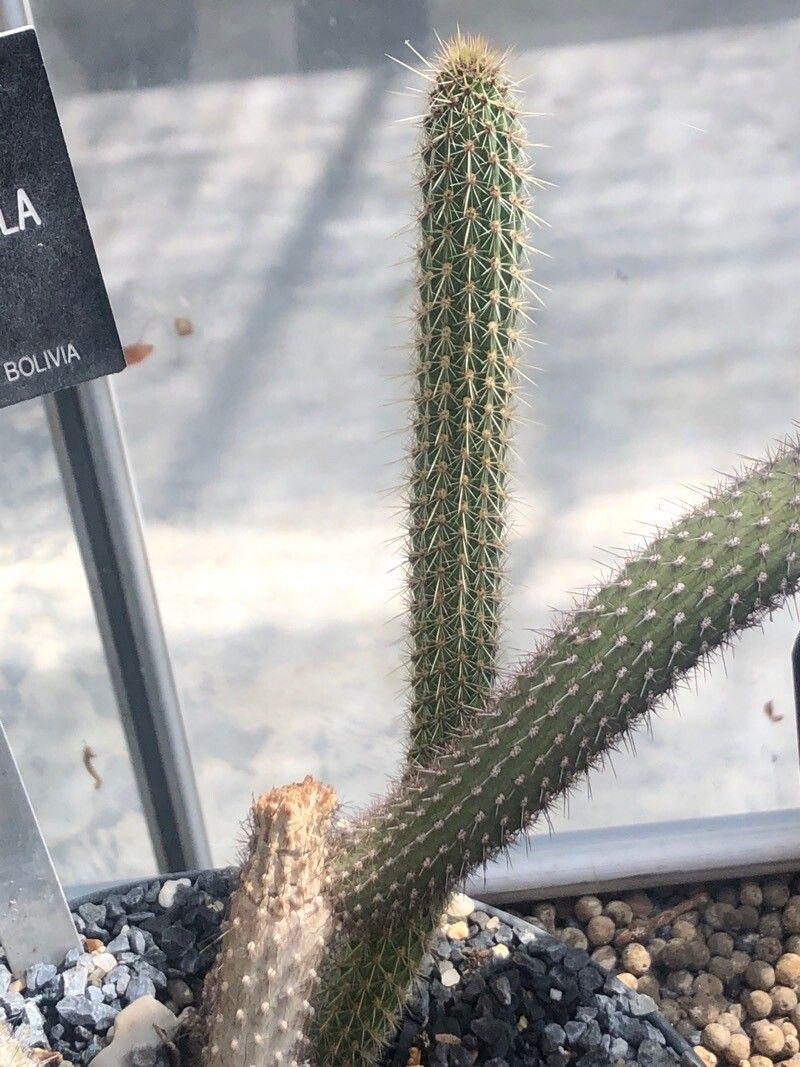
Cleistocactus samaipatanus is a species of flowering plant in the family Cactaceae, native to Bolivia. Growing to 1.5 m (4.9 ft) tall, it has multiple long, narrow columnar green stems with pale gold spines. It grows vigorously with large, pinky-red flowers in summer. In cultivation in the UK, this plant has gained the Royal Horticultural Society’s Award of Garden Merit (confirmed 2017). However, as it does not tolerate temperatures below 0 °C (32 °F), it must be grown under glass, though it may be placed outside during the warm summer months.
Cleistocactus samaipatanus is fairly resistant to diseases and generally remains healthy under normal care. It can, however, be vulnerable to mealybugs; these pests may cause some harm but typically do not pose a serious danger. Regarding care, Cleistocactus samaipatanus is drought-tolerant and does not require frequent watering. It can endure extended periods without water and needs little fertilizer. That said, it is very prone to root rot if kept in poor light and given too much water. Overall, Cleistocactus samaipatanus is a good choice for people who prefer low-maintenance plants, provided its basic needs are met. It is especially appropriate for those who are away for long stretches and might forget regular watering.
How to keep Cleistocactus Samaipatanus.
Light
Originating in arid areas, Cleistocactus samaipatanus performs best in full sun, as its native habitat has intense sunlight and very little shade. It can also tolerate partial sun, providing some flexibility in its growth.
Water
Cleistocactus samaipatanus is a drought-tolerant plant that only requires thorough watering when the soil is completely dry. During the growing season, from spring to fall, water the plant once or twice a week. In winter, reduce watering to once a week. It's best to use rainwater or distilled water to prevent soil compaction. Make sure the water does not come into contact with the stem, as this can cause rotting.
Temperature
Cleistocactus samaipatanus prefers warm conditions and needs higher temperatures during the growing season to stimulate growth and metabolism. It does well with plenty of sunlight, proper moisture, and good air circulation. However, it can be harmed by very low temperatures and by overwatering. It’s essential to maintain a balance and also to avoid extremes of excessive heat and overly dry conditions.
Fertilizer
Cleistocactus samaipatanus requires only light fertilizer applications once or twice a year during the growing season. Do not fertilize in winter or summer when it is dormant. Cut back on fertilizer for plants that have been repotted and wait a few months after repotting before you start fertilizing. Feeding helps maintain healthy growth and encourages flowering.
Pruning
Cleistocactus samaipatanus is a columnar cactus with striking red-orange flowers. To keep the plant healthy, perform minimal pruning in early spring, focusing on removing any dead stems. Always use sterilized tools to prevent infections. Be careful not to prune excessively, as the stems store water and support the plant’s overall health by allowing better light access.
Botanical profile.
- Plant Type
- Succulent
- Life Cycle
- Perennial
- Genus
- Cleistocactus
- Family
- Cactaceae
- Hardiness Zone
- 9-11
- Mature Height
- 91 cm
- Mature Spread
- 61 cm
- Leaf Color
- Green
- Leaf Type
- Evergreen
- Flower Color
- Red
- Flower Size
- 3.05 cm to 4.06 cm
- Bloom Time
- Late spring, Summer, Early fall
- Planting Time
- Spring, Summer, Autumn
- Harvest Time
- Late summer, Fall