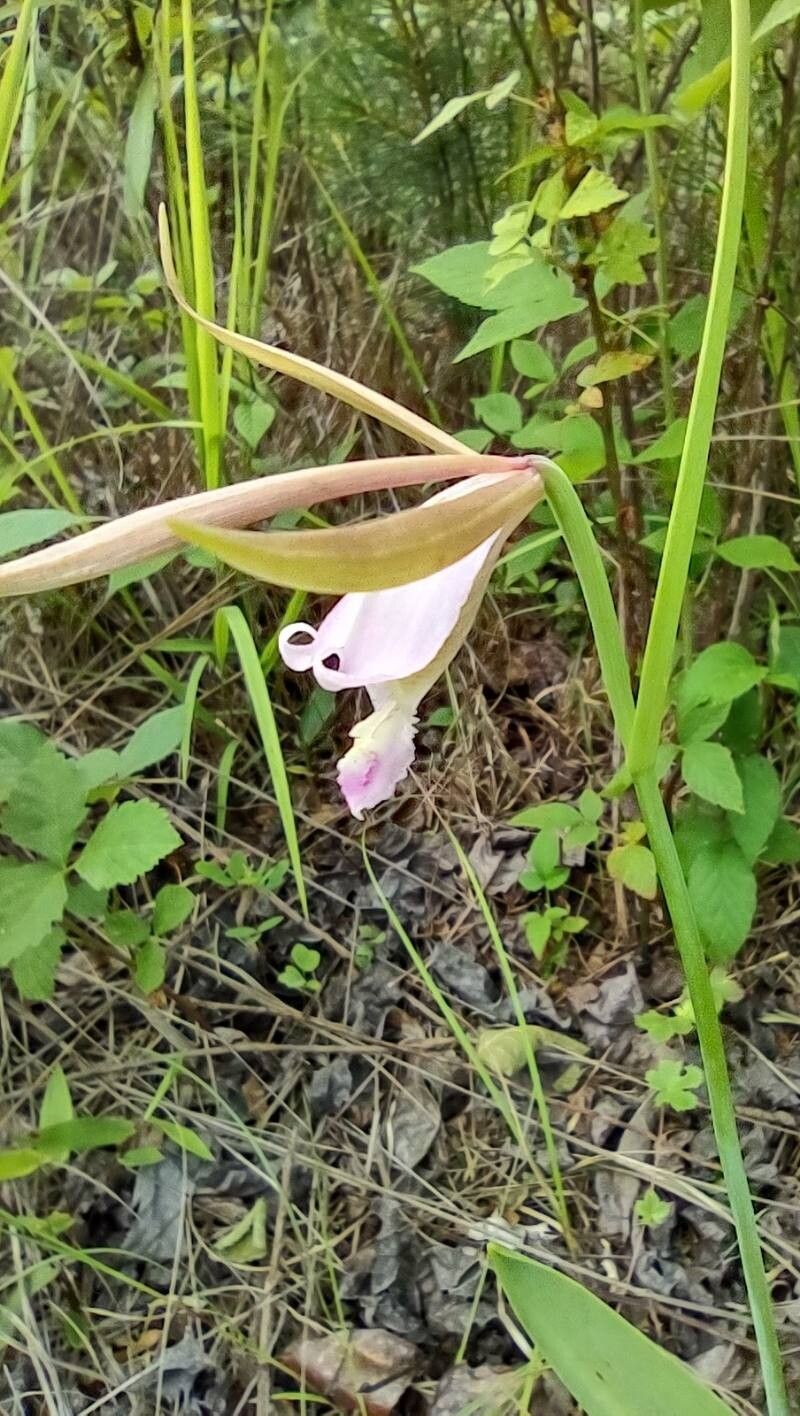
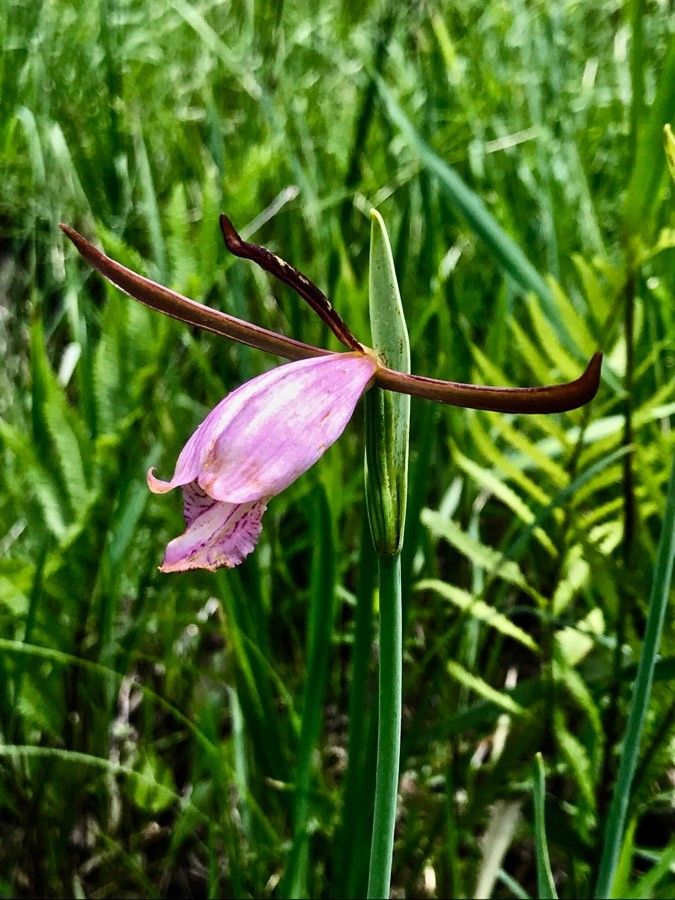
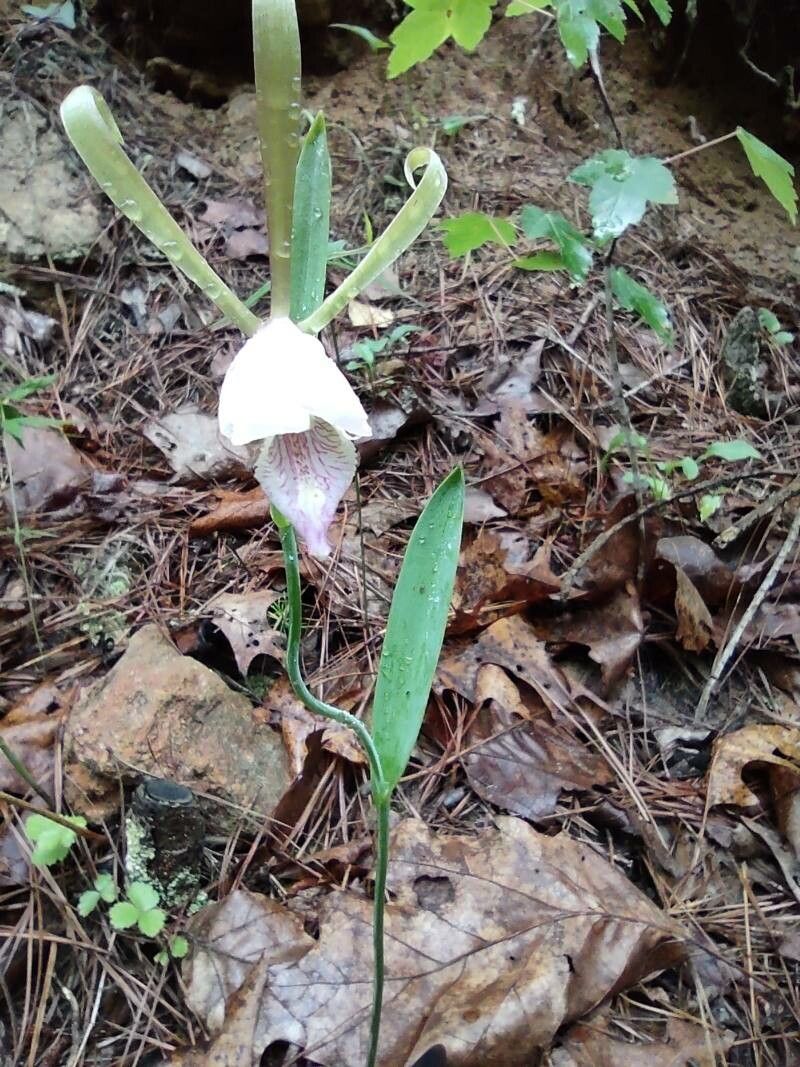
Cleistesiopsis divaricata is a terrestrial species of orchid native to the eastern United States from New Jersey to Florida.
Large spreading pogonia typically has strong resistance to disease and is troubled by relatively few insect pests. Its care level is regarded as difficult, since it needs a very humid yet well-ventilated environment with minimal harmful pathogens. Too much water can result in root rot. Although anyone can grow Large spreading pogonia, keeping it healthy and encouraging it to bloom again requires more growing experience.
How to keep Cleistesiopsis Divaricata.
Light
Large spreading pogonia is found naturally in settings like forest understories or rocky areas, where it grows in natural shade. It prefers partial sun but can tolerate full sun or full shade, illustrating its versatile and hardy character.
Water
The large spreading pogonia thrives in humid environments and needs consistent moisture to maintain its lush foliage. It is sensitive to drought, so it should be watered weekly to ensure it does not dry out, without over-saturating the soil. This plant is ideal for outdoor growth, as it can benefit from natural rainfall patterns and seasonal water availability, which influence its growth cycles.
Temperature
Large spreading pogonia can tolerate a broad range of temperatures, yet its distribution can still be restricted by particular combinations of moisture and heat. It does best in warm summer conditions with sufficient rainfall or watering. Long periods of cloudy, rainy weather, as well as sustained high temperatures, can raise the chance of Large spreading pogonia dying. In winter, protecting the plant from cold can increase its survival rate.
Fertilizer
The best time to fertilize a Large spreading pogonia is in early spring, as it comes out of dormancy and starts active growth. Fertilization supplies essential nutrients for healthy development. Although a Large spreading pogonia has relatively low fertilizer requirements, applying fertilizer annually can improve its survival and encourage better, longer-lasting flowers.
Pruning
The large spreading pogonia benefits from strategic pruning between early and late spring. To encourage healthy growth and better air circulation, remove any dead stems and thin out crowded areas. Be careful not to prune too heavily, as maintaining its natural shape is important for ensuring vigorous blooms and overall plant health.
Botanical profile.
- Plant Type
- Herb
- Life Cycle
- Perennial
- Genus
- Cleistesiopsis
- Family
- Orchidaceae
- Hardiness Zone
- 6-9
- Mature Height
- 30 cm to 61 cm
- Mature Spread
- 15 cm to 30 cm
- Leaf Color
- Green
- Leaf Type
- Semi-evergreen
- Flower Color
- Purple, Lavender
- Flower Size
- 3.05 cm to 5.08 cm
- Bloom Time
- Late spring, Early summer
- Planting Time
- Spring, Summer
- Harvest Time
- Mid summer, Late summer
Other names.