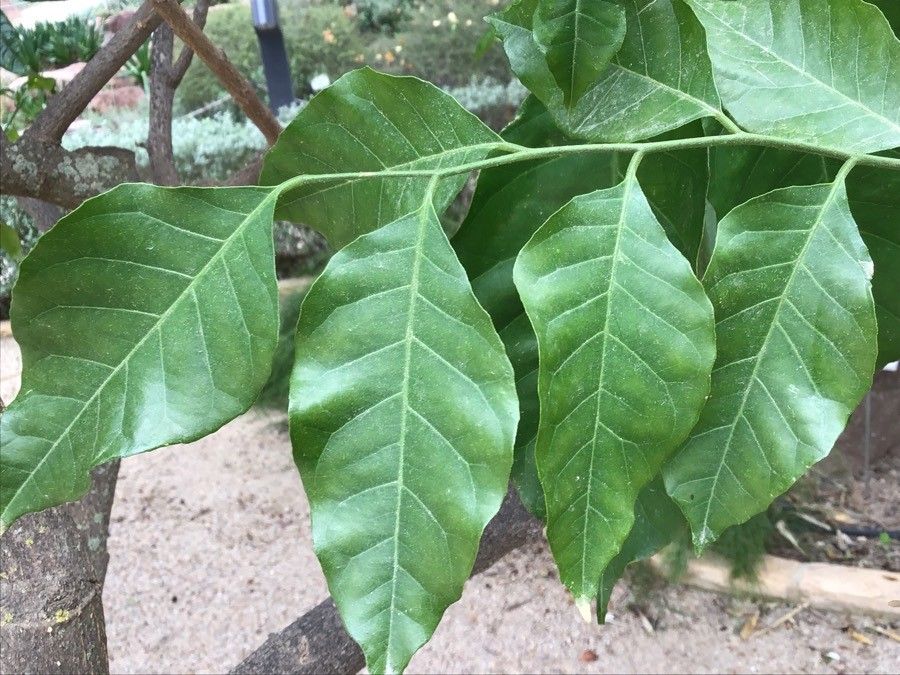
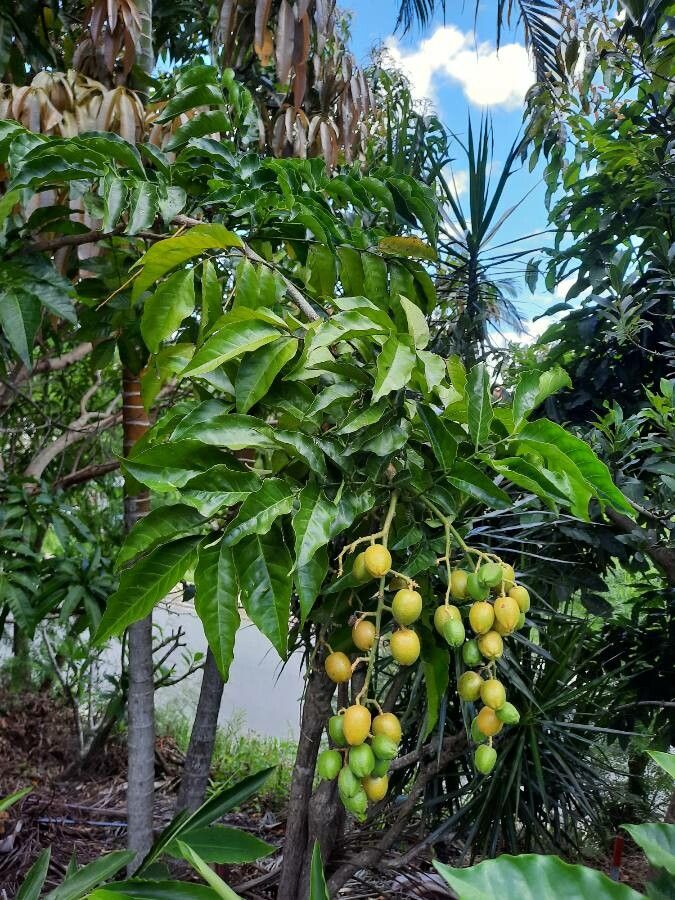
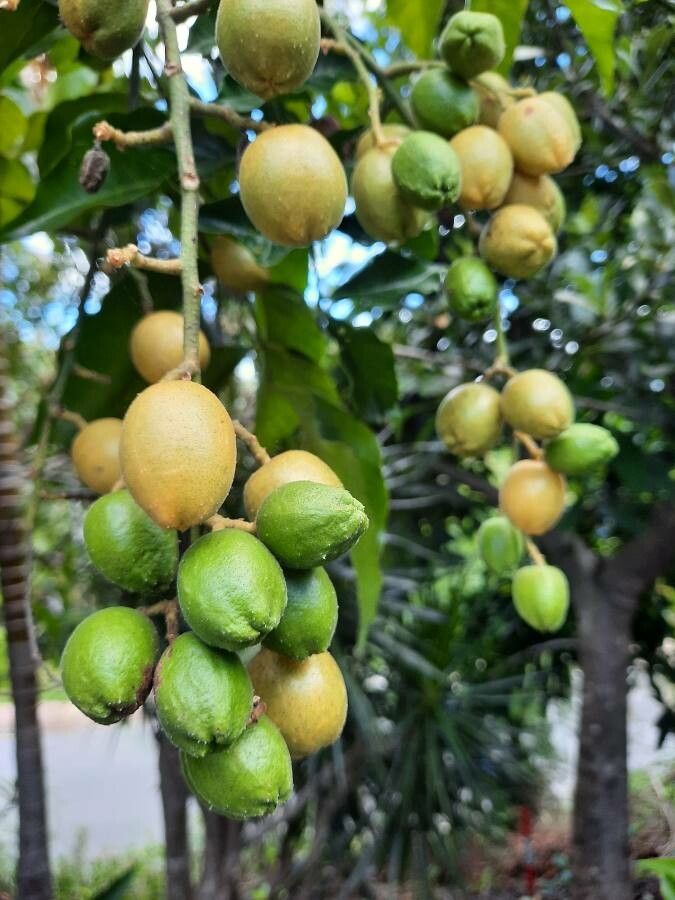
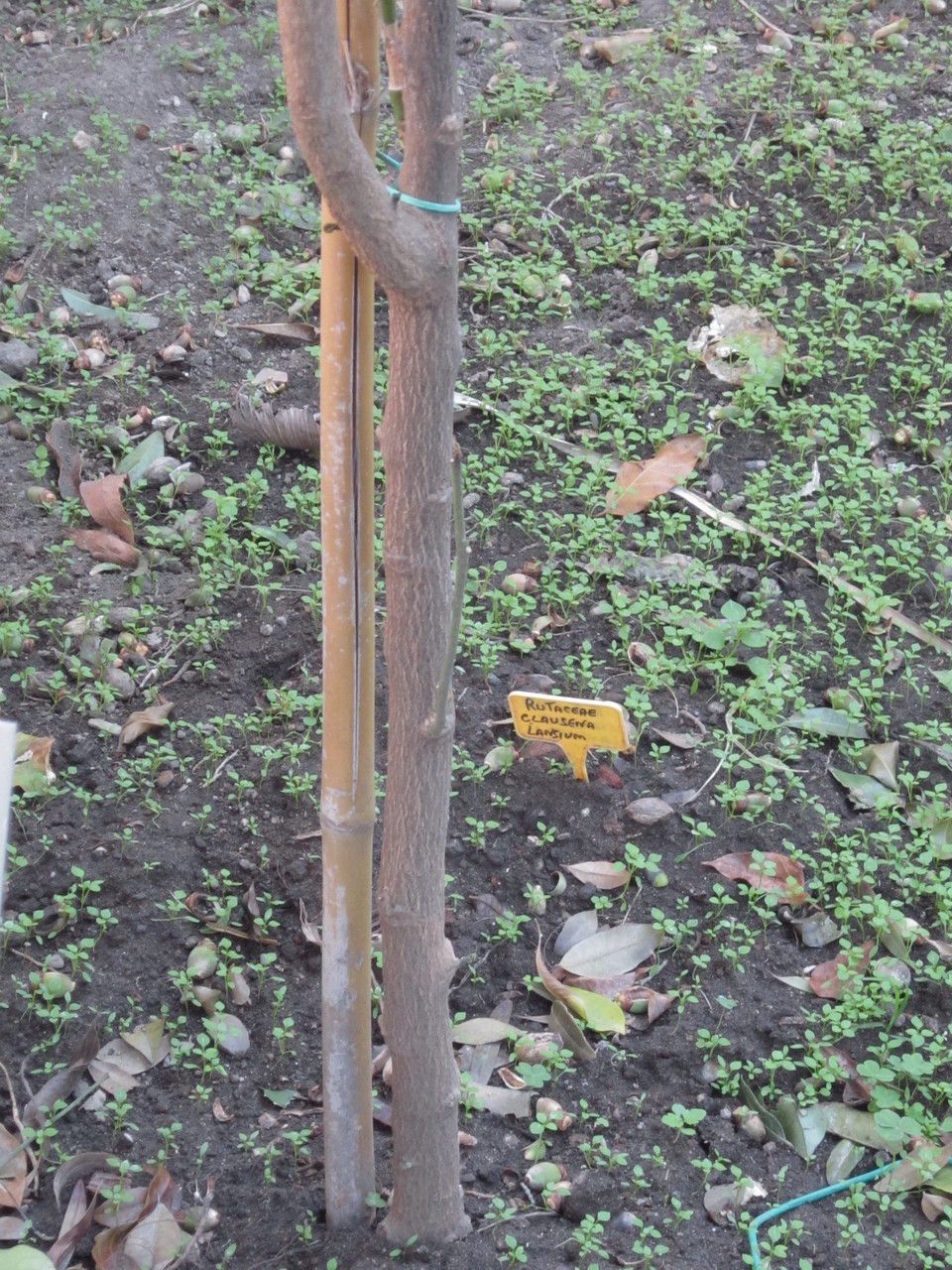
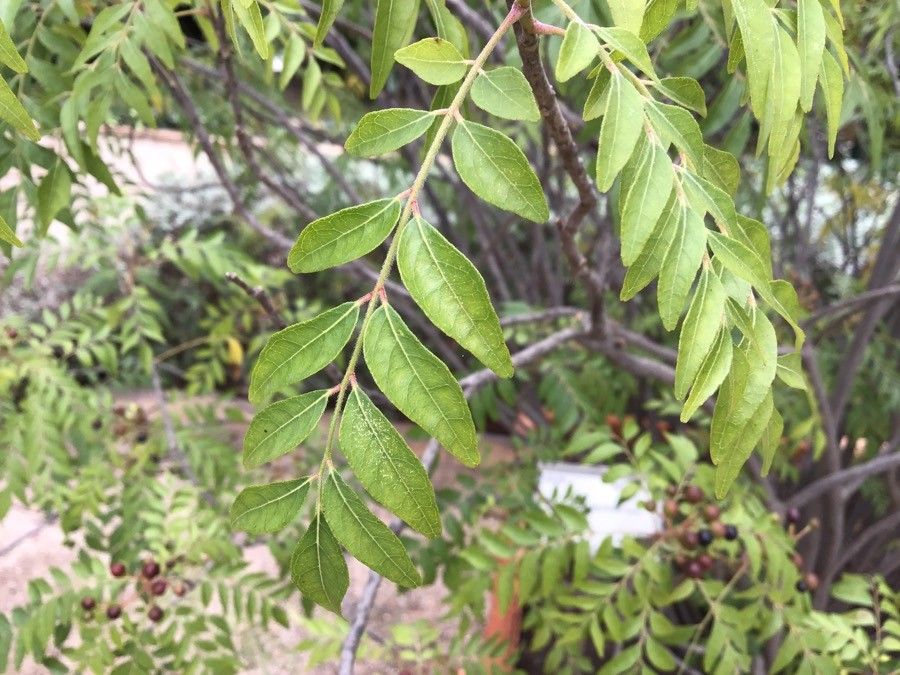
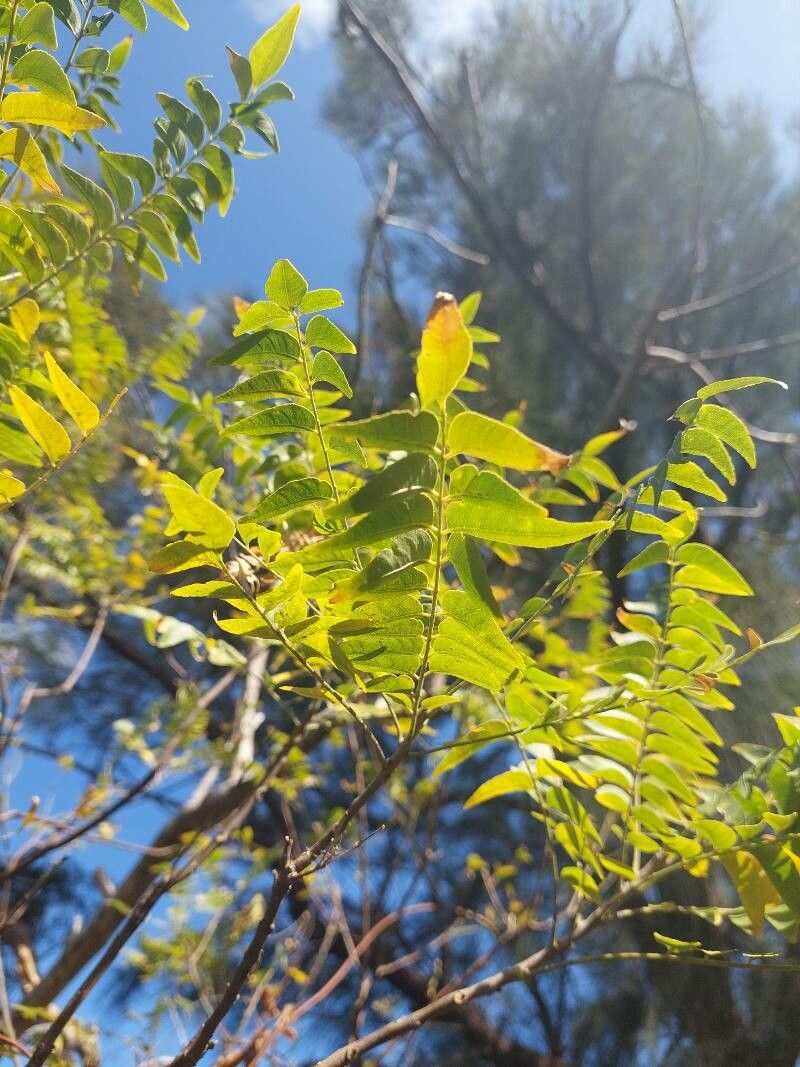
Clausena lansium, commonly known as wampee or Chinese wampee, is a small evergreen tree or shrub belonging to the citrus family, Rutaceae. Native to Southeast Asia and China, this plant has been cultivated for centuries for its edible fruit. The tree can grow up to 10 meters tall and features a dense crown of glossy green leaves that emit a citrusy aroma when crushed. The fruit of Clausena lansium is small, round, and roughly the size of a golf ball. It has thin yellow skin encasing white flesh, which surrounds several seeds in the center. The fruit boasts a sweet-tart flavor reminiscent of grapefruit, but with hints of pineapple and mango. Beyond its culinary uses, Clausena lansium also holds medicinal properties in traditional Chinese medicine, where it is used as an anti-inflammatory agent for treating fever, coughs, sore throats, and other respiratory ailments. The plant prefers warm tropical climates but can also thrive in subtropical regions where temperatures do not drop below the freezing point. It requires well-drained soil rich in organic matter and regular watering during dry periods. Overall, the Clausena lansium plant offers both culinary delights and medicinal benefits, making it an important and culturally significant species across the Southeast Asia region where it originated. Its unique flavor profile sets it apart from other fruits available on the market today, contributing to its increasing global popularity.
Wampi has strong resistance to disease and is typically not susceptible to illnesses. Regarding upkeep, this plant is fairly low maintenance. When grown outdoors it needs only light watering, and larger specimens usually do not require pruning. Smaller specimens, however, should be trimmed after they finish blooming. Wampit is appropriate for anyone who has an outdoor area like a garden or a deck, and it does not demand extensive care experience.
How to keep Clausena Lansium.
Light
Wampi favors moderate sunlight exposure, which promotes its optimal growth. The environment where it flourishes in its native range reflects this preference. Excessive sunlight can cause stress, while insufficient exposure can impede growth and vitality.
Water
Wampi flourishes in environments with moderate moisture and typically needs watering every two weeks. As a deciduous plant, it drops its leaves during dry periods as an adaptation. To promote its growth and overall health, it's important to adjust watering based on seasonal changes.
Temperature
Wampi originates from temperate regions and favours temperatures between 68 and 100.4 °F (20 to 38 ℃). To achieve optimal growth, keep these temperatures throughout all seasons, making adjustments when necessary.
Fertilizer
Choose organic fertilizers (e.g., fish emulsion or compost) instead of chemical ones for Wampi. Provide higher levels of nitrogen and phosphorus to young plants during spring. Incorporate compost or fertilizer into the soil before or after planting. For mature plants, supplement in spring with a balanced fertilizer or one specific to identified deficiencies. Nutrient deficiency causes small leaves, short branches, yellow or bronze foliage, acidic fruits, premature fruit drop, and fruit splitting.
Pruning
Wampi is a tropical plant that produces fragrant flowers and edible fruits. To promote healthy growth and robust fruit production, it is important to prune the plant from early to late spring. This involves cutting back overgrown branches to enhance airflow and maintain an open canopy. By doing so, you improve light penetration and increase the plant's resistance to pests.
Botanical profile.
- Plant Type
- Tree
- Life Cycle
- Perennial
- Genus
- Clausena
- Family
- Rutaceae
- Hardiness Zone
- 10-11
- Mature Height
- 3.05 m to 6.1 m
- Mature Spread
- 30 cm to 61 cm
- Leaf Color
- Green
- Leaf Type
- Evergreen
- Flower Color
- White
- Flower Size
- 2.54 cm
- Bloom Time
- Late spring, Early summer
- Planting Time
- Spring, Summer
- Harvest Time
- Late summer, Early fall
- Native Area
- Vietnam, Laos, China
Other names.
Reader questions.
How should I water my Wampi plant in the best way?
Your Wampi is not picky about how you water it. You can use common watering tools like cans, hoses, or cups. Just make sure to water directly on the soil and evenly moisten all areas to give the roots the water they need. Filtered water is a good choice to avoid harmful particles. It's also best to use water that is at or slightly above room temperature. Cold or hot water can be a bit shocking for the Wampi, although it usually handles any water just fine.
Why should I add fertilizer to my Wampi plant?
If the soil in your area is rich, fertilizing may not be necessary. However, if the soil lacks nutrients, it can result in a Wampi plant failing to produce an adequate amount of leaves, flowers, and fruits. To determine the nutrient levels in the soil, a soil test is recommended. Nutrient deficiency in Wampi plants can lead to small leaves and short branches, yellowing or bronze leaves, and fruits that are more acidic and less tasty. Certain nutrient deficiencies can also cause fruits to fall prematurely or split.
How much sunlight does Wampi need every day?
When growing Wampi indoors, it's important to provide it with plenty of filtered or dappled light. To ensure this, place the plant in a sunny spot throughout the day. Keep in mind that the duration of daylight can change with the seasons, but a general guideline is to give Wampi at least 6 hours of light each day. This should include 3-6 hours of direct sunlight. Exposing the plant to indirect sunlight for several hours won't cause any harm, but it's essential to be cautious about direct sunlight.
What temperature is best for Wampi?
To help your tropical plants thrive, it's best to maintain a temperature range of 75℉ to 90℉ (25-32℃). While different species can tolerate temperatures outside this range, sticking within a few degrees of these limits will ensure optimal growth. However, there are extreme temperature limits to be aware of. Anything below 50℉ (10℃) or above 95℉ (35℃) can hinder growth and cause issues with the leaves and stems. Low temperatures are particularly damaging, as even a light frost can lead to the death of your tropical plants. In fact, cellular death can occur rapidly, with some species dying within 12 to 24 hours.
What should I do if I give my Wampi plant too much or too little water?
When planting outdoor plants, especially new ones or seedlings, be aware that they may need extra watering at first. This is because they are still establishing their roots and need consistent moisture. However, once they are fully established, they can usually rely on natural rainfall. On the other hand, when planting Wampi in pots, overwatering is a common mistake. If you accidentally overwater your plant, take immediate action to address the issue. First, stop watering the plant to minimize the negative effects. Next, remove the Wampi from its pot and examine the roots. If there is no sign of root rot, you can place the plant back in the pot. However, if you do find signs of root rot, trim away the affected roots and consider using a fungicide to prevent further damage. Finally, repot the Wampi in well-draining soil. For underwatered Wampi, the solution is simple: water the plant more frequently. If you notice the leaves drooping, drying out, or falling off, it's a sign that the Wampi needs more water. Adjust your watering schedule accordingly. Remember, underwatering can be easily corrected, so make sure to water the plant as soon as you notice signs of underwatering.
When should I fertilize my Wampi for the best results?
To support strong leaf and root development for future growth, it is recommended to give young Wampi plants higher nitrogen and phosphorus fertilizer. The best time to apply fertilizer is in the spring of their first growing season. It's also a good idea to mix compost or another fertilizer into the soil before or right after planting. For mature plants, supplement with a balanced fertilizer or one that addresses specific soil deficiencies in your area every few years during the spring and summer as needed. Avoid fertilizing Wampi plants in the autumn or winter.
What kind of sunlight does Wampi need?
Wampi in the wild receive ample sunlight throughout the day, but it is dappled and indirect as it shines through the leafy canopy of tall trees above them. When grown indoors, Wampi plants need to be placed in a sunny windowsill or provided with bright indirect light using grow lights.
Do Wampi need different temperatures at different growing stages?
Although Wampi can transition between different growing phases without changes in temperature, it is important to maintain consistency. Fluctuations in temperature can hinder its growth, regardless of the current phase. Therefore, it is recommended to provide a controlled environment. The optimal temperature range for Wampi is between 75℉ and 90℉ (25-32℃), with emphasis on staying above the lower limit. While exceeding 90℉ (32℃) is not ideal, the plant, being tropical, can tolerate it to some extent. Conversely, temperatures below 50℉ (10℃), especially 40℉/5℃, can cause direct damage to this heat-loving species.
How frequently should I water my Wampi?
For plants that grow outdoors, they usually get enough water from rainfall. However, if your area doesn't get much rain, you'll need to water your plants every 2 weeks in the spring and fall. In the summer, you'll need to water them more often. In the winter, when growth slows down and plants need less water, you can water them less frequently or not at all. If your Wampi plant is young or newly planted, you should water it more often to help it get established and grow. Mature plants are more adaptable and can handle drought better. When it comes to potted plants, there are two ways to determine how often to water your Wampi. One way is to follow a set watering schedule, like once a week or once every other week. However, this may not always work because the growing conditions can vary. Another way is to check the moisture in the soil. Usually, it's best to wait until the top 2 to 4 inches of soil have completely dried out before watering again. This measurement is about one-third to half the depth of the pots.
When is it not a good idea to put fertilizer on my Wampi plant?
To ensure the well-being of your Wampi plant, refrain from fertilizing it in certain situations. Avoid fertilizing after pruning, when the plant is experiencing disease, insect infestation, or any form of stress. It is important to note that fertilizer is beneficial only for addressing nutrient deficiency in the soil, and cannot resolve other underlying issues that may harm the Wampi. Therefore, accurately diagnosing the problem will help avoid unnecessary fertilizer application when another factor may be the true cause. Furthermore, do not fertilize the Wampi during the winter months or during hot and dry periods in the summer.
Should Wampi stay away from the sun?
Wampi can still be exposed to sunlight but it should be the right kind. Direct sun exposure, where the sunlight directly hits the plant, should be limited to no more than 6 hours per day. However, indirect light, which can be reflected off nearby objects or filtered through a sheer curtain, is fine. So, it's important to protect Wampi from too much direct sun.
Does Wampi require varying temperatures during different seasons?
Wampi does not require different temperatures for different growing seasons. The key to taking care of this plant is to maintain the optimal temperature range. Therefore, it's advisable to keep the plant indoors so that you have control over the temperature, regardless of the external climate conditions. Additionally, light plays a crucial role in tropical species like Wampi. These plants prefer a moderate amount of sunlight, where the light is filtered or partially shaded. When growing your plants indoors, it is best to provide bright but indirect light. Excessive direct sunlight can harm the plant's leaves and hinder its growth.