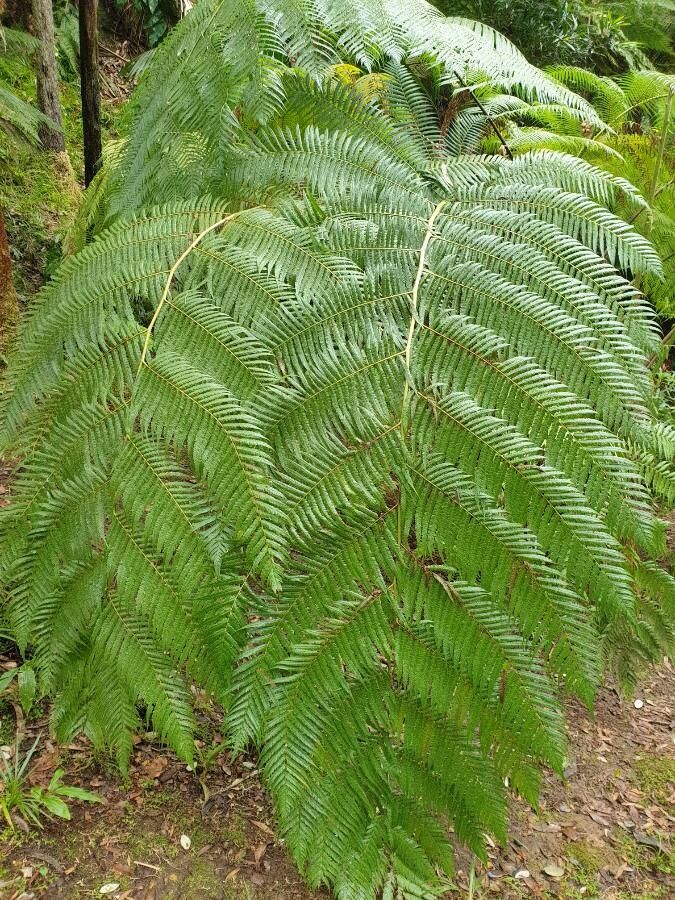
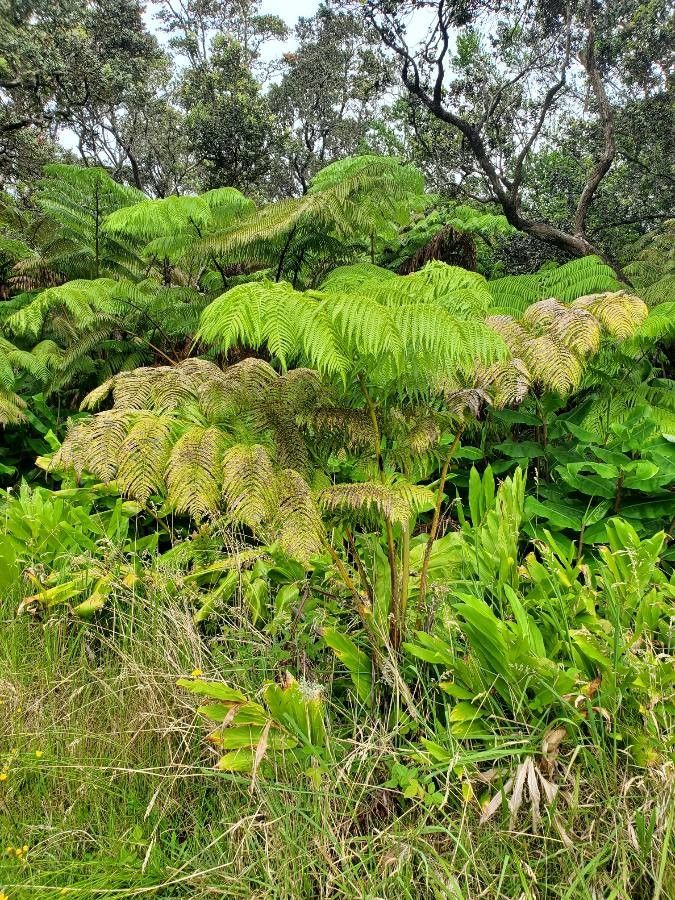
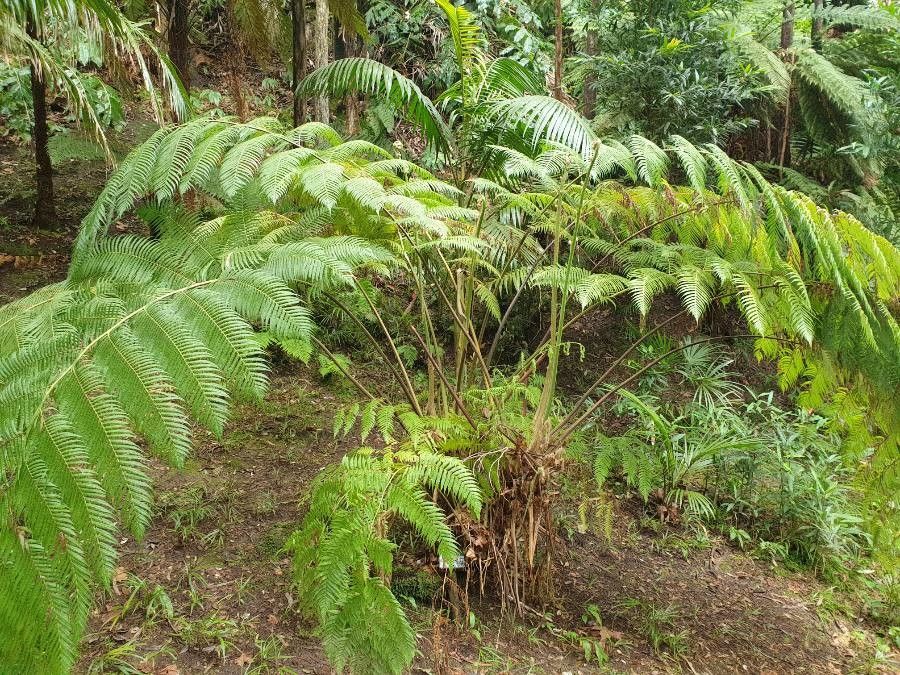
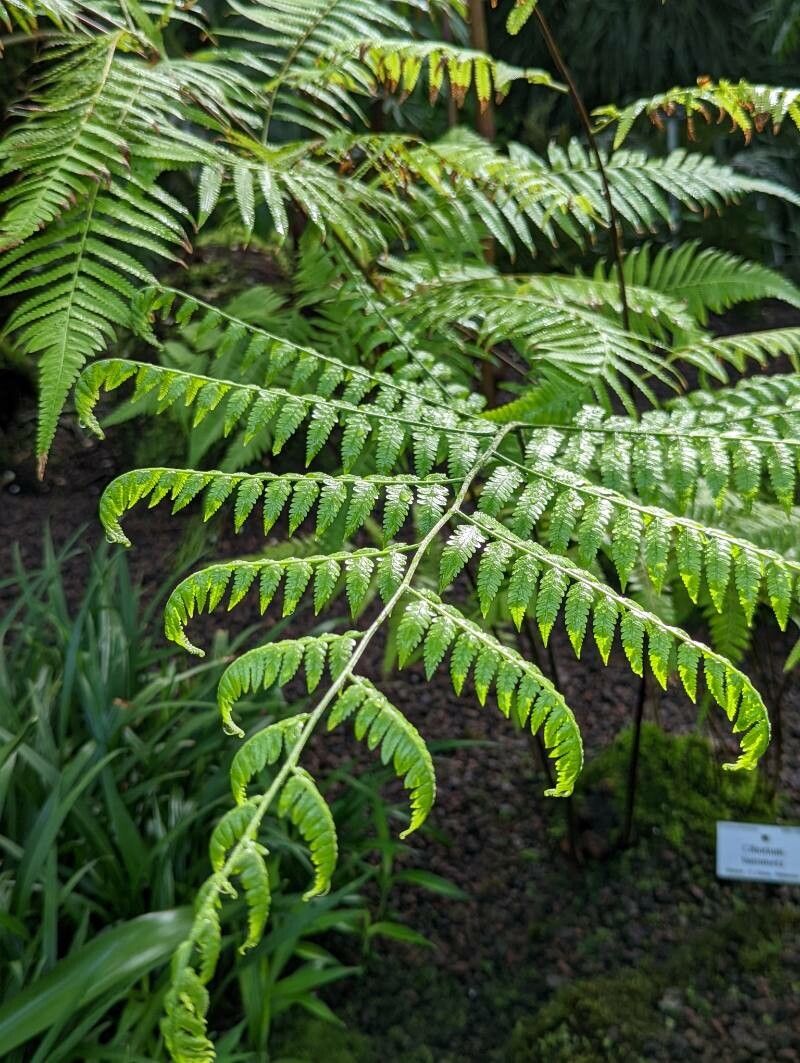
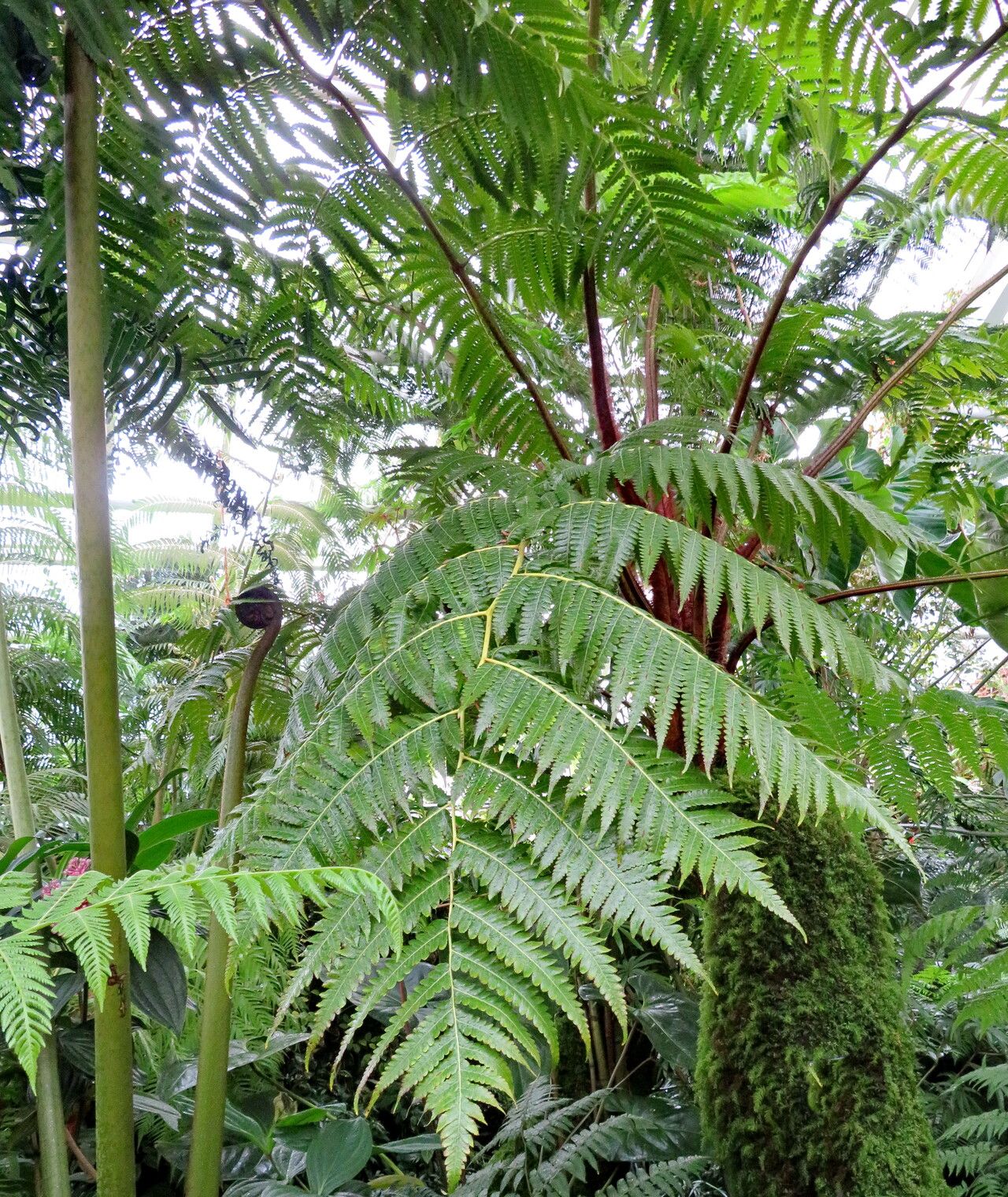
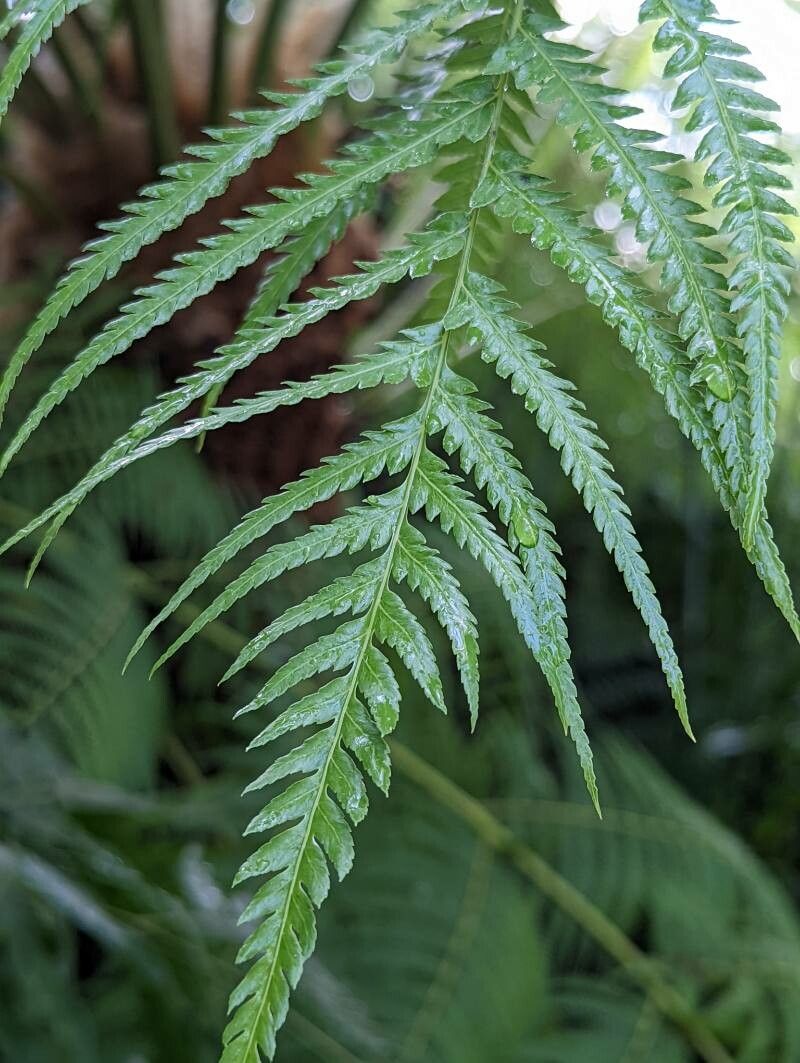
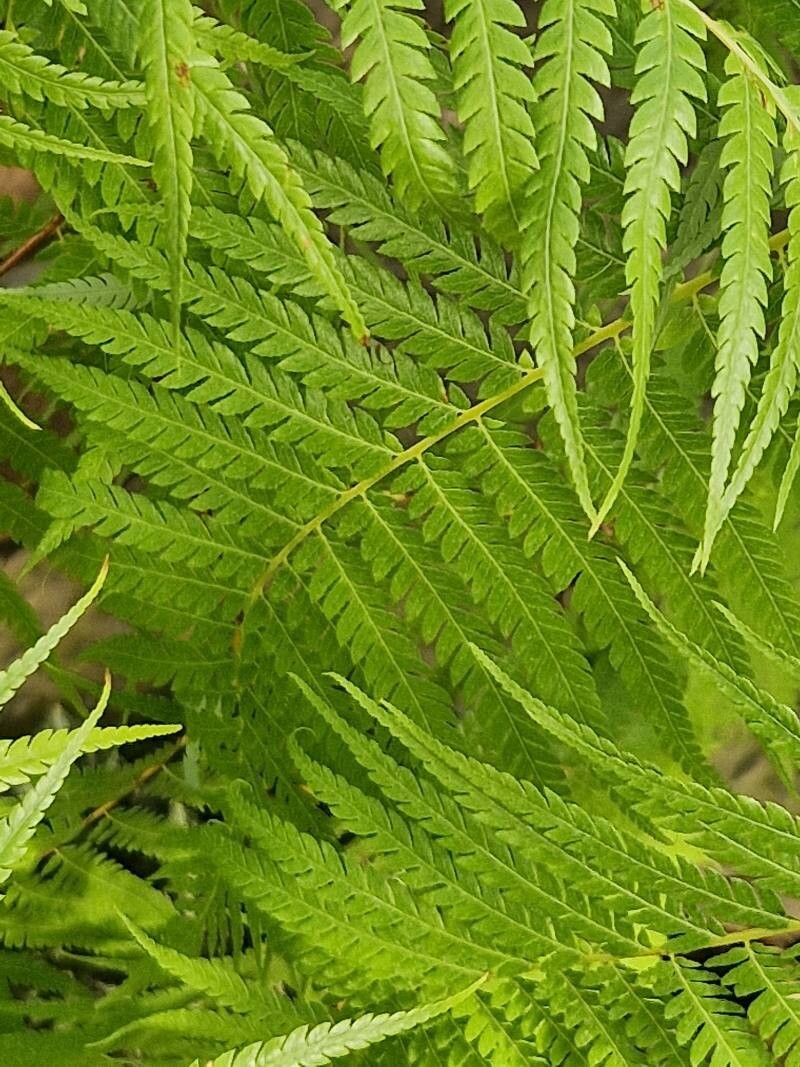
Cibotium glaucum, commonly known as the Hawaiian tree fern, is a striking species of fern native to Hawaii and other Pacific islands. This large and impressive plant can grow up to 10 feet tall, with fronds reaching up to 6 feet in length. The fronds are dark green with a glossy texture and are deeply lobed, giving them an elegant appearance.
The Hawaiian tree fern thrives in moist soil and partial shade, although it can tolerate full sun if provided with sufficient water. It is commonly found in rainforests or along streams, where it receives ample moisture.
Native Hawaiians have utilized this plant for various purposes for centuries. The young fronds were eaten as food, while the mature ones were used for weaving baskets or mats.
Cibotium glaucum has gained popularity among gardeners due to its striking appearance and ease of care. It requires minimal maintenance once established, though it should be protected from frost during colder months.
Overall, Cibotium glaucum is not only an impressive plant with cultural significance in Hawaii but also an attractive addition to any garden or landscape design.
Hapu'u typically resists disease well and is affected by relatively few insect pests. Its care is regarded as difficult because it needs a consistently moist environment and frequent watering. However, the roots can rot if the plant is overwatered or if the surroundings lack good ventilation. Hapu'u is appropriate for people with some growing experience, since most individuals can keep it alive for a period of time. Still, Hapu'u may struggle to thrive, and its leaves can dry out and become less healthy over time.
How to keep Cibotium Glaucum.
Light
Hapu'u comes from habitats such as forest understories or rocky areas that offer natural shade. It prefers Full Shade but can tolerate Partial Sun.
Temperature
Hapu'u comes from tropical areas, where the climate is generally warm and humid. As a result, it is adapted to high temperatures and humidity. It is sensitive to sudden temperature changes and prefers a stable thermal environment, so indoor temperature fluctuations should be avoided. It typically does not tolerate cold and needs warmer conditions to grow. If the surrounding temperature falls too low, the plant may stop growing or even die.
Pruning
Hapu'u plants are characterized by their spreading fronds and trunk-like stems. Pruning them in early spring helps remove damaged fronds and encourages new growth. To ensure clean cuts and reduce the risk of pests, always use sharp, sterilized tools. For the best results, time your pruning to coincide with hapu'u's active growth phase to promote optimal recovery and development.
Pot & Repot
When repotting Hapu'u, select a pot 1–2 inches (2.5–5.1 cm) larger with good drainage. Use a well-draining potting mix. Repot in spring or fall, making sure the root ball sits slightly below the rim of the flowerpot. Water thoroughly after repotting, then place it in a warm spot with indirect sunlight.
Botanical profile.
- Plant Type
- Fern
- Life Cycle
- Perennial
- Genus
- Cibotium
- Family
- Cyatheaceae
- Hardiness Zone
- 9-11
- Mature Height
- 1.83 m to 10.97 m
- Mature Spread
- 3.96 m
- Leaf Color
- Light Green, Pale Green
- Leaf Type
- Evergreen
- Planting Time
- Spring, Summer, Autumn
Other names.