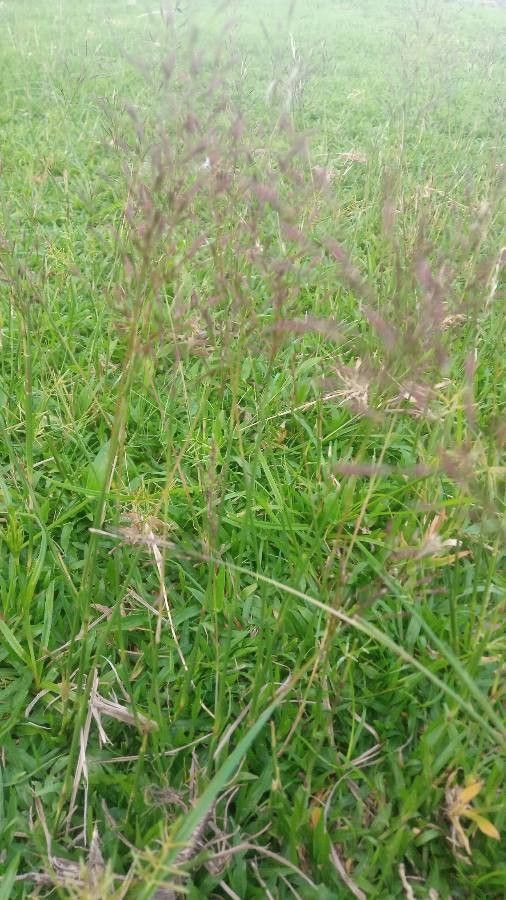
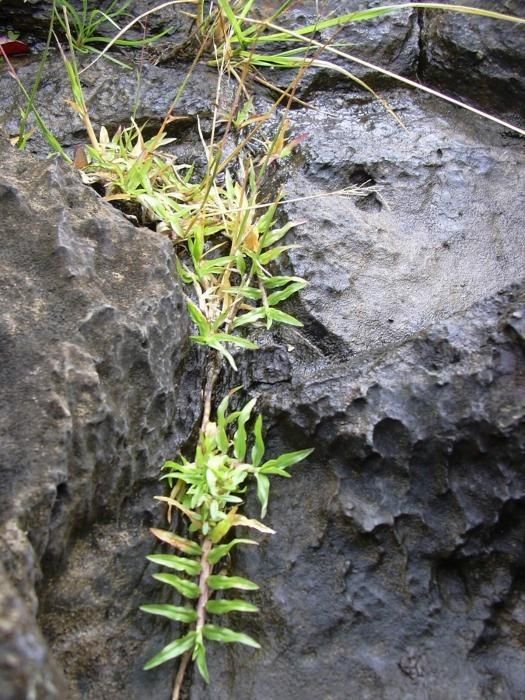
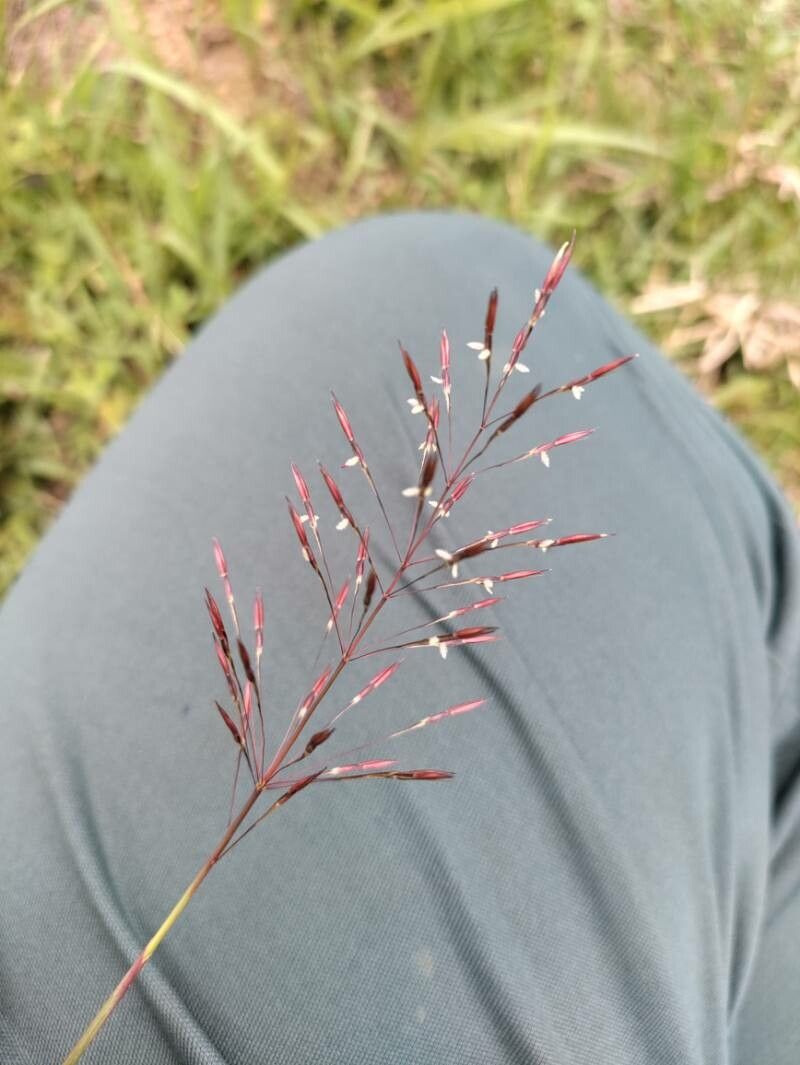
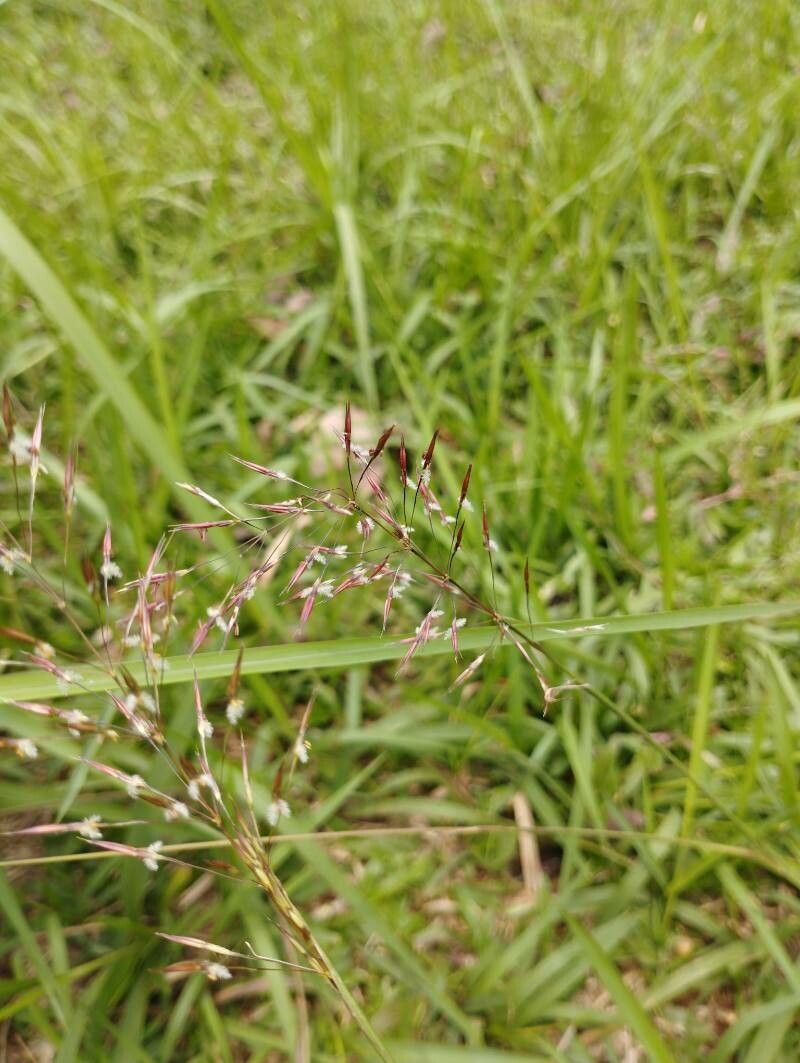
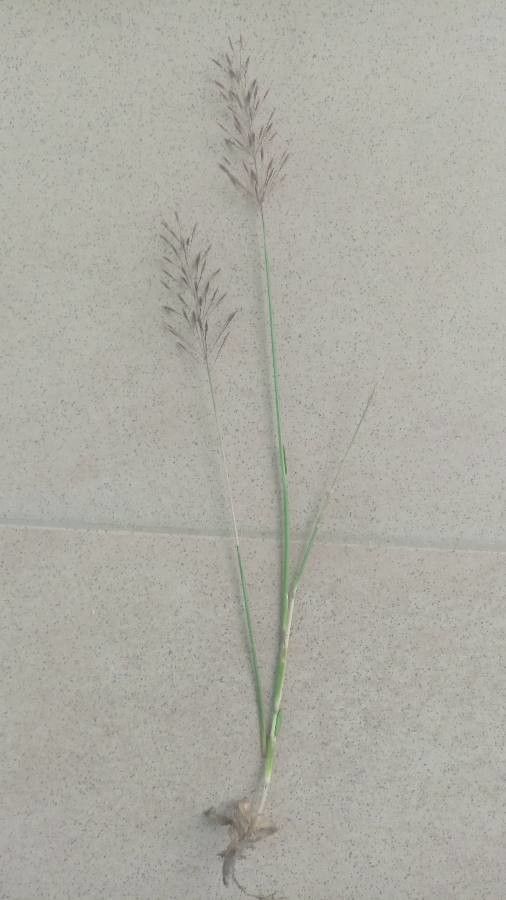
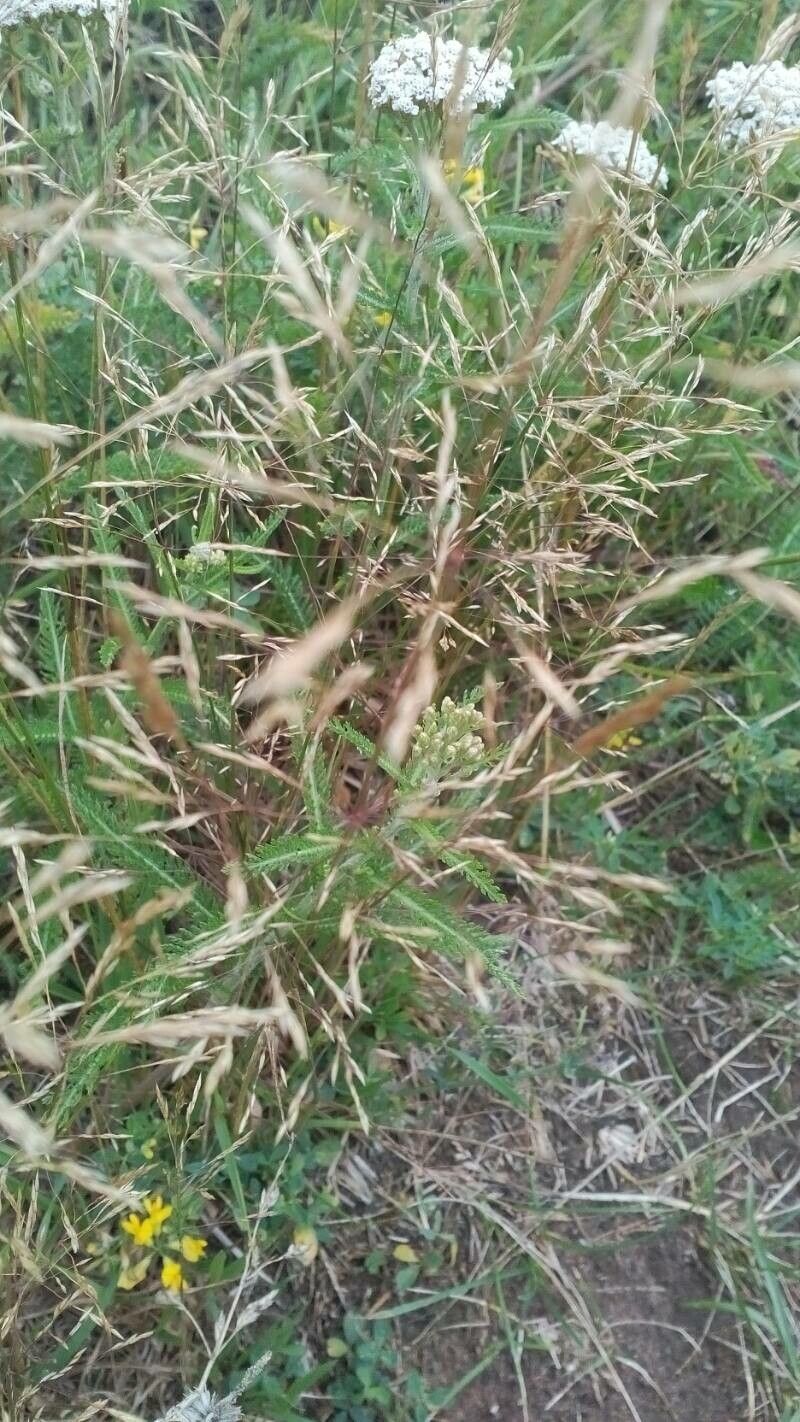
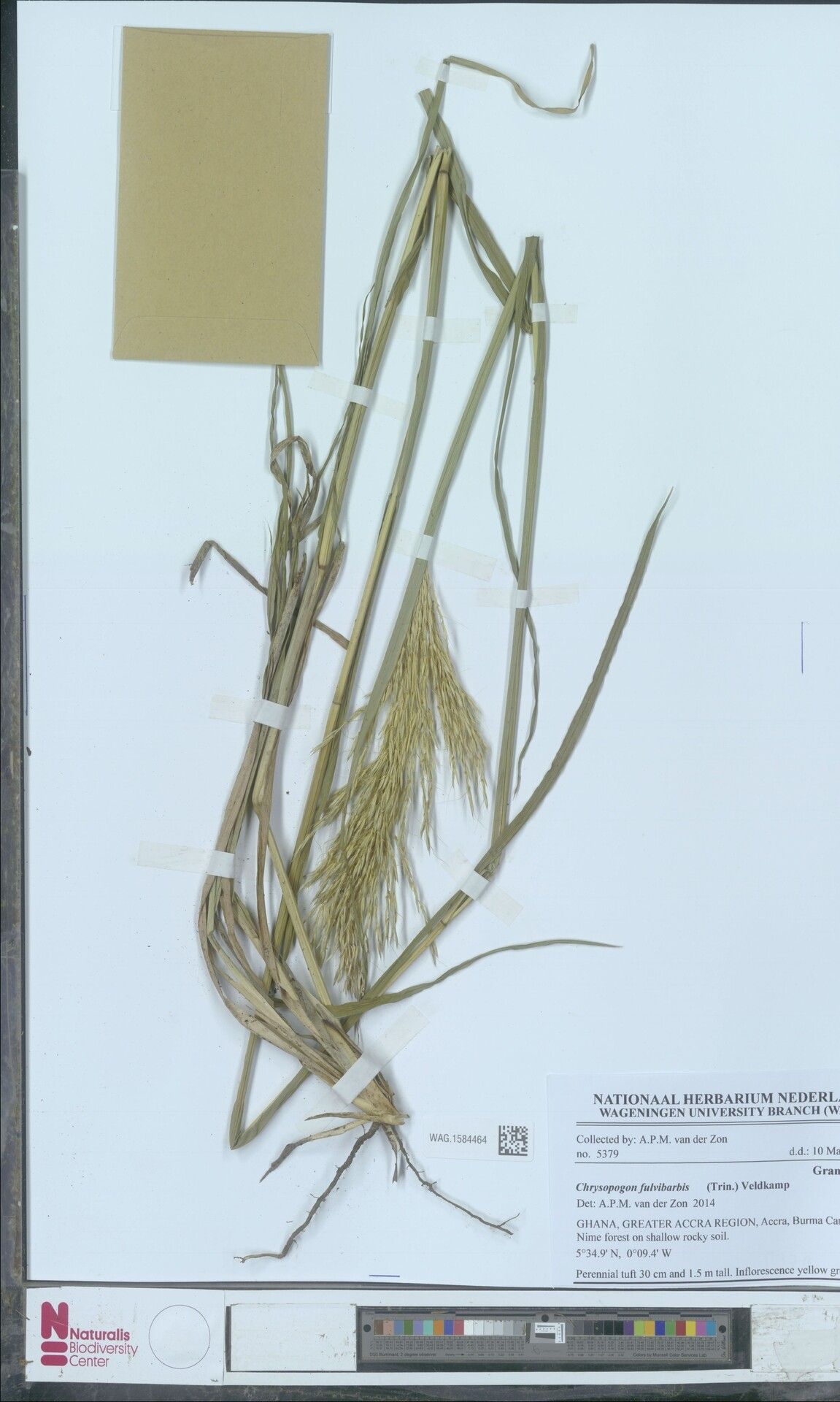
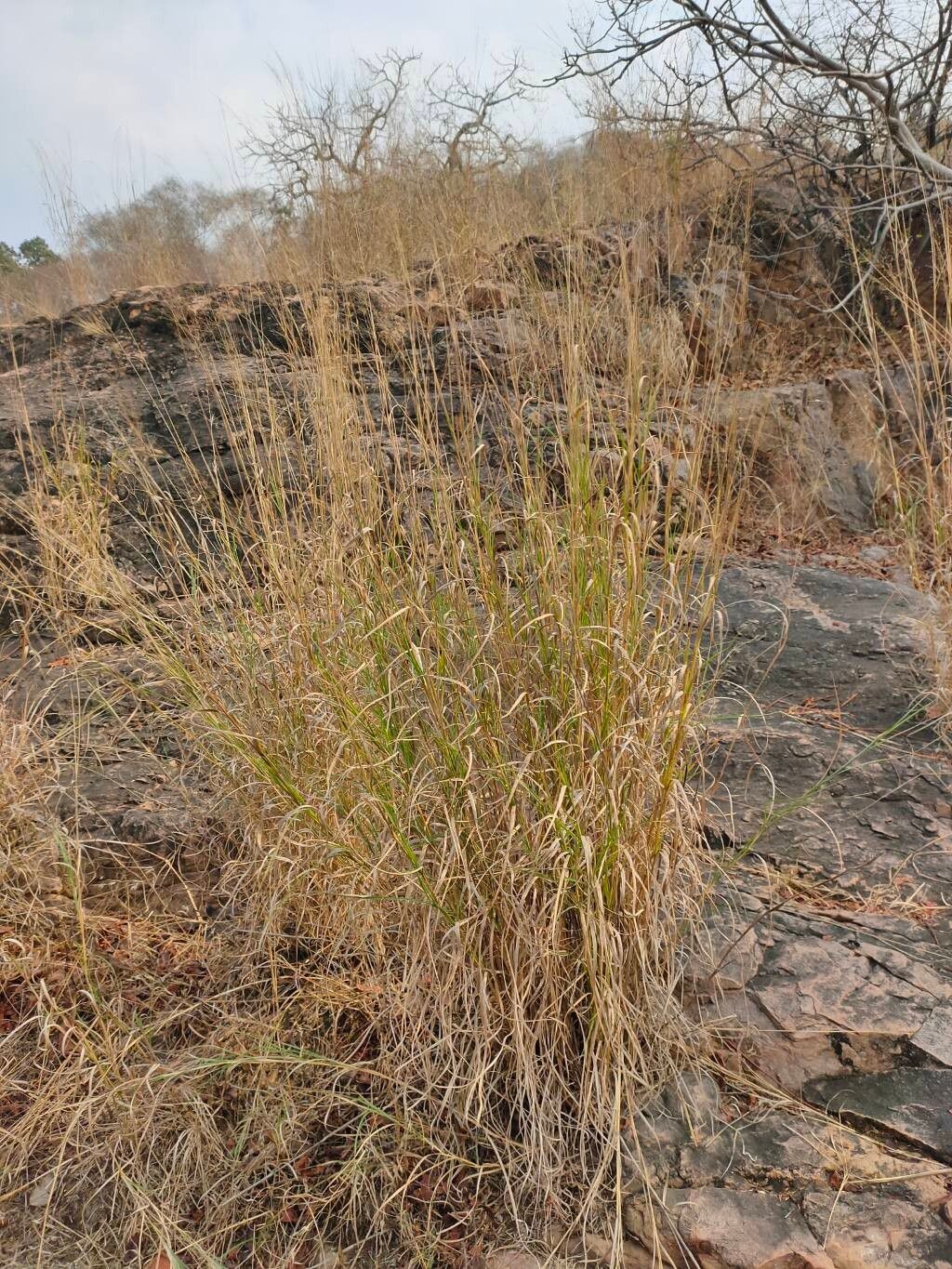
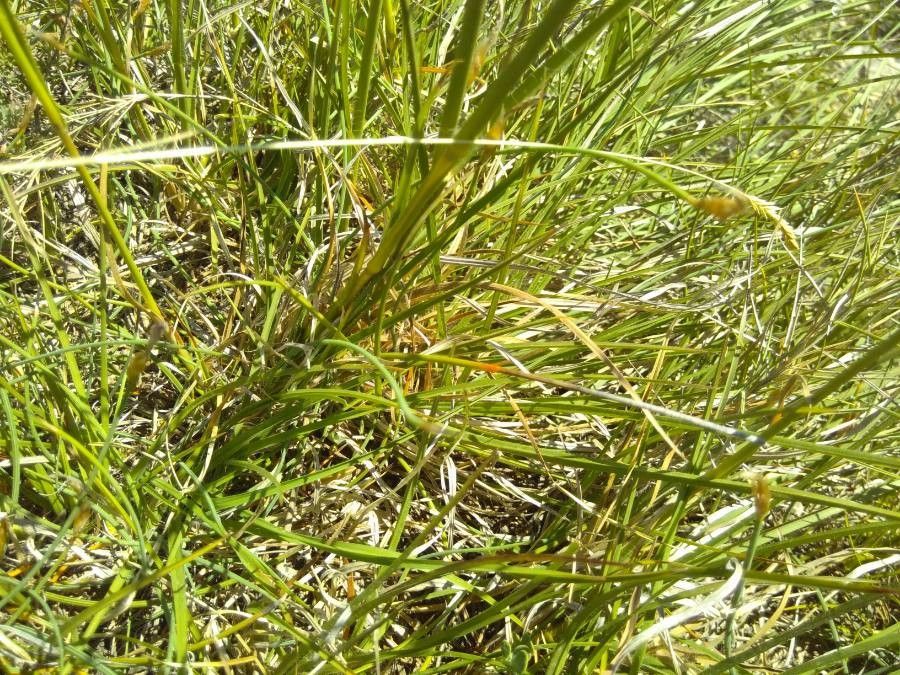
Chrysopogon aciculatus (syn. Andropogon aciculatus) is a species of grass native to the tropics of Asia, Polynesia, and Australia at low elevations. Common names include amorseco (Spanish, "dry love") (not to be confused with the amor seco tree, Alchornea glandulosa), lesser spear grass, Mackie's pest, pilipiliula, and grama-amorosa (Brazilian Portuguese).The grass is widely considered an invasive species, but some cultures use it for medicinal purposes. Its flowering stems are about 20 to 60 centimeters high and its leaves are linear-lanceolate and about 3 to 10 centimeters long by 4 to 6 centimeters wide. The panicles are purplish, open and with few whorled branches and can reach about 5 centimeters long, bearing few-flowered spikes. The sessile spikelet is very narrow, about 3 millimeters long. The callus is elongated and barbed and the fourth glume is linear, acuminate, and awned.
Wild oat grass is resistant to disease and generally does not suffer from illnesses. As for care, the plant is fairly low-maintenance. When grown outdoors it needs little watering, and larger specimens usually do not require pruning. Smaller plants, however, should be trimmed after they have finished blooming. Wild oat grass is suitable for anyone with an outdoor area, such as a garden or deck, and does not demand much gardening experience.
How to keep Chrysopogon Aciculatus.
Light
Wild oat grass comes from sunny tropical regions and flourishes in direct sunlight. It prefers full sun but can also tolerate partial sun, adapting well to lightly shaded areas.
Water
Wild oat grass, which originates from tropical regions, thrives in consistently moist environments and requires weekly watering to sustain its growth. Although it prefers regular hydration, it can tolerate short periods of dryness. Generally cultivated outdoors, wild oat grass benefits from natural rainfall patterns during its active growing season.
Temperature
Wild oat grass comes from areas with a moderate climate and prefers temperatures of 68 to 106 °F (20 to 41 ℃). This temperature preference indicates the plant adapts well to seasonal changes within that range. If conditions fall outside these limits, adjustments may be required to sustain optimal growth.
Fertilizer
Wild oat grass needs extra nutrients to encourage healthy new growth. In spring, spreading compost around the plant's base will effectively supply the nutrition it requires. Fertilizing helps support vigorous growth and enables the plant to better resist diseases and pests.
Pruning
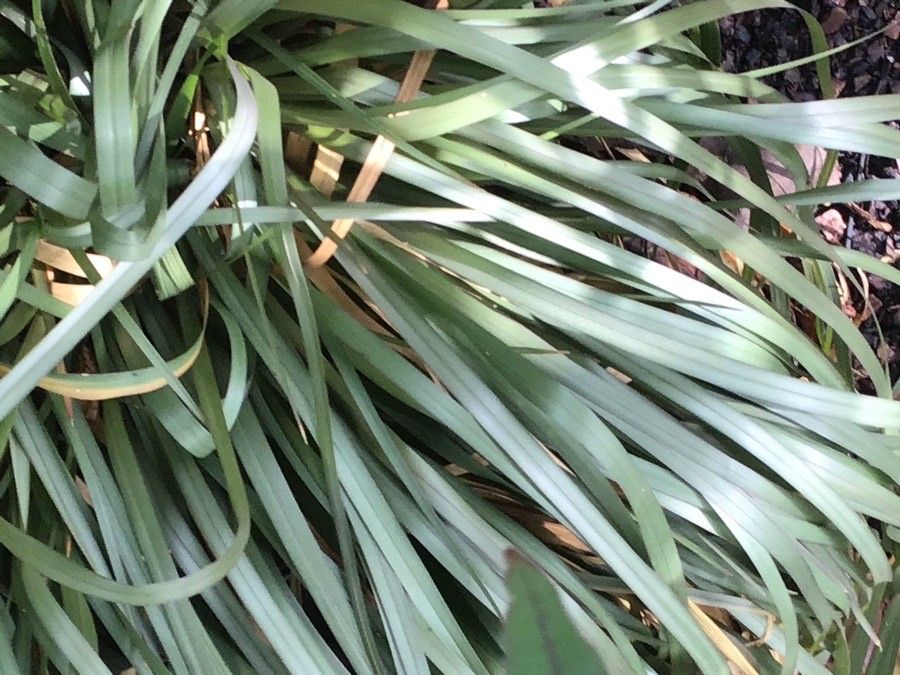
Wild oat grass features dense foliage and spreads easily, requiring very little pruning. In early spring, prune the plant to remove any dead stems and to improve air circulation. Light trimming throughout the year helps maintain its shape, encourages healthy growth, and enhances its ornamental appeal, ensuring that it doesn't overshadow nearby plants.
Botanical profile.
- Plant Type
- Grass
- Life Cycle
- Perennial
- Genus
- Chrysopogon
- Family
- Poaceae
- Hardiness Zone
- 9-13
- Mature Height
- 20 cm to 49 cm
- Mature Spread
- 20 cm to 40 cm
- Leaf Color
- Light Green
- Leaf Type
- Semi-evergreen
- Flower Color
- White
- Flower Size
- 1.02 cm to 3.05 cm
- Bloom Time
- Summer, Early fall, Mid fall
- Planting Time
- Spring, Summer, Autumn
- Harvest Time
- Late summer, Fall, Early winter
- Native Area
- Vanuatu, Solomon Islands, China
Other names.
Reader questions.
What are the sunlight requirements for Wild oat grass?
Wild oat grass (Chrysopogon aciculatus) thrives in environments with plenty of sunlight, reflecting its tropical origins. It requires full sun, defined as more than 6 hours of direct sunlight daily, but it can also adapt to partial sun, which means about 3-6 hours of sunlight. It's important to observe your garden's light patterns to find spots with the ideal balance of light and shade to ensure your plants' health and happiness.
What is the optimal temperature range for wild oat grass?
Wild oat grass, also known as Chrysopogon aciculatus, thrives in moderate climates with temperatures ranging from 68 to 106°F (20 to 41°C). This temperature preference indicates that the plant can adjust well to seasonal changes within this range. However, adjustments may be necessary for maintaining optimal growth outside of this temperature range. Since wild oat grass is extremely heat-loving, cold temperatures can be harmful. To protect the plant during colder months, it's recommended to bring outdoor-grown wild oat grass indoors and place it near a bright window, maintaining a safe distance from heaters and ensuring temperatures stay above 20°C. Avoiding temperatures close to 0°C is crucial for the plant's wellbeing.
Can indoor Wild oat grass thrive under artificial lighting?
Yes, indoor Wild oat grass can thrive under artificial lighting, especially when natural sunlight is insufficient, like in winter or less sunny spaces. The right type of artificial light, such as LED lights, can mimic the specific wavelengths required for optimal plant growth. Full sun plants need about 30-50W/sq ft of artificial light, while partial sun plants require 20-30W/sq ft. Proper placement (12-36 inches above the plant) and duration (8-12 hours per day) of the light source are important to simulate natural sunlight conditions and promote healthy growth.
How do I care for wild oat grass in low temperatures?
Wild oat grass prefers warm temperatures and struggles in cooler conditions. It thrives best when temperatures are maintained above 20°C and should be kept above 0°C during winter months. Exposure to temperatures below -5°C may cause the leaves to lighten in color, eventually turning brown or black after frost damage, accompanied by wilting and drooping. To care for wild oat grass in low temperatures, you should trim off the frost-damaged parts and move the plant into a warm indoor environment for protection against the cold. Placing the plant near a south-facing window ensures it receives ample sunlight, but it's important to avoid positioning it near heaters or air conditioning vents to prevent the air around it from becoming excessively dry.
What are the symptoms of light deficiency in Wild oat grass?
Symptoms of light deficiency in Wild oat grass include small new leaves, leggy or sparse growth, faster leaf drop, slower or no new growth, and lighter-colored new leaves. These signs indicate that the plant is not receiving adequate sunlight, leading to reduced photosynthesis and growth. Additionally, chlorosis, sunscald, leaf curling, wilting, and leaf scorching can occur in conditions of excessive sunlight, indicating the importance of balanced light exposure.
What should I do if my wild oat grass experiences high temperatures?
During the summer, it's essential to keep wild oat grass below 41°C to prevent heat stress. Exposure to temperatures above 45°C can lighten the color of the leaves and increase susceptibility to sunburn. If your wild oat grass experiences high temperatures, you should trim away the sunburned and dried-up parts to help it recover. Moving the plant to a shaded location, especially from the midday and afternoon sun, can protect it from further sunburn. Additionally, watering the plant in the morning and evening helps keep the soil moist, providing the plant with the necessary hydration to withstand high temperatures.
What are some solutions for light deficiency in Wild oat grass?
To combat light deficiency in Wild oat grass, gradually increase sunlight exposure to at least 6 hours daily for outdoor plants or use artificial light for indoor ones. For outdoor plants, move them to sunnier spots weekly to avoid sudden intensity changes that could result in sunburn. If trees obstruct sunlight, prune them to allow more light through. For smaller plants, consider transplanting during their dormant period to a location with ample sunlight and good drainage. Remember, parts of the plant affected by insufficient light may not recover, but new, healthy growth will appear with improved light conditions.