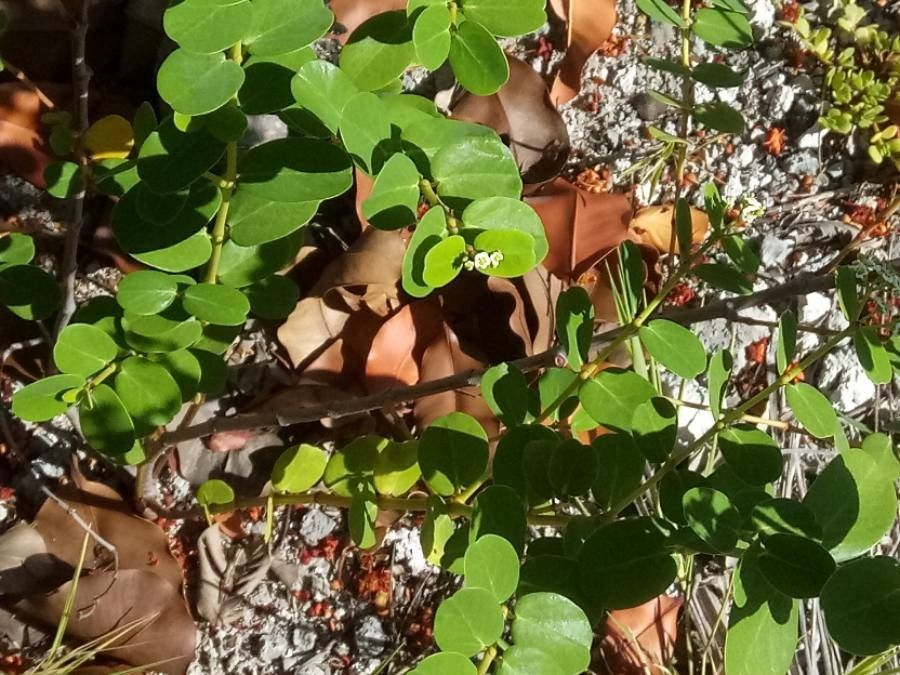
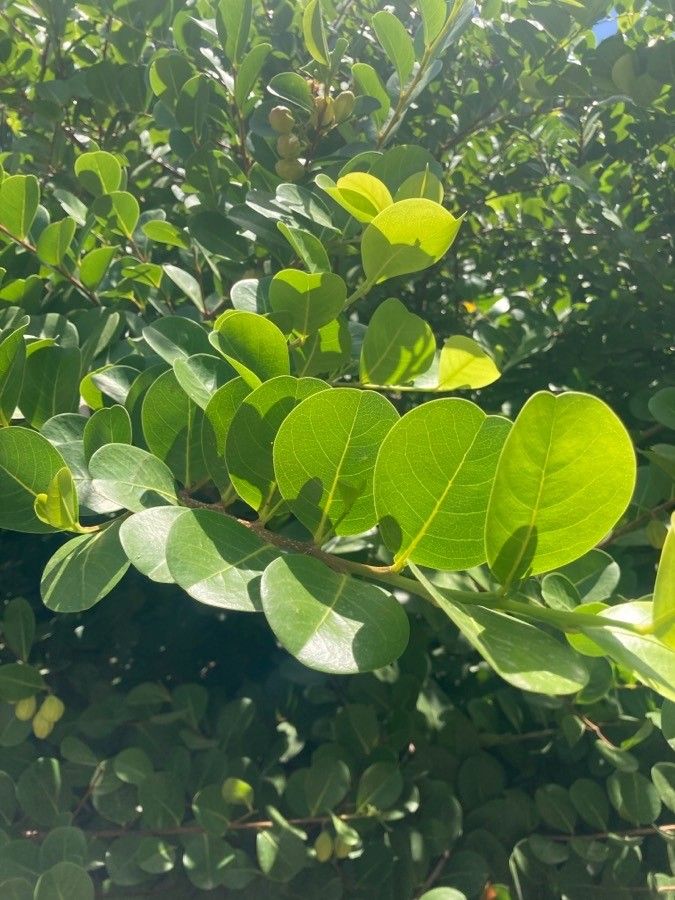
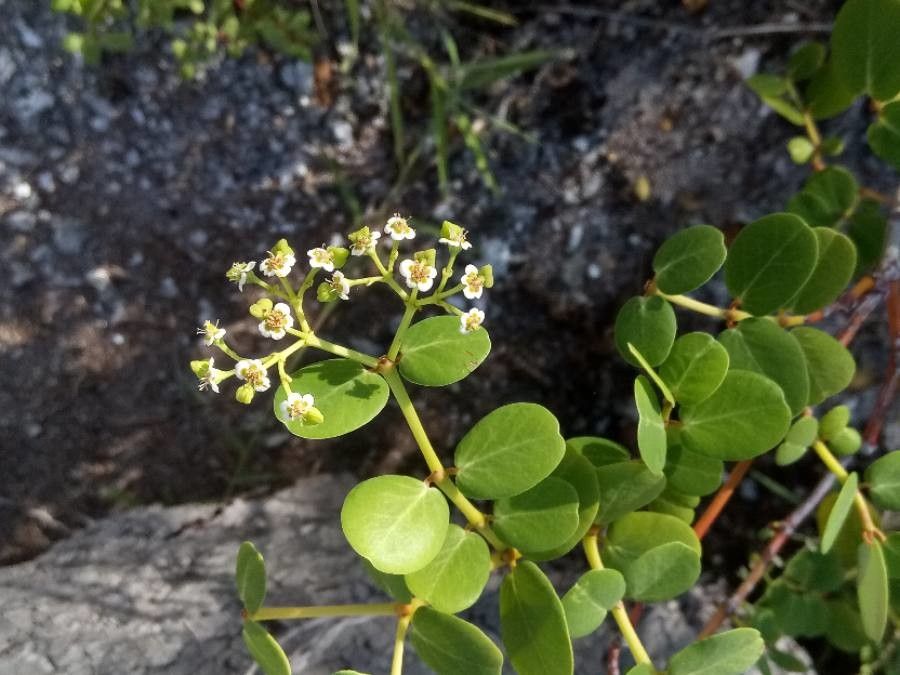
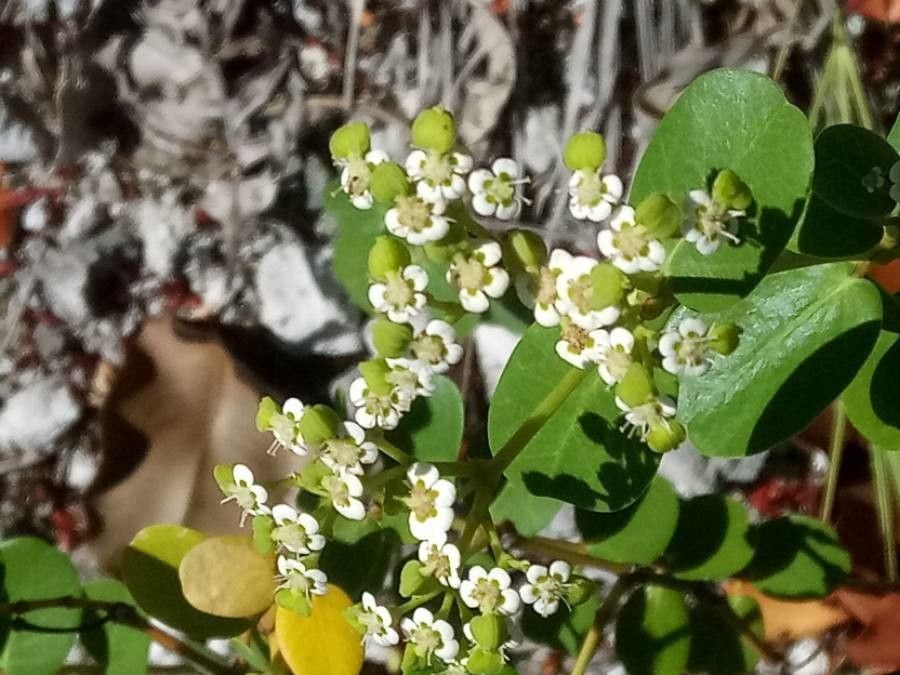
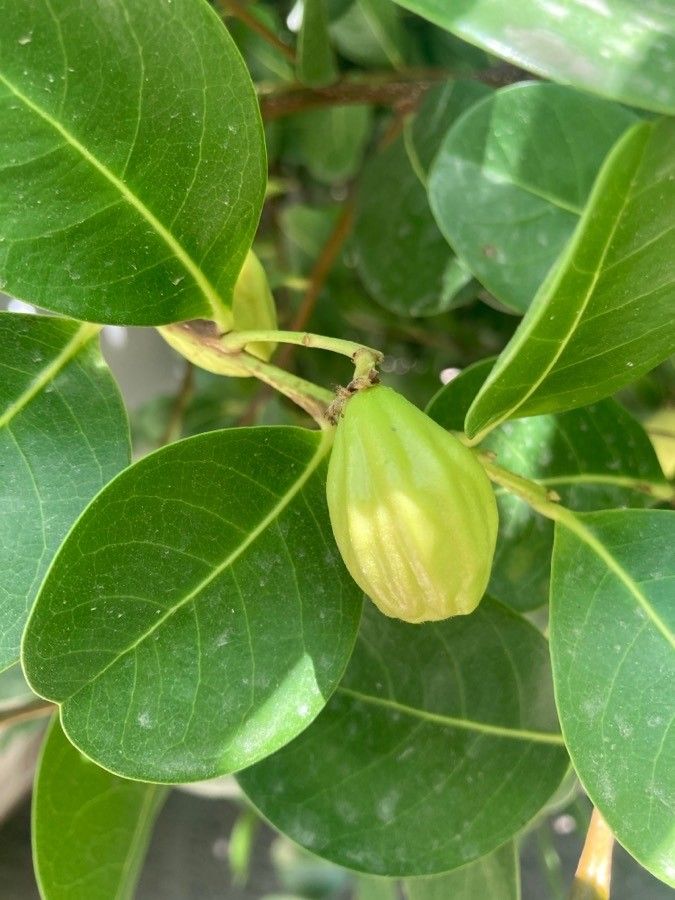
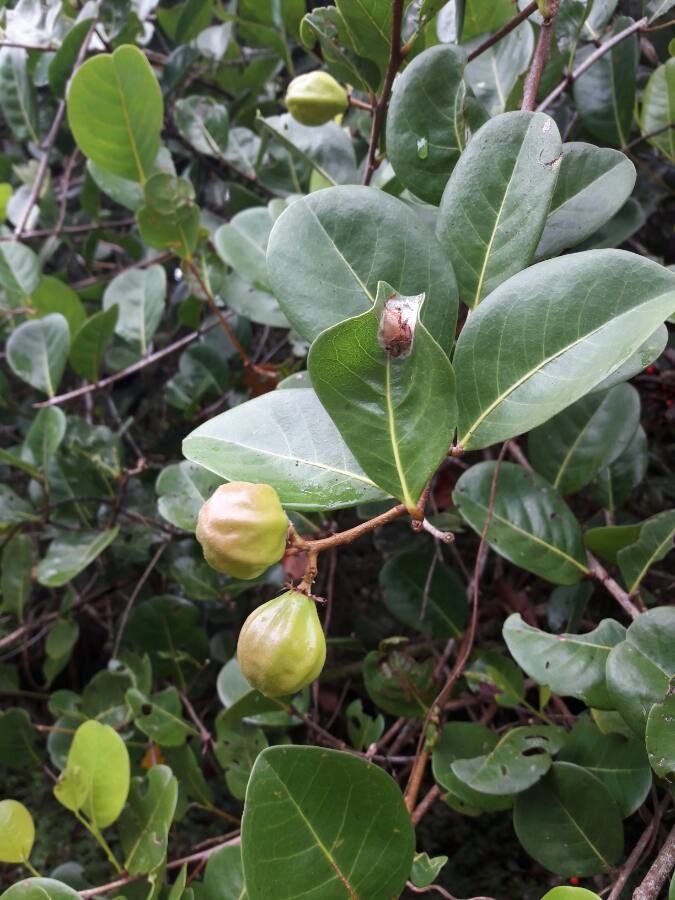
Chrysobalanus icaco, commonly known as the cocoplum, is a small to medium-sized evergreen shrub or tree native to the coastal areas of the Americas. Belonging to the family Chrysobalanaceae, it can reach heights of up to 10 meters. The plant exhibits a dense, bushy growth habit, characterized by glossy, oval-shaped leaves with a leathery texture.
The cocoplum produces small white or pink flowers that bloom from spring through summer, followed by edible fruits that resemble plums. The fruit, round or oblong in shape, turns a reddish-purple color when ripe and has a sweet flavor.
The plant prefers well-drained soils but can tolerate salt spray from coastal environments. It thrives in full sun but can also adapt to partial shade. Due to its attractive foliage, flowers, and fruit, cocoplum is often used as an ornamental plant in landscaping.
Beyond its ornamental appeal, Chrysobalanus icaco possesses medicinal properties largely attributed to its high content of antioxidants, such as flavonoids, which help protect against oxidative stress caused by free radicals.
Overall, Chrysobalanus icaco is an attractive shrub or tree with edible fruits rich in antioxidants, making it both aesthetically pleasing for landscaping and beneficial for health when consumed regularly.
Cocoplum is resistant to many diseases and is generally unlikely to suffer from them. In terms of care, this plant is fairly low-maintenance. When grown outdoors it needs little watering, and larger plants typically do not require pruning. Smaller plants, however, should be pruned after they have finished blooming. Cocoplum is appropriate for anyone with an outdoor area, such as a garden or deck, and does not demand extensive gardening experience.
How to keep Chrysobalanus Icaco.
Light
Cocoplum does best with abundant sunlight — roughly most of the day's light. Still, it can grow in less sunny locations, though sunlight is essential. Too little or too much sun can result in weak growth, while its habitat receives considerable sunshine. Adequate solar exposure is required for its nourishment throughout the different stages of growth.
Water
Cocoplum thrives in tropical climates characterized by regular rainfall and high humidity. While it prefers moist conditions, it can endure brief dry spells and typically needs watering every 1-2 weeks. As an evergreen plant, it requires consistent moisture to maintain its foliage throughout the year and to support new growth during the growing season.
Temperature
Cocoplum is a temperate woody plant that favors a temperature range of 68 to 105 ℉ (20 to 41 ℃). It originates from warm coastal areas, so it is well adapted to the temperatures typical of tropical and subtropical regions. In colder months it may need protection or insulation to keep its temperature within the optimal range.
Fertilizer
Select organic fertilizer (e.g., fish emulsion, compost) instead of chemical fertilizers for Cocoplum. Give young plants increased nitrogen and phosphorus during spring. Incorporate compost or fertilizer into the soil before or after planting. For mature plants, supplement in spring with a balanced fertilizer or one that addresses specific deficiencies. Nutrient deficiency causes small leaves, short branches, yellow or bronze leaves, acidic fruits, premature fruit fall, and splitting.
Pruning
Cocoplum is an excellent choice for hedges due to its glossy leaves and dense growth. To maintain its health and shape, it is best to prune it in early spring. This helps remove dead branches and encourages healthy growth. Additionally, thinning out overcrowded areas improves air circulation and light penetration, enhancing both the plant's vitality and its appearance.
Pot & Repot
When repotting Cocoplum, select a pot 1-2 inches (2.5–5.1 cm) larger that provides good drainage. Use a well-draining potting mix. Repot in spring or fall, making sure the root ball sits slightly below the rim of the pot. Water thoroughly after repotting and place in a warm spot with indirect sunlight.
Botanical profile.
- Plant Type
- Shrub
- Life Cycle
- Perennial
- Genus
- Chrysobalanus
- Family
- Chrysobalanaceae
- Hardiness Zone
- 10-13
- Mature Height
- 3.66 m to 10.97 m
- Mature Spread
- 2.13 m
- Leaf Color
- Green, Red
- Leaf Type
- Evergreen
- Flower Color
- White, Green, Yellow
- Flower Size
- 2.54 cm
- Bloom Time
- Early summer, Mid summer
- Planting Time
- Spring
- Harvest Time
- Mid summer, Late summer, Early fall
Other names.
Reader questions.
How should I water my Cocoplum plant?
Your Cocoplum plant is not particular about how you water it, so you can use any common watering tool. Whether it's a watering can, hose, or even a cup, it will work well for watering your Cocoplum. It's important to water directly onto the soil and make sure all areas are moistened equally, so the entire root system receives enough water. Using filtered water is beneficial to avoid harmful particles in tap water. It's also better to use water at or slightly above room temperature, as extreme temperatures can be a shock to the Cocoplum. However, the Cocoplum generally responds well to any type of water you give it.
Why should I put plant food on my Cocoplum?
If the soil in your area is rich, you may not need to use fertilizer. On the other hand, if the soil lacks nutrients, a Cocoplum plant will struggle to grow enough leaves, flowers, and fruits. To determine which nutrients are present or lacking in the soil, it is recommended to conduct a soil test. A deficiency in nutrients can result in small leaves and short branches, yellowing or bronze-colored leaves, and less flavorful fruits due to increased acidity. Certain nutrient deficiencies can even cause fruit to fall off prematurely or split.
What are the sunlight requirements for Cocoplum?
Cocoplum thrives best in full sun conditions, meaning it requires above 6 hours of direct sunlight. However, it can also grow in partial sun, receiving about 3-6 hours of sunlight. It's important to observe how sunlight moves through your garden and select locations that offer the right balance of light and shade. This ensures your Cocoplum plants remain healthy and happy. Although Cocoplum is adaptable and can grow in less sunny areas, direct sunlight exposure for most of the day is essential. Insufficient or excessive sunlight can lead to weak growth, as Cocoplum's natural habitat is characterized by significant sunshine. Its ability to sustain through various growth stages critically depends on adequate sunlight exposure.
What is the preferred temperature range for Cocoplum?
Cocoplum thrives in a temperature range of 68 to 105°F (20 to 41°C), making it best suited for tropical and subtropical regions. Being a heat-loving plant, it requires protection from cold, especially in cooler months. During autumn and winter, maintaining temperatures above 20°C is crucial for its well-being, as any temperatures near or below 5°C can cause harm. For those growing it outdoors in cooler climates, it is recommended to bring the Cocoplum indoors, near a bright window, while ensuring it is not placed too close to heaters.
What should I do if I give too much or too little water to my Cocoplum plant?
Outdoor plants, especially newly planted ones or seedlings, are susceptible to lack of watering. To ensure healthy growth, continue watering regularly for a few months until the tree is established and can rely on rainwater. However, when Cocoplum plants are in pots, overwatering is a common issue. If you accidentally overwater your Cocoplum, act promptly to minimize damage. Firstly, stop watering the plant immediately. Then, remove the plant from its pot to inspect the roots. If you notice any signs of root rot, trim affected roots and consider using a fungicide to prevent further damage. You can return the plant to its container if no root rot is found. Lastly, repot the Cocoplum in a well-draining soil. On the other hand, if your Cocoplum is underwatered, water it more frequently. Underwatering is easily rectified as the plant's leaves will droop and dry out, but they will recover upon sufficient watering. Remember to adjust your watering schedule promptly when underwatering occurs.
When should I fertilize my Cocoplum?
To promote healthy leaf and root development in young Cocoplum plants, it is recommended to give them more nitrogen and phosphorus fertilizer. The best time to apply this fertilizer is during the first growing season in spring. It is also beneficial to mix compost or another fertilizer into the soil before or right after planting. As for mature plants, it is necessary to supplement them with a balanced fertilizer or one that addresses specific soil deficiencies in your area, but only every few years during spring and summer. It is important to avoid fertilizing Cocoplum plants during autumn or winter.
How can artificial lighting support Cocoplum's growth indoors?
Indoor Cocoplum plants require sufficient lighting for optimal growth, especially when natural sunlight is lacking during winter or in less sunny locations. Artificial lighting serves as an essential alternative to promote faster and healthier growth. Selecting the right type of artificial light, such as LED lights, is crucial because they can be customized to provide the specific wavelengths needed by your plants. For full sun plants, 30-50W/sq ft of artificial light is needed; partial sun plants require 20-30W/sq ft, and full shade plants need 10-20W/sq ft. Ensuring the artificial light source is placed 12-36 inches above the plant helps mimic natural sunlight. Additionally, maintaining a duration of 8-12 hours of light per day, akin to natural daylight hours, is important for Cocoplum's growth indoors.
How does low temperature affect Cocoplum and what are the recommended solutions?
Cocoplum is not tolerant of low temperatures and thrives best when the temperature is maintained above 20°C, with winter temperatures ideally staying above 5°C. Exposure to temperatures below 1°C can result in the leaves lightening in color, followed by frost damage that turns the leaves brown or black, leading to wilting and drooping. The recommended solution for frost-damaged Cocoplum includes trimming off the damaged parts and moving the plant to a warmer indoor location, preferably near a south-facing window to ensure ample sunlight. It is also important to avoid placing the plant near heaters or air conditioning vents to prevent air dryness.
How frequently should I give water to my Cocoplum plant?
If your area doesn't get much rain, you'll need to water your outdoor plants every 2 weeks in the spring and fall, and more often in the summer. In the winter, water less frequently, and you may not need to water at all. However, if your Cocoplum is young or newly planted, it will need more frequent watering to help it establish and grow. For potted plants, you can either follow a set watering schedule (about once every week or every other week), or check the soil moisture and water when the top two to four inches have dried out. Keep in mind that the watering needs may change depending on the season, so adjust accordingly.
When is it not a good idea to add fertilizer to my Cocoplum plant?
To ensure the health of your Cocoplum, it is important to avoid fertilizing it after pruning, during periods of disease, insect infestation, or when it is under stress. Fertilizer only addresses nutrient deficiencies in the soil and cannot resolve other underlying issues that may affect the Cocoplum. It is crucial to accurately diagnose the problem before applying fertilizer, as there may be other factors contributing to the issue. Additionally, refrain from fertilizing the Cocoplum in the winter or during excessively hot and dry summer periods.
What are the symptoms of inadequate lighting for Cocoplum?
When Cocoplum receives insufficient lighting, several noticeable symptoms can emerge. These include the development of smaller new leaves compared to older ones, leggy or sparse growth due to elongated spaces between leaves or stems, faster leaf drop as the plant conserves resources, and slower or completely halted new growth. Leaves may also appear lighter in color or pale, signaling a lack of chlorophyll and essential nutrients. In cases of excessive sunlight, symptoms like chlorosis (leaves turning yellow), sunscald (damaged leaves or stems due to intense exposure), leaf curling (as a defense mechanism against too much sunlight), wilting (loss of turgor pressure causing leaves and stems to droop), and leaf scorching (brown, dry edges on leaves) may occur, all of which can detrimentally affect the plant's ability to photosynthesize and maintain overall health.
What should be done if Cocoplum experiences high temperature?
During the summer, it's essential to ensure that Cocoplum's surrounding temperature does not exceed 41°C. Temperatures over 45°C may lighten the color of the leaves and increase the plant's risk of sunburn. To mitigate the effects of high temperatures, trim away the sunburned and dried parts of the plant. It's also advised to move Cocoplum to a shaded area, especially away from the harsh midday and afternoon sun. Additionally, watering the plant during the morning and evening hours can help keep the soil moist and prevent the plant from overheating.