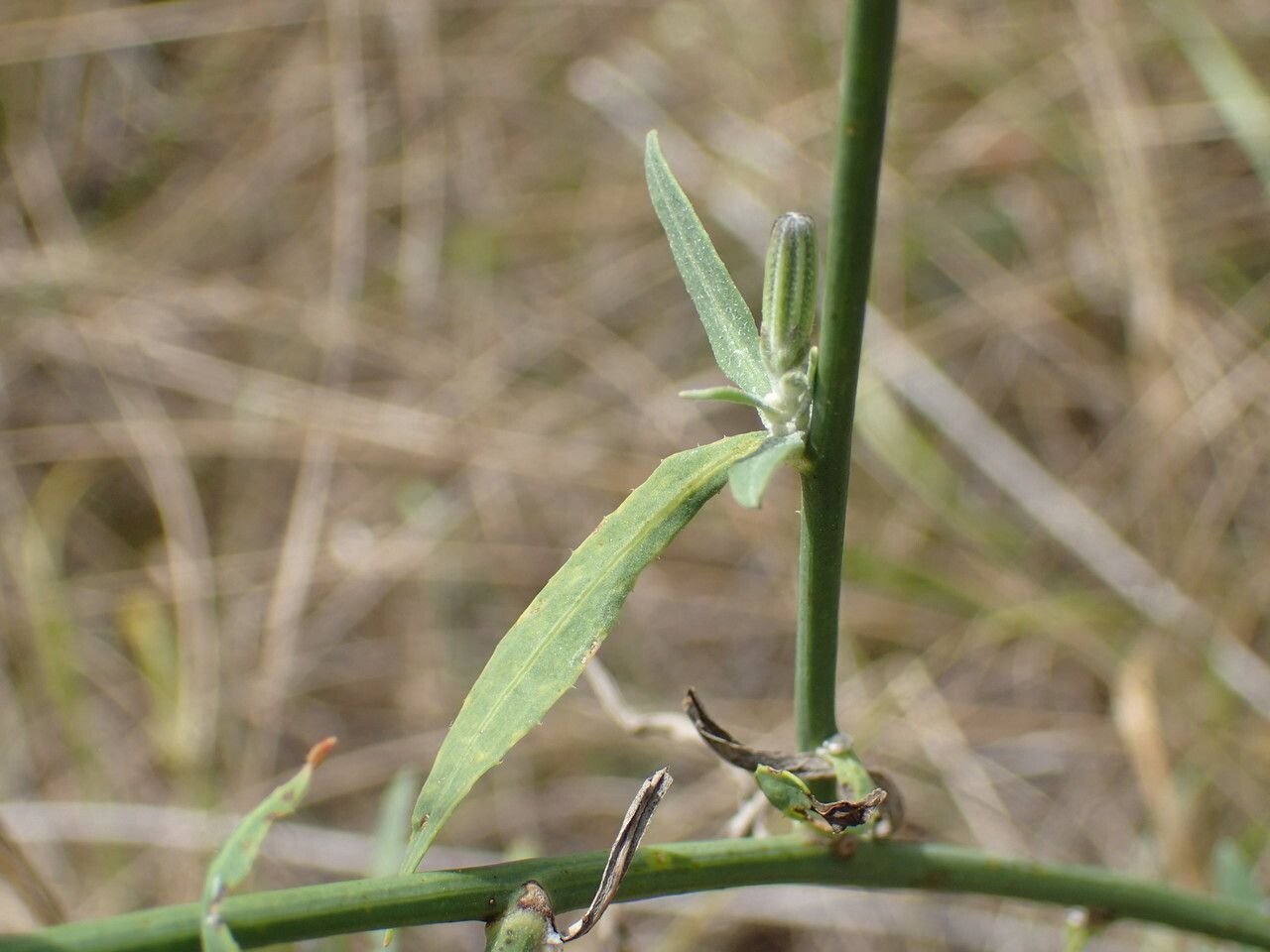
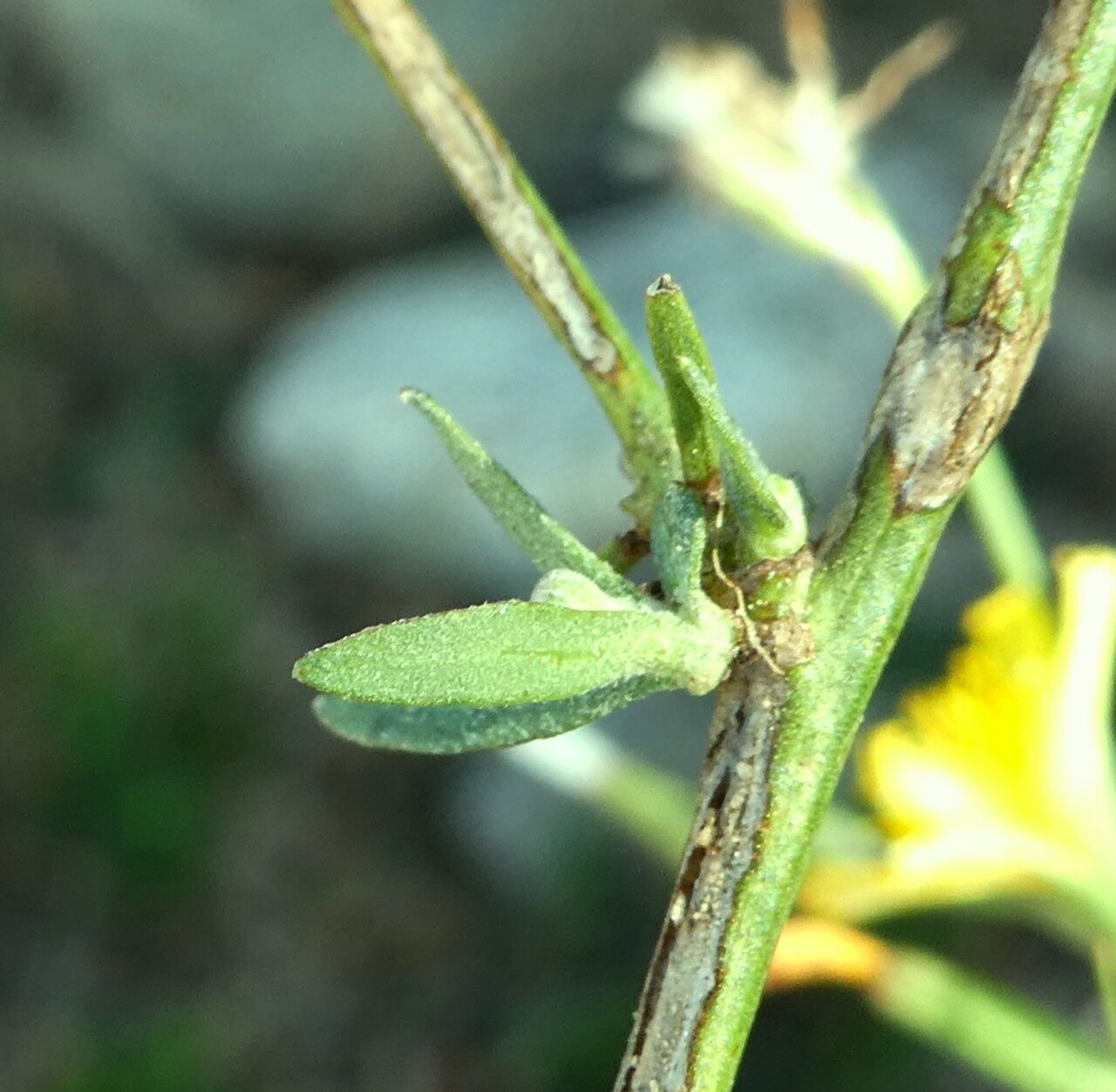
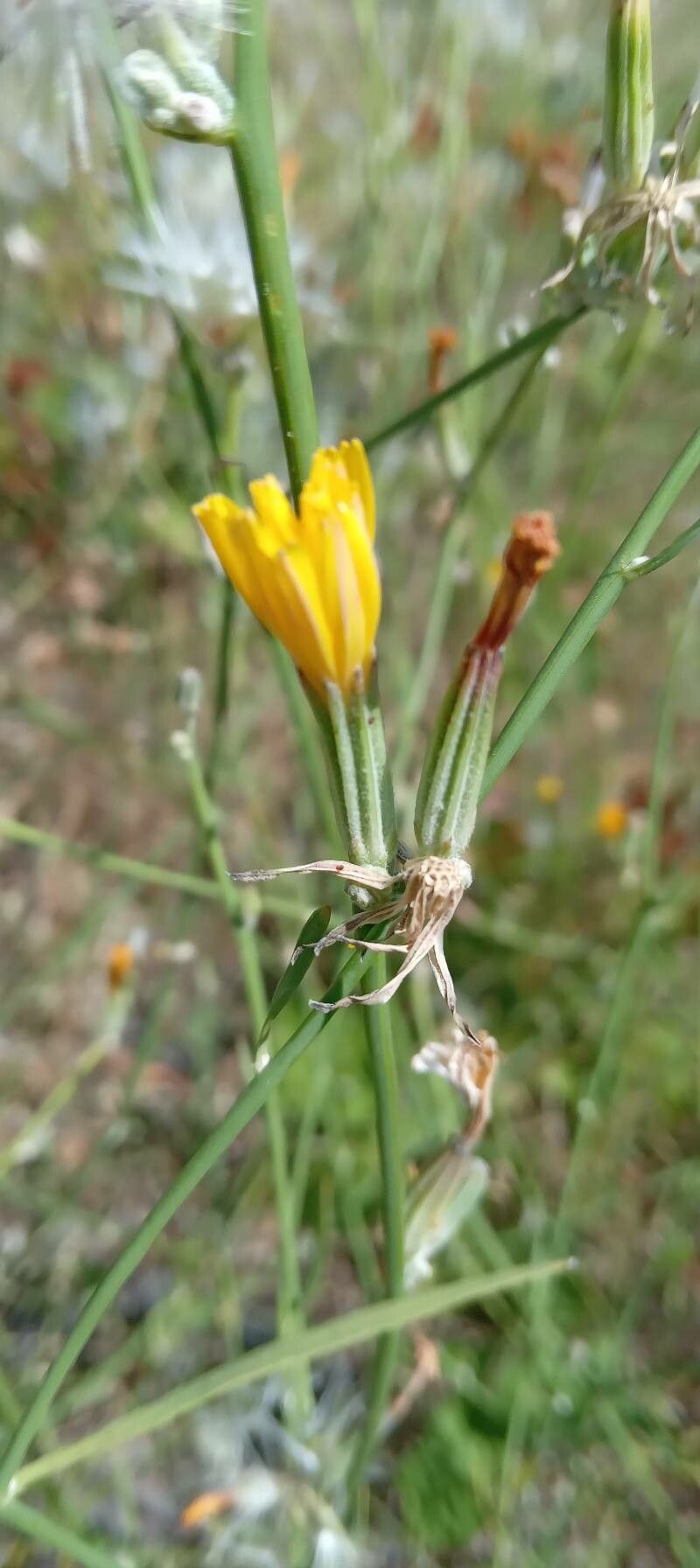
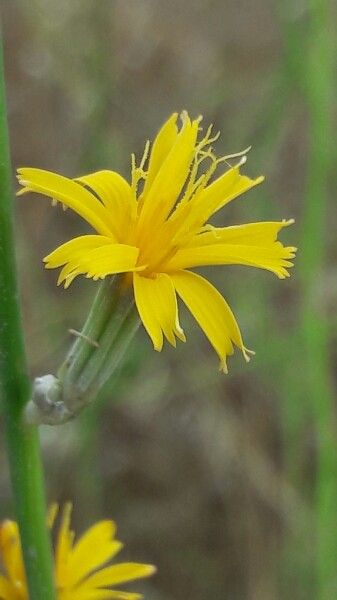
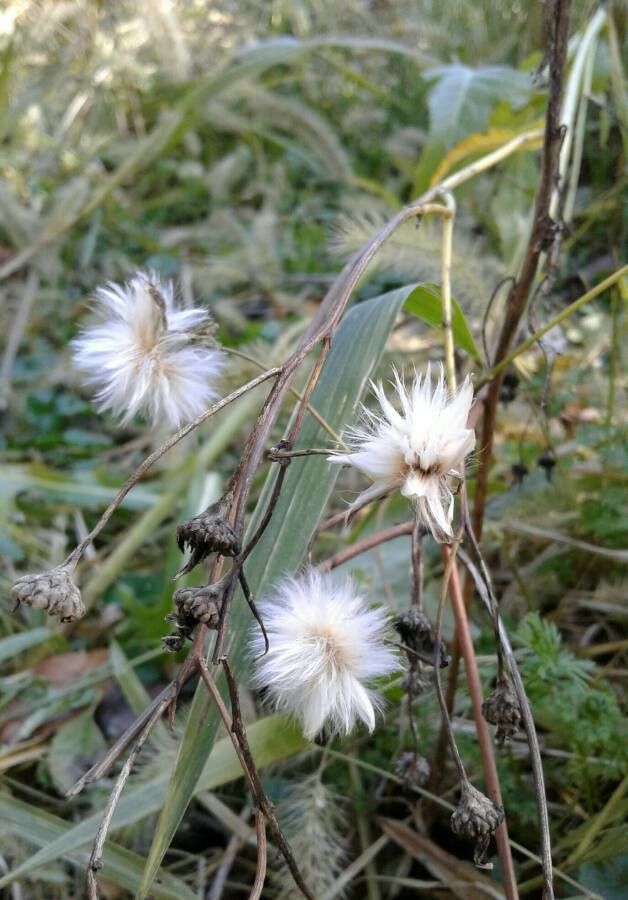
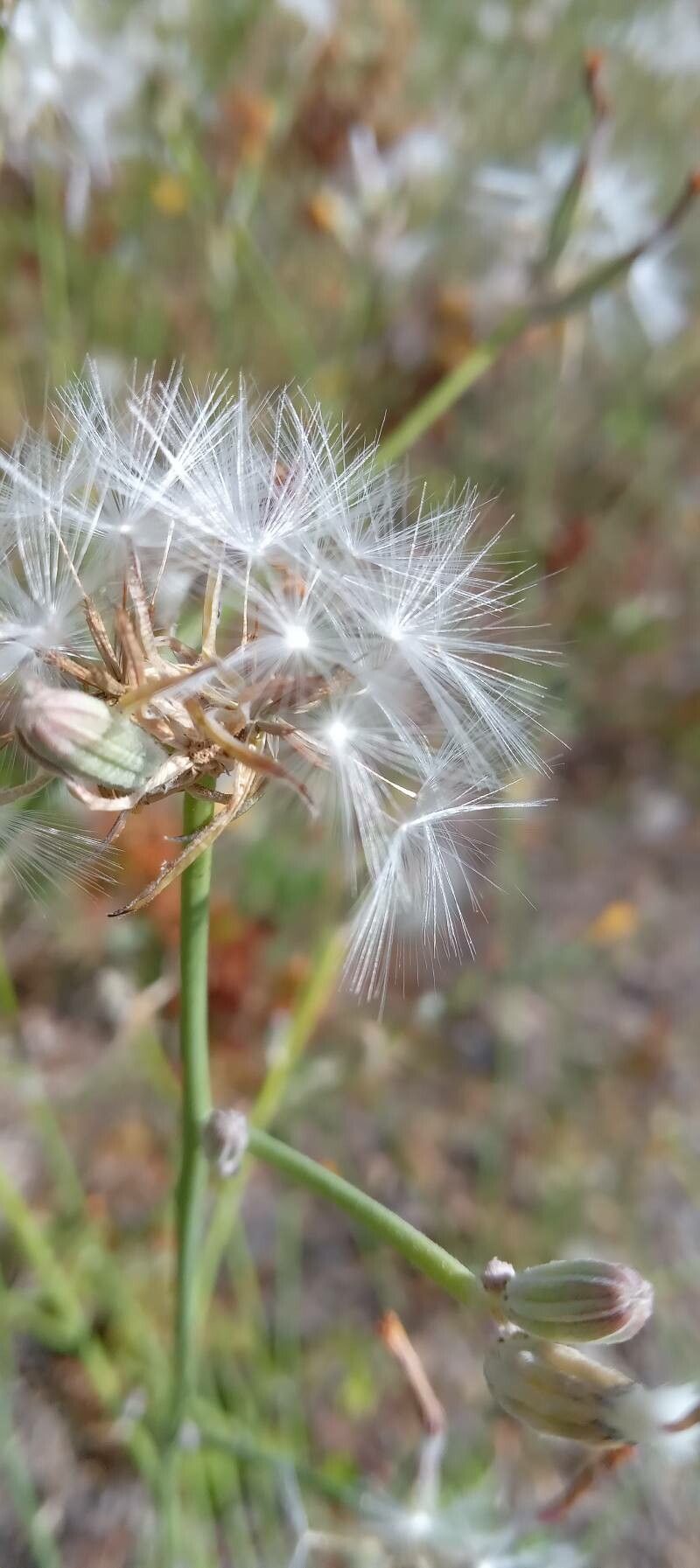
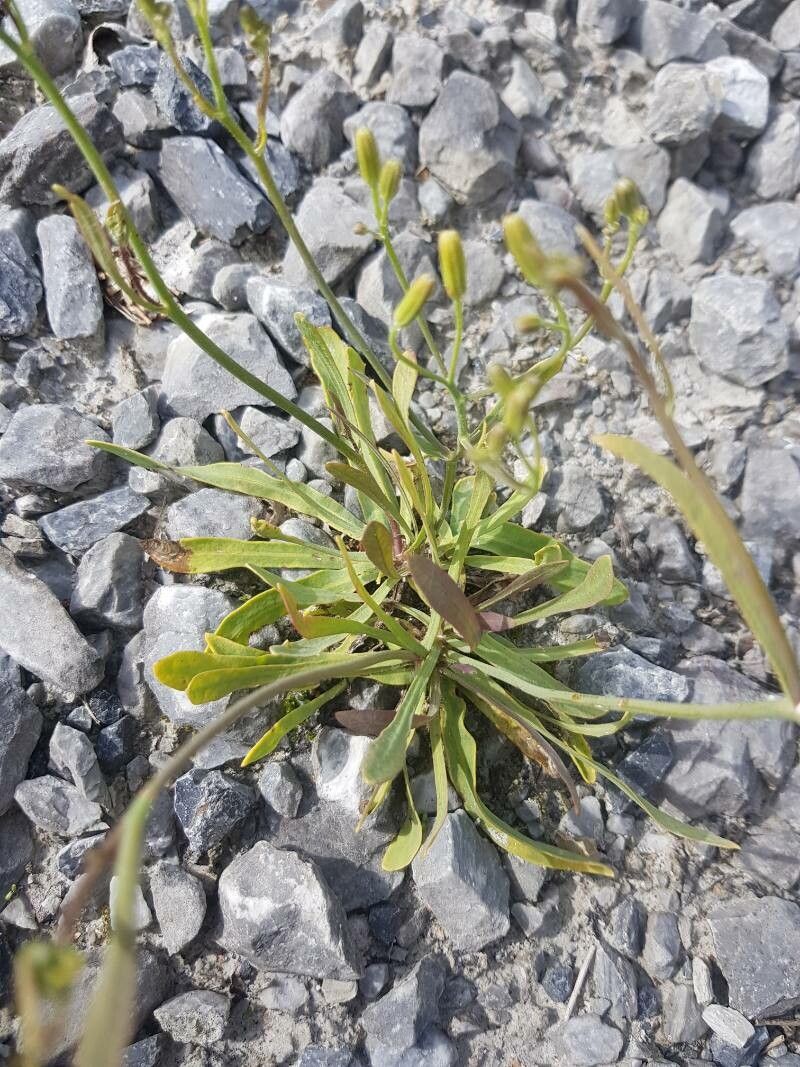
Chondrilla juncea, commonly known as skeleton weed or rush skeleton weed, is a perennial herbaceous plant belonging to the family Asteraceae. Native to Europe and Asia, this plant has been introduced and naturalized in various parts of the world, including North America.
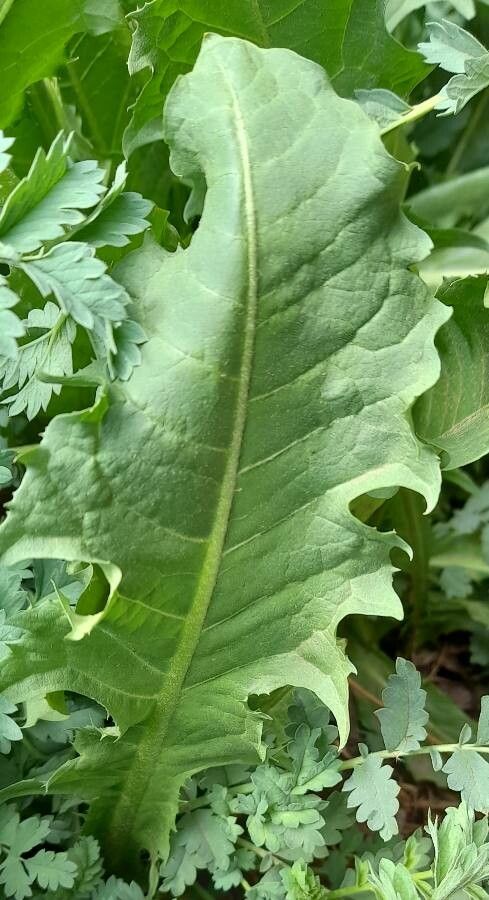
The plant features a deep taproot system that can extend up to 10 feet in depth in some cases. Its erect stem can grow up to 3 feet tall and branches at the top. The leaves are narrow and lance-shaped with toothed edges, resembling a fern.
The flowers of Chondrilla juncea are small and yellowish-green, arranged in clusters at the ends of branches. They bloom from June through September.
Chondrilla juncea thrives in disturbed areas such as roadsides, fields, and pastures, where it competes with native vegetation for resources like water and nutrients.
Although traditionally used for medicinal purposes due to its diuretic properties and treatments for liver diseases, Chondrilla juncea poses an ecological threat because of its invasive nature. It can cause significant economic damage by reducing crop yields and interfering with livestock grazing areas.
Various organizations worldwide are working to control this invasive species through methods such as herbicide application. However, prevention remains key to mitigating its spread into new areas and avoiding both ecological and economic harm.
Rush skeletonweed is fairly disease-resistant and is typically not prone to illnesses. Still, it can be affected by pests and diseases present in its environment. These problems are usually mild. For care, this plant needs moderate maintenance. It should be pruned regularly to preserve a neat appearance and support healthy growth. Fertilizing can also encourage flowering. Rush skeletonweed is appropriate for people with outdoor areas like a garden or patio and does not require extensive care experience. Growing it indoors may demand more attention.
How to keep Chondrilla Juncea.
Light
Rush skeletonweed is suited to habitats where strong sunlight predominates. Excessive shade can cause poor health and reduced growth. Accordingly, an area with plenty of sun would favor rush skeletonweed's growth and health at every stage. Long stretches of inadequate light can stunt growth, produce pale foliage, and raise vulnerability to disease. By contrast, too much light can result in leaf burn.
Water
Rush skeletonweed thrives in environments with moderate moisture and can withstand short periods of dryness, especially when watered weekly. It grows well outdoors and benefits from natural rainfall, making it an excellent choice for gardens that receive regular rain. Its resilience allows rush skeletonweed to adapt to a variety of conditions, making it a versatile option for many different settings.
Temperature
Rush skeletonweed is native to areas with moderate to high temperatures, flourishing at 68 to 100 °F (20 to 38 ℃). Growing rush skeletonweed in different seasons may require regulating temperature to recreate its native climates.
Fertilizer
One fertilizer application in spring is generally enough for Rush skeletonweed, though repeated feedings can maximize growth. Fertilize about every month to a month and a half. Fertilization improves the leaves' appearance and function, helping maintain even color and a healthy texture. It also promotes root development and nutrient uptake for the plant's long-term health.
Pruning
Rush skeletonweed has wiry stems and deep taproots. Pruning in the spring can improve growth and airflow. To keep the plant from self-seeding and spreading invasively, regularly remove damaged stems and seed heads. This will also help maintain a healthier appearance in your garden.
Botanical profile.
- Plant Type
- Herb
- Life Cycle
- Perennial, Biennial
- Genus
- Chondrilla
- Family
- Asteraceae
- Hardiness Zone
- 4-11
- Mature Height
- 91 cm
- Mature Spread
- 20 cm to 49 cm
- Leaf Color
- Green, Dark Green
- Leaf Type
- Semi-evergreen
- Flower Color
- Yellow
- Flower Size
- 1.02 cm to 2.03 cm
- Bloom Time
- Summer
- Planting Time
- Spring, Summer
- Harvest Time
- Late summer, Early fall, Mid fall
- Native Area
- Libya, Turkey, Sweden, Austria, Slovakia, Montenegro, Slovenia, Morocco, Croatia, Belarus, Uzbekistan, Russia, Iraq, Germany, Jordan, Romania, Belgium, Moldova, Portugal, Netherlands, Saudi Arabia, France, Tunisia, Czech Republic, Cyprus, Bulgaria, Poland, Armenia, Greece, North Macedonia, Ukraine, Serbia, Lebanon, China, Afghanistan, Syria, Italy, Kazakhstan, Spain, Switzerland, Bosnia and Herzegovina, Iran, Albania, Azerbaijan, Algeria, Hungary, Turkmenistan
Other names.
Reader questions.
How should I water my Rush skeletonweed?
To water the Rush skeletonweed effectively, use filtered water at room temperature or slightly warmer. Tap water may contain harmful particles, so filtered water is best. Since the plant is accustomed to warm environments, avoid using cold water as it can shock the plant. Instead of overhead watering, apply the filtered room temperature water directly to the soil until it is fully soaked. This benefits the plant by moisturizing the roots and aiding in their spread through the soil for nutrient collection.
What are the sunlight requirements for Rush Skeletonweed?
Rush Skeletonweed thrives in environments that receive more than 6 hours of sunlight per day. It's essential to observe the sunlight patterns in your garden to ensure spots are selected that provide a balanced mix of light and shade, conducive to plant health. Overly shaded areas can lead to poor growth, susceptibility to disease, and pale foliage, while too much direct light can cause leaf burn. In cases where natural light is insufficient, especially indoors, artificial lighting can be a suitable alternative. Proper lighting promotes healthier and faster growth, with LED lights being a recommended option due to their ability to mimic natural sunlight conditions, suggesting a range of 30-50W/sq ft for full sun plants, 20-30W/sq ft for partial sun plants, and 10-20W/sq ft for full shade plants.
What is the native climate for Rush skeletonweed?
Rush skeletonweed, known botanically as Chondrilla juncea, originates from regions that experience moderate to high temperatures, specifically thriving in conditions ranging from 68 to 100 °F (20 to 38 °C). To successfully cultivate rush skeletonweed outside of these native climates, temperature regulation might be necessary to mimic its natural environment. Despite its preference for moderate to high temperatures, rush skeletonweed possesses notable cold resistance, making special frost protection measures generally unnecessary. However, in extremely cold conditions, such as temperatures plunging below -30°C, cold protection should be considered by covering the plant with soil or straw and ensuring the soil is moist before the first freeze of autumn.
What do I need to do if I give my Rush skeletonweed too much water or not enough water?
Overwatering is a common issue that can harm your Rush skeletonweed. Too much water can cause wilting, yellowing, and diseases like root rot, mold, and mildew. Underwatering is less common, but can still happen. It can make the leaves brittle and brown. It's important to notice signs of overwatering early. Some diseases, like root rot, cannot be fixed if you wait too long. If you see signs of overwatering, reduce watering immediately and check the soil's drainage. If the soil drains poorly, replace it. If your Rush skeletonweed is not getting enough water, simply water it more regularly.
What symptoms indicate insufficient or excessive sunlight in Rush Skeletonweed?
Symptoms of insufficient sunlight include smaller new leaves, leggy or sparse growth, faster leaf drop, slower or halted new growth, and lighter-colored new leaves. Excessive sunlight can cause chlorosis (loss of green color in leaves), sunscald, leaf curling, wilting, and leaf scorching. These symptoms reflect the plant's struggle with inappropriate light levels, either stunting growth or causing damage from overexposure.
How does Rush skeletonweed handle low temperatures, and what measures should be taken?
Rush skeletonweed can tolerate cold conditions well, ideally thriving when temperatures are maintained above 20°C. During the winter months, it's preferable to keep temperatures above 0°C since exposure to temperatures below -30°C might not show immediate damage but could result in reduced or non-existent sprouting in spring. To counteract potential damage from low temperatures, any non-sprouting parts of the plant should be removed in spring as a corrective measure.
How many times a week do I need to water my Rush skeletonweed?
If your Rush skeletonweed is in a pot, the most precise way to determine if it needs water is by checking the soil. Simply stick your finger into the soil and if you find that the top two to three inches are dry, it's time to water it. For those growing Rush skeletonweed outdoors in the ground, you can use a similar method to test the soil. Again, if the top few inches of soil are dry, it's time to water. Typically, during spring and early fall, watering once a week will suffice. However, during extremely hot weather, you may need to water twice or more per week. It's worth noting that mature, well-established Rush skeletonweed has an impressive ability to withstand drought.
How can I address sunlight-related issues in Rush Skeletonweed?
To address insufficient sunlight, gradually relocate the plant to sunnier spots until it gets at least 6 hours of direct sunlight daily, using south-facing windows for indoor plants and ensuring obstructions are minimized outdoors. If moving the plant is not feasible, consider artificial lighting solutions, keeping them on for at least 8 hours a day. For outdoor plants, adjusting them gradually to sunnier locations helps prevent shock and sunburn. Additionally, removing obstacles that block sunlight or transplanting smaller plants to brighter spots can improve light exposure. While affected parts may not recover, new growth should be healthier following these adjustments.
What should be done if Rush skeletonweed is exposed to high temperatures?
In the summer, it's essential for the well-being of Rush skeletonweed to ensure that ambient temperatures do not exceed 38°C. If temperatures rise above 43°C, the plant may exhibit signs of stress such as leaves becoming lighter in color, curling, being prone to sunburn, and, in severe cases, wilting and drying out entirely. To mitigate the effects of high temperatures, affected parts of the plant should be trimmed away. The plant should be relocated to a shaded area or protected with a shade cloth during the midday and afternoon sun. Additionally, watering the plant in the morning and evening is crucial to maintain soil moisture.
How much water does my Rush skeletonweed require?
To properly water your Rush skeletonweed, don't be conservative with the amount of water you use. Make sure the top few inches of soil are dry before watering, and then give it a good, thorough soaking. The goal is to saturate the entire soil. You'll know you've added enough water when you see excess water flowing out of the drainage holes at the bottom of the pot. If no excess water is draining, you may have underwatered the plant. However, be careful not to let the water accumulate in the soil, as this can harm the plant. On the other hand, if water isn't draining properly, it could indicate poor soil drainage, which is not healthy for the plant. In outdoor settings, one inch of rainfall per week should be sufficient.
How do I water my Rush skeletonweed as it grows at different stages?
The water needs of Rush skeletonweed can vary depending on its growth stages. In the early years or when you have just transplanted it to a new location, you will need to provide more water than usual. During these stages, the plant focuses on sprouting new roots to support future growth, so a bit more moisture is required. As the plant matures, it will need less water. Additionally, during the bloom period, the flower development requires a significant amount of moisture, so you may need to water the Rush skeletonweed more at this time.
How should I water my Rush skeletonweed during different seasons?
The Rush skeletonweed has varying water needs throughout the year. During the hottest months of summer, it requires the most water and may need to be watered more than once a week, depending on how quickly the soil dries. In contrast, during winter, the plant goes into a dormant phase and requires significantly less water. In fact, you may not need to water it at all during this time. However, if you choose to water it during winter, limit it to about once a month to avoid the risk of disease.