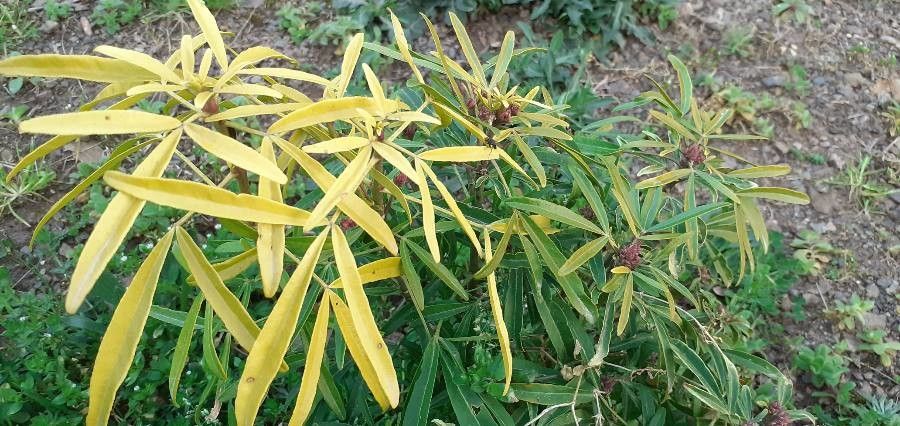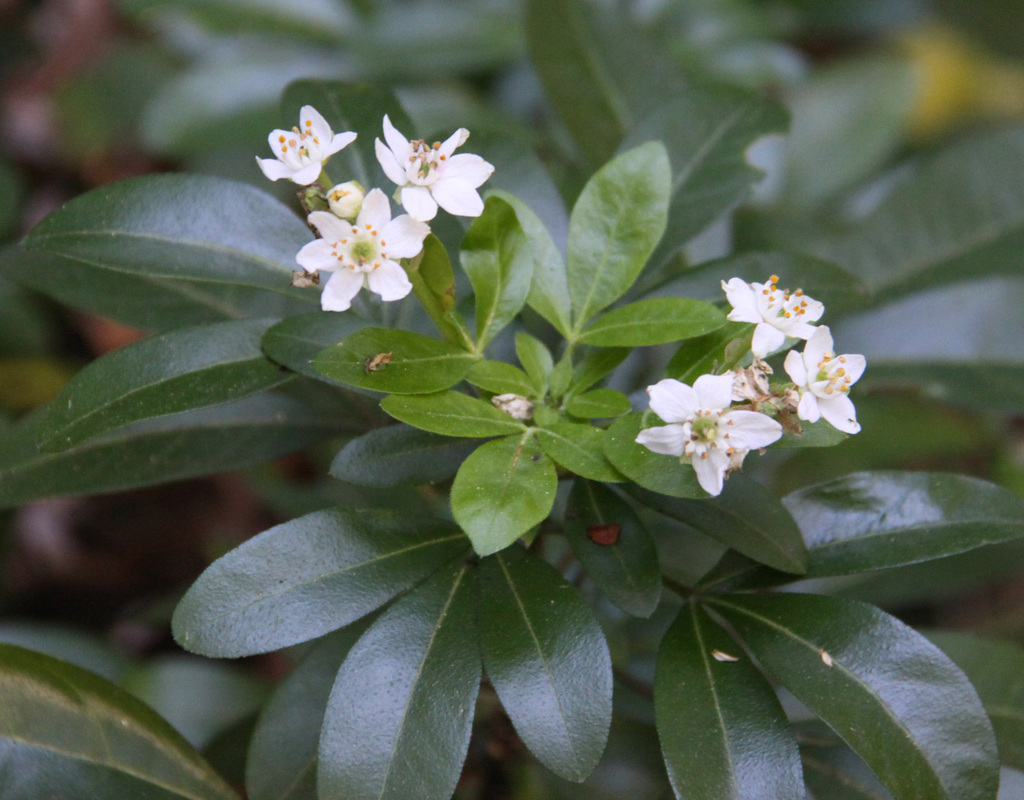
Choisya ternata, commonly known as the Mexican orange blossom, is a popular evergreen shrub belonging to the Rutaceae family. Native to Mexico and the southwestern United States, it is widely cultivated for its fragrant white flowers and glossy green leaves. The plant typically grows to a height of 2-3 meters with a spread of 1-2 meters.
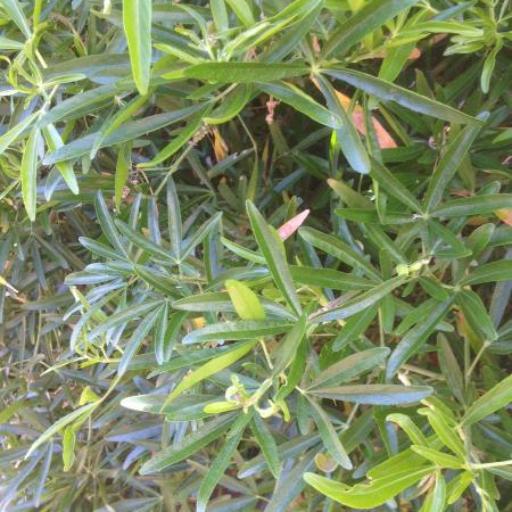
The leaves of Choisya ternata are dark green, leathery, and divided into three leaflets measuring about 3-8 cm long. In late spring or early summer, the plant produces clusters of fragrant white flowers that attract bees and other pollinators.
Mexican orange blossom thrives in well-drained soil with full sun or partial shade exposure. While it can tolerate drought conditions, it requires regular watering during hot summers.
Propagation of the plant can be achieved through stem cuttings taken in summer or by layering during autumn. Choisya ternata requires minimal pruning but can be shaped after flowering if necessary.
Mexican orange blossom serves multiple purposes, including use as an ornamental shrub for landscaping, as a hedge or border plant, or grown in containers on patios or balconies due to its compact size. Additionally, the essential oil extracted from its flowers is used in perfumes and aromatherapy for its calming properties.
Overall, Choisya ternata is an attractive evergreen shrub with fragrant white flowers that adds beauty to any garden landscape. It offers benefits such as attracting pollinators like bees and providing aromatic essential oils useful in aromatherapy, making it an excellent addition any garden enthusiast would love.
The Mexican orange, known botanically as Choisya ternata, originates from Mexico. Its leaves are characterized by three leaflets and emit a pleasant aroma. The plant produces fragrant white flowers that bloom primarily in the spring, with occasional blossoming in the autumn. Due to the distinct orange scent of its flowers, this plant is commonly referred to as the Mexican orange.
Mexican orange blossom has good resistance to disease and is generally not prone to illnesses. In terms of care, this plant is relatively low maintenance. When grown outdoors, it needs minimal watering, and larger plants typically do not require pruning. Smaller plants, however, should be pruned after they have bloomed. Mexican orange blossom is suitable for anyone with an outdoor area, such as a garden or deck, and does not demand a lot of care experience.
How to keep Choisya Ternata.
Light
Mexican orange blossom thrives in full sun yet is hardy enough to also grow well in moderate light. Although its native habitat receives abundant light, overexposure can scorch the leaves, while insufficient light can stunt growth and reduce flowering.
Water
The Mexican orange thrives in the landscapes of Mexico and prefers well-drained conditions with moderate humidity. Once established, it becomes drought-tolerant, requiring watering only every 1-2 weeks. While it is typically grown outdoors, adding mulch around the plant can help retain soil moisture during the growing season and prevent waterlogging.
Humidity
This plant will thrive in moderate humidity, which is probably the level in your home. However, misting it a few times a week can be very beneficial. Make sure the room has good ventilation.
Temperature
The mexican orange blossom grows naturally in temperate regions and needs a maximum temperature of 35℃ to thrive. It prefers a temperature range of 15 to 35℃. In summer, maintaining 25 to 30℃ is ideal. In winter it can tolerate temperatures as low as -10℃ and still survive.
Fertilizer
Fertilize your Mexican orange blossom in early spring to encourage healthy growth. Regular feeding improves overall health, leading to vigorous development, increased resilience to harsh conditions, and enhanced resistance to pests and diseases. Keep to a consistent fertilization schedule for your Mexican orange blossom to preserve vibrant, deeply colored foliage and a lush appearance.
Pruning
The Mexican orange is an evergreen shrub known for its glossy leaves and fragrant white flowers. To maintain its shape and promote healthy growth, prune the shrub in late spring after it has finished blooming. Be sure to remove any dead branches and thin out crowded shoots to improve airflow. Every few years, consider performing rejuvenation pruning to enhance flowering and maintain a compact size. Always use clean tools to prevent infection.
Pot & Repot
When repotting Mexican orange blossom, select a pot 1-2 inches (2.5–5.1 cm) larger that has ample drainage. Use a well-draining potting mix. Repot in spring or fall, making sure the root ball sits slightly lower than the rim of the flower pot. Water thoroughly after repotting and place it in a warm spot with indirect sunlight.
Toxicity
Mexican orange shrubs have no reported toxic effects on people or pets. Though no part of the plant is intended to be eaten, they are safe to plant around children and pets.
Further reading →
The toxicity and danger assessments provided are for reference only. We do not assure their accuracy, so it's crucial not to depend on them. Seek professional advice when necessary for accurate guidance.
Botanical profile.
- Plant Type
- Shrub
- Life Cycle
- Perennial
- Genus
- Choisya
- Family
- Rutaceae
- Hardiness Zone
- 7-10
- Mature Height
- 1.22 m to 3.05 m
- Mature Spread
- 1.22 m to 3.05 m
- Leaf Color
- Green, Yellow
- Leaf Type
- Evergreen
- Flower Color
- White
- Flower Size
- 3.05 cm to 5.08 cm
- Bloom Time
- Late spring, Early summer, Mid summer
- Planting Time
- Spring, Autumn
- Harvest Time
- Mid summer
- Native Area
- Mexico
Other names.
Reader questions.
How should I water my Mexican orange plant in the best way?
Your Mexican orange isn't very particular about how you water it, so you have flexibility in choosing a watering tool. Whether it's a watering can, hose, or even a cup, any common tool will serve its purpose of moisturizing the soil. Regardless of the tool you choose, the key is to ensure that you water the soil directly and evenly, providing all parts of the root system with the necessary moisture. It's recommended to use filtered water, as tap water may contain harmful particles. Additionally, using water at or slightly above room temperature is best, as extreme temperatures can be a shock to the plant. However, the Mexican orange generally reacts well to any type of water you give it.
Why should I put fertilizer on my Mexican orange tree?
No matter which type of Mexican orange you own, regularly fertilizing it will contribute to its overall health. Providing the proper nutrients will result in stronger growth and increased resilience to challenging growing conditions. It will also enhance the plant's ability to withstand diseases and pests. The foliage of the Mexican orange is particularly appealing, so it's important to maintain its condition. Creating and sticking to a fertilization schedule specifically designed for your Mexican orange will ensure vibrant and lush leaves.
What are the sunlight requirements for Mexican orange?
Mexican orange, or Choisya ternata, thrives best under conditions of full sun, which refers to areas receiving above 6 hours of sunlight daily. It can also grow in partial sun, defined as about 3-6 hours of sunlight per day. However, it's essential to observe how sunlight moves through your garden to choose spots that ensure a balance of light and shade, contributing to the plant's overall well-being. The ideal exposure supports the plant's growth, flower production, and maintains its health, but it's vital to guard against both underexposure, which may stunt growth and reduce flowering, and overexposure, which can cause leaf scorching.
What are the ideal growing conditions for Mexican Orange?
Mexican Orange (Choisya ternata) thrives in temperate regions with a preferred temperature range of 15 to 35°C. For optimal growth, the maximum temperature should not exceed 35°C. During summer, adjusting the surrounding temperature to between 25 and 30°C is ideal. Its strong cold resistance allows it to survive winters with temperatures as low as -10°C without needing special frost protection measures. However, if winter temperatures are expected to drop below -15°C, it's important to protect the plant by wrapping its trunk and branches with materials like non-woven fabric. Additionally, watering the plant abundantly before the first freeze in autumn helps keep the soil moist, preventing drought and water scarcity during winter and early spring.
What should I do if I give my Mexican orange tree too much or too little water?
Outdoor plants, especially newly planted ones or seedlings, are susceptible to dehydration. It is important to remember that consistent watering is necessary for the first few months when the tree is small or recently planted. This is because once the roots are established, the Mexican orange can rely on rainfall for the most part. When the Mexican orange is in a pot, overwatering is more likely to occur. If you accidentally overwater your Mexican orange, you need to take immediate action to fix the situation. Firstly, stop watering the plant to minimize the effects of overwatering. Then, remove the Mexican orange from its pot to check its roots. If there is no sign of root rot, you can return the plant to its container. However, if root rot is present, trim the affected roots and consider applying a fungicide to prevent further damage. Lastly, repot the Mexican orange in well-draining soil. On the other hand, underwatering can easily be resolved by increasing the frequency of watering. You can recognize underwatering when the plant's leaves droop, dry out, and fall off. The leaves will normally regain their fullness after sufficient watering. It is important to adjust your watering frequency promptly when underwatering occurs.
What is the best time to fertilize my Mexican orange?
To ensure your Mexican orange thrives, it is recommended to fertilize it during late winter or early spring. Providing these nutrients during this time allows the plant to grow healthily once the weather warms up. If you live in a warm climate region, it can be beneficial to provide an additional fertilizer feeding in early fall. This not only adds nutrients for the following growing season but also helps the plant withstand the winter cold without foliage damage. Fertilizing earlier also ensures that the new branches have enough time to grow and withstand the cold winter.
How does artificial lighting affect Mexican orange growth indoors?
Indoor plants like the Mexican orange require adequate lighting for optimal growth, particularly when natural sunlight is insufficient, such as during winter or in less sunny spaces. Artificial lights, including LED lights, serve as a crucial solution by providing essential wavelengths for faster and healthier growth. For full sun plants, 30-50W/sq ft of artificial light is recommended, partial sun plants require 20-30W/sq ft, while full shade plants need 10-20W/sq ft. The light source should be placed 12-36 inches above the plant to simulate natural sunlight and be kept on for 8-12 hours per day, mimicking natural daylight hours specific to the plant species.
How does the Mexican Orange react to low temperatures?
The Mexican Orange is highly tolerant of low temperatures and performs best when temperatures remain above 15°C. During the winter months, it can survive temperatures as low as -10°C. If temperatures fall below -15°C, the plant might not show immediate signs of stress, but you may notice that the branches become brittle and dry come springtime, leading to a lack of new shoots. To assist the plant in spring, pruning away any dead branches that failed to produce new leaves is recommended as part of the plant's care.
How often do I need to water my Mexican orange plant?
If your area doesn't get much rainfall, regularly watering your outdoor plants every 2 weeks during spring and fall should be sufficient. In the summer, you'll need to water more often, but in the winter, you can water less frequently or not at all. However, if your Mexican orange plant is young or newly planted, it will need more frequent watering initially to help it establish and grow. For potted plants, there are two main approaches to determining watering frequency for your Mexican orange. One option is to follow a predetermined watering schedule of once every week or every other week. However, this may not always be accurate as it doesn't consider the specific conditions of your plant's environment. Alternatively, you can base your watering frequency on the moisture level of the soil. Wait until the top two to four inches of soil have dried out completely before watering again, which is usually about ⅓ to ½ of the depth of the pots. Adjust your watering schedule accordingly, considering that your Mexican orange will likely require more water during the summer months.
When is the best time to not fertilize my Mexican orange plant?
There are specific times of the year when it is not advisable to fertilize your Mexican orange plant. Firstly, during the early and mid-winter months when the plant is dormant, it does not require any feeding. Additionally, it is not recommended to fertilize the plant in late spring and throughout the summer due to the hotter and drier weather conditions during this period. Fertilizing during this time can have a detrimental effect on the plant. To prevent any issues, it is best to follow a fertilization schedule that involves feeding only in early spring and early fall.
What are key symptoms of light deficiency or overexposure in Mexican orange?
Mexican orange exhibits several symptoms in response to light deficiency or overexposure. Insufficient sunlight can lead to smaller new leaves, leggy or sparse growth, faster leaf drop, slower or halted growth, and lighter-colored or chlorotic leaves. Overexposure to sunlight might cause chlorosis, sunscald, leaf curling, wilting, and leaf scorching. These symptoms are crucial indicators of the plant's need for adjustments in lighting, whether it requires more light or protection from too much direct sunlight.
How should you care for a Mexican Orange during high temperatures?
In high temperatures, specifically when temperatures soar above 35°C during summer, the care for Mexican Orange should be adjusted to mitigate heat stress. If temperatures exceed 41°C, the plant's leaves may lighten in color, and the tips can become dry and withered, increasing its susceptibility to sunburn. To protect the plant, trim away any sunburned and dried-up parts. Moving the plant to a shaded location, especially from the midday and afternoon sun, or using a shade cloth can provide necessary relief. It's also crucial to maintain soil moisture by watering the plant in the morning and evening.