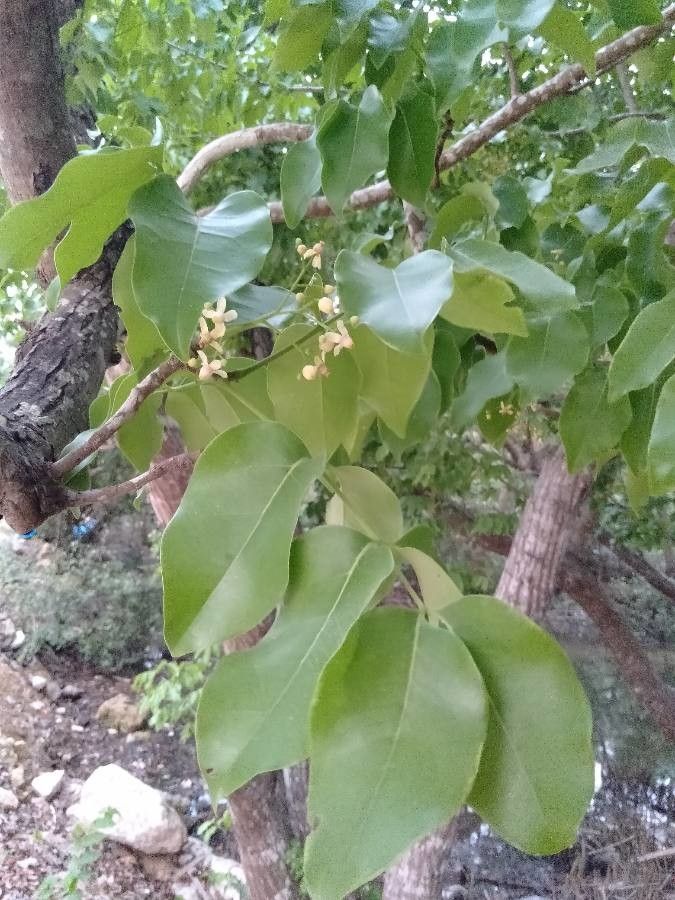
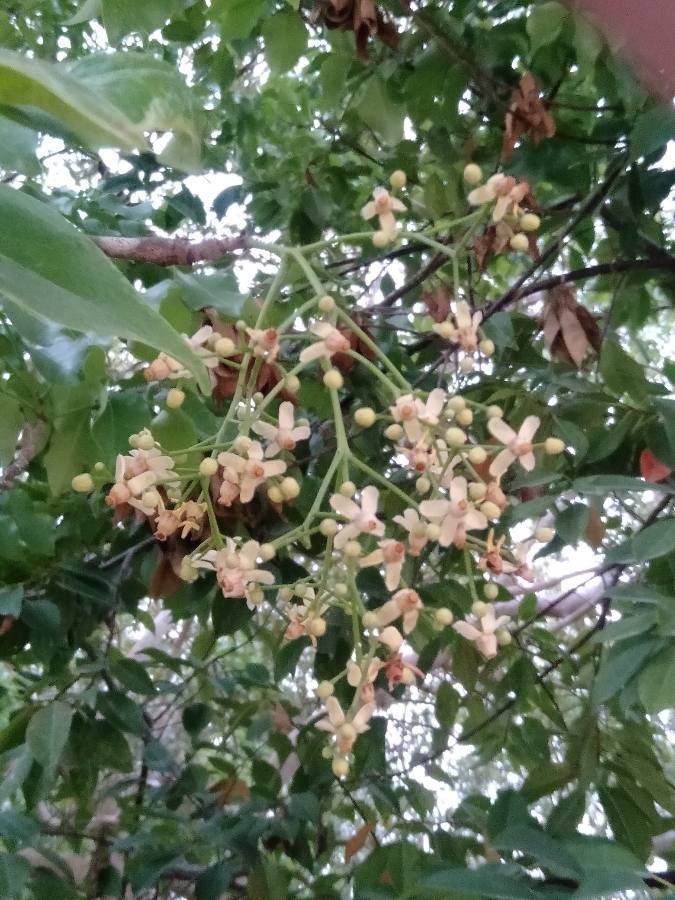
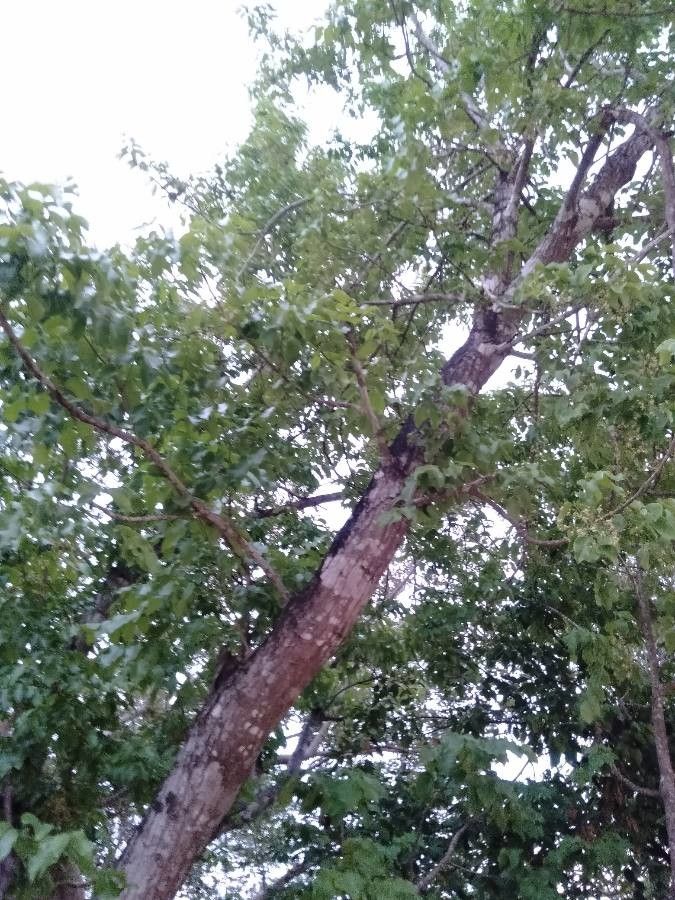
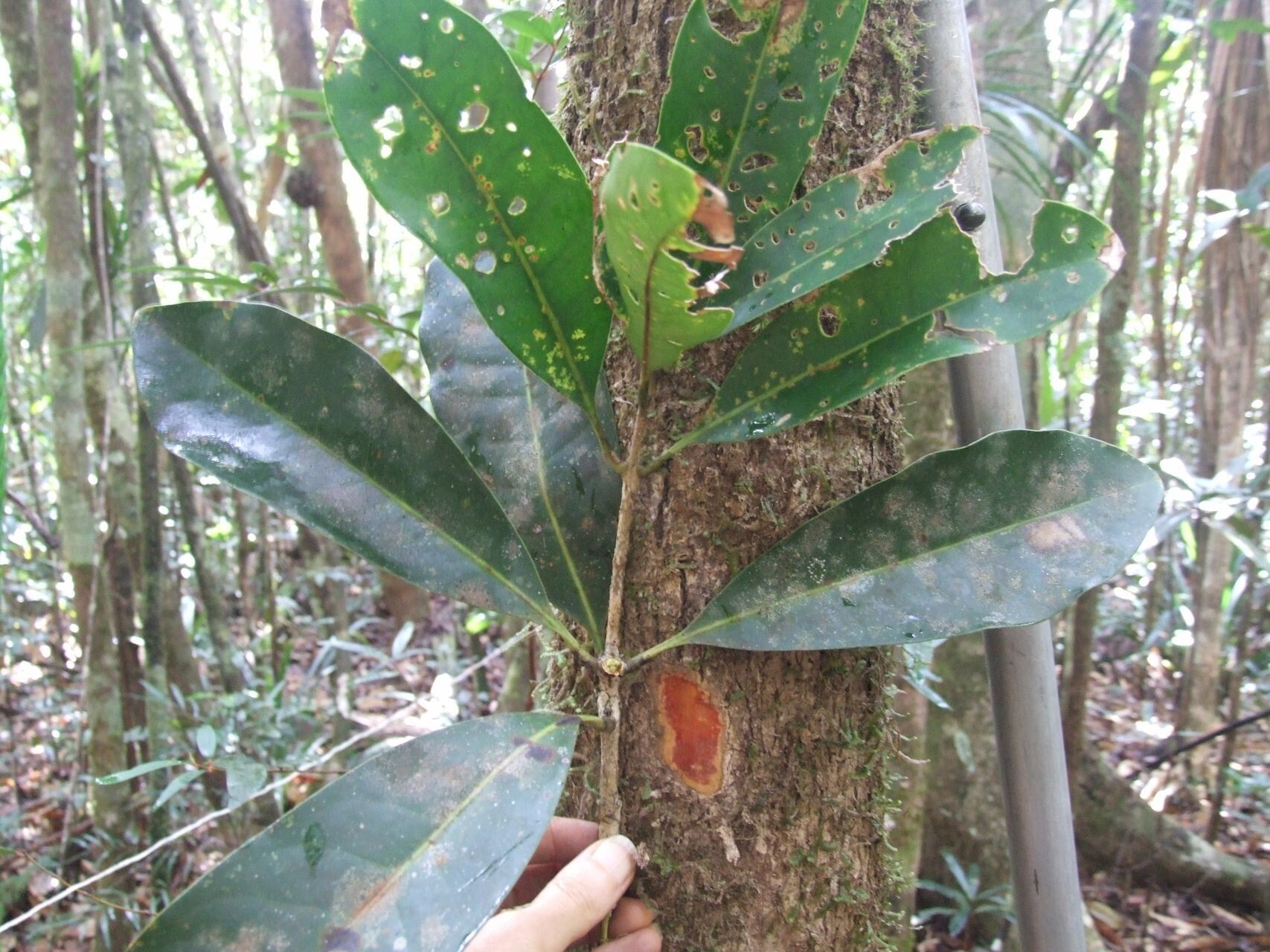
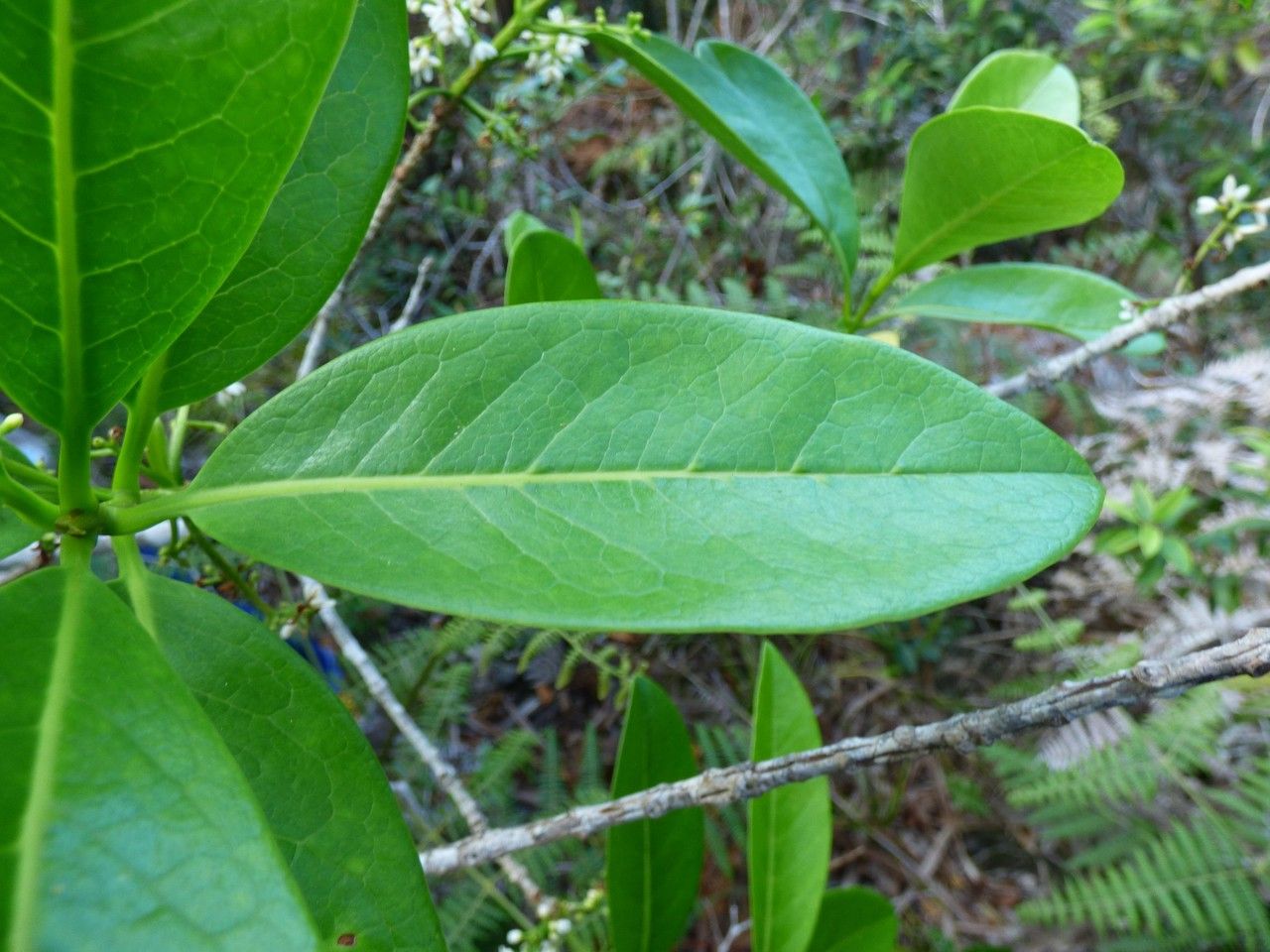
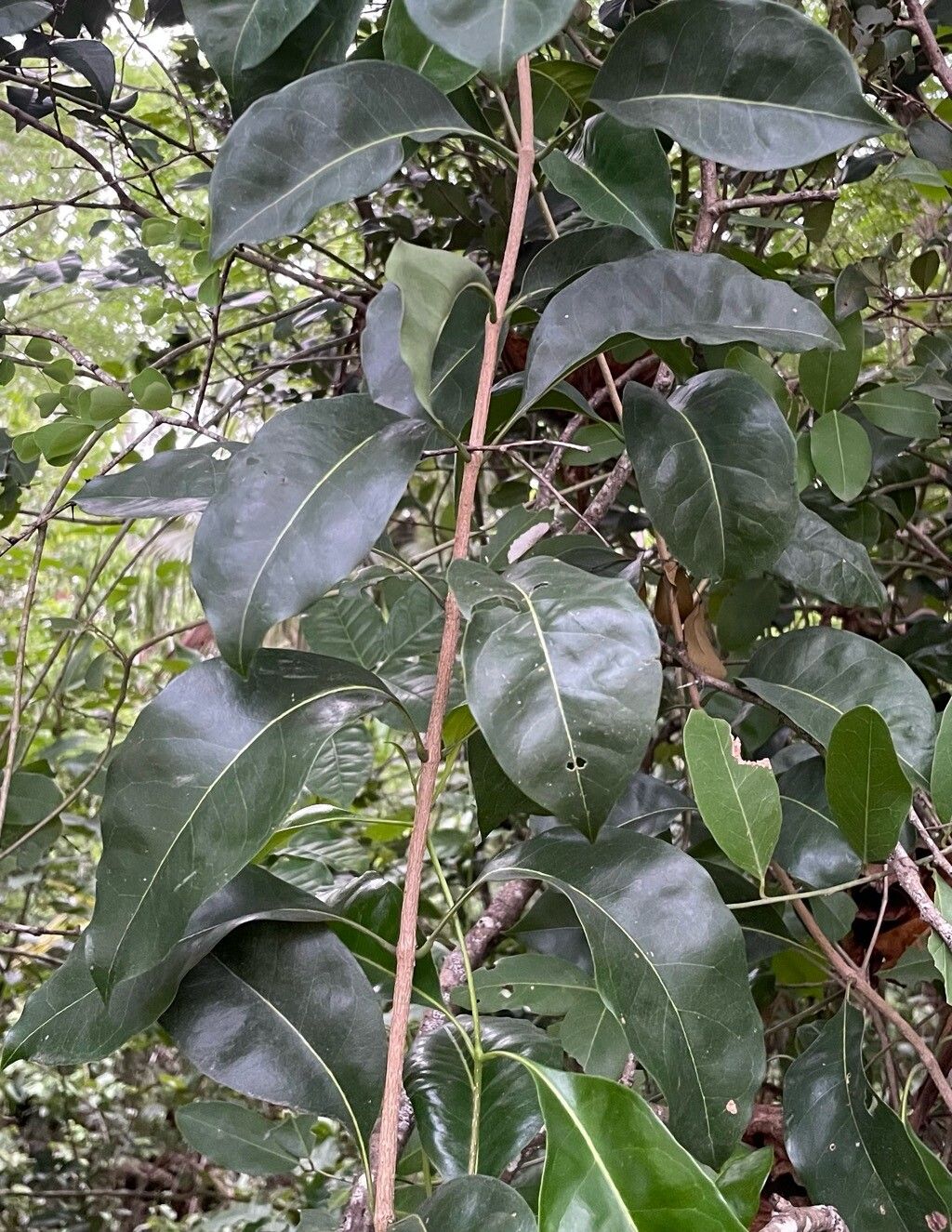
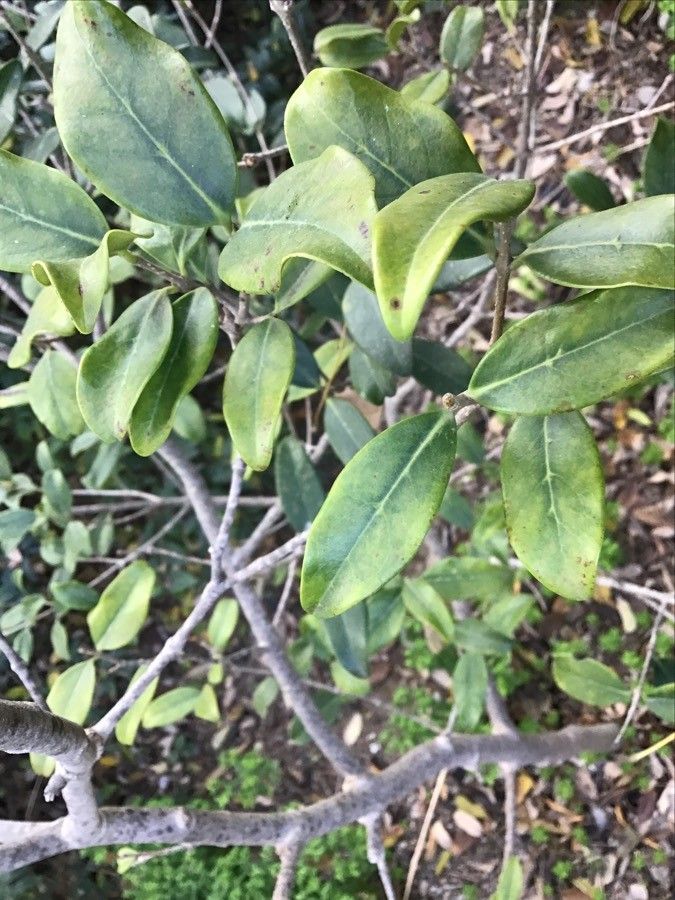
Chionanthus ramiflorus (syn. Linociera ramiflora (Roxb.) Wall.), commonly known as northern olive or native olive, is a species of shrubs and trees, of the flowering plant family Oleaceae. They grow naturally in India, Nepal, northeastern Australia (Queensland), New Guinea, the Philippines, southern China and Taiwan.They grow as evergreen shrubs or trees to 3–23 m (10–75 ft) tall. The leaves are 8–20 cm (3–8 in) long and 4–7 cm (1.6–2.8 in) broad, simple ovate to oblong-elliptic, with a 2–5 cm (0.8–2.0 in) petiole. The flowers are white or yellow, produced in panicles 2.5–12 cm (1.0–4.7 in) long. The fruit is a blue-black drupe 1.5–3 cm (0.6–1.2 in) long and 0.5–2.2 cm (0.2–0.9 in) diameter.Sometimes the species is treated in the segregate genus Linociera, though this does not differ from Chionanthus in any character other than leaf persistence, not a taxonomically significant character.The 1889 book 'The Useful Native Plants of Australia' records that "The fruit of this plant is the food of the jagged-tailed bower-bird (Preonodura Neivtoniana). (Bailey.) This observation is interesting, and is the more valuable in that the vegetable foods of our indigenous fauna have very rarely been botanically determined. This plant is not endemic to Australia. Queensland."
Native olive is resistant to disease and is usually not susceptible to illnesses. Regarding care, this plant is fairly low-maintenance. When grown outdoors, it needs only light watering, and larger plants typically do not require pruning. Smaller plants, however, should be trimmed after they finish blooming. Native olivet is appropriate for anyone with an outdoor area, such as a garden or deck, and does not demand much experience in plant care.
How to keep Chionanthus Ramiflorus.
Light
Native olive comes from open habitats, such as sunlit meadows and forest edges, which supply plenty of light. It does best in full sun but can also tolerate partial sun, adapting well to different sunlight conditions.
Water
The native olive plant needs moderate watering every 2-3 weeks and is drought-tolerant, adapting well to different moisture levels. As an evergreen, it keeps its leaves year-round, helping to conserve water during dry periods. It flourishes in areas with balanced rainfall.
Temperature
Native olive comes from tropical regions, where the climate is typically warm and humid. As a result, it is well adapted to high temperatures and humidity. It does not fare well with sudden temperature changes and prefers a stable temperature environment, so it is important to avoid temperature fluctuations indoors. It usually does not tolerate cold temperatures and requires higher temperatures for growth. If the environmental temperature drops too low, the plant may stop growing or even die.
Fertilizer
The best time to fertilize a Native olive is in early spring, as it breaks dormancy. This supports overall growth and flower development. Fertilization improves the foliage, stems, and branches, while encouraging large, vibrant, long-lasting flowers. It also helps move nutrients from the roots to the flowers and enhances the plant’s health and resistance to disease.
Pruning
The native olive tree features attractive bark and fragrant flowers. To keep the tree healthy and looking its best, prune it in early spring. This will help remove dead branches, improve its structure, and encourage more blooms. Additionally, thinning out dense areas will improve air circulation. Always make sure your tools are clean before you start. Proper pruning promotes new growth and helps maintain the tree's appealing shape.
Botanical profile.
- Plant Type
- Tree, Shrub
- Life Cycle
- Perennial
- Genus
- Chionanthus
- Family
- Oleaceae
- Hardiness Zone
- 9-11
- Mature Height
- 3.05 m to 22.86 m
- Mature Spread
- 3.05 m
- Leaf Color
- Dark Green
- Leaf Type
- Deciduous
- Flower Color
- White
- Flower Size
- 2.54 cm to 11.43 cm
- Bloom Time
- Late spring, Early summer
- Planting Time
- Spring, Summer, Autumn
- Harvest Time
- Late summer, Early fall, Mid fall
- Native Area
- Nepal, Sri Lanka, India, Malaysia, Indonesia, Cambodia, Vietnam, Myanmar, Philippines, Singapore, Bangladesh, Brunei, Thailand, China
Other names.
Reader questions.
What are the sunlight requirements for a Native olive plant?
The Native olive plant, or Chionanthus ramiflorus, originates from open environments that typically receive ample sunlight, such as sunny meadows and forest edges. It thrives best in full sun, which is defined as receiving above 6 hours of sunlight daily but can also tolerate partial sun, meaning it can grow in conditions with about 3-6 hours of sunlight each day. Keeping an eye on how sunlight moves through your garden is crucial, and selecting locations that offer the right balance of light and shade will ensure your plants remain healthy and happy.
What is the Native olive's botanical name?
The botanical name of the Native olive is Chionanthus ramiflorus. This name helps in identifying the plant scientifically across different regions and languages.
How does artificial lighting support the growth of indoor Native olive plants?
Indoor plants, including Native olive, require adequate lighting for optimal growth, especially when natural sunlight is insufficient, such as during winter or in less sunny spaces. Artificial lights, particularly LED lights, provide a vital solution by offering the specific wavelengths of light that plants need for faster and healthier growth. For plants that need full sun, 30-50W/sq ft of artificial light is recommended, while partial sun plants need 20-30W/sq ft, and full shade plants require 10-20W/sq ft. The artificial light source should be placed 12-36 inches above the plant to mimic natural sunlight, and the lights should be on for 8-12 hours per day, depending on the plant species' specific needs.
What are common symptoms of light deficiency in Native olive plants?
Native olive plants that don't receive adequate sunlight may show several symptoms indicating light deficiency. These include the development of smaller leaves compared to previously matured ones, leggy or sparse growth characterized by longer spaces between leaves or stems, premature leaf drop as the plant conserves resources, slower or halted growth as the plant enters survival mode, and the appearance of lighter-colored or chlorotic leaves, indicating a lack of chlorophyll and essential nutrients. Additionally, excessive sunlight might cause sunscald, leaf curling, wilting, and leaf scorching, which are harmful to the plant's health.
How can I address and prevent light-related issues in Native olive plants?
To ensure your Native olive plant receives optimal growth conditions, gradually introduce it to more sunlight each week until it reaches at least 6 hours of direct sunlight daily. If the plant is indoors and large or difficult to move, consider supplementing with artificial lighting, such as keeping a desk or ceiling lamp on for at least 8 hours daily or investing in professional plant grow lights. For outdoor plants, moving them to sunnier spots gradually is key to preventing sunburn. Reducing obstructions to sunlight, such as pruning trees that cast shade, and transplanting smaller plants during their dormant period to sunnier locations, can also help. Although parts of the plant that have been deprived of sunlight may not recover, new growth will be healthy with increased light exposure.