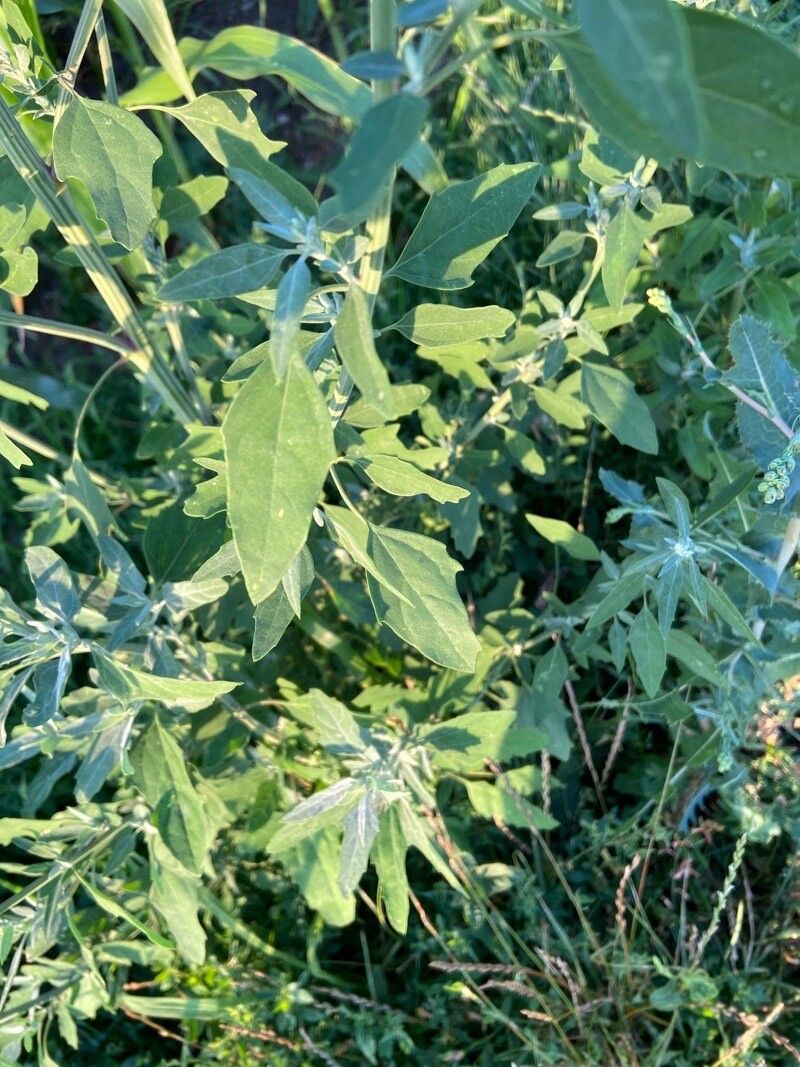
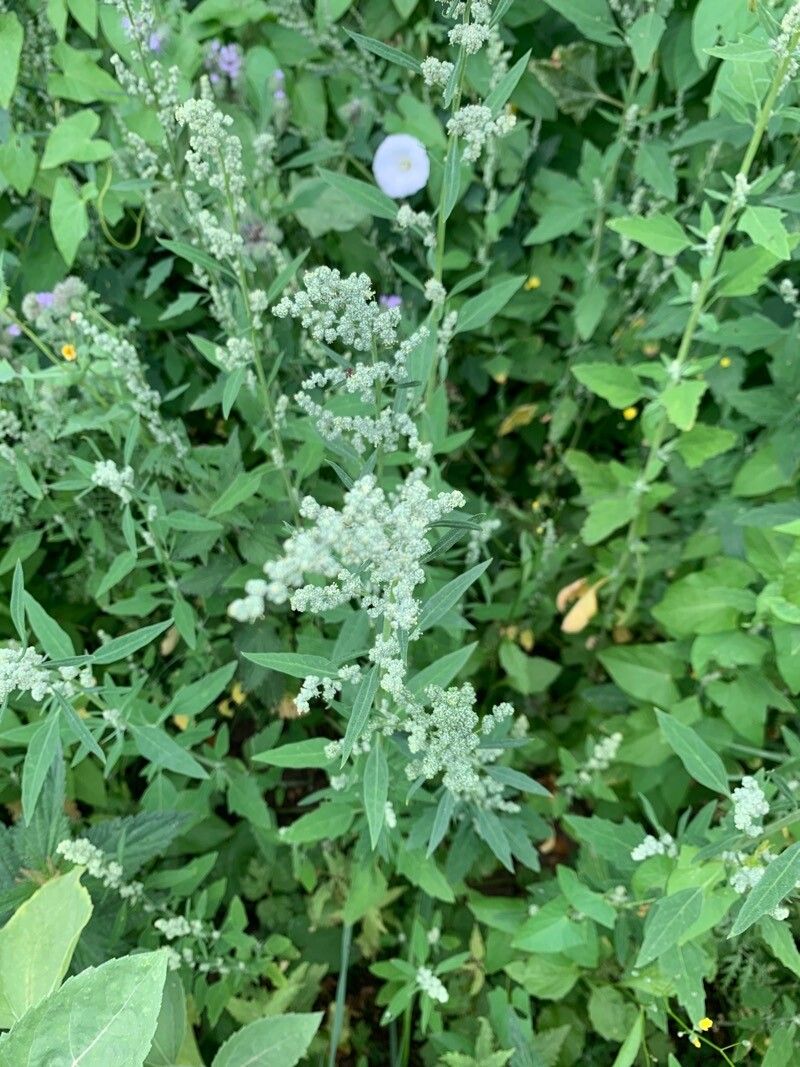
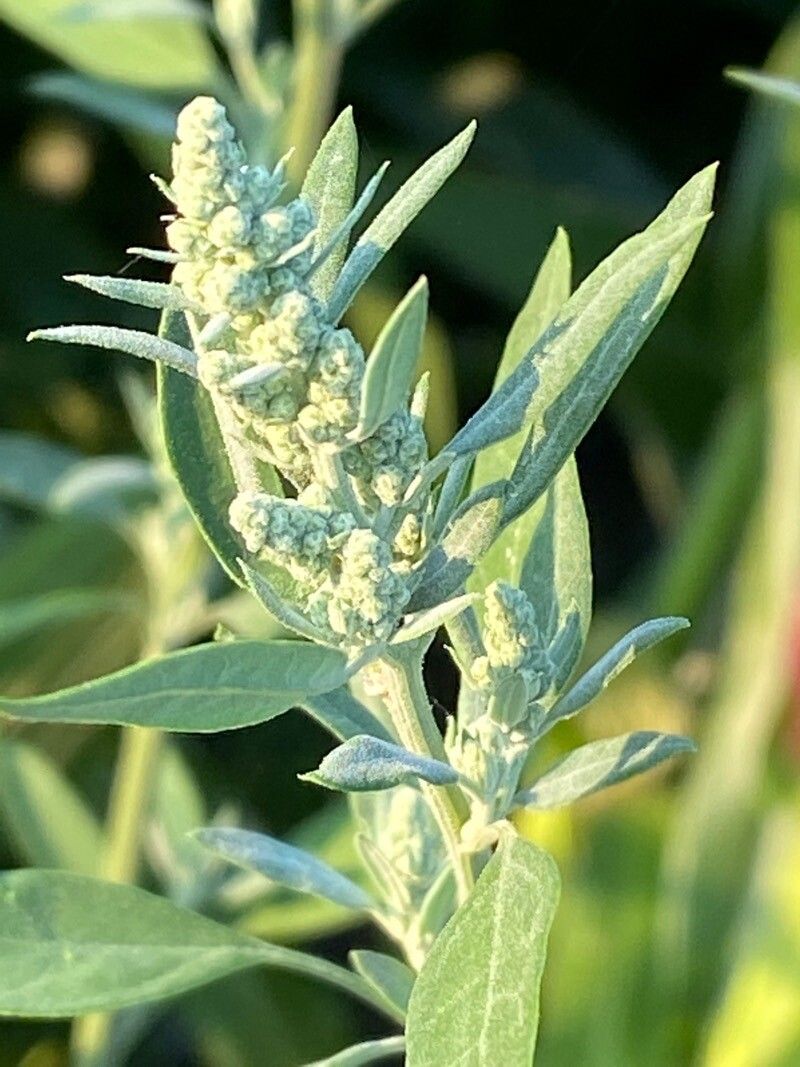
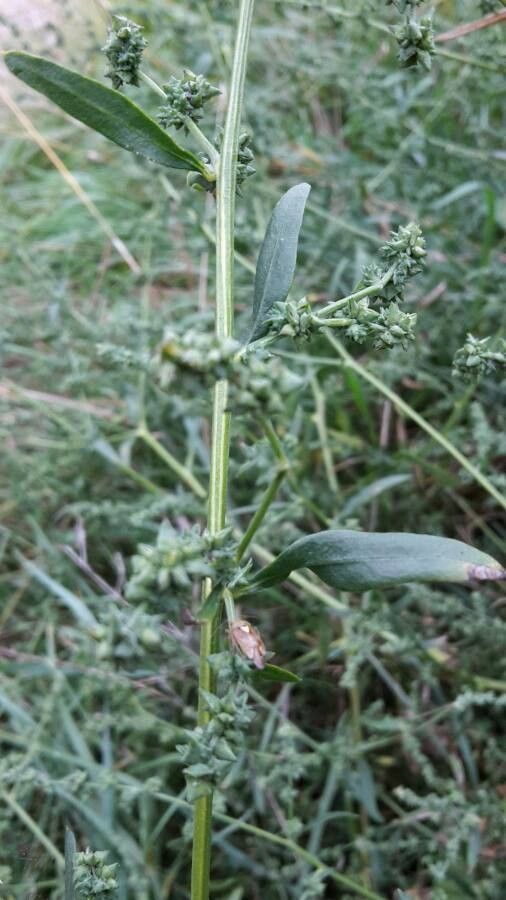
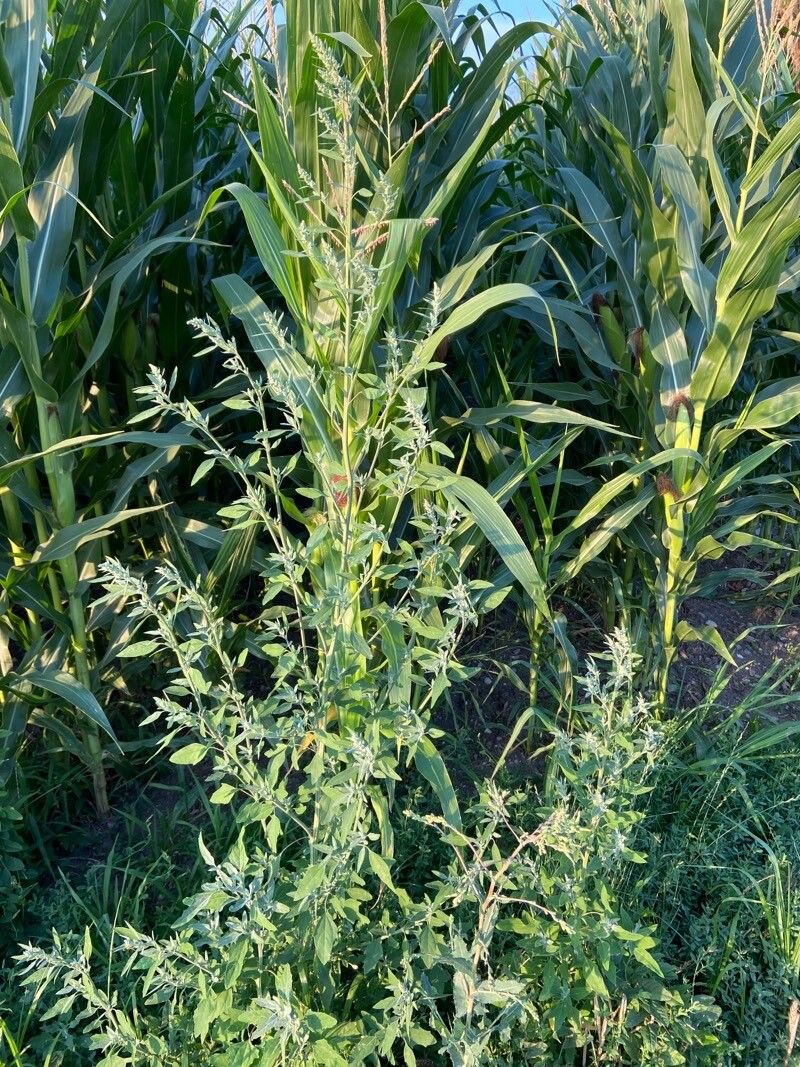
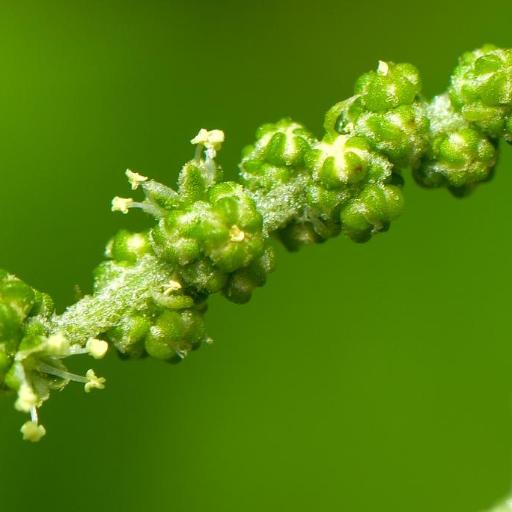
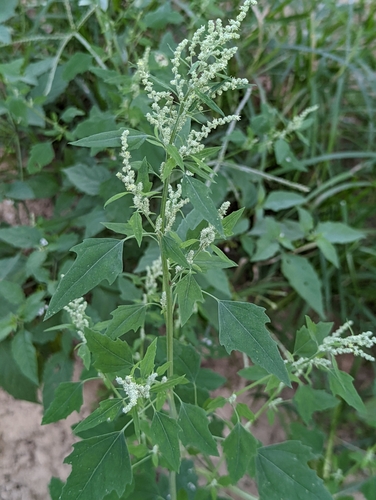
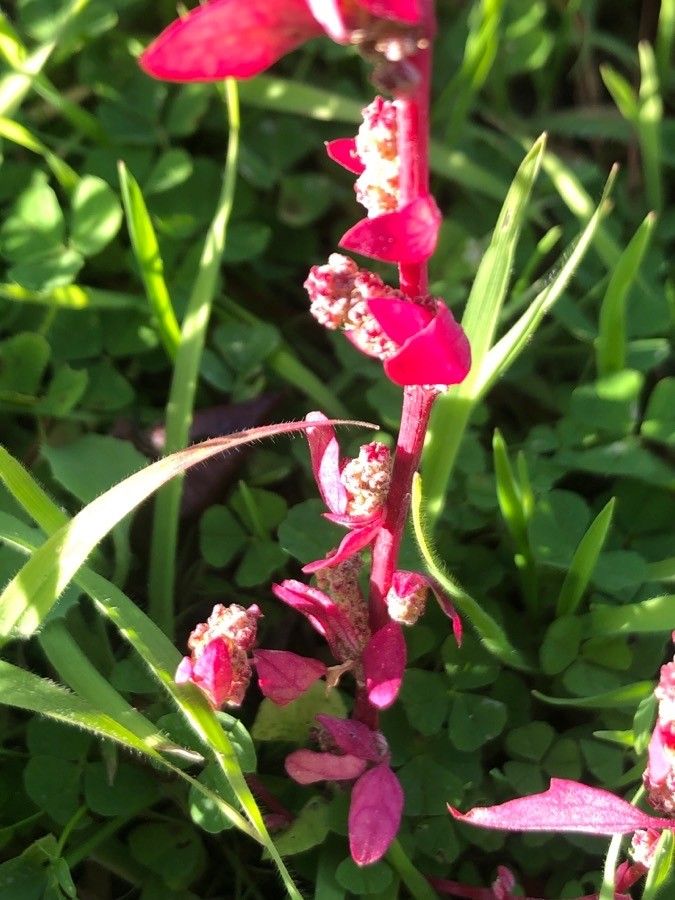
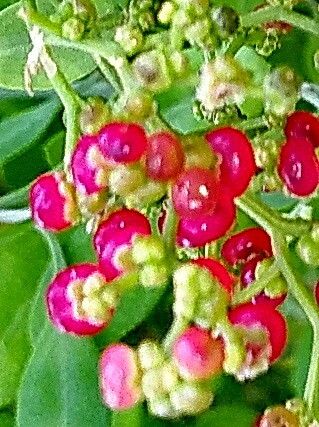
Chenopodium pratericola is a species of flowering plant in the goosefoot family known by the common name desert goosefoot. It is native to much of western and central North America, where it grows in many types of open habitat, such as sagebrush, often on alkaline soils. It is an annual herb growing up to 65 to 80 centimeters tall, sometimes branching. It is powdery in texture, especially on the leaves and flowers. The leaves are oval to lance-shaped and some are lobed. The inflorescences are located in leaf axils and in panicles at the end of the stem. Each is a small, dense cluster of tiny flowers.
Desert goosefoot is fairly disease-resistant and usually does not develop illnesses. Still, it can be vulnerable to pests and diseases present in its environment. These problems are typically not serious. For care, this plant requires moderate maintenance. It should be trimmed regularly to keep a neat appearance and support healthy growth. Fertilizing can also encourage flowering. Desert goosefoot is appropriate for anyone with an outdoor area, such as a garden or patio, and does not demand extensive care experience. It may need more attention when grown indoors.
How to keep Chenopodium Pratericola.
Light
Desert goosefoot comes from bright, open habitats where it does best in full sun. It can tolerate partial sun but favors direct sunlight for optimal growth. This plant, which may be annual or biennial, is known for its sun-loving character.
Water
Desert goosefoot is extremely drought-tolerant, thriving in dry environments with little water. To encourage optimal growth, water the plant twice a week, ensuring the soil dries out between watering sessions. Its adaptability makes it an excellent choice for xeriscaping, which helps reduce the need for irrigation.
Temperature
Desert goosefoot can adjust to a wide range of temperatures, but its distribution may still be restricted by different combinations of moisture and heat. It does best in warm summer conditions with sufficient rainfall or watering. Extended periods of cloudy, rainy weather or prolonged high temperatures can raise the chance of Desert goosefoot dying. In winter, adequate protection from cold can increase the plant's survival rate.
Fertilizer
Desert goosefoot does well with regular, dilute fertilizer applications to encourage healthy leaf growth. Fertilize desert goosefoot about once a month during the summer. Nitrogen is important for foliage, and adding nitrogen-rich fertilizer helps desert goosefoot thrive.
Pruning
Desert goosefoot is well-suited to dry conditions and benefits from pruning in early to late spring. By trimming dead stems, you can encourage new growth and improve air circulation. It's important to avoid heavy pruning after spring, as this can cause stress to the plant. Proper pruning promotes regrowth and increases the plant's resilience in arid environments.
Botanical profile.
- Plant Type
- Herb
- Life Cycle
- Annual
- Genus
- Chenopodium
- Family
- Amaranthaceae
- Hardiness Zone
- 4-9
- Mature Height
- 20 cm to 61 cm
- Mature Spread
- 20 cm to 61 cm
- Leaf Color
- Green, Gray
- Leaf Type
- Semi-evergreen
- Flower Size
- 0.10 cm to 0.20 cm
- Bloom Time
- Summer
- Planting Time
- Spring, Summer, Autumn
- Harvest Time
- Late summer, Early fall, Mid fall
- Native Area
- Mexico, Panama
Other names.
Reader questions.
What are the sunlight requirements for Desert Goosefoot?
Desert Goosefoot (Chenopodium pratericola) requires specific amounts of sunlight to thrive. For full sun exposure, it needs above 6 hours of sunlight, which is ideal for its growth. Alternatively, if the plant is in an area receiving partial sun, about 3-6 hours of sunlight is necessary. It's important to observe how sunlight moves through your garden throughout the day. Selecting the right spots that offer a good balance of light and shade will ensure the plants remain healthy and happy. This careful observation is key in providing the optimal environment for Desert Goosefoot's growth.
What is the common name for Chenopodium pratericola?
The common name for Chenopodium pratericola is Desert goosefoot.
What is the botanical name for Desert goosefoot?
The botanical name for Desert goosefoot is Chenopodium pratericola.