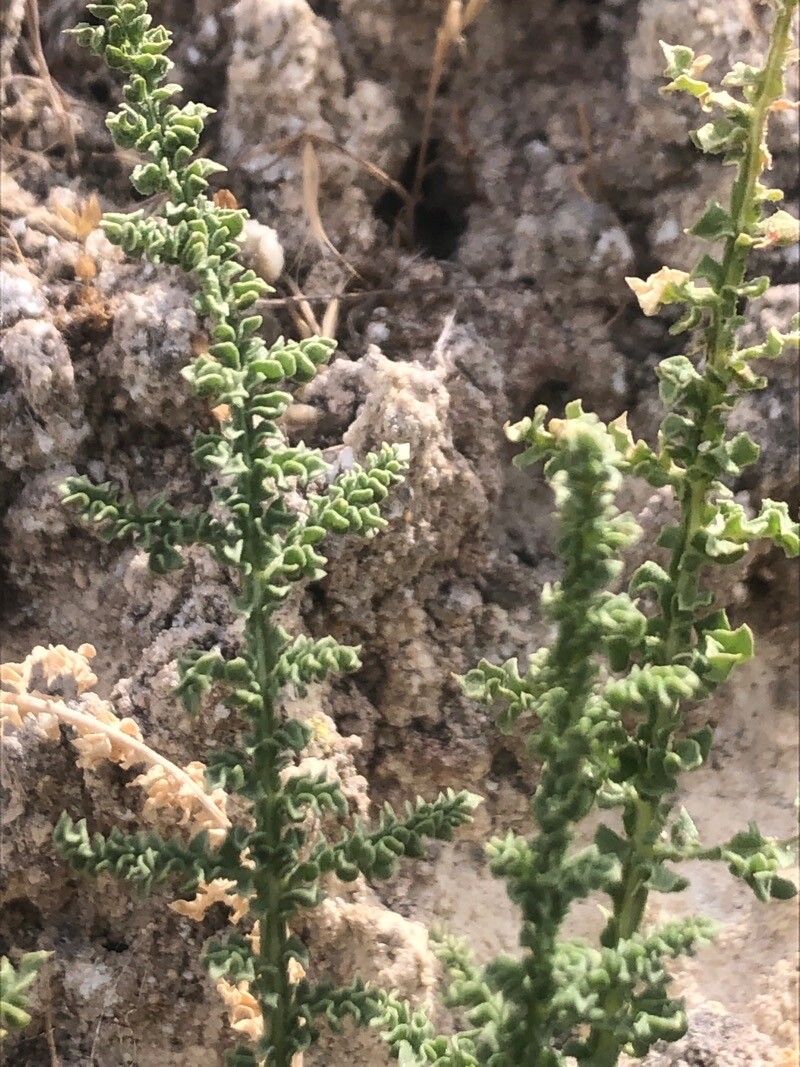
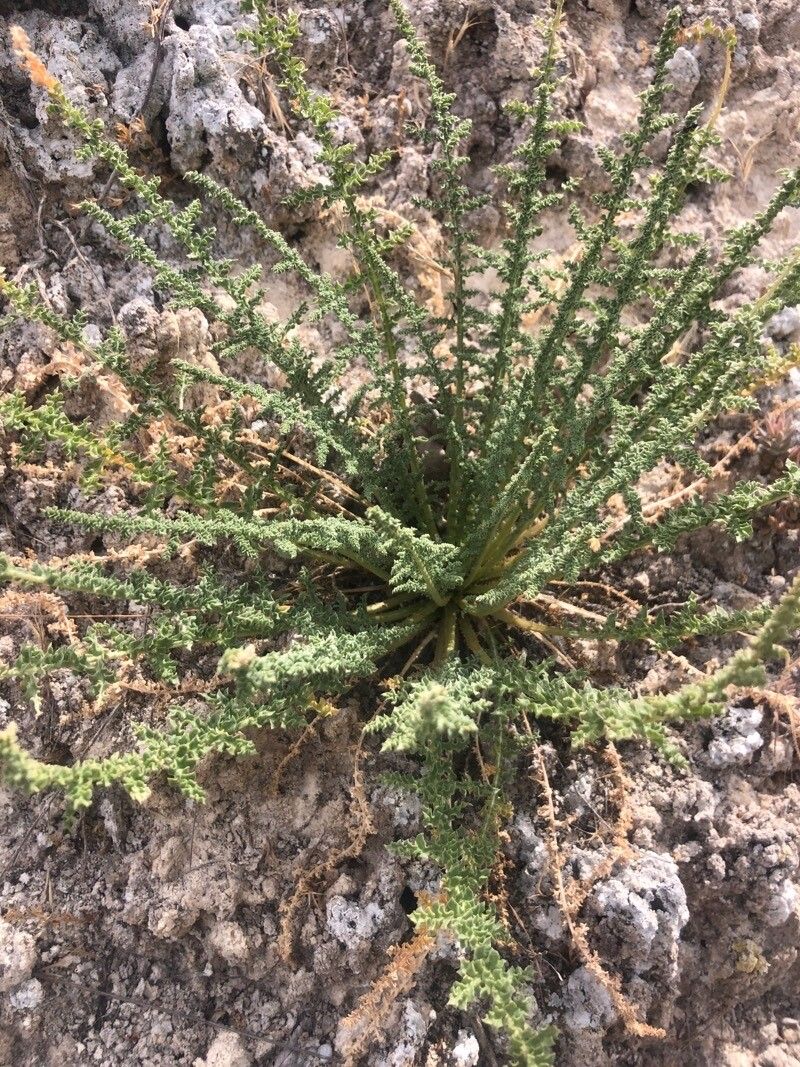
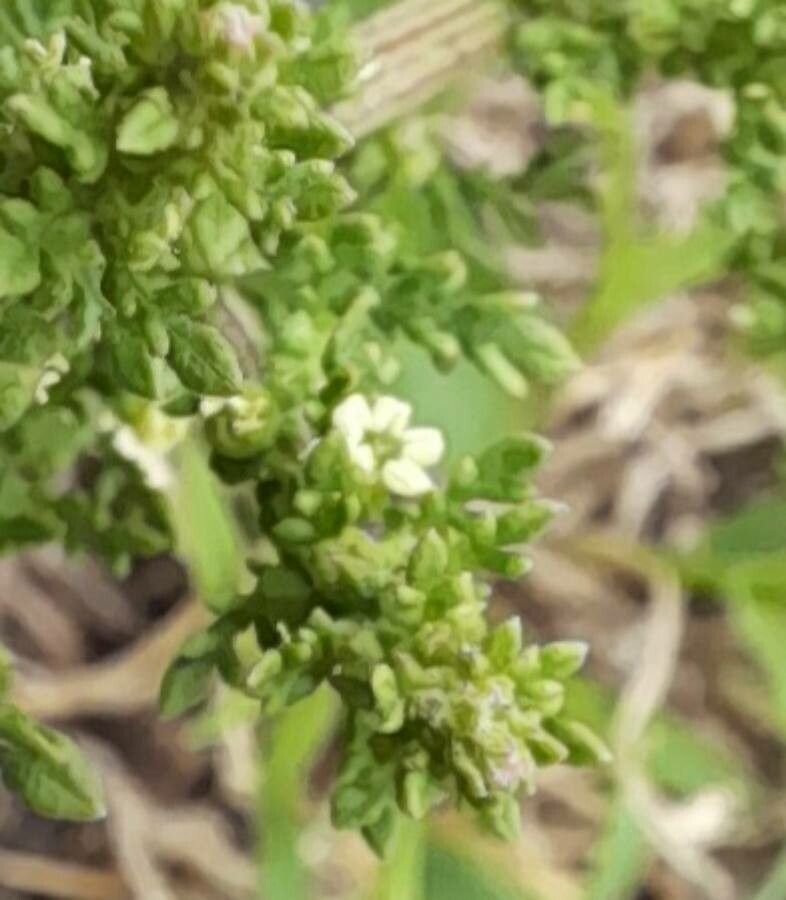
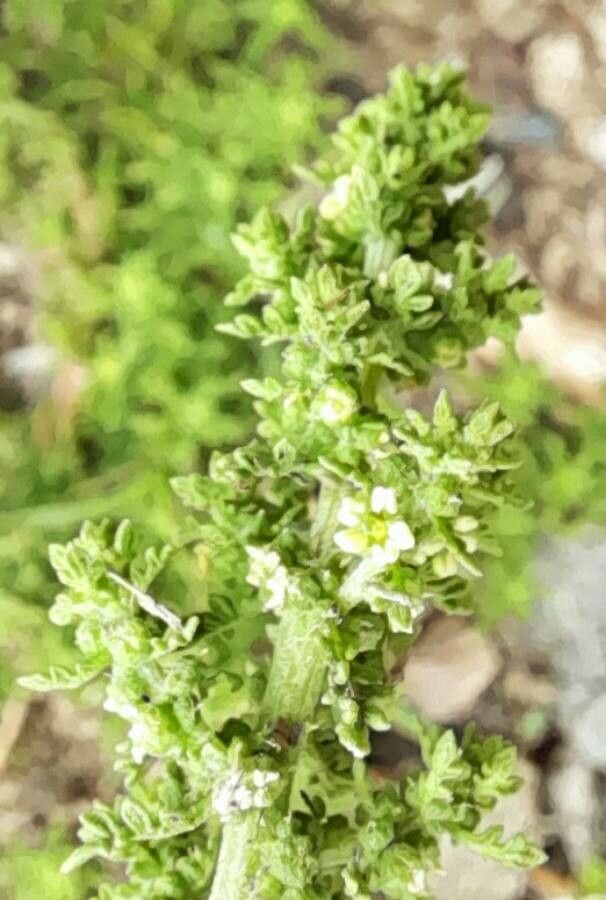
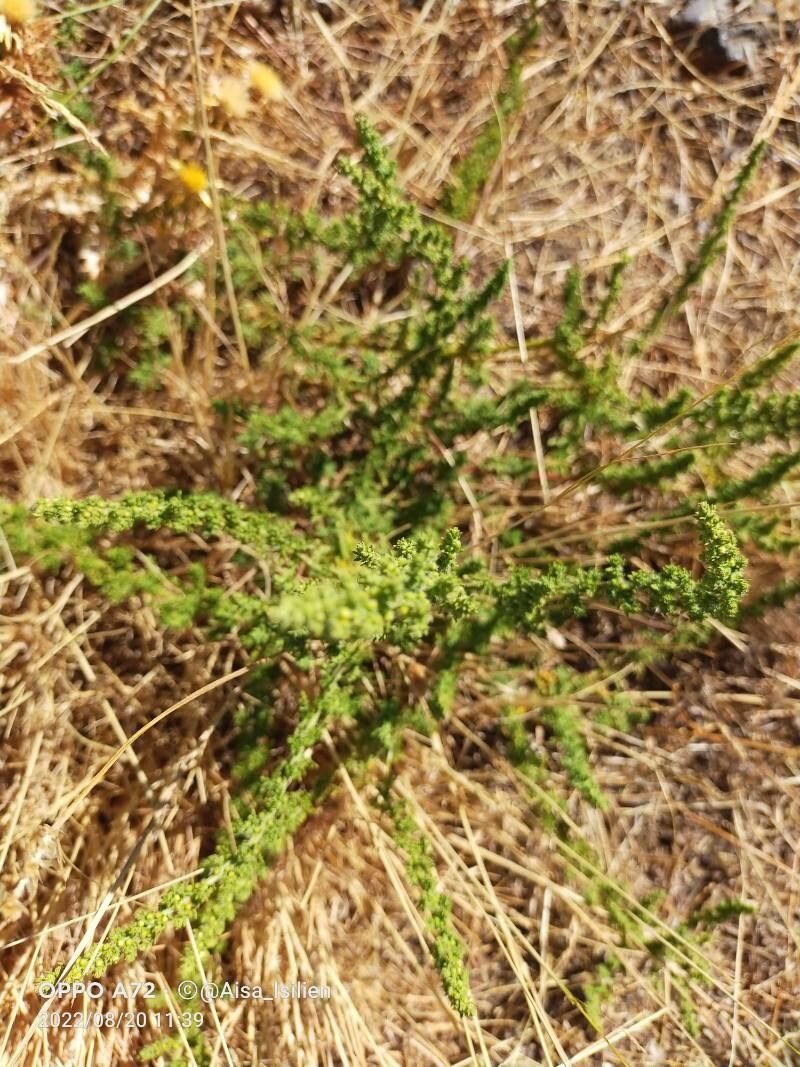
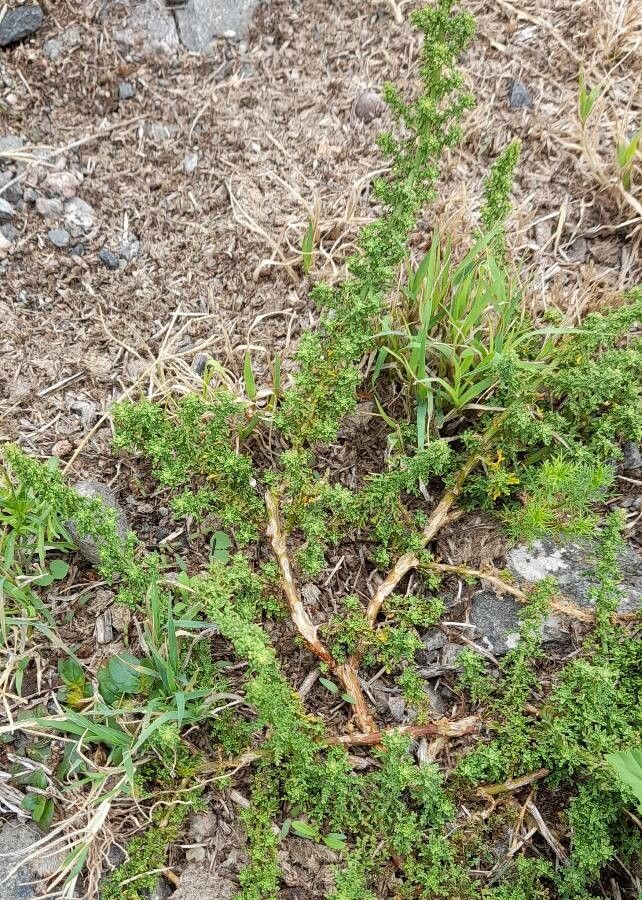
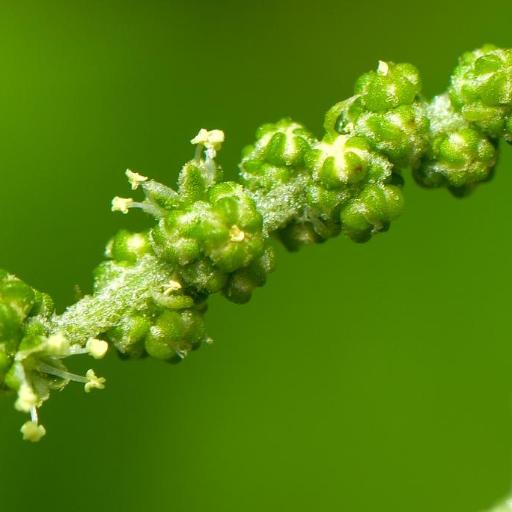
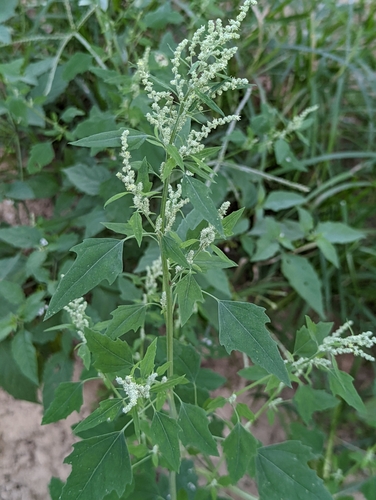
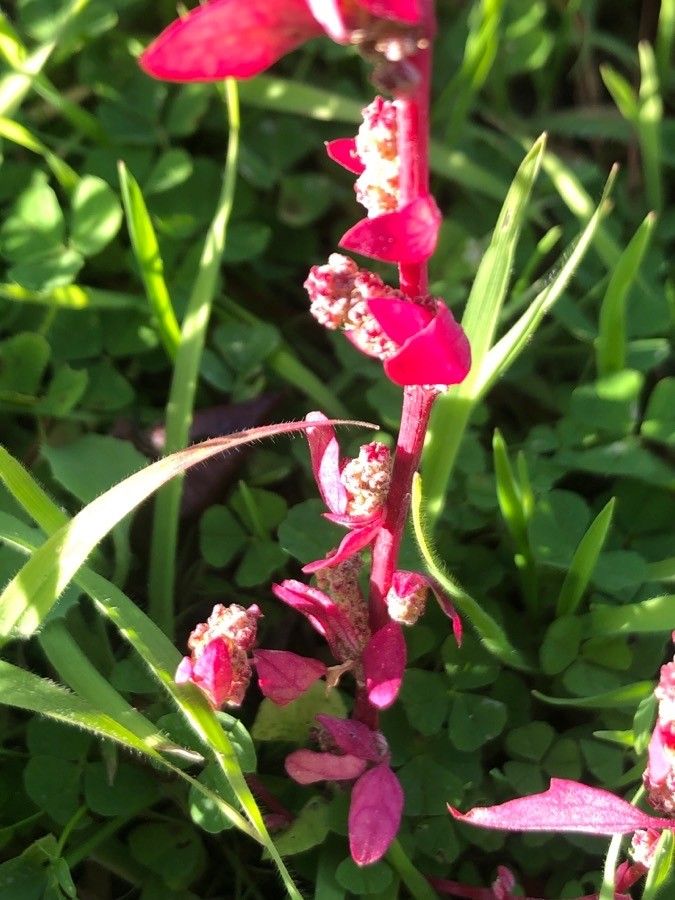
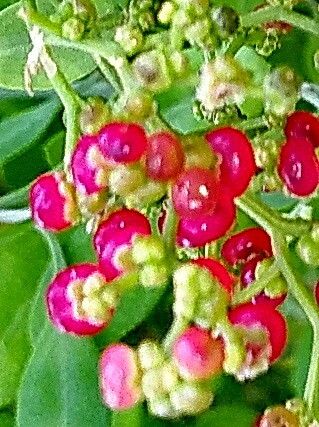
Dysphania multifida is a species of flowering plant in the family Amaranthaceae known by the common names cutleaf goosefoot and scented gooosefoot.It is native to South America, but it can be found on most continents as an introduced species. It grows easily in many habitat types, including disturbed areas such as roadsides. It is an annual herb with variously shaped stems up to about 60 centimeters long, branching and growing upright to flat along the ground. The oblong, glandular leaves are up to 2 centimeters long and have several lobes along each side. The inflorescences are located in leaf axils, spherical in shape and about half a centimeter long, with panicles of clusters located at the ends of stem branches. Each is a dense cluster of tiny flowers enclosing the developing fruit.
Cutleaf goosefoot has strong disease resistance and is generally not likely to develop diseases. However, it can be affected by pests and diseases present in its surroundings, and these infections are usually not severe. Regarding care, this plant needs a moderate level of maintenance. It should be pruned regularly to keep a good appearance and support healthy growth. Fertilizing can also aid in promoting flowering. Cutleaf goosefoot is suitable for anyone with outdoor space, such as a garden or patio, and does not require extensive care experience. It may need more attention if grown indoors.
How to keep Chenopodium Multifidum.
Light
Cutleaf goosefoot is a sun-loving, perennial herb that comes from open habitats and commonly grows in meadows and grasslands. It prefers full sun but can also tolerate partial sun.
Temperature
Cutleaf goosefoot can tolerate a wide range of temperatures, but its range may still be restricted by different mixes of moisture and heat. It performs best in warm summer climates with sufficient rainfall or irrigation. Extended stretches of cloudy, rainy weather or prolonged high temperatures can raise the chance of Cutleaf goosefoot dying. In winter, adequate protection from cold can increase the plant's chances of survival.
Fertilizer
One fertilizer application in spring is generally adequate for Cutleaf goosefoot, though repeated feedings can maximize growth. Apply fertilizer every one to one and a half months. Fertilizing improves leaf appearance and function, encouraging uniform color and a healthy texture. It also promotes root development and nutrient uptake for long-term plant health.
Botanical profile.
- Plant Type
- Herb
- Life Cycle
- Perennial, Annual
- Genus
- Chenopodium
- Family
- Amaranthaceae
- Hardiness Zone
- 8-11
- Mature Height
- 30 cm to 61 cm
- Mature Spread
- 30 cm to 46 cm
- Leaf Color
- Light Green, Pale Green
- Leaf Type
- Deciduous
- Flower Size
- 0.20 cm to 0.25 cm
- Bloom Time
- Summer, Fall
- Planting Time
- Spring, Summer
- Harvest Time
- Late summer, Fall, Early winter
- Native Area
- Uruguay, Chile, Argentina, Bolivia, Peru, Brazil
Other names.