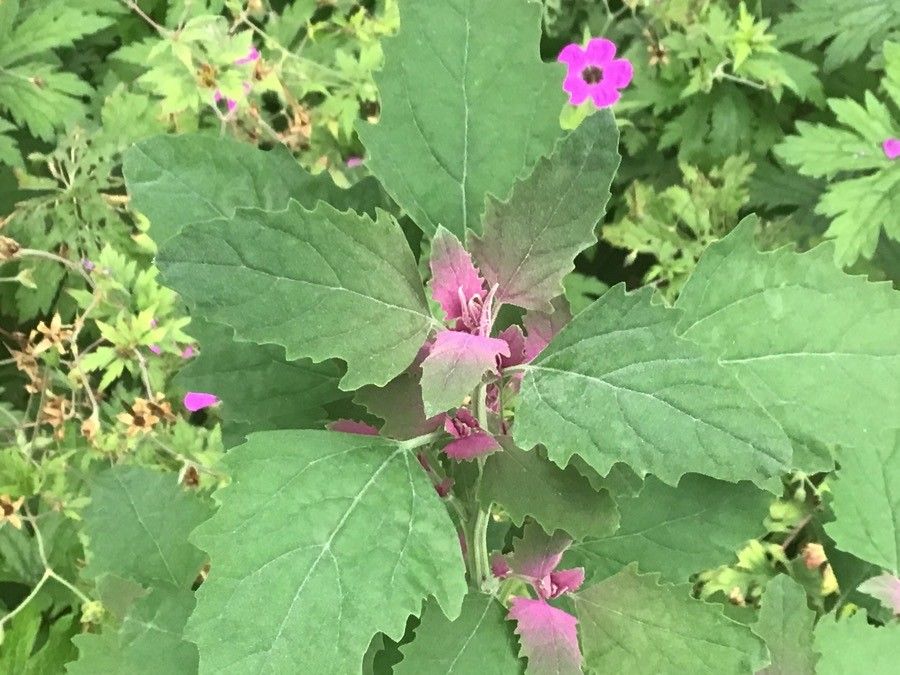
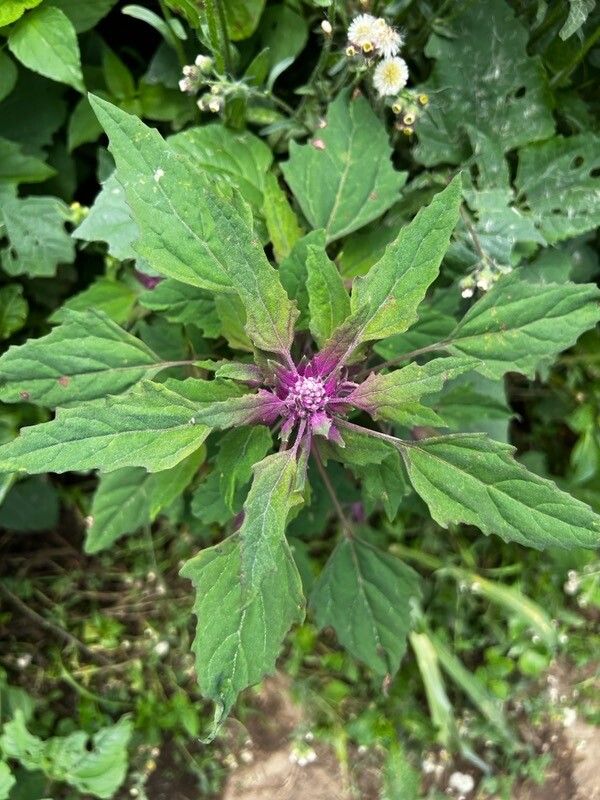
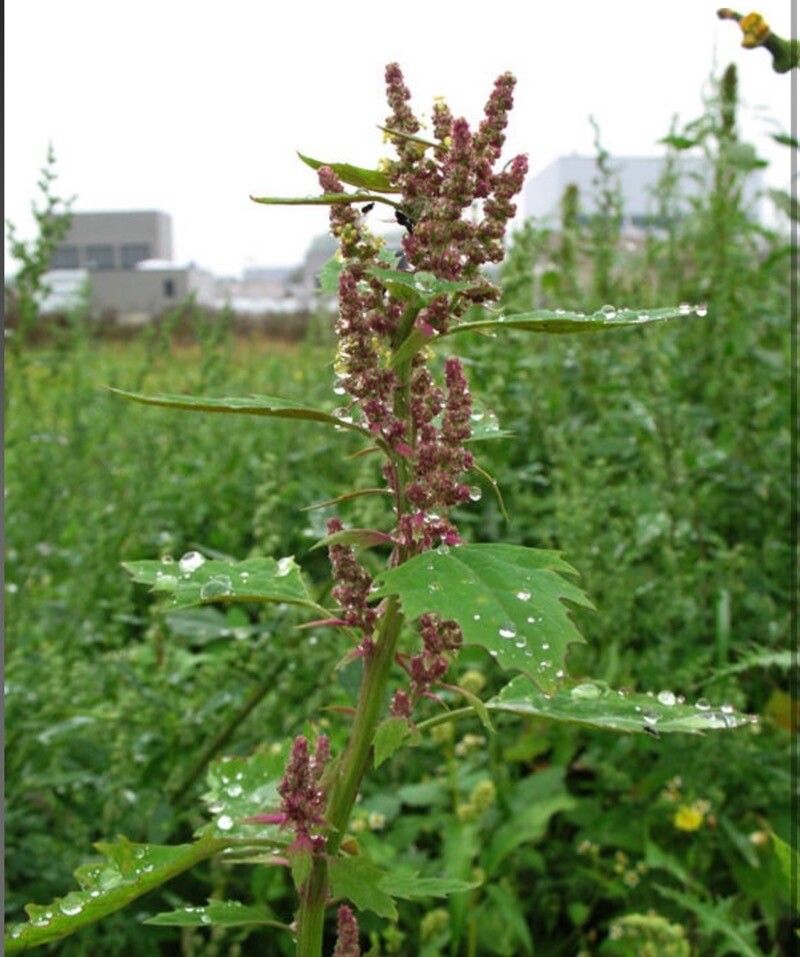
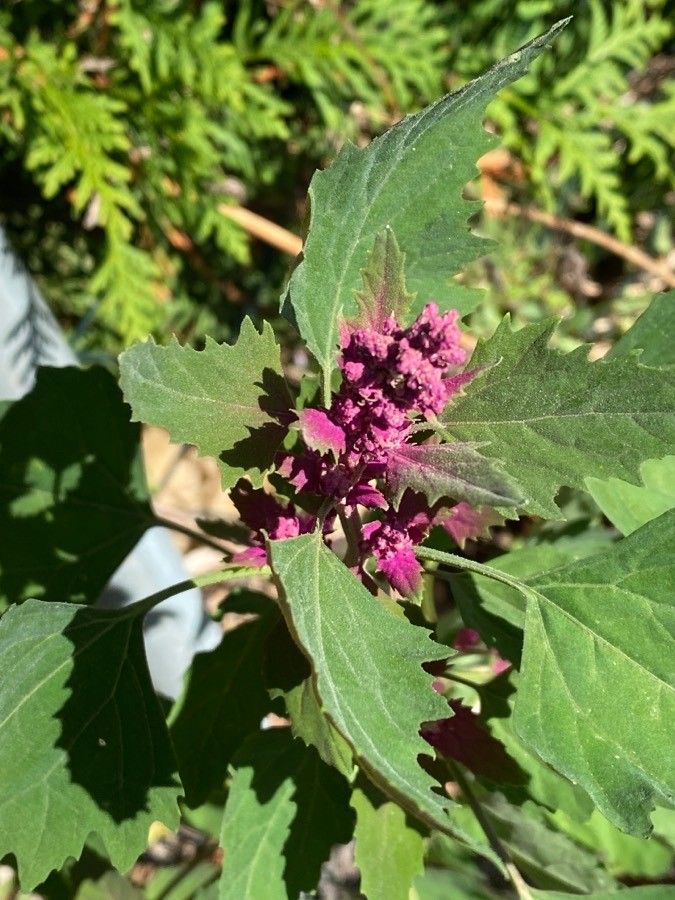
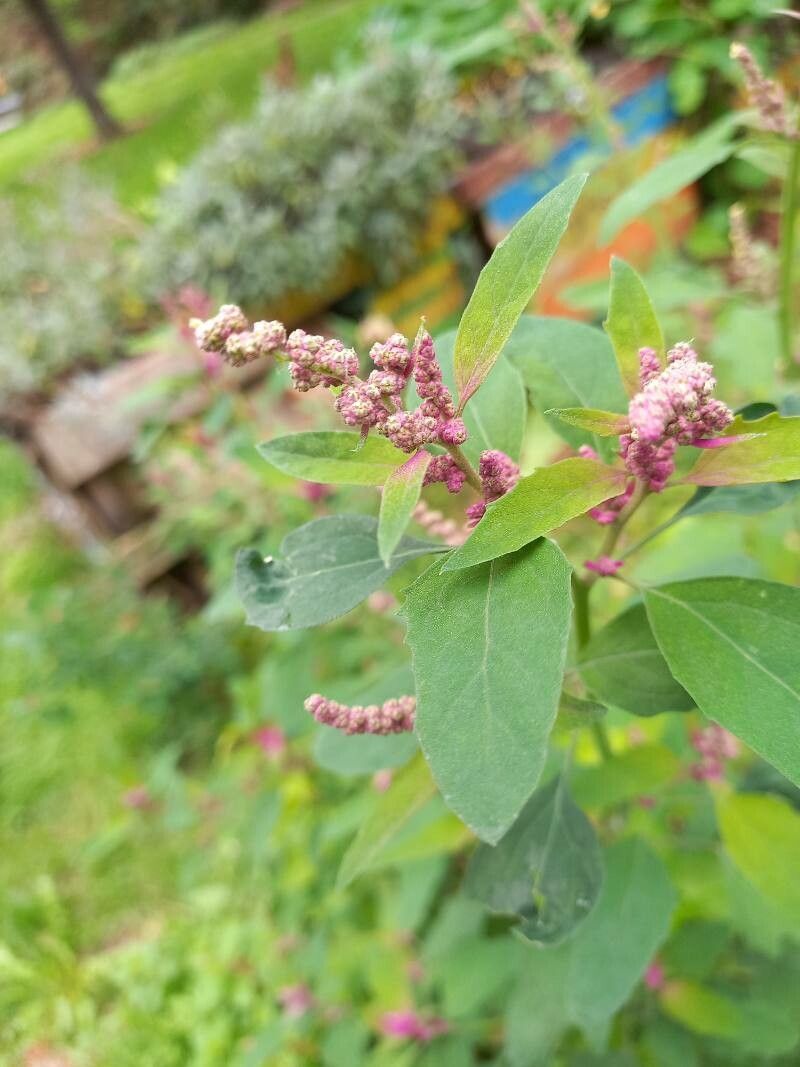
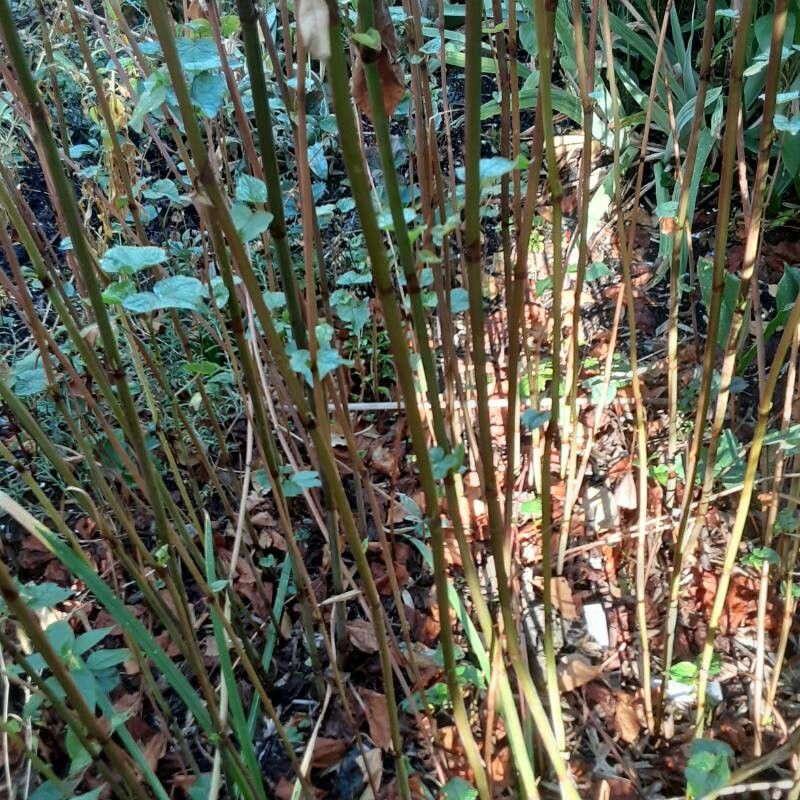
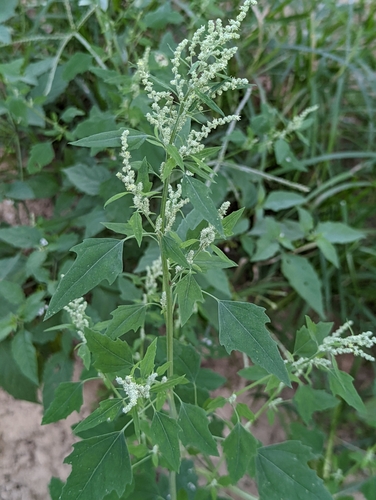
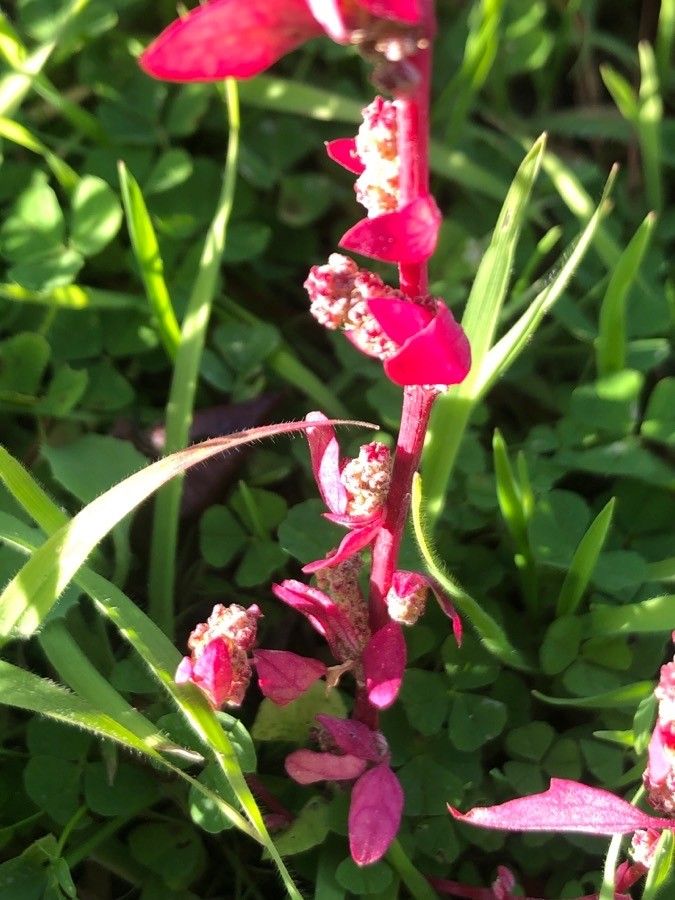
Chenopodium giganteum, commonly known as giant lambsquarters or tree spinach, is a large leafy plant in the Amaranthaceae family. Native to South America, it has been introduced and naturalized in many regions worldwide. This plant can grow up to 3 meters tall and has large, triangular leaves that are edible and often used in salads or cooked as a vegetable.
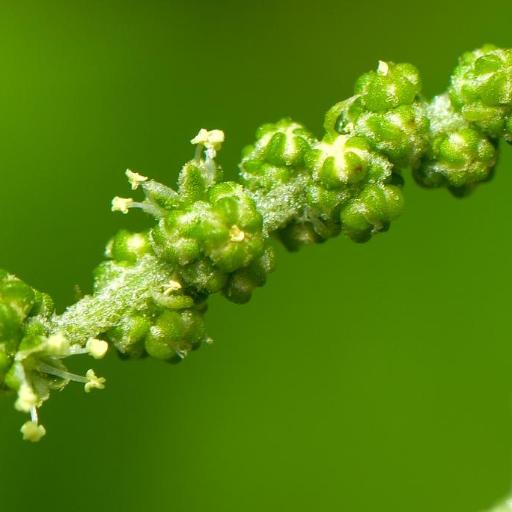
The leaves of Chenopodium giganteum are rich in vitamins A and C, calcium, iron, potassium, and magnesium. They have a mild, spinach-like flavor with a slightly sweet taste. The plant also produces small green flowers that develop into clusters of seeds.
Chenopodium giganteum is easy to grow and thrives in full sun or partial shade with well-drained soil. It can be propagated by seeds or cuttings during the growing season.
Beyond its culinary uses, Chenopodium giganteum has been used for medicinal purposes by indigenous people for centuries because of its anti-inflammatory properties. It has served as an herbal remedy for various ailments, including arthritis pain relief and digestive issues.
Overall, Chenopodium giganteum is an interesting addition to any garden due to its unique appearance and versatility for both culinary and medicinal purposes.
Tree spinach has moderate disease resistance but can be prone to conditions like leaf spot. Its vulnerability to insect pests varies with the variety, though most varieties are not highly resistant to pests. For care, tree spinach requires regular watering and fertilizing, and yellow leaves should be pruned frequently. It is important to manage pests and diseases when they occur and to harvest the plant promptly. Tree spinach is appropriate for people who can dedicate some time and energy to routine care.
How to keep Chenopodium Giganteum.
Light
Tree spinach thrives in full sun, though it can adjust to weaker light. Sunlight promotes vigorous growth and helps maintain the plant's health. Coming from a naturally sunny habitat, excessively low or excessive light can harm its growth and vitality.
Water
Tree spinach is adaptable to varying moisture levels and exhibits moderate drought tolerance. Once established, it requires consistent watering twice a week, with some dryness of the soil in between. Its growth naturally aligns with rainfall patterns, reducing the need for additional watering during wet seasons. This ensures lush foliage without over-saturating the roots.
Humidity
This plant will thrive in moderate humidity, which is probably the level in your home. However, misting it a few times a week can be very beneficial. Make sure the room has good ventilation.
Temperature
Tree spinach is native to warm environments and generally thrives at temperatures between 68 and 95 °F (20 to 35 ℃). In colder seasons, consider using heat lamps to maintain that ideal temperature.
Fertilizer
To achieve the best yield, Tree spinach requires frequent use of a balanced fertilizer, with a high concentration of nitrogen. Fertilizer should be applied prior to planting, during the planting, and when the seedlings reach a height of 2 inches (5.1 cm). The addition of compost or manure also ensures a constant supply of nutrients. Poor nutrient levels in the soil can lead to underdeveloped leaves and stems, unfavorable tastes, weak stems, and possibly a bitter flavor.
Pruning
Tree spinach is a fast-growing annual plant that benefits from early spring pruning. This helps maintain its shape and encourage growth. By regularly trimming long, spindly growth and removing damaged branches, you can improve the density of its foliage, increase air circulation, and reduce the risk of disease. These practices support healthy development and result in vibrant leaves.
Botanical profile.
- Plant Type
- Herb
- Life Cycle
- Annual, Biennial
- Genus
- Chenopodium
- Family
- Amaranthaceae
- Hardiness Zone
- 4-8
- Mature Height
- 2.44 m
- Mature Spread
- 91 cm
- Leaf Color
- Green, Red
- Leaf Type
- Semi-evergreen
- Flower Color
- Red, Green
- Flower Size
- 2.54 cm
- Bloom Time
- Mid summer, Late summer, Early fall
- Planting Time
- Spring, Summer, Autumn
- Harvest Time
- Early fall, Mid fall
- Native Area
- Russia, Nepal, India, Japan, Koppen, Iran, South Korea, China
Other names.
Reader questions.
How should I water my Tree spinach?
The Tree spinach has specific preferences for water quantity and how it is provided. It is important to use the proper watering technique to avoid damaging your tomatoes. The recommended method is to water the Tree spinach directly on the soil at a slow and gentle pace. Avoid pouring all the water at once or using overhead watering. It is important to water slowly but deeply to ensure the entire soil where the Tree spinach grows is adequately moist.
Why is it necessary to fertilize my Tree spinach?
Tree spinach needs adequate nutrients to produce delicious leaves and shoots and to ensure a bountiful harvest. If it is grown in nutrient-deficient soil, the leaves and stems may not grow properly and the flavors may be lacking compared to plants grown in ideal conditions. The stems may become thin and the taste may turn out bitter. If you are growing tree spinach in a container, it is even more important to fertilize because container plants have limited access to organic matter compared to those grown in the ground. To supplement your tree spinach in a pot, use a balanced liquid fertilizer.
What are the sunlight requirements for Tree spinach?
Tree spinach, or Chenopodium giganteum, thrives best under full sun conditions, necessitating more than 6 hours of sunlight daily for optimal growth. However, it can also adapt to partial sun conditions, which entails receiving about 3 to 6 hours of sunlight per day. Notably, the plant's well-being is significantly influenced by the balance of light and shade in its environment. It's important to observe the movement of sunlight in your garden to select the ideal spots that provide this balance, ensuring the plant's happiness and growth.
What is tree spinach's native environment and ideal temperature range for growth?
Tree spinach, scientifically known as Chenopodium giganteum, thrives in warm environments. It prefers temperatures between 68 to 95°F (20 to 35°C) for optimal growth. When cultivating tree spinach in colder seasons, it is worthwhile to use heat lamps to ensure the temperature stays within this ideal range to support healthy plant development.
What should I do if I give my Tree spinach too much or too little water?
If you have overwatered your Tree spinach and are worried about the risk of disease, take immediate action. The best way to handle an overwatered Tree spinach is to remove it from its current spot. Let the roots dry a bit before planting it in a new location with well-draining soil. If you grow it in a pot, consider transferring it to a pot with more or bigger drainage holes. On the other hand, if you have underwatered your plant, simply increase the frequency of watering.
When should I fertilize my Tree spinach for the best results?
To properly nourish your Tree spinach throughout the growing season, there are a few key points to consider. First, when preparing the soil for planting, it's best to incorporate nutrient-rich organic material like compost or manure at least 2 to 8 weeks prior to planting. This initial application sets a solid foundation. Next, when it's time to actually plant the seedlings, repeat the process by amending the soil with the same organic material. This ensures the newly planted Tree spinach will have the necessary nutrients to thrive. After the seedlings emerge and grow to a height of around 2 inches, it's time for the next round of fertilizer. You can continue to regularly feed your Tree spinach with either rich organic matter or a commercial fertilizer until it's time for harvest. A good guideline for fertilizing frequency is every two to three weeks. To provide a continuous supply of nutrients, it's recommended to also add a layer of compost or manure around the plant. This additional step helps sustain the health of your Tree spinach.
How does sun exposure affect tree spinach, and what are the essentials for its growth?
Sun exposure plays a crucial role in the growth and health of tree spinach. Originating from environments where sunlight is abundant, this plant flourishes when exposed to the full strength of the sun, as it encourages robust growth. However, it can still adapt to conditions of lesser light. If the plant receives too much or too little sunlight, it could negatively impact its growth and vitality. For indoor plants, artificial lighting may serve as a vital supplement to natural sunlight, especially during winter or in less sunny spaces. Using artificial lights, such as LED lights tailored to provide specific wavelengths your plant needs, can promote faster and healthier growth. Full sun plants typically require 30-50W/sq ft of artificial light, partial sun plants need 20-30W/sq ft, and full shade plants need 10-20W/sq ft.
How should tree spinach be cared for during winter to prevent damage?
During the winter months, it's crucial to maintain a temperature above 20°C (68°F) for tree spinach to avoid cold damage. The plant should not be exposed to temperatures below the freezing point, as this can cause harm. When outdoor temperatures drop to around -5°C (25°F) or lower, it's advisable to bring tree spinach indoors or provide it with protection. This can be achieved by setting up a temporary greenhouse or using materials such as plastic film or fabric to insulate the plant.
How often should I water my Tree spinach plant?
Tree spinach needs a lot of water during its growing season. To meet this high water requirement, it is important to water it frequently. In the beginning of the growing season, watering should occur about once or twice per week. As the season goes on, watering should be done more often, potentially even twice a day during hot summer months. Once the Tree spinach has completed its main growth phases, watering can be reduced to about once per week until the end of the growing season.
When is the best time to not use fertilizer on my Tree spinach?
To ensure optimal growth of Tree spinach, it is important to consider the moisture in the soil. Avoid fertilizing this plant during dry soil conditions as it requires ample water for proper nutrient absorption. It is also advisable to refrain from using chemical fertilizers outside of the growing season, as this could result in an excess that the plant cannot utilize. Moreover, excessive chemical fertilizer can contribute to groundwater contamination and soil pollution. Be mindful to apply fertilizers only during the active growing periods.
What are the symptoms of insufficient sunlight for tree spinach?
When tree spinach lacks sufficient sunlight, especially when grown indoors, it may display subtle symptoms indicative of light deficiency. These include smaller new leaves compared to older ones, leggy or sparse growth, accelerated leaf drop, halted new growth, pale or irregularly colored new leaves, and several others such as chlorosis, sunscald, leaf curling, wilting, and leaf scorching. These symptoms reflect the plant's struggle under inadequate light conditions and its attempts to conserve resources or protect itself from excessive sunlight.
What are the symptoms of tree spinach suffering from low temperatures and how can it be treated?
Tree spinach displays a moderate tolerance to low temperatures but thrives within a range of 20°C to 35°C. Exposure to temperatures below 0°C can lead to darkening of the leaves. If the temperature drops below -30°C, the plant may exhibit symptoms like water-soaked necrosis, wilting, and a gradual change of leaf color to brown, indicating severe cold damage. The treatment involves trimming away frost-damaged parts, immediately moving the plant to a warm environment or setting up a makeshift greenhouse, and ensuring it receives ample sunlight, ideally near a south-facing window. Supplemental lighting can be used if natural light is insufficient.