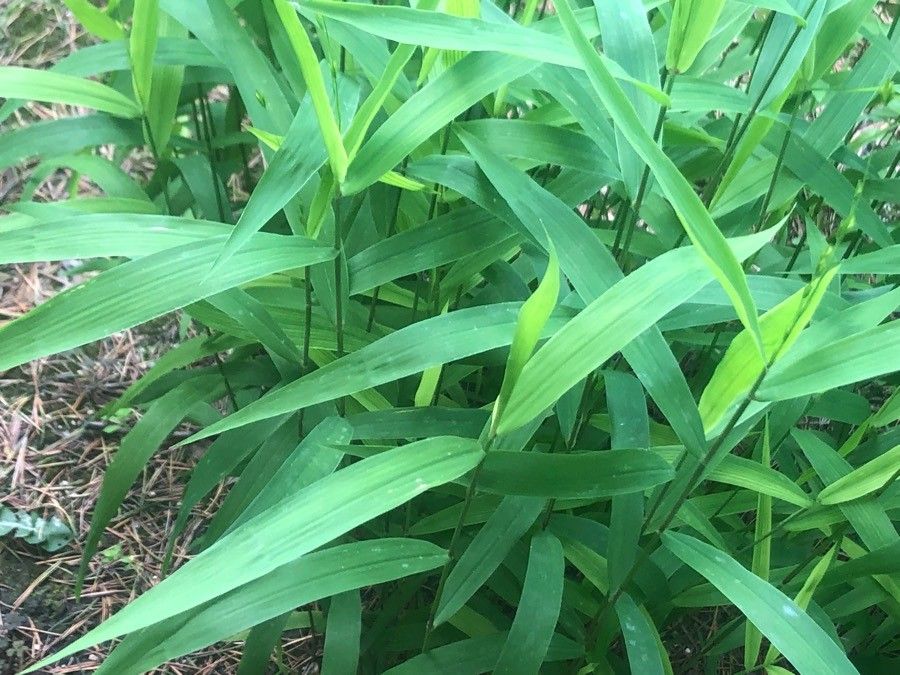
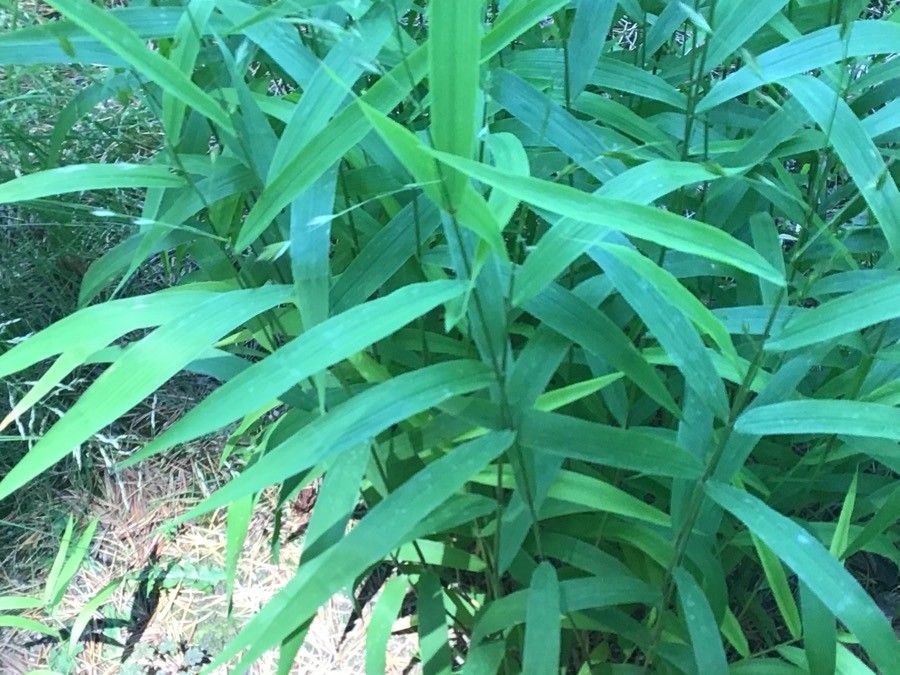
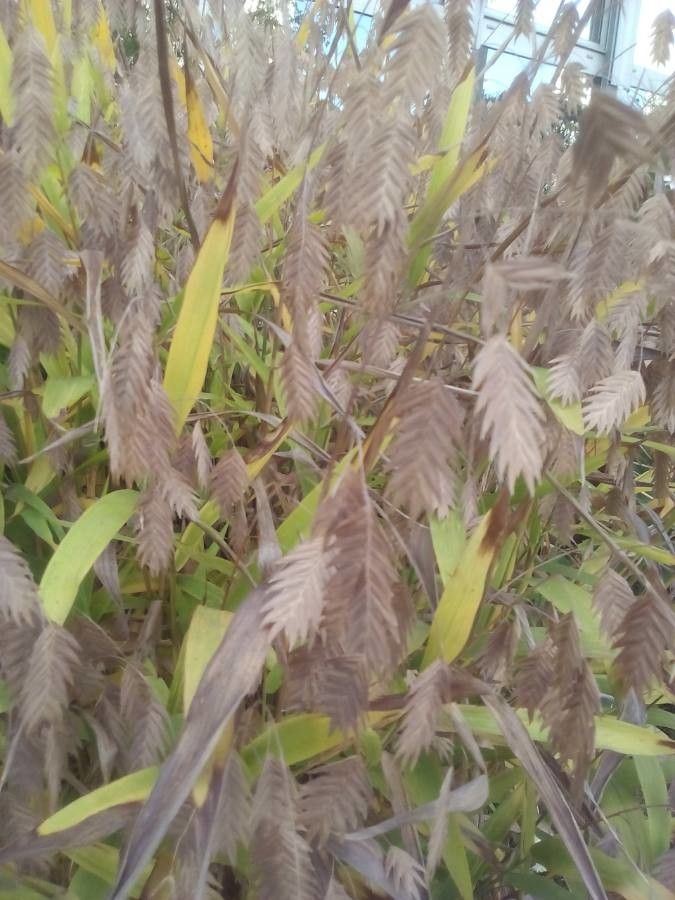
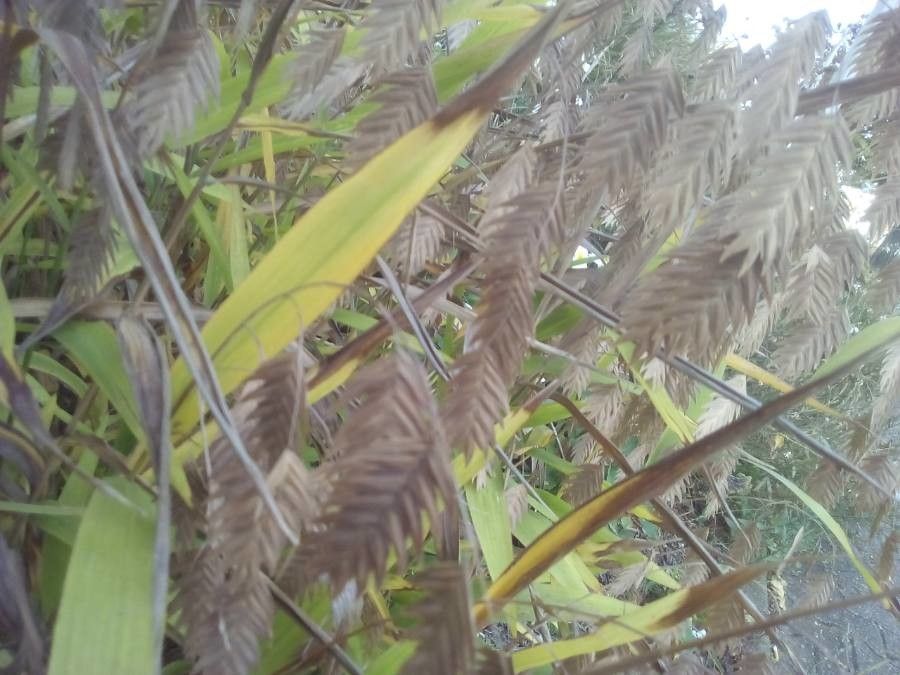
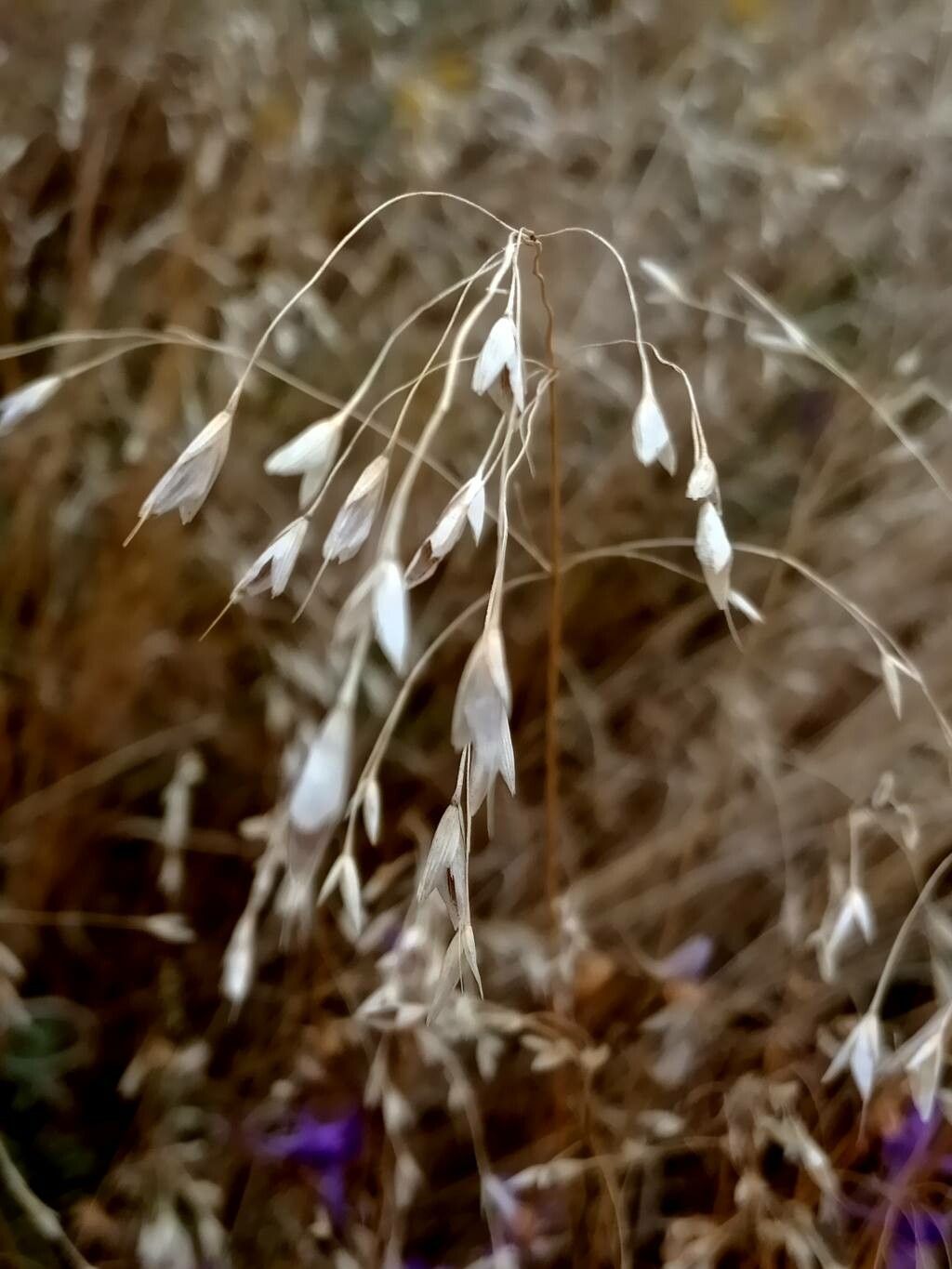
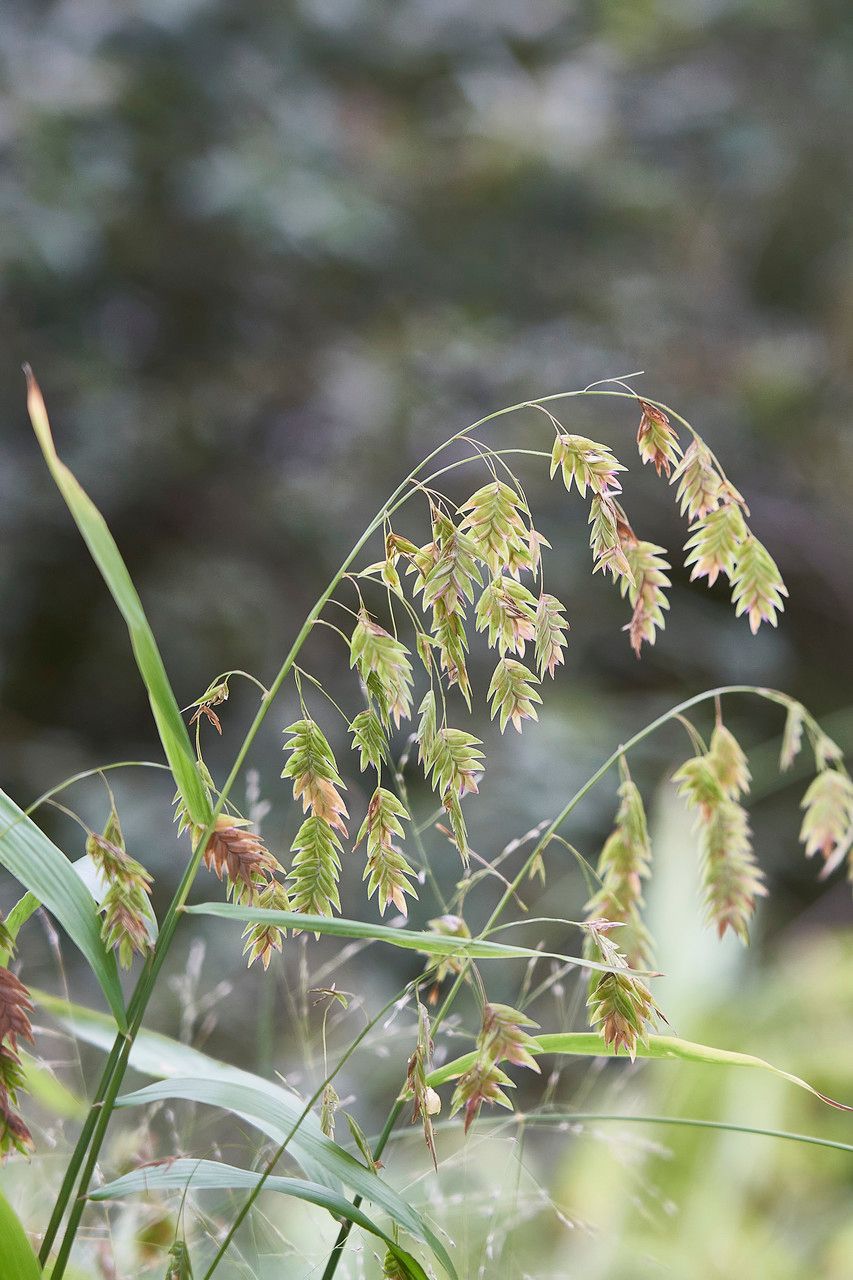
Chasmanthium latifolium, commonly known as river oats or inland sea oats, is a perennial grass species native to the eastern and central regions of North America. This member of the Poaceae family typically reaches a height and spread of 3 to 5 feet. Its green foliage turns a distinctive bronze color in the fall, and it produces drooping seed heads resembling flattened oat spikes in late summer. River oats are adaptable to various soil types but thrive best in moist, well-drained soils. Although they are tolerant of shade, they perform optimally in partial to full sun conditions. Additionally, this plant is deer-resistant and well-suited for ornamental landscaping. Beyond its aesthetic appeal, Chasmanthium latifolium holds ecological significance by providing food for birds and small mammals. The plant's extensive root system also helps prevent soil erosion along riverbanks. In summary, Chasmanthium latifolium is a visually appealing ornamental grass that offers ecological benefits and is easy to care for in most garden settings.
Northern sea oats is relatively disease-resistant and is usually not susceptible to diseases. Regarding care, this plant is fairly low-maintenance. When grown outdoors it needs minimal watering, and larger plants generally do not require pruning. Smaller plants, however, should be pruned after they have finished blooming. Northern sea oats are suitable for anyone with an outdoor area, such as a garden or deck, and do not require much gardening experience.
How to keep Chasmanthium Latifolium.
Light
Northern sea oats favors locations where the sun is not constantly at full intensity, although it can tolerate higher levels of sunlight. Moderate light exposure supports healthy growth at every stage. In settings that mimic its native habitat, this appropriate light will prevent leaves from yellowing or the plant from developing weak structure.
Water
Northern sea oats thrive in moist, forested floodplains and require regular watering, about twice a week. While they can tolerate short periods of drought, they prefer higher humidity, making them a resilient choice for a houseplant. This ornamental grass sways gracefully in the breeze, capturing raindrops on its shimmering seed heads, which adds to its visual appeal.
Humidity
This plant needs special care because it loves high humidity levels of 60-80% or more. The best way to achieve this is by placing a humidifier near the plant. Daily misting is also essential! Make sure the room has good ventilation.
Temperature
Northern sea oats is native to temperate environments and adapts to a wide span of temperatures. It prefers temperatures between 32 and 90 °F (0 to 32 °C), but can endure colder winter conditions provided the soil is not overly wet. For best growth and flowering in hot summers, keep the soil sufficiently moist and shield the plant from direct sunlight.
Fertilizer
Northern sea oats require extra nutrients to encourage healthy new growth. In spring, placing compost around the plant’s base will effectively supply the necessary nutrition. Fertilization promotes vigorous growth and helps the plant resist diseases and pests.
Pot & Repot
When repotting Northern sea oats, select a pot 1–2 inches (2.5–5.1 cm) larger with good drainage. Use a well-draining potting mix. Repot in spring or fall, making sure the root ball is slightly lower than the rim of the flower pot. Water thoroughly after repotting and place in a warm spot with indirect sunlight.
Botanical profile.
- Plant Type
- Grass
- Life Cycle
- Perennial
- Genus
- Chasmanthium
- Family
- Poaceae
- Hardiness Zone
- 3-8
- Mature Height
- 91 cm
- Mature Spread
- 30 cm to 46 cm
- Leaf Color
- Green, Yellow
- Leaf Type
- Deciduous
- Flower Color
- Green, Brown, Pink, Purple, Black
- Flower Size
- 2.54 cm to 5.08 cm
- Bloom Time
- Early summer, Mid summer
- Planting Time
- Spring, Summer
- Harvest Time
- Mid summer, Late summer
- Native Area
- Mexico
Other names.
Reader questions.
What should I do if I give my Northern sea oats too much or too little water?
Proper watering is crucial for the health and performance of this beautiful ornamental grass. When planted in the ground, watering issues can be resolved. However, in a container, both overwatering and underwatering can quickly lead to the demise of Northern sea oats. Insufficient water can cause the grass to stop growing, resulting in drooping leaves, weak seed head production, and browned leaves. Conversely, overwatering can cause yellow leaves with brown tips. If you suspect that your Northern sea oats have been improperly watered, the first step is to determine whether it has been given too much or too little water. If it has been overwatered, immediately cease watering and allow time for heavy soils to dry out. Once new growth appears, test the soil moisture and decide whether additional watering is needed. If the grass has been underwatered, simply give it a deep drink and observe if it regains vitality. It is important to note that a long, deep watering is preferable to frequent, shallow waterings. This encourages the development of deep roots, making the grass more resistant to drought and water-related issues.
Why should I put fertilizer on my Northern sea oats?
Fertilizing Northern sea oats is important because it provides essential nutrients for healthy new growth, while also supporting the health of existing growth and aiding in disease and pest resistance.
What are the sunlight requirements for Northern sea oats?
Northern sea oats require moderate sunlight exposure at all stages of their growth to maintain health. They are lovers of environments where the sun does not shine with full intensity but can endure a larger amount of sunlight if necessary. This plant thrives in partial sun conditions, which means about 3-6 hours of sunlight per day, but it can also handle full sun conditions, which is above 6 hours of sunlight. It's important to watch how sunlight moves through your garden to select spots that offer the ideal balance of light and shade, ensuring your plants' well-being.
What is the native environment and temperature tolerance of Northern Sea Oats?
Northern sea oats, known botanically as Chasmanthium latifolium, thrive in a temperate environment. They adapt well to a broad temperature spectrum, preferring a range between 32°F to 90°F (0°C to 32°C). Despite this, they can endure lower temperatures in the winter, provided the soil is not overly moist. To maintain health and encourage flowering, especially in the warmer months, it's crucial to ensure the soil stays moist and to shield the plants from direct sunlight. Given their strong resistance to cold, Northern sea oats don't typically require special frost protection in winter. However, in regions where temperatures might fall below -35°C (-31°F), cold protection measures, such as covering the plants with soil or straw, become necessary. Additionally, watering the plants abundantly before the first freeze of autumn will help keep the soil moist, aiding the plants in avoiding drought and water scarcity during the colder months.
How frequently should I water my Northern sea oats?
The watering needs of Northern sea oats depend on where it is planted. Generally, watering this grass every week is recommended. In hot climates, watering once or twice a week in the summer might be necessary. In moderate climates, watering once every seven days or more may be sufficient. Grass in containers usually needs more frequent watering than grasses in the ground. However, the location also matters for this particular species, as it can thrive in full sun or part shade. Shaded grasses require less frequent watering compared to in-ground grasses. To determine when to water Northern sea oats, check if the soil is dry by pressing your finger a couple of inches into it. For potted grass, you can weigh the grass with a portable scale or simply feel if the pot is light from lack of water. When the roots lack sufficient water, the grass blades may appear folded and thinner than usual. Despite its drought tolerance, regular, deep waterings will result in a beautiful color. In its natural habitat of open scrubland, Northern sea oats is exposed to extreme heat, bright sun, and intermittent rain. Although this grass is drought resistant, it still requires care and attention. For optimal growth, consistent watering is recommended. When newly planted, Northern sea oats needs more frequent watering until it establishes deep roots. Potted sea oats dry out quickly, particularly if exposed to direct sun for a significant part of the day, so check the soil every 3 to 4 days and water only when it feels dry. In-ground sea oats generally require less watering, but it depends on the type of soil. Clay soil retains moisture below the surface, so it may feel dry on top while still containing enough moisture. Sandy soils that drain quickly will need more frequent watering.
When should I fertilize my Northern sea oats?
To ensure the survival of Northern sea oats in your garden, it is important to know when to fertilize. This plant does not require much nutrients and does not need additional feeding when it is dying back. During the growing season, it is not advised to apply diluted fertilizer. Instead, it is recommended to use mulch or compost around the base of the plant.
How can artificial lighting be used for Northern sea oats?
When natural sunlight is insufficient, especially during winter or in less sunny spaces, artificial lighting can support the growth of Northern sea oats indoors. LED lights are recommended as they can be customized to provide specific wavelengths of light needed by the plants. For full sun plants, 30-50W/sq ft of artificial light is needed; partial sun plants require 20-30W/sq ft; and full shade plants need 10-20W/sq ft. The artificial light source should be placed 12-36 inches above the plant to mimic natural sunlight and provided for 8-12 hours per day to emulate the length of natural daylight hours.
How does cold temperature affect Northern Sea Oats and what are the solutions?
Northern sea oats exhibit a high tolerance to cold temperatures, optimally growing when the temperature remains above 0°C (32°F). However, they should ideally not be exposed to temperatures below -30°C (-22°F). Exposure to harsher conditions, specifically temperatures falling below -35°C (-31°F), doesn't typically result in immediate visible damage during the winter, yet it might lead to reduced sprouting or even a complete lack of sprouting come spring. The recommended action in such cases is to wait until the spring and then remove any parts of the plant that have failed to sprout, facilitating healthy growth in the new season.
What do I need to be cautious of when watering my Northern sea oats in different seasons, climates, or periods of growth?
You can easily determine if you are watering your grass enough by observing its growth rate. Northern sea oats, for example, tend to double in size within a year during the hottest months. Therefore, if the weather is hot but the grass is not growing vigorously, it may be necessary to adjust your watering schedule. In winter, you can probably get away with watering just once a month, but it is still important to check the soil for moisture. Generally, during the warmest months when the grass is actively growing, it will require more water. However, during winter and cooler months, the need for water will significantly decrease. The key point to remember with Northern sea oats is that the soil should always be allowed to completely dry out before adding water.
When should I not put fertilizer on my Northern sea oats?
If you're not using packaged fertilizers, there's no need to be concerned about when to stop feeding Northern sea oats. Adding compost or mulch in the spring is sufficient for the plant's happiness all year round. No need to worry about mulching or composting during the winter when the plant is dormant.
What are the symptoms of improper lighting for Northern sea oats?
When Northern sea oats are grown indoors with insufficient light, they may exhibit symptoms such as smaller new leaves, leggy or sparse growth, faster leaf drop, slower or no new growth, lighter-colored new leaves, chlorosis (leaves turning yellow), sunscald, leaf curling, wilting, and leaf scorching. These symptoms indicate a deficiency or excess of light, affecting the plant's ability to photosynthesize, maintain hydration, and its overall health.
What impact does high temperature have on Northern Sea Oats and what solutions can mitigate these effects?
In the summertime, keeping Northern sea oats below 32°C (90°F) is advisable for their well-being. Should temperatures soar above 35°C (95°F), several issues can arise, including leaves becoming lighter, more prone to curling, suffering from sunburn, and in extreme cases, the plants might wilt and dry out entirely. To address these challenges, it’s recommended to trim away the sun-damaged and dried parts of the plant. Relocating it to a shaded area during the intense midday and afternoon sun or covering it with a shade cloth can also help protect the plant. Additionally, watering the plants during the cooler morning and evening hours can help keep the soil adequately moist, ensuring the health of the Northern sea oats.