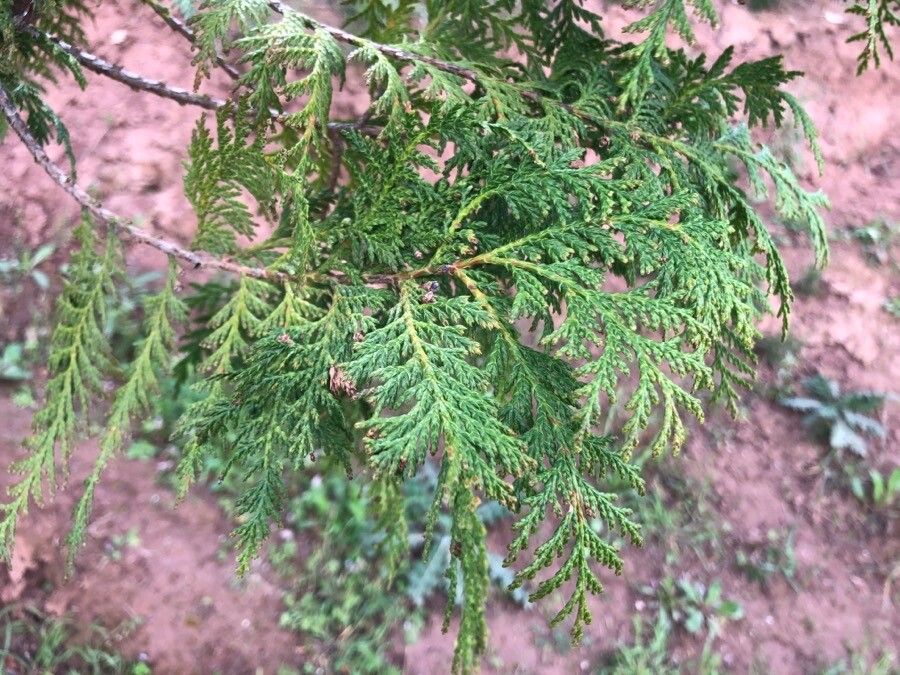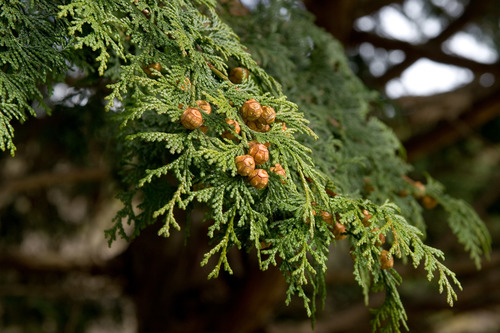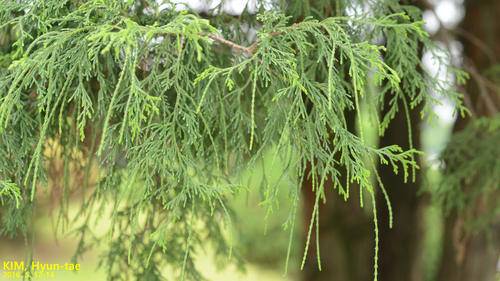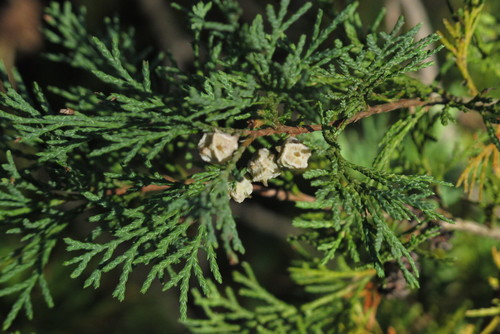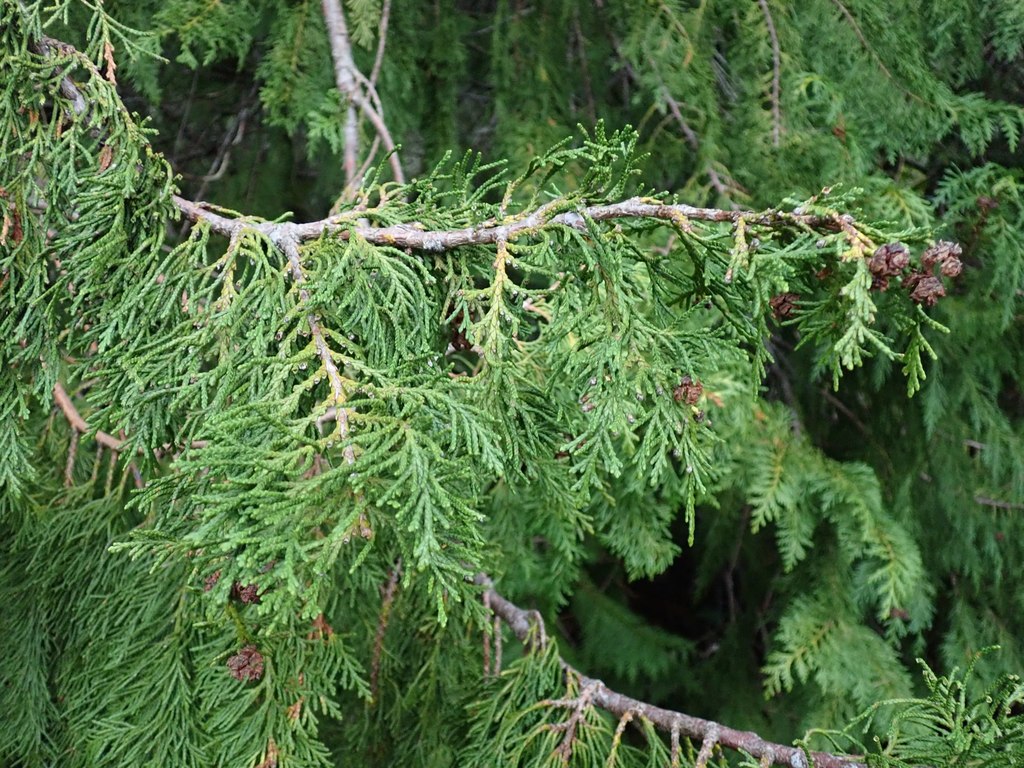
Chamaecyparis lawsoniana, commonly known as Lawson's cypress or Port Orford cedar, is a coniferous evergreen tree native to the Pacific Northwest region of North America. It is a popular ornamental tree because of its attractive foliage and conical shape. The leaves are scale-like, arranged in flattened sprays, with a blue-green color on the upper surface and white stomatal bands on the lower surface. The bark is reddish-brown and features deep furrows that become more pronounced as the tree matures.
In its natural habitat, Lawson's cypress can grow up to 70 feet tall, but it typically reaches 30-40 feet in cultivation. This tree prefers moist, well-drained soil and partial shade but can tolerate full sun if it receives adequate water. The wood of Lawson's cypress is highly valued for its durability and resistance to decay, making it popular for use in construction projects such as shingles and fence posts.
However, overharvesting has raised conservation concerns for this species in some areas of its range, where it has been heavily exploited for timber production over many years.
The aromatic wood is lightweight yet incredibly strong, making it ideal for constructing shrines and temples in Asia. Its exceptionally fine grain and excellent acoustics also make it a popular choice for crafting guitars and other stringed instruments. FUN FACT · FROM THE LIBRARY
Lawson's cypress is fairly disease-resistant and generally does not tend to get illnesses. In terms of care, the plant is relatively low-maintenance. When grown outdoors it needs only minimal watering, and larger specimens usually do not require pruning. Smaller plants, however, should be pruned after they have finished blooming. Lawson's cypress is suitable for anyone with an outdoor space, such as a garden or deck, and does not demand a lot of gardening experience.
How to keep Chamaecyparis Lawsoniana.
Light
Lawson's cypress grows best in abundant sunlight, though it can adapt to moderate light levels as well. Native to well-lit regions, it prefers a bright site for strong growth. Too little sun may restrict its development, while excessive exposure can stress the plant.
Water
Lawson's cypress comes from the moist forests of North America and thrives in environments with consistent humidity. It needs to be watered every 1 to 2 weeks, with the soil allowed to dry out slightly between waterings. As an evergreen, it is crucial to provide adequate water during its active growth period to maintain optimal health.
Humidity
This plant needs special care because it loves high humidity levels of 60-80% or more. The best way to achieve this is by placing a humidifier near the plant. Daily misting is also essential! Make sure the room has good ventilation.
Temperature
Where it naturally grows, lawson's cypress occurs in regions with cool temperatures of about 5 to 20 ℃ (41 to 68 ℉). It can, however, withstand warmer summer temperatures up to 35 ℃ (95 ℉). To cope with seasonal changes, water the plant deeply during drought periods and avoid heavy pruning in the hotter months.
Fertilizer
Lawson's cypress has particular nutrient needs and does not require heavy fertilization. Spring is the best time to fertilize for optimal growth. Providing nutrients improves its health, increases its resistance to pests and diseases, and helps preserve its long lifespan.
Pruning
Lawson's cypress is a coniferous evergreen tree with a pyramidal shape. To protect new growth, it is best to prune the tree from early to late winter. Regularly remove any dead branches and thin out crowded areas to improve air circulation. Light, consistent pruning promotes healthy growth and helps maintain a tidy appearance.
Pot & Repot
When repotting Lawson's cypress, choose a pot 1-2 inches (2.5–5.1 cm) larger with ample drainage. Use a well-draining potting mix. Repot in spring or fall, making sure the root ball sits slightly below the rim of the flower pot. Water thoroughly after repotting and place it in a warm spot with indirect sunlight.
Botanical profile.
- Plant Type
- Tree
- Life Cycle
- Perennial
- Genus
- Chamaecyparis
- Family
- Cupressaceae
- Hardiness Zone
- 5-10
- Mature Height
- 14.94 m to 60.05 m
- Mature Spread
- 9.14 m to 17.98 m
- Leaf Color
- Green, Blue, Yellow
- Leaf Type
- Evergreen
- Flower Color
- Green, Yellow, Purple, Red, Black, Violet
- Flower Size
- 0.25 cm to 0.51 cm
- Bloom Time
- Late spring, Early summer, Mid summer
- Planting Time
- Spring, Autumn
- Harvest Time
- Mid summer, Late summer, Early fall
- Native Area
- Japan
Other names.
Reader questions.
How should I water my Lawson's cypress plant?
Watering your Lawson's cypress is a simple task. To water the tree, you can use a garden hose and slowly soak the soil. This method is best for mature trees that require a significant amount of water. However, if you have smaller trees, you can use a watering can or another smaller tool. It is important to avoid overhead watering, especially for younger trees, as excess moisture on the leaves can cause disease.
Why should I put fertilizer on my Lawson's cypress tree?
To ensure healthy growth of Lawson's cypress, it is recommended to fertilize in the spring. It's important to support this plant, considering its long lifespan. Adding nutrients to the soil not only improves its health, but also helps the plant resist common pests and diseases that can stunt growth or shorten its lifespan.
What are the sunlight requirements for Lawson's cypress?
Lawson's cypress requires abundant sunlight to thrive optimally, being native to areas with ample light. It prefers locations that offer a generous amount of sunlight; however, it can still adapt to moderate sunlight exposure. Insufficient sunlight may hinder its growth, while too much direct exposure can stress the plant. It's important to note that the quality of sunlight profoundly influences the health and development of Lawson's cypress, emphasizing the need to find the perfect balance of light for robust growth.
What are the ideal temperature conditions for Lawson's Cypress?
Lawson's Cypress thrives in its native environment with cool temperatures, ideally between 5 to 20 °C (41 to 68 °F), but it can also endure warmer summer temperatures up to 35 °C (95 °F). The plant is cold-resistant and does not usually require special frost protection measures during winter. However, if temperatures are expected to drop significantly below its cold tolerance threshold, it is important to provide protection by wrapping the trunk and branches with insulating materials. Additionally, ensuring the soil is moist before the first freeze can help prevent drought stress in winter and early spring.
What do I do if I give my Lawson's cypress too much or too little water?
Overwatering your Lawson's cypress can be caused by poor soils that do not drain water effectively. If this happens, your plant may start to decline. To solve this, you can improve the soil's drainage by amending it or move your plant to a better location. If your Lawson's cypress is potted, you may need to repot it with looser soil and a container that allows for better drainage. If your plant is overwatered, it can also be prone to diseases, so try to treat them as soon as possible. On the other hand, if your Lawson's cypress is underwatered, you can simply water it more frequently to help it recover. To determine if you have overwatered your plant, check the foliage, particularly the new growth. If the new growth is discolored or easily breaks, it's a clear sign of too much moisture. Additionally, if you notice standing water or slow drainage in the growing area, the soil may be too moist. Underwatered Lawson's cypress trees will have foliage symptoms such as sparse and brown leaves. It's important to consider recent heavy rainfalls or consistently high temperatures in order to make the right judgment about the plant's condition.
When should I fertilize my Lawson's cypress?
Lawson's cypress is unique because it doesn't need a lot of extra nutrients, unlike regular garden plants. The growing medium may not always provide enough nutrients for healthy growth. To fertilize Lawson's cypress, the ideal time is in spring before new growth starts to show.
How can artificial lighting benefit indoor plants?
Artificial lighting plays a significant role in the growth of indoor plants, especially when natural sunlight is inadequate. It promotes faster, healthier growth by providing the necessary light spectrum. LED lights are recommended due to their ability to offer specific wavelengths needed by plants. The intensity of artificial lighting should be adjusted according to the plant's needs: full sun plants require 30-50W/sq ft, partial sun plants need 20-30W/sq ft, and full shade plants require 10-20W/sq ft. Proper placement is crucial, with the light source being 12-36 inches away from the plant to simulate natural sunlight. Duration is also important, with most plants needing 8-12 hours of light daily.
How should I care for Lawson's Cypress in varying temperatures?
In periods of drought or high temperatures, water Lawson's Cypress deeply to prevent drought stress. Avoid heavy pruning during hot months, as the plant can become more susceptible to damage. During cold winters, especially if temperatures fall below the plant's cold tolerance limit, wrap the trunk and branches with non-woven fabric or cloth for protection, and ensure the ground is well-watered before the first freeze to help the soil maintain moisture. If there are any changes in condition due to extreme temperatures, such as brittle and dry branches after cold periods or lighter-colored and sunburned leaves after hot periods, prune away the damaged parts to encourage healthy growth.
How frequently should I moisten my Lawson's cypress plant?
A mature Lawson's cypress is highly drought tolerant and can survive with only rainfall. During the hottest months, watering once a week may be necessary, but during other seasons, watering is not likely needed. The only exception is for newly planted trees, which should be watered regularly to establish roots. However, it's crucial to remember that standing water is not tolerated by Lawson's cypress. So, it's better to avoid overwatering and err on the side of not watering at all if unsure.
When is the best time to not fertilize my Lawson's cypress?
Lawson's cypress is a plant that doesn't need a lot of fertilizer. Unlike other plants that benefit from monthly or weekly fertilization, too much fertilizer can actually be harmful to Lawson's cypress and cause it to die back. It's best to apply fertilizer only in the spring and avoid using it during the summer, fall, and winter seasons. Additionally, during these seasons do not add any organic matter to the soil.
What are some symptoms of poor lighting conditions in Lawson's cypress?
Lawson's cypress may show several symptoms when exposed to poor lighting conditions, including smaller new leaves, sparse and leggy growth, faster leaf drop, slower or no new growth, lighter-colored new leaves, chlorosis, sunscald, leaf curling, wilting, and leaf scorching. These symptoms can weaken the plant, affecting its overall health and appearance. It's crucial to monitor these signs and adjust the plant's exposure to sunlight accordingly to ensure its well-being.
How often should I water my Lawson's cypress?
During the height of summer, your Lawson's cypress will need to be watered. Normally, giving it about one inch of water per week is sufficient. However, this may vary if there has been significant rainfall. If it has rained one inch or more that week, you won't need to water your Lawson's cypress. Keep in mind that newly planted Lawson's cypress will require more water during the establishment period. Generally, this means watering once every one to two weeks for the first few growing seasons.