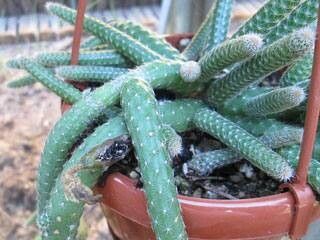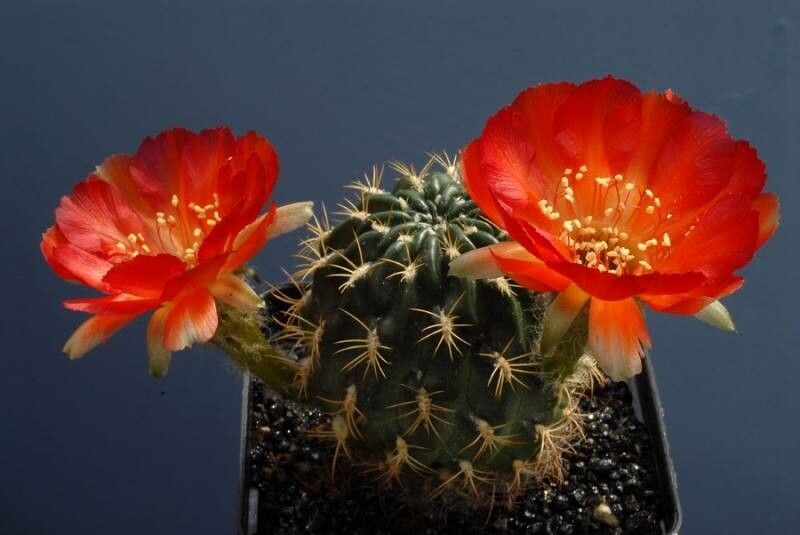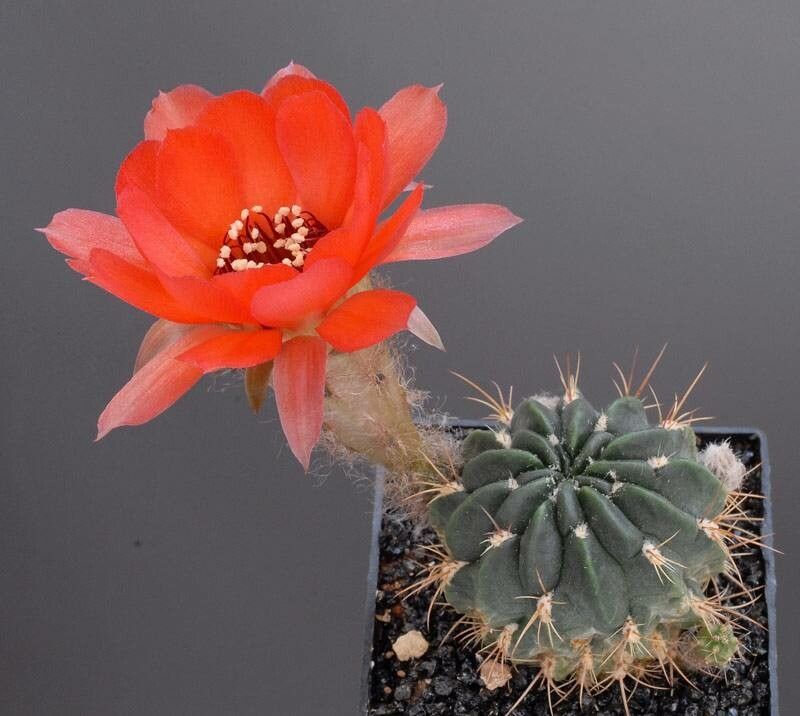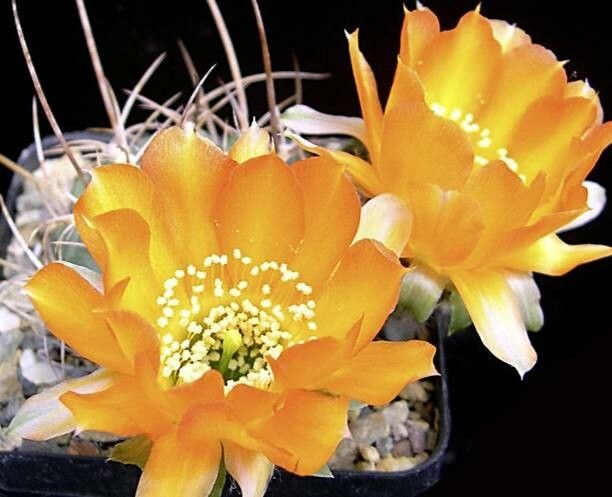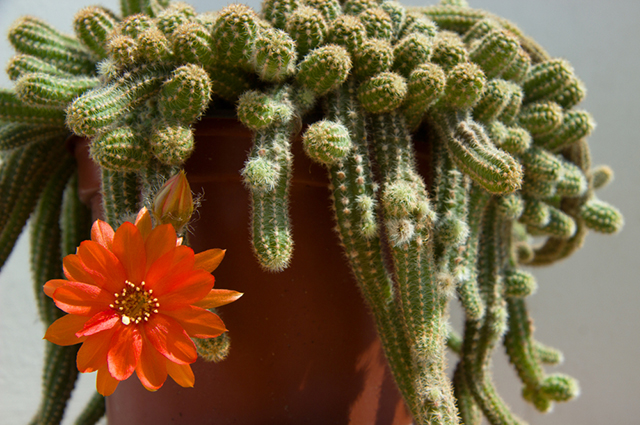
Peanut cactus (Echinopsis chamaecereus) is a branching cactus with finger-like branches that grow in clusters and trails. It's ideal for hanging baskets because of its growing behavior. Each ribbed stem is covered in little white bristles and can grow up to 6 inches long and half an inch in diameter. While the peanut cactus' spines appear spiky, they are actually quite soft. However, touching them is still not recommended since the fine bristles can penetrate the skin and cause irritation. The peanut cactus, on the other hand, is easier to handle and nurture than some of its spikier cacti relatives since it is soft.
The Peanut cactus is fairly resistant to disease and tolerates normal care without becoming sick easily. It can, however, be vulnerable to mealybugs; these pests may cause some damage but generally are not a serious threat. In terms of care, the Peanut cactus is drought-tolerant and does not need frequent watering. It endures long periods without water and requires little fertilizer. That said, it is highly prone to root rot if lighting is poor and it is overwatered. Overall, the Peanut cactus is suitable for people who want a low-maintenance plant, though it’s important to know and meet its basic needs. It is particularly well suited to those who are often away for extended periods and may forget to water regularly.
How to keep Chamaecereus Silvestrii.
Light
Peanut cactus does best in conditions with abundant warmth and strong light comparable to full-light conditions; it can tolerate lower light levels, though those are not ideal. Because it comes from brightly lit habitats, good illumination supports the plant's health. However, too much exposure can scorch its tissues, while too little can impede growth.
Water
The peanut cactus can withstand droughts because to its thick, water-storing stems, but it is easily overwatered. Allow the soil to dry completely between waterings, then water strongly, totally immersing the soil. When the cactus is dormant in the winter, reduce watering.
Temperature
The peanut cactus cactus originates from areas of South America where temperatures range from 60 to 95 ℉ (15 to 35 ℃). They do best in temperatures of 59 to 100 ℉ (15 to 38 ℃), with a winter minimum of 50 ℉ (10 ℃). During summer, it is advisable to keep them in shade to prevent temperatures from going above 100 ℉ (38 ℃).
Fertilizer
For Peanut cactus, small amounts of fertilizer once or twice a year during the active growing season are enough. Do not fertilize in winter or in summer when the plant is dormant. Cut back on feeding for repotted specimens and wait a couple of months after repotting before you start fertilizing. Fertilizing helps maintain healthy growth and encourages flowering.
Pruning
The peanut cactus, like most cacti, can be easily grown by stem cuttings. Simply callous over the ends of broken branches or stems for 12-24 hours (until they are no longer wet), then insert the stem's base into freshly prepared cactus or succulent soil. Wait until the roots of the newly planted stem have sprouted.
Pot & Repot
Repot Peanut cactus in spring or summer, selecting a pot slightly larger than the current one that provides good drainage. Use a sandy or gritty cactus mix that drains well. Handle it carefully to avoid the spikes. Allow the cactus to dry out before repotting to prevent root rot. After repotting, wait for a week before watering to allow the roots to heal.
Botanical profile.
- Plant Type
- Succulent, Shrub
- Life Cycle
- Perennial
- Genus
- Chamaecereus
- Family
- Cactaceae
- Hardiness Zone
- 7-12
- Mature Height
- 10 cm to 15 cm
- Mature Spread
- 30 cm
- Leaf Color
- Green
- Leaf Type
- Evergreen
- Flower Color
- Red
- Flower Size
- 5.08 cm
- Bloom Time
- Late spring, Early summer
- Planting Time
- Spring, Summer, Autumn
- Harvest Time
- Mid summer