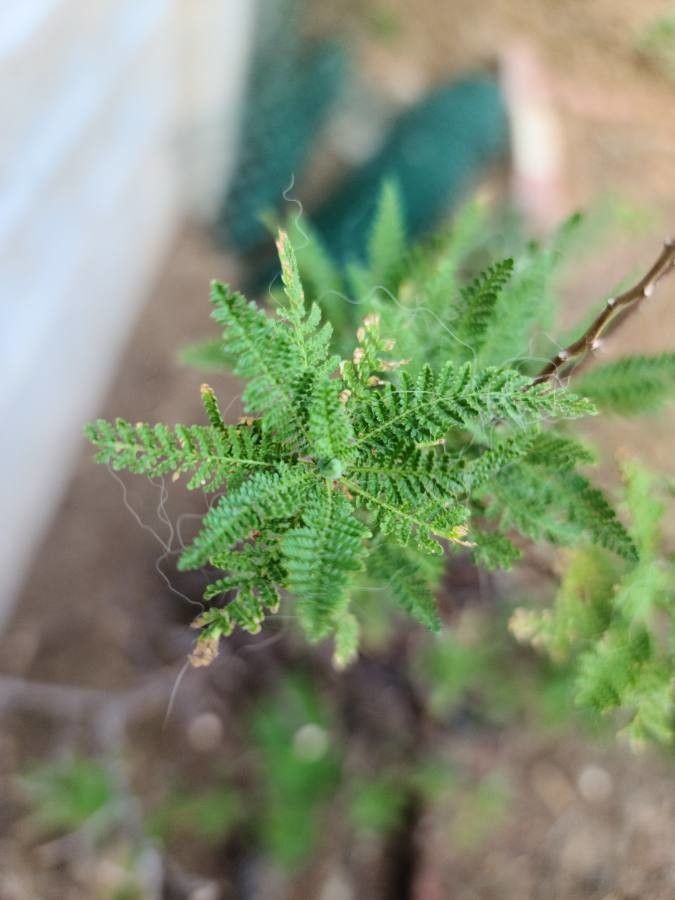
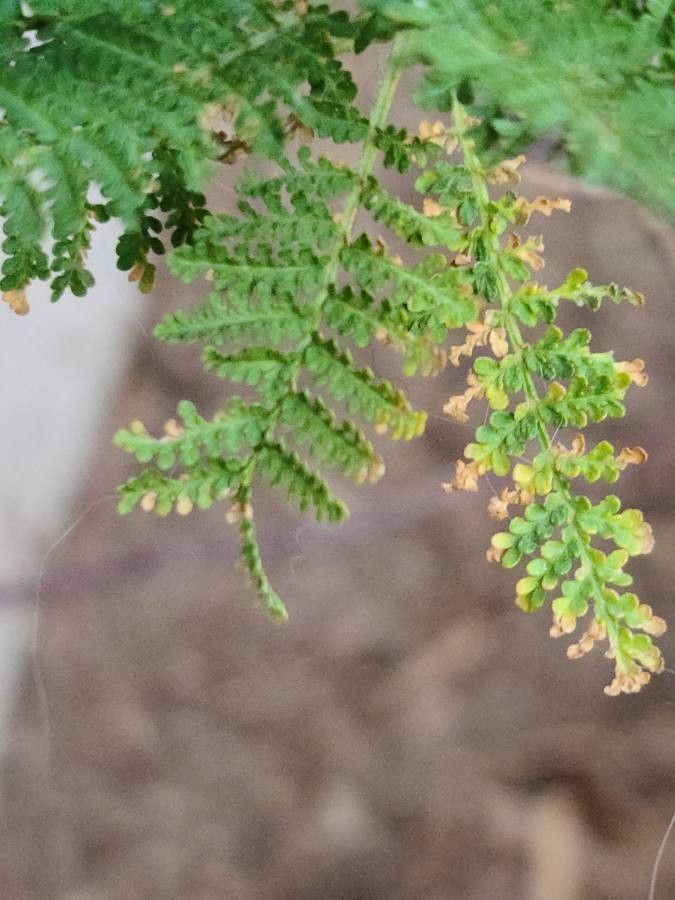
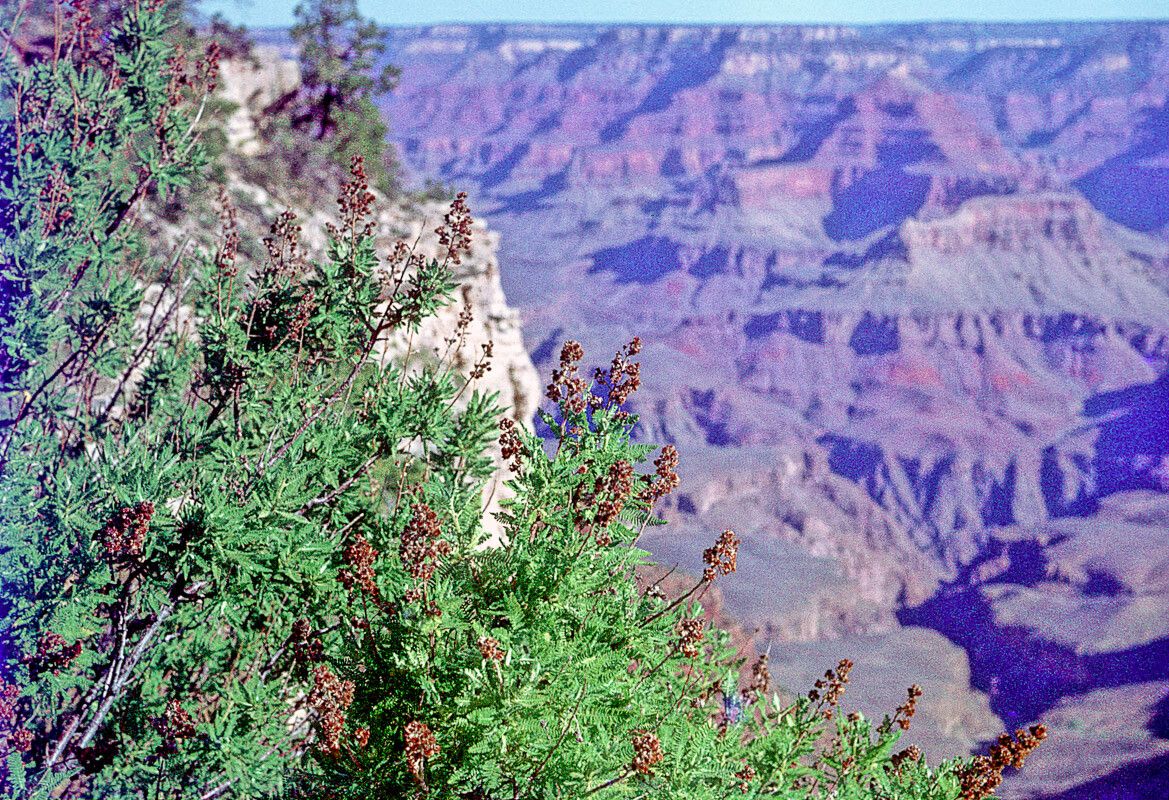
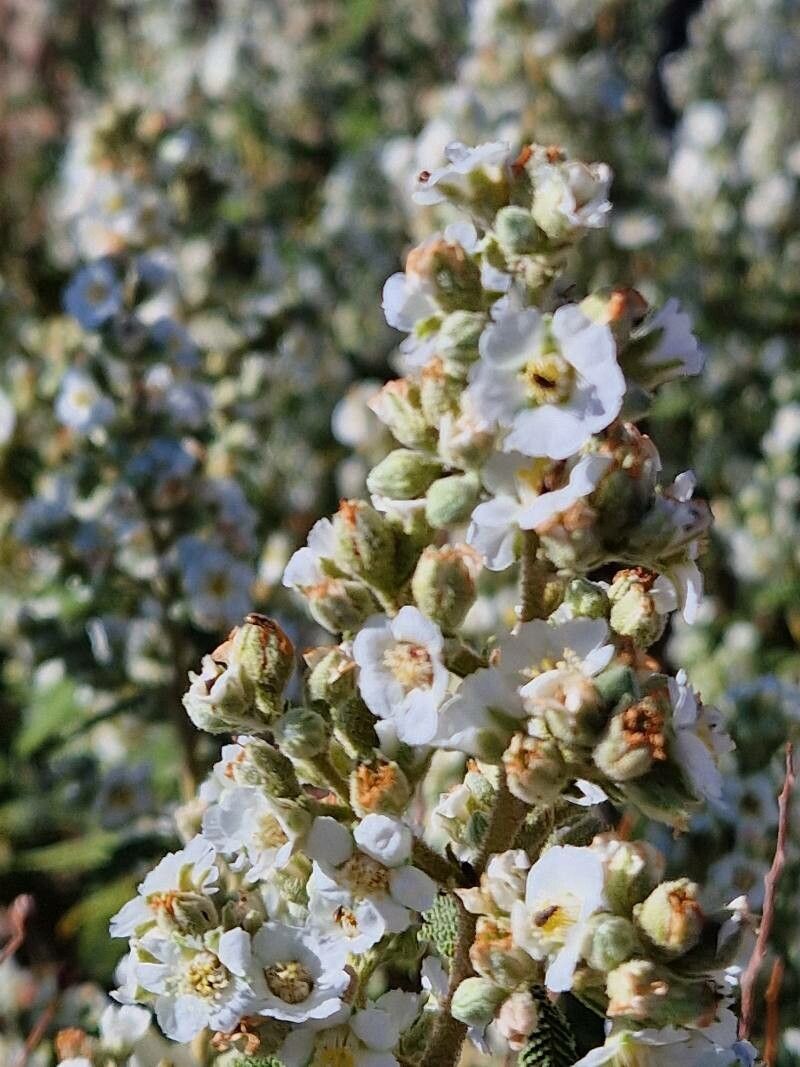
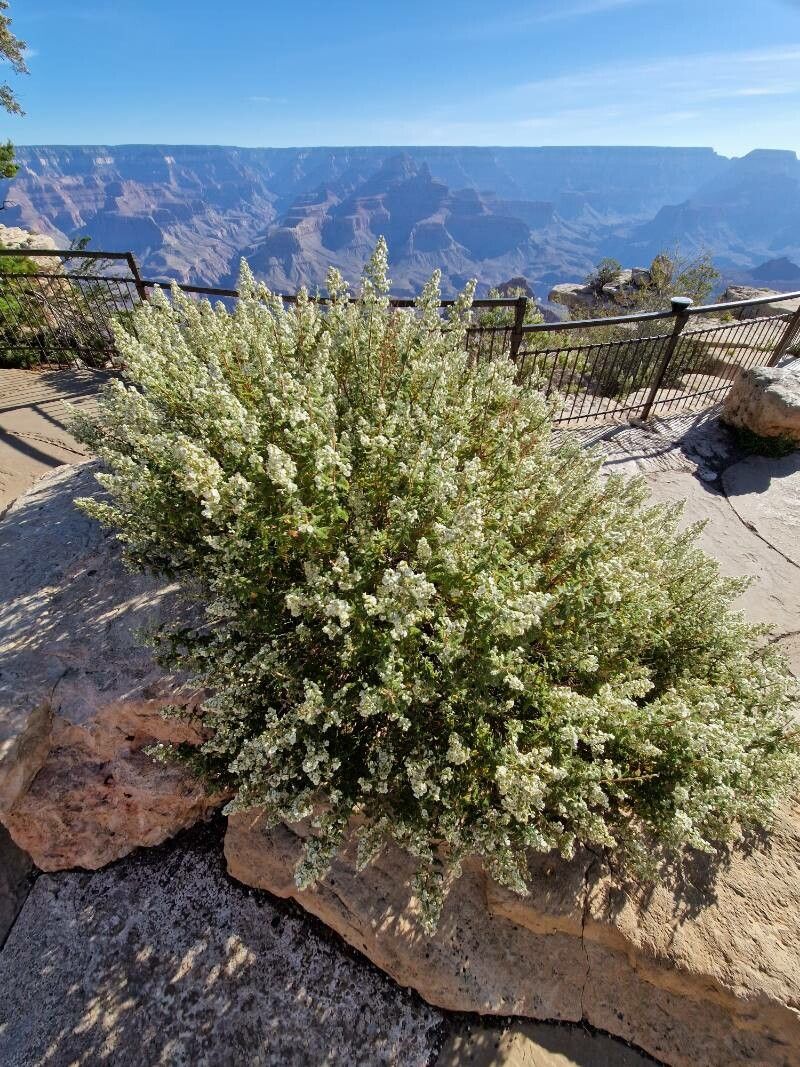
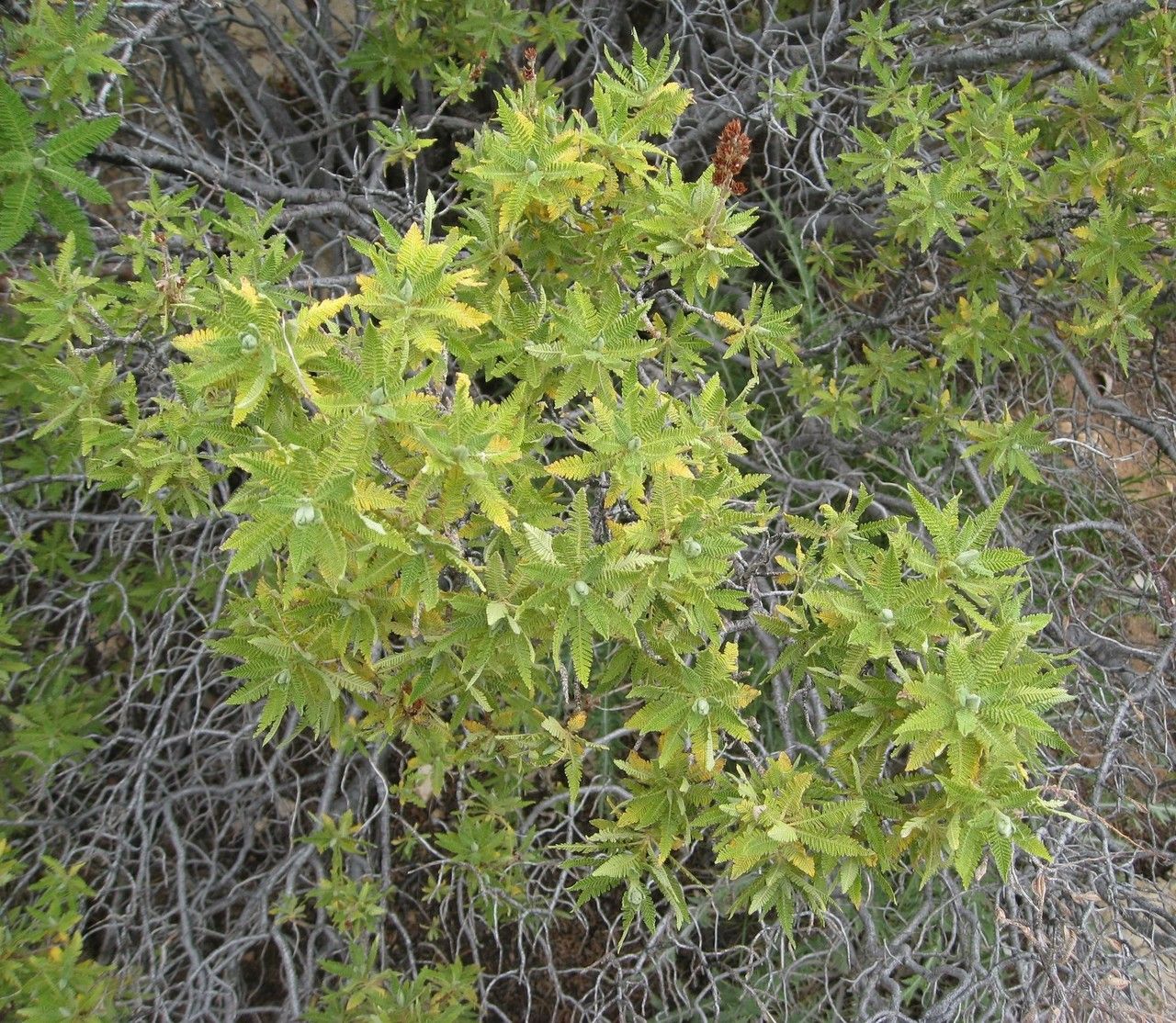
Chamaebatiaria is a monotypic genus of aromatic shrub in the rose family containing the single species Chamaebatiaria millefolium, which is known by the common names fern bush and desert sweet. Its genus name comes from its physical resemblance to the mountain miseries of genus Chamaebatia, which are not closely related. This is a hairy, sticky plant covered in fernlike foliage made up of fronds of small leaflets. At the ends of the erect branches of this spreading bush are inflorescences of white roselike flowers. This shrub is a resident of scrub, woodland, and forests in western North America. The closest relative of Spiraeanthus.
Desert sweet has strong resistance to disease and is generally unlikely to be affected by illnesses. In terms of care, this plant is fairly low-maintenance. When grown outdoors it needs minimal watering, and larger plants typically do not require pruning. Smaller plants, however, should be pruned after they have finished blooming. Desert sweet is appropriate for anyone with an outdoor space, such as a garden or deck, and does not demand extensive care experience.
How to keep Chamaebatiaria Millefolium.
Light
Desert sweet does best in locations where it can receive the most sunlight throughout the day. Its native habitats are characteristic of areas with plentiful sunshine, which promotes healthy growth. However, either too much or too little sunlight can cause stunted growth or wilting.
Water
Desert sweet is well-suited for arid conditions and demonstrates excellent drought tolerance. It needs watering every one to two weeks, ensuring the soil is allowed to dry completely between watering sessions. As an outdoor plant in dry climates, desert sweet has adapted to efficiently retain water in its foliage.
Temperature
Desert sweet is native to environments with moderate temperatures, specifically flourishing between 41 and 77 °F (5 and 25 ℃). Seasonal temperature adjustments may not be required unless temperatures fall outside this range.
Fertilizer
The timing of fertilization is vital for Desert sweet. Apply fertilizer in early spring and repeat monthly through early summer. Fertilizer encourages lovely blooms and supplies energy during both dormant and active growth phases.
Pruning
The desert sweet is a shrub known for its feathery leaves and fragrant white flowers. To maintain its health and appearance, prune it in early spring. This helps to remove dead or crossing branches, improving air circulation and light penetration. Regular pruning encourages strong growth and more abundant flowering. Be sure to use clean, sharp tools to minimize plant stress and reduce the risk of disease.
Botanical profile.
- Plant Type
- Shrub
- Life Cycle
- Perennial
- Genus
- Chamaebatiaria
- Family
- Rosaceae
- Hardiness Zone
- 4-6
- Mature Height
- 0.91 m to 2.44 m
- Mature Spread
- 0.91 m to 1.52 m
- Leaf Color
- Green
- Leaf Type
- Semi-evergreen
- Flower Color
- White
- Flower Size
- 2.54 cm
- Bloom Time
- Early summer, Mid summer
- Planting Time
- Spring, Summer
- Harvest Time
- Late summer, Early fall
Other names.
Reader questions.
How should I water my Desert sweet plant in the best way?
To optimize root development, consider placing a garden hose near the base of your plants. Avoid spraying water directly onto the leaves, as this can be detrimental. Keep in mind that if your plants are outdoors and exposed to direct sunlight, the leaves may require more frequent watering. Moistening the roots can be achieved by using bubblers or soaker hoses. When adding or removing plants, utilize soaker hoses that cover the entire garden or bed to ensure deep root penetration. After watering, make sure to drain any excess water and allow the soil to dry before watering again. To prevent diseases, water at ground level rather than spraying the foliage. On sunny days, you may opt to spray the entire bush with water. Whether your plants are potted or in the ground, it is important to remember that Desert sweet plants prefer deep watering as opposed to light sprinkling.
Why is it necessary to add fertilizer to my Desert sweet plant?
If you own a Desert sweet plant, regular fertilization is important for its overall health. Providing the proper nutrients will help it grow stronger and better withstand difficult growing conditions, as well as fight off diseases and pests. The foliage of a Desert sweet is one of its most attractive features, so it is important to maintain it. This can be achieved by following a regular fertilization schedule that is specific to your Desert sweet. By doing so, you can expect your plant to have vibrant leaves and a lush appearance.
What are the sunlight requirements for Desert Sweet?
Desert Sweet requires full sun, meaning it needs above 6 hours of sunlight daily to thrive. It's essential to observe your garden's sunlight patterns and choose spots that provide a healthy balance of light and shade, ensuring the plant's well-being. This plant is native to environments rich in sunlight, which is crucial for its healthy growth. However, too much or too little sunlight can lead to problems such as stunted growth or wilting.
What is the optimal temperature range for growing Desert Sweet?
Desert Sweet, botanically known as Chamaebatiaria millefolium, thrives best in moderate temperatures, specifically between 41 to 77 °F (5 to 25 °C). It is important to maintain the temperature within this range for optimal growth, and seasonal temperature adjustments are generally unnecessary unless there are extreme temperature deviations outside this range.
What do I need to do if I give Desert sweet plant too much or too little water?
An overwatered Desert sweet can display several signs of distress. Its leaves may turn yellow, drop off, and wilt, giving the plant a dull and unhealthy appearance. Mushy stems may also be present. When these signs begin to show, it's important to adjust your watering schedule if possible. Wilting can also indicate under watering, which manifests as crispy and dry leaves. In such cases, checking the soil is necessary. If the soil is dry and simply watering is not enough, it should be thoroughly watered. However, even with enough water, the Desert sweet may still exhibit dryness and yellow leaves due to a damaged root system. The yellowing will eventually cease once the plant recovers. For indoor Desert sweet plants, regularly check the moisture levels in the pot and avoid overwatering. Black spots on the leaves are a sign of overwatering, in which case the soil should be allowed to dry out for a few days. Overwatering can lead to root rot, so if discolored and slimy roots are present, consider transferring the plant to a different pot. Always take measures to prevent root rot and avoid making the soil excessively soggy. When planting Desert sweet outdoors, it is advisable to dig a little deeper. If the soil feels too dry when checked with your fingers, it may indicate underwatering. In such cases, adequate watering is necessary to aid the plant's recovery.
When should I fertilize my Desert sweet plant for the best results?
To ensure healthy growth, it is important to fertilize your Desert sweet during late winter or early spring. This provides the necessary nutrients for the plant to thrive when the weather warms up. If you live in a warm climate, it is beneficial to give your Desert sweet an additional fertilizer feeding in early fall. This not only adds nutrients for the upcoming growing season but also helps the plant withstand the winter cold without any foliage damage. Fertilizing earlier will allow the new branches to grow and be more resistant to the cold.
How can artificial lighting support Desert Sweet's growth indoors?
When natural sunlight is insufficient, especially in winter or less sunny spaces, artificial lighting becomes essential for Desert Sweet's growth indoors. It's recommended to use LED lights as they can be tailored to meet your plant's specific light wavelength needs. For full sun plants like Desert Sweet, aim for 30-50W/sq ft of light. Place the light source 12-36 inches above the plant and ensure it receives 8-12 hours of light daily to mimic natural sunlight conditions.
How does Desert Sweet handle cold weather?
Desert Sweet is notably cold-tolerant and does not require additional frost protection measures during the winter months. To prepare for the first freeze of autumn, it's advised to water the plant generously. This ensures the soil around the plant remains moist as it enters a frozen state, helping to prevent drought and water scarcity for the plant during winter and early spring.
How often should I give water to my Desert sweet?
The Desert sweet plant prefers to be watered deeply and not so often. This is especially important if it is planted in a pot, as the soil in pots dries out quickly. In colder regions, you should water every 3 to 5 days. Water the plant in the morning when the soil is dry both indoors and outdoors. You can also check the soil moisture by feeling the top 2-3 inches of soil; if it's dry, it's time to water. On hot days, you might need to check the soil moisture daily as it can dry out quickly. If you have a garden, you should also irrigate the soil. In hot climates, watering once a week is usually sufficient. However, only water when about 2 to 3 inches of soil becomes too dry, whether indoors or outdoors. Take into account the amount of rainfall and avoid overwatering to prevent root rot. Desert sweet plants typically grow during spring and fall. When planted outdoors, adding a layer of mulch about 3 to 4 inches deep can help conserve water. Sandy soil drain faster, so it may require more frequent watering. On the other hand, clay soil retains water better, so it needs watering less often. It can be helpful to mark the date on a calendar whenever you water the plants and pay attention to any drooping leaves, which may indicate that the plant needs water sooner.
When is it not a good idea to fertilize my Desert sweet?
There are certain times of the year when fertilizing your Desert sweet plant should be avoided. The first of these times is the early and mid-winter months when the plant goes dormant and does not require any feeding. Another period to avoid fertilizing is during late spring and throughout the entire summer. During this time, the weather is typically hotter and drier, which can have a detrimental impact on your plant if it is fertilized. To prevent any potential issues, it is recommended to only fertilize your Desert sweet during early spring and early fall.
What are some signs that Desert Sweet is not receiving enough light?
Signs of insufficient light in Desert Sweet include smaller new leaves, leggy or sparse growth, faster leaf drop, slower or halted new growth, paler new leaves, chlorosis (leaves turning yellow), sunscald, leaf curling, wilting, and leaf scorching. These symptoms indicate the plant is struggling with the light conditions, impacting its health and growth.
What should be done if Desert Sweet experiences temperatures below -30°C?
Even though Desert Sweet is extremely cold-tolerant, winter temperatures should be kept above -30°C. If temperatures drop below this threshold, the branches may turn brittle and dry by springtime, failing to produce new shoots. The solution for this is to prune away any dead branches that haven't produced new leaves by spring.