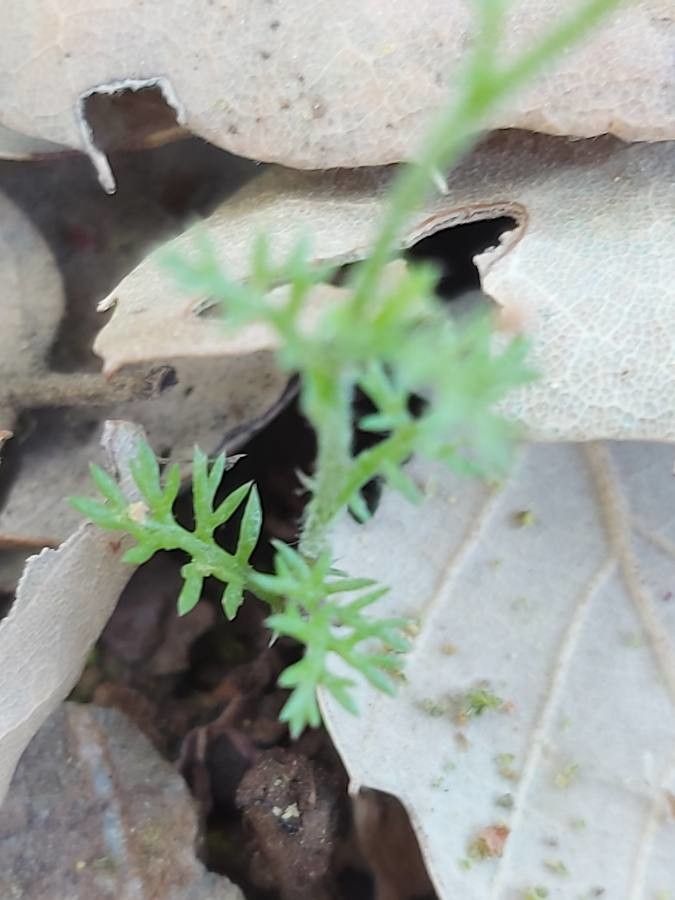
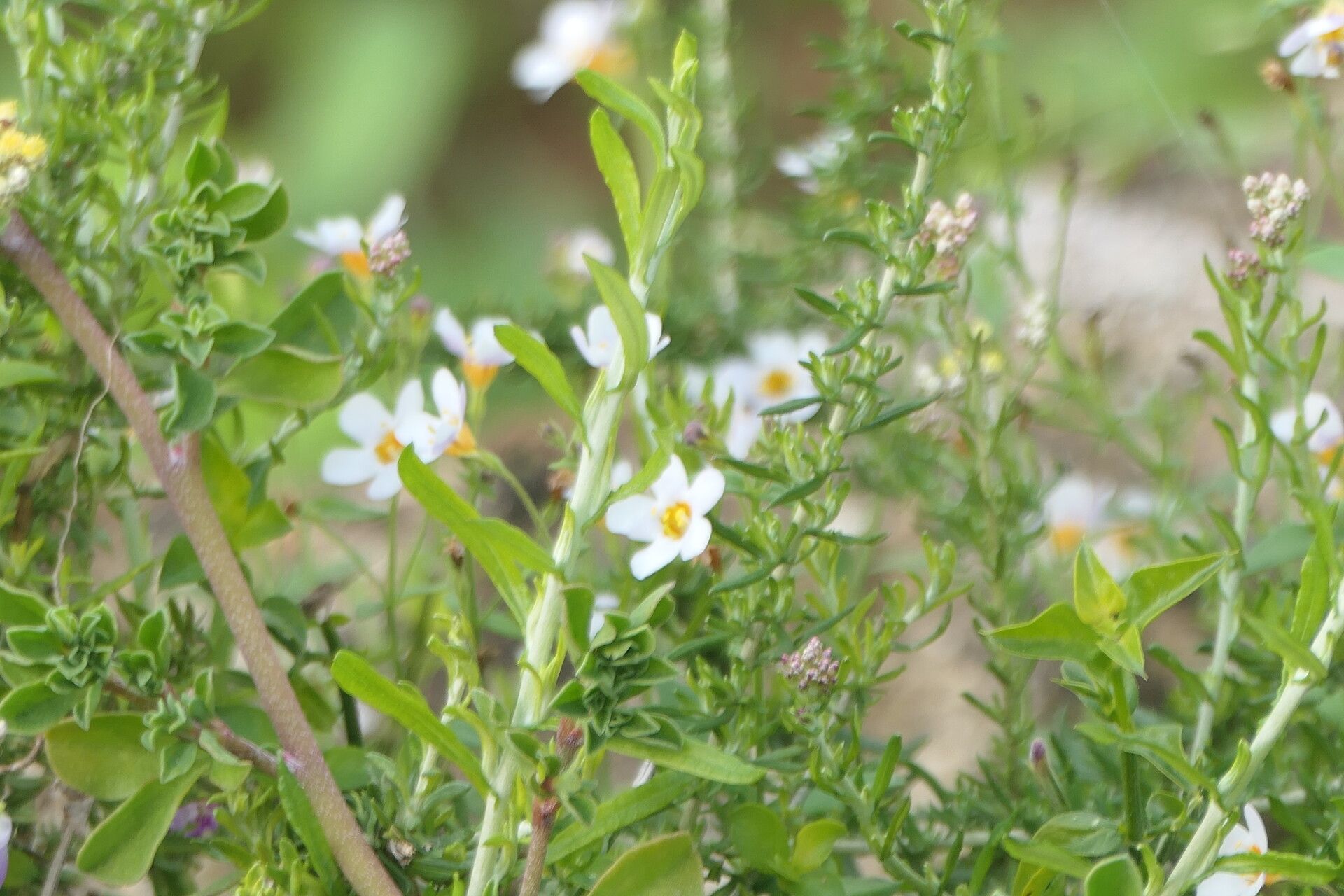
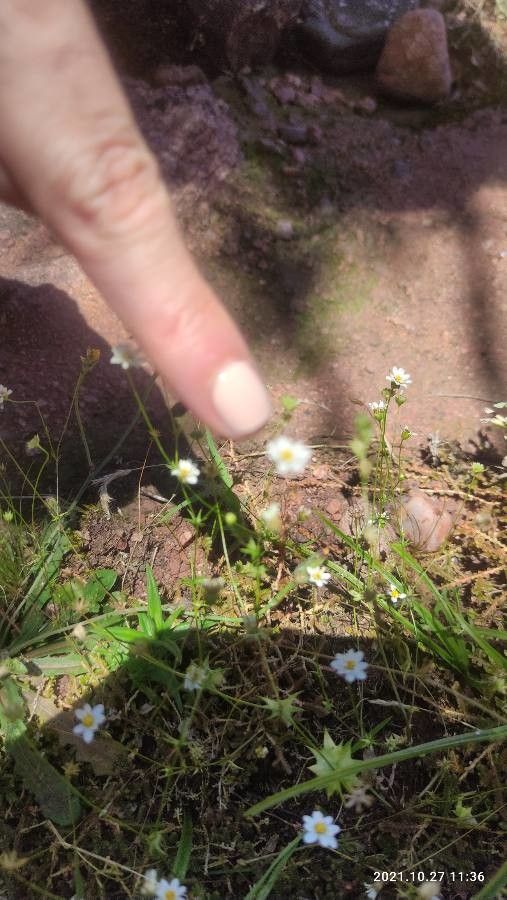
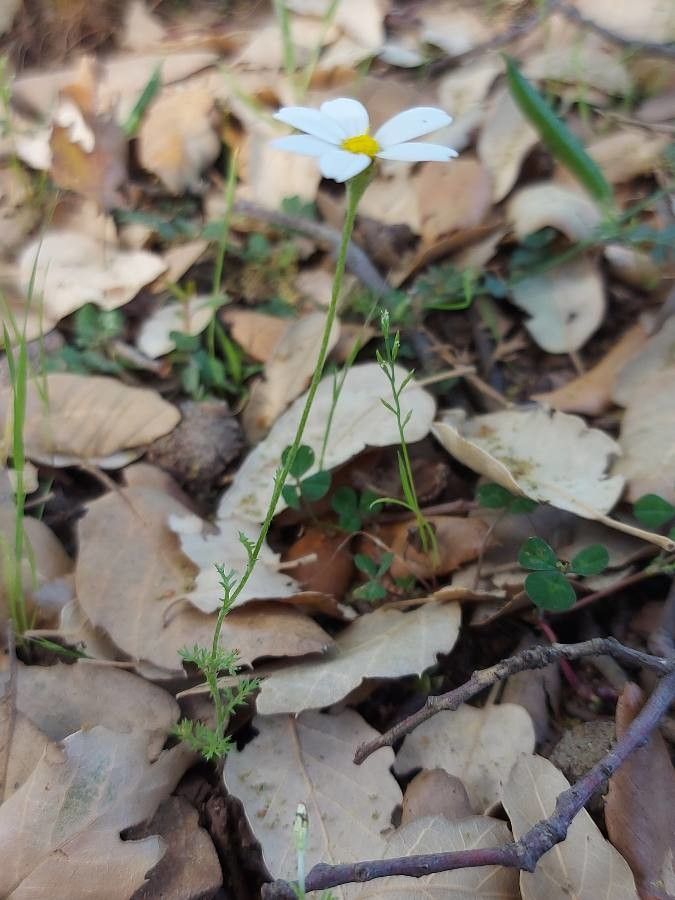
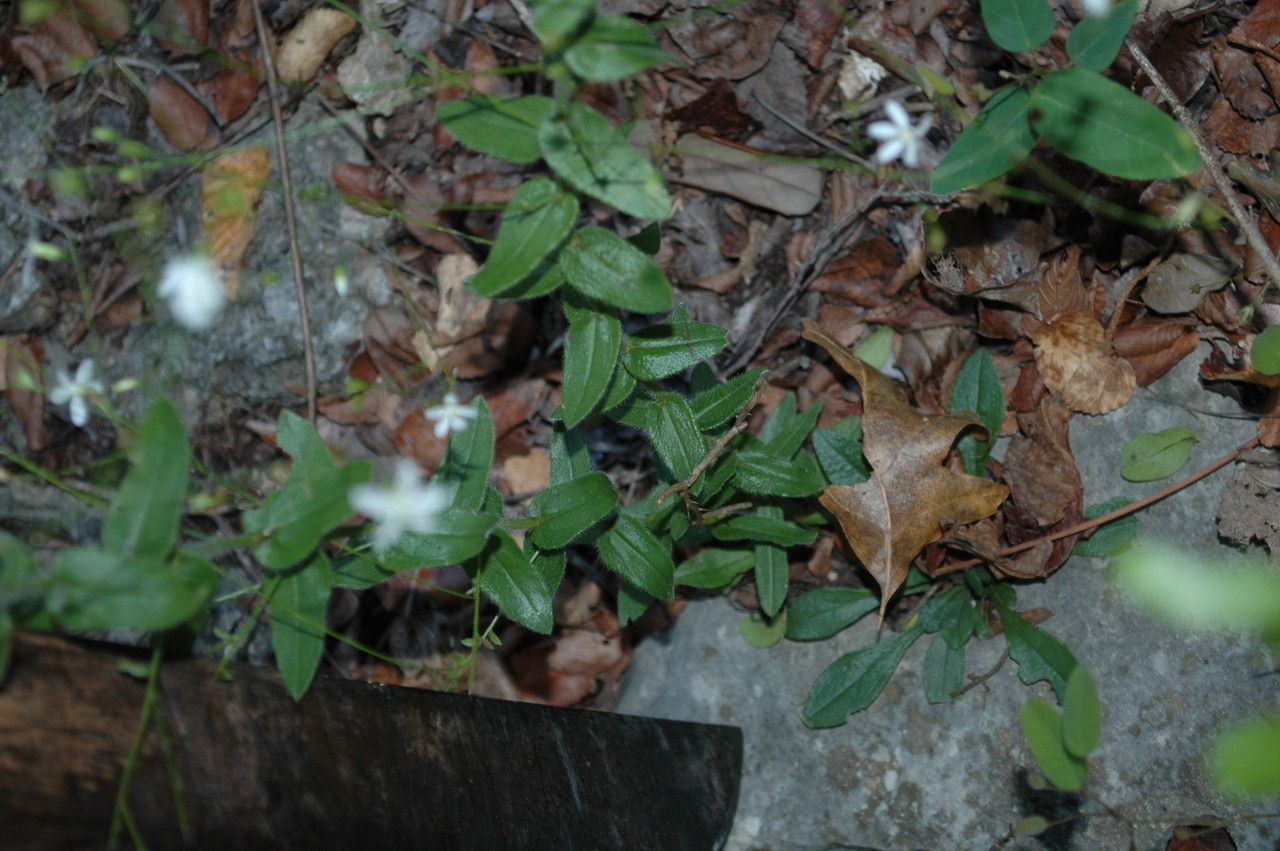
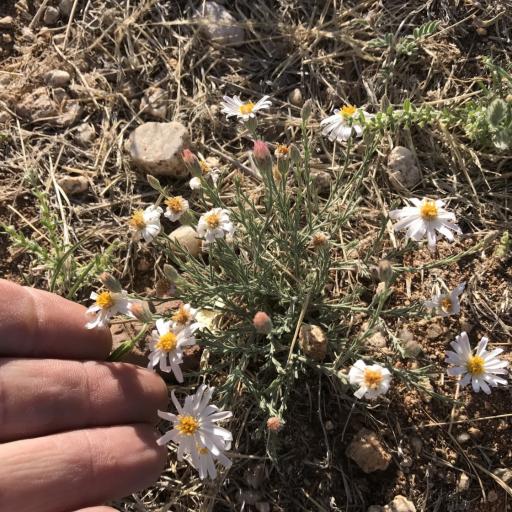
Chaetopappa asteroides, called the tiny lazy daisy, or Arkansas leastdaisy, is a North American species of plants in the family Asteraceae. It is native to the southern Great Plains of the United States (Kansas, Oklahoma, Texas, Louisiana, Missouri, Arkansas) and also to northeastern Mexico (Tamaulipas, Hidalgo). VarietiesChaetopappa asteroides var. asteroides - most of species range Chaetopappa asteroides var. grandis Shinners - Río Grande Valley in Texas
Arkansas leastdaisy has strong disease resistance and is generally not vulnerable to illnesses. Still, it can be affected by pests and diseases that exist nearby. Such infections are typically mild. Carewise, the plant is moderate in its needs. It should be pruned on a regular basis to preserve its appearance and healthy growth. Applying fertilizer can also encourage blooming. Arkansas leastdaisy is appropriate for anyone with outdoor areas like a garden or patio and does not demand extensive gardening experience. It may need more attention if kept indoors.
How to keep Chaetopappa Asteroides.
Light
The Arkansas leastdaisy comes from bright, open habitats where it does best in full sun. It can tolerate partial sun but prefers direct sunlight for optimal growth. This plant, which may be annual or biennial, is known for its sun-loving habit.
Water
The Arkansas leastdaisy, native to the arid plains, is highly drought-tolerant and thrives in environments with low water availability. This plant grows best with biweekly watering, as it effectively stores moisture. Typically cultivated outdoors in full sun, the Arkansas leastdaisy is an excellent choice for xeriscaping, taking full advantage of its natural adaptation to local rainfall patterns.
Temperature
Arkansas leastdaisy can adapt to a wide variety of temperature conditions, yet its distribution may still be restricted by particular combinations of moisture and heat. It does best in warm summer climates when it receives sufficient rainfall or watering. Extended stretches of cloudy, rainy weather or prolonged high temperatures make the plant more likely to die. In winter, protecting it from cold increases its chances of survival.
Fertilizer
After Arkansas leastdaisy has opened most of its blooms to full size, resume fertilizing. When the flowers are at peak production, apply fertilizer every three to four weeks, weather permitting. Once the plant begins producing fewer new blooms, stop fertilizing; there's no need to feed it when it can no longer produce more blooms.
Pruning
The Arkansas Leastdaisy is a compact perennial known for its bright white flowers. To promote healthy growth and denser foliage, prune the plant between early and late spring. Be sure to use clean tools to prevent disease, and avoid over-pruning, as this can stress the plant. Proper pruning will enhance both the plant's appearance and vigor.
Botanical profile.
- Plant Type
- Herb
- Life Cycle
- Annual
- Genus
- Chaetopappa
- Family
- Compositae
- Hardiness Zone
- 5-9
- Mature Height
- 10 cm to 30 cm
- Mature Spread
- 15 cm to 25 cm
- Leaf Color
- Green
- Leaf Type
- Semi-evergreen
- Flower Color
- White, Yellow
- Flower Size
- 1.02 cm to 1.52 cm
- Bloom Time
- Mid spring, Late spring, Early summer
- Planting Time
- Spring, Summer, Autumn
- Harvest Time
- Summer
Other names.