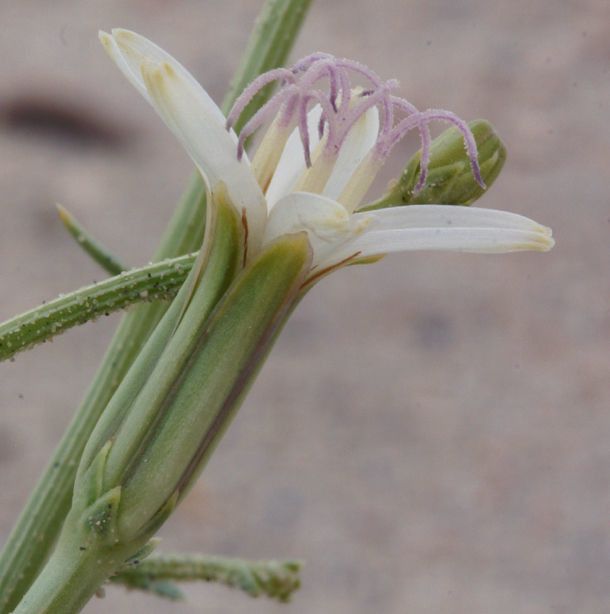
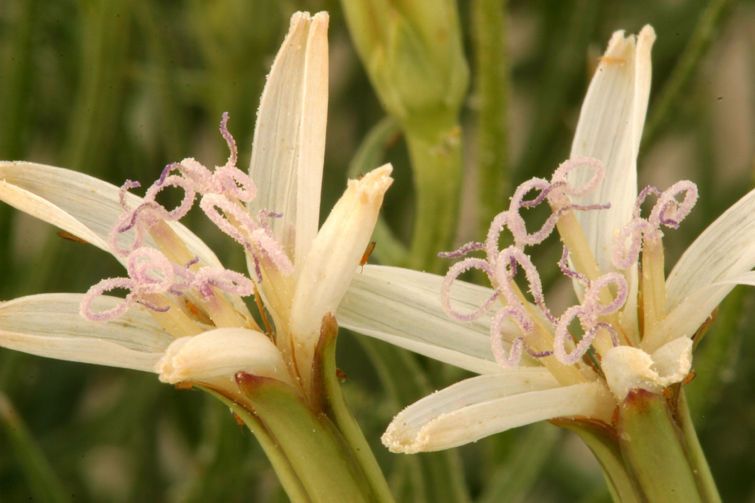
Chaetadelpha is a genus of plants in the family Asteraceae containing the single species Chaetadelpha wheeleri, or Wheeler's skeletonweed. This brushy perennial plant is native to the western United States (Nevada, eastern California, southeastern Oregon).Chaetadelpha wheeleri forms a low bush with plentiful erect stems covered in very narrow, long and pointed leaves. Branchlets emerge from the stems and each bears a cylindrical flower which opens at the end into a star-shaped white or pale purple flower with five ray florets. The center of each head is filled with curly pollen-dusted anthers. This species is found most often in sand and scrub, particularly in desert regions.
Wheeler's skeletonweed shows good resistance to disease and is generally not vulnerable to illnesses. Still, it can be affected by pests and diseases present in its environment. Those infections are typically not serious. Regarding care, this plant needs a moderate amount of attention. It should be pruned regularly to preserve an attractive appearance and support healthy growth. Applying fertilizer can also encourage more flowering. Wheeler's skeletonweed is appropriate for someone with outdoor space, like a garden or patio, and does not demand much gardening experience. It may need extra care if grown indoors.
How to keep Chaetadelpha Wheeleri.
Light
Wheeler's skeletonweed is a sun-loving, perennial herbaceous plant native to open habitats, commonly thriving in meadows and grasslands. It prefers full sun but can also tolerate partial sun conditions.
Water
Wheeler's skeletonweed, native to dry regions, is highly drought-tolerant and requires very little moisture to thrive. To avoid overwatering, it should only be watered once a week. This resilient outdoor plant excels at conserving water, enabling it to survive in harsh, low-rainfall conditions.
Temperature
Wheeler's skeletonweed can tolerate a wide span of temperatures, but its distribution may still be restricted by various combinations of water and heat. It does best in warm summer climates with sufficient rainfall or watering. Extended periods of cloudy, rainy weather or sustained high temperatures can increase the likelihood of Wheeler's skeletonweed dying. In winter, adequate protection from the cold can improve the plant's survival rate.
Fertilizer
Feeding Wheeler's skeletonweed with fertilizer just once in spring is generally enough, however, monthly to six-week interval feedings can optimize its development. Fertilizing this plant contributes to the visual quality and role of the leaves, ensuring a vibrant color and robust texture. Besides, it boosts the growth of roots and absorption of nutrients, thus fostering the lasting wellbeing of the plant.
Pruning
To promote healthy growth and maintain its shape, prune Wheeler's skeletonweed from early to late spring, concentrating on removing dead or overgrown stems. Make sure to use sharp, sterilized tools to make clean cuts, which helps prevent disease and boosts its vitality and resilience while encouraging its natural form.
Botanical profile.
- Plant Type
- Herb
- Life Cycle
- Perennial
- Genus
- Chaetadelpha
- Family
- Asteraceae
- Hardiness Zone
- 5-9
- Mature Height
- 30 cm to 49 cm
- Mature Spread
- 20 cm to 40 cm
- Leaf Color
- Green
- Leaf Type
- Evergreen
- Flower Size
- 1.02 cm to 2.03 cm
- Bloom Time
- Early summer, Mid summer
- Planting Time
- Spring, Autumn
- Harvest Time
- Mid summer, Late summer
Other names.