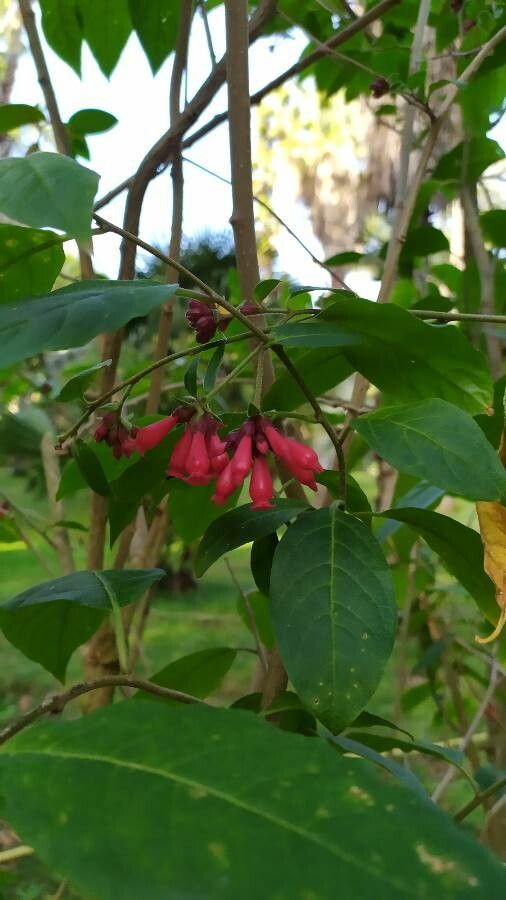
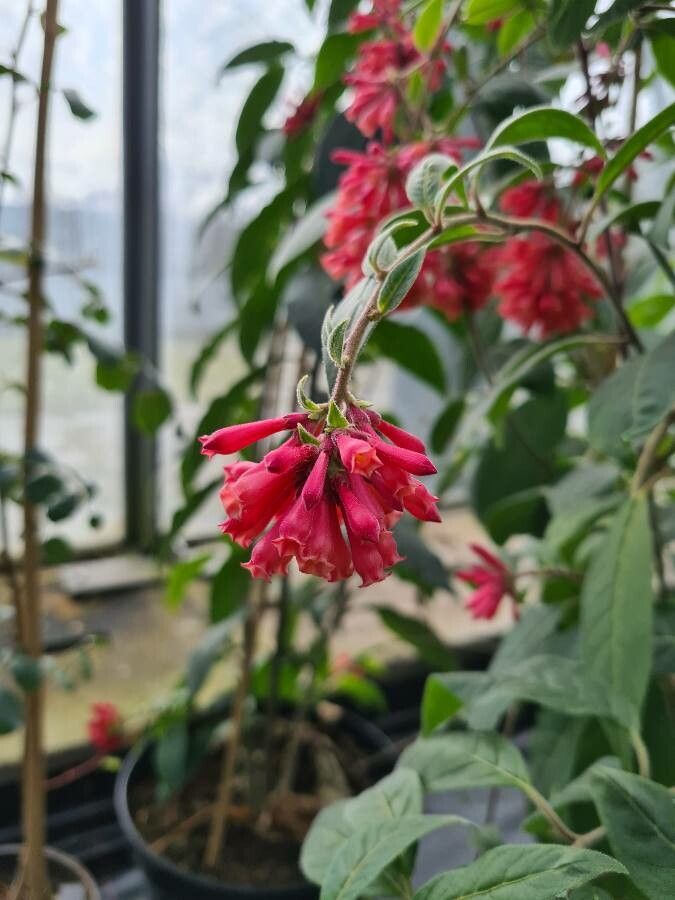
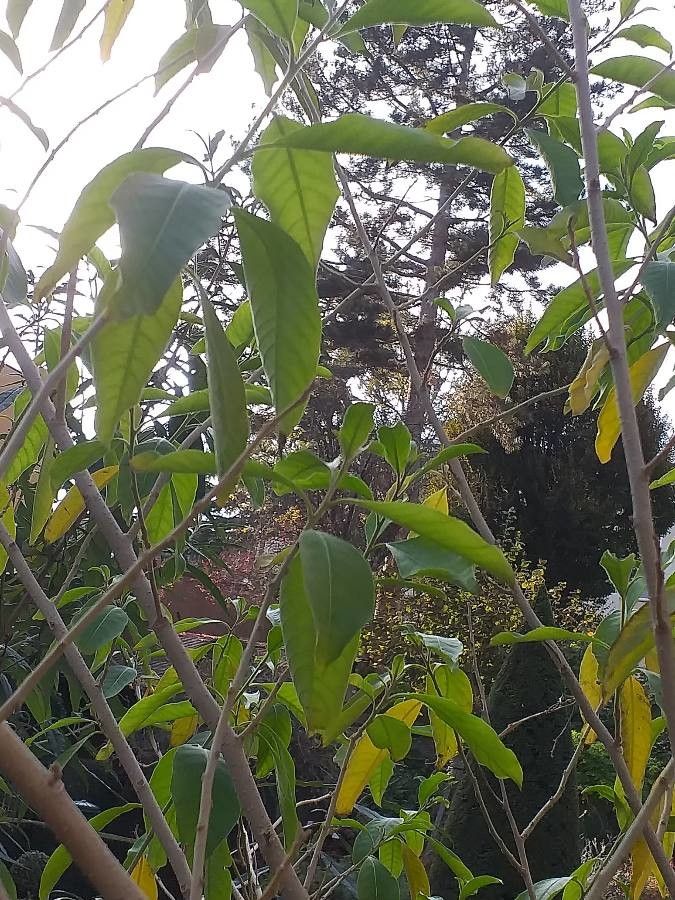
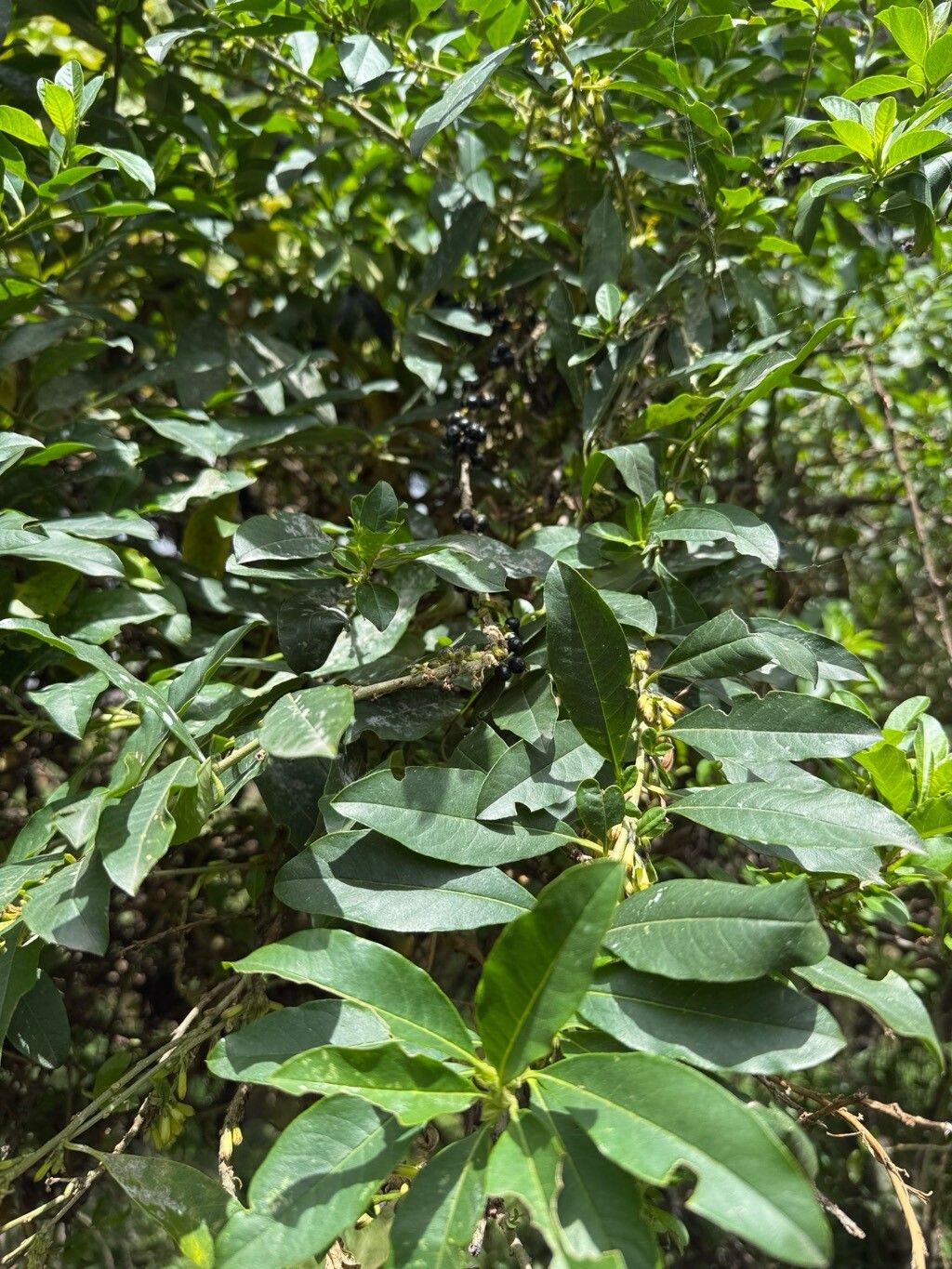
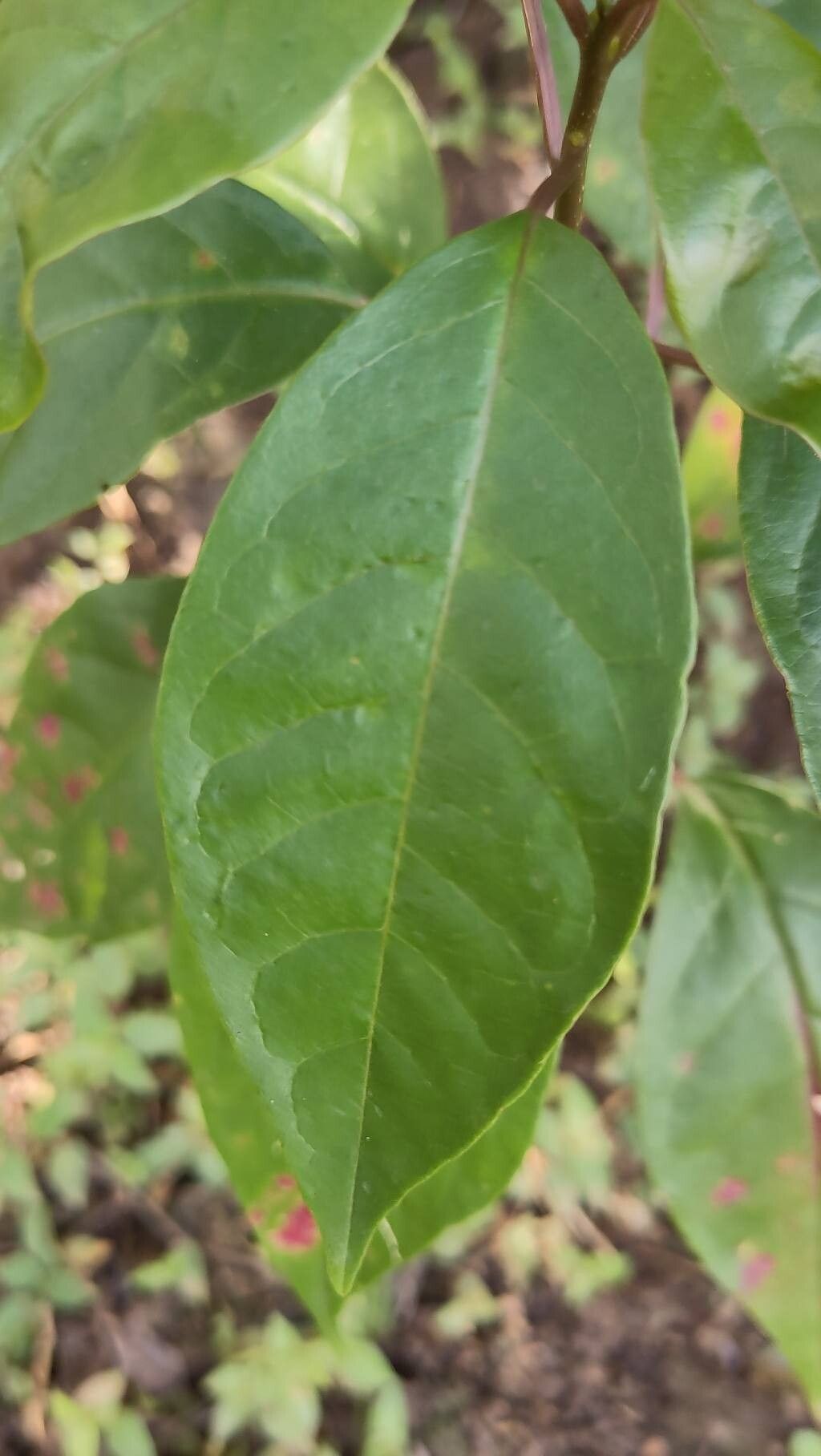
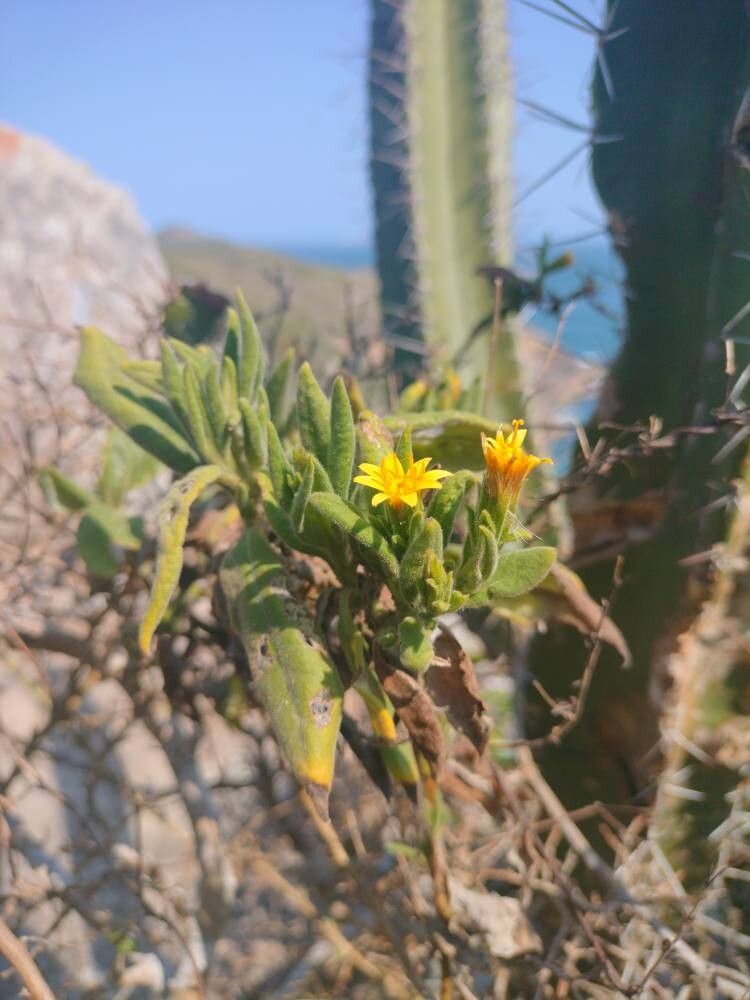
Cestrum fasciculatum is a species of flowering plant in the family Solanaceae known by the common names early jessamine and red cestrum. It is native to central Mexico, but it is also kept elsewhere as an ornamental plant. This is a gangly evergreen shrub reaching a maximum height of over two meters. The stems, and especially new twigs, are sometimes purple in color and slightly hairy. It bears hairy, oval-shaped, pointed green leaves up to 13 centimeters long. Plentiful inflorescences appear at the tips of stem branches, each a dense cluster of up to 10 hairy red flowers. Each tubular flower is 2 or 3 centimeters long, counting the elongated calyx of sepals and the long corolla. The fruit is a berry about 1.5 centimeters wide which is red on the outside and white inside with about 10 small brown seeds.
Early jessamine has strong disease resistance and is typically not susceptible to diseases. In terms of care, this plant is fairly low maintenance. When grown outdoors it needs little watering, and larger plants generally do not require pruning. Smaller plants, however, should be pruned after they have bloomed. Early jessaminet is appropriate for anyone with an outdoor area, such as a garden or deck, and does not demand much care experience.
How to keep Cestrum Fasciculatum.
Light
Early jessamine comes from open habitats, such as sunny meadows and forest edges, which supply abundant light. It does best in Full Sun but can also tolerate Partial Sun, adjusting well to different sunlight levels.
Water
Early jessamine flourishes in moderately moist conditions and typically needs watering every one to two weeks. As an evergreen, it keeps its leaves throughout the year, allowing it to consistently absorb and store water, even during dry periods.
Temperature
Early jessamine adapts well to temperature, able to withstand higher heat and considerable temperature fluctuations. In hot weather, you should pay attention to watering and provide adequate shade to avoid sunburn. On the other hand, Early jessamine is not very tolerant of low temperatures: it can endure some cold, but very cold conditions may cause frost damage.
Fertilizer
Proper timing is essential when fertilizing Early jessamine. Apply fertilizer in early spring and continue monthly until early summer. Fertilizer encourages lovely blooms and supplies energy during both dormant and active growth phases.
Pruning
The early jessamine is a vibrant shrub that thrives when pruned in early spring. To care for it properly, focus on removing dead branches and thinning out dense areas to enhance airflow. This encourages robust growth and abundant flowering. Pruning before new growth begins minimizes stress on the plant, improving its shape and vigor, and making it an attractive addition to any garden.
Pot & Repot
Repot "early jessamine" every 2–3 years in the spring, using a pot that's 20% larger than the previous one. After repotting, place the plant in bright, indirect light and keep the soil consistently moist. A slightly larger container promotes healthy root growth, while ensuring the plant remains stable is essential for its thriving.
Botanical profile.
- Plant Type
- Shrub
- Life Cycle
- Perennial
- Genus
- Cestrum
- Family
- Solanaceae
- Hardiness Zone
- 9-11
- Mature Height
- 2.13 m
- Mature Spread
- 2.13 m
- Leaf Color
- Dark Green
- Leaf Type
- Evergreen
- Flower Color
- Red
- Flower Size
- 2.03 cm to 3.05 cm
- Bloom Time
- All year round
- Planting Time
- Spring, Summer, Autumn
- Harvest Time
- All year round
- Native Area
- Mexico
Other names.
Reader questions.
What are the sunlight requirements for Early jessamine (Cestrum fasciculatum)?
Early jessamine (Cestrum fasciculatum) thrives in various sunlight conditions. It requires 'Full sun', meaning it needs above 6 hours of sunlight daily, to flourish. Alternatively, it can also grow well in 'Partial sun', which amounts to about 3-6 hours of sunlight each day. When planning where to plant your Early jessamine, it's important to observe the quality of light in your garden throughout the day. Finding areas that provide a perfect balance of light and shade ensures the best growth conditions for your plant, keeping it healthy and happy.