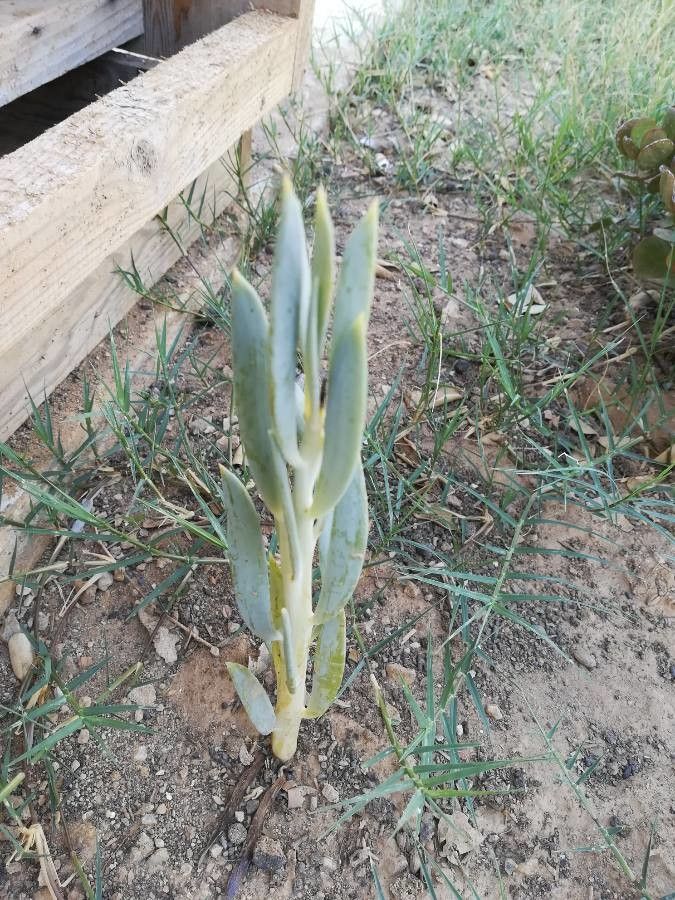
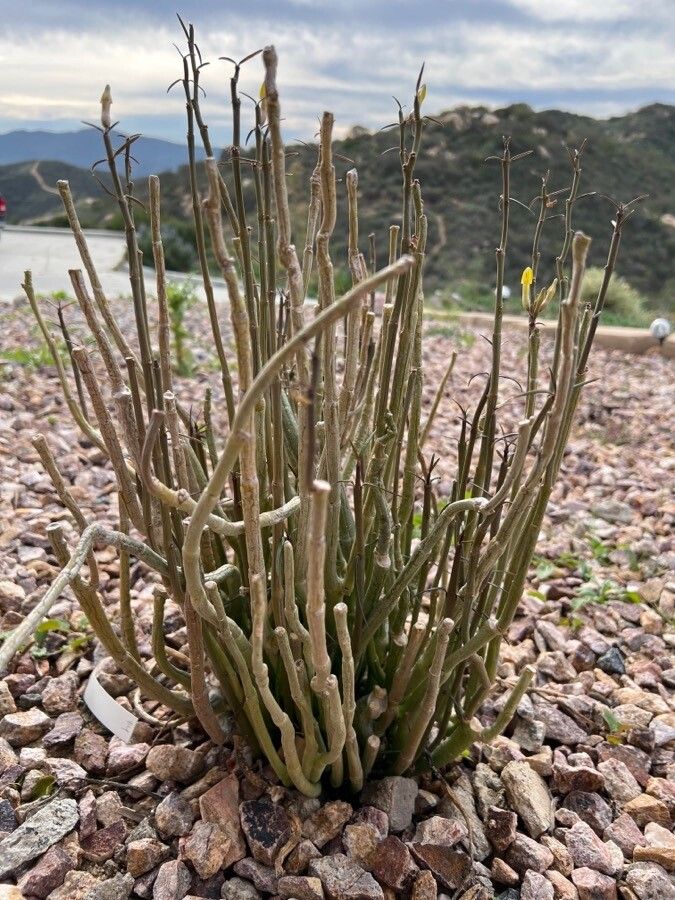
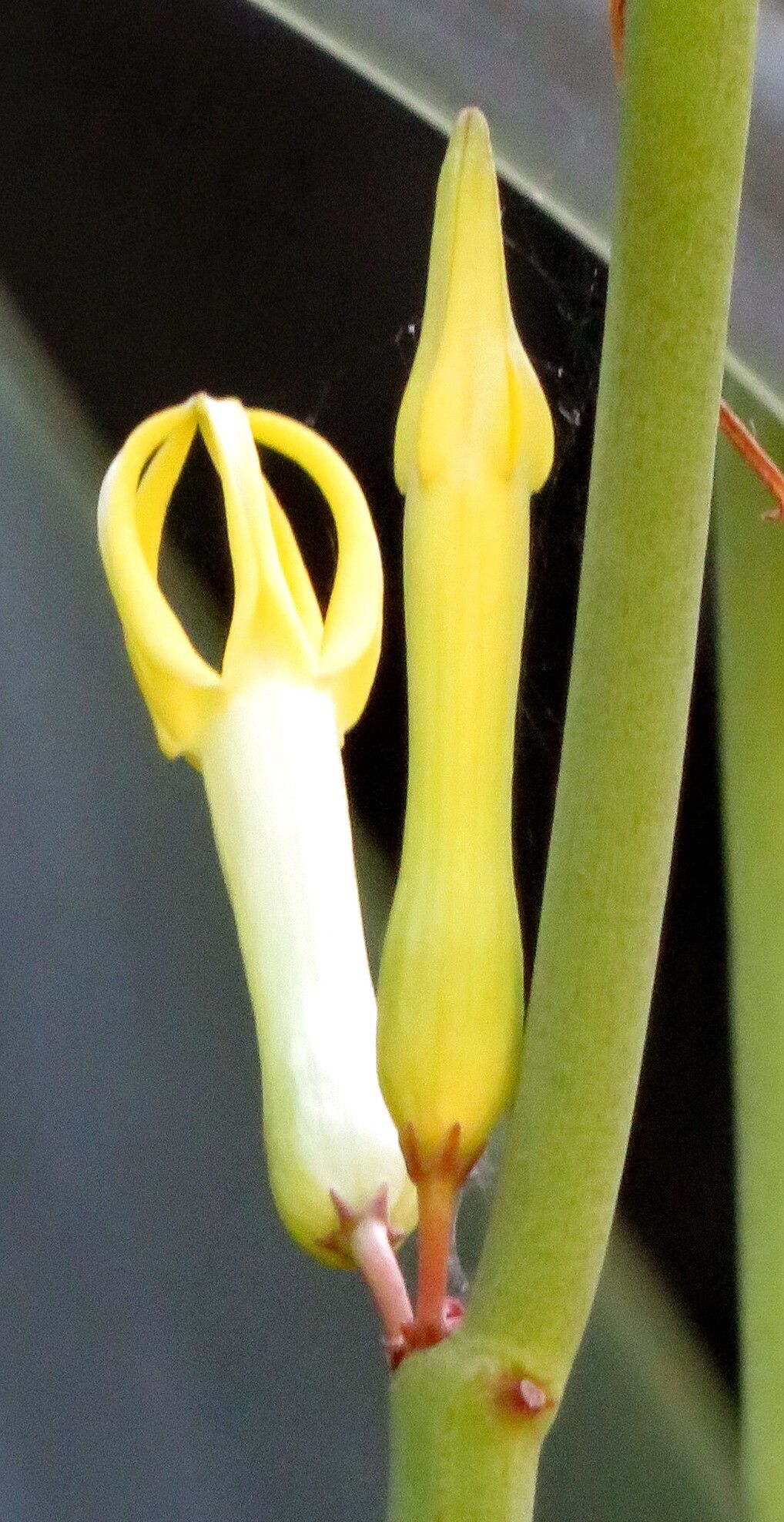
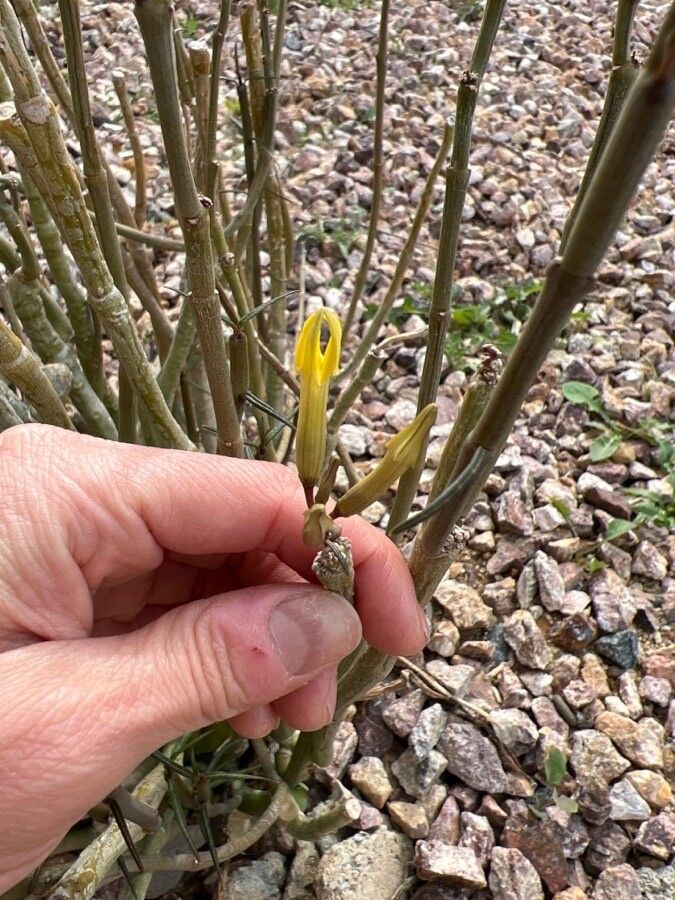
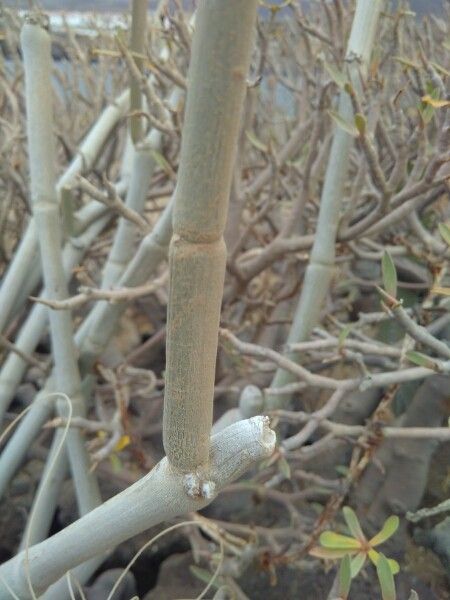
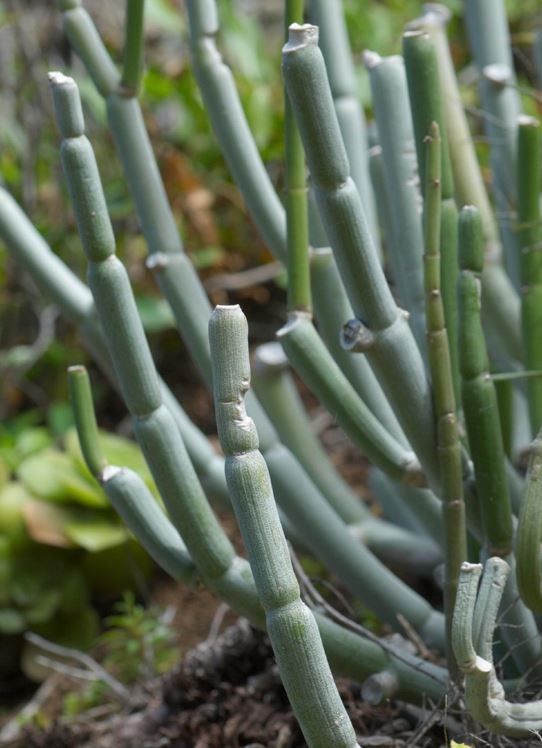
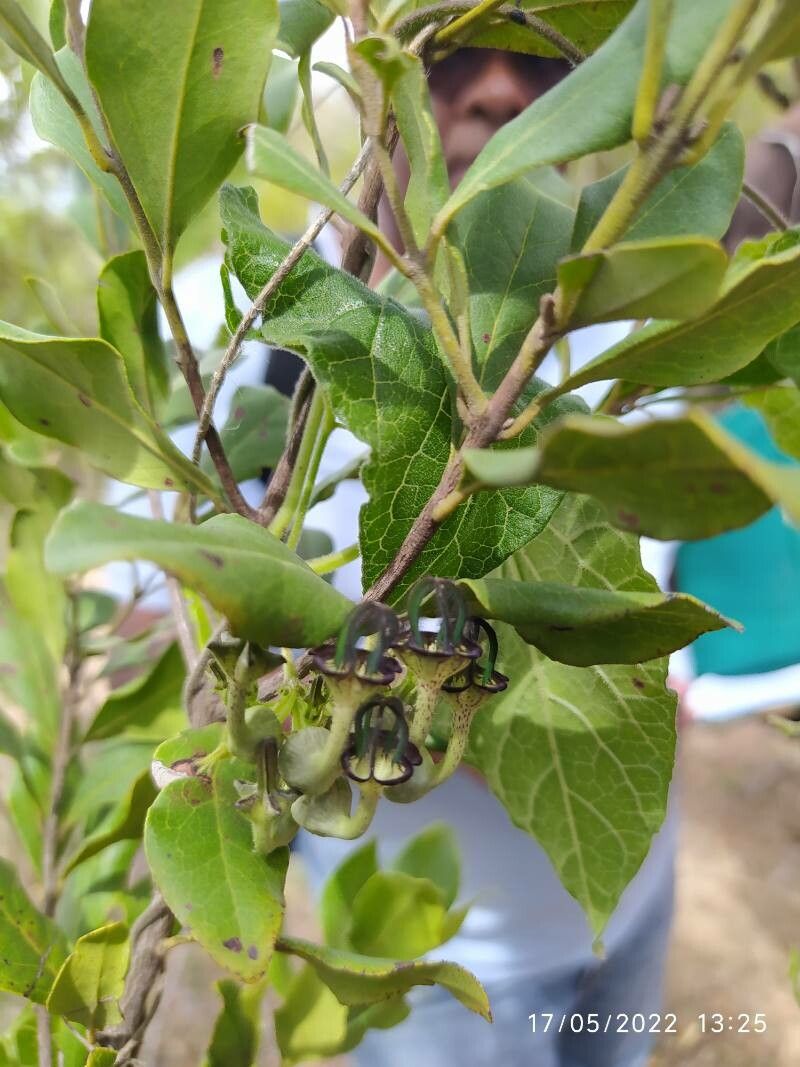
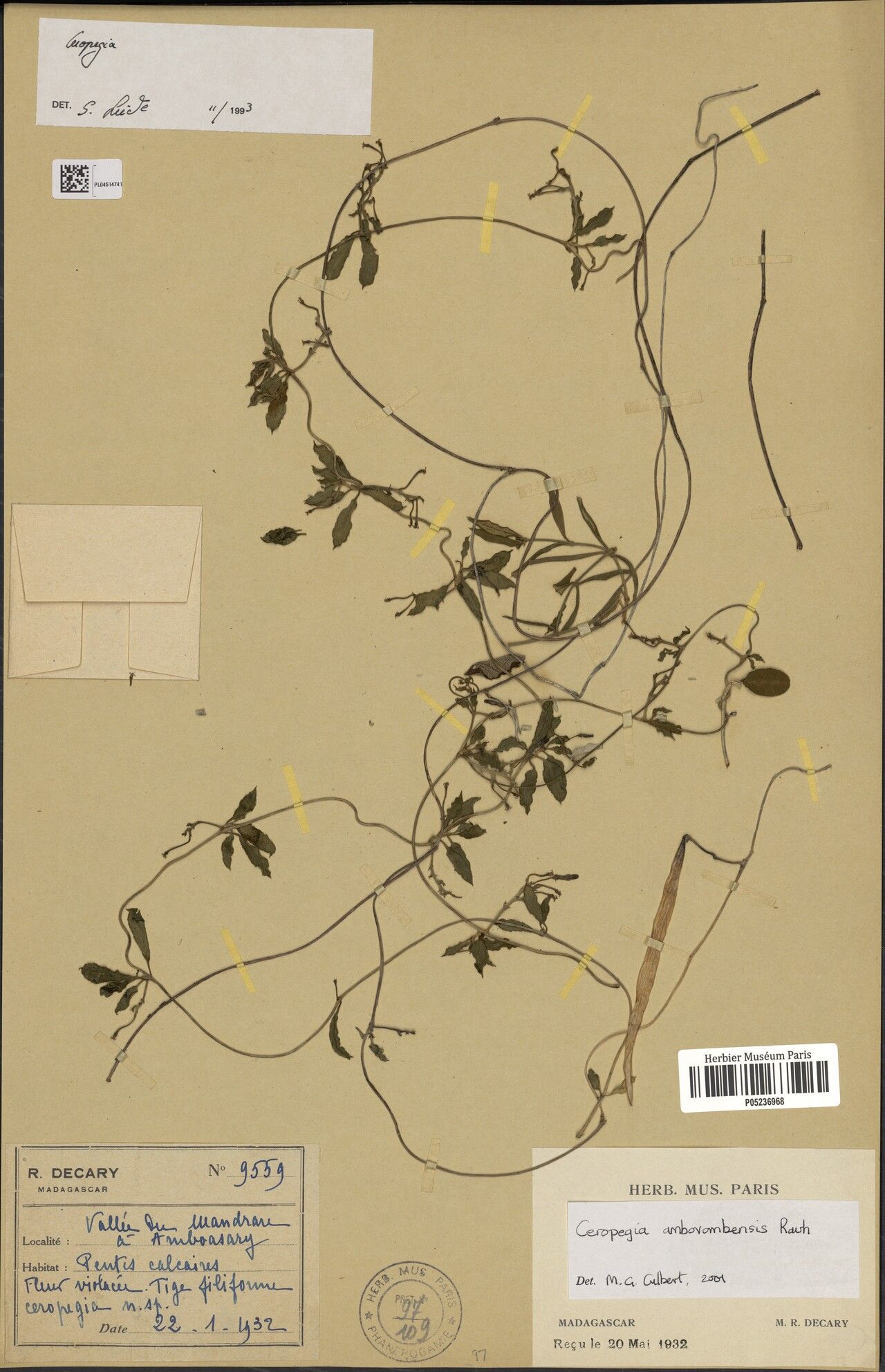
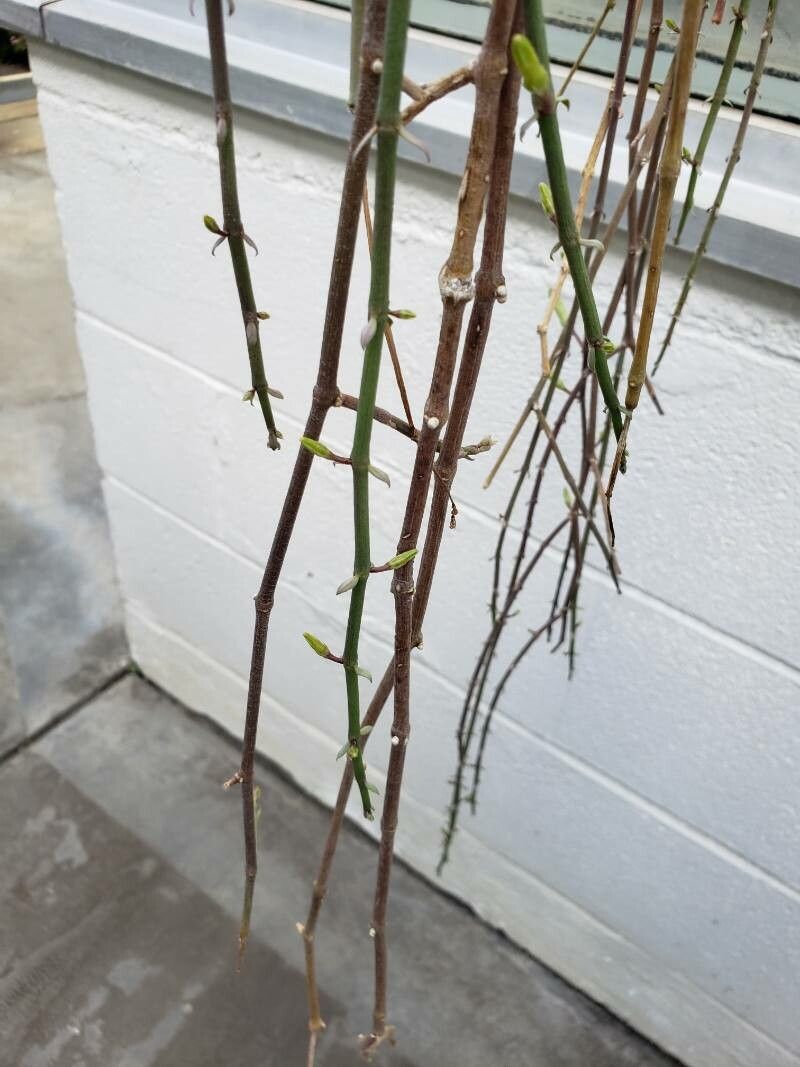
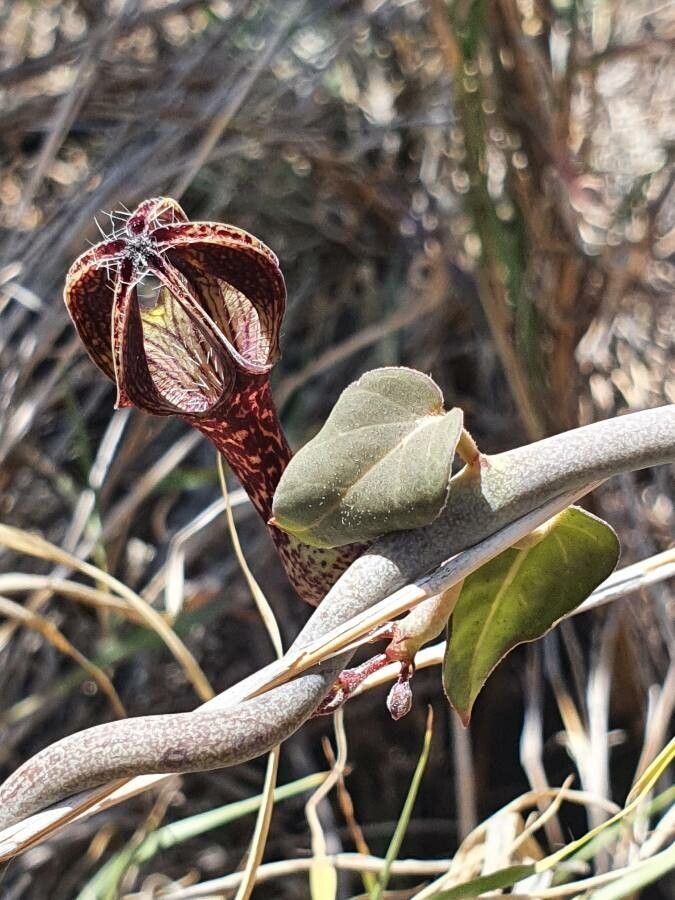
Ceropegia dichotoma (Spanish: cardoncillo) is a flowering plant in the genus Ceropegia (Apocynaceae). It is endemic to the Canary Islands, where it grows on Tenerife (Macizo de Anaga, Buenavista del Norte and Barranco del Infierno in Adeje), El Hierro, La Gomera, and La Palma in the Tabaibal-Cardonal zone at up to about 600 m altitude. It was first described in 1812.It can grow up to 1.2 m in height, and is abundant in terrains with good drainage in grainy soil and plenty of sun and prolonged dry climate. The flowers are grouped from two to seven at the end of the trunk; each flower 3 cm long, tubular, pale yellow, with five narrow lobes joined at the tip; flowering is in autumn and winter. The fruit is a pair of large horn-shaped capsules up to 12 cm long.
Needle vine has moderate disease resistance but is relatively sensitive to humidity and overwatering. It also becomes more prone to disease when it is kept in low light and overwatered. In terms of care, Needle vine is drought-tolerant and can withstand extended periods without watering. It requires little fertilizer and only occasional pruning. These characteristics make it suitable for people of all experience levels, especially those who prefer to spend less time on plant care and who may sometimes be away from home for long periods. It is a good option for people who do not want to spend much time caring for their plants but still want an easy-to-maintain plant.
How to keep Ceropegia Dichotoma.
Light
Needle vine does best when it receives unobstructed sunlight all day. That level of exposure encourages vigorous growth. Too little sun can hinder its development, while too much can be damaging. In its natural setting, it generally does well in sunny conditions.
Water
The needle vine is well-suited for arid environments and requires only minimal watering every 2-3 weeks. Its succulent nature allows it to retain moisture effectively, making it an ideal choice for rocky terrains and dry conditions. This drought-tolerant plant thrives in areas where water is scarce.
Temperature
Needle vine does best in warm conditions and needs relatively high temperatures during the growing season to support growth and metabolism. It prefers plenty of sunlight, suitable moisture, and good air circulation. However, it can be damaged by very low temperatures and by overwatering. It's important to maintain balance and avoid both excessively high heat and overly dry conditions.
Fertilizer
For Needle vine, light applications of fertilizer once or twice a year during the growing season are enough. Do not fertilize in winter or summer when the plant is dormant. Cut back on fertilizer for plants that have been repotted and wait a couple of months after repotting before applying fertilizer. Fertilizing helps maintain healthy growth and encourages blooming.
Pruning
Needle vine is a succulent characterized by its slender stems and tubular flowers. To keep it healthy and encourage more blooms, it's best to prune the plant between early and late spring. Start by removing any weak stems and trimming back excessive growth. Be careful not to cut back more than one-third of the plant, as excessive pruning can cause stress. This careful pruning will help promote vigorous growth and result in fuller, more robust branching.
Pot & Repot
Repot your needle vine every 2 to 3 years, ideally in late winter or early spring. Choose a taller, well-draining container that is slightly larger than the current one. Once repotted, place the needle vine in a location with bright, indirect light. Be sure to water consistently, taking care not to overwater, to help the plant recover.
Botanical profile.
- Plant Type
- Herb
- Life Cycle
- Perennial
- Genus
- Ceropegia
- Family
- Apocynaceae
- Hardiness Zone
- 10-12
- Mature Height
- 0.91 m to 2.13 m
- Mature Spread
- 49 cm to 91 cm
- Leaf Color
- Light Green
- Leaf Type
- Semi-evergreen
- Flower Color
- Yellow, Green
- Flower Size
- 2.03 cm to 3.05 cm
- Bloom Time
- Summer, Early fall, Mid fall
- Planting Time
- Spring, Summer, Autumn
- Harvest Time
- Fall, Early winter, Mid winter
Reader questions.
How should I water my Needle vine?
To properly water the Needle vine, it's important to use filtered water at room temperature. Tap water may contain harmful particles, so filtering it is preferable. Additionally, the water should be at room temperature or slightly warmer to avoid shocking the plant, as it comes from a warm environment. It's best to avoid overhead watering, as this can lead to problems with the foliage. Instead, simply apply the filtered room temperature water directly to the soil until it is completely soaked. This helps moisturize the roots and allows them to spread in the soil to gather the necessary nutrients.
Why should I put fertilizer on my Needle vine?
Fertilization is crucial for maintaining the leaves of the Needle vine. It ensures that the leaves not only look great but also function properly. Proper fertilization leads to leaves with consistent color and a healthy texture. Moreover, fertilization benefits the Needle vine below the soil's surface by promoting the growth of new roots and maintaining existing ones. This not only keeps the plant healthy in the present but also enhances its ability to absorb soil nutrients in the future.
What are the sunlight requirements for Needle vine?
Needle vine, also known by its botanical name Ceropegia dichotoma, requires full sun, meaning it thrives in conditions where it receives more than 6 hours of sunlight daily. It can also tolerate partial sun, which is about 3-6 hours of sunlight. It is essential to observe the movement of sunlight through your garden to find the best spot that provides a balance of light and shade, ensuring the plant's wellness and vigorous growth.
What is the Needle Vine?
The Needle Vine, known botanically as Ceropegia dichotoma, is a plant species with distinctive characteristics. Unfortunately, details such as its essential features, symptoms of care needs, or additional information were not provided.
What should I do if I give my Needle vine too much or too little water?
Overwatering is a more common issue for Needle vines and can cause wilting, yellowing, and diseases like root rot, mold, and mildew. Underwatering is less common but can cause brittle, brown leaves. It's important to quickly notice and address signs of overwatering, as some diseases may be irreversible if left too long. Reduce watering if you see early signs of overwatering and replace poorly draining soil. If your Needle vine is receiving too little water, simply water more regularly until signs of drought stress disappear.
When should I fertilize my Needle vine?
If you grow your Needle vine outdoors, it will send out new growth in early spring. This is when you should start fertilizing it for the year. Typically, a single application of fertilizer in the spring is enough for the Needle vine to thrive. However, if you want to maximize its growth, you can fertilize it multiple times during spring and early summer. In this case, you should feed it every month to a month and a half.
How does artificial lighting benefit indoor Needle vine plants?
For indoor Needle vine plants, when natural sunlight is insufficient, artificial lighting serves as a crucial substitute to promote healthier and faster growth. LED lights are recommended because they can be tailored to provide specific wavelengths needed by the plants. The artificial light requirement varies: full sun plants need 30-50W/sq ft, partial sun plants require 20-30W/sq ft, and full shade plants need 10-20W/sq ft. The light source should be placed 12-36 inches above the plant, mimicking natural sunlight for 8-12 hours per day.
How often do I need to water my Needle vine?
If your Needle vine is in a pot, the best way to check if it needs water is to stick your finger into the soil. If the first few inches of soil feel dry, then you should water the plant. The same method can be used if you have the Needle vine planted outdoors in the ground. If the top few inches of soil are dry, it's time to water. In the spring and early fall, you will typically need to water about once a week using this method. However, during very hot weather, you may need to water twice a week or more. It's worth noting that mature and well-established Needle vines can withstand drought quite well.
When should I not add fertilizer to my Needle vine?
During the late fall and winter, your Needle vine will go into a dormant phase and stop producing new growth. It is best to avoid fertilizing your Needle vine during this time. If you do decide to fertilize your vine in the spring and summer, gradually lower the frequency as summer approaches because the growth rate of your vine will also slow down. It is important to note that it is not recommended to fertilize your Needle vine during extremely hot weather or when the soil is overly dry. Fertilizing in these conditions can cause stress to your vine and potentially lead to its premature demise.
What are the key symptoms of inadequate sunlight in Needle vine?
When Needle vine receives insufficient sunlight, it may exhibit several symptoms, including smaller new leaves, leggy or sparse growth, and accelerated leaf drop. Growth may become sluggish or cease entirely, new leaves might appear lighter or develop chlorosis, leading to a loss of green color. Sunscald, leaf curling, wilting, and leaf scorching can also occur due to excessive sunlight or abrupt exposure changes, indicating the balance of light exposure is essential for plant health.
How much water does my Needle vine require?
When watering your Needle vine, it's important not to hold back on the amount of water you give. Check if the top two to three inches of soil are dry, and if so, give the plant a thorough watering. Make sure to fully saturate the soil, allowing excess water to flow out of the drainage holes at the bottom of the pot. If you don't see any excess water draining, it's likely that you haven't watered the plant enough. However, be careful not to let water accumulate in the soil, as this can be harmful to the plant. On the other hand, if water doesn't drain well through the pot, it's a sign that the soil doesn't drain properly, which is bad for the health of the plant. Finally, if the plant is outdoors, one inch of rain per week should be sufficient.
Which fertilizer should I use for my Needle vine?
Choosing the best fertilizer for a Needle vine is easy. Use a general-purpose garden fertilizer with equal amounts of nitrogen, phosphorus, and potassium, like one with a 10-10-10 ratio. Avoid fertilizers with high nitrogen levels. Granular fertilizers are best for Needle vines and should be slow-release. You can also feed the plant with organic soil amendments like compost.