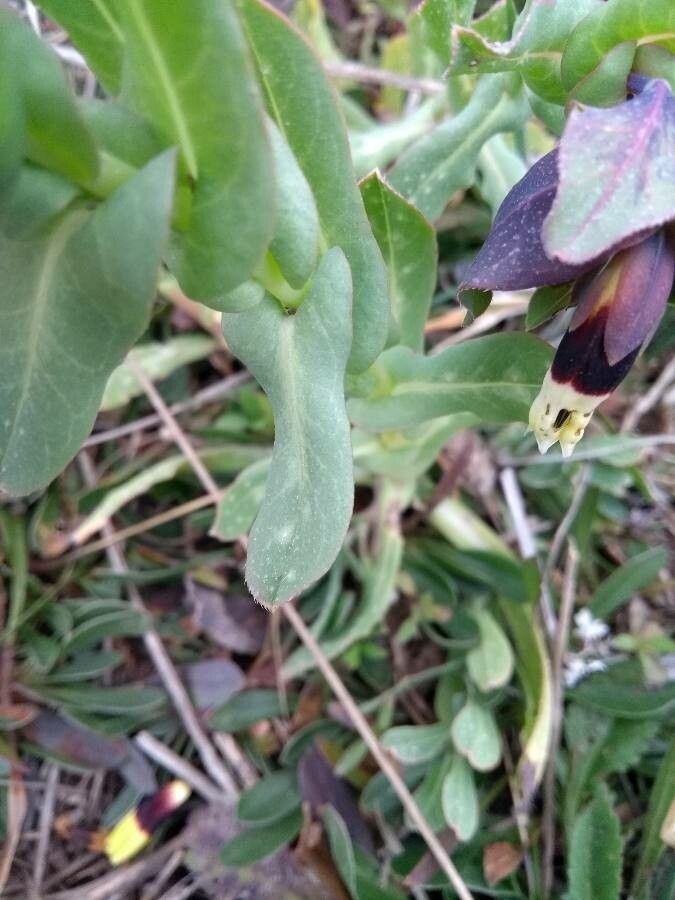
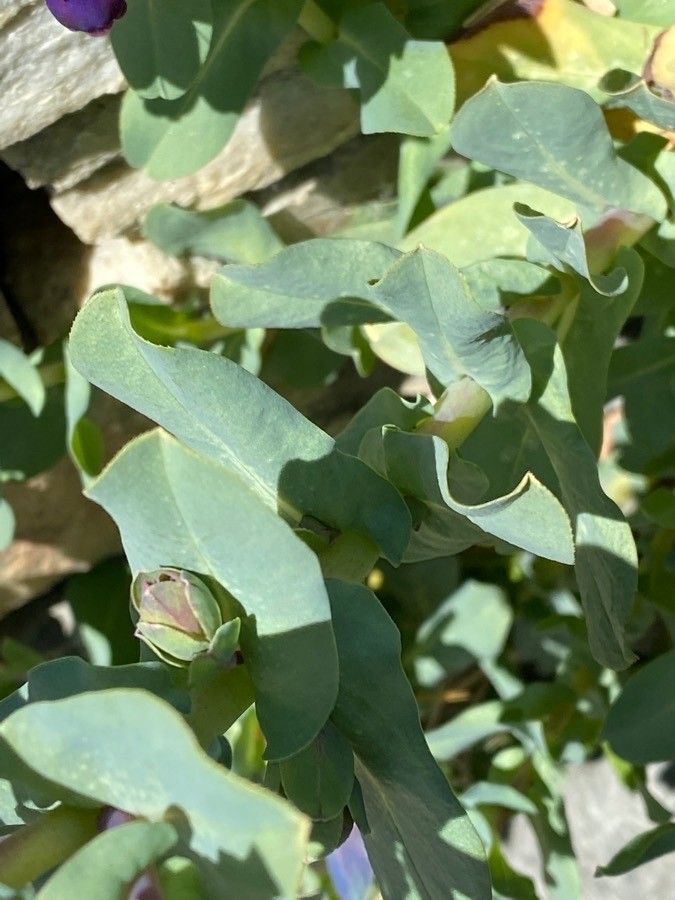
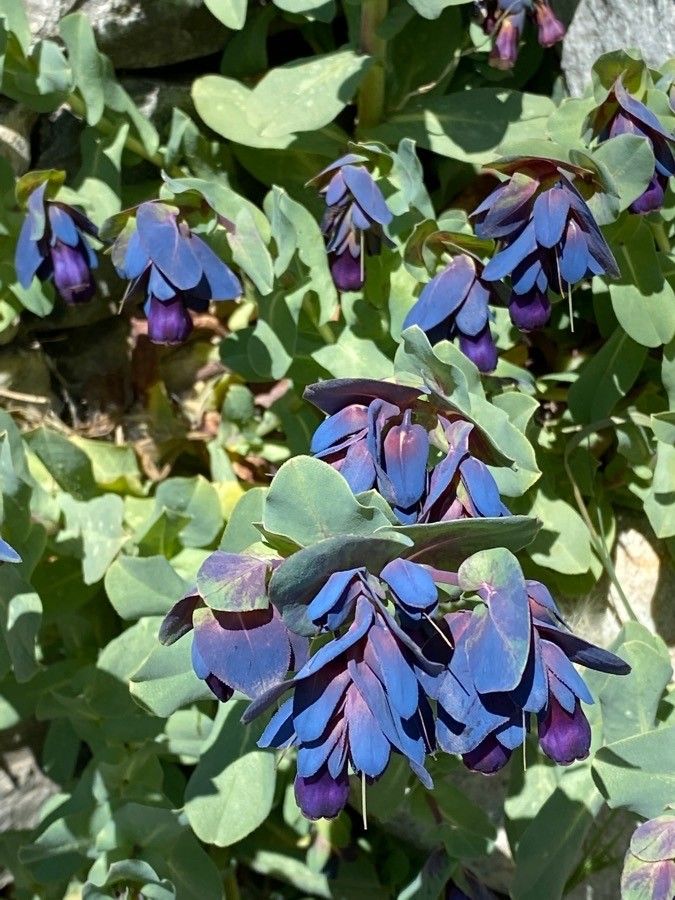
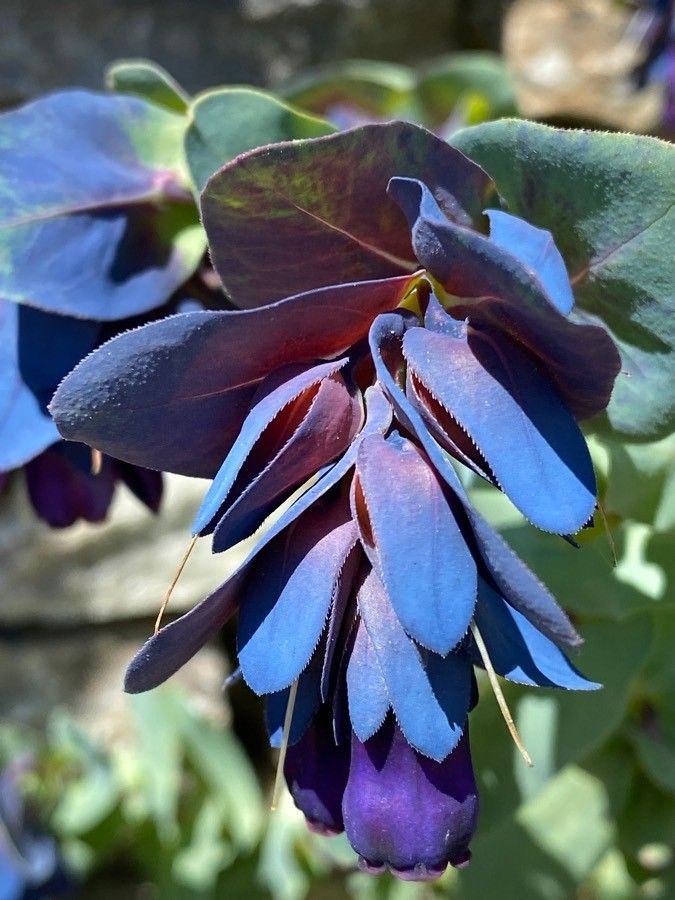
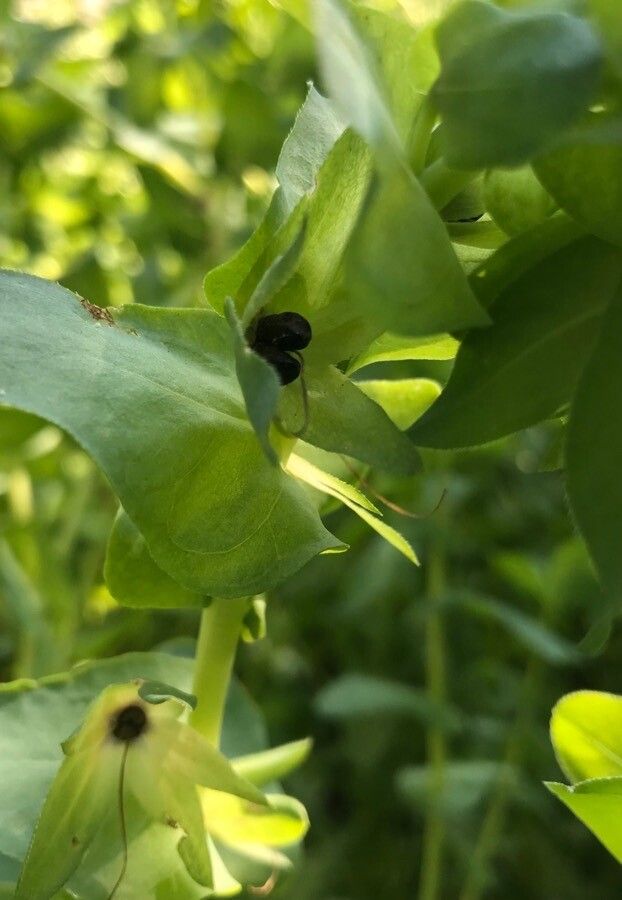
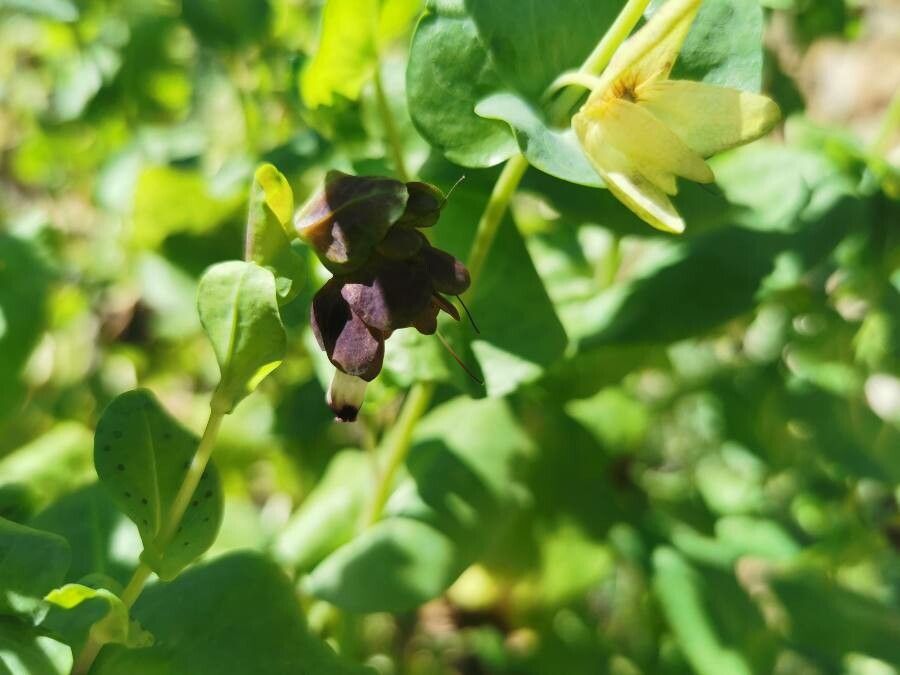
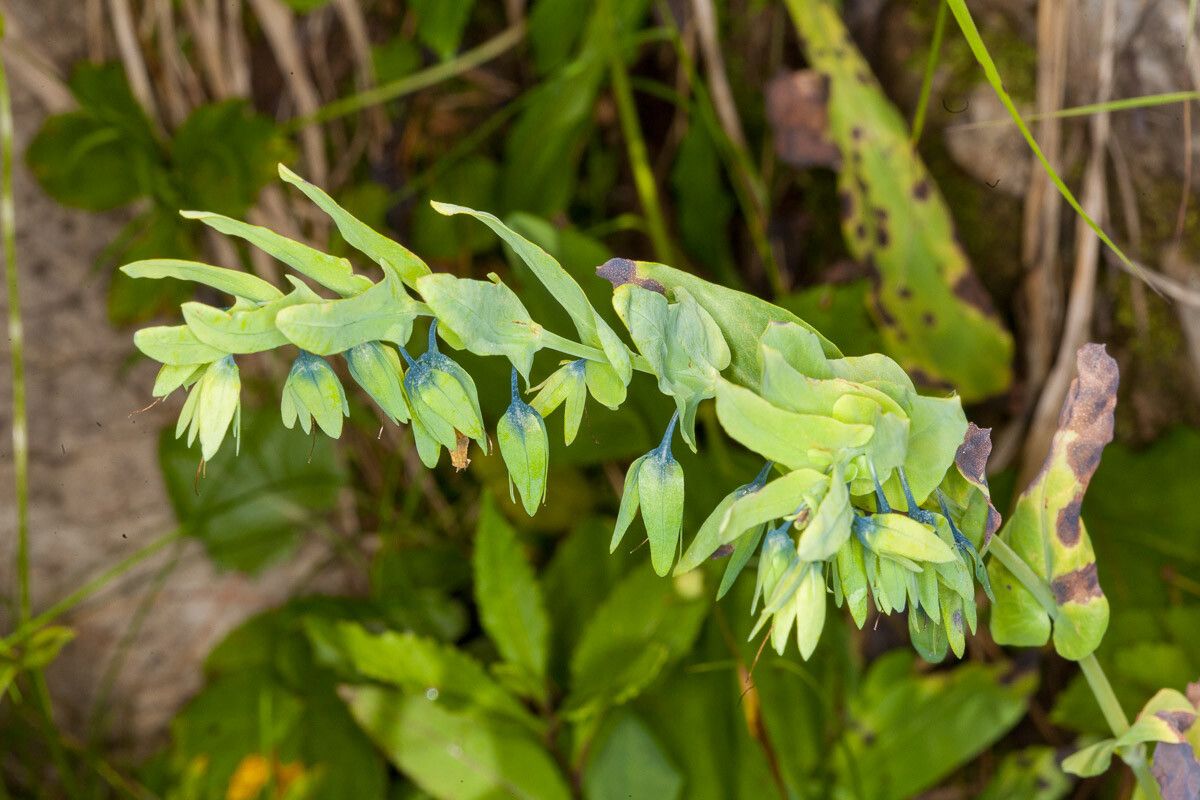
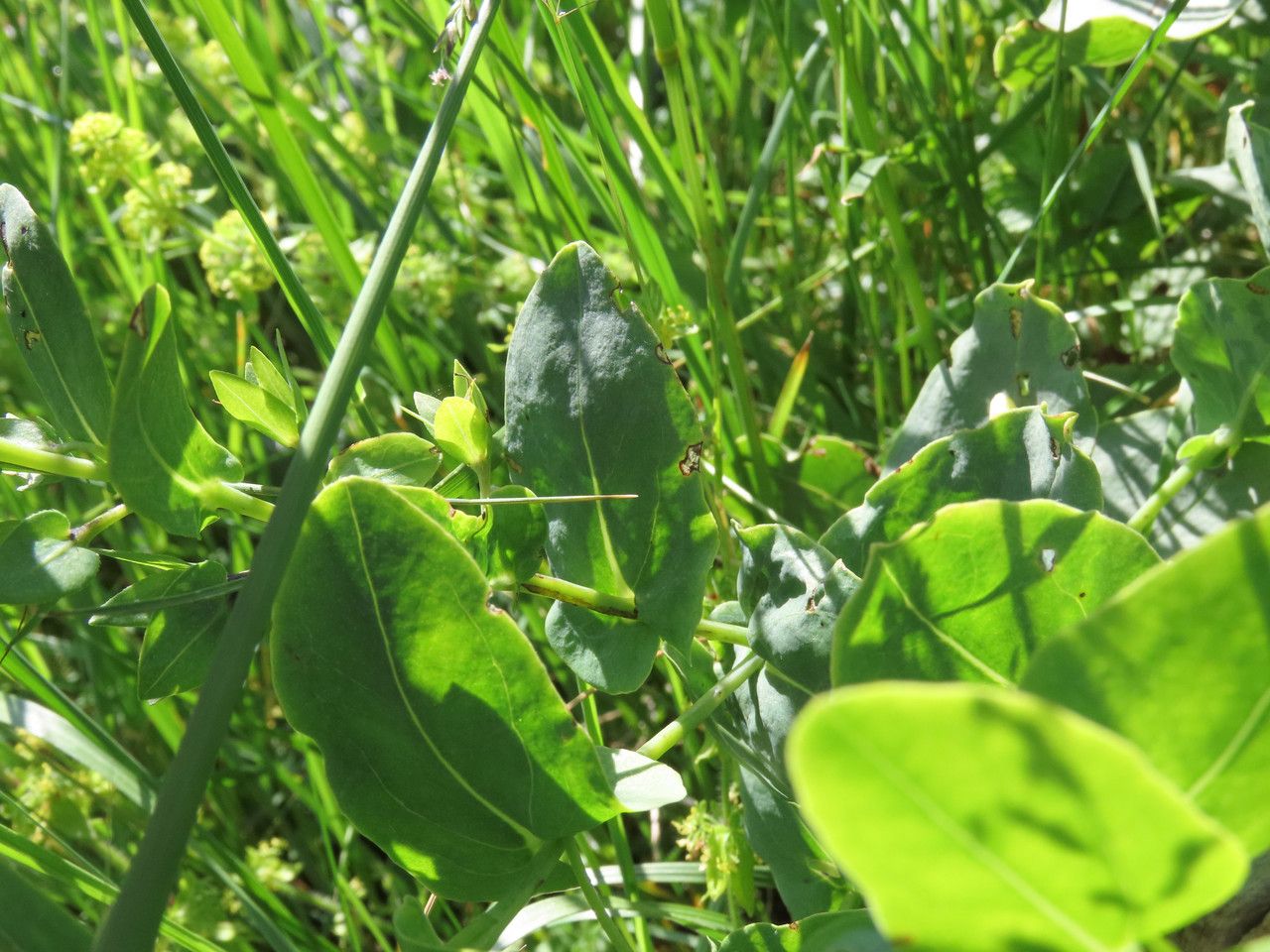
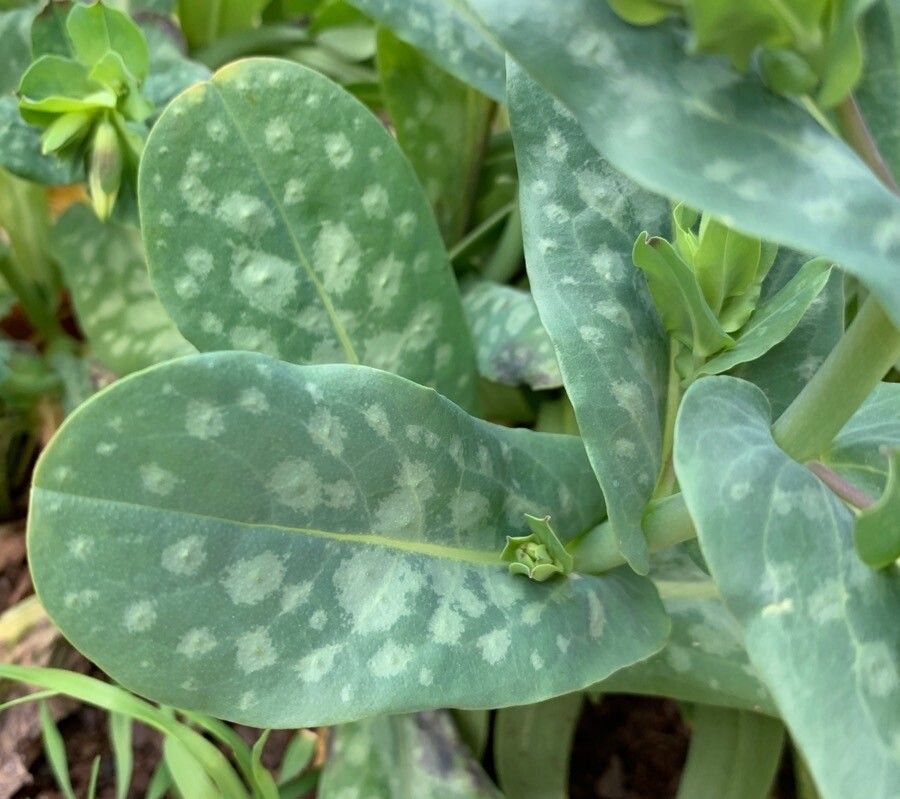
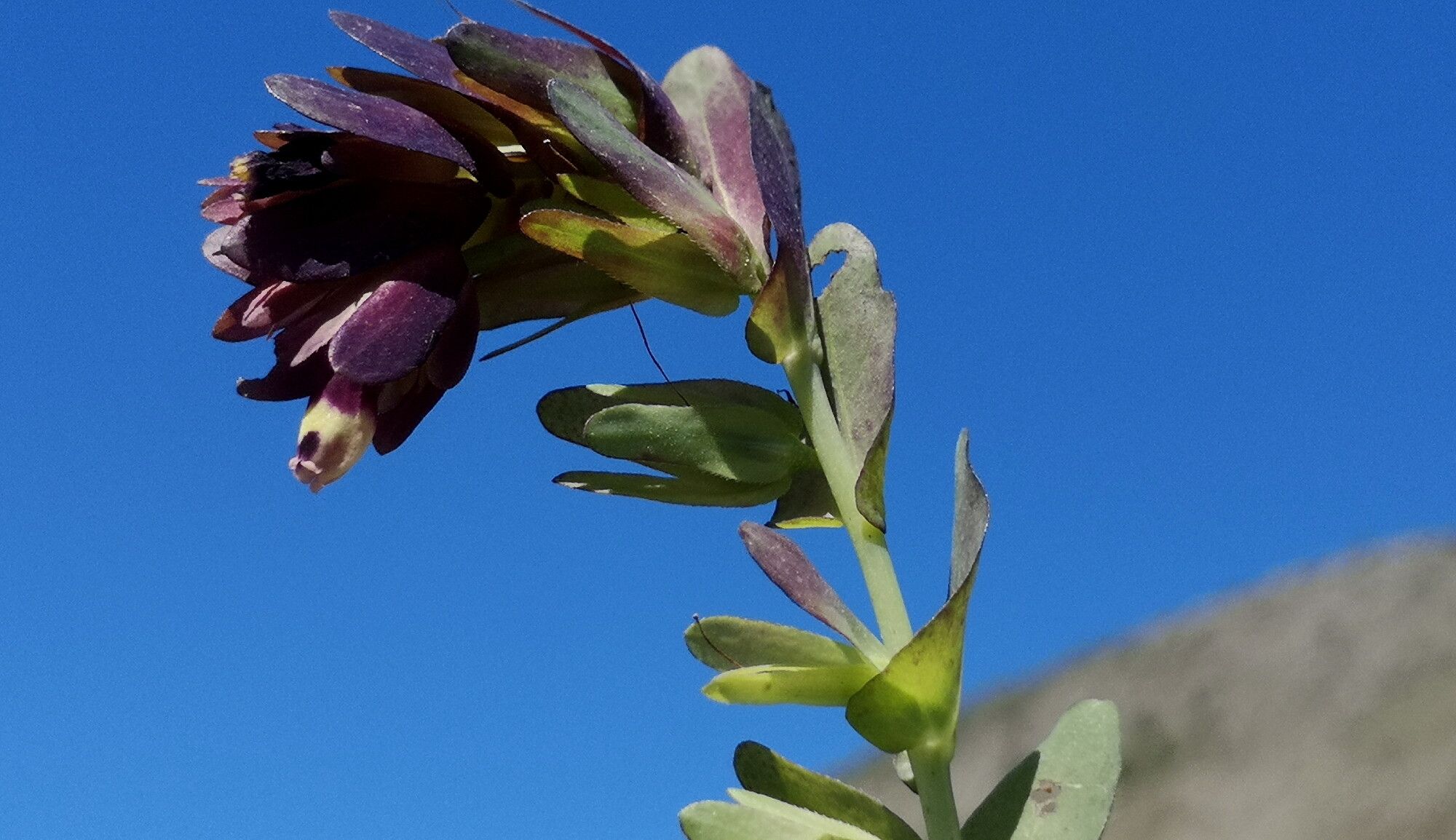
Cerinthe major, called honeywort along with other members of its genus, is a species of flowering plant in the genus Cerinthe, native to the Mediterranean region, and introduced to New Zealand. Gardeners have a choice along a spectrum of cultivars ranging from Cerinthe major subsp. major, with sea-green bracts and yellow flowers, to Cerinthe major subsp. purpurascens with blue bracts and purple flowers.
Honeywort is fairly disease-resistant and typically not prone to illnesses. However, it can be vulnerable to pests and diseases present in its surroundings. Such infections are generally mild. In terms of care, this plant needs moderate maintenance. It should be pruned regularly to preserve an attractive appearance and support healthy growth. Applying fertilizer can also encourage flowering. Honeywort is suitable for people with outdoor spaces like a garden or patio and does not require extensive gardening experience. When grown indoors it may demand more attentive care.
How to keep Cerinthe Major.
Light
Honeywort needs a generous amount of sunlight to grow well. In its native environment it receives abundant sun, which supports improved development and flowering. While it can tolerate lower light, extended periods with less light may result in stunted growth and poor flowering. Conversely, excessive sun can scorch the leaves.
Water
Honeywort thrives in Mediterranean climates, where it needs well-drained soil and has moderate drought tolerance. It should be watered weekly, with extra watering during dry spells to ensure vibrant flowering. For best results, grow honeywort in full sun, taking advantage of natural rainfall, but be sure to provide additional moisture during long dry periods.
Temperature
Honeywort comes from habitats with moderate temperatures and prefers to grow between 68 to 95 °F (20 to 35 ℃). Seasonal temperature adjustments should match these conditions to promote optimal growth.
Fertilizer
When most of Honeywort’s flowers have fully opened, resume fertilizing. At the peak of bloom production, feed it every three to four weeks, weather permitting. Once the plant begins to produce fewer new flowers, stop fertilizing—there’s no need to feed it when it can no longer generate more blooms.
Pruning
Honeywort features elegant arching stems and striking tubular flowers. To encourage new growth and remove any damaged stems, prune one-third of the plant in early to late spring after the last frost. Be careful to avoid heavy pruning during the summer, as this can stress the plant. Regular maintenance not only enhances the blooms and overall vitality but also improves the aesthetics of your garden.
Botanical profile.
- Plant Type
- Herb
- Life Cycle
- Annual, Biennial
- Genus
- Cerinthe
- Family
- Boraginaceae
- Hardiness Zone
- 7-10
- Mature Height
- 15 cm to 76 cm
- Mature Spread
- 61 cm
- Leaf Color
- Green, Blue
- Leaf Type
- Semi-evergreen
- Flower Color
- Purple, Blue
- Flower Size
- 2.03 cm to 3.05 cm
- Bloom Time
- Late spring, Early summer, Mid summer
- Planting Time
- Spring, Summer
- Harvest Time
- Early summer, Mid summer
- Native Area
- Meditteranean
Other names.
Reader questions.
How should I water my Honeywort plant?
To water Honeywort, there are several options you can choose from: a garden hose with a spray nozzle, a watering can, or any other common watering tool. The good news is that Honeywort is not too particular about the type of water it receives, so rainwater, tap water, or filtered water will all suffice. However, it is best to avoid watering this plant from above because it can harm the leaves and flowers and potentially cause disease. A drip irrigation system is often the ideal solution for watering Honeywort as it distributes water evenly and directly to the soil. If you have Honeywort growing in a container, you can follow a similar watering method but adapt the tools you use. Simply use a cup, watering can, or your tap to apply water directly to the soil in the container.
Why should I add fertilizer to my Honeywort plant?
Plants, including Honeywort, require nutrients to survive. Gardeners, regardless of their experience level, understand this. Without proper nourishment, Honeywort will die soon after its first pollination. To ensure its continuous blooming season and the formation of large, stunning flowers, it is important to provide the appropriate type and quantity of nutrients. Fertilizer is particularly beneficial for Honeywort as it helps develop a robust and healthy root system. This is crucial since the plant's roots are delicate and prone to damage. By fertilizing during planting, Honeywort can establish a sturdy root structure that not only provides stability but also sets the stage for an impressive flowering display. When timed correctly, fertilization can significantly lengthen Honeywort's blooming period.
What are the sunlight requirements for Honeywort?
Honeywort requires more than 6 hours of sunlight daily to ensure healthy growth. It's crucial to observe how sunlight moves through your garden to find spots that provide a balance of light and shade, ideal for your plants' growth. Honeywort's native habitat is abundant in sun exposure, which is essential for its development and flowering. Although it can tolerate some shade, insufficient light over extended periods may lead to stunted growth and poor flowering. However, too much direct sunlight might cause leaf scorching.
What is the native environment of Honeywort?
Honeywort, or Cerinthe major, thrives in environments with moderate temperatures, specifically between 68 to 95°F (20 to 35°C). This range reflects the optimal growing conditions for Honeywort, suggesting it prefers a climate that is neither too hot nor too cold for optimal growth.
What should I do if I give my Honeywort too much or too little water?
If your Honeywort is not getting enough water, the solution is simple: start watering it more frequently. However, overwatering can be a bigger problem. If you overwater your Honeywort, it can get sick and eventually die. To avoid this, choose a sunny location with well-draining soil. If you have an overwatered potted Honeywort, consider repotting it in a pot with better drainage. Make sure to use loose soil and a pot that drains well.
When should I put fertilizer on my Honeywort?
Honeywort undergoes rapid growth as soon as the last frost risk has passed in the early growing season. It is recommended to fertilize Honeywort during this time, specifically during planting. Whether you choose to plant it in the ground or in planters, apply fertilizer at this initial planting stage. This will be the only time you fertilize until later in the year when the blooms are fully developed. As the season progresses and Honeywort blooms reach their maximum size, it is time to resume fertilizing. Begin fertilizing once every three to four weeks, depending on the weather, around the time when the blooms are at their peak output. Once Honeywort starts producing fewer new blooms, cease fertilizing as there is no need to continue when the plant cannot produce more blooms.
Can artificial lighting be used for Honeywort and how?
Yes, artificial lighting can be a vital solution for Honeywort, especially when natural sunlight is insufficient, like in winter or less sunny spaces. Indoor plants benefit from adequate lighting for optimal growth. LED lights are popular for indoor plant lighting as they can provide specific wavelengths needed by plants. The recommended artificial light intensity varies with the type of plant: full sun plants require 30-50W/sq ft, partial sun 20-30W/sq ft, and full shade 10-20W/sq ft. The light source should be placed 12-36 inches above the plant, mimicking natural sunlight distance, and plants typically need 8-12 hours of light per day.
Does Honeywort require special frost protection measures during winter?
Honeywort possesses strong cold resistance, reducing the need for special frost protection measures in winter. However, if winter temperatures are expected to drop below -15°C, it is important to provide cold protection to the plant. This protection can be achieved by covering the plant with materials such as soil or straw. It is also advisable to water the plant abundantly before the first freeze in autumn to keep the soil moist and help prevent drought and water scarcity during the cold months.
How much water does my Honeywort need and how often?
To ensure the healthy growth of your Honeywort plant, it is important to provide regular watering throughout the growing season. Starting in spring, watering once a week should suffice. However, as the season progresses and temperatures rise, you may need to increase watering to two or three times per week. It is crucial not to exceed this frequency, as it can harm the plant. It is also important to maintain moist, but not wet, soil for your Honeywort. When watering a potted Honeywort, you will need to water more frequently compared to an in-ground plant. Potted soil tends to heat up and dry out faster, so watering a few times per week should be sufficient.
When is it not a good time to fertilize my Honeywort plant?
Fertilizing is important for Honeywort, but it's crucial to know when and when not to apply it. In certain situations, it's necessary to hold off on fertilizing. These situations are often related to the climate, but they can also depend on other factors that can be controlled. In essence, if there is an issue with the plant, the soil, or the climate, it's best to wait until things have improved and the plant has recovered before fertilizing. For instance, if there are sudden and severe weather changes, such as a cold snap in the middle of summer, it's advisable to wait until the weather is warm again before applying fertilizer. The same applies if the soil becomes too dry or compacted to absorb the fertilizer properly. In this case, the fertilizer would go straight to the roots without being diffused by the soil, which can be detrimental to the Honeywort's roots. Similarly, during the hottest parts of the day when temperatures rise to around 90 degrees Fahrenheit, it's best to avoid applying fertilizer. The breakdown of fertilizer can vary depending on temperature, and allowing it to break down too quickly in hot temperatures may not be beneficial for the plant. Additionally, if there are any pests or diseases present, it's important to address and resolve those issues before reapplying fertilizer.
What are common symptoms of inadequate light for Honeywort?
When Honeywort doesn't receive enough light, it may show several symptoms such as small leaves (new leaves smaller in size compared to mature ones), leggy or sparse growth (longer spaces between leaves or stems, leading to a sparse appearance), faster leaf drop (older leaves shed early to conserve resources), slower or no new growth (the plant enters survival mode and stops producing new leaves), lighter-colored new leaves (indicating a lack of chlorophyll), chlorosis (leaves turn yellow due to chlorophyll breakdown from too much sunlight), sunscald (damage from intense sunlight exposure), leaf curling (leaves curl to minimize surface area and reduce water loss), wilting (loss of turgor pressure causing drooping), and leaf scorching (brown, dry edges on leaves due to excessive sunlight).
How does Honeywort respond to low temperatures?
Honeywort is cold-tolerant, ideally kept above 0°C during winter. However, if temperatures fall below -15°C, there might not be noticeable changes during winter, but a decrease in sprouting or even no sprouting might occur in spring. If this happens, it's recommended to remove any parts that have failed to sprout in spring as a solution.