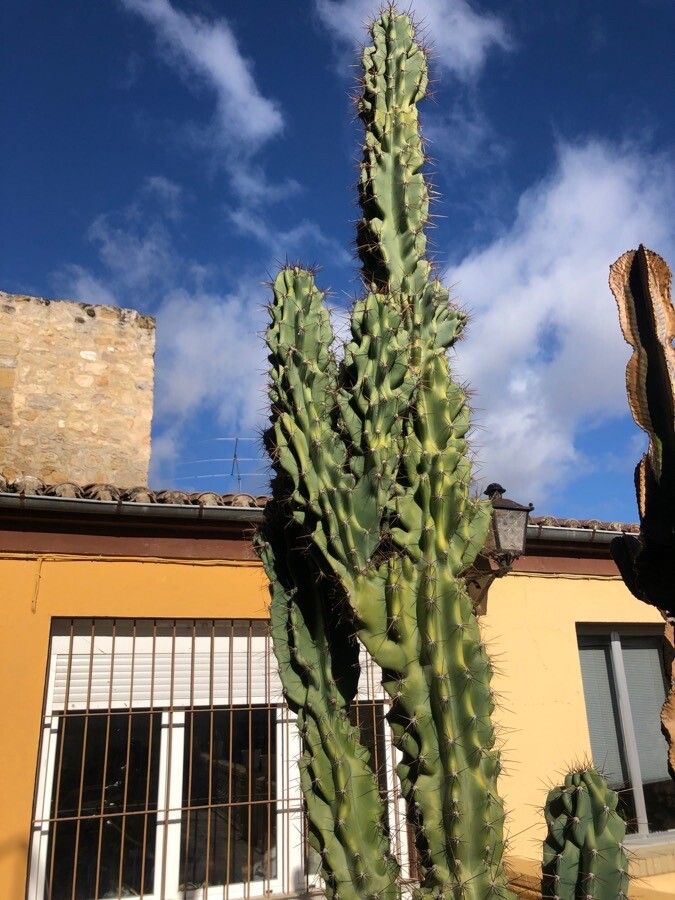
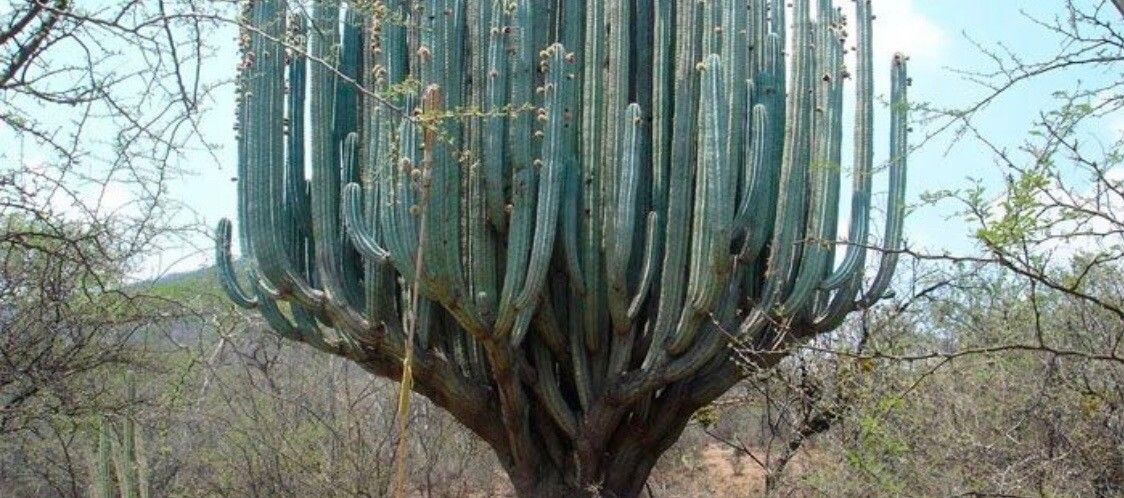
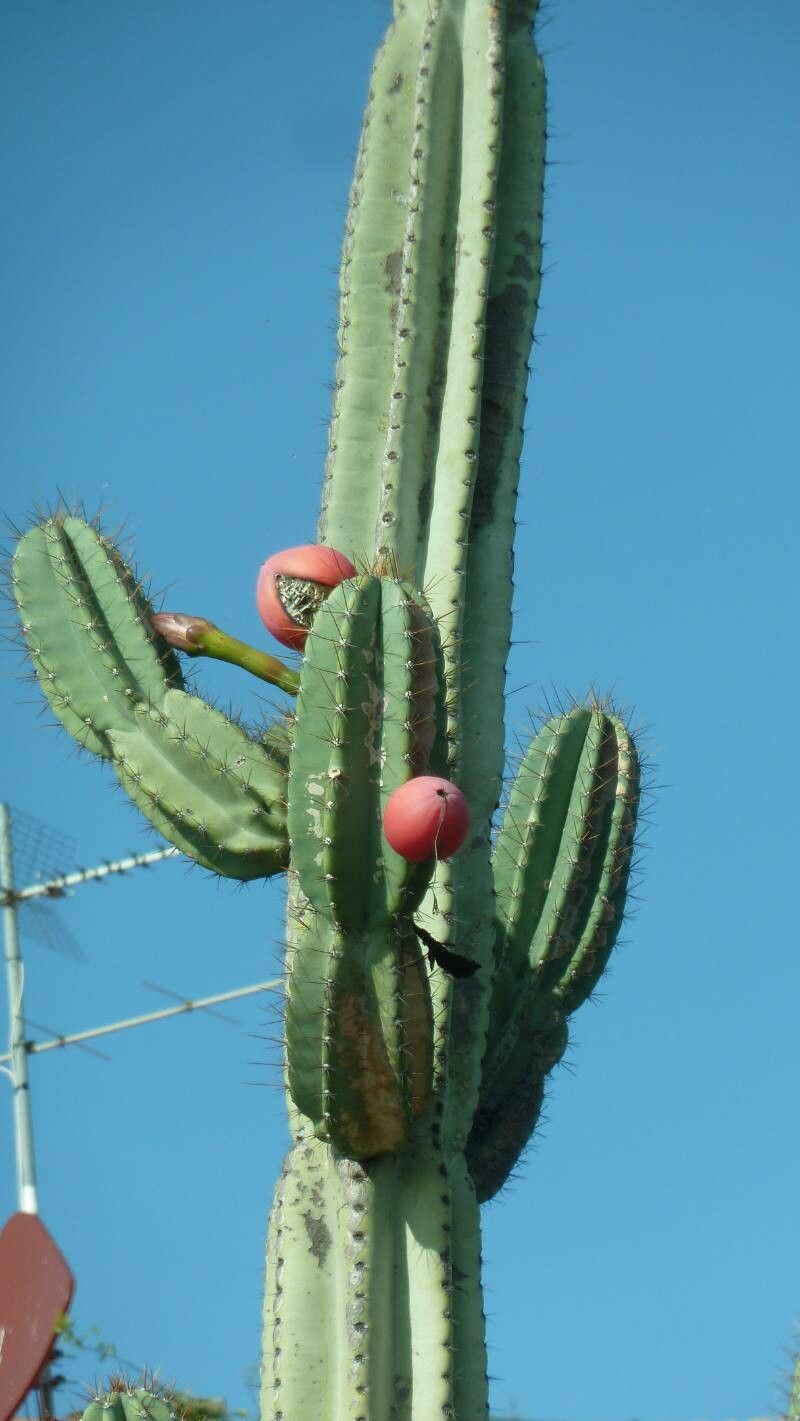
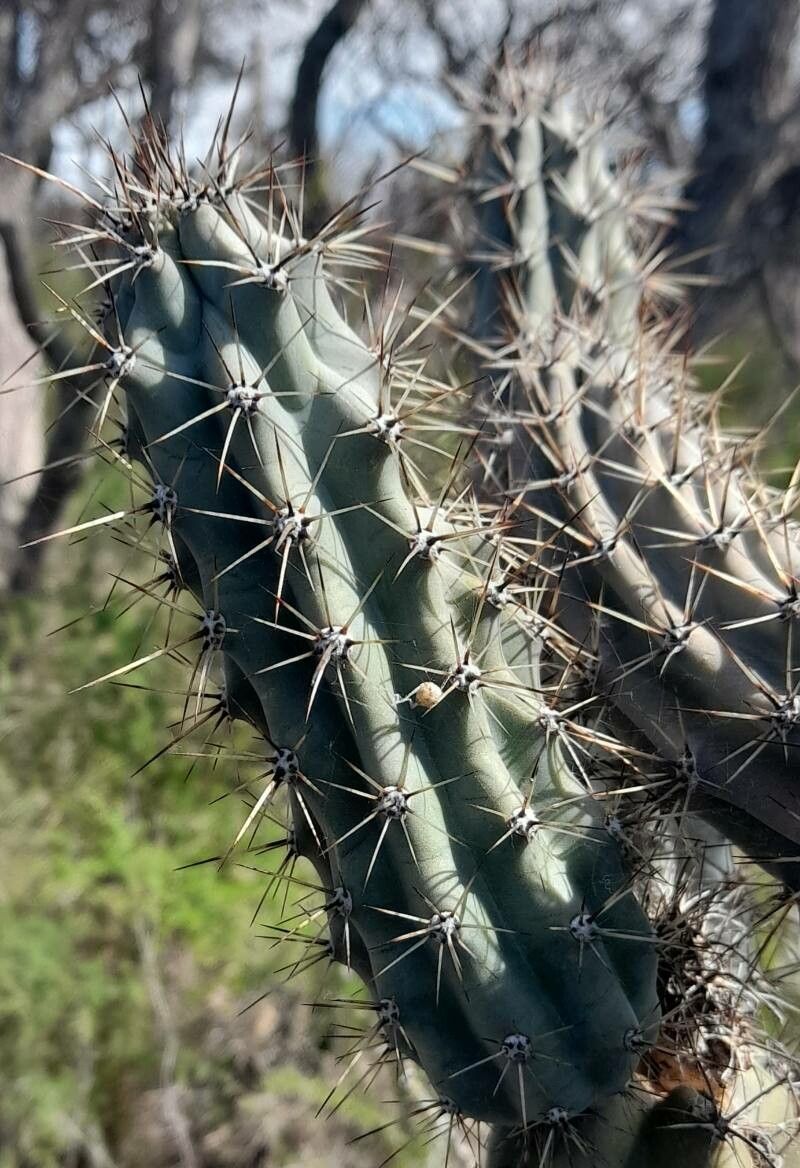
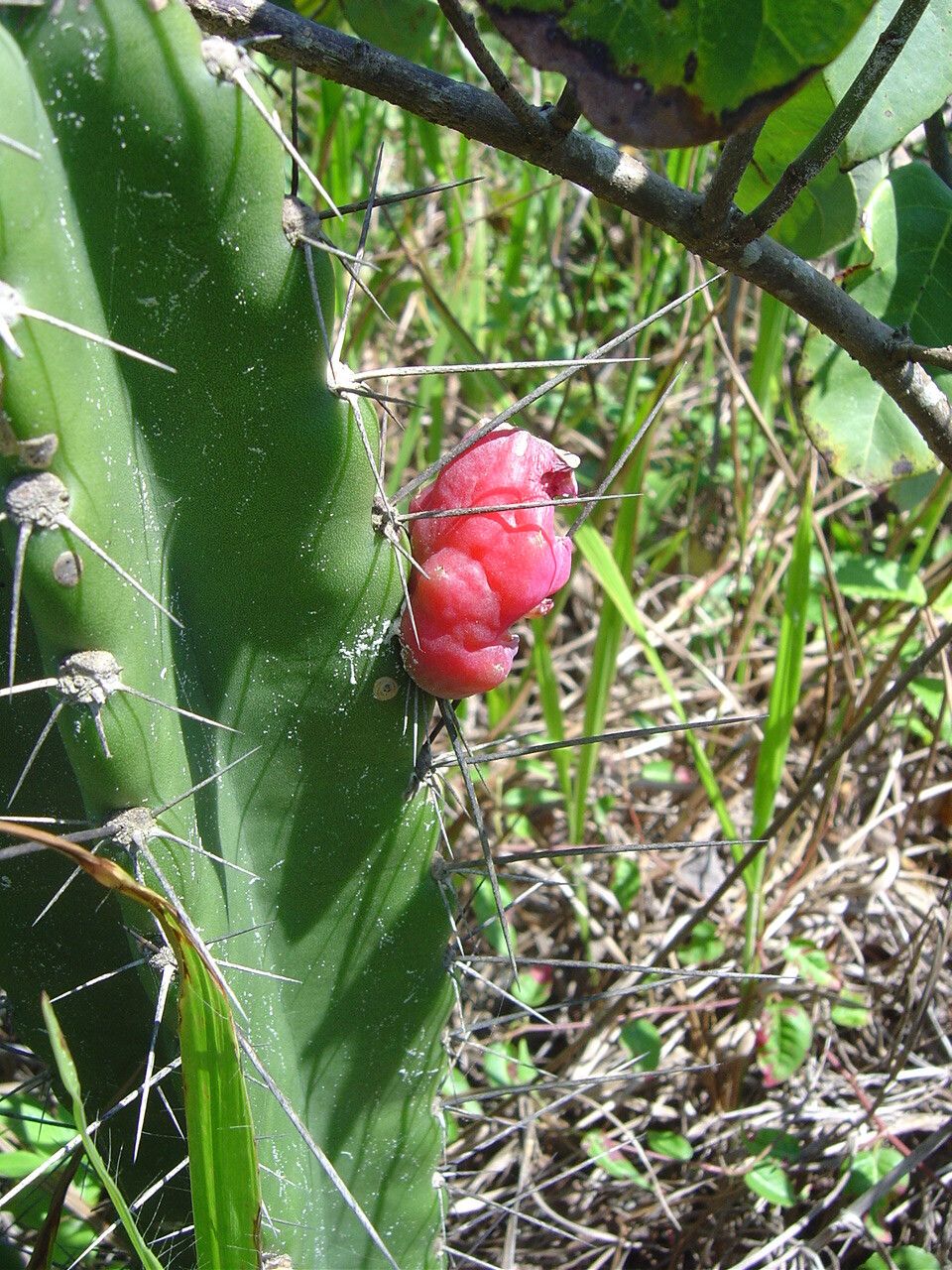
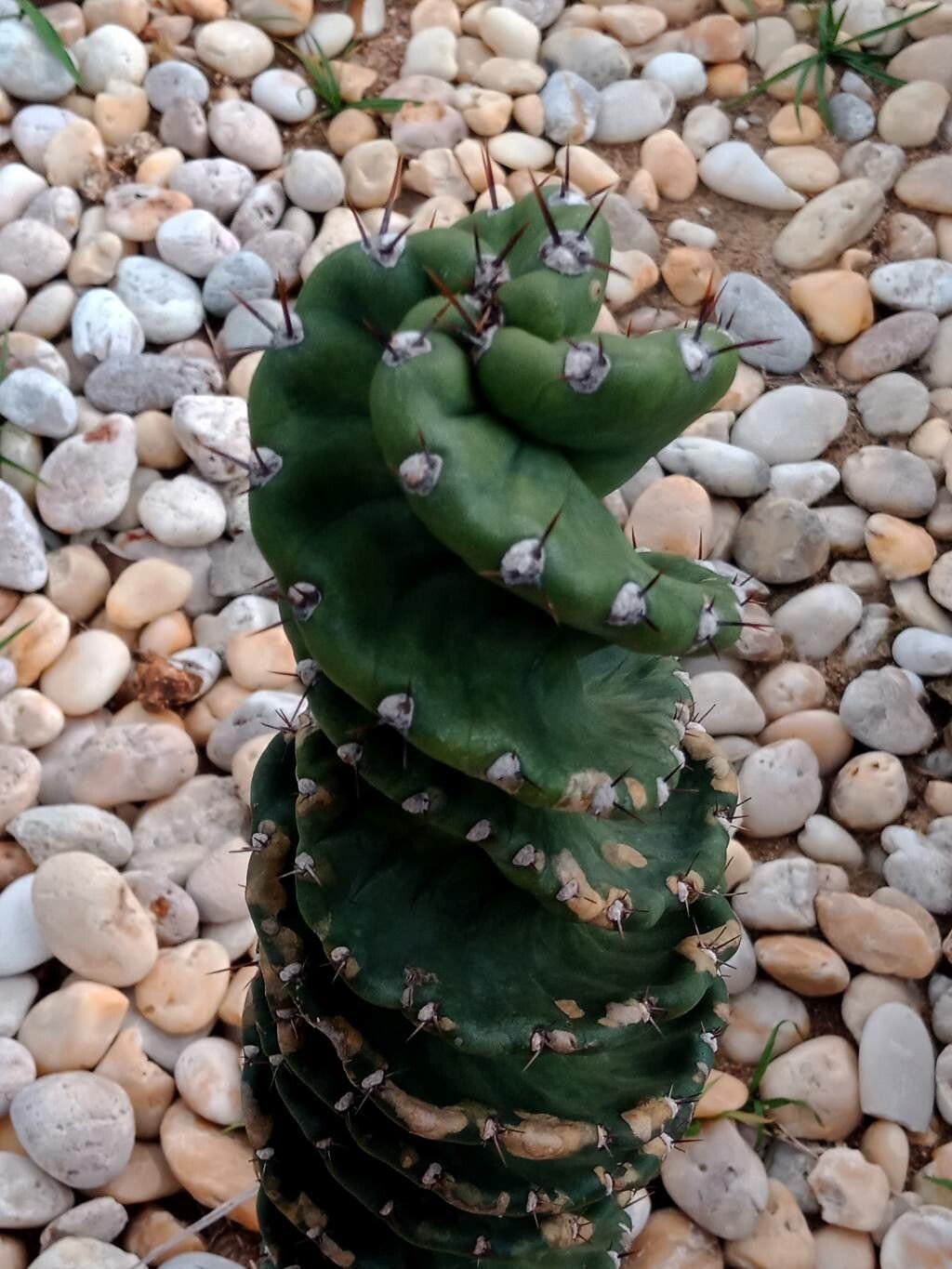
Cereus jamacaru, known as mandacaru or cardeiro, is a cactus native to central and eastern Brazil. It often grows up to 6 metres (20 feet) high. A thorn-less kind is used for animal feed. The most common kind is highly thorny but is also used for animal feed, after burning or cutting off the thorns. Mandacaru is highly drought-resistant.
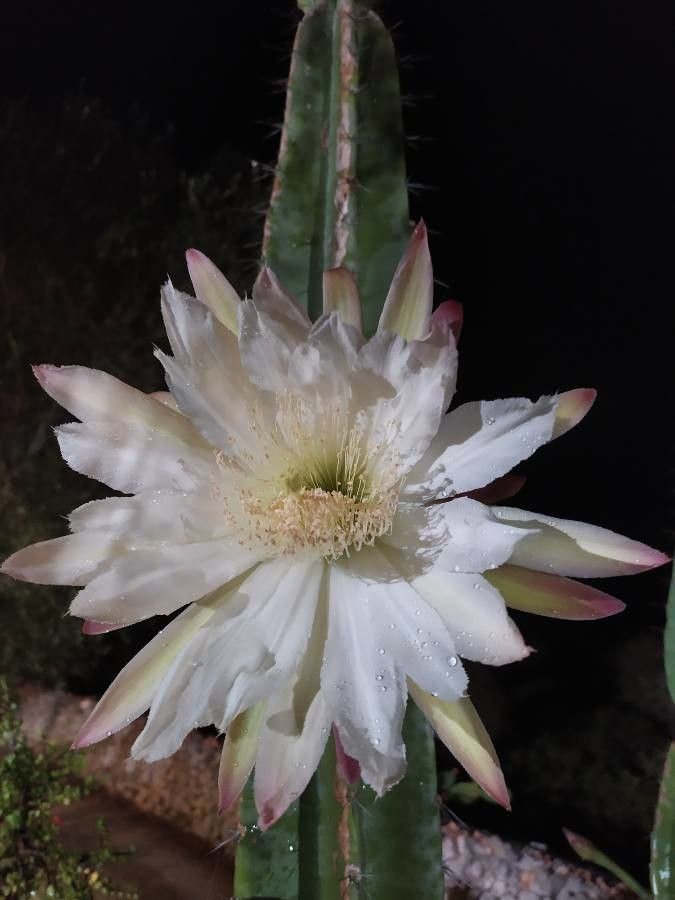
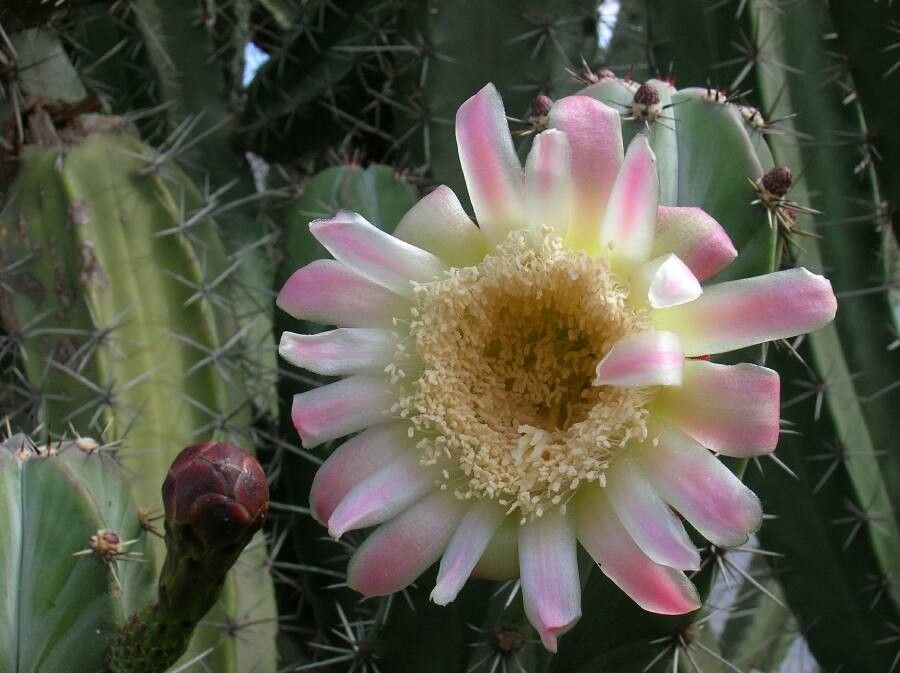
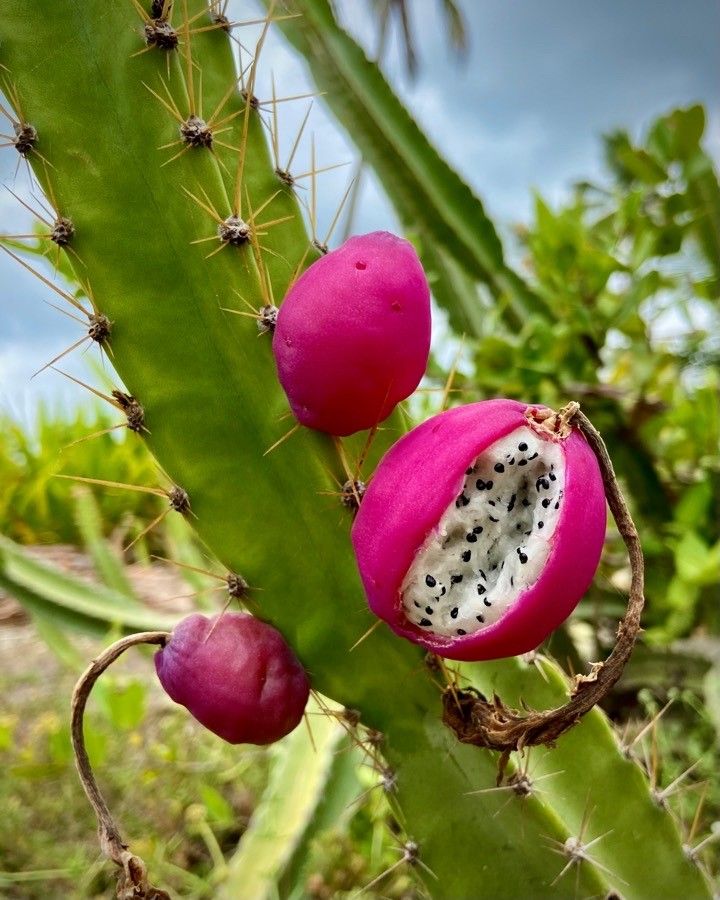
The flowers are white and about 250 mm (10 in) long. The flower buds usually appear in the middle of spring and each flower lasts only for a night. They blossom at dusk and wither by the morning. Its fruit has a very strong violet color. The pulp is white with tiny black seeds, and it is considered very tasty. Many birds feed on them, like the "gralha-cancã" and the "periquito-da-caatinga" from Brazilian caatinga. The mandacaru is featured on the flag of the city of Petrolina in the state of Pernambuco.
The mandacaru, also known as the "queen-of-the-night," gets its name "cereus," which means "candle," from its tall, candelabra-like stems. These stems produce flowers that open in the evening, effectively "lighting up" the night.
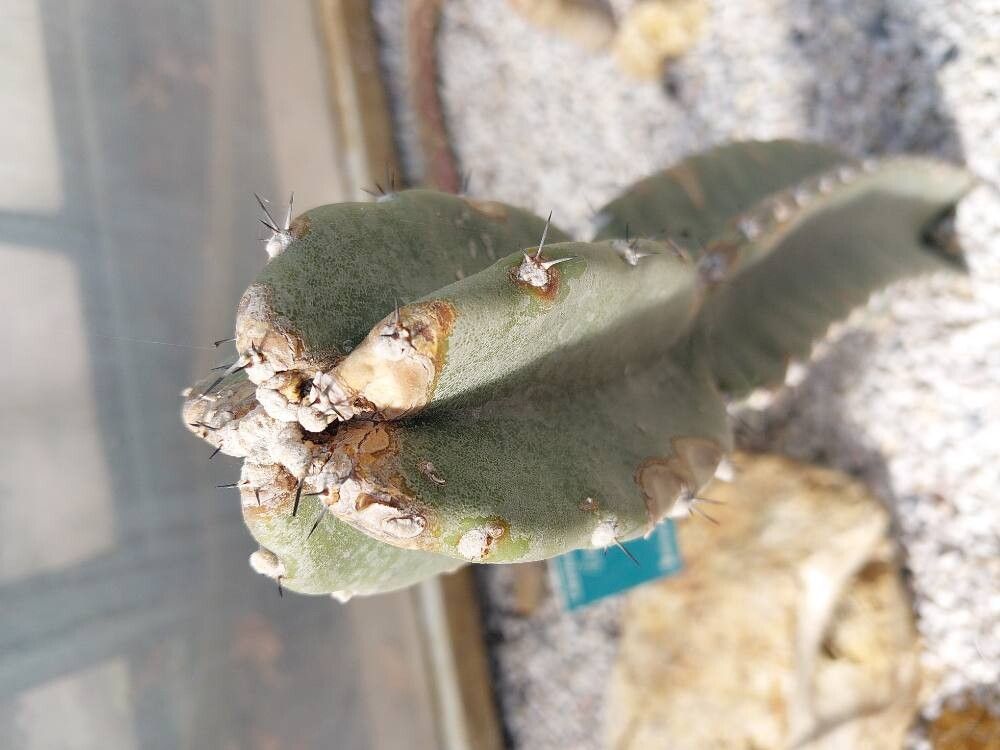
Mandacaru is resistant to many diseases and tolerates normal care conditions without becoming ill easily. It can, however, be vulnerable to mealybugs; these pests may cause some damage but are typically not a serious problem. Regarding care, Mandacaru is drought-tolerant and does not require frequent watering. It can withstand long stretches without water and needs little fertilizer. Still, if kept in poor light and overwatered, it is very prone to root rot. Overall, Mandacaru works well for people who want to spend less time on plant care, as long as its basic needs are understood and met. It is especially suitable for those who are away for long periods and may forget to water regularly.
How to keep Cereus Jamacaru.
Light
O Mandacaru prefere bastante sol e pode prosperar sob luz solar plena, o que reflete seu habitat de origem, onde a incidência de sol é intensa. No entanto, também se ajusta bem a locais com menor exposição solar. A falta de luz suficiente pode prejudicar seu desenvolvimento, enquanto o excesso pode queimar a planta.
Water
Mandacaru is a plant that is well-suited to arid regions due to its remarkable drought tolerance. Its succulent nature enables it to store water effectively, so it only needs watering about once a month. Ideally grown outdoors, Mandacaru thrives in sandy, well-draining soil, which helps prevent root rot and mimics the conditions of its natural habitat.
Humidity
This plant prefers dry conditions, so don't mist it. However, watering it less often can also thrive in higher humidity.
Temperature
Mandacaru is native to climates with temperatures between 68 and 100 ℉ (20 to 38 ℃), preferring warmer conditions. Seasonal temperatures should fall within this range to preserve the plant's health and support its growth.
Fertilizer
Mandacaru only needs light fertilizer applications 1-2 times a year during the growing season. Do not fertilize in winter or summer when it is dormant. Cut back on fertilizer for plants that have been repotted, and wait a couple of months after repotting before fertilizing. Fertilizing promotes healthy growth and encourages blooms.
Pruning
Mandacaru requires minimal pruning. To help the plant direct nutrients toward healthy growth, remove any withered flowers and branches regularly.
Pot & Repot
Repot your mandacaru cactus every 2 to 3 years, ideally in early spring. Choose a pot that is about 20% larger than the previous one to accommodate growth. Make sure the pot has good drainage, and water the plant sparingly after repotting. Place the mandacaru in a bright spot to help it recover. Be careful when handling the plant because of its spines; it’s advisable to wear gloves for protection.
Botanical profile.
- Plant Type
- Tree
- Life Cycle
- Perennial
- Genus
- Cereus
- Family
- Cactaceae
- Hardiness Zone
- 9-11
- Mature Height
- 3.96 m to 11.89 m
- Mature Spread
- 15 cm
- Leaf Color
- Green, Blue
- Leaf Type
- Deciduous
- Flower Color
- White
- Flower Size
- 15.24 cm to 20.32 cm
- Bloom Time
- Mid summer
- Planting Time
- Spring, Autumn
- Harvest Time
- Mid summer, Late summer, Early fall
- Native Area
- Brazil
Other names.
Reader questions.
How should I water my Mandacaru plant so it gets the best care?
When watering this species, it is recommended to water it from the bottom. This allows for proper absorption of water into the roots, which helps nutrients circulate throughout the entire plant. Spilling water on the top part can lead to the development of diseases and fungi. If you have irrigation systems, use sprinklers. Specifically, opt for small revolving sprinklers that allow you to adjust the water delivery patterns as needed. Avoid using sprinklers on windy days. Whether your Mandacaru is in a pot or in the garden, it is best to use the soak and dry method. This helps distribute moisture evenly across the root systems, resulting in healthier growth. Some owners may consider a built-in drainage system for their succulents. This involves placing layers of porous materials, such as recycled glass or hydro stones, beneath the soil. These materials serve as a reservoir for excess water, so it's important not to overwater when using these built-in systems.
Why should I put fertilizer on my Mandacaru plant?
When you fertilize Mandacaru, it adds nutrients to the growing medium. While it already stores water and nutrients, applying plant food during the growing season further supports healthy growth. Additionally, fertilizing can encourage mature specimens to produce blooms in the growing season.
What are the sunlight requirements for Mandacaru?
Mandacaru requires generous sun exposure to thrive, indicative of its origin where ample sunlight is prevalent. It can exist under full sun for above 6 hours of sunlight or partial sun with about 3-6 hours of sunlight. Though it also adapts well to settings with less exposure, insufficient light may impede its growth, while too much sunlight can scorch the plant. It's important to observe how sunlight moves through your garden or space, choosing spots that offer the perfect balance of light and shade for the plants, ensuring their health and happiness.
What are the essential care instructions for a Mandacaru?
Mandacaru thrives in climates with temperatures ranging from 68°F to 100°F (20°C to 38°C), preferring warmer environments for optimal health and growth. It enters a dormant state if exposed to colder temperatures and stops growing during the winter. To maintain its health, it's crucial to move Mandacaru indoors when outdoor temperatures drop below 32°F (0°C), placing it near a south-facing window for maximum sunlight exposure. In cases of insufficient natural light, supplemental lighting can be used. The plant's growth slows when the temperature falls below 68°F (20°C), prompting a reduction or complete stop in watering to avoid root rot. For those grown outdoors, halt watering during low temperatures, and consider using a temporary greenhouse or wrapping the plant for insulation against the cold.
What should I do if I give my Mandacaru plant too much or too little water?
If you notice that the Mandacaru plant is turning yellow, it could be due to underwatering or overwatering. Overwatering can lead to fungal infections, so it's important to let the soil dry out and avoid overwatering. Browning and dropping leaves indicate too much moisture, while yellow tips on stems and branches suggest a lack of water. Before buying a Mandacaru, ensure that the soil drains properly. Improper drainage can result in insufficient water supply for the plant in the future. To prevent the plant from dying, avoid constant overwatering and excessive exposure to rain if planted outside. Use rainwater or distilled water, as the plant prefers water with fewer minerals. Squishy stems, drooping growth, and discolored parts are all signs of excess moisture. Give the plant time to recover by allowing the pot to dry and, if necessary, transfer it to a different container to prevent root rot. If planted outside, consider transferring it to a pot during winter to aid recovery.
When should I fertilize my Mandacaru plant?
Mandacaru plants only require a small amount of fertilizer during the growing season, about 1-2 times a year. It is recommended to fertilize in the spring and autumn, avoiding the dormant periods of winter and summer. When repotting, be cautious and reduce the amount of fertilizer. It's best to wait a couple of months after repotting before applying any fertilizer.
How can artificial lighting be used for Mandacaru indoors?
When natural sunlight is insufficient, especially during winter or in less sunny areas, artificial lights offer a critical solution for indoor Mandacaru plants, promoting faster, healthier growth. Effective artificial lighting involves choosing the right type of light, such as LED lights that can be customized to provide specific wavelengths needed by your plants. The intensity needed varies: full sun plants require 30-50W/sq ft, partial sun plants need 20-30W/sq ft, and full shade plants need 10-20W/sq ft. The light source should be placed 12-36 inches above the plant to mimic natural sunlight and be kept on for 8-12 hours per day to replicate natural daylight hours.
How should I care for my Mandacaru in low temperatures?
Mandacaru is sensitive to low temperatures and performs best when the environment is above 68°F (20°C). During winter, ensure the temperature stays above 32°F (0°C) to prevent the plant from becoming weak or wilting. Exposure to temperatures below -5°C can lead to root rot and wilting. If frost damage occurs, trim the frostbitten areas and check for root rot. If found, cut off the rotted roots. You can then propagate the plant from cuttings. To provide a warm environment, move the plant indoors near a south-facing window to ensure it gets enough sunlight. If sunlight is insufficient, consider using supplemental lighting.
How often do I need to water my Mandacaru plant?
Watering frequency for succulents can vary depending on the season. In the summer and spring, you typically only need to water them once every two to three weeks. However, during the winter and fall, it's best to reduce or avoid watering altogether since these plants become dormant. It's important to let the soil dry completely before watering again. It's better to slightly underwater than to overwater. When potted, deep watering at intervals promotes healthier soil growth. When planted outdoors, avoid watering lightly as this encourages shallow root growth. Instead, wait a few weeks and only water when the surrounding soil is too dry.
When is it not a good idea to fertilize my Mandacaru plant?
Mandacaru, like most plants, goes through a dormancy period. During this time, it's best to avoid applying fertilizer. This period occurs in both summer and winter when the plant stops growing. It's also recommended to take a break from fertilizing for the first few months after repotting in the spring.
What are the symptoms of light deficiency in Mandacaru?
In suboptimal lighting, Mandacaru may exhibit several symptoms indicating light deficiency. These include smaller new leaves, leggy or sparse growth, a faster rate of leaf drop, slower or halted growth, paler new leaves, and symptoms of overexposure like leaf scorching, curling, wilting, chlorosis, and sunscald. These signs show the plant's struggle to adapt to insufficient or excessive light, impacting its overall health.
What do I do if my Mandacaru is exposed to high temperatures?
During the summer, it's crucial to keep Mandacaru's temperature below 100°F (38°C). Exposure to temperatures above 109°F (43°C) halts its growth, causes water loss, wilting, and increases susceptibility to sunburn. In such cases, remove any sunburned or rotten parts of the plant. Protect the plant from direct afternoon sunlight until it recovers and resumes growth. If the plant suffers from root rot, cease watering until new roots develop, indicating recovery.