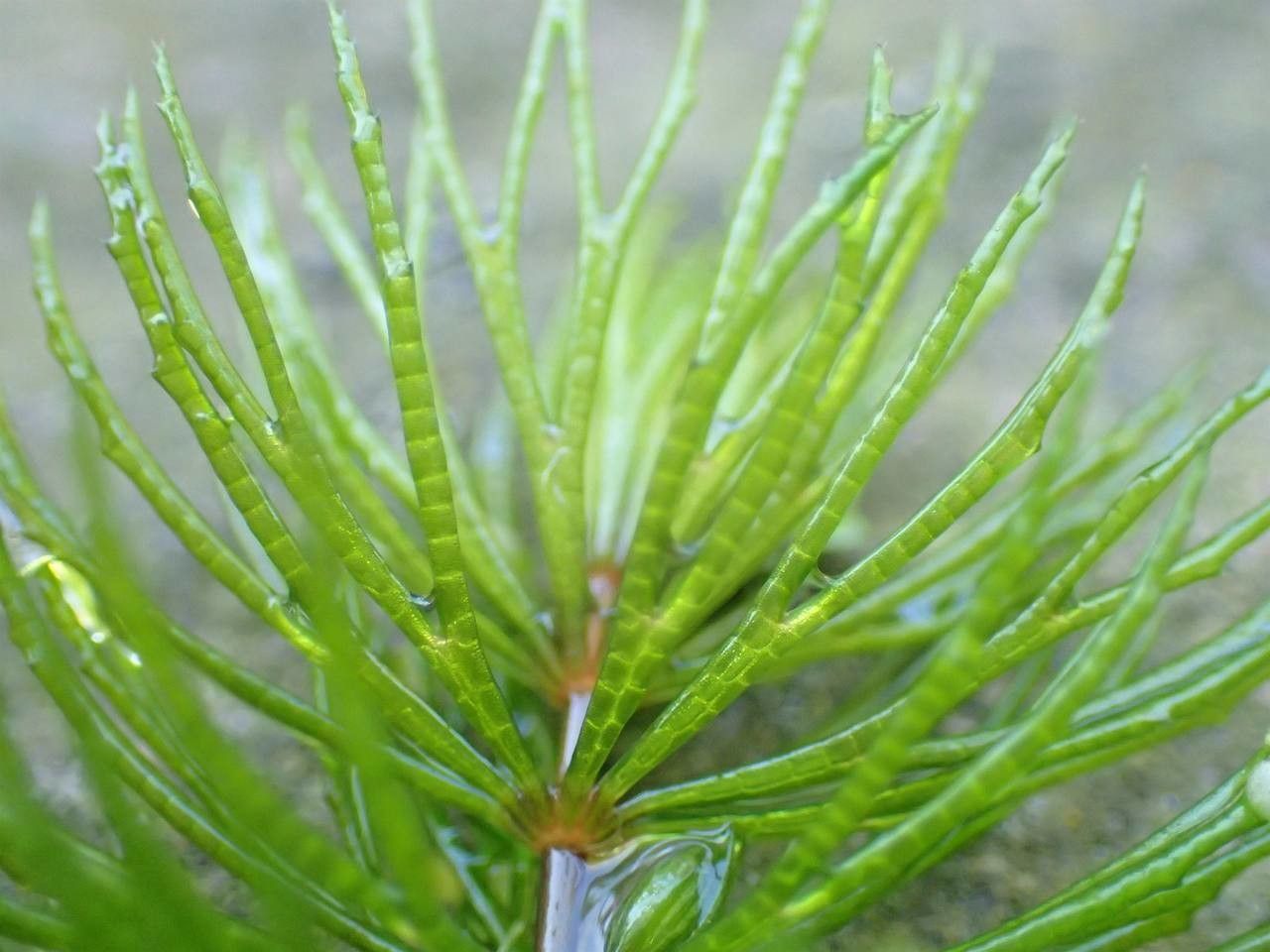
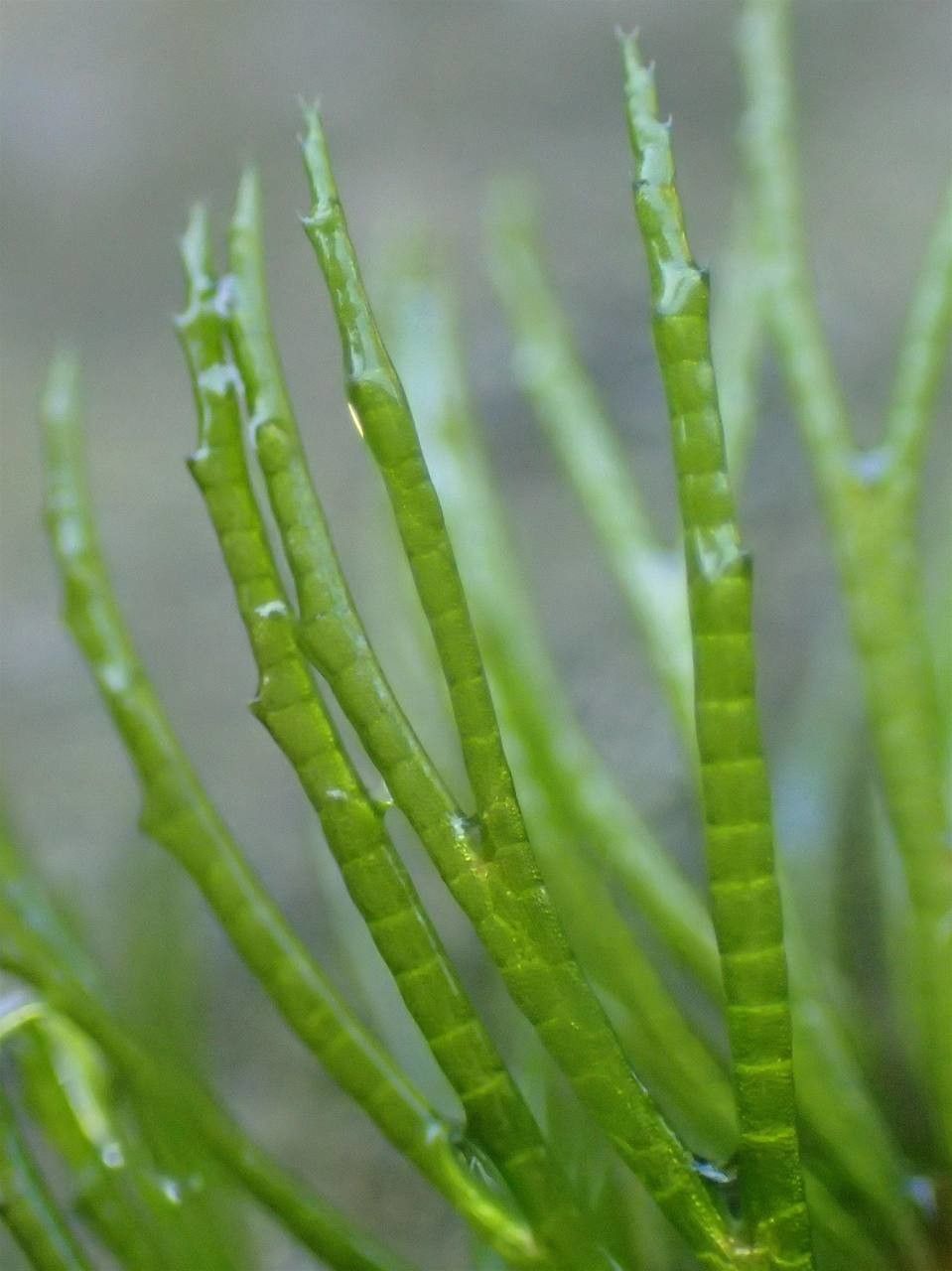
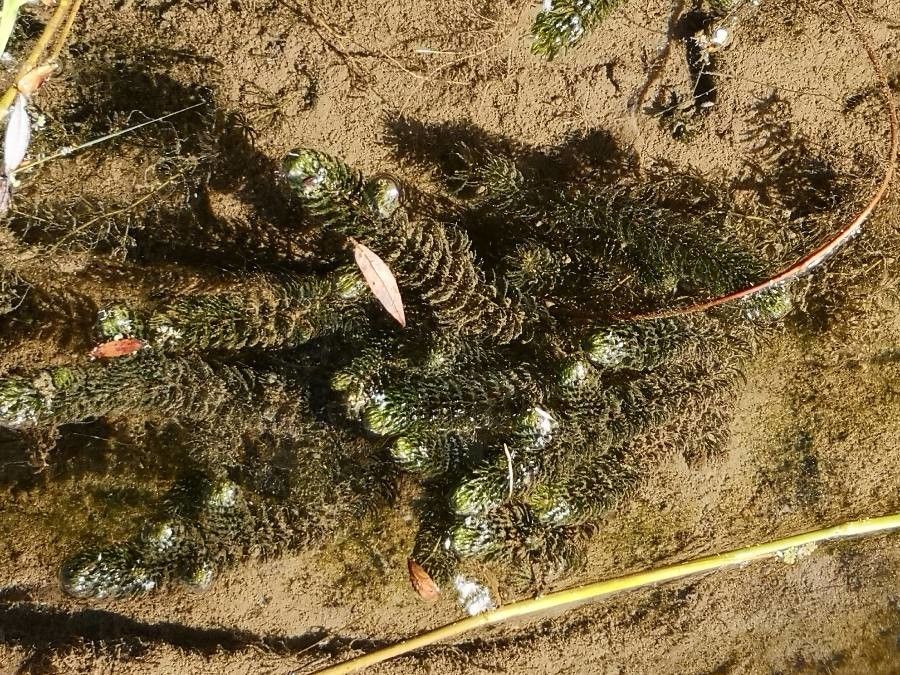
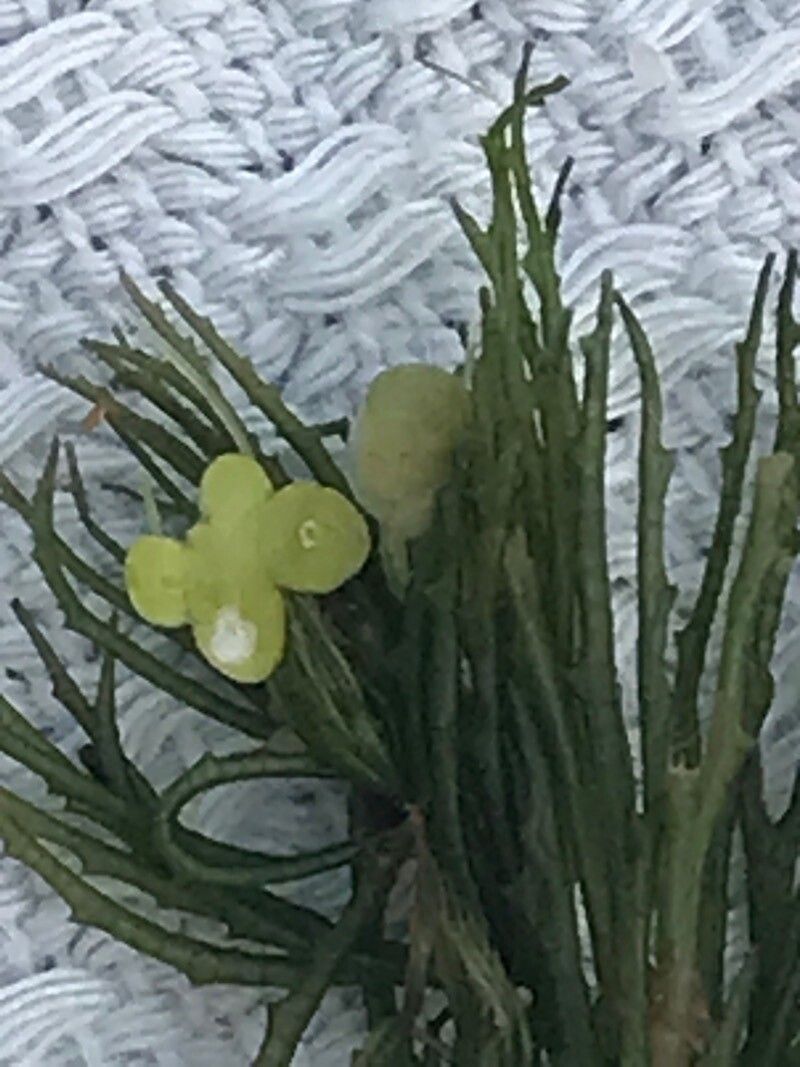
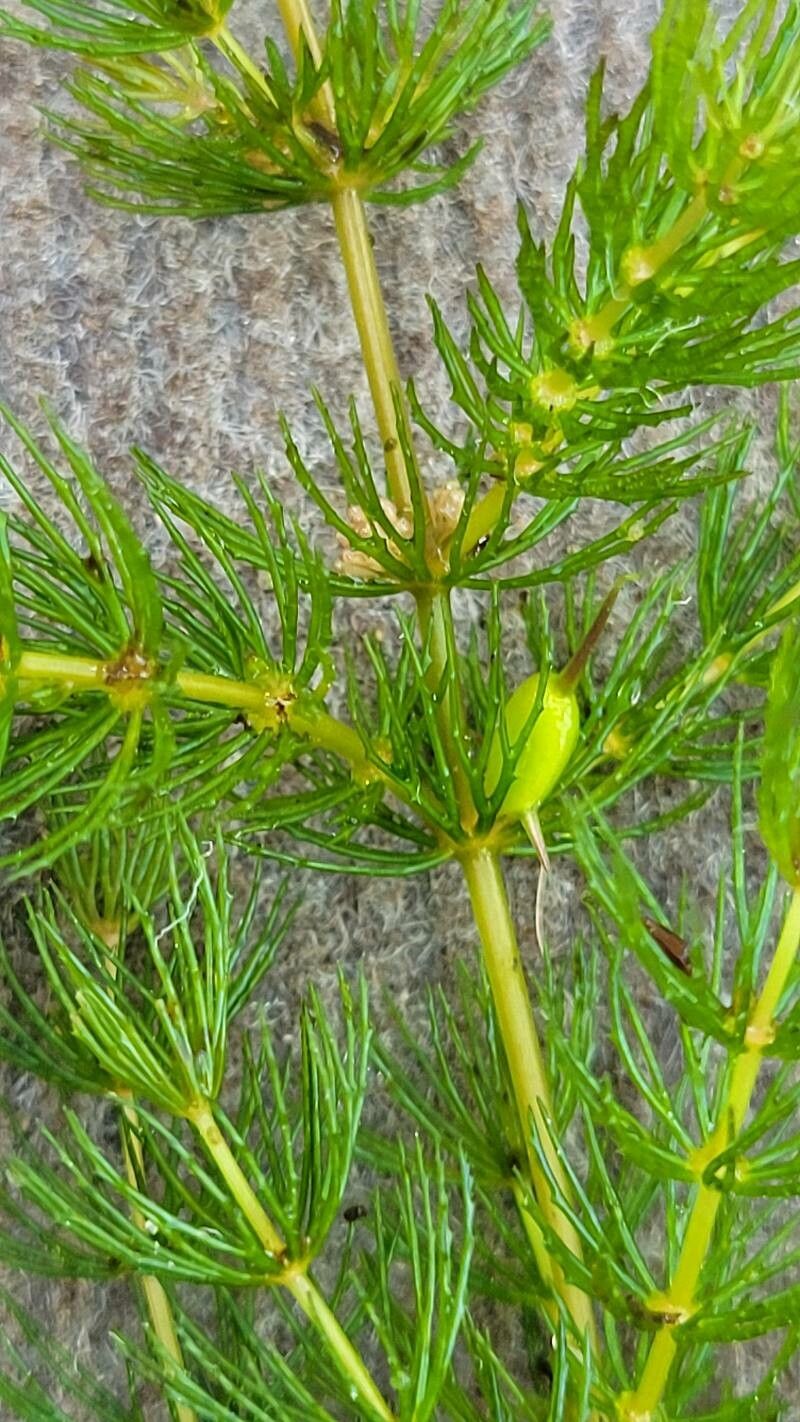
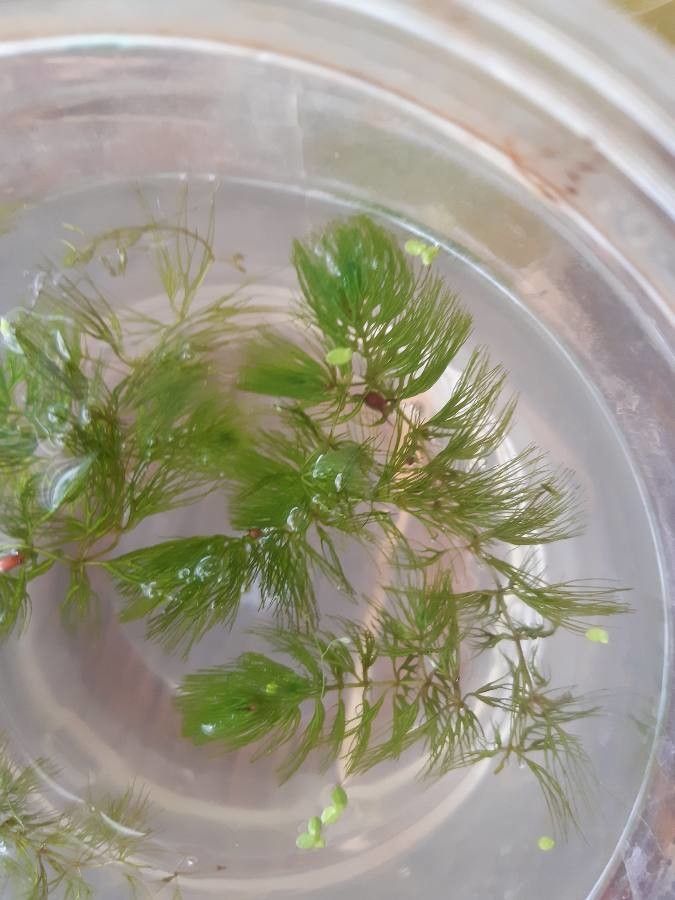
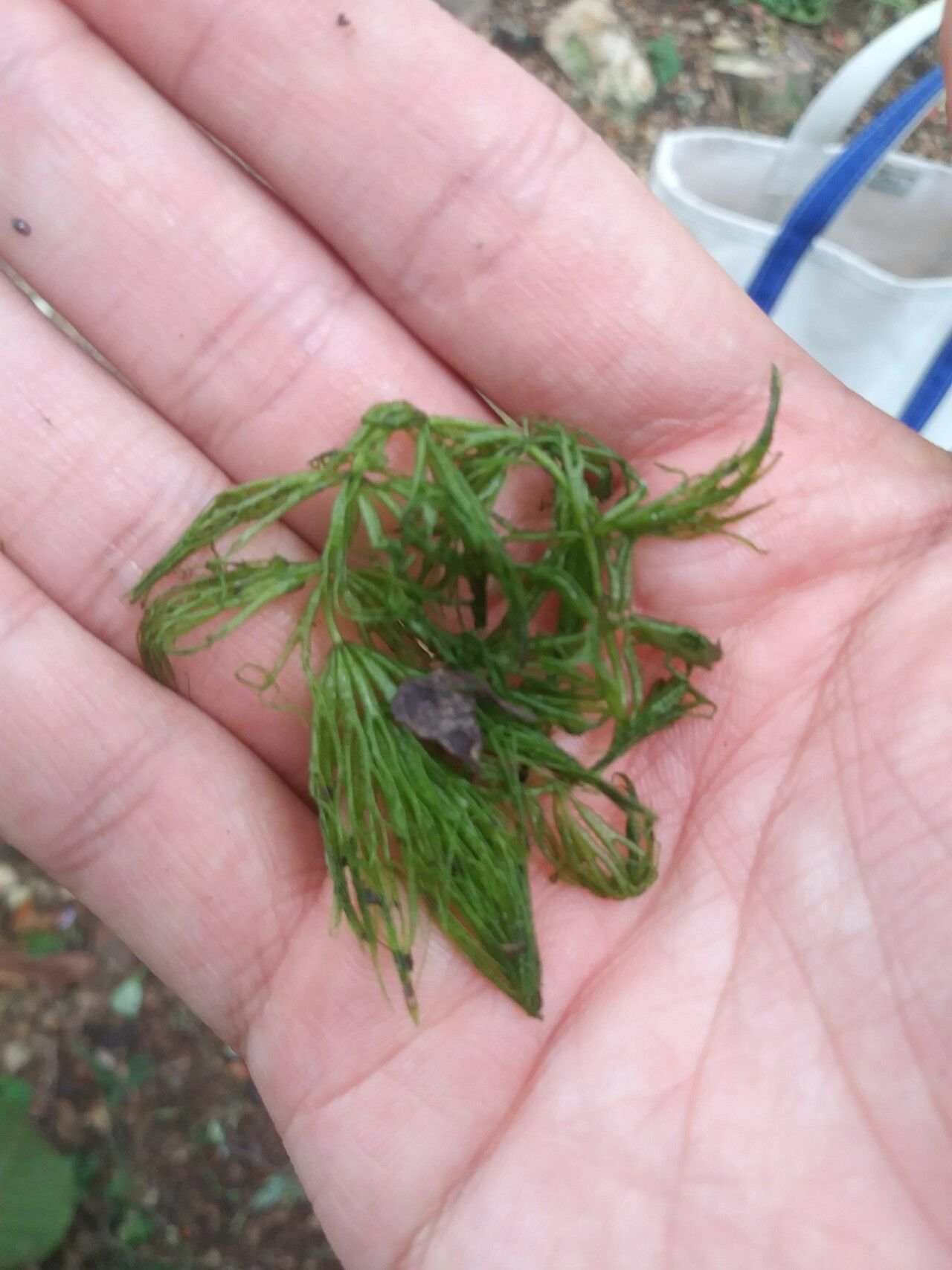
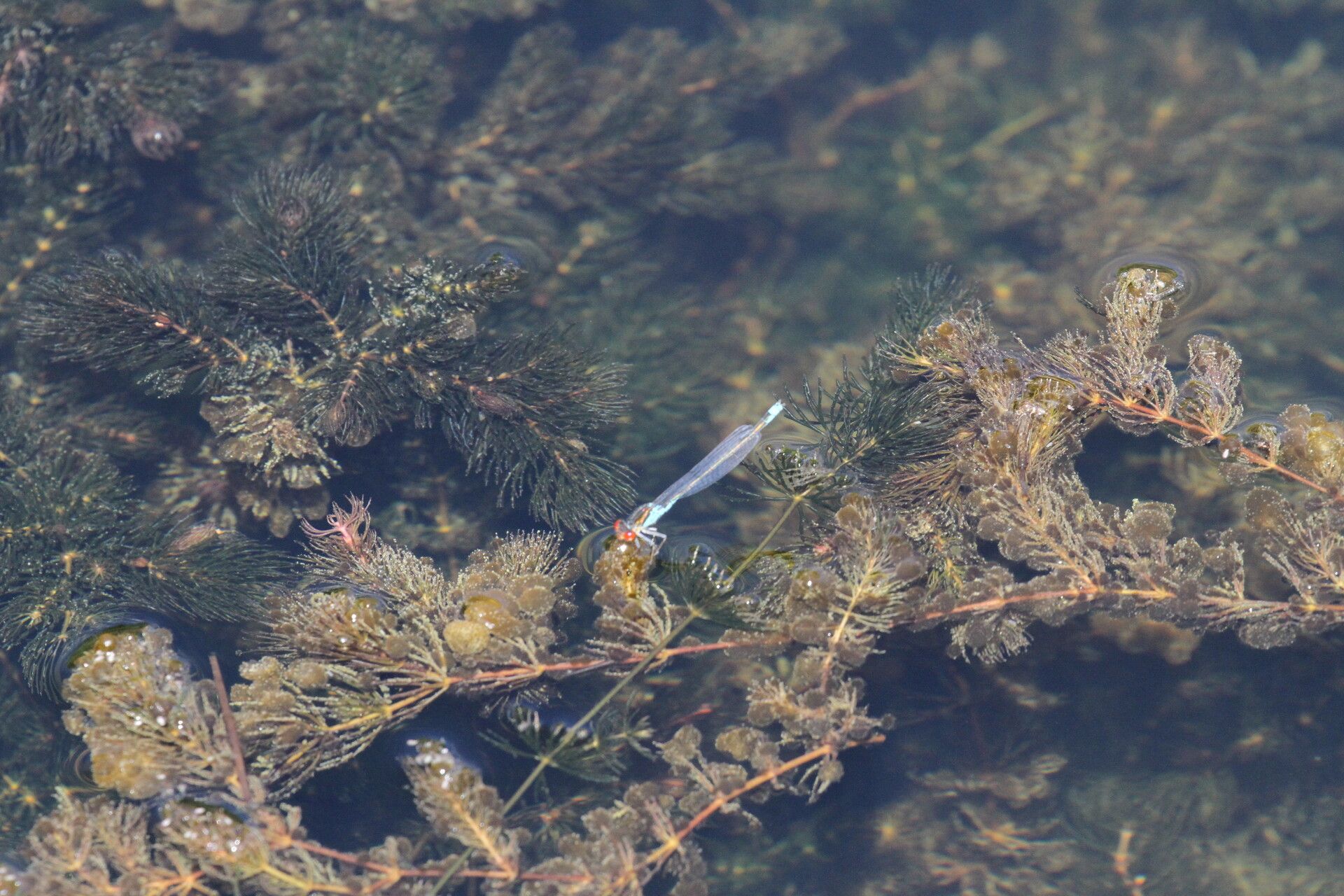
Ceratophyllum demersum, commonly known as hornwort, is a submerged aquatic plant native to North America, Europe, and Asia. This plant is popular in the aquarium trade for its attractive appearance and ease of care. Hornwort features long stems that can extend up to 10 feet, adorned with small leaves arranged in whorls of 6-12. The leaves are finely divided, giving them a feathery look.
Hornwort thrives in a wide range of water conditions but prefers cooler temperatures between 60-75°F. It doesn't require substrate or fertilizers but benefits from moderate lighting. This plant provides excellent cover for fish fry and other aquatic animals, while also helping to oxygenate the water.
Beyond its role as an aquarium plant, hornwort has been used for medicinal purposes by indigenous peoples for centuries due to its anti-inflammatory properties. Additionally, it has been studied for its potential as an alternative fuel source because of its high lipid content.
Overall, Ceratophyllum demersum is an attractive and beneficial addition to any aquarium or aquatic environment. Its minimal care requirements make it ideal for beginners or those seeking low-maintenance plants.
Hornwort is fairly resistant to disease and, in most cases, does not readily develop illnesses. Still, it can be affected by pests and diseases present in its environment. These problems are typically not severe. In terms of care, the plant requires moderate maintenance. It should be pruned regularly to keep a neat appearance and encourage healthy growth. Fertilizing can also help stimulate flowering. Hornwort is suitable for anyone with outdoor space, such as a garden or patio, and does not demand extensive care experience. It may need more attention when cultivated indoors.
How to keep Ceratophyllum Demersum.
Light
Hornwort prefers plenty of sunlight and can also tolerate moderate light. Excessive shade can impede its growth, though it can adapt to a variety of lighting conditions. It originally thrived in places with abundant sun. Both too much and too little light can reduce its health.
Humidity
This plant needs special care because it loves high humidity levels of 60-80% or more. The best way to achieve this is by placing a humidifier near the plant. Daily misting is also essential! Make sure the room has good ventilation.
Temperature
Hornwort originates from climatic zones with temperatures between 59 and 95°F (15 to 35℃). For best growth, keep temperatures within that range and adjust them as the seasons change.
Pruning
Hornwort is an aquatic plant with feathery, submerged leaves. To manage its growth, promote new shoots, and prevent overcrowding, it is best to prune the plant from early to late spring. Regular maintenance, including the removal of decayed material, not only improves the plant's health and appearance but also provides ecological benefits for ponds and aquariums.
Botanical profile.
- Plant Type
- Herb
- Life Cycle
- Perennial
- Genus
- Ceratophyllum
- Family
- Ceratophyllaceae
- Hardiness Zone
- 7-10
- Mature Height
- 10 cm
- Mature Spread
- 1.52 m
- Leaf Color
- Green
- Leaf Type
- Deciduous
- Flower Color
- Green, White
- Flower Size
- 0.20 cm
- Bloom Time
- Summer, Early fall, Mid fall
- Planting Time
- Spring, Summer, Autumn
- Harvest Time
- Late summer, Fall, Early winter
- Native Area
- Sri Lanka, Libya, India, Turkey, Sweden, Mexico, Guatemala, Slovakia, Madagascar, Montenegro, Pakistan, Thailand, Nigeria, Slovenia, Croatia, Morocco, Guinea-Bissau, Belarus, Fiji, Uganda, Tanzania, Benin, Germany, Indonesia, Cameroon, Mozambique, Koppen, Ethiopia, Romania, Latvia, Belgium, Netherlands, Central African Republic, Portugal, Saudi Arabia, Malawi, Tunisia, Honduras, Peru, Bulgaria, Bangladesh, Panama, Ukraine, Chad, China, Colombia, Afghanistan, Syria, Kyrgyzstan, Kazakhstan, Italy, Japan, Mongolia, Finland, Togo, El Salvador, Senegal, Eswatini, Iran, Côte d'Ivoire, Azerbaijan, Costa Rica, Congo (DRC), Egypt, Angola, Austria, Namibia, Rwanda, Eritrea, Yemen, Kenya, Jamaica, Zimbabwe, Uzbekistan, Russia, Mali, Iraq, Cambodia, Burundi, Venezuela, Estonia, Brazil, Oman, Ghana, South Korea, Botswana, France, Congo, Tajikistan, Czech Republic, South Africa, Sudan, Mauritania, Armenia, Poland, Zambia, Greece, Serbia, Lithuania, Hungary, Spain, Switzerland, Bolivia, Vietnam, Myanmar, Denmark, Nicaragua, Albania, Ireland, United Kingdom, Algeria, Turkmenistan, Gabon
Other names.
Reader questions.
What are the sunlight requirements for Hornwort?
Hornwort thrives when exposed to abundant sunlight, requiring full sun conditions of above 6 hours of sunlight per day or partial sun conditions of about 3-6 hours of sunlight per day. Originating in environments with plentiful solar exposure, Hornwort can adapt to varied light conditions but may not grow as well under too much shade. It’s essential to watch how sunlight moves through your garden to ensure spots provide the right balance of light and shade, ensuring the plants' happiness.
What is the optimal temperature range for the growth of Hornwort?
Hornwort thrives best in climates where the temperature ranges between 59 to 95°F (15 to 35°C). To ensure optimal growth, it's important to maintain temperatures within this range, making seasonal adjustments as necessary. Hornwort exhibits strong resistance to cold, and special frost protection measures usually aren't required. However, in regions where winter temperatures may drop below -15°C, providing cold protection by covering the plant with soil or straw is advisable. Additionally, watering the plant abundantly before the first freeze in autumn to maintain moist soil can help prevent drought and water scarcity during winter and early spring.
How does artificial lighting support Hornwort growth indoors?
Indoor Hornwort plants require adequate lighting for optimal growth, especially when natural sunlight is insufficient, such as in winter or less sunny spaces. Artificial lights, particularly LED lights, are beneficial because they can be tailored to provide specific wavelengths needed by the plant. For full sun plants, 30-50W/sq ft of artificial light is recommended; partial sun plants need 20-30W/sq ft, and full shade plants need 10-20W/sq ft. The light source should be placed 12-36 inches above the plant to mimic natural sunlight, and most plants will need 8-12 hours of light per day.
How does Hornwort react to low temperatures?
Hornwort is known for its cold tolerance and generally thrives when the temperature is kept above 15°C. If winter temperatures fall below -10°C, the plant should still manage well. However, if temperatures dip below -15°C, while there might not be immediate visible changes in winter, the plant could exhibit a decrease in sprouting or even fail to sprout during the following spring. In such cases, removing any parts of the Hornwort that have failed to sprout in spring is the recommended solution.
What symptoms might indicate insufficient light for indoor Hornwort?
Symptoms of insufficient light in indoor Hornwort include smaller new leaves, leggy or sparse growth, faster leaf drop, slower or halted growth, lighter-colored new leaves, and conditions such as chlorosis, sunscald, leaf curling, wilting, and leaf scorching. These symptoms may vary based on the light exposure, with some being related to low light and others to excessive sunlight.
What should be done if Hornwort experiences high temperatures?
During the summer, it's crucial to ensure that Hornwort is kept at temperatures below 35°C. Exposing the plant to temperatures above 41°C can result in its leaves becoming lighter, prone to curling, suffering from sunburn, and in severe cases, the entire plant might wilt and dry out. To mitigate these issues, trim away the sunburned and dried-up parts of the plant. Additionally, moving the plant to a shaded location or using a shade cloth to protect it from midday and afternoon sun is beneficial. Keeping the soil moist by watering in the mornings and evenings can also help the plant withstand high temperatures.
What solutions are available for optimizing Hornwort’s light exposure?
To optimize Hornwort’s light exposure indoors, gradually move plants to sunnier locations, aiming for at least 6 hours of direct sunlight daily, or use artificial lighting methods, such as keeping a lamp on for at least 8 hours a day or investing in professional grow lights. Outdoors, move plants gradually to better sunlight spots to avoid sunburn. Furthermore, reducing obstructions like pruning nearby trees can help, as can transplanting smaller plants during their dormant period to locations with ample sunlight and good drainage. It's important to note that while affected parts may not recover, new growth should be healthy with improved light conditions.