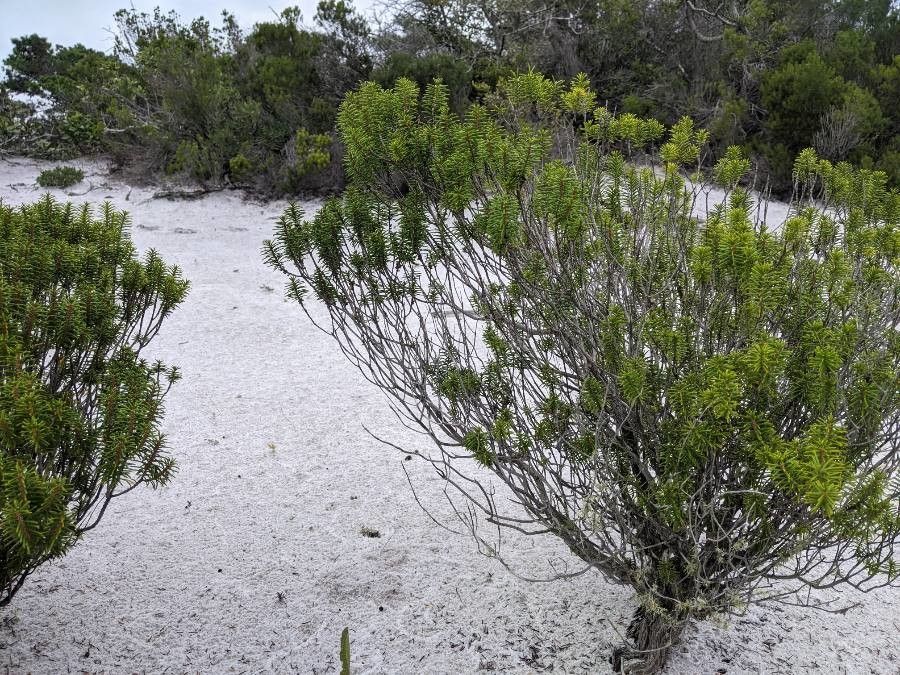
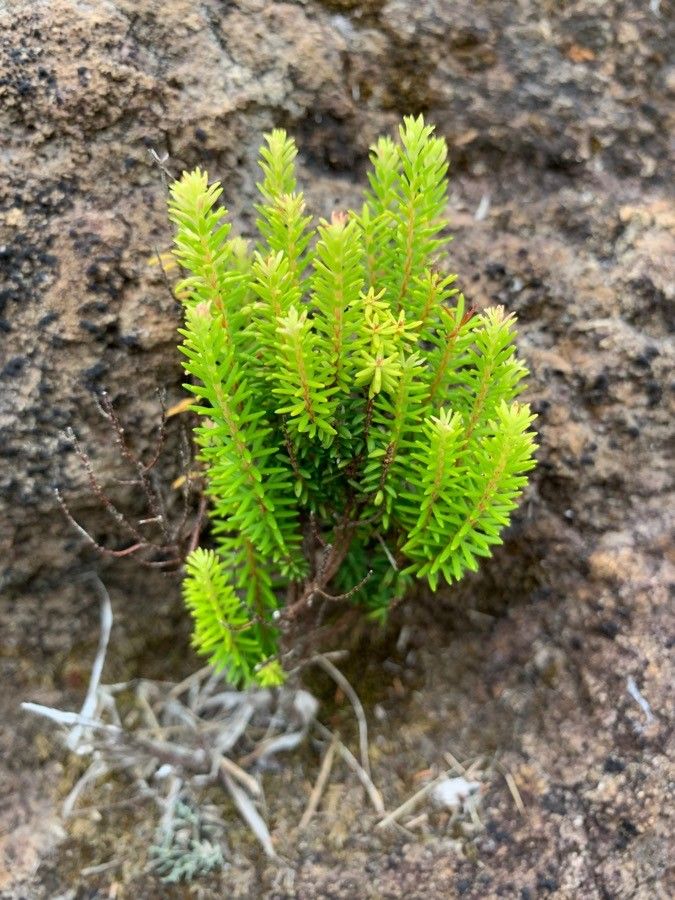
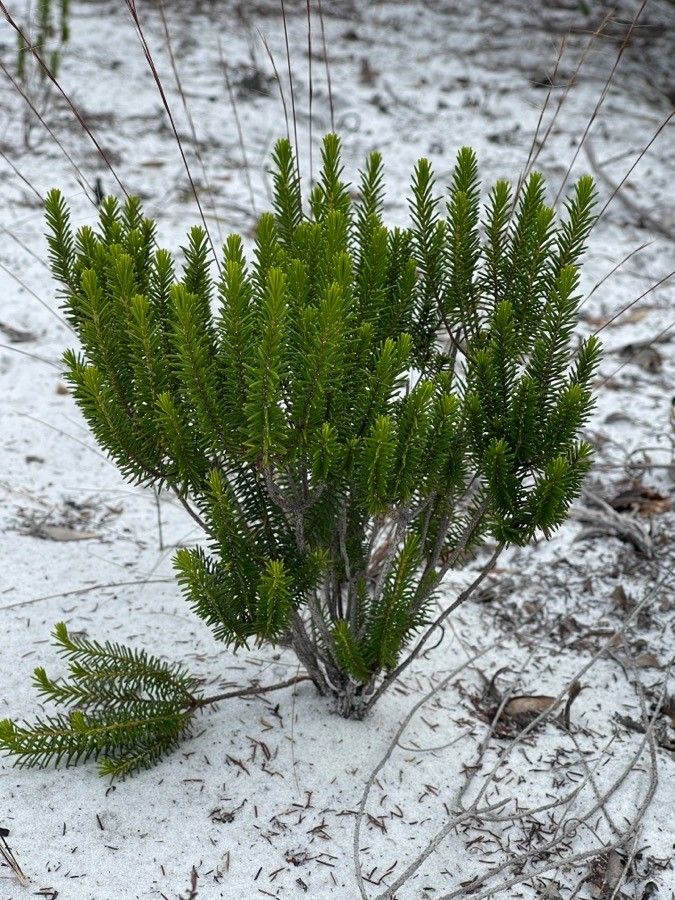
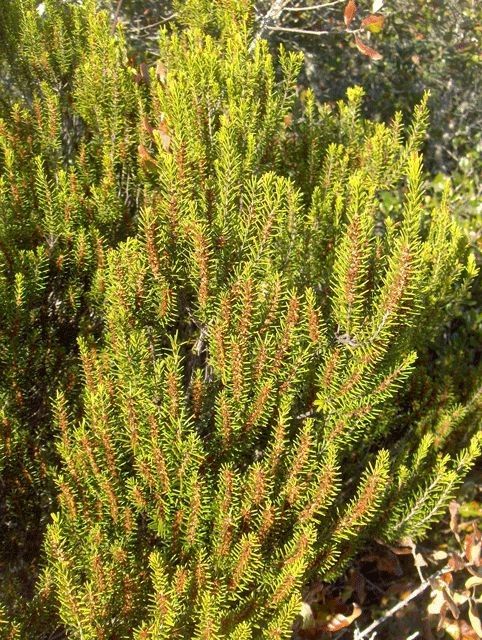
Ceratiola is a genus of flowering plants with a single species, Ceratiola ericoides, the sand heath, sandhill-rosemary or Florida-rosemary, is a species of shrub usually included in the plant family Ericaceae, though treated by some botanists in the Empetraceae. It is the sole species in the genus Ceratiola. It is native to subtropical scrub and dry sandy habitats in the coastal southeastern United States, in Alabama, Florida, Georgia, Mississippi and South Carolina. It commonly occurs together with sand pine and species of oak. Like sand pine, it is adapted to the harsh coastal environment where hot sun and fast draining white sandy soils are common. Cetatiola regenerate by seed after periodic forest fires. Its habitat is important for the endangered Florida sand skink (Neoseps reynoldsi) in central Florida. The name derives from the species' superficial similarity to the unrelated European shrub rosemary, familiar for its leaves used as a herb. Florida-rosemary is not edible. Florida-rosemary can grow to about 1.5 to 8 feet tall. It flowers in spring, summer and fall, and grows in the maritime hammocks.
Sand heath is fairly disease-resistant and usually not prone to illness. However, it can be affected by pests and diseases present in its environment. These infections tend to be minor. In terms of care, the plant requires a moderate level of maintenance. It should be pruned regularly to keep a neat appearance and support healthy growth. Fertilizing can also help encourage flowering. Sand heath is suitable for anyone with an outdoor area, such as a garden or patio, and does not demand extensive experience in plant care. It may need more attention when grown indoors.
How to keep Ceratiola Ericoides.
Light
Sand heath typically performs best in locations where it gets as much sunlight as possible throughout the day. Excessive shade can restrict its development. Its native habitat reflects this, since it originated in areas with strong solar exposure. During all stages of growth it needs plenty of sunlight. Insufficient light can inhibit its growth, while a surplus of sun usually does not cause notable harm.
Water
Sand heath flourishes in arid climates due to its drought tolerance and ability to retain water efficiently. While it can withstand dry conditions, weekly watering is recommended to maintain its optimal health. This hardy evergreen is an excellent choice for areas with low rainfall and humidity, making it well-suited for dry environments.
Temperature
Sand heath is suited to a temperate climate, growing best in temperatures between 59 and 95 °F (15 to 35 ℃). Native to an environment that undergoes that temperature range, sand heath may require extra care if temperatures move beyond those limits.
Fertilizer
A single fertilizer application in spring is generally enough for Sand heath, though multiple feedings can maximize growth. Feed every month to every month and a half. Fertilization improves leaf appearance and function, helping maintain uniform color and a healthy texture. It also promotes root growth and nutrient uptake, supporting long-term plant health.
Pruning
Sand heath, with its heath-like appearance, benefits from pruning between early and late spring. To promote healthy growth, remove dead branches to improve airflow and shape the plant. Light pruning is recommended, as it encourages vitality without hindering growth. Avoid heavy pruning, since sand heath grows slowly and heavy cutting can detract from its natural beauty.
Botanical profile.
- Plant Type
- Herb, Shrub
- Life Cycle
- Perennial
- Genus
- Ceratiola
- Family
- Ericaceae
- Hardiness Zone
- 7-10
- Mature Height
- 0.46 m to 2.44 m
- Mature Spread
- 91 cm
- Leaf Color
- Green
- Leaf Type
- Evergreen
- Flower Color
- White
- Flower Size
- 0.20 cm to 0.25 cm
- Bloom Time
- Late summer, Early fall, Mid fall
- Planting Time
- Spring, Summer, Autumn
- Harvest Time
- Late fall, Early winter, Mid winter
Other names.
Reader questions.
What are the sunlight requirements for Sand Heath (Ceratiola ericoides)?
Sand Heath requires full sun, meaning it should receive more than 6 hours of sunlight daily. Observing how sunlight moves through your garden can help you choose the best spots that offer a balance of light and shade, ensuring the plant's wellness. Naturally thriving in environments with significant solar exposure, Sand Heath grows best when it harnesses maximum sunlight throughout the day, as its growth can be hindered by too much shade. While insufficient sunlight can stunt its growth, exposure to abundant sunlight doesn't typically cause significant harm.
What climate does Sand Heath thrive in?
Sand Heath, with its botanical name Ceratiola ericoides, is well-adapted to a temperate climate, flourishing in temperatures ranging from 59 to 95 °F (15 to 35 °C). This plant is native to environments that experience such temperature variations, indicating the need for additional care if temperatures fall outside these boundaries.
Can artificial lighting be used for Sand Heath, and if so, how?
Yes, artificial lighting can support the growth of Sand Heath, especially indoors when natural sunlight is insufficient, such as in winter or less sunny spaces. It's crucial to choose the right type of artificial light, with LED lights being a popular choice because they can be customized to provide the specific wavelengths of light that plants need. Full sun plants need 30-50W/sq ft of artificial light, partial sun plants need 20-30W/sq ft, and full shade plants need 10-20W/sq ft. The artificial light source should be placed 12-36 inches above the plant to mimic natural sunlight and be kept on for 8-12 hours per day to imitate natural daylight hours.
Does Sand Heath require special frost protection measures?
Sand Heath possesses strong resistance to cold, negating the need for special frost protection measures under normal winter conditions. However, if temperatures are expected to plummet below -15°C, it's crucial to provide cold protection. This can be achieved by covering the plant with soil or straw. Moreover, to counteract potential drought and water scarcity during the colder months and early spring, it's advisable to water the plant generously before the first freeze in autumn, ensuring the soil remains moist and enters a frozen state.
What are the signs of inadequate lighting for Sand Heath?
Signs of inadequate lighting for Sand Heath include small leaves, leggy or sparse growth, faster leaf drop, slower or no new growth, lighter-colored new leaves, and symptoms of overexposure like chlorosis, sunscald, leaf curling, wilting, and leaf scorching. These indicators show that the plant is not receiving optimal light conditions, affecting its growth, health, and photosynthesis abilities.
What should be done if the temperature drops below Sand Heath's cold tolerance level?
Sand Heath is cold-tolerant and generally thrives best in temperatures above 15°C. However, winter temperatures should ideally stay above -10°C. If temperatures fall below -15°C, you might not notice changes during the winter, but there could be a decrease in sprouting or even a complete lack of sprouting in spring. In such cases, you should remove any parts of the plant that have failed to sprout in spring.
How can you address lighting issues for Sand Heath, both indoors and outdoors?
To optimize growth when facing lighting issues, gradually move Sand Heath plants to sunnier locations, ensuring they receive at least 6 hours of direct sunlight daily. Use south-facing windows and keep curtains open for indoor plants. Consider using artificial light sources like desk or ceiling lamps, or professional plant grow lights for at least 8 hours daily for plants that are large or not easily movable. Outdoors, avoid sudden changes in light intensity to prevent sunburn. Improving sunlight exposure involves reducing obstructions like pruning trees or transplanting to sunnier locations with good drainage, especially during the plant's dormant period.
How should Sand Heath be cared for during high temperatures?
During the summer, it's vital to ensure Sand Heath does not experience temperatures above 35°C. When temperatures soar beyond 41°C, the plant's leaves may lighten in color, become prone to curling, suffer from sunburn, and in severe cases, the entire plant may wilt and dry out. The remedy for this includes trimming away the sunburned and dried-up parts of the plant, relocating it to a shaded area or utilizing a shade cloth to protect it from the midday and afternoon sun. Additionally, watering the plant in the morning and evening helps keep the soil moist, further mitigating the adverse effects of high temperatures.