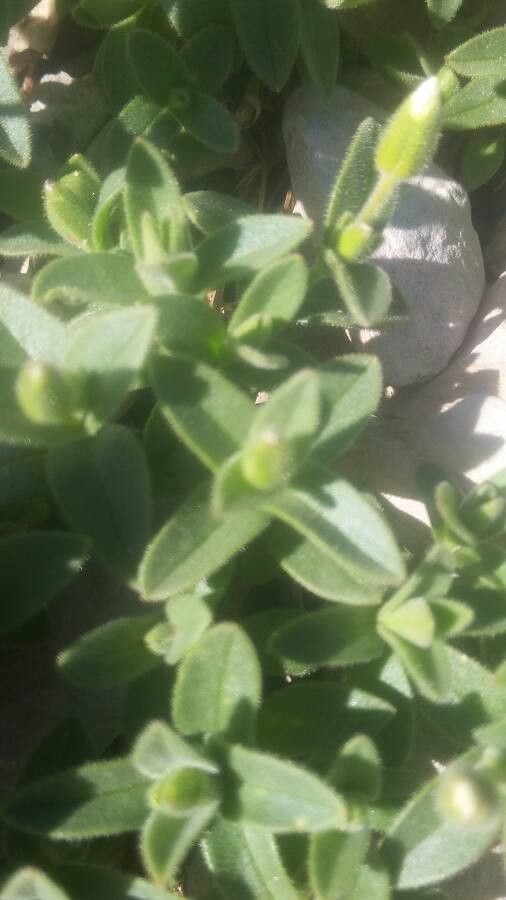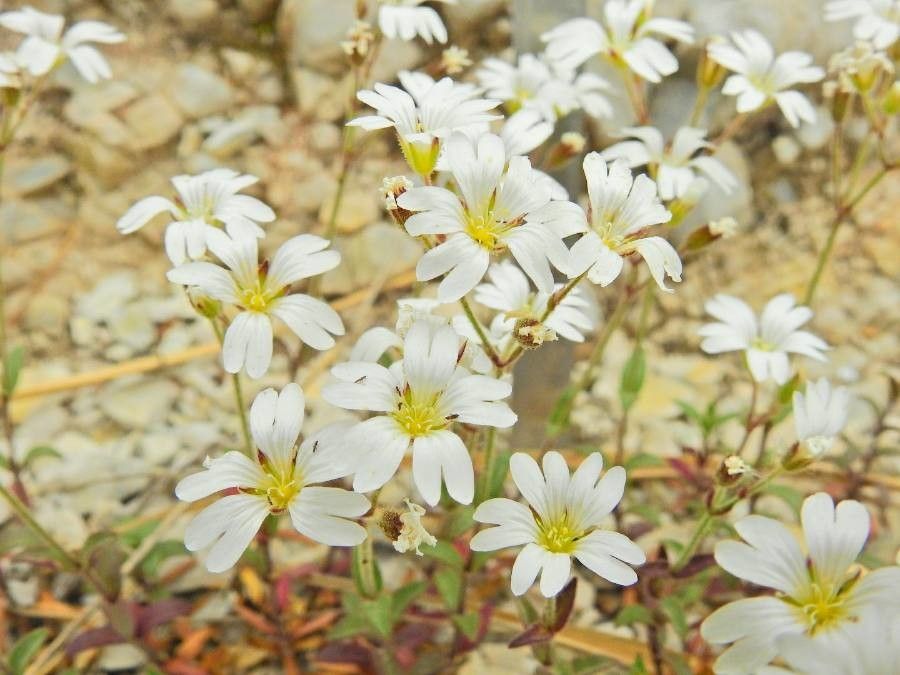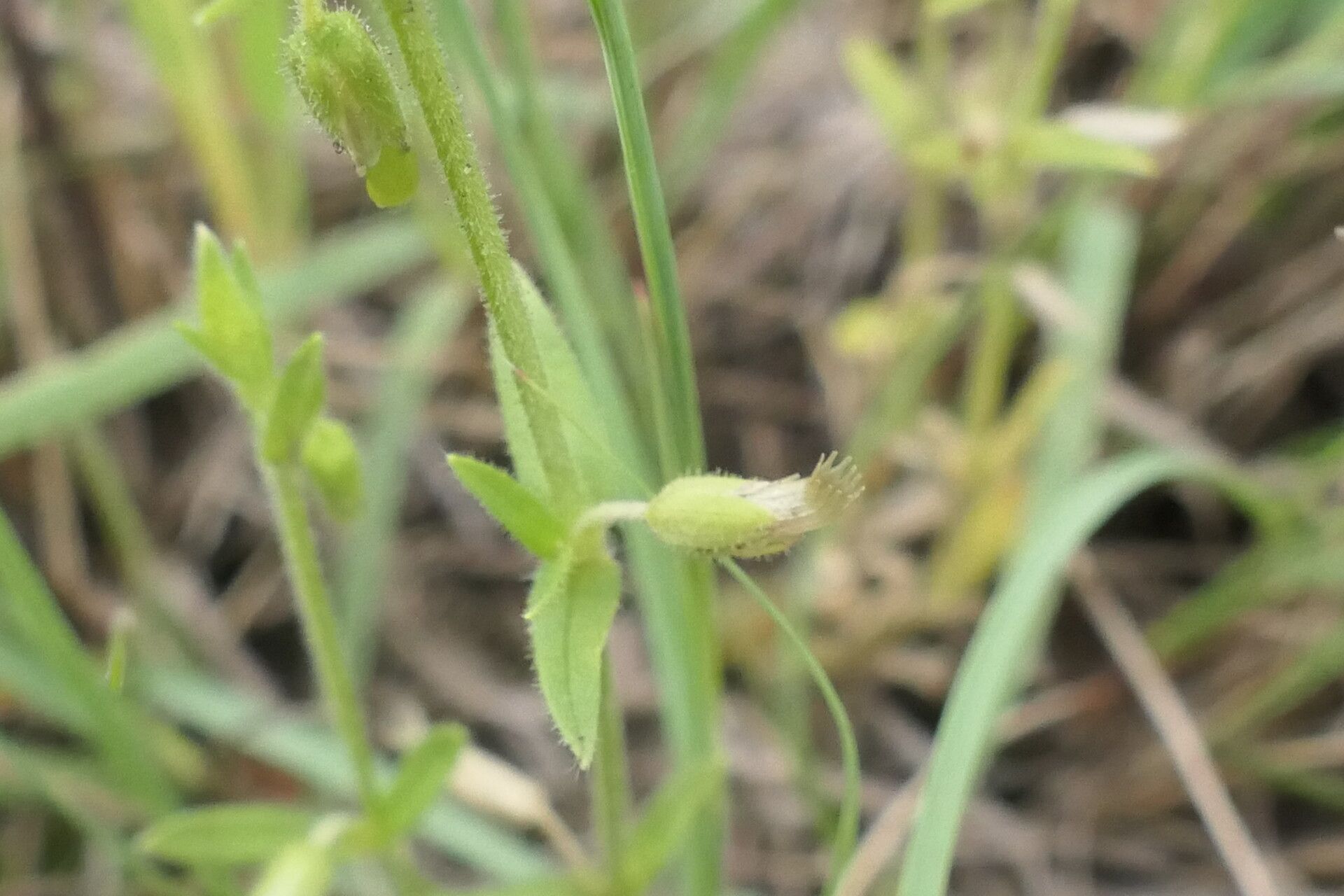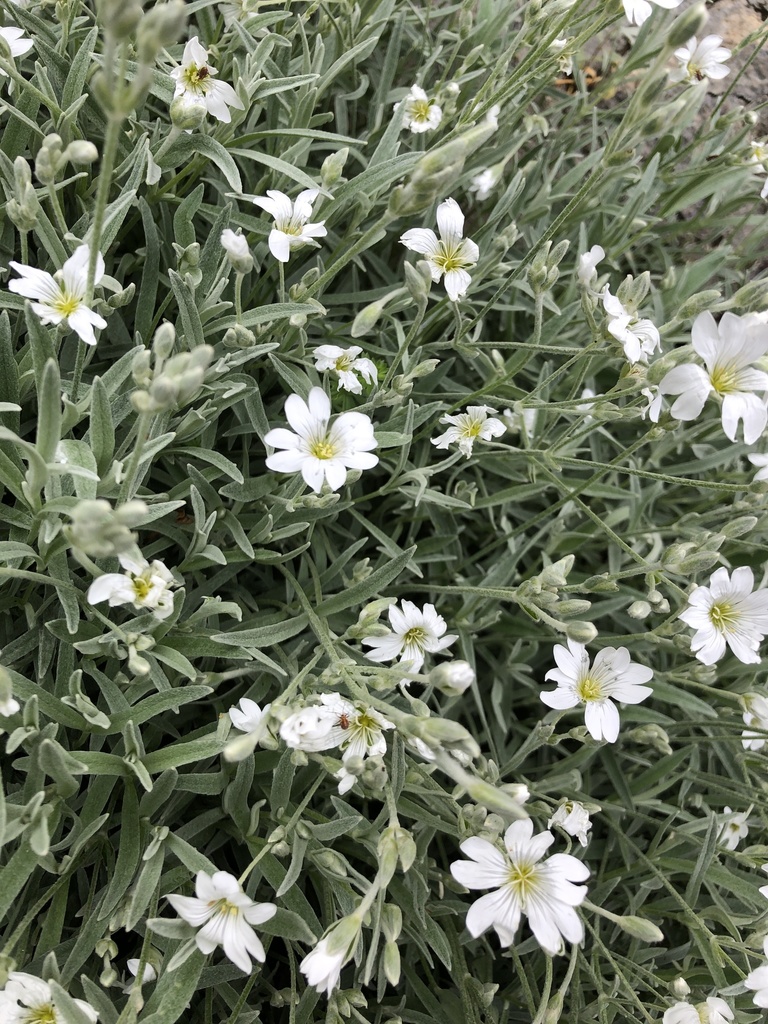
Cerastium tomentosum (snow-in-summer) is an herbaceous flowering plant and a member of the family Caryophyllaceae. It is generally distinguished from other species of its genus by "tomentose" or felty foliage. It is a low, spreading perennial native to alpine regions of Europe. The stems & leaves are silvery-grey, whilst the flowers are star-like, white & about 15mm across.
Snow-in-summer, scientifically known as Cerastium tomentosum, earns its common name from its abundant white flowers that resemble a blanket of snow during the summer months. The genus name, Cerastium, is derived from the Greek word "keras," meaning horn, because the seed capsules in this genus typically resemble a cow's horn. Meanwhile, the specific epithet "tomentosum" refers to the term "tomentose," which describes the plant's felt-like, hairy foliage.
Botanical profile.
- Plant Type
- Herb
- Life Cycle
- Annual, Biennial, Perennial
- Genus
- Cerastium
- Family
- Caryophyllaceae
- Hardiness Zone
- 7-9
- Mature Height
- 30 cm to 46 cm
- Mature Spread
- 25 cm to 46 cm
- Leaf Color
- Green, Gray, Silver
- Leaf Type
- Deciduous
- Flower Color
- White
- Flower Size
- 0.51 cm to 0.51 cm
- Bloom Time
- Mid spring, Late spring, Early summer
- Planting Time
- Winter, Spring
- Harvest Time
- Late spring, Early summer, Mid summer
- Native Area
- Sri Lanka, Libya, Somalia, Egypt, Turkey, Sweden, India, Austria, Slovakia, Montenegro, Pakistan, Slovenia, Morocco, Croatia, Yemen, Belarus, Uzbekistan, Russia, Iraq, Germany, Indonesia, Iceland, Estonia, Romania, Belgium, Moldova, Portugal, Nepal, Saudi Arabia, Netherlands, France, Tajikistan, Tunisia, Czech Republic, Cyprus, Bulgaria, Poland, Armenia, Greece, Ukraine, Serbia, Lebanon, Lithuania, Norway, China, Afghanistan, Syria, Italy, Kazakhstan, Spain, Switzerland, Denmark, Mongolia, Bhutan, Iran, Albania, Ireland, United Kingdom, Hungary, Algeria, Azerbaijan, Turkmenistan