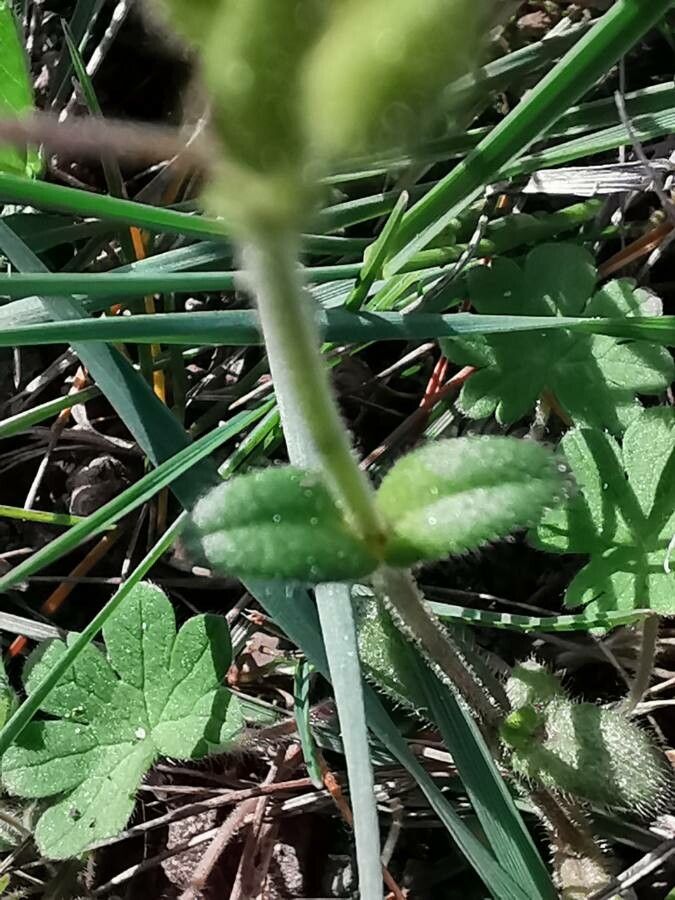
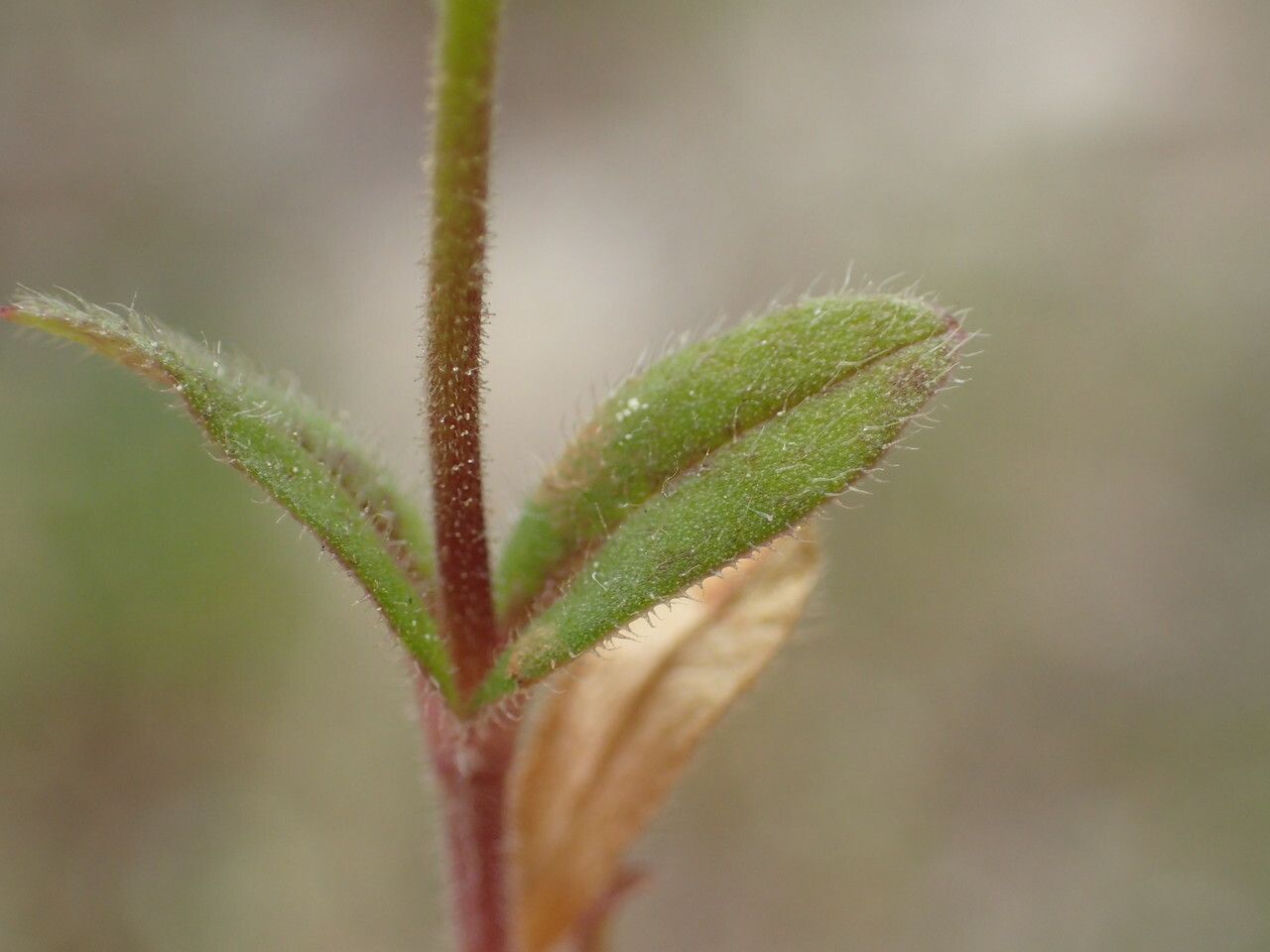
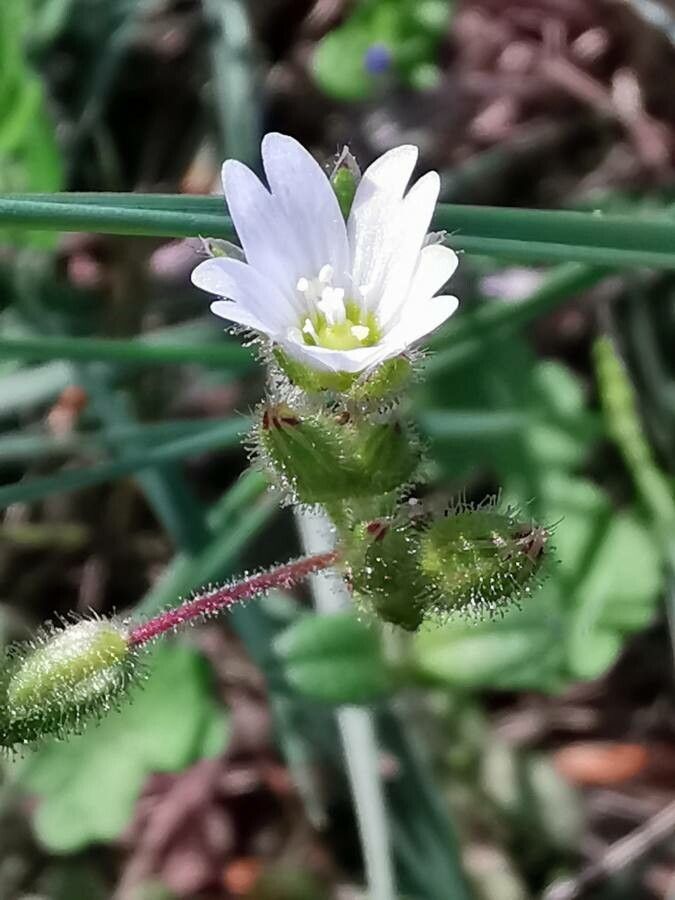
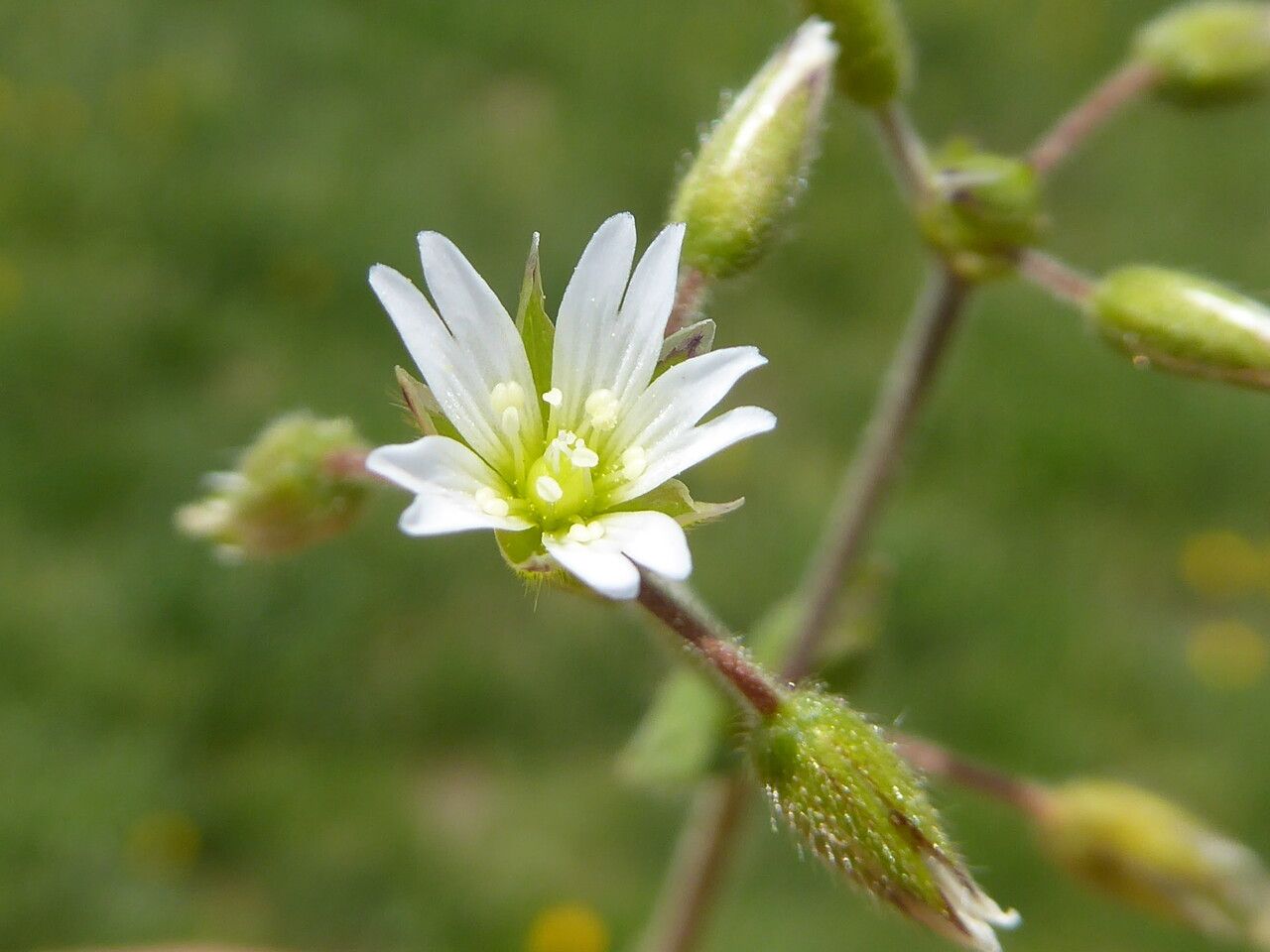
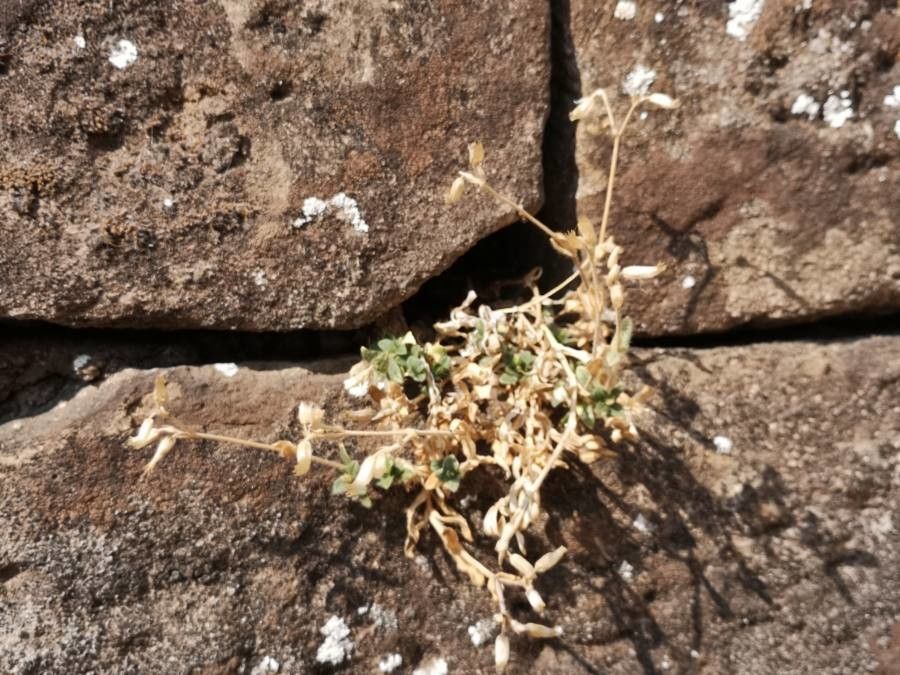
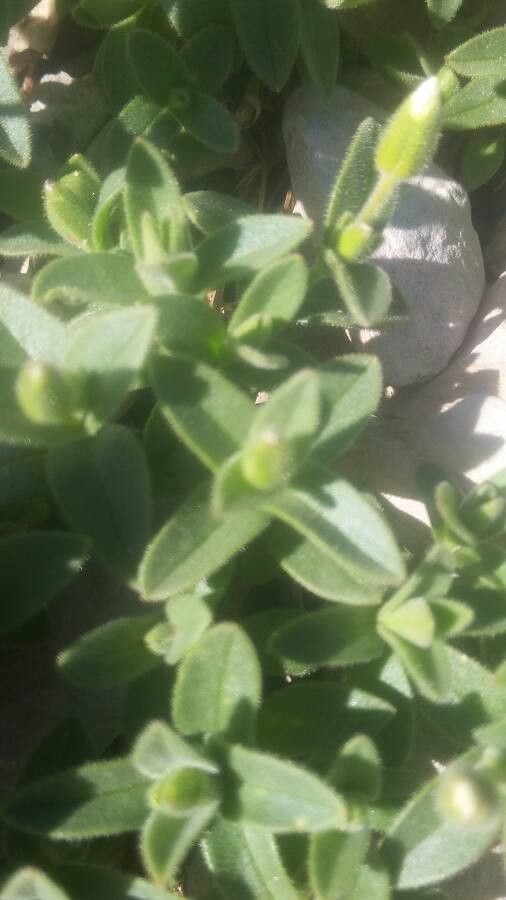
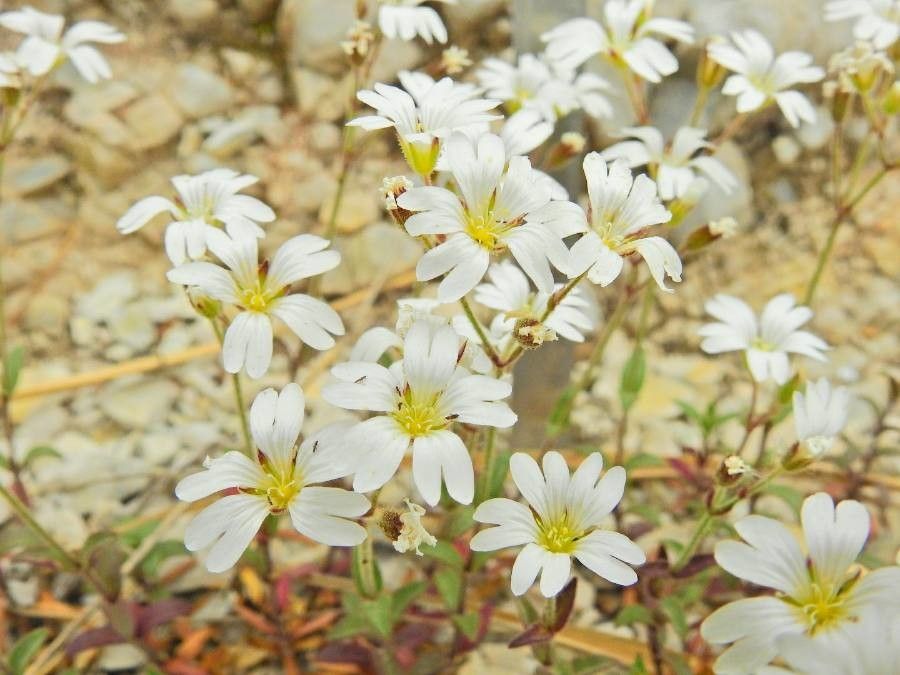
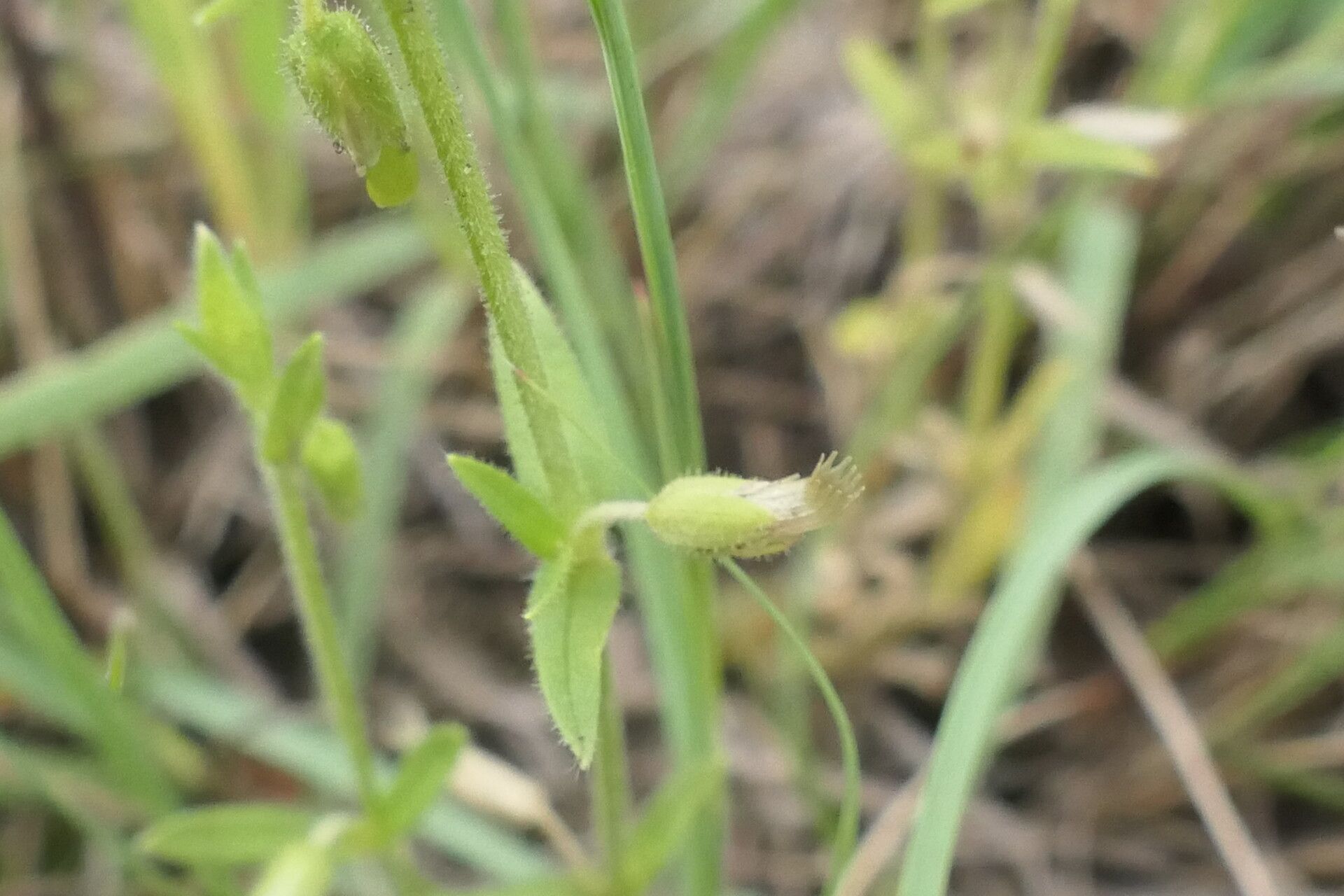
Cerastium pumilum, the dwarf mouse-ear or European chickweed, is an annual or biannual herbaceous plant, between 2 and 20 cm. high, native to Central and western Europe. The petals of the white flowers are shorter or equally long as the sepals, and split in the middle, up to a quarter of the length. The fruit petioles stand diagonal to the stems, often bent over at their top. Flowering occurs between March and May. Rarely occurs on the seacoast.
Sticky chickweed is fairly disease-resistant and typically does not suffer from many illnesses. Nevertheless, it can be vulnerable to pests and diseases found in its environment. Such infections tend to be mild. Regarding care, this plant is of moderate maintenance. It should be pruned on a regular basis to preserve a neat appearance and encourage healthy growth. Applying fertilizer can also aid in boosting flowering. Sticky chickweed is appropriate for anyone with outdoor areas like a garden or patio, and it does not demand extensive gardening experience. When cultivated indoors, however, it may need more attentive care.
How to keep Cerastium Pumilum.
Light
Sticky chickweed performs best in full sun, though it can tolerate lower light levels. Native to sunny habitats, it fares poorly in heavy shade. Conversely, too much sunlight can be damaging, but it tolerates brighter conditions better than some other species.
Water
Dwarf mouse-ear is a plant native to temperate regions and thrives in moderate moisture and well-drained soil. It's generally grown outdoors and does well with the natural rainfall typical of these areas, as it aligns with its growth cycles and seasonal water needs. To maintain proper hydration without over-saturating the soil, water the plant weekly.
Temperature
Sticky chickweed is native to habitats where temperatures range from 68 to 95 °F (20 to 35 ℃). It favors a temperate climate, so seasonal adjustments may be needed to maintain those conditions.
Fertilizer
Sticky chickweed does well with regular, light applications of fertilizer to encourage healthy leaf development. Fertilize Sticky chickweed roughly once a month during the summer. Nitrogen is important for foliage, and adding nitrogen-rich sources helps Sticky chickweed flourish.
Pruning
The dwarf mouse-ear plant features low-growing foliage and small white flowers. To maintain its health and appearance, it's important to prune it between early and late spring. The main techniques for pruning include removing dead stems and lightly trimming the plant to enhance its shape and encourage new growth. Regular pruning helps prevent overcrowding, reduces the risk of disease, and promotes the plant's overall health.
Botanical profile.
- Plant Type
- Herb
- Life Cycle
- Annual, Biennial, Perennial
- Genus
- Cerastium
- Family
- Caryophyllaceae
- Hardiness Zone
- 7-9
- Mature Height
- 30 cm to 46 cm
- Mature Spread
- 25 cm to 46 cm
- Leaf Color
- Green, Gray, Silver
- Leaf Type
- Deciduous
- Flower Color
- White
- Flower Size
- 0.51 cm to 0.51 cm
- Bloom Time
- Mid spring, Late spring, Early summer
- Planting Time
- Winter, Spring
- Harvest Time
- Late spring, Early summer, Mid summer
- Native Area
- Sri Lanka, Libya, Somalia, Egypt, Turkey, Sweden, India, Austria, Slovakia, Montenegro, Pakistan, Slovenia, Morocco, Croatia, Yemen, Belarus, Uzbekistan, Russia, Iraq, Germany, Indonesia, Iceland, Estonia, Romania, Belgium, Moldova, Portugal, Nepal, Saudi Arabia, Netherlands, France, Tajikistan, Tunisia, Czech Republic, Cyprus, Bulgaria, Poland, Armenia, Greece, Ukraine, Serbia, Lebanon, Lithuania, Norway, China, Afghanistan, Syria, Italy, Kazakhstan, Spain, Switzerland, Denmark, Mongolia, Bhutan, Iran, Albania, Ireland, United Kingdom, Hungary, Algeria, Azerbaijan, Turkmenistan
Other names.
Reader questions.
How should I water my Dwarf mouse-ear plant in the best way?
Watering Dwarf mouse-ear is easy and can be done with various tools such as a garden hose, watering can, or any common watering tool. This plant is not too particular about the type of water it receives, whether it's rainwater, tap water, or filtered water. However, it is generally advised to avoid watering from above as it can harm the leaves and flowers and even lead to disease. A drip irrigation system is often the best method for watering Dwarf mouse-ear because it provides even and direct water to the soil. If you have a container-grown Dwarf mouse-ear, you can use a cup, watering can, or tap to water it directly onto the soil.
What are the sunlight requirements for Dwarf mouse-ear?
Dwarf mouse-ear, scientifically known as Cerastium pumilum, thrives in environments that offer full sun exposure, which means it benefits from more than 6 hours of sunlight daily. However, it can also tolerate partial sun conditions, with about 3-6 hours of sunlight. It's essential to observe how sunlight moves through your garden for choosing spots that offer the proper balance of sun and shade, ensuring the plants' optimal growth and happiness.
What should I do if I give too much or too little water to my Dwarf mouse-ear plant?
To remedy underwatering Dwarf mouse-ear, simply water it more regularly once you notice it lacking moisture. Overwatering can be more problematic, potentially leading to disease and the plant's decline or death. To prevent this, choose a suitable location with ample sunlight to dry the soil and good drainage to prevent water from pooling. If you overwater a potted Dwarf mouse-ear, consider switching to a new pot with better drainage and loose soil when repotting.
How does artificial lighting support Dwarf mouse-ear's growth indoors?
When natural sunlight is not sufficient, especially during winter or in spaces that do not receive enough sunlight, artificial lighting can be a crucial solution for supporting the growth of Dwarf mouse-ear indoors. Proper artificial lighting promotes healthier and faster growth. LED lights are recommended due to their ability to be customized to cater to the specific light wavelengths needed by plants. Full sun plants, like Dwarf mouse-ear, require about 30-50W per square foot of artificial light. The artificial light source should be placed 12-36 inches above the plant to mimic natural sunlight and should be kept on for 8-12 hours per day to simulate the natural daylight hours a plant would receive outdoors.
How often do I need to water my Dwarf mouse-ear?
Dwarf mouse-ear requires regular watering during the growing season. In spring, water the plant about once a week. As the season gets warmer, increase watering to two to three times per week. However, too much watering can harm the Dwarf mouse-ear. It's important to keep the soil moist, but not wet, regardless of the watering frequency. When watering a potted Dwarf mouse-ear, you'll need to water more frequently as the soil in a pot dries out faster. Typically, water a container-grown Dwarf mouse-ear a few times per week, compared to once per week for an in-ground plant.
What are common symptoms of insufficient light in Dwarf mouse-ear?
When Dwarf mouse-ear is not receiving adequate light, several symptoms may appear, indicating light deficiency. These symptoms include smaller new leaves, leggy or sparse growth, premature leaf drop, delayed or halted growth, lighter-colored new leaves, chlorosis (yellowing leaves), sunscald, curled leaves, wilting, and leaf scorching. These signs suggest the plant is struggling with light absorption, affecting its photosynthesis process and overall health.
How much water does my Dwarf mouse-ear plant need?
Determining how much water to give to your Dwarf mouse-ear can be done in a few different ways. Some gardeners rely on feeling the soil for moisture and suggest watering until the first six inches of soil are moist. Alternatively, you can use a set measurement, such as about two gallons of water per week, depending on factors like the temperature and how quickly the soil dries out. However, it's important to be cautious with strict guidelines, as overwatering can occur if your plant requires less than two gallons per week. When growing Dwarf mouse-ear in a container, a different approach is needed. You should aim to moisten all layers of dry soil, which can be tested by sticking your finger in the soil or by noticing a slight trickle of excess water exiting the pot's drainage holes.
What can be done to address light deficiency issues in Dwarf mouse-ear?
To combat light deficiency in Dwarf mouse-ear, gradual adjustment to sunlight exposure is key. For indoor plants, start by moving them to a sunnier spot each week until they get at least 6 hours of direct sunlight, ideally near a south-facing window, and consider artificial lighting solutions, such as desk or professional plant grow lights, for at least 8 hours a day. Outdoor plants should also be moved gradually to sunnier spots to prevent sunburn. If physical obstructions block natural sunlight, such as trees or buildings, consider pruning or relocating the plants to better-lit areas. Remember, while parts of the plant that suffered from insufficient light may not recover, new growth will be healthy once proper light levels are achieved.
How do I know if I'm giving enough water to my Dwarf mouse-ear?
Dwarf mouse-ear plants can be tricky to water properly. They have deep roots that need watering every week, but they are prone to root rot if overwatered. Overwatering can also cause browning of the leaves. Underwatering is less of a concern as these plants can survive without additional water for a while, but if they are left without water for too long, they will start to wilt and the leaves will become dry.
How do I water my Dwarf mouse-ear plant throughout the different seasons?
As the season progresses, the water needs of your Dwarf mouse-ear plant will increase. In spring, watering once per week should be sufficient. However, during the hot summer months, you may need to water your Dwarf mouse-ear plant more frequently, potentially up to three times per week. This is particularly important if your Dwarf mouse-ear plant is growing in a container, as the soil in containers tends to dry out faster in warm weather. In autumn, when the temperature decreases and the sun is less intense, your Dwarf mouse-ear plant may require less water while still in bloom.
How should I water my Dwarf mouse-ear plant as it grows?
Dwarf mouse-ear goes through different growth stages throughout the year, with some phases needing more water than others. To start, when planting Dwarf mouse-ear from a seed, it is important to provide ample water to support germination. Keep the soil consistently moist by watering regularly. Once the plant emerges from the soil after a few weeks, it will require slightly less water than during the seedling phase. When the Dwarf mouse-ear is mature, a watering frequency of about once per week is sufficient. However, during flower development, you may need to increase water slightly to assist the process.
How is watering Dwarf mouse-ear different inside and outside?
Most Dwarf mouse-ear plants prefer growing outdoors for a few reasons. Firstly, they tend to grow taller than average, which may not be suitable for indoor settings. Secondly, these plants require more daily sunlight than most indoor locations can provide. However, if you are able to create a suitable indoor environment, you may find that you need to water your Dwarf mouse-ear more frequently compared to outdoor growing. This is because indoor environments are typically drier due to HVAC units, and soil in containers can dry out quickly in comparison to soil in the ground.