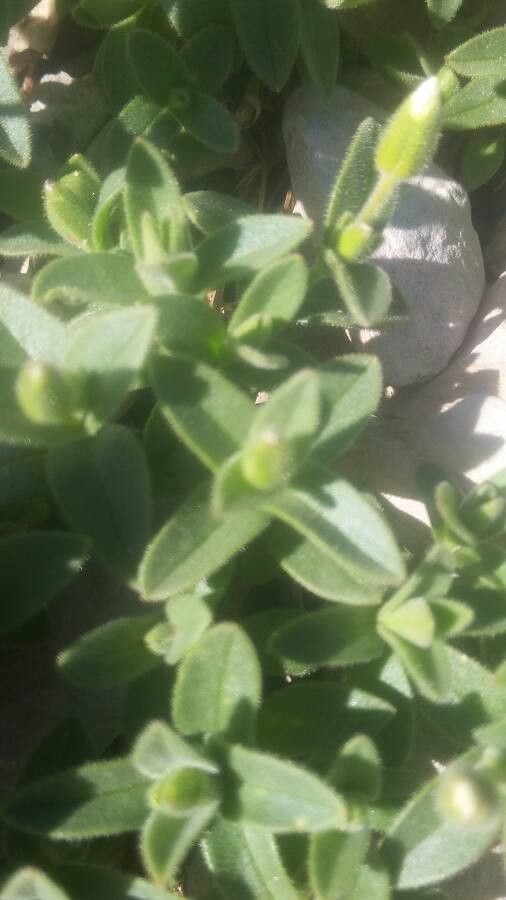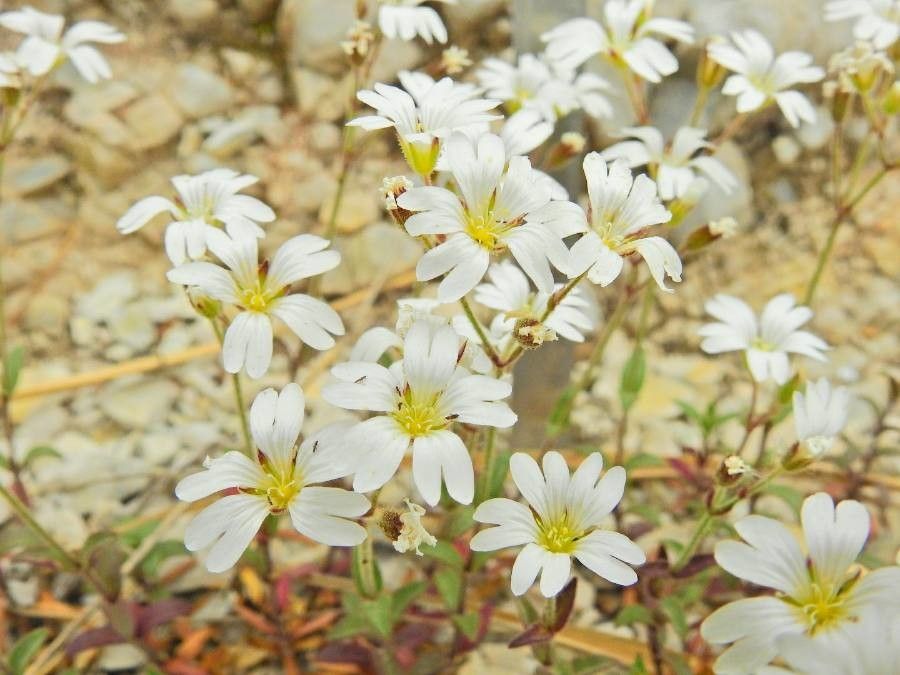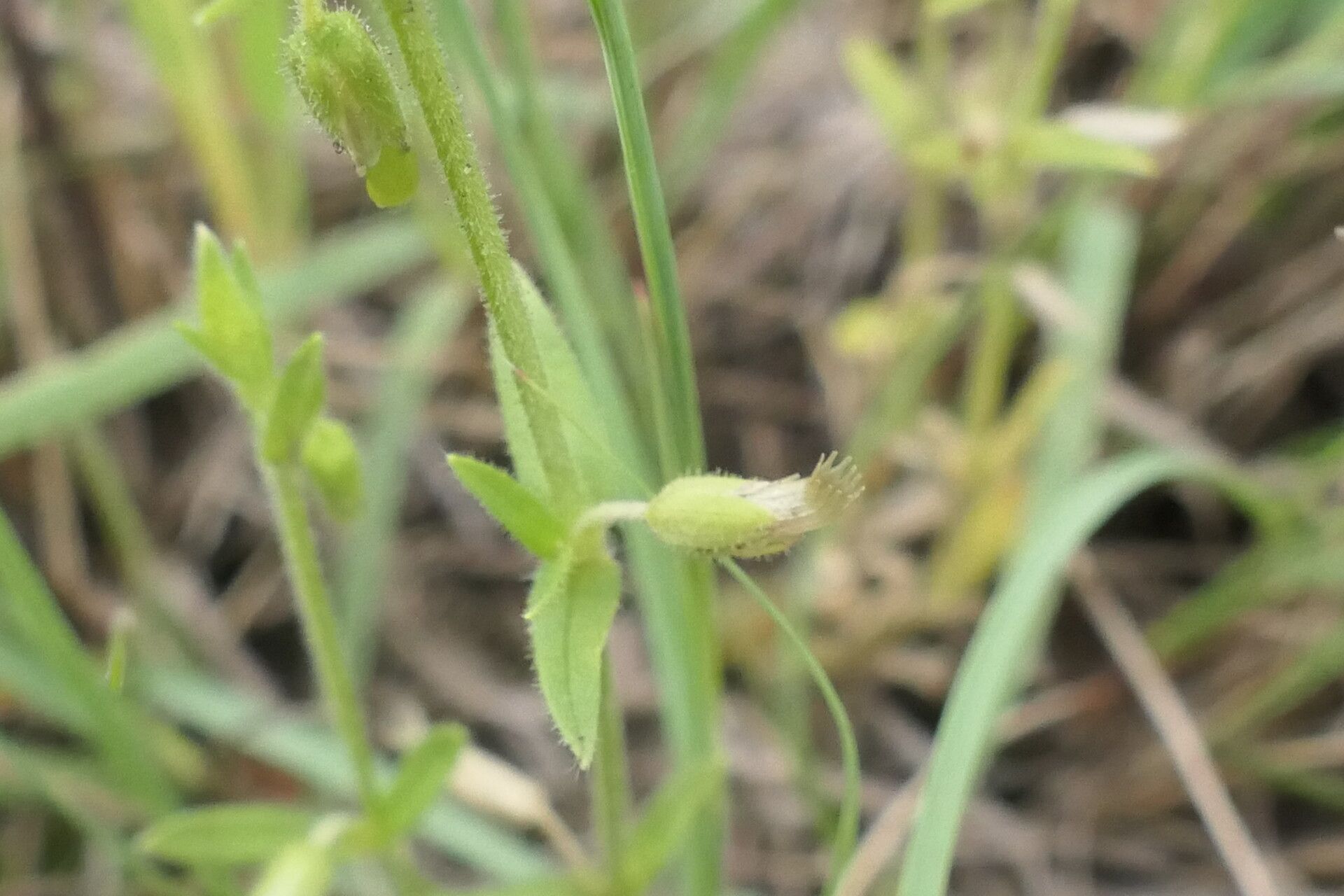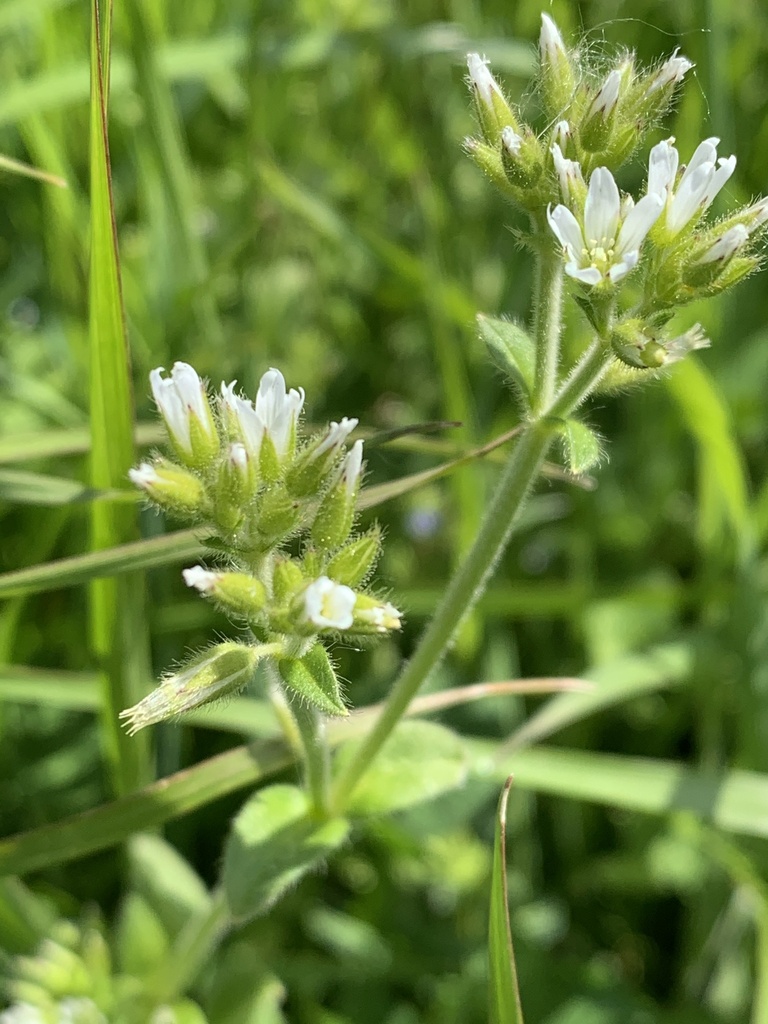
Cerastium glomeratum, commonly known as clustered mouse-ear, is a low-growing perennial plant belonging to the family Caryophyllaceae. Though native to Europe and Asia, it has been introduced and naturalized in North America. The plant typically reaches up to 20 cm in height and forms dense mats of foliage that spread via creeping stems. The leaves of Cerastium glomeratum are small, oval-shaped, and covered with fine hairs. Its flowers, which are white or pinkish-white, feature five petals that are deeply notched at the tips. These blooms appear in clusters at the tops of slender stems from late spring through early summer. Preferring well-drained soils in full sun or partial shade, Cerastium glomeratum can tolerate a wide range of soil types. It is commonly found on rocky slopes, meadows, open woodlands, and disturbed areas such as roadsides. The plant is also known for its medicinal uses. It has antibacterial properties that make it effective for treating wounds and expectorant properties that help alleviate respiratory problems like coughs. Overall, Cerastium glomeratum is an attractive groundcover plant that provides excellent erosion control on slopes while adding beauty with its delicate flowers during the spring bloom season. This makes it an excellent addition to gardens and landscaping projects!
Sticky Chickweed, also known as Sticky Mouse-ear Chickweed, refers to plants from the Cerastium genus. These plants are commonly called mouse-ear chickweed because their hairy leaves resemble the ears of a mouse. Specifically, the leaves of Cerastium glomeratum have a sticky texture, which gives rise to the name sticky chickweed.
Sticky chickweed is fairly disease-resistant and typically does not suffer from many illnesses. Nevertheless, it can be vulnerable to pests and diseases found in its environment. Such infections tend to be mild. Regarding care, this plant is of moderate maintenance. It should be pruned on a regular basis to preserve a neat appearance and encourage healthy growth. Applying fertilizer can also aid in boosting flowering. Sticky chickweed is appropriate for anyone with outdoor areas like a garden or patio, and it does not demand extensive gardening experience. When cultivated indoors, however, it may need more attentive care.
How to keep Cerastium Glomeratum.
Light
Sticky chickweed performs best in full sun, though it can tolerate lower light levels. Native to sunny habitats, it fares poorly in heavy shade. Conversely, too much sunlight can be damaging, but it tolerates brighter conditions better than some other species.
Water
Sticky chickweed, native to temperate regions, grows best in moderately moist soil. It prefers consistent watering, without becoming waterlogged. Watering once a week is ideal, and using mulch can help retain moisture. This makes it well-suited for outdoor garden beds and as ground cover.
Temperature
Sticky chickweed is native to habitats where temperatures range from 68 to 95 °F (20 to 35 ℃). It favors a temperate climate, so seasonal adjustments may be needed to maintain those conditions.
Fertilizer
Sticky chickweed does well with regular, light applications of fertilizer to encourage healthy leaf development. Fertilize Sticky chickweed roughly once a month during the summer. Nitrogen is important for foliage, and adding nitrogen-rich sources helps Sticky chickweed flourish.
Botanical profile.
- Plant Type
- Herb
- Life Cycle
- Annual, Biennial, Perennial
- Genus
- Cerastium
- Family
- Caryophyllaceae
- Hardiness Zone
- 7-9
- Mature Height
- 30 cm to 46 cm
- Mature Spread
- 25 cm to 46 cm
- Leaf Color
- Green, Gray, Silver
- Leaf Type
- Deciduous
- Flower Color
- White
- Flower Size
- 0.51 cm to 0.51 cm
- Bloom Time
- Mid spring, Late spring, Early summer
- Planting Time
- Winter, Spring
- Harvest Time
- Late spring, Early summer, Mid summer
- Native Area
- Sri Lanka, Libya, Somalia, Egypt, Turkey, Sweden, India, Austria, Slovakia, Montenegro, Pakistan, Slovenia, Morocco, Croatia, Yemen, Belarus, Uzbekistan, Russia, Iraq, Germany, Indonesia, Iceland, Estonia, Romania, Belgium, Moldova, Portugal, Nepal, Saudi Arabia, Netherlands, France, Tajikistan, Tunisia, Czech Republic, Cyprus, Bulgaria, Poland, Armenia, Greece, Ukraine, Serbia, Lebanon, Lithuania, Norway, China, Afghanistan, Syria, Italy, Kazakhstan, Spain, Switzerland, Denmark, Mongolia, Bhutan, Iran, Albania, Ireland, United Kingdom, Hungary, Algeria, Azerbaijan, Turkmenistan
Other names.
Reader questions.
How should I water my Sticky chickweed?
To water Sticky chickweed, you have several options. You can use a garden hose with a spray nozzle, a watering can, or any other common watering tool. Sticky chickweed is not too particular when it comes to water sources; it can thrive with rainwater, tap water, or filtered water. However, it's generally best to avoid watering this plant from overhead as it can harm the leaves and flowers and potentially cause diseases. Instead, setting up a drip irrigation system is recommended, as it evenly and directly applies water to the soil. For container-grown Sticky chickweed, you can follow a similar approach but adjust the tools used. In this case, you can use a cup, watering can, or tap to apply water directly to the soil.
What are the sunlight requirements for Sticky Chickweed?
Sticky Chickweed, known botanically as Cerastium glomeratum, thrives best with extensive exposure to sunlight, requiring above 6 hours of sunlight for full sun conditions, and can also grow in partial sun, which is about 3-6 hours of sunlight a day. However, it's important to monitor the plant's exposure to sunlight; while it can endure less abundant light, overly shaded conditions can impede its growth. Additionally, excessive sunlight can also cause harm, although Sticky Chickweed can withstand more sun than some species. Remember to watch how sunlight moves through your garden, selecting spots that offer a balance of light and shade to ensure the plants' happiness.
What is Sticky Chickweed and where does it originate?
Sticky chickweed, botanically known as Cerastium glomeratum, is native to temperate climates where the temperature typically ranges from 68 to 95 °F (20 to 35 °C). It has a strong cold resistance, making it adaptable to a variety of environments without the need for special frost protection measures in most cases.
What should I do if I give my Sticky chickweed too much water or too little water?
To prevent underwatering Sticky chickweed, simply water it more regularly when you notice it lacks moisture. Overwatering, on the other hand, is a serious issue that can lead to diseases and the decline of the plant. To avoid this, choose a sunny location with good drainage to help dry the soil and prevent waterlogged conditions. If you have overwatered Sticky chickweed in a pot, consider changing the pot to one with better drainage and using loose, well-draining soil when repotting.
How can artificial lighting support the growth of Sticky Chickweed indoors?
When natural sunlight is insufficient for Sticky Chickweed, especially during winter or in less sunny spaces, artificial lighting provides an essential solution for optimal growth. Indoor plants benefit from adequate lighting which supports faster, healthier growth. Opt for LED lights, a popular choice, as they can be customized to supply specific wavelengths needed by your plants. Full sun plants require 30-50W/sq ft, partial sun plants need 20-30W/sq ft, and full shade plants require 10-20W/sq ft of artificial light. Placing the light source 12-36 inches above the plants mimics natural sunlight, and mirroring natural daylight hours for your species—most need 8-12 hours of light daily—is crucial for healthy plant development.
How should Sticky Chickweed be cared for during winter?
During the winter, Sticky chickweed usually does not require special frost protection due to its strong cold resistance. However, if temperatures are expected to drop below -15°C, it's important to take steps to protect the plant. Covering the plant with soil or straw can provide necessary cold protection. Additionally, watering the plant abundantly before the first freeze in autumn to ensure the soil remains moist can help prevent drought and water scarcity during the colder months.
How frequently should I water my Sticky chickweed?
Sticky chickweed requires regular watering throughout the growing season. In the spring, watering once per week is sufficient. As the season progresses and temperatures rise, you may need to water two to three times per week. However, be careful not to exceed this rate as it can harm the plant. Regardless of watering frequency, it's important to keep the soil moist but not overly wet. For potted Sticky chickweed, you'll generally need to water more frequently as the soil in pots tends to dry out faster. In most cases, watering container-grown plants a few times per week is recommended, compared to just once per week for plants in the ground.
What symptoms indicate insufficient sunlight for Sticky Chickweed?
When Sticky Chickweed doesn't get enough light, it might show symptoms such as smaller new leaves, leggy or sparse growth, faster leaf drop, slower or no new growth, and lighter-colored new leaves. These symptoms indicate light deficiency and can significantly impact the plant's health and appearance. Additionally, exposure to excessive sunlight can trigger chlorosis, sunscald, leaf curling, wilting, and leaf scorching. It's essential to monitor these symptoms closely to adjust the plant's exposure to light effectively and ensure its well-being.
What are the symptoms of Sticky Chickweed under low temperature conditions?
Sticky chickweed is cold-tolerant, thriving best in temperatures above 20°C and should be kept above 0°C during winter to avoid damage. Temperatures falling below -15°C might not show immediate signs of damage but can lead to decreased sprouting or even no sprouting in spring. If this occurs, removing any parts of the plant that have failed to sprout in spring is recommended.
How much water does my Sticky chickweed require?
Determining the appropriate amount of water for your Sticky chickweed can be approached in a few different ways. Some gardeners prefer to assess the moisture of the soil by touch, suggesting that watering should continue until the top six inches of soil feel moist. Alternatively, you can use a specific measurement as a guideline. On average, providing about two gallons of water per week should suffice, but this can vary depending on factors like heat and soil dryness. It's important to note that strictly following such guidelines might result in overwatering if your plant requires less water. For container-grown Sticky chickweed, a different method is necessary. The goal is to moisten all layers of dry soil, which can be tested by sticking your finger into the soil to sense moisture. Another indication is when you observe a slight dribble of excess water coming out of the pot's drainage holes.
What solutions are there for Sticky Chickweed suffering from insufficient sunlight?
For Sticky Chickweed experiencing insufficient sunlight, a gradual increase in exposure can help. Indoor plants can be moved to a sunnier location each week until they receive at least 6 hours of direct sunlight daily, using a south-facing window and keeping curtains open during the day. If moving the plant isn't feasible, consider artificial light sources, such as desk or ceiling lamps, for at least 8 hours a day or invest in professional grow lights. Outdoors, gradually acclimate your plants by moving them weekly to brighter spots, avoiding sudden light intensity changes to prevent sunburn. If trees obstruct sunlight, trimming branches may help. For smaller plants, consider transplanting during their dormant period, usually late winter or early spring, to a site with more sunlight and good drainage. Note that parts of the plant already affected might not recover, but new growth should be healthy with improved light conditions.
How does Sticky Chickweed react to high temperatures, and what are the solutions?
In high temperatures, specifically above 35°C, Sticky chickweed may exhibit signs of stress, including leaves becoming lighter, curling, susceptibility to sunburn, and in severe cases, wilting and drying. To mitigate these effects, trim away sunburned and dried parts of the plant, move it to a shaded location, particularly away from midday and afternoon sun, or use a shade cloth. Additionally, watering the plant in the morning and evening can help keep the soil moist and reduce temperature stress.