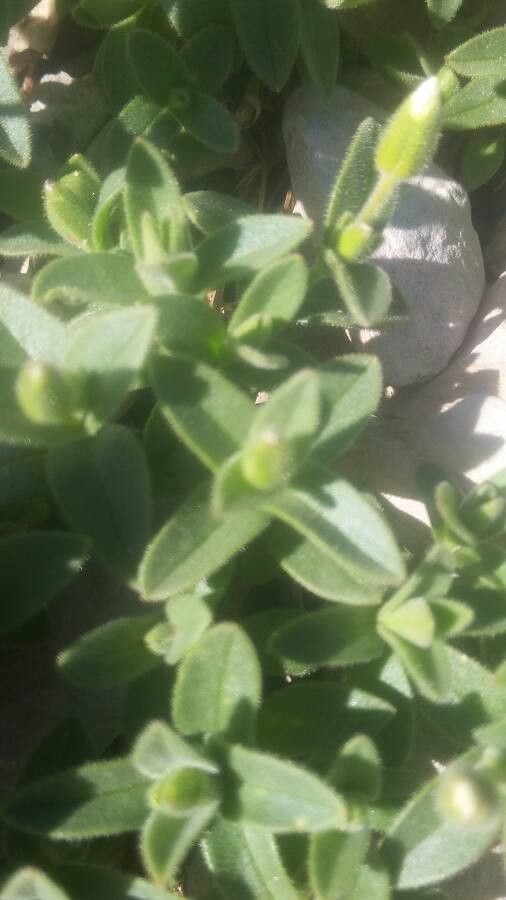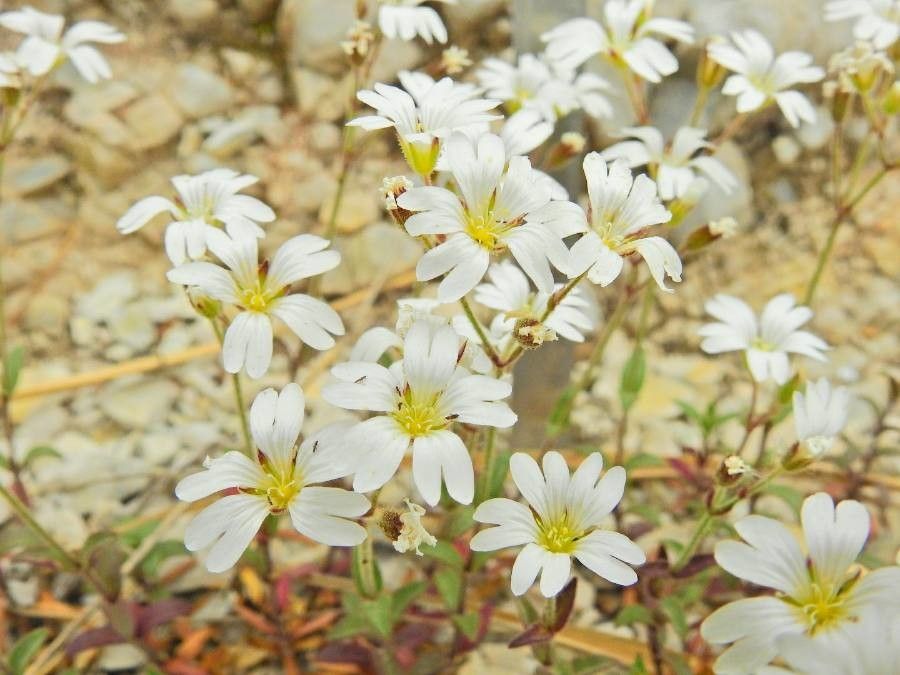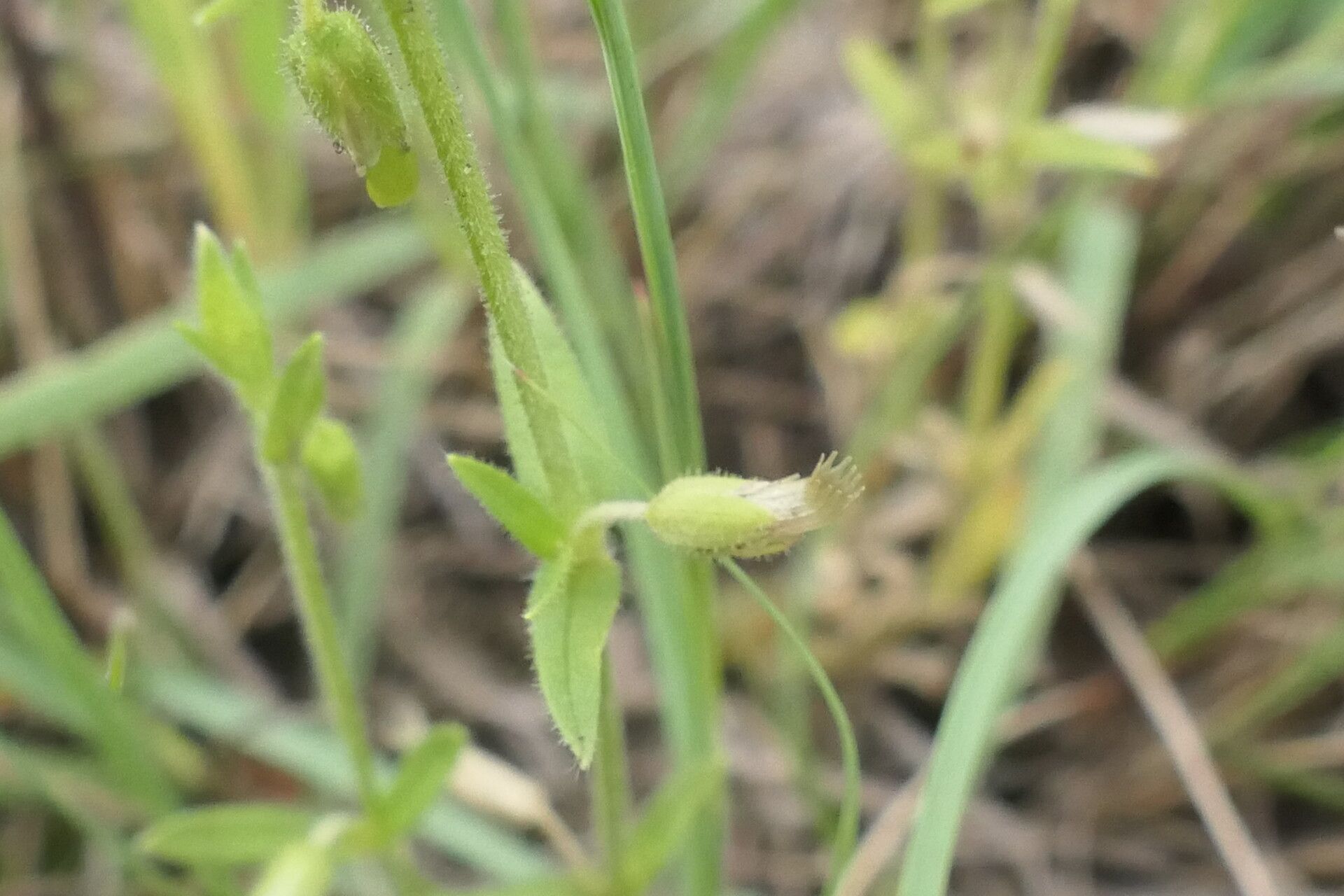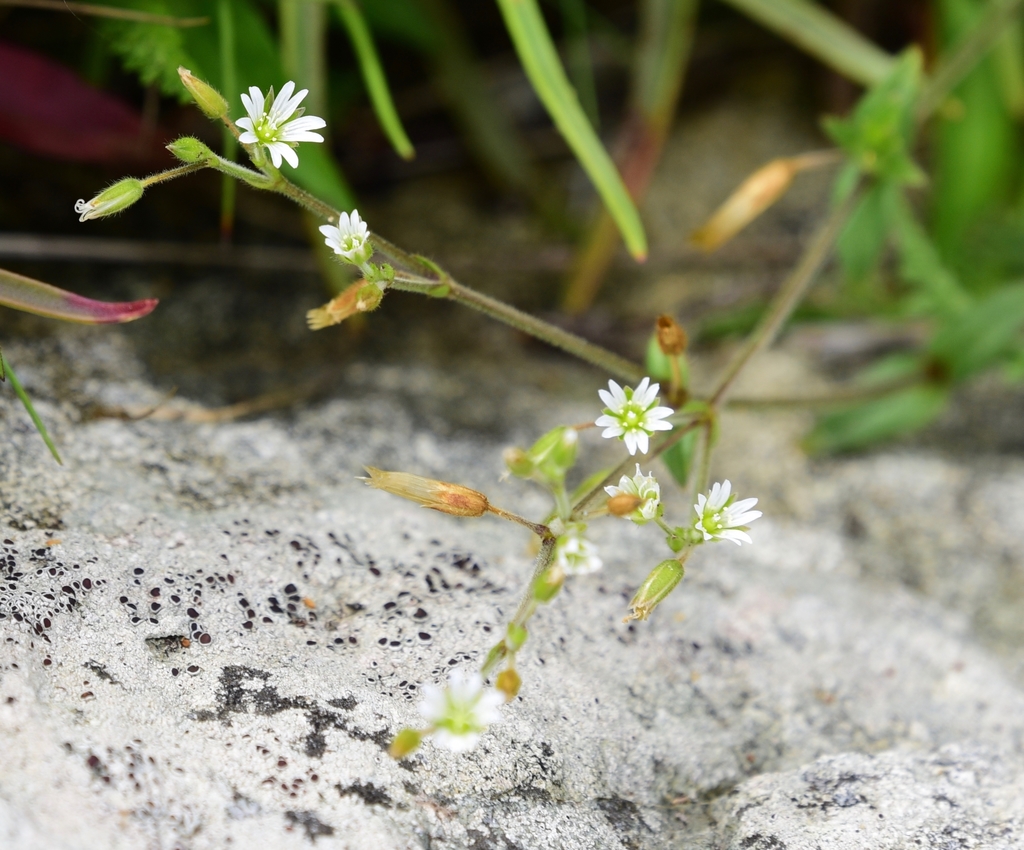
Cerastium fontanum, commonly known as Common Mouse-ear Chickweed, is a small flowering plant that belongs to the family Caryophyllaceae. Native to Europe and Asia, it has been introduced and naturalized in many regions worldwide. The plant typically grows up to 30 cm tall, exhibiting a spreading habit with numerous branches. Its leaves are small, narrow, and pointed, covered with fine hairs.
The flowers of Cerastium fontanum are white or pinkish, featuring five deeply notched petals. They bloom in clusters at the end of each stem from May to September. The fruit is a capsule containing numerous tiny seeds.
Common Mouse-ear Chickweed thrives in moist soils but is adaptable to various habitats, including meadows, fields, roadsides, gardens, and disturbed areas such as waste grounds or railway tracks.
Historically, this plant has been used for its medicinal properties. Applied topically, it can help alleviate pain caused by arthritis or rheumatism due to its anti-inflammatory effects.
Cerastium fontanum is also an important food source for various insects like bees and butterflies, offering nectar-rich flowers that attract these pollinators.
Overall, Cerastium fontanum is an attractive wildflower that enhances the beauty of its surroundings while providing ecological benefits through the pollination services it offers to visiting insects.
Botanical profile.
- Plant Type
- Herb
- Life Cycle
- Perennial, Biennial, Annual
- Genus
- Cerastium
- Family
- Caryophyllaceae
- Hardiness Zone
- 3-10
- Mature Height
- 30 cm
- Mature Spread
- 49 cm
- Leaf Color
- Green
- Leaf Type
- Deciduous
- Flower Color
- White
- Flower Size
- 2.54 cm
- Bloom Time
- Mid spring, Late spring, Early summer
- Planting Time
- Autumn
- Harvest Time
- Late spring, Early summer, Mid summer