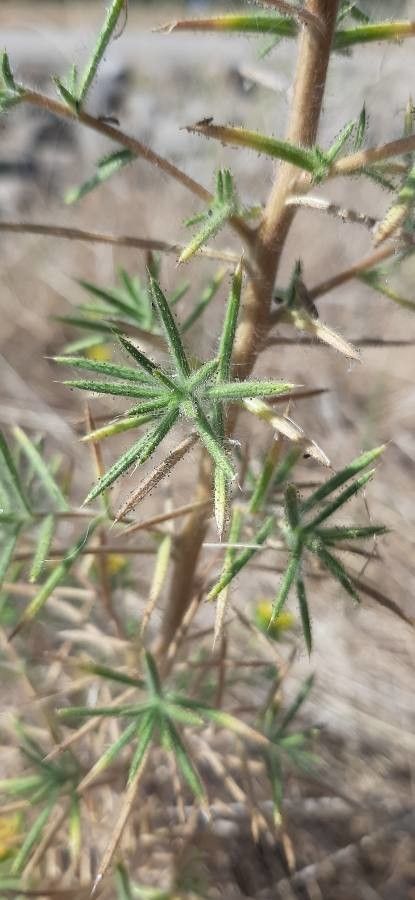
Centromadia pungens, the common spikeweed or common tarweed, is a species of North American plants in the tribe Madieae within the family Asteraceae. It is native to northern Baja California and the western United States (California, Oregon, Washington, Idaho, Nevada, Arizona). The plant is considered a noxious weed in parts of the Pacific Northwest.Centromadia pungens is an herb up to 120 cm (47 in) tall. It produces arrays of numerous yellow flower heads with both ray florets and disc florets. SubspeciesCentromadia pungens subsp. laevis (D.D.Keck) B.G.Baldwin - Baja California, southern California Centromadia pungens subsp. pungens - most of species range
Common tarweed is fairly resistant to disease and usually not prone to illness. However, it can be affected by pests and diseases present in its environment. These problems are typically minor. Regarding care, this plant requires moderate maintenance. It should be pruned regularly to keep a good appearance and encourage healthy growth. Fertilizing can also help stimulate flowering. Common tarweed is suitable for anyone with an outdoor area, such as a garden or patio, and does not demand much caregiving experience. It may need more attention when grown indoors.
How to keep Centromadia Pungens.
Light
Common tarweed is native to bright, open areas and performs best in full sun. It will tolerate partial shade but prefers direct sunlight for optimal growth. This plant, which can be annual or biennial, is noted for its sun-loving habit.
Water
The common tarweed, native to dry habitats, demonstrates impressive drought tolerance and thrives with minimal moisture. It needs to be watered weekly but should not be over-saturated. Its growth cycle is influenced by seasonal rains, reflecting its adaptation to sporadic rainfall. These changes in rainfall affect its active growth periods and dormancy.
Temperature
Common tarweed can adjust to diverse temperature conditions, although diverse mixtures of heat and water conditions may still restrict its spread. It flourishes most in summer's warm climates, provided there is sufficient rainfall or irrigation. Extended stretches of overcast and wet weather, along with sustained high temperatures, can raise the chances of Common tarweed's death. During winter, ensuring appropriate cold protection can enhance the plant's ability to survive.
Fertilizer
Regular, mild applications of fertilizer can aid Common tarweed in developing a healthy foliage. During the summer season, Common tarweed should be fertilized about once a month. Nitrogen is essential for leaf growth, and using sources rich in nitrogen can ensure the prosperous growth of Common tarweed.
Pruning
Common tarweed is known for its sticky leaves and yellow flowers. To promote its health and enhance flowering, early to late spring pruning is essential. Important practices include removing dead branches and thinning the growth to improve air circulation. Additionally, ensure your tools are clean to prevent the spread of disease.
Botanical profile.
- Plant Type
- Herb
- Life Cycle
- Annual
- Genus
- Centromadia
- Family
- Asteraceae
- Hardiness Zone
- 8-10
- Mature Height
- 30 cm to 61 cm
- Mature Spread
- 20 cm to 40 cm
- Leaf Color
- Green
- Leaf Type
- Deciduous
- Flower Color
- Yellow
- Flower Size
- 1.02 cm to 2.03 cm
- Bloom Time
- Summer
- Planting Time
- Spring, Summer
- Harvest Time
- Late summer, Early fall, Mid fall
Other names.
Reader questions.
What are the sunlight requirements for Common Tarweed?
Common Tarweed, known botanically as Centromadia pungens, thrives in environments that offer above 6 hours of sunlight daily, preferring full sun conditions for optimal growth. It's essential to observe the movement of sunlight through your garden to find the best spots that offer a balance of light and shade, ensuring the plant's happiness. In its native habitats, Common Tarweed is accustomed to bright, open environments.
How can artificial lighting support Common Tarweed indoors?
When natural sunlight is insufficient, especially during winter or in less sunny spaces, artificial lighting can be a vital alternative for indoor Common Tarweed plants, promoting faster and healthier growth. LED lights are recommended because they can be customized to provide specific wavelengths needed by plants. For full sun plants like Common Tarweed, 30-50W/sq ft is advised. The light source should be placed 12-36 inches above the plant, and the lighting duration should mimic natural daylight hours, generally 8-12 hours per day.
What are the symptoms of inadequate light in Common Tarweed?
When Common Tarweed does not receive enough light, several symptoms may appear, including smaller new leaves, leggy or sparse growth, faster leaf drop, slower or halted new growth, lighter-colored new leaves, chlorosis, sunscald, leaf curling, wilting, and leaf scorching. These symptoms highlight the plant's struggle with insufficient light conditions, affecting its overall health and growth.
What solutions can help Common Tarweed receive adequate light?
To ensure Common Tarweed receives enough light, gradually move it to a sunnier location, aiming for at least 6 hours of direct sunlight daily. For indoor plants, consider placing them near a south-facing window or using artificial lighting, like professional grow lights, for a minimum of 8 hours per day. Outdoors, avoid sudden changes in light exposure to prevent sunburn. Removing obstructions and transplanting smaller plants to sunnier spots during their dormant period can also significantly improve sunlight reception.