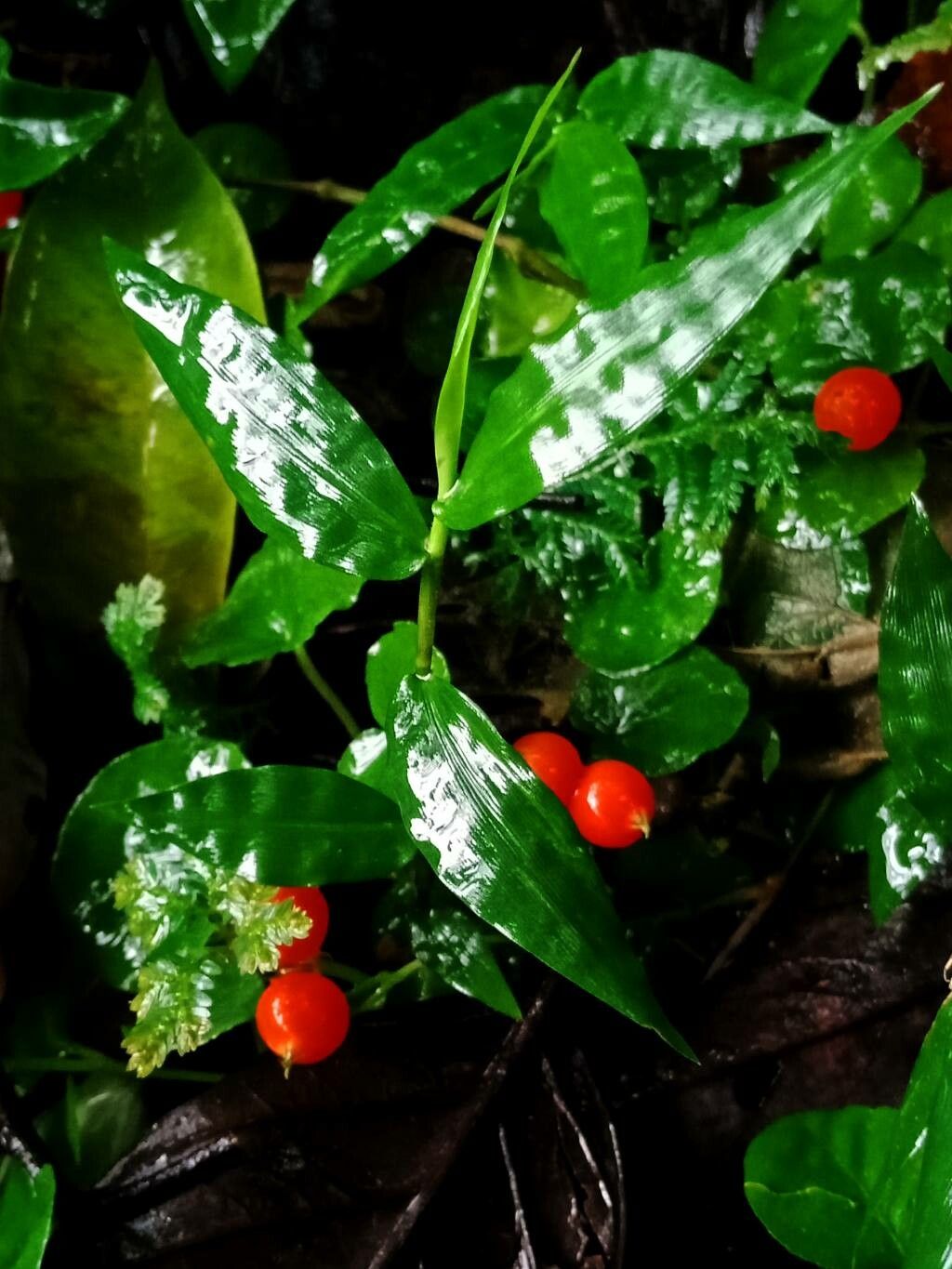
Barbed grass is resistant to disease and is usually not vulnerable to illnesses. Regarding care, this plant is fairly low-maintenance. When grown outdoors it needs little watering, and larger specimens typically do not require pruning. Smaller plants, however, should be trimmed after they finish blooming. Barbed grass is suitable for anyone with an outdoor area, such as a garden or deck, and does not call for much gardening experience.
How to keep Centotheca Lappacea.
Light
Barbed grass grows best with moderate light exposure, which supports healthier development. Its growth cycle does not require different light conditions at different stages. While it is adapted to its native forest understorey, it can tolerate low light, though this may cause reduced growth.
Water
Barbed grass flourishes in tropical, humid environments where there is consistent moisture. It effectively retains water and can tolerate drought conditions, though it requires weekly watering for optimal, lush growth. Typically grown outdoors, it thrives during the peak season with the help of rainfall that supports its vigorous growth.
Temperature
Barbed grass is native to regions with temperatures ranging from 59 to 95 °F (15 to 35 ℃). Ideally, the plant favors temperate to warm conditions. When seasons change, appropriate care should be taken to adjust its surroundings so the temperature stays within its preferred range.
Fertilizer
Barbed grass needs extra nutrients to encourage healthy new growth. In spring, applying compost around the plant's base will effectively supply the nutrition it requires. Fertilization helps support robust growth and improves the plant's resistance to diseases and pests.
Pruning
Barbed grass is a tall perennial known for its distinctive barbed spikelets. To care for this grass, prune it in early spring. Trim the dead stems close to the base, but be careful not to damage any new growth. This process improves air circulation, encourages new shoots, and helps maintain the plant's shape while preventing overcrowding. Always use sterilized tools to minimize the risk of disease.
Botanical profile.
- Plant Type
- Grass
- Life Cycle
- Perennial
- Genus
- Centotheca
- Family
- Poaceae
- Hardiness Zone
- 7-9
- Mature Height
- 40 cm to 91 cm
- Mature Spread
- 20 cm to 40 cm
- Leaf Color
- Light Green, Forest Green
- Leaf Type
- Deciduous
- Flower Color
- Yellow, Green, Red, Brown
- Flower Size
- 0.20 cm to 0.25 cm
- Bloom Time
- Summer, Early fall, Mid fall
- Planting Time
- Summer
- Harvest Time
- Late summer, Fall, Early winter
- Native Area
- Sri Lanka, India, Malaysia, Madagascar, Nigeria, Fiji, Benin, Sierra Leone, Indonesia, Cambodia, Equatorial Guinea, Liberia, Cameroon, Ghana, Congo, Nepal, Central African Republic, Philippines, Laos, Guinea, China, Vietnam, Myanmar, Togo, Bhutan, Senegal, Singapore, Côte d'Ivoire, Congo (DRC), Thailand, Gabon
Other names.
Reader questions.
What are the sunlight requirements for Barbed Grass?
Barbed Grass, also known as Centotheca lappacea, thrives best with moderate exposure to light, requiring about 3-6 hours of sunlight daily. It is adaptable to various light conditions, reflecting its natural habitat in the forest understorey where it experiences a mix of light and shade. However, it's important to ensure that the plant does not receive too little sunlight as this can lead to inhibited growth. Watch the movement of sunlight through your garden to find spots that offer a balance of light and shade to ensure the plant's well-being.
What is the ideal climate for Barbed grass?
Barbed grass, botanically known as Centotheca lappacea, thrives in moderate to warm climates. It is indigenous to environments where temperatures range from 59 to 95 °F (15 to 35 °C). The plant possesses strong cold resistance, implying that special frost protection measures are generally unnecessary. However, in environments where winter temperatures are expected to fall below -15°C, it is vital to provide cold protection to the plant, such as covering it with soil or straw. Additionally, watering the plant abundantly before the first freeze in autumn to ensure the soil remains moist is recommended, as this helps prevent drought and water scarcity for the plant during winter and early spring.
Can artificial lighting be used for Barbed Grass, and how?
Yes, artificial lighting can be a vital solution for Barbed Grass, especially when natural sunlight is insufficient, such as in winter or less sunny spaces. Indoor plants benefit greatly from the right type of artificial light, like LED lights, which can be customized to provide specific wavelengths needed for optimal growth. For full sun plants, 30-50W/sq ft is recommended; partial sun plants need 20-30W/sq ft, and full shade plants require 10-20W/sq ft. The light source should be placed 12-36 inches above the plant to mimic natural sunlight, with the duration mimicking natural daylight hours, typically 8-12 hours per day for most plants.
How does Barbed grass react to low temperatures?
Barbed grass is cold-tolerant and can thrive well in temperatures above 15°C. During the winter, it's crucial to keep the plant above -10°C. If temperatures fall below -15°C, the plant may not show noticeable changes during the winter, but there could be a decrease in sprouting, or it may not sprout at all come springtime. The recommended solution for handling such scenarios is to remove any parts of the plant that have failed to sprout in spring.
What are the symptoms of light deficiency in Barbed Grass?
Barbed Grass shows several symptoms when it's not getting adequate light, including smaller new leaves, leggy or sparse growth, faster leaf drop, slower or no new growth, lighter-colored new leaves, chlorosis (leaves turning yellow due to a breakdown of chlorophyll), sunscald, leaf curling as a defense mechanism against excessive sunlight, wilting from water loss due to overexposure to sunlight, and leaf scorching characterized by brown, dry edges on leaves. These symptoms indicate the plant's struggle with either too little or too much light.
How should Barbed grass be cared for in high temperatures?
In the summer, when temperatures can climb, it is important to ensure that Barbed grass does not get exposed to conditions over 35°C. Exposure to temperatures above 38°C can cause the plant's leaves to lighten in color, become prone to curling, suffer from sunburn, and in severe cases, wilt and dry out. To manage these conditions, it is advisable to trim away the sunburned and dried-up parts of the plant. Moving the plant to a shaded location, or using a shade cloth to protect it from the midday and afternoon sun, can be beneficial. Additionally, watering the plant in the morning and evening to keep the soil moist can help mitigate the stress from high temperatures.
How can light-related issues in Barbed Grass be resolved?
To address light-related issues in Barbed Grass, consider gradually shifting the plants to sunnier spots each week until they receive the ideal 3-6 hours of direct sunlight daily, allowing them to adapt to increasing light. For plants that are large or not easily movable, supplementing with artificial light such as keeping a desk or ceiling lamp on for at least 8 hours daily or investing in plant grow lights can provide ample light. Outdoors, moving your plants gradually to sunnier locations can help avoid sunburn. If plants have been stunted by low light, focus on encouraging healthy new growth after increasing light exposure. Reducing obstructions like pruning branches or transplanting to soots with more sunlight can also improve the situation.