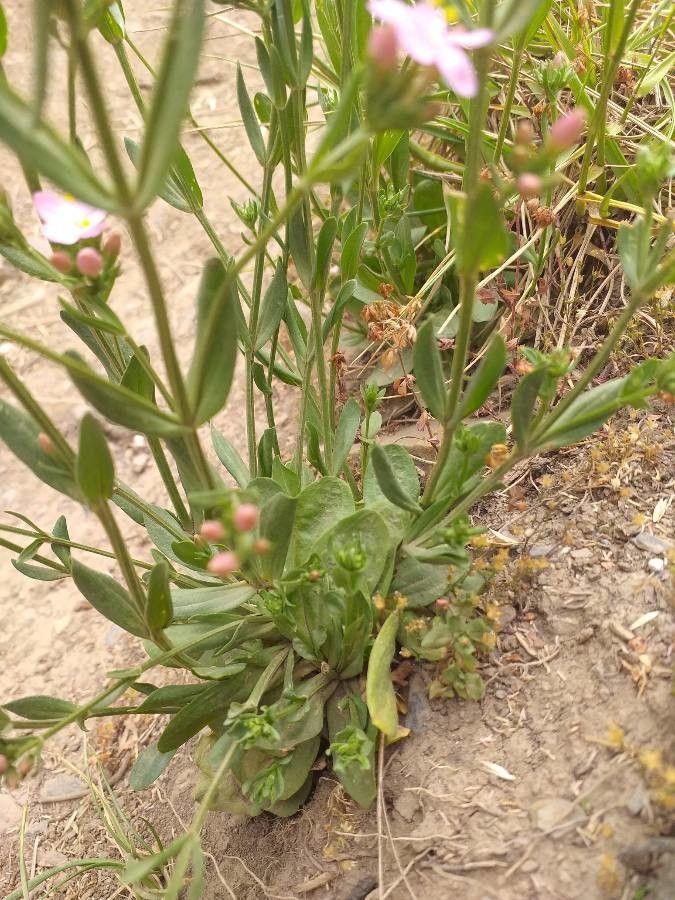
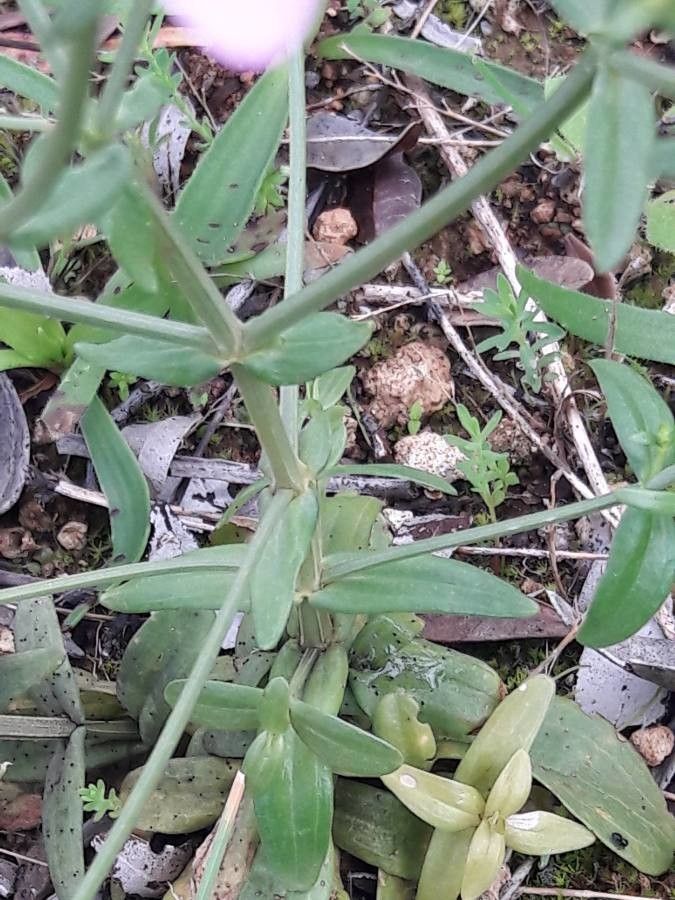
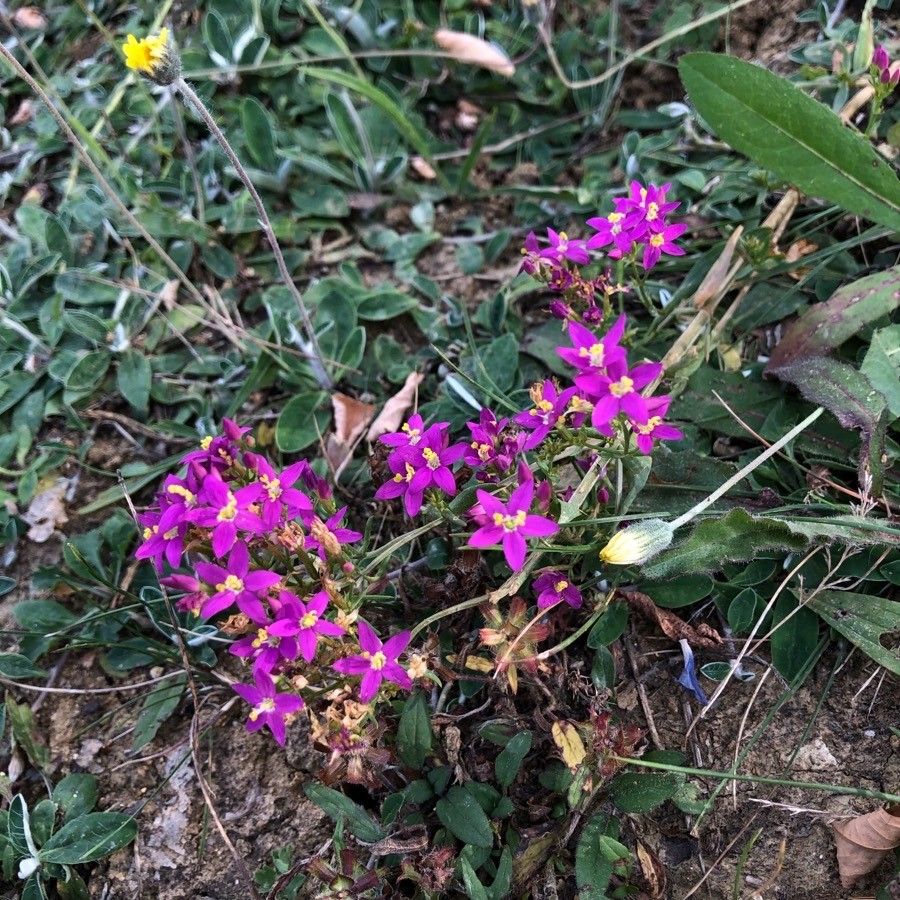
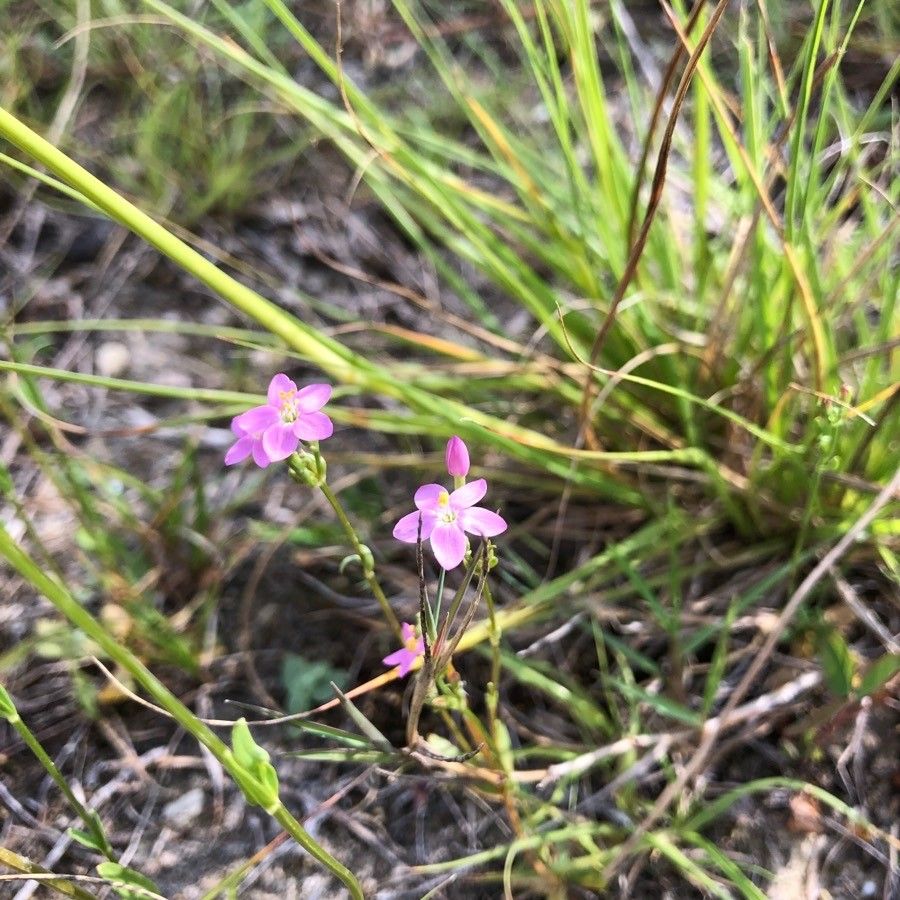
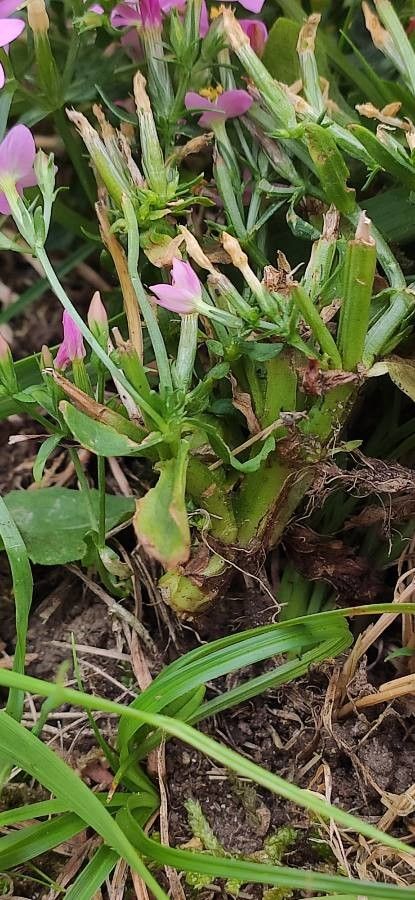
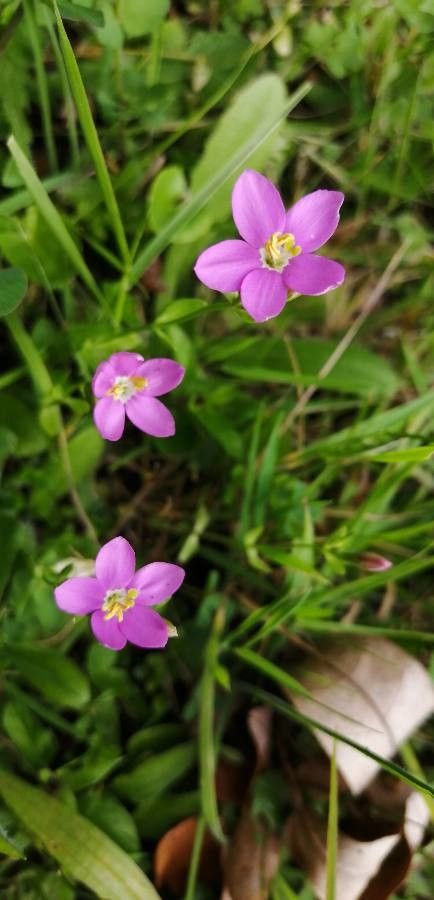
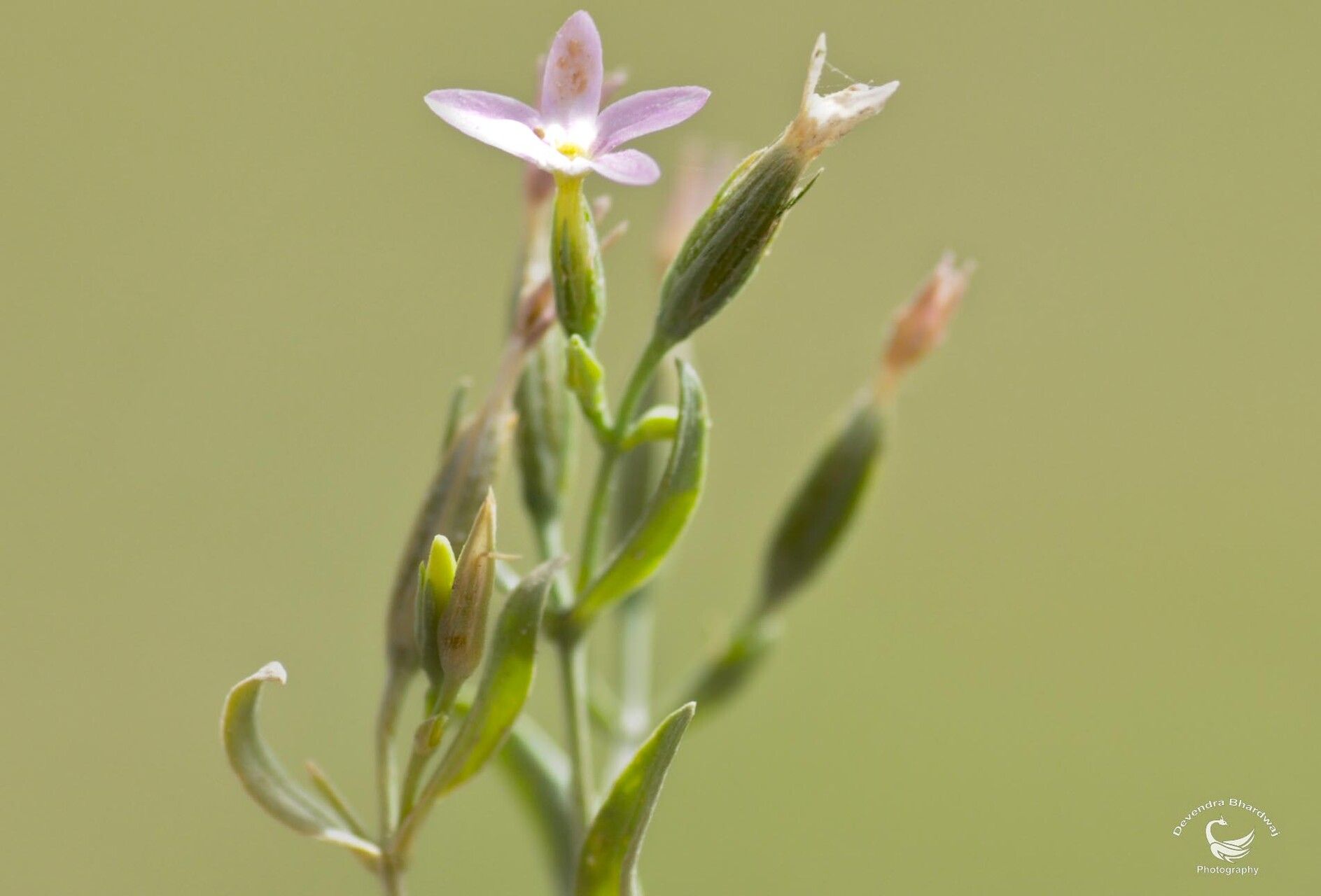
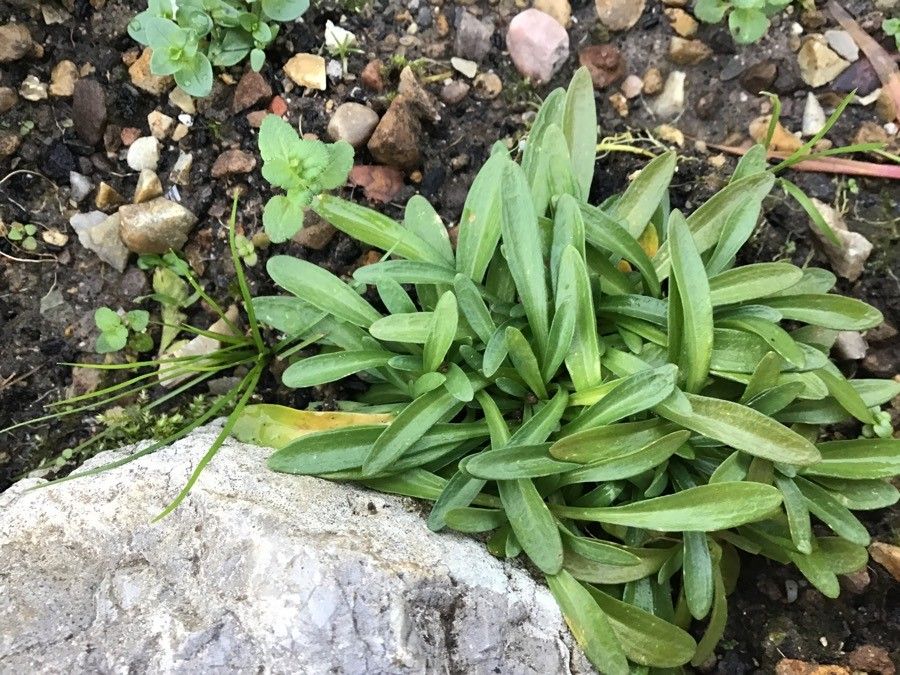
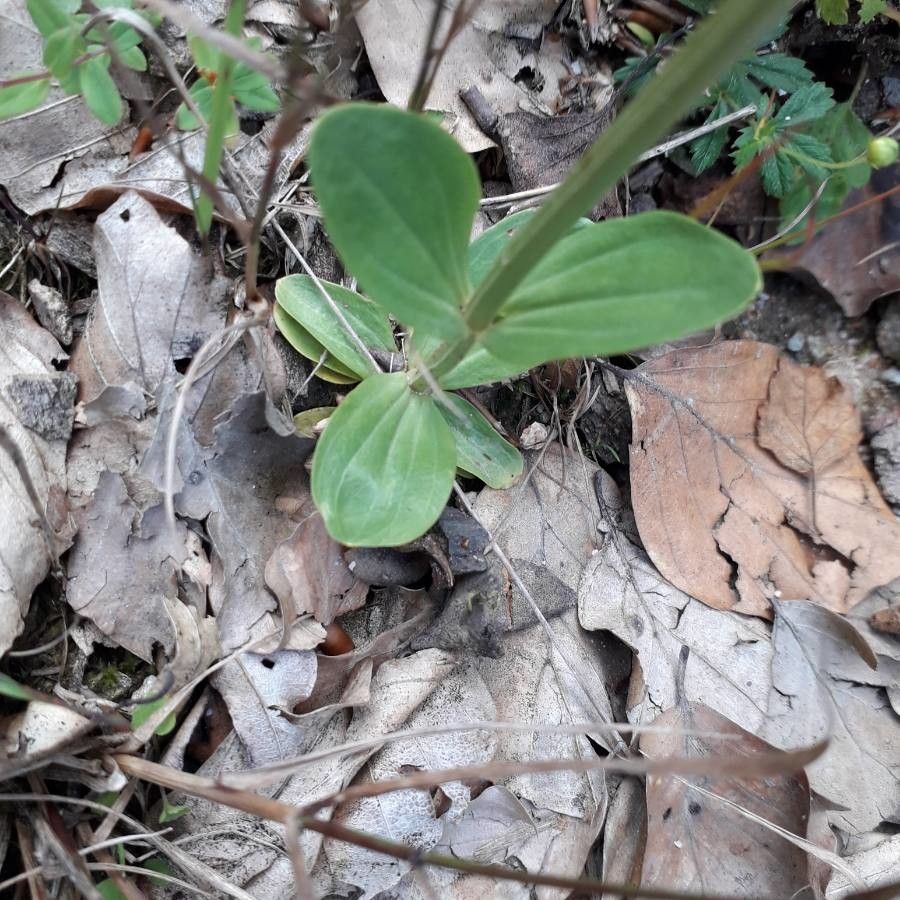
Centaurium littorale, commonly known as the seaside centaury, is a small annual herbaceous plant in the Gentianaceae family. Native to coastal regions of Europe and North Africa, it thrives in sandy or rocky soils near the sea.
This plant features a slender stem that can reach up to 30 cm in height. Its small, narrow leaves are arranged oppositely along the stem. The flowers, which bloom from June to September, are pink or purple and have five petals forming a star shape.
Traditionally, seaside centaury has been used for medicinal purposes due to its bitter taste, which stimulates digestion and appetite. It contains compounds like gentiopicroside, known for their anti-inflammatory properties.
Ecologically, Centaurium littorale is significant for coastal ecosystems. It helps stabilize sand dunes by trapping sand with its roots, thereby preventing erosion caused by wind or water currents.
In summary, Centaurium littorale is a plant of both medicinal and ecological importance in the coastal regions of Europe and North Africa.
Seaside centaury is fairly disease-resistant and typically not prone to illnesses. However, it can be affected by pests and diseases present in its environment. Such infections are usually mild. Care-wise, the plant requires moderate maintenance. Regular pruning is needed to maintain a good appearance and support healthy growth. Fertilizing can also help encourage flowering. Seaside centaury is suitable for anyone with outdoor space, such as a garden or patio, and does not demand extensive care experience. It may need more attention when grown indoors.
How to keep Centaurium Littorale.
Light
Seaside centaury comes from bright, open habitats where it performs best in full sun. It can tolerate some shade, but it prefers direct sunlight for optimal growth. This plant, which may be annual or biennial, is known for its sun-loving habit.
Water
Seaside centaury thrives in humid coastal regions and prefers consistent moisture without becoming waterlogged. To maintain its health and replicate its natural habitat, it's best to water it weekly. While it is typically grown outdoors to benefit from optimal light conditions, it requires additional watering during its active growing season to encourage better growth and ensure its survival.
Temperature
Seaside centaury can tolerate a wide variety of temperatures, but its range may still be restricted by different combinations of moisture and temperature conditions. It performs best in warm summer climates with sufficient rainfall or regular watering. Extended periods of cloudy, rainy weather, as well as prolonged high heat, can raise the risk of Seaside centaury dying. In winter, adequate protection from cold can enhance the plant's chances of survival.
Fertilizer
Seaside centaury requires regular fertilization to encourage flowering but dislikes excessive amounts. It needs frequent, light applications of fertilizer throughout its entire life cycle, particularly during peak active growth and while it is flowering. You will feed your Seaside centaury until they stop blooming.
Pruning
Seaside centaury is a plant that flourishes in coastal environments, displaying star-shaped, pale pink flowers. To maintain its health, prune the plant in early to late spring using sharp, sterilized shears. Be careful not to over-prune, as this helps to preserve its foliage. Regular pruning promotes better growth and flowering, improves air circulation, and reduces the risk of disease.
Botanical profile.
- Plant Type
- Herb
- Life Cycle
- Biennial, Annual
- Genus
- Centaurium
- Family
- Gentianaceae
- Hardiness Zone
- 5-9
- Mature Height
- 10 cm to 30 cm
- Mature Spread
- 5 cm to 15 cm
- Leaf Color
- Green
- Leaf Type
- Deciduous
- Flower Color
- Pink
- Flower Size
- 1.02 cm
- Bloom Time
- Summer
- Planting Time
- Spring, Summer, Autumn
- Harvest Time
- Late summer, Early fall, Mid fall
Other names.
Reader questions.
How should I water my Seaside centaury plant?
To properly water the Seaside centaury, it is recommended to use filtered water that is at room temperature or slightly warmer. This plant benefits from filtered water because tap water may contain harmful particles. Since the Seaside centaury is accustomed to warm environments, cold water can be a shock to its system. Therefore, it is important to avoid overhead watering to prevent foliage complications. Instead, water the plant by applying filtered room temperature water directly to the soil until it is completely soaked. This method is beneficial as it moistens the roots, allowing them to spread and collect necessary nutrients from the soil.
What are the sunlight requirements for Seaside centaury?
Seaside centaury thrives in environments that offer full sun, requiring more than 6 hours of sunlight per day for optimal growth. It can also tolerate partial sun with about 3-6 hours of sunlight but prefers full sun to flourish. The plant originates from bright, open areas, making it well-suited to conditions that mimic its natural habitat. When planning where to place your Seaside centaury, either outdoors or indoors, it's crucial to ensure it receives the adequate amount of sunlight it needs to thrive.
What is Seaside Centaury?
Seaside Centaury, known botanically as Centaurium littorale, is a plant species. Details about its essentials and symptoms are not provided in the available information.
What should I do if I give my Seaside centaury too much or too little water?
Overwatering is a more common problem than underwatering for the Seaside centaury. When the plant is overwatered, its stems and leaves may wilt and turn yellow. Overwatering for a long time can also cause diseases like root rot, mold, and mildew, which can kill the plant. While underwatering is less common, it can still happen, causing the leaves to become brittle and brown. It's important to notice signs of overwatering early to prevent irreversible damage. If you see the early signs, reduce watering immediately and check the soil drainage. If the soil drains poorly, replace it with a loose, well-draining potting mix. If you notice your plant is receiving too little water, increase watering until the signs improve.
How can I use artificial lighting for Seaside centaury if natural sunlight is insufficient?
When natural sunlight is insufficient, especially during winter or in less sunny spaces, artificial lighting can be a vital solution for keeping your Seaside centaury healthy. For indoor plants, choosing the right type of light, such as LED lights, which can be customized to provide specific wavelengths, is important. Full sun plants require 30-50W/sq ft of artificial light, while partial sun plants need 20-30W/sq ft. The appropriate distance for placing the light source is 12-36 inches above the plant to mimic natural sunlight conditions. Additionally, mimicking natural daylight hours, most plants will need 8-12 hours of light per day, is key to promoting optimal growth.
How frequently do I need to water my Seaside centaury?
To determine if your Seaside centaury plant needs water, there are different methods depending on whether it is in a pot or grown outdoors in the ground. For potted plants, simply stick your finger into the soil. If the top two to three inches of soil are dry, it's time to water. Similarly, for plants grown in the ground, check the top few inches of soil. If they have dried out, it's time to water. During spring and early fall, watering about once a week is usually sufficient. However, in extremely hot weather, you may need to water twice a week or more. Keep in mind that mature, well-established Seaside centaury plants can tolerate drought conditions well.
What are common symptoms of light deficiency in Seaside centaury when grown indoors?
When Seaside centaury is grown indoors under inadequate light conditions, it may display several symptoms indicating light deficiency. These include smaller new leaves, leggy or sparse growth, faster leaf drop, slower or no new growth at all, lighter-colored new leaves, and various signs of distress like chlorosis, sunscald, leaf curling, wilting, and leaf scorching. These symptoms arise as the plant struggles to adapt to lower light levels, which can significantly impact its health and growth.
How much water does my Seaside centaury plant need?
When watering your Seaside centaury, don't be shy about giving it a generous amount of water. Make sure the first two to three inches of soil are dry, then water the plant thoroughly, soaking the entire soil. Add enough water so that it flows through the drainage holes at the bottom of the pot. If you don't see excess water draining, you haven't watered enough. However, be careful not to let water accumulate inside the soil, as this can harm the plant. On the other hand, if water doesn't drain through the pot, it may indicate poorly draining soil, which is bad for the plant's health. If the plant is outside, 1 inch of rain per week is sufficient.
What solutions can I apply for Seaside centaury facing light deficiency issues?
To address light deficiency issues in Seaside centaury, consider the following solutions: For indoor plants, you can gradually move them to a sunnier location, aiming for at least 6 hours of direct sunlight daily. Use a south-facing window and keep curtains open during the day. If moving the plant isn't feasible due to its size, using artificial light such as desk lamps or professional grow lights for at least 8 hours a day can be effective. For outdoor plants, gradually transitioning them to sunnier spots and ensuring they are not subjected to sudden intense sunlight, which could cause sunburn, is crucial. Additionally, identifying and reducing obstructions that block sunlight, pruning trees or bushes as needed, or transplanting smaller plants during their dormant period to a location with ample sunlight can significantly improve their light exposure and overall health.
How do I water my Seaside centaury as it grows?
The water needs of the Seaside centaury can vary based on its growth stages. When it is young or newly transplanted, it requires more water because it is focused on developing new roots. These new roots need extra moisture to support future growth. As the plant matures, it will need less water. Another stage that requires more water is the bloom period, as the flowers use up a lot of moisture. So, you might need to provide more water during this time.
How should I water my Seaside centaury in different seasons?
The Seaside centaury has different water needs depending on the season. During the hottest months of the year, especially the height of summer, the plant requires more frequent watering, potentially more than once per week. However, it is important to consider how quickly the soil dries out before watering again. In contrast, during the winter, the plant goes into a dormant phase and requires much less water than usual. In fact, it may not need any watering at all during this time. If you do decide to water the plant in winter, it should be done sparingly, preferably only once a month. Overwatering during this season can increase the risk of the Seaside centaury contracting a disease.
What's the difference between watering my Seaside centaury inside and outside?
If you don't live in temperate or tropical regions, the easiest way to grow the Seaside centaury is indoors. Keep in mind that soil in a container can dry out faster than ground soil, so you'll need to water it more frequently if you have drying elements like air conditioning units. If you choose to plant it outside and you receive regular rainfall, you may not need to water it much at all. However, if you grow it indoors, you'll need to water it more often since rainwater won't be an option.